<>1921:German sociologist Max Weber’s "life
work", Wirtschaft und Gesellschaft [Economy and Society], published
posthumously. Contained influential treatment of "class and status" [CCS:409-23
| CCS,1:701-15]. A great
European, whose career got under way in 1904:1905,
had his most influential work published only after his death
<>1921fe21:Persian coup d'état, carried out by a small force of
1200 troops under the command of Reza Khan returned power to a ministerial
government within the Majlis [the Persian parliament]
- Reza Khan appointed a civilian journalist to the
position of Prime Minister and himself to Minister of War
- An official Iranian historical website
[W] described the situation this way =
After centuries of misrule and the ravages of the war waged by foreign
belligerents on its soil from 1914 to 1919, Iran in 1921 was prostrate, ruined,
and on the verge of disintegration. The last of the shahs of the Qajar dynasty,
Ahmad Shah, was young and incompetent, and the Cabinet [Persian government
formed within the Majlis] was weak and corrupt
- Great Britain and Russia both had strong commercial and
strategic interest in the country
- "Western" dominance over Iran
outraged Iranian patriots and nationalists, but they were not yet able to do
anything about it
\\
*--LOOP on AfroAsia
<>1921fe22:Soviet
Central
State Economic Planning Commission [GosPlan] created
*1921fe:Peasants were sentenced for petty commercial activities [RWR:166]
*--Further examples of economic conditions and abuses on eve of
NEP in rural Russia [RWR:167-70]
*1919:1921; Three years of peasant unrest preceded
NEP [RWR:270-82]
<>1921fe27:Georgia [Gruziia] Soviet regime established
<>1921mr01:mr08; Kronstadt (fortress island
protecting Petrograd) the scene of a significant rebellion against Communist rule, though in
favor of Soviet rule
*--Resolutions [RWR:288-95 | BNE:239-41 | Chamberlin,2:495-7 |
SGv:147-8 | DPH:435-6 |
Voline:passim | PWT2:298-300]
<>1921mr08:mr16; Communist Party Congress #10
laid final foundation for institutionalization of NEP (below)
[McC2:207-14]
*--Resolution on Party unity [RWR:308-10 | Chamberlin,2:497-9 |
SGv:149 | DPH:436-7]
<>1921mr16:English-Russian
[NB! not yet "Soviet Union"] commercial treaty [Senn,2:74-80]
<>1921mr18:Poland gained
international recognition of independence
by Treaty of Riga [Wki], which favored Poland
*--1/3 of the population in the new Poland were non-Poles, mainly East-Slavic peoples
of Lithuania, Belarus and Ukraine
*--The askew eastern geo-physical location of the nation-state Poland did not correspond
to the geo-physical location of the Polish nation
*1921mr:Report on Comintern activities [RWR:201-3]
<>1921mr23:1927de; Russian
Soviet Federated Republic issued its
New Economic Policy [NEP]
which lasted seven years
- 1921:The post-WW1 and revolutionary-civil-war Soviet economy has been compared with the last pre-WW1
year of the Imperial economy (1913) [McC2:257]
- Efforts to build socialism in the three years since Brest-Litovsk [ID] had mixed but largely
ineffective results [RWR:183-205]
- Now the so-called "War Communism" during the Revolutionary Civil War had to be
replaced by something like regular or every-day practices
- Radical Communist restructuring of the Soviet economic system was postponed (some thought forever)
- 1921mr:1922de; NEP in the countryside [RWR:299-308]
- The agricultural economy, including the growing
number of "Russian farmers", and the small-scale commercial economy
were allowed to operate without direct state control
- Tax and other burdens on villagers relaxed by the Decree on tax in kind, etc
[Chamberlin,2:499-503 | SGv:323-4 |
DPH:437-8]
- The four-year drift, without a coherent policy on agricultural land, seemed over
- The Soviet state did retain control over the "commanding heights" of the economy =
- Banking, currency, foreign trade, heavy industrial productivity, means of communication
and transportation, national labor organizations, etc
- Industrial wage-labor disturbances in this year cautioned against letting workers go free
in their unions [Page]
- 1921mr:1924ja21; From the introduction of NEP to Lenin's death, a 3-year period that Moshe Lewin
titled Lenin's Last Struggle (1968)
- These first three years provided the Revolution a window of opportunity, to take a
different path than that forced by circumstances of WW1 and Civil War
- A central vexing problem was how to balance Party power with wage-labor
authority, or at least worker "in-put"
- Lenin's last struggle was not successful, or perhaps not full-hearted
- These NEP years either suggested a less harsh
Soviet future or they were merely a prelude to the swift rise of Stalinism
- 1921mr27:Lenin outlined the threats to the revolution [BNE:241-]
- 1921ap05:Soviet commercial and trade concessions to
Germany and Italy [McC2:241]
- 1921ap07:Russian-German negotiations [McC2:195-6]
- 1921my30:The Red Army was called in to perform significant domestic economic tasks [McC2:238-9]
- 1921jy08:Nikolai Bukharin described "The New Economic Policy of Soviet Russia"
- USA journalist William Henry Chamberlin witnessed and described NEP [P20:115]
- USA labor activist and pacifist
Anna Louise Strong traveled from Seattle to Russia, working for
the American Friends Service Committee relief mission
\\
*--Rimlinger:252-69 [TXT]
<>1921my30:je01;
USA Oklahoma | Tulsa race riot, arguably the worst in US history
[W]
<>1921je:jy; Mikhail Gershenzon &
Viacheslav Ivanov wrote philosophical reflections on post-revolutionary
Russia, Correspondence Across a Room (1984)
[Excerpts = Raeff3:373f]
- These were difficult years for old-regime intellectuals
- Even those who felt hostility toward the old regime and sympathy for popular freedoms, for
example, Maxim Gorky, became uneasy
- Gorky was an associate of the Russian SDs and enjoyed a personal relationship with Lenin, but
Gorky had always performed the role of lower-depths maverick
- Later official Soviet evaluations of Gorky stuck close to this sentence from a 1959 encyclopedia biographical profile =
On the eve and during the Great October socialist revolution [1917], Gorky did not sufficiently evaluate the possibility
of union between the proletariat and the peasantry, and he exaggerated the
significance of the old intelligentsia, but he later acknowledged the error of
these views
- The early Soviet era made every effort to bring the revolution into the
"everyday life experience" of all citizens, wherever they stood in the
emerging new three-tier Soviet-style "social/service hierarchies" -- Workers [the
proletariat], Peasants, and Intelligentsia [RWR:316-39]
- Compare the Soviet social/service hierarchies with previous Imperial
social/service hierarchies [LOOP]
- 1921:1928; Gorky asked to be allowed to go abroad for medical reasons and remained for 7 years, the bigger part of
the whole NEP period
- 1928:He returned briefly to the USSR and traveled widely
- He wrote a series of descriptive and largely praiseful articles about the new revolutionary nation
- 1931:1936; He returned permanently to his homeland in just those years in which
"Stalinism" consolidated itself
- Now he found himself performing a new role
- No longer the maverick, Gorky
became the most prestigious champion of the emerging official artistic doctrine called "Socialist Realism"
- 1920s:1930s; Over these years a dedicated group of scattered Russian scholars and
intellectuals in European emigration developed ideas about "Eurasianism" [Evraziistvo] [TXT]
\\
- LOOP on Eurasia ends here for now
<>1921jy:Soviet Republic hosted Third World Congress
of the Communist International (Comintern) [RFP2,2:158-61]
- Ukrainian Communist Party sent memo to Congress #3 in which it outlined
the main complex phases of political struggle in Ukraine over the previous four years, all from a Communist Party
perspective [McC2:217-23]
- Memo made it clear that the Ukrainian political task was identical to the wider world revolutionary task, but
with the special feature of Ukrainian life =
- The Ukrainian revolutionary urban proletariat was located mainly in the
big industrial centers in eastern Ukraine with Russian populations
- The Ukrainian proletariat thus found itself afloat in a largely backward Ukrainian peasant sea and faced a
set of complex tasks =
- It had to resist backward, reactionary, i.e., bourgeois revolutionary efforts so prevalent in the Ukraine over
the previous four years
- But it also had to take on the tasks of that bourgeois revolution as their own; it had to absorb and take
charge of essentially all the contending revolutionary factions in Ukraine and complete the still unrealized old
bourgeois revolution as it marched forward to the socialist and communist future
- The memo therefore made it clear that the Ukrainian Communist Party meant "proletarian" and not "bourgeois" national
self-determination when it fought for "national self-determination"
- The memo acknowledged that Ukraine would be a distinct republic within the expanding Union of Soviet republics
<>1921fa:1922wi; Soviet Republic suffered famine
*1921oc:Volga region famine described by Philip Gibbs [Eye:493-5]
*--Anna Louise Strong witnessed NEP-era famine and described it
[TXT]
*1922mr05:Russian Orthodox Metropolitan Veniamin described Church-supported famine relief
[RWR:310-12]
<>1921no05:Mongolia and the Soviet Republic signed treaty
after Mongolia broke away from China
<>1921no25:Tambov province again the
site of peasant disorders
*--300 Tambov hostages submitted petition to the
All-Russian Cheka [RWR:280-2]
*--Throughout the territories of the old Empire, storms arose on the "peasant sea" (as described
in an earlier Ukrainian memo to Comintern Congress #3 [ID] )
*--The NEP years were not all wine and roses
<>1921de06:Ireland and Great Britain signed
Treaty of Irish independence
- 1922:1923; Ireland was soon, however, locked in a bloody civil war
- One of the two big Irish political parties, Fianna Fail, was founded by Eamon de Valera, the
man who led the opposition to the 1921 treaty that forged the new southern Irish
state
- Valera felt that the pact tied Ireland too closely to Britain
- He would not accept the oath of allegiance to the English King which the treaty required
- He and his associates also resented the division of Northern Ireland from the
Irish Free State and the continuation of English rule there
- The other big Irish party, Fine Gael, was later created by those who accepted
the treaty
- By 1923, they had crushed de Valera's rebels
- In the decades to come, these two political parties kept alive the hostilities
that had fueled the murderous civil war
- Then there arose another major party, Labour
- The Irish Labour Party grew from a faction in the rebel ranks that hoped the rising against imperial
dominion of the English would spark a Marxist revolution of workers against all bourgeois exploiters
- 1960s:1997; IRA conducted a war of terrorism against English power
- 1997:The IRA declared a cease-fire
- 2005:The IRA disarmed, making it possible again to celebrate the
Easter Uprising, banned in
Ireland since 1966
<>1921de19:de22; USSR Communist
Party conference#11 officially named the new revolutionary nation the "Union of Soviet Socialist
Republics" (USSR)
*--The USSR came into institutional existence in the NEP years
& survived seventy years, almost to the day, until 1991de31
<>1922:Irish author
James Joyce published Ulysses in book form
[TXT], a great
20th-century fine arts landmark
- Joyce was "Irish" by birth and steeped in a half-millennium
of Irish history
- Like so many leading figures of 20th-century high art, James Joyce lived the life of the émigré
- He was pan-European by avocation
- In this same year, USA-born émigré in England T.S. Eliot published his challenging and
characteristic poem "The Waste Land" [TXT]
- Eliot warned, "Poetry, in our civilization, as it exists at present, must be difficult"
- Readers on their own have difficulty with Joyce and much else in 20th-century high culture
- Readers have often had to seek guidance -- "mediation" -- from cultural/literary commentators
- The European "audience" has always had Joyce's challenging literary art "mediated"
- An English critic wrote [2005ap29:TLS:3] =
Disorientated by the radical novelty of Ulysses, many
early readers relied instead on the critical compass of insiders like Larbaud, whose
influential 1922 essay in La Nouvelle Revue Française had been informed
by access to Joyce's private schemata of the novel's structure. This experience
of heavily mediated reading remains just as true today. Joyce asks that we be
well versed in Catholic rite, fluent in Latin and with few snatches of Greek, on
intimate terms with Homer, naturally, but no less with Dante, Shakespeare, St
Augustine, Aristotle, Aquinas, music hall, opera, the Celtic twilight, and the
demography, topography and historiography of turn-of-the-century Dublin -- the
whole kit and boodle in a word. Because our cultural competence is not up to the
task now, if ever it were, we fall back on a wealth of reference materials....
Where earlier reviewers complained of the book's unreadability, today's
critics regard this resistance to reading as a legitimate means of keeping the
work ‘open' [IE=keeping it alive to new interpretation]
- Geert Lernout and Wim Van Mierlo, eds., The Reception
of James Joyce in Europe | noUO
\\
*--[W]
<>1922ja26:China and USSR
issued Joint statement of Sun Yat-sen and A. A. Joffe [RFP2,1:177-8]
- Official USSR Communist Party position was to support Nationalist "liberal" Guomindang party in China
- Soviet NEP-era diplomacy seemed ready to join the wider world on something like amiable terms
- 1922fe06:USA Washington, DC | Belgium, Great Britain, China, France, Italy,
Japan, Netherlands, Portugal, USA signed Nine-Power Treaty on China
[RWP1,3:222-4]
- Sun Yat-sen's decade of
greatest political influence was nearing its end
- But his legacy lived on in his party, the Guomindang, which
played a central role in Chinese politics throughout the 20th century
<>1922ja31:German financier
Walther Rathenau became German Foreign Minister
<>1922mr:ap; USSR Communist Party
Congress #11
- Joseph Stalin became First Secretary [F/] of Central Committee [F/]
of Communist Party of the USSR
- The fundamental institutions of one-party rule were now firmly in place =
- Politbiuro [F/]
- Secretariat, led by
- First Secretary or sometimes General Secretary or "Gensek") of the
Secretariat of the P:olitburo of the Central Committee
- The three bodies just above, all Party institutions, were de facto the central ruling groups
- All three
rested de jure within the highest larger "representative" Party institution =
- The Central Committee of the Communist Party of the Soviet Union
- At this time also the Cheka was replaced by the OGPU
(Ob"edinnenoe gosudarstvennoe politicheskoe upravlenie; [Unified State Political Control,
IE=state "secret police"]
- 1926:Law on OGPU prohibited local changes in OGPU personnel above rank of ordinary
agent
- IE=Provincial control was restricted & Moscow control was strengthened
- Police everywhere were instituted as arms of central state control
- In these days the Main Administration for Affairs of Literature and
Publication (Glavlit) was created
- Glavlit functioned into the final years of the USSR as the main institution managing
Soviet censorship of print media [PS&C:132-5]
- At the 1922 Congress, Tomskii criticized wage-labor
strikes [SGv:409f]
- Trotsky spoke for official encouragement of schism within the Russian Orthodox
Church [RWR:312-14]
- NEP-era domestic institutional innovation was a mixed bag, seeming to many not
nearly so promising as NEP economic innovation [ID]
- This important NEP-era Congress laid several of the most important
institutional foundations for what would later be called "Stalinism"
\\
*--LOOP on Censorship
<>1922mr01:Sweden signed commercial treaty with USSR
<>1922ap10:1922my19:Genoa Italy|
International conference tried to put European economy back together after devastation
of WW1 [Conference docs]
- More than 2 dozen states participated, but Italy, Britain, France, Germany and USSR were central participants
- The remarkable feature of Genoa was that neither Germans nor Soviets were excluded
from a Europe-wide diplomatic conference [RWR:203-5]
- The purpose was to bring the two rogue European states (liberalizing Germany
[ID] and NEP-era USSR) into the diplomatic
system of Europe, especially to explore ways that revolutionary Russia might be integrated
with the European international community
- Prior to Genoa, USSR was already active establishing economic ties with other European states [EG#1 |
EG#2]
- USA had fled home across the Atlantic after the Paris Peace deliberations
[ID] and was not a participant (though it was consulted)
- The Conference failed in its larger objectives, essentially because France would not budge in its
determination to receive reparation payments from Germany and repayment of pre-Soviet tsarist national debts
from the USSR
- Post-WW1 Europe was in a state of serious decline. Something effective had to be done
- 1922ap:USSR diplomat Georgii Chicherin expressed views on Soviet reconstruction [Senn,2:]
- 1922ap16:Rapallo Treaty was signed by USSR Peoples' Commissar
for Foreign Affairs, Georgii Chicherin and German Foreign Minister Walter Rathenau
[DPH:461-2 | Senn,2:]
- They signed the treaty independently of the deliberations and decisions of the on-going Genoa Conference,
in part in response to the increasing likelihood that the Genoa Conference was getting nowhere
- The Rapallo Treaty cancelled all retributions and indemnities between the two WW1 enemies,
Germany and Russia (now forming up the USSR) and resumed normal
diplomatic and commercial relations
- Germany recognized USSR as a "great power", the first such admission of USSR into the community of European nations
- Soviets agreed to allow Germany to redevelop its national military secretly on Soviet soil, in contravention of the
imposed Versailles Treaty
- Thus the two "renegade states" of Europe -- Germany in defeat and Russia in revolution -- came
to one another's aid as post-WW1 general collapse spread
- At the Genoa conference table, other European governments continued to insist on the following =
- German payment of indemnities to victorious Allies, an economic impossibility, and
- Soviet repayment of tsarist debts (mainly connected with WW1) to western Allied treasuries and bankers
- Soviet return of confiscated foreign property
- 1922my24:Shortly after Genoa Conference and Rapallo Treaty, Italy signed its own bilateral
commercial treaty with USSR
- Commercial relations in the first year or so of NEP [LOOP]
- For continuing NEP era, read on =
\\
*--Wki
*1986fe:IHR#8,1:41-55| "Italy and the Genoa Conference...."
*--LOOP on "finance"
<>1922my:Russian Orthodox Church Patriarch Tikhon arrested
<>1922my25:Vladimir Lenin 1st stroke
seriously incapacitated him
<>1922je24:German Foreign Minister
Walther Rathenau murdered by right-wing nationalists
//
*--Wki summary of Rathenau's position in post-WW1 events
<>1922au04;au07; Communist Party Congress #12 [McC2:214-17]
*1922au06:Trial of SRs under way| Speech by Abram Gots [RWR:314-16]
*--Political in-fighting picked up as NEP era matured
<>1922se19:Germany, Kiel | USA author Ernest Hemingway
described scene of economic collapse [Eye:497-501]
- In a matter of a few months, the Deutschmark had fallen from 162 to the USA dollar to
7000 DM/dollar
- Within a year, it fell to 4.2 trillion DM to the dollar! [I.e., it
evaporated]
- 1923:Konrad Heiden, The Ruinous Inflation [P20:153]
<>1922oc:Vladivostok,Siberia |
Japan
withdrew its forces from the vital Russian port after almost 4 years of
occupation, since the early days of the
Revolutionary Civil War
<>1922oc30:1943jy26;
Italian Fascist Party came to power and remained for 21 years after Benito Mussolini (1883-1945) led march
of paramilitary supporters on Rome [DPH:387-8]
- The Fascists were a political party, the original European fascist party
- On the very eve of this success, Mussolini delivered a speech in Naples in which he said =
We have created our myth. The myth is a faith, it is passion. It is not necessary that it shall be a
reality. It is a reality by the fact that it is a good, a hope, a faith, that it is courage. Our myth
is the Nation, our myth is the greatness of the Nation! And to this myth, to this grandeur, which
we wish to translate into a complete reality, we subordinate all the rest [BMC1:649-50]
- "Life under Fascism" [W]
- Photo exhibits [ pix#1 |
pix#2 ]
- 1932:ex.USSR leader Leon Trotsky explained, from his Communist point of view,
how Fascism succeeded in Italy, with reference also to the looming possibility of Nazi victory in Germany
[TXT]
\\
*--LOOP on "fascism" and "fascist"
<>1922oc30:USSR | NEP era labor
law [SGv:413-24]
<>1922no:USSR hosted Fourth World Congress of the
Comintern [RFP2,2:161-5]
- Marxist ideology was being tailored to meet needs of a world far wider than
NEP-era USSR, wider than catastrophically damaged northwest Europe =
- 1922no18: At the Congress, Bukharin issued a policy statement
on the right of world-wide "red intervention" [E-TXT excerpt],
a foreign policy justification for pre-emptive strikes against bourgeois power, in the interests of liberating the
workers of the world anywhere they were threatened =
<>1922no01:Turkey | Mustafa Kemal
(Kemal Pasha or Kemal Atatürk -- Kemal the Father of the Turks) led modernizing revolution to power at the head
of a rebel army
- Kemal declared the Ottoman Empire dead, pulled down the old state, moved government headquarters (capital)
to Ankara, and declared a Turkish Republic
- The Ottoman Turkish Empire was now put to rest, after 469 years existence
- All AfroAsia was quick with anticipation of great changes
- In the years before WW2, the last great efforts were made to achieve comprehensive and global understanding of
"modes of production" very unlike those of Europe
\\
*--LOOP on "AfroAsia"
*--LOOP on "Political-Economy"
<>1922no16:Italian Chamber of Deputies heard
Fascist Party leader Mussolini's speech [DPH:388-9]
\\
*--LOOP on "fascism" and "fascist"
<>1922de13:de30; USSR
[Union of Soviet Socialist Republics; Soiuz sovetskikh sotsialisticheskikh
respublik] was formally declared [RWR:339]
<>1922de23:1923ja04; Vladimir Lenin's
"Testament" [TXT] dictated over two week period [SGv:155-9 |
RWR:340-4]
*--A critique of Joseph Stalin and others, but essentially a belated call for radical
democratization of Party and state here in the NEP era
*--Too little, too late?
<>1923:Austrian-born Hebrew scholar and moral
philosopher Martin Buber published I and Thou
*--Buber described a highly personal relationship between the individual and God
*--The relationship with God provided the ideal model for all human relationships
*--The relationship was a subjective dialogue rather than interaction between objectivities
*1929 he published an essay "Zwiesprache" [dialogue] which concentrated on this idea [CCS,1:337-61]
<>1923:NYC etc | Sergei Esenin, "An Iron Mirgorod" [Hasty:144-58]
<>1923:Spanish philosopher
José
Ortega y Gasset (1883-1955) published El tema de nuestro tiempo
[1931:translated as The Modern Theme] [CCS,2:709-729]
*--Ortega argued that "the modern theme is to
subject reason to living, to localize it within the biological field, to subordinate it to
the spontaneous"
*--He celebrated razon vital [living reason, vital
consciousness,
rationality for life]
<>1923:USSR and Finland sought advisory
opinion in international law from the League of Nations Permanent Court of
International Justice [ID] regarding jurisdiction in eastern
Karelia [RWP1,2]
<>1923ja:German industrial center in the Ruhr area was
occupied by French and Belgian troops to ensure that Germany make reparation payments
*--German officials adopted passive resistance to occupying forces [DPH:412-13]
*--Versailles settlement crumbled yet further
<>1923mr04:Lenin published his
last substantial piece, "Better Fewer, But Better" [SAC.TXT |
E-TXT] [Moshe Lewin,
Lenin's Last
Struggle:156-74]
- A comparison of this work with Lenin's famous
What's to be Done? twenty years
earlier helps measure the two-decade evolution of his political thought,
through RREV1, WW1, RREV2, RREV3 & early NEP
- 1923:1925; Documents of Soviet History, v3 [DSH,3]
- Lenin was seriously ill. Power was slipping out of his hands, but he
struggled to communicate his deep concerns about where NEP
and his revolution was going
- 1923mr23: Lenin suffered 2nd stroke
\\
*:|Wolfe.WAR
[E-TXT of US socialist's short and vigorous 1956 critique of Lenin]
<>1923ap17:1923ap25; Russian Communist Party Congress #12
[W-ID]
- Stalin's speeches at the Congress [E-TXT]
- Bukharin's speech at the Congress
[E-TXT]
<>1923my12:Italian
periodical Il Mundo employed the political term "totalitarian"
to describe the Fascist state
*--Fascist Party leader Mussolini coined and used, with
approval, the term totalitario
\\
*--LOOP on "fascism" and "fascist"
<>1923jy24:Turkey | Convention Relating to the Regime of
the Straits [
TXT#1 | TXT#2
| TXT#3] [W.ID]
- Revolutionary Turkey was the only defeated power in WW1 to force revision of the peace terms imposed by
victorious allies at the Paris Peace Conference (EG= Versailles)
- In this year, Mustafa Kemal [pix]
created the "Republican People's Party"
- 1924mr03:Mustafa Kemala abolished the Caliphate and transferred its powers to the new Turkish parliament, the
Grand National Assembly
- "Arab Revolt" [W-ID] against this and other moves on
the part of the Turks
- King Hussein bin Ali, leader of the Arab Revolt and king of the short-lived Hejaz state
[W-ID] claimed the title Caliph
- 1925:Arab Revolt was put down and the Hejaz kingdom was absorbed into the Saudi Arabian kingdom of Ibn Saud
[W-ID]
- 1926:Cairo summit of Islamic leaders discussed the revival of the Caliphate, but nothing came of this
technically "reactionary" discussion for almost a century
- In Turkey, Kemal began to fashion a modernizing, secular, one-party state,
taking inspiration in part from the Soviet Revolution
- Kemal's Republican People's Party organized itself and functioned in the Leninist tradition,
though the new Turkey sustained the older Ottoman anti-Russian foreign-policy
\\
*2016oc06:EUROTOICS.net| "Erdoğan questions historic treaty [Lausanne]
[E-TXT]
<>1923se:German officials called off passive resistance to Allied occupation of Ruhr district
*--Within the next year the "Dawes Plan" put reparation payments back on track, still without any time limit
*--Heavy payments from Germany continued for six more years, until the Dawes Plan was replaced by a less harsh "Young Plan"
in 1929 [DPH:413-118]
*--The aftershocks of the Paris Peace Treaties continued to rock Europe and AfroAsia
<>1923oc08:Trotsky launched political attack on Soviet bureaucracy
<>1923de06:USA President Coolidge on "interrupted" USA foreign policy
and on the special problem of Russia and earlier famine relief, with Soviet responses
[RFP2,2:37-9]
*--Coolidge was willing to tolerate private commercial relationships with USSR but repeated the now standard reasons for
USA refusal to open diplomatic relations with USSR = Failure of USSR to pay off WW1 debts and restore confiscated property
<>1924:China | Guomindang party
declaration [SPE2:875-9] China
<>1924:USA culture critic Gilbert Seldes published
The Seven Lively Arts, a pioneer study of
popular commercial culture in the new electronic media
- Seldes expressed an open willingness to find all that was best in the new commercial media
[bibliography]
- 1920s were greatest years of lively and independent diversity in electronic communications
[TXT (especially the first three entries)]
- In post-WW1 USA, the pop-arts erupted on the world cultural stage
- Gilbert Seldes' brother George Seldes [ID] was also
an influential but far more explicitly political pundit
<>1924:German novelist Thomas Mann
published his third great novel, Der Zauberberg [The Magic Mountain]
- Mann portrayed the details in the life of a young middle-class man visiting a TB sanatorium as WW1 loomed
- Though not originally sick, the young man somehow decided to stay in the mountain-top sanatorium
- There he cast his many petty and creature-comfort-oriented personal agonies and ecstasies across the ruined
but somehow still beautiful post-WW1 European bourgeois cultural landscape
<>1924:Russian political émigré, ex-terrorist
and anti-Bol'shevik insurgent Boris Savinkov slipped over the border into the USSR but was soon arrested
<>1924ja13:USSR Second All-Russian
Congress of Soviets approved first USSR Constitution, based on deliberations
that got under way in 1922de
- This first constitution took the form of a Declaration and a "Treaty", the first Union Treaty,
among the unifying republics [SGv:51-62]
- Passport regulations in the early Soviet period [PS&C:161-3]
- 1923 essay by Soviet Marxist ideologist I. Podvolotskii argued that civil
rights were a bourgeois deception [Jaworskyj:114-17]
- 1924 essays by N. V. Krylenko on the Marxist concept of Law and State and on
the conflict between socialist theory and Soviet reality [ibid:142-9, 162-78]
Compare with a theoretical discussion ten years later
- 1926 essay by I. Naumov on "legal nihilism" [ibid:247-51]
<>1924ja21:Vladimir Il'ich Lenin died, ending
a remarkable revolutionary career that spanned 28 years
<>1924ap:Moscow |
Joseph Stalin (1879-1953) laid his ideological claim to Communist Party leadership with a series of
lectures, later gathered and augmented in a booklet Foundations of Leninism
[CWC:233-51 | BPE:560-72 | MDF:122-3]
- With this work Stalin first suggested the idea of "socialism in one country". [On
dialectical and historical materialism, see BMC1:626-34 &BMC4:731-8]
- Stalin and Trotsky were locked in an ideological struggle with immense
implications for the Marxist legitimacy of the Soviet Union
- Stalin staked all on the concept of "socialism in one country" in which
he argued that the USSR did not need the world revolution. It could build
socialism out of its own resources, so long as the cadres of the Communist
Party of the USSR maintained its powerful managerial control over things
- Trotsky staked all on his own concept of "permanent revolution"
[TXT]. If the world revolution does not
spontaneously break out, the USSR can keep things in a revolutionary turmoil
until the revolution does consolidate itself in the USSR and, in the process,
spark the world revolution
- In Stalin's surprising ideological foray we see an early NEP-era
appearance of the concept "Leninism", but some would argue that as Stalin laid claim to be the
only faithful adherent to "Leninism" he was in fact creating the central creed
of a new "ism", Stalinism
<>1924my31:China & USSR Agreement on General
Principles [RFP2,1:179-83]
<>1924oc02:Geneva Protocol set procedures and obligations
in connection with the League of Nations effort to settle
international disputes without war [DPH:462-5]
*--The protocolsfailed, in significant measure due to English refusal to ratify them
1924no24:Mongolian People's Republic declared
<>1924de:USSR hosted Fifth World Congress of the Communist International
[RFP2,2:165-9]
<>1925:1926; NYC, Chicago, etc.|
Russian revolutionary poet Vladimir Maiakovskii wrote about his visit to USA, "My Discovery of
America" [Hasty:159-220]
- Maiakovskii visited
Chicago at the end of its first great century
- Like San Francisco (just for one other example), Chicago represented an unusual multiplication of
regional as well as international "metropols" [ID] within one nation-state
- Chicago, San Francisco
and a few other USA "world cities" were not (yet) merely large urban
"peripheries" to the vast central metropol, New York City
<>1925:English philosopher, who was then an
émigré in the USA, Alfred North Whitehead (1861-1947) published an influential book on
Science and the Modern World
[BMC1:606-9 | BMC4:699-701]
*--Whitehead sought to give science its due respect -- he had co-authored Principia Mathematica
[ID] with Bertrand Russell
*--But Whitehead rejected the absolutist optimism of simplistic "scientism"
<>1925:Germany | Austrian-born political conspirator
Adolf Hitler (1889-1945) described his main political ideas with bold clarity,
Mein Kampf [My struggle TXT]
- Mein Kampf became the main ideological foundation of
the Nazi movement
- Hitler outlined with stark clarity his views on what he called "the big lie" [v1, ch10] =
In the big lie there is always a certain force of credibility; because the broad masses of a nation
are always more easily corrupted in the deeper strata of their emotional nature than consciously or voluntarily; and thus
in the primitive simplicity of their minds they more readily fall victims to the big lie than the small lie, since they
themselves often tell small lies in little matters but would be ashamed to resort to large-scale falsehoods. It would never
come into their heads to fabricate colossal untruths, and they would not believe that others could have the impudence to
distort the truth so infamously. Even though the facts which prove this to be so may be brought clearly to their minds, they
will still doubt and waver and will continue to think that there may be some other explanation. For the grossly impudent lie
always leaves traces behind it, even after it has been nailed down, a fact which is known to all expert liars in this world
and to all who conspire together in the art of lying.
- 1926:German intellectual Friedrich Jünger presented anti-democratic argument based on his sense
of a "new nationalism" [P20:154 | PWT2:328-31]
<>1925:USSR scholar and leading Marxist ideologist D. Riazanov published article
[TXT]
on Engels' Peasant War in Germany
<>1925:Spanish writer and thinker
Miguel de Unamuno published The Agony of Christianity [CCS,2:858-72]
*--Born in Basque country, Unamuno grew up mindful of cultural distinctions. He resisted
simple-minded generalizations like "Europe" and "The West"
*--His thought was full of lively paradox, and he placed highest value on immediate experience rather than theory
*--He and Ortega y Gasset contributed a distinct, innovative yet somehow also traditional
flavor to 20th-century thought, a "Spanish" flavor, if you find such generalizations to your taste
<>1925ja:USSR Communist Party dismissed War Commissar Leon Trotsky
*--Trotsky's aggressive promotion of the idea of "permanent revolution" brought him under attack from moderates, led by
Nikolai Bukharin [RRC1,3:534-41]
*--Having sided with Stalin against Trotsky, now Bukharin would come under attack from Stalin
*--Deadly in-fighting among top leaders became an obvious feature of the first years of the NEP-era
<>1925ap:USSR Communist Party congress#12 heard
Joseph Stalin's formal announcement of his concept "socialism in one country"
- Conventional Marxist ideologists, including Bukharin, presumed, as Lenin had for so long,
that no true socialist revolution was possible in an economy ("mode of production") as undeveloped as Russia's
- Stalin insisted that the USSR did not need to experience a liberal or "bourgeois" revolution in order to move ahead
toward the construction of a socialist and then communist future. [This idea explained].
- Stalinism now had a powerful slogan as in-fighting among top leaders intensified
in the late NEP era. In addition to everything else, it appealed to "nationalistic" pride
<>1925oc16:Locarno Treaties negotiated by
France, Germany, Belgium, Italy, Czechoslovakia, Poland, and England in an effort normalize relations in the post-WW1 era
- For the first time since the Genoa Conference [ID], Germany met as a sovereign equal
in open diplomatic parley with the other European states, and the intention was to mop up some part of the mess created by
the Versailles Treaty, particularly in the face of the general European post-WW1 crisis
- The central issue was regularization of Germany's borders to east and west
- Locarno marked the high point of European inter-state goodwill between WW1 and WW2 [DPH:465-8]
- Several treaties were signed in these sessions =
- Germany agreed with France to recognize borders set in the Versailles Treaty, in exchange for
German entry into the League of Nations
- Germany and eastern European states failed to achieve as much, but they agreed at least to diplomacy and arbitration
- Two major flaws of Locarno diplomacy =
- England refused to sign on with France to those provisions that guaranteed east European borders
- England was concerned only with the German threat in the westward direction
- But France signed independent mutual defense pacts with Poland and
Czechoslovakia against Germany, not at all in the spirit of Locarno
or the League of Nations
- USSR was not invited to particpate
<>1925oc:Persian Majlis (parliament) declared
the rule of the Qajar dynasty to be terminated and deposed Ahmad Shah while he was absent in Europe
- War Minister Reza Khan advised the creation of an Iranian Republic, but conservative
Shiah religious leaders blocked that. [Here Persia parted ways with a similar
movement in Turkey (LOOP)]
- The Majlis found a solution to the impasse when it elected Reza Khan to the
position of shah and granted him the title Reza Shah Pahlavi, thus marking the
beginning of a 54-year (1925:1979) Pahlavi Dynasty
- 1925:1941; Persian/Iranian Reza Shah Pahlavi
ruled for 16 years and dedicated his energies to the termination of decades-old chaos in his
land and the introduction of radical reform and autonomous modernization [should we feel comfortable
calling this "Westernization"?] [Wki]
- His first priority was to strengthen the authority of the central government by creating a disciplined
standing army under the Majlis and restraining the autonomy of tribal chiefs (local "warlords") which under
the Bakhtiari had caused so much trouble
- Iran's first industrialization program got under way, with dramatic development of modernized
infrastructure = roads, bridges, railways, schools and hospitals
- The Iranian state took control of the country's finances and communications,
which up to then had been virtually in foreign hands
- Many factories were built and managed as state enterprises
- Reza Shah earlier failed to guide Iran on the path toward a republican form of
government, but he was able now to democratize the country and emancipate it, at
least temporarily, from foreign interference
- 1927:1938; The Trans-Iranian Railway was completed with a growing number of
branch lines to principal cities
- 1928: One-sided agreements and treaties with foreign powers were terminated, abolishing all special privileges
in Iran [Wki]
- 1932:1933; Cancelled original D'Arcy oil-field Concession and eventually saw to a more
favorable arrangement with Anglo-Persian Oil Company [Wki]
- 1935:Women were emancipated and required to discard their veils
- 1934:The first Iranian university opened and became the crown-jewel of a
growing national system of schools
- Schools were opened to women, and job opportunities brought women into the work force
- 1935: All foreign governments were requested to observe the new name of Persia = Iran
- Two solid nation-states, Iran and Turkey, were
coming to maturity and independence in the old European and Ottoman imperialist domains
- But the 1930s were not propitious times for newly modernizing nation states of AfroAsia
\\
*--LOOP on "AfroAsia"
*--LOOP on "finance"
<>1925de24 Christmas Eve:Italian parliament neutralized by
laws that allowed Mussolini to rule as a Fascist dictator [DPH:389-90]
*--1925:Italy, Perugia | Fascist Party
activist Alfredo Rocco delivered authoritative speech in which he defined "The Political Doctrine of Fascism"
[CCS:1015-36 | CCS,2:648-69 | BMC1:640-6 | BMC4:738-44]
\\
*--LOOP on "fascism" and "fascist"
<>1925de25:Moscow premier of two movies:
ROBIN HOOD, starring Douglas Fairbanks, and BATTLESHIP POTEMKIN, directed by Sergei Eisenstein
*--Soviet cinema industry was responding very vigorously to Lenin's insistence that movies were the
most revolutionary art form [EG]
\\
*1999su:WiQ#23,3:56-70| Richard Schickel, "Cinema Paradiso", a brief
history of movies ("film") as a world cultural phenomenon, lamenting decline in
recent years. Moscow premier is the central symbolic moment in his tale of
movies and the pop-arts
<>1926:Austrian Count Richard N. Coudenhove-Kalergi
argued against nationalist and racist doctrines and in support of what he called Pan-Europe
[P20:196]
<>1926:English economist John Maynard Keynes published
Laissez-Faire and Communism [CCS:754-74] and
"The End of Laissez-Faire" [E-TXT]
[Excerpts = BPE:663-8]
*--In this epoch of serious and quickly globalizing market-economic collapse and widely expressed hysteria about
the apparently thriving revolutionary Soviet economy, with its claim on social justice as well
as prosperity, Keynes also wrote "A Short View of Russia"
<>1926:German political
activist Robert Michels explained European class
consciousness [CCS,1:739-65]
- In these painful post-WW1 years, German teacher and free-lance writer Oswald Spengler completed
his gloomy Decline of the West [BPE:637-62 | BMC1:683-6 | BMC4:777-80 |
CCS,2:485-507 | CCS,1:134-43]
- The book wasn't published until after WW2
- What Spengler's book lacked in seriousness of content, it made up in popularity
- Spengler set the tone for following generations of pop-art pundits
- He caught the mood of the time and helped popularize the concept of "The West"
<>1926:Scottish-born USA political
philosopher Robert M. MacIver sought to redefine
relationship of individual to society and state, to defend liberal
and democratic governments from the onslaught of European statist doctrines, in his book
The Modern State [CCS,1:631-50]
<>1926ja31:Italian Fascist dictatorship of Mussolini
strengthened by law on power of the executive branch to make decrees having the force of
legislation or laws [DPH:390]
<>1926ap03:Italian Fascist dictatorship
of Mussolini strengthened by law forcing state control over compulsory collective labor relations
*--Labor unions were absorbed into the "Corporative State", and a form of fascist welfare
statism was put in place [DPH:390-1]
\\
*--LOOP on "fascism" and "fascist"
<>1926my03:my12; British General Strike spread
for nine days throughout major industrial centers of England, Wales and Northern Ireland
*--The general collapse of European capitalism intensified the economic struggle between wage-laborers and their bosses,
and English domestic policy displayed an unexpected similarity to emerging harsh continental policies
*--See the following two news stories that did not break until more than 80 years after the events =
\\
*2009no16:CSM| Kathy Marks, "Australia's Rudd apologizes to forced child migrants"|
[The apology was for] a postwar plan to empty British orphanages and repopulate [Australia] with "good white stock". The
children, who were shipped out [...,] believed their parents were dead. In reality, [one child, a so-called "orphan of Empire",
learned years later that his] unmarried mother had been forced to give him up as a baby. That was the case with many of
the "orphans", others had been placed in care by impoverished families. Some migrants learned that their parents had tried
to seek them, without success – either because their names were changed when they arrived in Australia, or
because parents were told by British authorities that their children were dead or had been adopted by wealthy families.
Parliamentary inquiries in Britain and Australia in the past decade [1999-2009] concluded that physical and sexual
abuse were "widespread and systematic" in the institutions, particularly those run by Catholic orders such as the
Christian Brothers and Sisters of Mercy. [...] The children were cheap to house, and a ready source of labor. And,
importantly for Australia, they were white; this was an era when Australia feared being overwhelmed by "Asian hordes"
from neighboring countries. The institutions, though, were not properly inspected, and staff were mostly
untrained and poorly supervised. The official inquiries heard that funds provided by the government for the children's
upkeep were sometimes used to feed staff well, while the children were given scraps
*2009no16:guardian.co.uk| More than 150,000 British children, most
of them from deprived backgrounds [impoverished wage labor], were sent to Commonwealth countries with the promise
of a better life – but the reality was often very different, with many facing abuse and a regime of unpaid labor.
Government records show that at least 150,000 children aged between three and 14 were sent to Commonwealth
countries, mainly Australia and Canada, in a program that began in the 1920s and did not end until 1967.
[...] Parents were told the children had gone to a better life, but many of them ended up in institutions or were sent
to work unpaid on farms, with many facing abuse
*--These stories suggest that the long history of removal, transport
and concentration stretched further into the 20th-century than we might conventionally expect
*--Anne Perkins, A Very British Strike... [noUO], offers an establishmentarian interpretation of the labor
strikes in these years, with more attention to "Communist influence" on the union movement than to domestic economic
and political actualities in the everyday life of wage-laborers
<>1926jy:USA Colonel Raymond Robins decried lack of
normal USA-USSR relations [RFP2,,2:42-8]
<>1926oc:USSR | Leon Trotsky &
other "Joint Opposition" leaders, Leo Kamenev & Grigorii Zinoviev, dismissed from
Politbiuro [F/]. [Excerpt from Trotsky's "defense" (TXT)]
*1926:1928; Documents of Soviet History, v4 [DSH,4]
*--The Soviet NEP era was winding down as the great pre-WW2 world-wide political and economic crises
of the 1930s unfolded =
<>1927:1937;
Decade-long and Europe-wide "free-market" collapse
An era of economic [ID], social [ID]
and political [ID] crises
- In this decade, dramatic Soviet modernization seemed to rival capitalism
- Apparent Soviet success, combined with "collapse of the world's market economies" in the Great
Depression, might be compared with a crudely reversed set of events at the end of the 20th century =
- Apparent US success, combined with "the collapse of Communism"
- And an even more crude parallel might be seen in the resurgence of Russia and the economic crisis in the
"capitalist world" beginning in 2008
- A most alarming parallel is the harsh militarism that followed 1937, 1992 and 2008
- After WW1 and particularly in the late 1920s, market economies were in shambles
- As one result, European and North American welfare programs expanded
- Welfare programs were designed to address the needs of wage-labor, that sector of modernized society
most profoundly damaged by economic collapse
- One natural motive was to reduce the chance that labor might turn to progressive and socialist movements,
or fall under the influence of Soviet Communism
- At the same time, welfare might limit the influence of crisis-driven right-wing fascist-style political movements
- The post-WW1 "Western" establishments were caught not only between a rock (Soviet Communism)
and a hard place (Fascism and other radical rightist movements), but had to try to navigate through a
perilous political "soft place" right next to them, right between the rocks and hard places, namely, post-WW1 revival
of 19th-century social democracy
.
- "Liberal" and "conservative" establishments were surrounded on all sides and faced a challenge from radicals in
their own midst
- Labor unions (workers exercising that great liberal "civil right", namely, freedom of assembly)
were weakened, but still capable of significant self-organization and exertion of economic pressure on "the bosses"
- 1929no29:Economic collapse in a global GREAT DEPRESSION impacted USA like a meteor,
having already for ten years wobbled the orbits of post-WW1 European and world capitalist markets [EG]
- The so-called and mythical "isolation" of post-WW1 USA was, even if it were authentic, not a
successful quarantine against world problems
- For about a quarter century, USA was inextricably laced with the wider world, especially since
the era of Secretary of State John Hay [ID]
- To whatever degree and in whatever form, USA isolation exacerbated world
problems and intensified the shock when these problems finally caught up to USA
- In the wider world, economic, social and frequently political collapse inspired and served to justify "right-wing"
reactionary as well as "left-wing" revolutionary statism =
- In the broadest sense 20th-century statist radicalism, "right and left" [ID],
may be said to have grown from the following three characteristic 20th-century trends =
- Managerial elitist trends in "the second industrial revolution"
- Most recent overseas imperialist practices (hop back eighty years and traverse the
LOOP on "Great Game")
- Monstrous demands of 20th-century "total war" [LOOP]
- Perhaps the France of Louis Napoleon (Napoleon III) [ID] was the earliest
European harbinger of these characteristic trends, of this "third European and world revolution"
[ID] but =
- World War One [WW1] opened a new era of "far-right" and "far-left" statist radicalism
- Now statist radicalism poised itself with intensity on the eve of World War Two [WW2]
- And it continued to flicker to life again and again, even into the 21st century [EG]
\\
*2017mr11:theguardian.com| "1930s were humanity's darkest, bloodiest hour"
[E-TXT]
*--LOOP on "fascism" and "fascist"
<>;1927:1928; French writer André Gide wrote
Voyage au Congo and Le retour du Tchad, powerful but straightforward descriptive
condemnations of imperialism based on eye-witness experiences in the
Congo [CCC2,2:853f CCC3,2:1161-9]
<>;;1927:French philosopher Julien Benda,
The Treason of the Intellectuals [BMC4:761-3]
<>;1927:German philosopher and educator Martin Heidegger
(Marburg University, then Berlin) published Sein und Zeit [translated in
1949 as "Existence and Being"]
*--Heidegger may be thought of as the creator of
non-Christian or "esthetic" existentialism
*--Sartre was his student
\\
*--[W#1
| W#2]
<>1927:USSR feminist writer and public figure Aleksandra
Kollontai’s novel Red Love
*--The book was taken to advocate "free love"
relationships between men and women
*--So, once translated into English, it caused
a stir among the moralistically righteous
*--But it also
inspired active and more radical participation in women's movements
*--Kollontai had been the first woman ever appointed ambassador when she took up her post
at the Soviet Embassy in Stockholm, Sweden
*--But
her brilliant decade of revolutionary
activism was over as she transitioned to honorific state service
<>1927mr:China, Hunan Province | Communist activist of
peasant origins, Mao Tse-Tung [Zedong], published analysis of rural conditions,
"Report of an Investigation into the Peasant Movement in Hunan" [CCS::1120-52]
*1927mr01:Nanching Uprising led by People's Liberation Army [PLA] signaled new strength of the Chinese Communist-Party
*--The Comintern now thought it could count on serious participation of Chinese revolutionary forces
<>1927ap21:Italian "Corporate statism"
consolidated itself by gaining dominion over the wage-labor movement with its "Charter of Labor"
[DPH:393-6]
*1927my:Italian leader Mussolini addressed his puppet parliament and attacked
political opposition as "silly and superficial in a totalitarian regime" [Nicholas Farrel,
Mussolini: A New Life:161 |
Also see 2005mr25:TLS:17]
<>1927my30:Comintern Executive
Committee debated and formulated a resolution on China [Gruber,2:490-500 | BNE:299-303]
- Within two years of Sun Yat-sen's death, the Comintern engaged itself in Chinese affairs more directly
than ever, while China entered into civil war among factions
- Before long international war with Japan added to the complex military/revolutionary situation
- General Chiang Kai-shek now was the leading figure in the beleaguered revolutionary party Guomindang
- Zhou Enlai and Mao Zedong now were the central figures in the revived revolutionary Communist Party
- 1927jy25:Japanese Premier Tanaka memo to his Emperor on
railroads and "Our New Continent" (China) [RWP1,2:113-24 |
RFP2,1:191-3]
- 1927au01:Stalin on China [RFP2,1:184-90]
<>1927oc:USSR "Joint Opposition",
including Trotsky, expelled from Communist Party & banished
\\
*--Robert Conquest, The Great Terror [E-TXT,
abridged but including first sections dealing with the origins of the Stalinist purges]
<>1927oc15:oc20; Turkey |
Mustafa Kemal delivered 6-day speech [SPE2::855-6]
<>1927no:USSR Foreign Affairs Commissar (de facto) Maksim
Litvinov proposed "the complete abolition of all land, naval and air forces" to members of the League of Nations
- The Soviet proposal was couched in terms that could not please League members = "armed force is a weapon in the
hands of great powers for the oppression of peoples in small and colonial countries" [ORW:196-7]
- League members intuitively grasped the close similarity of "external war" (war between nation states, international
war) and "internal war" (revolution within the nation state) [ID]
- League members saw no sense in a Soviet disarmament proposal that left the world-revolutionary Comintern
still active and under Soviet leadership
- The Comintern supported anti-imperialist armed insurrection
- The Moscow-based international movement thrived, to all appearances, in its exaggerated
ambition to overthrow the very members of the League of Nations themselves
- Even active members of the Comintern were beginning to stir under increasing Soviet
control of the nominally "international" organization [See Helmut Gruber, ed., Soviet
Russia Masters the Comintern: International Communism in the Era of Stalin's Ascendancy
- Litvinov did not give up
<>1927de02:de19; USSR Communist Party Congress#15.
The end of nearly 7-year-long NEP and the beginning of the Stalin era
- Stalin now proposed new industrialization program which became the foundation of the
industrial Five-year plans for rapid economic modernization
[DPH:439-]
- Collectivization of agriculture was also proposed
- 1927fe22:Peasant Ivan Khomich submitted a complaint to Soviet officials. Khomich employed
charts that gave comparative statistical measure to amounts and costs of food and resources
made available to peasants and factory workers. The charts indicated that peasants were not
getting their fair share. Factory workers were favored by official policy. Khomich observed that
factory workers got more satisfaction from their work than did rural laborers. "The peasant
is naked and barefoot and even hungry, while workers eat eggs, butter, meat
and chicken. [...] I am a peasant, and my hopes for communism are cooling
off because you are fooling the people." [Quote based on extinguished website]
- Global growth of a managerial culture in association with large transnational corporations
influenced Stalinist industrial modernization program and its managerial policies (see Merkle and Granick below)
- What began in USA as management of workplace efficiency [ID] was
becoming a widely employed technique for global industrial institutional administration and national governance
- The Stalinist "cadre" political party achieved a most thoroughgoing combination of
distinctive 20th-century managerial-elitist (1) political and (2) economic trends
- Stalinist USSR became one influential model of the nearly
half-century long and expanding world-wide "second industrial revolution"
- The Communist Party of the Soviet Union in Stalin's time sought
managerial control over all aspects of national life [SWL:103-34]
- USSR was on its way toward becoming a model "total state" or "totalitarian state" [ID]
- Around the globe, debate sharpened on the comparative virtues (and relationships) of Stalinist style
command economies and capitalist economies
- The debate intensified as global market economies wobbled on the brink of collapse
in what is called "The Great Depression" [ID]
- Even some US entrepreneurs who had the strongest negative views on Stalinist economics were quick to invest and do
business in and with the USSR
- For example, Henry Ford was a famous anti-Communists at home, but his company built vehicles in the USSR
[Wki]
- Brazil was another overseas adventure for the Ford company
[E-TXT]
- Other USA businessmen became deeply involved in the Soviet economy, for example, Armand Hammer
- His (auto)biography (co-written by Neil Lyndon) concentrates on his Russian/American background and
experience = Hammer (1987)
- Five-year plans and Collectivization were two core ingredients of Stalinism, quickly augmented by =
- Intellectual and cultural control, purges, and other devices of
disciplinary terroristic state policy
\\
- 2016fe23:WDC USA| The Kennan Institute scheduled a scholarly/public presentation by Andrei Borisovich Suslov
[ID] on Stalin’s
“Revolution from Above”, using rural property seizure in the Perm Region as a case study in Stalin's 1930's
"liquidation of kulaks as a class" [a phrase with definite genocidal implications, also profound economic implications
(CF=LOOP on "primitive accumulation of capital")]
- It began with the seizure of peasants' property
- The arbitrary nature of this campaign's enforcement was by rational design, rather than an accident of application.
[Could this be a major post-Enlightenment historical difference from earlier European inclosures of village lands?]
- The directives of regional Party bodies reveal a relationship between the seemingly random application of
"dekulakization" on the local level, and Stalin's overarching goal to change the structure of Soviet society and economy
- Merle Fainsod, Smolensk Under Soviet Rule focuses on captured archives relating to one western region
- Judith A. Merkle, Management and Ideology: The Legacy of the International Scientific
Management Movement (1980) Ch.1, Origins:7-36; and "The Taylor System in Soviet Socialism":103-135
[TXT]
- David Granick, Red Executive:1-33, 266-81. Chapter titled "Managerial Class":307-16 [TXT]
- Cyril Black, "Russian and Soviet Entrepreneurship in a Comparative Context", intro to Entrepreneurship:3-10
- J. C. Thompson & Richard F. Vidmer, Administrative Science & Politics in the
USSR and the United States: Soviet Responses to American Management Techniques, 1917-Present (1983)
Chs. 1-4 (ca. 69 pp) into the Stalin period
- Barry M. Richman, Soviet Management: With Significant American Comparisons (1965)
- Milton Friedman with the assistance of Rose D. Friedman, Capitalism and Freedom (1962)
- Saul G. Bron, Soviet economic development and American business; results of the first year
under the five-year plan and further perspectives (New York, 1930)
- Joseph Finder, Red Carpet: The Connection between the Kremlin and America's Most Powerful Businessmen--
Armand Hammer, Averell Harriman, Cyrus Eaton, David Rockefeller, Donald Kendall (1983)
- Antony C. Sutton, Wall Street and the Bolshevik Revolution (1974)
- Edward Jay Epstein, Dossier: the secret history of Armand Hammer (1996)
- GO 1928my28 for more Russia/USA macro-economic comparisons, concentrating on agriculture
<>1927de27:Joseph Stalin condemned
Trotskyist Opposition [SGv:160-2]
<>1928:Peruvian Marxist and member of the Comintern
José Carlos Mariátegui (1895-1930) published Seven Essays Interpreting the Peruvian Reality
*--The second essay was "The Land Problem" [CCS,2:730-52]
<>1928ap14:USA Secretary of State Kellogg stated impossibility
of USA-USSR relations so long as Comintern existed [RFP2,2,2:39-41]
<>1928my28:USSR | Stalin on Collectivization of
agriculture [ID] [SGv:325-30] [skz ecx]
- Over the next five months, the Central Committee debated about increasingly prosperous peasant farmers, the so-called
kulaki [kulaks, "tight fists", usurers; in this case, by extension, rich farmers, peasants who had thrived
in the countryside since the Stolypin land laws [ID] and NEP
[ID]]
[Tucker_Stalin in Power:84-5 | DK268.S8T86]
- Collectivization was a component of a broad Stalinist program for economic modernization and
for realizing "socialism in one country"
- The main outline of what might be called "Stalinism" was becoming clear
- 1920s:1930s; Two movies [EG#1
and EG#2] illustrate some similarities and differences in the revolutionary Soviet
and depression-era US views on the "land" and the "salt of the earth"—the agriculturists who work the land,
those who produce the food
- Everywhere in the 1930s, farmers had a hard time | The evangelical nostalgia for the old days
"down on the farm" sometimes inspired cultural figures who had no first-hand
knowledge of, or relation with, agricultural life
- EG= *1930s:USA "Southern Agrarians" or "Vanderbilt Agrarians" organized to resist modernization of
life [W]
- If they had been a movement rooted in what was in the Cold War called "The Third World", might these good old boys
have been labeled "anti-Western"?
\\
*--Rimlinger:269-80
*2013:| David Moon, _The_Plough that Broke the Steppes: Agriculture and Environment on Russia's Grasslands, 1700–1914|
CF= EG#2 above | DESCRIPTION
*--N. C. Field's comparison of the agricultural land base of the USSR and North America" [TXT]
*--Jon Lauck, American agriculture
and the problem of monopoly: the political economy of grain belt farming, 1953-1980 (2000)
helps put Soviet collective farming into context with a later trend in
the USA toward corporate farming. This study puts a question mark around several
of the titles that follow below, those mid-century efforts of USA specialists
who placed much emphasis on the contrast of individual, free-market farming in
the USA with Soviet statist agriculture =
*--George Grantham, et al., eds., Agrarian
Organization..., v1:1-24 (gnr intro) v2:USA & Russia
*--Agriculture
in the United States and the Soviet Union (Several USA gov. publications)
*--Lazar Volin, Agricultural Picture
in U.S.S.R. and U.S.A. (1963)
*--E. G. Richards, ed., Forestry and the
Forest Industries: Past and Future; Major Developments in the Forest and Forest Industry Sector Since 1947
in Europe, the USSR, and North America (1987)
*--USA Congress, Joint Economic Committee, Soviet Economy in a Time of Change (1979), see especially
Douglas B. Diamond and W. Lee Davis, "Comparative Growth in Output and Productivity in U.S. and U.S.S.R. Agriculture";
and Imogene Edwards, Margaret Hughes, and James Noren, "U.S. and U.S.S.R.: Comparisons of GNP":369-401
*--Agrarnaia evoliutsiia Rossii i
SShA v XIX-nachale XX veka : materialy sovetsko-amerikanskikh simpoziumov [Agrarian evolution in
Russia and the United States in the XIX--early XX century] (1991). Table of contents also in English
*--GO 1964:USA for more Russia/USA macro-economic comparison
*--LOOP on "Stalinism"
<>1928jy:USSR | Conclusion of Shakhty [Mines, Miners] Trial,
early Stalinist purge trial
<>1928jy:USSR | Sixth World Congress of the Communist
International [the Comintern] [RFP2,2:192-8]
- USSR asserted its dominion over the members of the supposedly international Comintern [ORW:199-200]
- 1928:1929; USA Communist Party, for example, was a product
of earlier home-grown radical traditions [EG]. But
now it fell under the dominance of the Comintern
- By this time, Jay Lovestone was the leading figure in CLP, but he became
entangled in Stalin'
s struggle against Nikolai Bukharin
- Oddly, the US movement vibrated in response to Soviet Communist Party internal struggles rather than in
response to political and economic conditions in the USA
- Comintern leadership and policy were at a crossroads. Bukharin was forced out, but
Lovestone would not denounce him. Under Lovestone'
s leadership US Communist Party dissenters tried to
resist Stalinist manipulation of the Comintern
- 1928de:1929sp; Bertram Wolfe traveled to Moscow in an effort to restore harmony, but he found the
Soviet Party set on taking over the USA Party by undermining its elected leadership
- 1929my06:my14; Moscow | Stalin delivered three speeches on the US situation in which he conceded
that US capitalism showed certain specific features, but that it was quite wrong to presume that these
warranted different Marxist analysis or Party program in USA. CPA leaders "exaggerate the significance
of the specific features of American capitalism and thereby overlook the basic features of world
capitalism as a whole". In other words, CPA should not seek to form policy based on USA specifics but
rather on global universals, as defined at global headquarters = the Comintern
- Perhaps Stalin's most salient point was this = CPA had no one to back them
up, CPA by now had no "constituency", no authentic comradely association with US workers
- Constituent relationships with the working people were not characteristic of the parties close
to the center of the Comintern
- CPA was asked to bear in mind that it had only one important "comrade", and that was Stalin. He
was not to be defied
- After Stalin's my14 speech, many of the CPA leaders capitulated
- However, when Stalin left the meeting at which he defeated the US leadership, he stopped
to extend a hand of greeting to Edward Welsh, a black delegate in the USA group. Welsh turned from
Stalin to the defeated Lovestone next to him and asked, "What the hell does this guy want?" Welsh
did not shake Stalin's hand
- 1929je:Lovestone was expelled from the Comintern, and so was Wolfe when he
refused to support the Comintern decision against Lovestone
- The USA Party, earlier in a majority behind the dissenter Lovestone,
now went along with the decision handed down from Moscow, and this on the eve of
the USA stock-market collapse
\\
*-- Theodore Draper, American Communism and Soviet Russia: The Formative Period
(1960)
*--The Soviet World of American Communism
<>1928au27:Kellogg-Briand Pact | Germany, USA, France,
England, Italy, Japan, plus Belgium, Czechoslovakia
and Poland solemnly declared "that they condemn recourse to war for the solution of
international controversies, and renounce it as an instrument of national policy in their
relations with one another" [DPH:468-9]
*1922fe06:1936de31; Fourteen years of negotiations between USA, France, England, Italy and Japan, in an effort to
limit naval armament, lay behind the landmark Kellogg-Briand Pact [RWP1,3:230-7]
USA isolationism began to crumble, but was it too little, too late?
*--The Pact affirmed good sentiments, and was eventually signed by 65 nation-states. But the Pact provided for
no enforcement mechanisms and thus reflected a general structural fault in the design of the
League of Nations
<>1928se:Scotland | Achnacarry Agreement among the seven great trans-national
petroleum corporations -- "The Seven Sisters" -- created global petroleum cartels
*--International Petroleum Cartel (WDC:Gvt. Printing Office,1952)
<>1928oc:1932de; USSR First
Five-year Plan lasted four years and became the industrial cornerstone of
Stalinism
\\
*--Paul R. Gregory, The Political Economy of Stalinism: Evidence from the Soviet Secret Archives
<>1928de09:Italian Fascist state
strengthened by its absorption of the Grand Council of Fascism (something like the fascist party executive)
- The Italian corporate state was absorbing the Fascist Party [DPH:396-7]
- 1928, Mussolini published his autobiography. The English translation sported a forward by
Richard Washburn Child, who had witnessed the rise of Italian corporate statism as Ambassador to Italy from USA.
Child was an early supporter of Theodore Roosevelt and his "Bull Moose" party of US progressives. Now Child scoffed
at the "so-called liberals" who criticized Fascism. Child extolled the mystic power of the Italian leader and
compared his personal magnetism to that of Teddy Roosevelt =
Admire him or not, approve his philosophies or not, concede the permanence of his success or not,
consider him superman or not, as you may, he has put to a working test, on great
and growing numbers of mankind, programs, unknown before, in applied
spirituality, in applied plans, in applied leadership, in applied doctrines, in
the applied principle that contents are more important than labels on bottles.
He has not only been able to secure and hold an almost universal following; he
has built a new state upon a new concept of a state. He has not only been able
to change the lives of human beings but he has changed their minds, their
hearts, their spirits. [xi]
\\
*--Thomas J. DiLorenzo, Professor of Economics at
Loyola University and Senior fellow at the Ludwig von Mises Institute,
explored the broader 20th-century implications of "corporatism" in his
article "Economic Fascism"
*--LOOP on "fascism" and "fascist"
<>1929:English novelist Virginia Woolf published
personal declaration of independence, requiring only, as her title put it, A Room of One's Own
[TXT]
[CWC:386-98]. Yes, a room of one's own, but also, as her text added, a steady income
of 500 British Pounds a year. A feminist manifesto by a representative of the English social, economic and cultural elite, one of the great novelists of the 20th-century, was also a plea for economic independence. Economic pressures caused by
the commercialization of the fine arts and the rise of pop-arts was felt in
Woolf's circles. Her manifesto had long-term influence, and not only on
women's movements
<>1929:German writer
Erich Maria Remarque published powerful novel about
WW1, All Quiet on the Western Front
*--German sociologist (Hungarian-born) Karl Mannheim published pioneer work in the
"sociology of knowledge", Ideology and Utopia [CCS:329-56]
<>1929:Spanish philosopher
Ortega
y Gasset, Revolt of the Masses
[TXT]
[TXT] [Excerpts =
(W) |
(W) |
CCS:485-506 | CCS,2:508-29 |
BMC4:659-61] Critical of mass culture [of which
pop-arts
were but a superficial expression] and suspicious of undisciplined democracy, he was nonetheless a
liberal who fought against old regime Spain and helped establish a
brief republican epoch before defeat in the Spanish Civil War brought
militarist, right-wing movement of Franco to power
\\
*--[W]
*--A praiseful contemporary "right-wing" critique of Ortega's central ideas
(with long quotes)
[W]
<>1929fe09:USSR |
Joseph Stalin criticized Nikolai Bukharin and the
Right Deviation [SGv:163-6]
*1929:1931;
Documents of Soviet History, v5 [DSH,5]
<>1929fe11:Italian Fascist
state signed concordat with Pope [DPH:398-9]
<>1929ap08:USSR | Status of Religious Groups Defined
[SGv:63-70]
*--Changes over the following half century documented = [PS&C:298-304]
<>1929oc29:USA | New York Times reported "Stock Prices
Slump", marking the beginning of the US phase of the global collapse of the capitalist economy
- "The Great Depression" was already a decade old in central Europe and only now swept
over USA isolationism
- Andrew Mellon served as Secretary of the Treasury (1921-1932)
during administrations of Harding, Coolidge and Hoover
- Mellon was described by his son Paul as "a thin-voiced, thin-bodied, shy and uncommunicative man" driven
by a narrow acquisitive ethic and esthetic. He seemed a man of much wealth and very little personality
- However, he established a fabulous personal art collection and used it to found the great National
Gallery of Art in Washington, DC
- Mellon averred that the only role of government in a free economy was to cut taxes and balance its budget
- Nonetheless, Mellon continued from his high position of national governmental responsibility and
trust to tend daily to the business of his own remarkably successful "laissez-faire" enterprises
- He claimed to have withdrawn from his own companies "as if I had died", but that was a lie
- He had no sense of contradiction or conflict of interests
- As the depression set in, he claimed that people needed simply to work harder and "lead a more moral life"
- His financial elitist and anti-wage-labor views, and his harsh, impractical ideas about
the national economic crisis were so offensive that President Hoover found it necessary to
reassign Mellon as ambassador to England
- The most famous pop-art song about the depression, "Brother Can You Spare a
Dime" [TXT#1 and
#2], was
written in 1931 by two Russian Jewish émigrés in America, Yip Harburg (lyrics) and
J. Gorney (music) and based on a Russian folk tune
\\
*--Eric Rauchway, Great Depression and the New Deal : A Very Short Introduction, chapter two, plus...
[E-TXT]
*--Rimlinger:193-200 [TXT]
*--LOOP on "finance"
<>1929no:USSR | Nikolai Bukharin
dismissed from Politbiuro. The so-called "right opposition" was defeated, and Stalin's path to unchecked power
was nearly clear of obstacles
<>1929de21:USSR | Fiftieth birthday of Joseph Stalin
<>1929de27:USSR Collectivization of agriculture
intensified as Stalin delivered speech which called for "the liquidation of the kulaks as a class" and "the eradication of the
distinction between city and countryside" [SGv:330-1 | DPH:440-1 |
PWT2:306-7]
- The next few months witnessed forced collectivization of about
half the USSR rural population, a bitter struggle, eventually with tragic result that
millions died in the Soviet countryside, particularly in Ukraine
- 1929:1932; Letters and other testimony from rural laboring folks [SWL:28-77]
- Party activist and later dissenter Lev Kopelev recalled long after the events his own
participation in the Terror in the Countryside [P20:121 |
PWT2:307-10]
- Miron Dolot much later recalled his experience of the famine in the Ukraine
[P20:124]
- From the time of Collectivization, Soviet Union expanded programs of removal and concentration
of designated individuals and groups, lodging them in an expanded system of Government Administered
Camps [GULag], another instance of terror as policy
and an essential institutional foundation of Stalinism
- Oleg Khlevniuk, The History of the
GUlag: from Collectivization to the Great Terror
<>1929:French scholar and public intellectual, Elie Halévy
lectured on "The World Crisis of 1914-1918: An Interpretation"
[E-TXT]
*--European catastrophes since 1914 shifted the attentions of Halévy from
English "Classical Economics" toward vast general-European themes, the political-economic and cultural
causes and consequences of the "Great War", including the deep harmonies of war and revolution
\\
*--LOOP on "Political-Economy"
<>1930:Austrian psychologist Sigmund Freud published
Civilization
and its Discontents (Das Unbehagen in der Kultur) [Summarized
TXT w/quotes | Excerpts = CCS:623-40
|
CCS,1:365-82 | PWT2:242-7
(includes other excerpts) | BMC1:617-20]
- Freud was at the height of his career, but he had moved in recent years
beyond psychoanalysis into huge issues of cultural analysis and criticism =
- 1927:The Future of
an Illusion (Die Zukunft einer Illusion),
a serious critique of religion as an illusion [BMC4:661-3]
- 1939:Moses and Monotheism
(Der Mann Moses und die monotheistische Religion)
- Freud thought he could bring the stricter laboratory virtues
of "science" into contact with broader social issues
<>1930:German journalist and
Nazi
ideologist Alfred Rosenberg wrote the influential Der Mythus des 20. Jahrhunderts
[The Myth of the Twentieth Century] [BMC1:651-3 | BMC4:749-51]
<>1930ja05:USSR | Collectivization of agriculture accelerated [SGv:331-2]
<>1930mr:Stalin signaled crisis in the implementation of
Collectivization with his deceptively titled speech "Dizzy with
Success" [SGv:332-3]
<>1930mr:USSR| Menshevik Party trial
signaled intensification of political terror as a facet of
Stalinism
<>1930mr20:Italian labor
law, reforming the Italian National Council of Corporations, further strengthened
Fascist statism [DPH:399-401]
\\
*--LOOP on "fascism" and "fascist"
<>1930mr28:German
Socialist Party [SPD] addressed an Executive Appeal to the German working people
<>1930my21:India |
Followers of Gandhi marched on salt deposits at Dharsana to protest English arrest of
their leader, as described by Webb Miller [Eye:501-4]
- 1931no30:Gandhi [pix]
addressed Second Plenary Meeting of the Second Session of the Round Table Conference
- Gandhi spoke boldly for the whole of India and insisted upon complete
freedom and independence from England
- Gandhi foresaw an India guided by the political party, the Indian National Congress
(founded in the 1880s) [BNE:303-6]
- Gandhi visited the English Prime Minister at 10
Downing Street [pix]
- Perhaps it was on this visit that Gandhi was asked what he thought
about Western civilization. He answered that he thought it would be a good idea
- 1933:1972; Afghanistan ruled for nearly 40 years by its
own "king" Mohammad [Muhammad in more common Arabic transliteration] Zahir Shah
- Pressed between colonial India and Iran (and eventually Pakistan), and at the strategic southern
limit of Russian imperial expansion, Afghanistan was an artificial border drawn by great-power rivalry,
and within it lived Uzbek, Pashtun (Pakistany) and Iranian (Persian) peoples
- Yet Afghanistan found its way in relative independence through the next four decades =
- 1946:Kabul University founded
- 1964:"liberal" constitution limited monarchical power
- The 40 years of the Shah was a time of moderate self-administered "modernization"
without thorough uprooting of traditional ways
- Afghanistan might have become a model of independent,
non-European modernization in AfroAsia and South-Asia if the great powers had not once again found
reason to focus their rivalries on it
\\
*--LOOP on "AfroAsia"
<>1930se:USA ex-Socialist John Spargo argued for recognition
of USSR [RFP2,2:49-58]
<>1930oc09:1940je26; USSR |
Stalinist
decade of labor laws (prior to WW2) [SGv:425-32]
- 1932au10:Nizhnii Novgorod penal labor colony [GULag] described in official
report [SWL:88-93 | see also other documents and
narrative discussion:94-102]
- Women's memoirs of the
GULag, edited by Simeon Vilensky,
Till My Tale is Told
- 1930oc25:oc26; Georgian Society of Marxist Theorists of State met, followed
soon by =
- 1931ja07:ja14; Moscow meeting of the First All-Union Congress of Marxist Legal
Theorists [Jaworskyj:281-90]
<>1930oc18:German Social-Democratic [SD] deputies in the
Reichstag declared their unwillingness to cooperate with either the National Socialists [Nazis]
or Communists [supporters of international Soviet programs designed within the Comintern]
- Surrounded on the right and on the left, German SDs predicted victory for the Nazis, but insisted
that Social Democracy and free trade unions were a bastion against complete fascist success in Germany =
- "The whole working class must support the parliamentary struggle of the Social-Democratic
deputies...with all its power" [DPH:419-20]
\\
*--LOOP on "facism" and "fascist"
<>1930no:USSR "Industrial Party" trial under way
<>1931:Austrian (born
in Czech region) mathematician Kurt Gődel (sometimes "Goedel" and
incorrectly as "Godel") (1906-1978) published his Incompleteness Theorems in Uber formal
unentscheidbare Sätze der Principia Mathematica und verwandter Systeme
*--The
Goedel Society website explains
that Goedel
proved fundamental results about axiomatic systems showing in any
axiomatic mathematical system there are propositions that cannot be proved or disproved
within the axioms of the system. In particular the consistency of the axioms cannot be
proved This ended a hundred years of attempts to establish axioms to put the whole of
mathematics on an axiomatic basis.
\\
*--[W]
*--Morris Kline,
Mathematics: The Loss of Certainty (1981)
<>1931:German author of world fame,
Thomas Mann, tried to
put rise of Nazism in broadest cultural and historical framework in a article titled
"An Appeal to Reason"
*--Mann reflected that Europe was in
a crisis which heralded the end of the bourgeois epoch that came in with the
French revolution and the notions appertaining to it. A new mental attitude was
proclaimed for all mankind, an attitude that has nothing to do with bourgeois
principles such as freedom, justice, culture, optimism, faith in progress. As
art, it gave vent to expressionistic soul-shrieks; as philosophy it repudiated
... reason, and the ... ideological conceptions of bygone decades; it expressed
itself as an irrationalistic throwback, placing the conception life at
the center of thought, and raised on its standard the powers of the unconscious,
the dynamic, the darkly creative, which alone were life-giving. [P20:169
| PWT2:351-2]
*--Late this same year in Germany, Arthur Koestler joined the Communist Party
and remained a member into the year 1938. Later he explained the circumstances
that attracted him to the Communist Party [PWT2:352-4]
<>1931:Berlin, Rome and Moscow were the only places where the 100th
anniversary of Hegel's death was
celebrated
*--Hegel might not have approved of Hitler, Mussolini or Stalin, but
they all had reasons to approve of him
*--How are philosophy and totalitarianism
linked in this episode?
*--In this same year, as the Nazi movement grew in strength,
Free
Corps spokesman Ernst von Salomon described the brutalization of post-war
life [P20:86 | PWT2:286-7]
<>1931:USSR |
Stalin
delivered speech
(1931fe05:Pravda) in which he said,
One feature of the history of old
Russia was the continual beatings she suffered for falling behind, for her backwardness.
She was beaten by the Mongol Khans [ID]. She was beaten by the
Turkish beys [ID]. She was beaten by
the Swedish feudal lords [ID]. She was beaten by the
Polish and Lithuanian gentry [ID]. She was
beaten by the French [ID] and
British capitalists [ID]. She was beaten by the Japanese
barons [ID]. All beat her--for backwardness, for military backwardness, for cultural
backwardness, for political backwardness, for her industrial backwardness, for
agricultural backwardness. She was beaten because to beat her was profitable and went
unpunished.... In the past we [Soviet working peoples] had no fatherland and could have none. Now, however, that we
have overthrown capitalism and the workers wield power in our country, we have a
fatherland and shall defend its independence. Do you want our Socialist fatherland to be
beaten and to lose its independence? If you do not want that, then you must abolish its
backwardness and develop a really Bolshevik pace in the establishment of its Socialist
economy.... We are fifty or a hundred years behind the advanced countries. We must make
good this lag in ten years. Either we accomplish this or we will be crushed."
[The hyperlinks are to plausible historical events behind
Stalinist
fear of defeat at the hands of foreign armies. Commentators have taken note of the fact that
ten years after this speech, USSR was
invaded by Hitler Germany] [BNE:248-55]
<>1931my31:Pope Pius XI issued
Quadragesimo Anno
[TXT],
referring to the 40th anniversary of Rerum
Novarum and bringing the message into line with the authoritarian and
anti-secular temper of the depression era [BPE:669-99]
*1937mr14:Pius XI,
Mit brennender Sorge
[TXT], criticized Nazi anticlericalism and paganism, then =
*1937mr19:Restated anti-communism,
Divini Redemptoris
[TXT] [BPE:585-604]
<>1931se18:1945; Japan invaded Manchuria and waged
war in disintegrating Republic of China for 14 years until the end of WW2
- The Japanese Empire was expanding in a manner not unlike that of earlier "Western" imperialist powers
- Hugely powerful Japanese insider-elite corporate organizations worked in close coordination with
nation-state military and fiscal/industrial power
- Japanese managerial elites promoted what they came to call "The Greater East Asia Co-Prosperity Sphere"
[ID]
- By 1932ja in Manchuria, Japan created a puppet Manchukuo state
- 1932se:League of Nations Commission head, English Lord Lytton, was delegated to study
the Manchurian situation [BNE:268-70]
- 1933de:Japanese-Soviet international relations described by USA Ambassador William
Bullitt [Senn,2:]
- 1935:Growing Soviet concern about Japanese imperialist expansion in East-Asia was clearly expressed
in the movie AEROGRAD [FLM]
- You might prefer just to check this excerpt which portrays Soviet paratroopers
[FLM]
- Compare these with 1942 Japanese paratroopers [ID]
- Japan withdrew from the impotent League of Nations
and stepped up its war against China and projected itself all the more deeply into SE-Asia
<>1932:1933; Ukraine
experienced collectivization of agriculture and famine, statistically the most
murderous dimension of Stalinism [93je18:MNe#25:15]
*1932:1934; Documents of Soviet History, v6 [DSH,6]
*--Stalin's personal life also took a tragic turn
\\
*2016de09:Независимая газета| Рада призвала мировое сообщество признать голод 1932-1933 годов в СССР геноцидом украинцев
[E-TXT]
<>1932: writer
Aldous Huxley (1894-1963) published
Brave New World,
a nightmare vision of a totally managed -- a "scientifically" managed -- culture,
government, and society
- This famous anti-utopian novel was provoked less by this or that monstrous ideology of
the inter-war years than by a much more ubiquitous industrial modernization and the erosion of
old-fashioned European values
- Here Huxley did not have in mind the home-spun values so much as the
values of a refined, educated civilization
- Huxley felt that advanced technologies and pop-art culture were
displacing traditional European humanist civilization
- He felt a vast cultural disenchantment with 20th-century mass society, in certain
ways like that perceived by Weber [ID] and, to
some degree, Zamiatin [ID] and
Ortega y Gasset [ID]
<>1932:German/Swiss
novelist Herman Hesse published Morgenland Fahrt [Journey to the east]
and concentrated on completing Glasperlenspiel [The Glass Bead Game or
Magister Ludi], not published until 1943
- Both Hesse works reflected a desperate
search for cultural identity in a dispirited or disenchanted era
- German physicist Werner Heisenberg (1901-1976)
won Nobel Prize, largely for his role over the previous five years in the elaboration of
the Principle of Indeterminacy or Uncertainty in the new quantum physics,
concepts that had broad philosophical implication for European culture
- 1931:English scientific theorist Herbert Dingle endeavored to explain the wider meaning
of relativity and quantum theory in the new physics [CCC2,2:1042-60]
- In the same year his fellow countryman John Scott Haldane (1860-1936) lamented that "the
attempt to place biology on a physico-chemical basis has been far from encouraging" [BMC1:596-8]
- 1955:Heisenberg himself endeavored to compare medieval and modern ideas of
nature, and to explain quantum physics, in his Das Naturbild der heutigen Physik
[translated as "The Physicist's Conception of Nature"] [BMC4:704-8]
- The broad reach of "science" had become a modern
cultural presumption, often welcomed and occasionally resisted. "Westernization"
of "The West" was not easy
\\
*--[ W#1 |
W#2 |
W#3 |
W#4 |
W#5 ]
<>1932:Italian Fascist dictator Benito Mussolini,
"The Political and Social Doctrine of Fascism" [TXT |
E-TXT with notes and
supplemental materials]
[Excerpts = BNE:261-4 | CWC:219-33 |
CCC2,2:1147-60 | BMC1:646-9 | BMC4:744-7]
\\
*--LOOP on "Fascism" and "fascist"
<>1932:Swiss child psychologist Jean Piaget published
The Moral Judgment of the Child [CCS,1:455-79]
*--Piaget sought to expand
psychology beyond its main fixation on sexuality and the study of
psychic pathology
*--He sought to illuminate how in general the human brain works,
especially how adult consciousness grows from earliest childhood
<>1932:USA Protestant theologian Reinhold Niebuhr
promoted the idea of democracy in his Moral Man and Immoral Society
*--Niebuhr used the Christian concept of "original sin" to justify checks and balances
*--He used the concept of choice to justify hope for human progress [CCS:552-70 |
CCS,2:839-57]
- Niebuhr began his ministerial career in Detroit where he sided regularly with
autoworker unions in their conflicts with management
- Eventually a famous "liberal" in public life, Niebuhr was equally famous as a conservative
theologian who adhered to the "Pauline Doctrine" and insisted on the inherent
sinfulness of humanity
- He rejected the popular "social gospel" found in suburban churches of his day, with its casual, maybe even smug,
neglect of the "original sin" doctrine
- His strong support of institutional restraint ("checks and balances") in political life and justice in
social and economic life, thus to minimize the constant threat posed by humanity's wayward ways, harmonized his
secular liberalism with his Christian conservatism
- His writings influenced many "New Deal" liberals [EG]
- In this ideologically intense epoch, Niebuhr also encouraged the more
practical-minded, less righteous and "ideological" theorists of international
relations [EG]
- 1933:English historian Christopher Dawson published Enquiries into Religion and Culture,
in which he described the failure of secularization [P20:211]. This represented
a significant internally generated critique of a central feature of "Westernization"
<>1932:USA social/economic theorists
close to FDR’s New Deal administration, Adolf Berle, Jr. (1895-1971), and Gardiner
Means published The Modern Corporation
and Private Property [CCS:729-53 | CCS,2:222-46]
- Berle and Means' publication "became the most acclaimed book of the depression
decade, if not of the first half of the twentieth century". It was "a manifesto for
augmenting a system of private planning with a system of public planning"
- These were the central ideas: The corporation "transferred control over property from
the owner (the stockholder) to management"
- Berle saw in this the danger of near constant violation of the very foundation of laissez faire
market economics, fiduciary trust [ID]
- This subtle point became a matter of great public interest when Berle showed what a huge part
of USA national wealth was concentrated in the hands of a few managers (EG= Andrew Mellon) [Jordan
Schwarz, Liberal, p. viii]
- The famous liberal "public intellectual"
Walter Lippmann explained why a free
but democratic USA had to guarantee minimal prosperity under 20th-century
conditions of hyper-industrial productivity [Rimlinger
provides 2 paragraphs of TXT]
- Popular self-organization and self-help groups, which were given such
importance one hundred years
earlier in Tocqueville's famous study of USA [ID],
now were much weaker, though they still played a role, for
example in the Townsend Movement [Rimlinger
provides 5 paragraphs of TXT]
- In this way, the New Deal may be thought of as a renewal of the USA "Progressive Era"
under conditions of economic collapse rather than industrial boom, and under the shadow of
the managerial revolution in corporate administration
- The historical irony here may be that "The West" experienced a crisis-ridden 1930s
in which an intense assault on the nearly two-century
tradition of market economics came from two very different directions =
(1) large business enterprises themselves and
(2) totalitarian statism
- Some opponents of the US "New Deal" accused it of siding
with the first, and some of siding with the second [EG]
- Berle and other "New Dealers" sought to tip-toe between these
two threats and to bring the USA out of economic collapse
- After Depression and WW2 and well into the Cold War era, Berle expanded
on his larger political-economic views in The American
Economic Republic (1963)
- See note#3 at end for comparison of the US corporate executive and
the Soviet Commissar
- Berle kept a meticulous record of his active life, published posthumously
as Navigating the Rapids, 1918-1971 (1973)
- His active life included service in the early 1920s as "Russian expert"
among President Wilson's delegation to the Versailles conferences
\\
*--LOOP on "Political-Economy"
<>1932ja:Soviet journal Kul'tura i byt [Culture and Everyday life] became
the organ of "Obshchestvo bor'by s alkogolizmom" [Society for the struggle with
alcoholism] and absorbed the journal Kul'turnaia revoliutsiia [Cultural Revolution]
*--Lenin’s and Stalin’s styles of struggle for revolutionary culture
were illustrated
in this transition from Lenin's call for more culture & retreat from revolutionary extremes
of War Communism, from that to Stalin’s struggle against alcoholism; from "Beethoven
for the proletariat" to "no booze" -- from literary dreams to Socialist
Realism
<>1932fe:League
of Nations Disarmament Conference convened
- Representatives of USA and USSR
participated
- The goal was to define means to limit and control expenditures by
nation-states for military weaponry and to reduce numbers in uniform
- France
rejected the draft treaty that came out of these meetings
- Germany suggested
that all nation-states should reduce their military to the levels imposed on
Germany at Versailles, a powerful idea but one accompanied by an unsettling
threat = Accept this German plan or Germany would rearm
- 1933mr:As the German Nazi Party ascended to power (via elections), the
Disarmament Conference adjourned
- Disarmament was
perhaps the most significant initiative of the League of
Nations, and it clearly was in jeopardy from the very beginning
<>1932mr:Leon
Trotsky journal
Bulletin
of the Opposition (Bolshevik Leninists) contained powerful letter
<>1932jy30:German
physicist
Albert Einstein wrote a letter
to the Austrian psychoanalyst Sigmund Freud in which he explored the question of
why humans go to war
<>1932au21:USSR | Riutin's "Appeal" [Tucker,Stalin in Power:211-12]
<>1932oc27:London | Hunger marchers converged on
House of Commons, as described by Wal Hannington [Eye:504-5]
- In this same year, German writer Heinrich Hauser described his experience
among Germany's unemployed [P20:160 |
PWT2:336-9]
- 1930:Austrian social scientist reported on impact of depression on everyday life in the
small industrial town Marienthal [CWC:446-63]
- English governmental figure and academic economist, active in the design of modern
welfare policies in the first half of the 20th century, William
Henry Beveridge, assessed the economic collapse in the Great Depression
[CCC2,2:1129-43]
- 1942de06:Ten years later, during WW2, Beveridge put up a strong
defense of social insurance [CWC:503-15]
<>1932no09:Joseph
Stalin's wife Nadia killed herself
<>1932de27:USSR | Internal Passport re-established [SGv:74-7
|
PS&C:164-6]
<>1933:1937; USSR Second
Five-year
Plan lasted four years
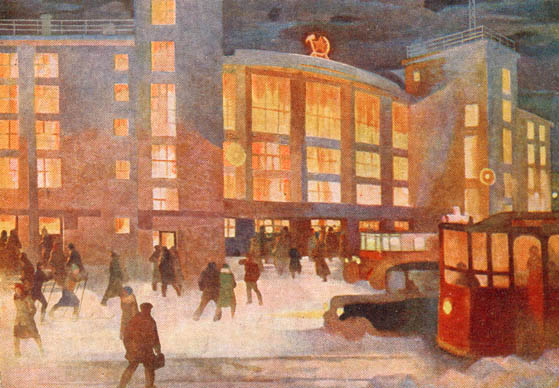
1932 New Years postcard created by N. I. Dormidontov
depicting "Moscow-Narva House of Culture" in Leningrad
[SOURCE]
<>1933:USSR Foreign Commissar Maksim Litvinov proposed
definition of "aggression" to League of Nations [ORW:198-9]
- League members were but little interested in the Soviet proposal, even though it
might be said to have defined aggression in such a way as to include international revolutionary activities,
EG=Comintern actions, as well as the traditional military actions of "states"
- Here's why = Litvinov's proposal stipulated that aggression
cannot be justified by "the alleged absence of certain attributes of state
organization" in the country attacked, or by "the establishment or maintenance
in any state of any political, economic or social order"
- Litvinov formulas carried the seeds of the notion of "peaceful co-existence" and
might have restrained both the new nation-state militarism of the time, as well as the actions of the
Comintern. Who can say? The Litvinov formula might have matured to a point of use
in the 21st-c. against international non-state "terrorism"
- The world, however, was spiraling in directions not likely to be altered by this or any other
"definition of aggression"
<>1933ja:1941; Eight pre-WW2 years
in which USA President Franklin D. Roosevelt [FDR] introduced his "New Deal"
- The New Deal was a vigorous series of emergency measures to combat the devastating consequences of the
Great Depression and, then in a steadier sequence of legislative acts, to restore and rebalance the US market economy
- English economist John Maynard Keynes was the most influential spokesperson for
New Deal style Anglo-American social democracy
- In the first two years of FDR's administration, these and other powerful measures were taken =
- 1933mr09:Emergency Banking Act
- 1933mr12:Agricultural Adjustment Act (1936:US Supreme Court declared AAA unconstitutional)
- 1933mr31:Civilian Conservation Corps Reforestation Relief Act established work
camps for 250,000 young men who were compensated with room and board plus $30/mo
salary. The CCC was much expanded with time
- 1933my12:Federal Emergency Relief Administration [FERA] created with
wide discretionary authority and headed up by FDR's most trusted administrative
lieutenant, Harry Hopkins
- A $500 million budget was devoted to state-administered rations of food and other commodities for those in desperate
need
- Its programs reached all the way to Alaska Territory
- 1933my18:Tennessee Valley Authority Act [TVA] issued from Congress rather than from the White House
(like the next three on this list)
- 1933my27:Federal Securities Act
- 1933je06:National Employment Service Act put those who needed
labor together with those who needed work
- 1933je12:Home Owners Refinancing Act allocated $2.2 billion to refinance about
one million mortgages on private homes
- 1933je16:Glass-Steagall Act created the Federal Deposit Insurance
Corporation [FDIC]
- Roosevelt's New Deal Administration drastically curtailed the number of bank failures
- 1933je16 was a big day for FDR =
- 1935:Social Security Act [TXT]
- 1935:1939; Works Progress Administration, later called Work Projects
Administration
- Headed by Harry Hopkins, the WPA lasted de jure until 1943, but anti-New Deal
Congressional opposition (fearing the spread of "socialism") reduced its operations to nearly nothing in 1939
- Before its abolition, WPA expended $11 billion to employ 8,500,000 otherwise unemployed in
useful public projects
- All across the land, WPA constructing 116,000 buildings, 78,000 bridges, 651,000 miles of
hard-surface road, and 800 modernized airports
- WPA also administered a Federal Art Project (creating 10,000 works of art, most
notably decorative murals in public buildings), Federal Writers' Project (which
produced a remarkable series of guidebooks, state by state), and a Federal
Theatre Project (sponsoring an estimated 4,000 performances a month during the
depression years) [Knight
Library Holdings]
- 1935:"Wagner Act" & National Labor Relations Board [NLRB] built on the principle that
membership or non-membership in a labor union cannot be a condition of employment
- This principle was first articulated in the act creating the NRA
- Labor unions, which had been considered something close to illegal political conspiracy in the
USA since the great Homestead Strike [ID], were now recognized.
- USA was the last of the "Western" nations to adopt modern welfare legislation
- It lagged behind Russia, imperial and Soviet
- English and USA tardiness in part influenced by "Social Darwinism" [ID],
in part by an obdurate US reluctance to vouchsafe a place for wage-labor
interests and organizations in the emerging modern industrialized political
economy. GO 1947:USA Taft-Hartley
- 1935my27:USA Supreme Court, however, declared the New Deal "National Industrial Recovery Act"
(a key element of the NRA plan) unconstitutional
- Still, the New Deal moved ahead in its struggle
against economic collapse
. EG=
- 1938: The Fair Labor Standards Act limited many forms of child labor. but not including agricultural labor
- 2015oc23:Mother Jones| "The Photos That Helped End Child Labor in the United States"
[PHOTOS]
- FDR redefined US liberalism, adding a large dose of what in Europe might be called social democracy
- However, some called it by other names which variously implied managerial bureaucratic
statism ("planned economy")
- In this case the planning was by a nationally elected government rather than self-administered corporate boards
or industrial CEOs [Howard Zinn, ed., New Deal Thought]
- Ex-Secretary of the Treasury Andrew Mellon remained until his death in 1937 a
bitter critic of FDR's "socialistic" New Deal
- The Roosevelt Administration began to pull the US capitalist economy out of the swamp into which it had
driven itself in the years of Mellon's service as Secretary of the Treasury
- Many whose chestnuts were thus pulled from the fire nurtured until their deaths an angry and thankless
hatred for the progressivism of the New Deal
- Those who thought this way felt it was sufficient condemnation of the "New Deal"
to equate it with the European (could we say "Western") social-democratic tradition
- Building on an inherited family fortune, Mellon individually achieved a
vigorous and astonishing half-century-plus business and public service career
\\
*--Rimlinger on Roosevelt's background [TXT |
also TXT
on the depression era | and TXT on Social
Security]
*--LBH,3:380-7
*--Jeff Shesol, Supreme Power: Franklin Roosevelt vs. the Supreme Court
<>1933ja11:USSR Machine Tractor Stations nationalized and
centrally administered large farm implements
*--Agriculture mechanized or industrialized as
agricultural collectivization advanced [SGv:334-6]
<>1933fe22:Germany, Berlin | D. Sefton Delmer described
Hitler's reaction to the burning of the Reichstag [Eye:507-9]
- From the beginning, the Nazis counted on its being the work of communists
- Thus they sought to exploit public concern over a terrorist act in order
to rouse the electorate to vote for their right-wing party
- The burning of the Reichstag appears now to have been a Nazi
setup, and it worked
- Trumped-up hysteria over terrorism
worked as an effective political tool
<>1933fe28:Nazis persuaded ineffective President Hindenburg to issue an ordinance
"for the protection of the people and state", on the basis of which Hitler was able to attack all political opposition to
his party in upcoming elections [DPH:420-1]
<>1933mr05:1945ap30; Adolf Hitler elected
head of German State, the beginning of 12-year-long "Thousand Year Reich" (the "Third Reich") in Nazi Germany
*--Ended with Hitler’s suicide and, two days later, the
surrender of Berlin to the Soviet Red Army and the end of WW2 in Europe
*--But over the next dozen years, Hitler reshaped European history
<>1933mr07:Austrian Premier Engelbert Dollfuss (Christian
Socialist Party) suspended parliamentary government, ousting Social Democrats
*--Dollfuss sought support from Fascist Italy, but he nonetheless tried to keep native-born Austrian Nazi Party
activists at arms length
*--Dollfuss assumed dictatorial power
\\
*--LOOP on "fascism" and "fascist"
<>1933mr24:German "Weimar Constitution" suspended in emergency
"enabling law" which gave Hitler unchecked authority "to relieve the distress of the people and the Reich"
*--Only the SDs voted against this measure
*--Liberalism appeared politically inert
*--Other laws followed in quick succession over the next few months in which Hitler carried
out his "revolution after power", establishing a dictatorship for himself and his Nazi Party
[DPH:421-4]
<>1933ap:USSR Metro-Vickers Trial
<>1933ap16:USSR | Sholokhov letter to Joseph Stalin re.
excesses of Collectivization [Tucker, Stalin in Power:194]
- Stalinist policy in this epoch could be compared and contrasted with English
policy much earlier, in the early industrial era
- Stalin's "primitive accumulation of capital" meant heartless squeezing of the domestic population
of the northern Eurasian continent in order to invest in centrally controlled economic modernization, all in a very
brief historical period, about one decade
- It meant a hurried transfer of the economic resources of Russians, and all other people under
direct Soviet rule, and especially the economic resources of traditional rural populations
- These resources were gathered into the hands of Party bureaucratic and managerial elites for purposes
of investment in Soviet industrial development, and the comfort of the gathering elite
- Relentless and cruel Collectivization disrupted and transformed forever the Russian rural landscape
- Historically earlier ("advanced" or "Western") English "primitive accumulation" was much slower and came from two sources
- First, common agricultural lands under traditional English village authority were "inclosed"
(or "enclosed") [ID] by landowning elites
- This meant the expropriation and concentration of economic resources into the hands of a
privileged English aristocracy and crown administration for their own comfort and their own expanded
opportunities for gain through investment in the dynamic new global market economy
- Thus a second form of English "primitive accumulation of capital" -- exploitation of
overseas imperial domains [EG] -- might be compared and
contrasted with Soviet exploitation of the several non-European regions of the USSR
- The destruction of traditional village ways and the introduction of modern, urban, mechanized
means of production has been variously painful everywhere it has happened, whether managed by entrepreneurial
aristocrats as in England, Commissars as in USSR or corporate executives as in USA
- In contrast to other moments in the history of the European "agricultural revolution"
as a prelude to industrialization, Soviet Collectivization was an intense and purposeful telescoping of
the misery and dislocation into a brief historical moment -- mostly in the first
five years of agricultural collectivization between 1927 and 1933 [ID]
- Soviet suffering and loss were staggering, even when judged by the standards of the
statist-managerial20th century, in fact, they were nearly
unprecedented in the modern history of domestic governmental policy
<>1933ap26:English ambassador to Germany Horace Rumbold
sent to London a clear description of what Hitler and his Nazi Party
meant for the wider world [BNE:270-3]. Political life darkened in central and eastern Europe
<>1933ap28:USSR Central Committee directive re. Communist
Party purge [Tucker, Stalin in Power:221-2 |
SGv:167-70]
- A political culture of denunciation crept into the everyday life of the
Soviet citizen [SWL:154-7; 207-81]
- Terror and purge trials now a feature of statist policy in the
Soviet Union
- These, along with forced economic modernization, became the central elements of what is called "Stalinism"
<>1933my10:German university students burned books which
the Nazis identified as objectionable. In Berlin, the local Associated Press bureau chief
Louis P. Lochner observed and reported on book burning [P20:177]
<>1933je:USA consul general at Berlin George S. Messersmith reported, "The
Nazis were after...unlimited territorial expansion" [P20:218]
<>1933se01:Germany | Nuremberg Nazi Party rally, became an
annual event of high theatre
- 1934:Nuremberg Nazi Party Rally recorded on film by Leni Riefenstahl Produktion,
Triumph of the Will | A film
commissioned by Adolph Hitler as the official record the Party Rally. Produced as an important piece of political
propaganda to introduce the new German leaders to the nation and to impress foreign audiences
- "Propaganda" was a positive word in the 19th century, describing the instruments, largely the printed
word, through which culture, especially religious doctrine, was spread ("propagated") to new adherents. As
governments and business enterprises ("ads") adopted propaganda techniques, expanding far beyond the printed
word in the 20th century, "propaganda" gained a new and negative meaning
- 1937:German supporter of Hitler who later broke with him, Kurt G.W. Ludecke, described The Demagogic Orator
[P20:168]
- USA medical doctor Alice Hamilton visited Nazi Germany and reported what she saw with precision and vitality =
To understand Hitler's enormous success with the young we must
understand what life has meant to the post-war generation in Germany, not only the children of the poor
but of the middle class as well. They were children during the years of the war when the food blockade kept
them half starved, when fathers were away at the front and mothers distracted with the effort to keep their
families fed. They came to manhood in a country which seemed to have no use for them
[P20:172 | PWT2:342-4]
<>1933se02:Winnipeg Free Press.
An article by Frank H. Williams on conditions in western Canada during the
Depression =
How families in stricken prairie areas have managed to live during
these trying times. Those too proud to accept relief have exhibited considerable
ingenuity in devising ways and means of augmenting the family income. For one
thing the old spinning wheel has come back into use again. In a small Manitoba
town a blacksmith took advantage of this sudden demand for spinning wheels to
revamp his shop into a spinning wheel factory and business boomed so quickly he
had to take on additional help. In the Edenwold district, east of Regina, one
family with butter and eggs to sell debated whether it was worth while to spend
the money for gasoline to take their produce to Regina. They solved the problem
by filling the old Model T Ford with cut firewood and the sale value of the wood
paid the expenses of the trip. Another farmer near Rouleau, Sask., despaired of
selling his hogs in the ordinary way for the price was at rock bottom. He
conceived the idea of manufacturing the entire hog into sausage and the word
spread that his sausage was good, so he was forced to go out and buy the hogs of
his neighbors. The spinning industry was revived because the price of wool was
so low as to make it unprofitable to sell. The government instructors quickly
adapted their training to the changed conditions and showed the farm
women how to make blankets out of the raw wool. Unable to buy new cars and by the same
token unable to buy gasoline for the old car, or even to buy a buggy, the
farmers have taken the engines out of their old Model T Fords, hitched a tongue
and whiffle-trees to the front axle and called it a "Bennett" buggy. Others have
put a seat on the front wheels of a Model T and have christened this an
"Anderson" cart. Probably Premiers Bennett and Anderson will not feel flattered
at the use of their names in this connection, but it is a reflection of the
spirit of the times.... One item of expense the farmer has eliminated is that of
flour. With thousands of bushels in his granaries that the market price doomed
to remain there, the farmer took five or ten bushels to the small grist mill for
his own flour. If he had no money to pay for the milling he left the bran and
shorts with the miller in payment. The average farm family has limited its
purchases to sugar and tea, for which no substitutes can be found on the land. A
few dozen eggs or a few pounds of butter can take care of these requirements.
Some enterprising businessmen, such as local theatre and skating rink managers
offered to take wheat and barley as payment for admission prices. They tell the
story of a Manitoba farmer who met two acquaintances outside a beer parlor.
"Lets go in for a beer," he suggested. The three quaffed their bottles of beer
and when the host arose to go he turned to the hotel-keeper. "I'll bring you ten
bushels of barley to pay for that." he said. Until organized relief measures
came to the aid of the farmer the fuel problem was his greatest worry. You can
drive a day at a time in some parts of Saskatchewan and never see a tree or a
bush. Those farmers burned coal in the good days, but in their necessity they
had no money with which to buy coal. So they burned barley. But they have caught
a vision of better times, with the upward trend of the wheat market. Those
courageous enough to hold their crop over from last year have sold it this
summer, mostly in small lots, for a carload shipment would excite comment and
perhaps invoke a seizure order from the bank, the implement agent or the
mortgage company. So they have sold a lot of their grain a hundred bushels at a
time and they are paying their small debts, preferably their store bills. They
feel the banks, the implement companies and the mortgage companies can wait a
bit longer for their money.... There will be money to spend in western Canada
this year if the market price of grain keeps up. The farmer is starved for
everything that contributes to the comfort and well-being of his family and as
soon as he gets some surplus cash he will turn it loose into the avenues of
trade .... [SOURCE]
<>1933oc14:Germany,
under Nazi rule,
withdrew from League of Nations and from its Disarmament
Conference [DPH:472-3]
*--The
Disarmament Conference was just then
reconvening. Perhaps we should say "just then coming too" after being knocked
out in its first phase
<>1933no:USA-USSR diplomatic relations
restored based on USA formal recognition of USSR that summer [Related documents = RFP2,2:59-67]
- Fifteen years of non-recognition and,
in general, USA isolationism (though only in
relationship to post-WW1 European problems) were now coming to a close
- A perception spread that the world was dividing along lines perceived as "progressive" on one side
and "fascistic" on the other
- Reluctantly FDR's administration saw itself forced to position itself in this starkly bifurcating world
- Thoughts of expanding Japan were not far from FDR's mind [EG]
- However, the devastated US economy still placed severe limits on just how
effective US involvement could be
\\
*--LOOP on "facism" and "fascist"
<>1934+: China in the grip of a persistent and militarized revolutionary movements
engaged in a complex civil war situation, soon to be expanded into global WW2
- At the heart of events were the armies and cadre-party activists who had inherited the Republic of China
after Sun Yat-sen's death [ID]
- After 1927, a rival revolutionary force arose among them and came to fruition in the People's Liberation
Army [PLA], a peasant army representing the more "rural-oriented" if not always peasant activists in the Chinese
Communist Party
- The PLA was ready to fight both international imperialist aggressors -- EG=Japan -- and also, after 1927,
the domestic "national bourgeoisie" -- EG=Republic of China when it fell under the control of General Chiang
Kai-shek and his political party, the Guomindang [KMT]
- Revolutionary struggle is often a form of "asymmetric warfare" in which rebels at war with dominant
forces have to devise special tactics. These tactics were a part of Mao's growing stature and influence
among Communist militants in the emerging People's Liberation Army [PLA]
- The PLA was inspired by what it took to be a world-revolutionary Comintern, yet the Comintern,
with its headquarters in Moscow, was anything but sure that a communist-inspired peasant army was the
right thing for China (or for the USSR) at just this time [ID]
- The Chinese Communist Party was led by Zhou Enlai in the big industrial city Shanghai, and by Mao
Zedong, who was under the unclear influence of the Comintern and led the party out on the field of battle
- In 1934 the PLA was in drastic retreat, a famous and almost mythic "Long March" into the remote
NE corners of China
- Journalist Edgar Snow traveled into those remote PLA camps where he met and interviewed Mao and
described the "Long March" [E-TXT]
\\
*--Wki#1 on Long March |
Wiki#2 on asymmetric warfare |
Wiki#3 and
Wiki#4 on "People's War"
and the use of force in politics
*2006:Hong Kong,Chinese University:|>Barnouin,Barbara, and Changgen Yu|_Zhou Enlai: A Political Life|
E-TXT | The
revolutionary years, 1924-1949 = pp. 31-118, esp. pp.67-92 [This electronic text skips pp. 56-66, 70, and 93-113]
but it still serves to remind us not to let the historic image of Mao
to overshadow Zhou Enlai
*--LOOP on Chinese Revolution
<>1934:English philosophical historian Arnold Toynbee
helped make sense out of confusing times for countless readers when he first published
A Study of History [BMC1:688-94 | BMC4:782-8]
*--Toynbee, in a time of decline, helped
popularize the notion of "The West" as an ascendant civilization
[IE=northwestern Europe and its North American off-shoot]
*--The concept "The West" sprouted
and grew over the previous half-century
*--Then the concept "The West"
came to full blossom in the half century of Cold War at the end of the 20th century
<>1934:French
artist André Breton, What is Surrealism? [CWC:368-86]
*--Breton rejected Tristan Tzara's "Dada" movement, with its
influential two-decade-long emphasis on the
unconscious, chaotic and irrational elements of creativity in the fine arts
<>1934:1937; German classicist Werner Jaeger,
Paideia: die Formung des griechischen Menschen (3 volumes, Berlin and
Leipzig:1934-1937; English translation)
\\
*--A student remembers her professor and considers his legacy
[W]
<>1934:German physicist and Nobel Laureate Johannes
Stark urged scientists to embrace Nazi racist doctrine and pitted "Jewish Science"
versus "German Science" [P20:175]
*1934:German-born (USA émigré) theoretical physicist
Albert Einstein, "What is the Theory of Relativity?" [BPE:723-6]
*1934:Soviet struggle to establish proper "Marxist" science of agriculture
increasingly came under authority of ideological hacks
\\
*--David Joravsky, "The Vavilov Brothers"
<>1934:Soviet Psychologist Lev Vygotskii
published Myshlenie i rech [translated as Thinking and speech about the
inter-relationship of language development and thought
- 1962:English translation published as Thought
and Language [Mysl' i iazyk]
- Thought builds on language and the two develop socially
<>1934:Swiss psychiatrist Carl Jung (1875-) wrote "Archetypes of
the Collective Unconscious" [BMC4:718-22 (includes excerpt
from later work)]
*--Selections from Jung's works
[TXT#1 |
TXT#2]
*1908:Jung met Freud [ID] and was thrown into
the psychological movement of the early 20th century. He soon found his own voice and broke
with Freud. For one thing, he did not accept the nearly exclusively sexual inclination of
Freudian analysis. He was more mystical, religious and anthropological in his psychology
*--Jung sought to understand what he called "the collective unconscious", a cluster of archetypical
emotions, images and inclinations that helped identify the individual within the larger collective
of general human consciousness and subconscious
\\
*--[W#1 | W#2]
<>1934:USA public intellectual Lewis Mumford published
Technics and
Civilization [CCS,2:18-39]
<>1934:1935; USA| Paul Robeson was an athlete,
scholar, actor, singer, and increasingly an activist on behalf of blacks and other oppressed minorities
[Archives]
*--In this year, Robeson accepted an invitation from
the film-maker Sergei Eisenstein to visit the USSR
*--This was the beginning of a complex and troubled epoch of activism in Robeson's life
[W]
*--Robeson sang "Sometimes I feel like a Fatherless Child" on the sound-track of a Soviet propaganda cartoon [YouTube]
\\
*--Wki
<>1934wi:French political crisis threatened
possibility of right-wing takeover [DPH:328-36]
<>1934ja:Stalin speech on relations of USSR with
Capitalist States represented a reasonably unambiguous statement of Stalinist
foreign policy in the aftermath of Nazi victory in Germany [RFP2,1:118-28 |
ORW:205-7]
<>1934fe04:USA New Deal agency,
FERA [ID], received report on the feasibility of
establishing an agricultural colony in the Alaska Matanuska Valley
- FDR ordered an end to the spontaneous settlement that had been filling Alaska habitable
places since the days of Russian dominion
- The Valley experienced 110 frost-free days. Sunshine was ample, 24 hours worth on June 21
- Three years earlier, USA Department of Agriculture, working closely with the Alaska Railroad, supported
experimental stations in Fairbanks and the Matanuska Valley. But by 1934, only
about 100 families could be found scattered in the Valley
- FDR now authorized Harry Hopkins to create a New Deal colony, the Alaska Rural Rehabilitation
Corporation, and to fund it out of the Federal Treasury until it got on its own
feet. FERA seized all previously abandoned claims to Matanuska land and began to
design and build a colonial settlement and to recruit settlers from
depression-hit Minnesota, Wisconsin and Michigan
- 1935my22:Seward-Palmer train delivered the second group of immigrants. Now each
of the 200 resettled families, by lot, was assigned a 40-acre plot
- 1935je06:Anchorage Daily Times editorialized, "It would be little less than a
Siberian exile to send decent Americans to Alaska"
- 1935oc:Twenty-six families had given up and had the way paid back home to "the
lower 48" (Alaskans often say "outside"). But 140 homes had been built, and 40
more were under construction. US government paid $7-8,000 for each house and
laid a mortgage on the householders. A Community Center, warehouse, dormitory,
and power plant were completed. A Community Council was organized among the
immigrants, made up of 18 members (1 man and 1 woman from each of the 9 camps)
- 1936fa:Twenty-room school under construction
- 1937fe:A year and a half into its existence and 130 babies had been born to the
colony
- The Matanuska Valley Farmers Cooperative was up and running, modeled on
WPA [ID] designs
- 1938se03:FERA administration ended, and the Matanuska Valley Civic Association
assumed the responsibilities of the Alaska Rural Rehabilitation Corporation
- 1940jy09:Anchorage Daily News reported that the government had invested
$4,169,370 in the Valley project
- As WW2 loomed, Federal military projects
(e.g., construction of Fort Richardson, then later the construction of the
Alaska Highway) further infused public tax dollars into the Valley
- By the end of WW2, US governmental expenditures in the Valley approached $6 million
- Into the 21st century, citizen's of this valley count themselves among
the most stalwart opponents of government intervention into the lives of
citizens. "Get the government off our backs" these heirs of the Roosevelt
New Deal are fond of saying
\\
*--Orlando W. Miller, The Frontier in
Alaska and the Matanuska Colony
*--T. C. Feldman, The Federal Colonization Project in the Matanuska Valley
(U of Washington MA thesis) ORBIS
*--Clarence C. Hulley, Alaska...
<>1934fe05:Italian Fascist state
complete with Law on Corporations [DPH:401-2]
\\
*--LOOP on "fascism" and "fascist"
<>1934fe10:USSR | Rules of the Communist Party [DPH:441-5]
<>1934ap:Austrian strong-man Dollfuss, after crushing a
Social Democratic uprising against his dictatorship, declared his
government an authoritarian or "corporate state" with a constitution drafted by
Austrian Nazis
*--Julius Deutsch, Commander of the Schutzbund, a private Social Democratic army
defeated by Dollfuss, gave an eyewitness account of the brief
Vienna-based civil war, Destruction of Austrian Socialism [P20:185]
<>1934ap:USA commercial attaché in Berlin, Douglas Miller,
reported to consul general Messersmith that "The Nazis were determined to secure more power and more
territory in Europe" [P20:219]
<>1934my13:USSR | Russian poet Osip Mandelshtam arrested,
as described by his wife Nedezhda Mandelshtam [Eye:510-11]
<>1934je08:USSR Decree emphasized dangers of treason [ORW:207-8]
<>1934je30:Germany experienced "the Night of the Long
Knives" in which Nazis began to "purge" SA [Sturm Abteilung,
storm troopers, a paramilitary wing of the Nazi Party]
- Hitler ordered the murder of
hundreds of leaders whose radical ambitions threatened Hitler's leadership but also
challenged the regular German army
- 1934jy03:Nazi authorities passed Law Concerning Measures for the Defense of the State
which served post facto to legitimize the "Long Knives" murders and to propel SS
leaders to top positions of power and influence
- Heinrich Himmler commanded the SS [Schutzstaffel,
defense echelon]
- Himmler and his elite military/police units thrived as repression became the heart of
the Nazi regime
- This fearsome truth was unclear only to those who thought violence directed against leftists, liberals,
gypsies, homosexuals and Jews was justifiable
\\
*--Pierre Ayçoberry, The Social
History of the Third Reich, 1933-1945 explores the roots of Nazi success as it molded social
acceptance of its repressive policies. Neither professional, intellectual, nor moral conscience
prevented individuals and groups from compliance with Nazi policy. By this time, German civil
society was like a "kicked-in anthill"
<>1934jy10:USSR upgraded its NKVD [Narodnyi
komissariat vnutrennikh del; Interior Commissariat, with heavy "police"
overtones] [SGv:254-5]
*--Compare with earlier Cheka & OGPU, and
with later MVD. These institutional arrangements were essential features of Stalinism
*--Soviet theorists worked on new interpretations of the Marxist concept of the "withering away"
of the state and law [Jaworskyj:303-14]
*--Compare with treatment of this topic a quarter-century later
<>1934jy25:Austrian dictator
Dollfuss assassinated by local Nazis as they tried unsuccessfully to seize power
*--Finally Hitler Germany moved in to complete what the local Nazis could not
finish on their own
<>1934au:USSR Union of Soviet Writers held its first Congress
[SAC NARRATIVE EXTENSION]
- "Socialist Realism" became state doctrine and an essential ingredient of Stalinism
- The most famous living Russian writer, Maksim Gorky, who never again reached the levels of literary quality and
productivity achieved between 1898 and 1913, was a leading figure at this Congress
- Party intrusion into cultural life increased in the two years prior to this official act [SWL:77-89]
- Party apparatchik Andrei Zhdanov on literature & the arts [RRC1,3:693-5]
- Party intrusion into cultural life extended the managerial authority of
Party "cadres" [SWL:134-53]
- Years later, Russian poet Yevgenii Yevtushenko described Literature as Propaganda [P20:129]
- In this year of the Soviet state move to terminate the great "Silver Age" of
Russian culture, Andrei Belyi died, but not before he issued his belated and fruitless defense of "symbolism",
Masterstvo Gogolia [Gogol's workshop]
- As in USSR, so also in USA, certain cultural elites took steps to protect the public from the evil that
might arise from spontaneous arts, especially the pop-arts [SAC NARRATIVE EXTENSION]
- In USA and USSR, in different ways, censorship, propaganda, and commercial advertising became entwined in the rise
of commercial-culture pop-arts and socialist realism
\\
*--Thomas Doherty, Pre-Code Hollywood:
Sex, Immorality and Insurrection in American Cinema, 1930-1934
<>1934se18:USSR
became a member of the League of Nations after 30
member-states offered invitation to join, plus membership on the Permanent Council
<>1934de01:Decree on the assassination of
Leningrad Communist Party boss, Sergei Kirov, a popular rival to Stalin [SGv:251-3]
*--Central Executive Committee issued order to track down terrorists [DPH:445]
Later the world learned of Stalin's complicity in this act of political
terror
<>1935:Russian Christian philosopher in exile from the
USSR, Nikolai Berdiaev, described how Christian civilization
was being destroyed by Nazism, Communism and other forms of "collective demoniac
possession"
*--Only Christian piety (active struggle for human dignity and social
justice) could save Europe and all mankind, Modern Ideologies at Variance with
Christianity [P20:209]
*--Berdiaev, "Socialism as Religion" [RRS:105-34]
<>1935:Turkey |
Kemal Atatürk's Republican People's Party program [SPE2:861-2]
*--By this time Turkey had adopted features of the Stalinist five-year plans,
emphasizing state controlled and planned heavy industrial development, and leaning heavily on an
antiquated agricultural economy
*--Hostile to the USSR in foreign affairs, Kemal's Turkey nonetheless imitated the Soviet domestic economy
*--Turkey survived into the middle of the 20th century
as an independent state as a result of the efforts of Kemal and the "Young Turks"
*--The movement that came to be known as "the young Turks" got under
way in the years before the collapse of the Ottoman Empire
<>1935:USA journalist Eugene Lyons tried to explain
the Soviet Union in
Moscow Carrousel
\\
*--Whitman Bassow,
Moscow
Correspondents: Reporting on Russia from the Revolution to Glasnost
<>1935:1936; Soviet writers Ilia Ilf and
Evgenyi Petrov, famous for their biting satirical prose works, traveled across
USA and wrote an account, Little Golden
America (also a later 1974 translation)
- They were especially struck by the mistreatment of blacks
- They saw this as a cultural tragedy, as well as a human-rights scandal
- If the USA did not have its blacks, it would be a very dull place, they said
- In these years "jazz" was sweeping the global cultural horizon
- Maxim Gorky was appalled by what
he took to be the savage degeneracy of jazz [as quoted in S. Frederick
Starr, Hot and Cool:91]
- Conventional sensibilities were shocked by the pop-arts everywhere
they appeared on the scene
\\
*--Maxim Matusevich, "An Exotic Subversive: Africa, Africans and the Soviet
Everyday" [TXT]
<>1935fe17:USSR Seventh Congress of Soviets passed law
about the kolkhoz [kollektivnoe khoziaistvo; collective farm] which joined
Collectivization with Five-year Plans for industrialization and
promoted "the liquidation of the distinction between town and countryside" [SGv:337f]
- The small family farm did not
seem to have much of a future in the industrializing 20th century
- Discontent with collective farms [kolkhozy] was rampant [SWL:282-355]
Chaos at kolkhoz market described [SWL:254-5]
- Congress heard speech by A.O. Avdienko which extolled The Cult of Stalin [P20:128]
- Since Stalin's 50th birthday a few years earlier signs of
the so-called "Cult of Personality" appeared with greater frequency
- A better translation of kul’t lichnosti might be "Cult of the Individual"
- This "cult" substituted the single individual for the group, i.e., substituted Stalin for the Party
- Stalin increasingly put himself above the Party, and he put his Party above all
else, creating "Stalinism" or Soviet-style "totalitarianism"
- In this year the 1935 General plan for the reconstruction of Moscow
overshadowed all the far-reaching architectural projections of the first
"five year plans" [pix]
- The plan envisaged the city as a unified system of highways, squares and embankments with
unique buildings, embodying the ideas and achievements of socialism
- The plan paid little attention to preservation of historical heritage
- Architects of diverse orientations and schools of thought were invited to submit projects
toward the realization of this grand design
- Particularly noteworthy were the projects for a Palace of Soviets (1931-1933)
[ W#1 |
W#2 ]
- The People's Commissariat of Heavy Industry (1934) [ W#1 |
W#2 |
W#3 ]
- Neither of these structures was built, but the heroic Stalinist architectural projects
had a noticeable influence on the development of Moscow
- [W--Follow the right arrow for more examples]
- 2017mr08:The Guardian| "Unbuilt Moscow: the 'new Soviet' city that never was – in pictures "
[E-TXT]
\\
*2016je15:Guardian| "Demolition of Moscow 'workers' villages' raises fears for avant garde heritage"
[E-TXT]
<>1935mr16:Germany denounced military clauses
of the Versailles Treaty and announced its plans to rearm [DPH:473-6]
- Europeans tried to coordinate their relationship to thenewly
rearming Nazi Germany [DPH:476-9]
- But the faulty Versailles settlement continued to crumble
- 1935:USA retired General Butler expanded an earlier popular speech into a book
of the same title = War Is A Racket
<>1935my25:Stalin disbanded the Society of Old Bolsheviks [Obshchestvo
starykh bol'shevikov] & its printing/publishing establishment
<>1935au:Soviet "Stakhanovite" program introduced for
industrial wage-labor
- The Stakhanovite program encouraged and rewarded a select few examples of Herculean accomplishment on the
worksite during the implementation of the five-year plans
- USA welder John Scott left Depression-era joblessness in USA and sought
his fortune in the construction and operation of the massive Magnitogorsk steel
mills in the Five-Year-Plan-era in the USSR
<>1935au:Moscow | Seventh World Congress of the Communist
International [RFP2,2:198-205]
*--Comintern strained relations with USA to the extreme [RFP2,2:67-72]
<>1935se13:German Nazi Party rally in Nuremberg | Minister of
Enlightenment and Propaganda Joseph Goebbels delivered speech in which he endeavored to distinguish National Socialist
(Nazi) rule in Germany from Communist rule in the USSR [TXT]
- For two years the mission of Goebbels was to shape the public image of his boss Adolf Hitler and his Nazi
Reich [W]
- 1933au18:Goebbels speech "Radio as the Eighth Great Power" [TXT]
- GOEBBELS' EXPERIMENT [FLM] uses original footage
to illustrate quotations from Goebbels' diaries from the 1920s until his death during the 1945 Soviet siege of Berlin,
a first-hand account of the rise and fall of the Nazi Party from the perspective of one central figure
- Electronic media significantly enhanced the power of "positive censorship" =
Positive censorship is a form of official propaganda which PROMOTES messages which are approved by the powers that be (officials and other "knowledge" authorities,
or media "owners")
This is the historical meaning of "propaganda", as in "propagating the faith"
"Negative censorship" SUPPRESSES messages which are disapproved by the powers that be
- The 20th-century world saw a remarkable expansion of positive censorship in its effort to monopolize
or flood key discourse environments with messages the suited the interests of the powers that be
- In liberal European environments
this seldom required serious effort to suppress other messages, just to drown
them out. All that was needed was to marginalize and/or mischaracterize disapproved messages
[EG#1(USSR) | EG#2(USA)]
\\
*--LOOP on Censorship
<>1935:Germany| A series of Nazi
laws on racial purity were put in force [DPH:424-6]
*--German textbook by Jakob Graf explained Heredity and Racial Biology for Students
[P20:177]
*1933ap01:1938au05:Berlin. German medical doctor Hertha Nathorff (Albert Einstein's
niece) kept a diary record of Jewish persecution, A German Jewish Doctor's Diary [P20:179]
*--Marta Appel described her similar experiences in Dortmund, Memoirs of a German Jewish Woman
[P20:181]
<>1936:1937; French coalition of socialist, communist and other left
political parties joined in a movement called "The Popular Front"
<>1936:USA socialist leader Norman Thomas published
After the New
Deal, What? in which he urged the nation to a fuller realization of
workers' democracy [Excerpts RWP1,1:86-93]
<>1936:Netherlands historian
Johan Huizinga published his gloomy vision of the future with a warning that European
civilization was at a breaking point: The Shadow of Tomorrow [CCS,2:463-484]
<>1936:French political philosopher Elie Halévy
(1870-1937) put a fierce polemical edge to his liberal social and economic views in
The era of tyrannies: Essays on socialism and war
(1965:English translation)
- Halévy was increasingly convinced that all state involvement in economic life (from communism to
fascism) equaled socialism
- And socialism was the source of militaristic tyranny everywhere in Europe, beginning with its earliest
comprehensive theorist, Saint-Simon [ID]
- Halévy dubbed Louis Napoleon (Napoleon III) "Saint-Simon on
horseback" [ID]
- But Halévy
also perceived that the essential Saint-Simonian "managerial"
quality of this "era of tyrannies" was expressed not just in economics but also
in political institutions and business organization
\\
*--LOOP on "facism" and "fascist"
<>1936:English economic theorist
John Maynard Keynes addressed problems of
collapsed market economies in The General Theory of Employment,
Interest & Money[TXT]
*--The brief opening chapter summarized his argument [bold face and hypertext hop supplied by SAC editor] =
I HAVE called this book the General Theory of Employment, Interest and Money, placing
the emphasis on the prefix general. The object of such a title is to contrast the
character of my arguments and conclusions with those of the classical theory of the
subject, upon which I was brought up and which dominates the economic thought, both practical
and theoretical, of the governing and academic classes of this [post-WW1] generation, as it
has for a hundred years past. I shall argue that the postulates of the classical
theory [ID] are applicable to a special case only
and not to the general case, the situation which it assumes being a limiting point of the
possible positions of equilibrium [ID].
Moreover, the characteristics of the special case assumed by the classical theory happen not to be
those of the economic society [in] which we actually live, with the result that its teaching is
misleading and disastrous if we attempt to apply it to the facts of [our contemporary] experience
*--The 24th and final chapter summarized the broader implications of his general theory
[E-TXT]
*--Keynes shifted attention from production and distribution of commodities to the complex role of money in this process
*--He sought ways to overcome the central human weaknesses of modern industrial economies = unemployment and great
disparities of wealth within the industrial social structure
*--John Maynard Keynes emphasized the financial underpinnings of modern industrial economies
\\
*--Wki !
*--LOOP on "finances"
<>1936:German "Frankfurt School" member
Walter Benjamin published "The Work of Art in the Age of Mechanical
Reproduction" [CWC:413-33], an effort to subject
industrial age pop-arts to serious theoretical analysis
<>1936:Paris | Russian
émigré philosopher Leon Shestov (pseudonym of Lev
Isaakovich Shvartsman, 1866-1938) contributed to the growth of "existentialist"
philosophy, particularly Christian existentialism, with his
Kierkegaard et la philosophie existentielle [Edie,3:227f]
<>1936ja28:Pravda
article, "Muddle Instead of Music" attacked 29-year-old Dmitrii Shostakovich's
opera "Lady Macbeth of Mtsensk" [Alan
Pavlik précis on article and comments]
*--The attack was possibly written by Stalin, certainly under
the direct influence of his views
*--Compare with later experience of USA composer Aaron Copland
\\
*1989mr:NewRepublic| Richard Taruskin on Shostakovich, questioning some popular, late-Cold-War views
on the composer's sufferings in USSR
[E-TXT]
<>1936mr07:German Nazi troops occupied left and right
banks of Rhine River, demilitarized by the Versailles
settlement, now all but nullified by Nazi action
*--French reaction [BNE:273-5]
*--Hitler continued into WW2 to justify Nazi aggression as proper
or natural response to the Versailles settlement
imposed on Germany 17 years earlier
<>1936ap:Ethiopia [Abyssinia] defeated by Italian
Fascist army after a half-year struggle
- Events described by émigré White Russian adviser to Ethiopian troops, Fedor
Konovalov [ID] [TXT]
- USA journalist with Mussolini's forces, Herbert Matthews also left
description [Eye:513-17 includes Konovalov excerpt]
- 1935oc02:Rome | In the previous fall, Benito Mussolini addressed crowd about
Italian invasion of Ethiopia [P20:221]
- 1936je30:Geneva. League of Nations heard Haile Selassie report on the
destruction of his Ethiopia at Fascist Italy'
s hands [P20:223]
- European reactions to Italian invasion of Ethiopia were centered in
League of Nations economic sanctions feebly imposed
on Italy [DPH:479-85]
1938ja02:Rome. L'Aquilone
Weekly propaganda magazine for young people,
intended to spark their interest in flying
and to call attention to the prowess of Italian pilots
[SOURCE]
The Italian Fascist movement, founded 17 years earlier, was
solidly in power and ready for any challenge, having now "erased" the
humiliation of earlier defeat at the hands of
Ethiopia
Europe was showing itself unwilling or unable to keep the peace, and then came the
Spanish Civil War which ended in overthrow of the liberal Spanish
Republic and victory of fascist militarists there =
<>1936au:1938se; Spanish
Civil War; General Francisco Franco and Falange (fascist militarists) defeated legitimate Republican
government
- World-wide "progressive" forces (including USSR and volunteers from USA in their "Lincoln
Brigade") opposed General Franco [DPH:488-98]
- Fascist Italy and Nazi Germany supported General Franco
- USA and other European governments stood aside from the conflict, in many cases hindering
citizens who sought to support the besieged Spanish Republic
- 1937jy06:USA Abraham Lincoln Brigade volunteer in Spain, Canute Frankson, wrote Letter
from an African-American Volunteer [P20:191]
- Bitter song of protest against USA persecution of Americans who sought at this time to
fight against Fascism, "A Hero of the Wrong War" [TXT]
- The Spanish Civil War was described by eyewitnesses
- English pundit of future world fame, George Orwell (pen-name of Eric Arthur Blair, 1903-1950),
described his volunteer effort to oppose fascism [Eye:518-23, 25-6]
- English Labour Party activist Fred Thomas
described his motives for going to fight against Franco in Spain [P20:189]
- English Communist (later a notable apostate from the Communist Party)
Arthur Koestler was imprisoned in Spain and released just before he
was scheduled to be executed. He described his experience [P20:193]
- At the opening of the school year at Salamanca University in October, 1936, Rector
Miguel de Unamuno was affronted by a falangist military leader's attack on Basque identity
accompanied by the shouted fascist slogan "Viva la Muerte!" [Long live death]
- In his speech, Unamuno said about his university,
This is the temple of the intellect. And I am its high
priest. It is you who profane its sacred precincts. You will win, because you have more
than enough brute force. But you will not convince. For to convince you need to persuade.
And in order to persuade you would need what you lack: Reason and Right in the struggle. I
consider it futile to exhort you to think of Spain. I have done.
Unamuno was put under house arrest and soon died there, an early figure in the history of 20th century
dissent [Hugh Thomas, The Spanish Civil War:353-5]
- 1937ap26:Basque market town Guernica in NW Spain the site of Nazi Luftwaffe [German airforce] bombing, an
experiment to determine the effectiveness of saturation aerial bombing of a city, a sorrowful premonition of WW2
[W]
- The great Spanish artist Pablo Picasso devoted a giant canvas to this quintessential 20th-century event
[Wki]
\\
*2016my12=The Guardian| "Spain in Our Hearts: Americans in the Spanish Civil War 1936-1939 by Adam Hochschild – review"
[E-TXT]
*--Website Franco bio.
w/ brief account of events in Spain into the 1960s
*--Malefakis.GUERRA
*--LOOP on "fascist" and "fascism"
<>1936au:1938mr;
Purge trials snared first central leaders of 1917 Soviet Revolution
and terminated their political careers, beginning w/Grigorii
Zinoviev and Leo Kamenev
*--Stalin was eradicating old Bolsheviks
*--As Stalin's power became more secure, the vozhd [leader, boss] became more harsh
*--As an "ism", Stalinism appears less a way to achieve or protect power than a way to exercise power
\\
*2004:Russian movie tries to capture the atmosphere of interpersonal relationships among top leaders at the time of
a banquet hosted by Stalin down in Georgia, his native land = Piry
Valtasara, ili, Noch' so Stalinym [Baltazar's feasts, or, The night with Stalin]
<>1936se25:USSR | Stalin and
Zhdanov sent telegram to Politbiuro
about NKVD [Narodnyi komissariat vnutrennikh del, People's Commissariat of Internal Affairs --
a secret, political police agency] [DPH:204-05]
<>1936no25:Berlin | Germany and
Japan signed the Anti-Comintern Pact
[RFP2,3:3-4 | DPH:487-8]
*--The complete "Axis" alliance followed within the next four years
<>1936de:USSR Third Constitution (Stalin Constitution)
[RRC1,3:600-14 | CCC2,2:1194-1203 |
DPH:446-9]
<>1937:England, Oxford | World Ecumenical Conference
passed resolutions on market economies that built significantly on earlier church
pronouncements on economic questions (1908:USA Federal Council of Churches of Christ in
America and its 1932 depression-era update) [CCC2,2:996-1011]
- As WW2 loomed on the horizon throughout Europe and North America, vigorous public discussion was underway
and active state measures were being taken to find ways to promote recovery from the great
post-WW1 world-wide collapse of market economies
- 1938:English commission, Pilgrim Trust, reported on the human impact of the Great
Depression, Men Without Work [P20:158]
- Orwell described English poverty with moving, sober,
descriptive honesty in The Road to Wigan Pier
[BPE:700-17]
- 1937:English author Rebecca West
[ID] wrote a remarkable travelogue of her visit to the Balkan Peninsula =
Black Lamb and Grey Falcon (1941:published)
- As she traveled and as she wrote about it, every line reflected a sensitive
conservative anxiety about the great financial crisis of the day and the rise of fascism
- The very roots of the civilization she loved and identified with were threatened
- She was mindful also of the rich history of "the Byzantine commonwealth" [ID]
as it intersected with disturbing current events
\\
*--LOOP on "fascist" and "fascism"
<>1937:German theoretical physicist Max Planck
(1858-1947) delivered a lecture in which he endeavored to explain the relationship between religion
and the natural sciences [BMC1:604-6]
- Plank was well beyond the years of his greatest contributions to modern science, the central notions
of "quantum physics" [ID],
for which he was awarded the Nobel Prize in 1918
- But he now endeavored to situate science in a comfortable position
within the wider realm of human thought or mentality
- 1941:Another lecture, on the meaning and limits of contemporary exact sciences
[BMC1:598-603 | BMC4:694-9]
- The broader "philosophical" implications of the "Second Law of
Thermodynamics" in physics had by the early years of the 20th-century helped undermine
the universal presumption of "progress" in the vaster environment
- Thus much of the impulse to see science as
a new source of comfort and absolute truth was also
undermined [EG]
<>1937:Italian Communist writer
Ignazio Silone resisted Fascism but more generally
became a dissenter from all ideologies
*--His novels, for example, Bread and Wine,
gave expression to a personal disillusionment but also to a new affirmation of
socialist idealism and Christian ethics
\\
*--LOOP on "fascist" and "fascism"
<>1937:Russian
émigré religious philosopher Nikolai Berdiaev,
published Origin of Russian Communism
[cf. KMM:251-7]
<>1937ja23:Stalinist purge trials of Radek, Piatakov, etc
[RRC1,3:664-73 | Tucker,Stalin in Power:394f!]
<>1937ap:League
of Nations Disarmament Conference suspended its
inconclusive 5-year-long operations as Japan
stepped up its military aggression in China
*--After 18 years of existence, the
League of Nations was an obvious failure
*--It was not formally dismantled until the end of WW2 when the second great effort at
trans-nation-state governance, the United Nations Organization, was created
[UNO LOOP]
<>1937my:je;
Stalinist purge trial of Marshal
Tukhachevskii & other Red Army officers
<>1937jy15:Moscow-Volga Canal opened
<>1938:1941; USSR Five-year Plan3
*--The third five-year plan built on a cruel decade of forced "modernization"
<>1938:Netherlands cultural historian
Johan Huizinga, Homo Ludens: Proeve eener bepaling van het spel-element der cultur
(1949:English translation, Homo Ludens: A Study of the Play-Element in Culture) [UO=CB151.H815 |
E-TXT#1 |
E-TXT#2 |
CCS,1:83-110]
\\
*--[W]
<>1938ja19:Stalinist purge trials officially
said to be over [SGv:171-5]. But they were not
<>1938ap30:Spanish Republican Government, about to be
defeated by Franco's fascist armies in their civil war,
issued war aims and guiding "liberal" principles,
including guarantee of property but "within limits prescribed by the higher interest
of the nation"; agrarian reform in which "the peasant will own the land he
tills"; protection of wage-labor rights through "up-to-date
social legislation"; welfare measures, etc.
[DPH:491-2]
\\
*--LOOP on "fascist" and "fascism"
<>1938mr:Stalinist purge trials ended on dramatic note with
Nikolai Bukharin, Rykov, Krestinskii, Rakovskii, Yagoda (head of NKVD), etc.
[Senn,2:]
- Brief excerpt from Bukharin's last plea at his purge trial [TXT]
- A relevant retrospective quote from Trotsky on the theme of opposition within the
Communist Party [TXT]
- General Procurer and chief prosecutor of Stalinist law, Andrei Vyshinskii
(1883-1954), offered his concept of a "new" approach to socialist law [Jaworskyj:324-29]
- On a broader scale, G. Gak offered his thoughts on the Marxist-Leninist
theory of truth [ibid:333-41], then =
- 1949:Mikhail Arzhanov (Communist Party member since 1924, Academy of Sciences
since 1939) outlined the Stalinist interpretation of Communism, the state and
law [ibid:380-7]
- As the USSR approached a very different epoch, WW2, the most intense
10-year period of "Stalinism" as a domestic historical experience was at its end
- Joseph Stalin himself lived on fifteen more years
<>1938mr13:Austria seized by Nazi Germany and declared a
part of the Reich, an act of "incorporation" or Anschluss [DPH:498-500]
*--Austrian author Stefan Zweig expressed his disgust at general European trends that
contributed to the Anschluss , The World of Yesterday [P20:225]
*--Austria had been slanting toward corporate statism over the
previous
five years
<>1938se:Munich Accord
[TXT], signed by England
(Neville Chamberlain), France (Édouard Daladier), Italy (Benito Mussolini) and Germany
(Adolf Hitler)
- The Munich Accord seemed to ratify Nazi aggression against Austria back in
March [ID]
- And it removed obstacles to German invasion of Czechoslovakia
[DPH:500-1]
- Neville Chamberlain offered a defense of his actions [P20:228;
PWT2:355-7]
- 1938oc05:English statesman Winston Churchill addressed House of Commons to attack
Munich Accord, "A Disaster of the First Magnitude" [P20:229
| PWT2:357-61 (with other eloquent early war-time
utterances)]
- The Munich Accord was a pivotal event
- "Western" diplomacy turned Wehrmacht attention eastward briefly
- Then Soviet diplomacy turned it back toward the west
- The pitiful consequences for Austria and Czechoslovakia
led directly to the tragic events we call WW2
<>1938oc:French socialist Daniel Guérin [W-ID],
after visiting Hitler Germany, wrote "Fascism and Big Business", a Marxist critique
of those who believe in the "progressive" implications of Europe-wide fascist
movements [E-TXT]
\\
*--LOOP on "fascist" and "fascism"
<>1939:English political figure, famous for his
no-nonsense acknowledgment of the role of pure power in politics and for his sympathetic
interest in Russian/Soviet studies, Edward H. Carr analyzed the European crisis since
WW1 in The Twenty Years'
Crisis [RWP1,2:96-102]
<>1939:German legal scholar Ernst Huber defined the
Nazi state in legal/political terms in Verfassungsrecht des grossdeutschen Reiches
[Constitutional Law of the Greater German Reich] in which he argued that "the authority
of the Führer is...all-inclusive and unlimited" [P20:171]
*--Beginning 20 years earlier as a small party, the Nazis now
ruled a powerful central European state
<>1939:German ex-communist Franz Borkenau argued in
World Communism that the Comintern ought to be considered no more
than an instrument of Soviet foreign policy [RFP2,2:206-20]
<>1939:Irish author
James Joyce published Finnegans Wake., an extreme
moment in the evolution of literary fine arts. Try part one
<>1939:USA philosopher and educator
John Dewey published a defense of liberal democracy against the rising tide of
managerial statism in the world = Freedom and Culture [CCS,1:866-80]
<>1939ja20:USSR | Stalin telegram to Party Secretaries and the NKVD about use of
"physical pressure" [i.e., torture] against those under interrogation
<>1939mr10:Stalin sized up recent events (especially
the exclusion of the USSR from Munich deliberations [ID])
- USSR had been pushing European "democracies" to form a joint alliance against Hitler Germany
- Now it appeared to Stalin that the "Versailles Strategy" of "The West" at Munich was to turn Hitler eastward
- Stalin would have prefered to turn "the mad dog" westward
- Stalin hinted at impending change in Soviet policy toward Hitler
Germany [BNE:275-8 | RFP2,3:5-15]
<>1939au14:Moscow | USSR Marshal Voroshilov
received little assurance of mutual defensive support from a joint meeting with
the military missions of England and France [BNE:278-9]
<>1939au22:Adolf Hitler delivered speech to his leading generals, "Poland
Will Be Depopulated and Settled with Germans" [P20:232]
*--These were war aims consistent with modern total war. The battlefield
included both the war front and the home front
<>1939au23:WORLD WAR TWO (first phase): Hitler Germany
vs. western Europe
- German-USSR, "Hitler-Stalin Pact" (or "Ribbentrop-Molotov Treaty") [RFP2,3:16-18
| RFP3:390-2 | ORW:211-12
| Senn,2 | HLW:387-8]
- England reaffirmed its intention to protect Poland from invasion [DPH:502-4]
- 1939au24:Moscow. Joseph Stalin-Ribbentrop conversation [HLW:388-91]
- 1939au31:Molotov explained Hitler-Stalin Pact [RFP2,3:18-27 |
RFP3:392-401]
- Stalin feared "The West" was trying to turn Hitler against the USSR, and he sought
with the "Hitler-Stalin Pact" to prevent that
- Stalin sought to reverse the direction of Hitler's aggression
- Stalin succeeded in the short run and failed in the long
<>1939se01:1945my08
(5 1/2 years -- about 2090 days in all); European WW2
- 1939se01:Nazi Germany invaded Poland [DPH:504-07]
- German Wehrmacht ["defense force"] introduced world to Blitzkrieg [lightning war].
WW2 opened with swift Nazi victories
- Then, according to 1939au23:Pact [ID], USSR moved troops into eastern Poland,
Estonia, and Latvia
- Lithuania at first fought in alliance with Soviet troops in Poland,
but soon suffered the fate of the other Baltic states
- 1960:Soviet version of war’s outbreak [ORW:212-19]
- 1939se01:England, London children evacuated to countryside, as described by Hilde Marchant [Eye:526-7]
- Everyone knew that the big capital cities, the home of military and industrial administrations, would become battlefields
- LOOP on "battlefield" for some defining moments
in the military action of WW2
- WW2: first phase lasted only just over one year and resulted in the near total defeat of western European enemies
- Only Great Britain stood, protected by the English Channel and by a feisty air force but still vulnerable and much
weakened
- The first phase was short, but filled with lessons about the nature of
the total-war battlefield
- HyperWar: A Hypertext History of
the Second World War
- WW2: second phase
\\
*--Mary Ann Robinson, The Home Front and War
in the Twentieth Century
*--Graham Lyons, ed., Russian Version of the Second
World War
*--Arthur Marwick, ed., Total War and Social
Change
*-----------------------, War and Social
Change in the Twentieth Century: A Comparative Study of Britain, France, Germany, Russia, and the United
States, ch1:1-23 ch7:213-25
<>1939se19:Poland, Gdansk [Danzig is the German name of this
Polish
Baltic port city]. Adolf Hitler speech [KRW:827-8]
<>1939no:1940mr; Finland-USSR "Winter War" flared as a result of
Finland’s resolute refusal to accept Soviet troops =
*--Contrast the Finnish experience with that of Estonia, Latvia, & Lithuania
*--The
Finns resisted, but the "Winter War" was a miserable stalemate
<>1940:1950; USA | George Seldes
[ ID#1 |
ID#2 ] in his
dissenting journal
In Fact
launched a crusade against fascist propaganda in USA
- 1947:One Thousand
Americans exposed a small handful of wealthy individuals and their
corporations who schemed against the popular welfare programs of the Roosevelt
"New Deal" administration
- This was an old theme for Seldes, often little more than anti-Republican Party and
pro-Democratic Party punditry
- However, in this publication, he was able to discuss and document
fascist schemes =
- 1934:A Fascist organization, "American Liberty League", formed up
[ID]
- Their goal was to create an armed force commanded by USA General Smedley Butler
[ID]
- This force was to seize power in Washington, DC
- George Seldes' brother was the media critic Gilbert Seldes [ID]
\\
*--LOOP on "fascist" and "fascism"
<>1940sp:Katyn, Kalinin, Starobelsk | People's Commissariat for Internal
Affairs
[NKVD] shot 1000s of Polish officers in
what has been called a "prophylactic genocide" of future
Polish leaders [Tumarkin,
Living:176f]
<>1940my07:1945jy27; English Prime Minister Winston
Churchill formed new war-time government
*1945jy27:He and his Conservative Party were soundly defeated at the polls five years
later, only weeks after the end of WW2
*--England accepted Conservative Party leadership during the war, but in peacetime trusted the reigns of government in the
hands of liberal and left political parties
<>1940my10:Hitler Germany launched its attack to
the west, against The Netherlands, Luxembourg, Belgium and France
- The first three smaller nations were defeated within 4-5 days
- The Netherlands city Rotterdam was seriously damaged by aerial bombing, the first such attack on a major city
- Aerial bombing of whole populations in large cities would soon become one of the distinctive features of
the expanded WW2 European battlefield
- 1941fe:Dutch union workers went on strike against the Nazis, beginning of war-time resistance
[RT News E-TXT]
- English, French and other forces arrayed against Hitler Germany were soon
surrounded near the Belgium port city Dunkirk and were not finally defeated until June
- All the while a massive air campaign was launched against military and civilian targets on the English island
<>1940my10:je22; France invaded by Hitler Germany and defeated in 42 days
- 1940my15:France, Maginot Line | German Panzer [panther] tank commander Erwin Rommel
described Blitzkrieg success [Eye:528-9]
- Panzer Commander General Heinz Guderian explained later that "French Leadership...Could Not
Grasp the Significance of the Tank in Mobile Warfare" [P20:234]
- But Hungarian journalist and volunteer in France, Hans
Habe, blamed "France's Internal Weaknesses" [P20:237]
- Modern total war would not be limited to, or decided by, static fortress defenses on
pre-defined battlefields
- Southern France (Vichy France) fell under the rule of a French Nazi puppet regime
- Some French leaders escaped to England where they planned bitter revenge
- And some French citizens went into the underground to
continue the struggle as guerilla resistance warriors or insurgents
- But, until the Normandy invasion four years
later, the great bulk of the
French nation settled into a state of inactive occupation or semi-alliance with Germany
<>1940my13:je18; English Prime Minister Winston Churchill delivered several
inspiring speeches over the first month of the "Battle of Britain", "Blood,
Toil, Tears, and Sweat" [P20:239]
*--For Volk, Führer, and Fatherland (excerpts from Nazi propaganda tracts and personal
letters) [P20:241]
<>1940my26:je04; France |Germany
surrounded Allied troops at Dunkirk beaches
- The scene of narrow, near disastrous Allied escape from the European continent to England, was described by eyewitness John Charles
Austin [Eye:529-33]
- Fishermen from English coastal villages plucked a surprisingly large portion of the poorly led British army home
- This battlefield failed to become the utter disaster it was about to become, only because of that civilian effort
- Three-hundred and thirty thousand retreating British and French troops were rescued
- One-hundred thousand were captured. Casualties were high
\\
*--Clive Ponting, 1940: Myth and Reality "stands just about every
preconceived notion concerning Britain's role in World War II on its head" (William
L. O'Neill): Britain's "finest Hour" looks more like a muddle of ineptitude and
propaganda. Britain was broke and utterly dependent on USA aid. It suppressed knowledge of
the fiasco that led to Dunkirk. It tried secretly to sue for peace with Hitler
<>1940je14:Moscow | German Ambassador to USSR communicated back to Berlin about
Soviet efforts to quell rumors of impending war with Germany [RFP2,3:36-8]
*1940je:Soviet Union annexed Estonia, Latvia, & Lithuania
*--These became Soviet republics after the end of WW2, but emerged again as independent states fifty years
later as the USSR collapsed
<>1940jy02:Belgium, near the small town Ypres, at
the Langemarck Cemetery [ID],
in the early months of Blitzkrieg success against Allies on the Western Front, Adolf Hitler, high-ranking
Wehrmacht officers and an honor guard appeared at the Belgian cemetery in a ceremonial commemoration of
an episode 26 years earlier in the first weeks of WW1 =
- 1914no10:The first battle of Ypres [ID]
- Langemarck holds thousands of bodies of German soldiers killed in that extended battle
- The memory of heroic achievement on that one day was now made even more mythical by virtue
of the fact that Hitler had served in that battle as a young Corporal in the 167th Bavarian Infantry
and had personally had to bear the national insult handed down at Versailles at the end of WW1
[ID]
- Now, 26 years later, Hitler returned to the Ypres battlefield triumphant
- He possessed unchecked power and moved to re-militarize, to
resuscitate Germany, to seek revenge
- WW2 thus was symbolized as the continuation of the sacred militaristic cause that had been
on hold since the end of WW1
- Hitler and the Nazi military establishment were not the only ones to look on WW2 in this way
- Churchill and de Gaulle saw it that way
- Maréchal said in 1919 that the Versailles settlements were "not a
peace but a twenty-year armistice"; he got his dates right on
- Many have characterized the era 1914-1945 as Europe's second Thirty-Years War
[ID]
- Among the strutting Nazi celebrants at Langemark on that fine July day, 1940, essentially none
had even vague forebodings about what lay ahead, 1940-1945
<>1940jy25:German Economics Minister Walther Funk delivered speech which outlined
Nazi plan for a united west Europe [BNE:279-81]
*1940oc15:German leaders laid out less friendly plans for east European territories.
once they were to come under Nazi rule
[BNE:281-2]
*1942oc03:Denmark's role in new Nazi united Europe [BNE:282-4]
<>1940au:Mexico | Leon Trotsky assassinated, ending a
35-year political/revolutionary career, one of the
most brilliant of the century
<>1940se03:English Channel the scene of aerial combat, a "dogfight", in
which English pilot Richard Hillary was shot down and lived to tell the tale [Eye:533-7]
*--HD Stock Footage of WWII Battle of Britain [VIDEO = PART TWO]
<>1940se07:se14; England | "London Blitz" began, described by Desmond
Flower and Frances Faviell [Eye:537-41]
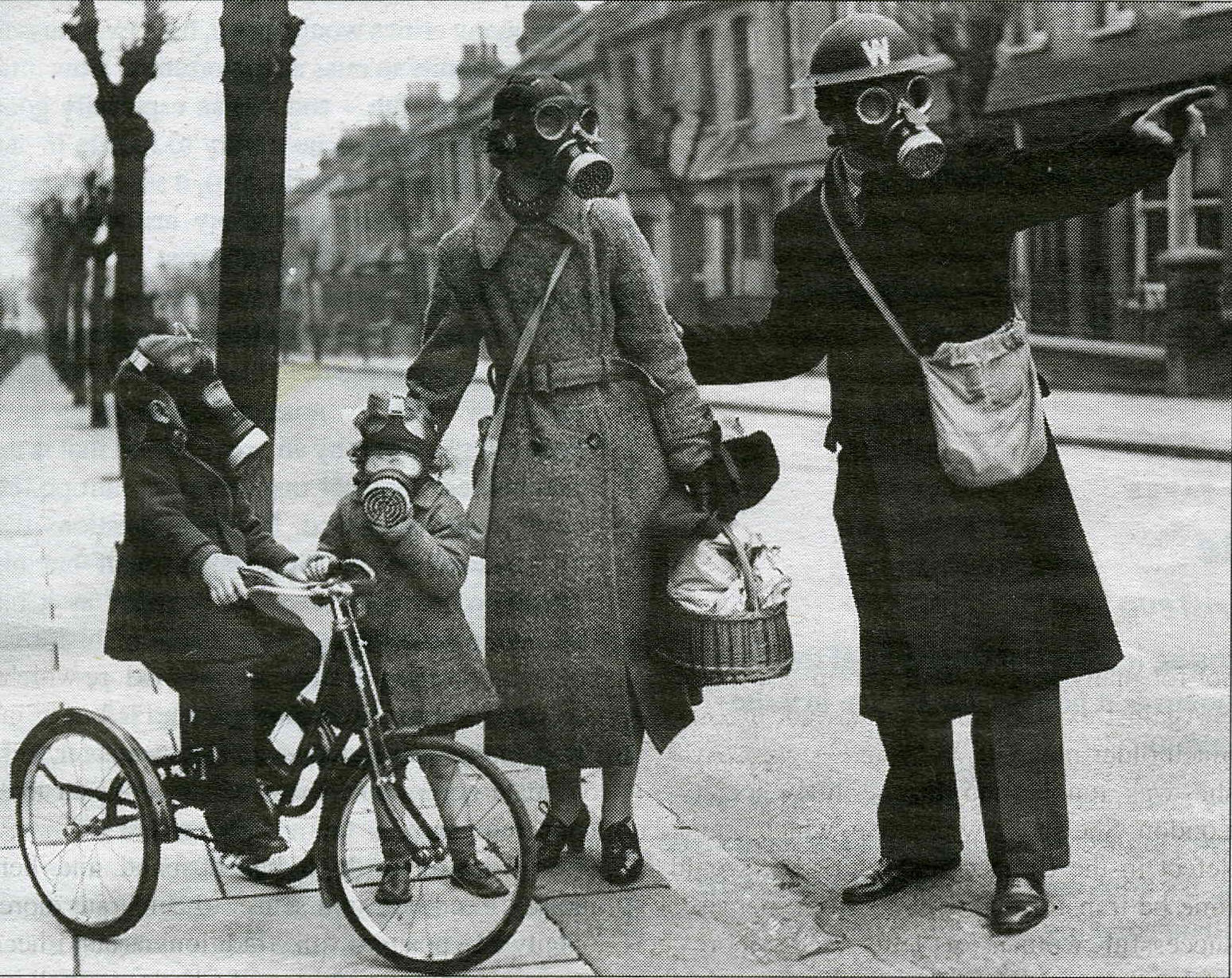
*1941mr29:England, Southend | Gas drill [2006mr03:TLS:7]
The domestic battlefield took on increasing importance
Astonishing MAP of 1940oc07:1941je06; Seven months
of aerial bombing impact points in London
The aerial battlefield was ever reaching greater degrees of perfection
<>1940se25:German Third Reich Foreign Minister Ribbentrop
informed USSR that Tripartite Act would soon be signed by the "Axis Powers"
(Germany, Italy and Japan)
*--Ribbentrop insisted that the Axis was directed solely at USA, not for aggressive purposes but only to
prevent USA from joining the European war to save England [RFP2,3:27-8]
*--se27:Tripartite Act signed
[TXT] [RFP2,3:28-9]
<>1940no:Axis Powers (on German initiative) entered into negotiations with USSR
over conditions under which USSR might join the Axis [RFP2,3:27-33]
<>1940de10:German leader
Hitler delivered speech to German
wage-laborers in which he subjected post-WW1 English
imperialism to a severe critique [CCC2,2:1171-82]
<>1940de18:Germany concluded that USSR would not joint Axis and began
more serious planning for
"Operation Barbarossa", the invasion of the USSR [RFP2,3:33-6]
<>1941:German Protestant
theologian Rudolf Bultmann
(1884-1976) published article "New Testament and Mythology" in which he tried to
make the New Testament "modern" without losing hold of the charisma of the
gospel [BMC4:668-70]
<>1941:German-born American
émigré psychiatrist and social theorist Erich Fromm
published Escape from Freedom [CCS:1074-94]
<>1941:Hungarian-born author
Arthur Koestler "factual fiction", Darkness at Noon,
exposed contradictions in a world communist movement which seemed to betray its own ideals
[P20:141]
*--He patterned the tragic hero on Nikolai
Bukharin whose great promise for the Soviet Revolution had first suggested
itself 20 years earlier
<>1941mr11:USA passed "Lend-Lease Act"
[TXT]
*--Seriously undermined 1937my01:Neutrality Act
[TXT] and
1939no04:Neutrality Act
*--USA inched closer to open hostility toward Hitler Germany
<>1941my:Half year
before the USA was drawn directly into WW2, official efforts got seriously
underway to mobilize for impending conflict
- An Office of Scientific Research and Defense [OSRD] was created
- The OSRD purpose was to support and coordinate contributions of scientists, private enterprise and the military
[ W#1 |
W#2 ]
- OSRD Director Vannevar Bush was interviewed on battlefield technology
[W]
- All combatants (current or future, Axis or Allies) perceived the need to create some form of
military-industrial complex
<>1941je21:German Foreign Office outlined reasons for attack on USSR and
instructed its Ambassador to USSR to prepare for impending invasion [RFP2,3:38-40]
<>1941je22:1945my08;
WW2: 2nd phase = Hitler Germany vs. USSR, nearly 4 years (just over 1400 days)
- World War Two on its eastern front opened with German invasion of USSR
- Soviet political cartoonists displayed this as German diplomatic betrayal of USSR
[pix]. Germany's
act was a unilateral abrogation of the 1939au23:Treaty [ID]
- 1941je:1941no; The first months of the war were desperate months for the USSR =
- Peasants fled the Nazi Wehrmacht [pix]
- The Wehrmacht occasionally bogged down, but was essentially
unstoppable [pix]
- Soviet citizens, imitating events 330 years earlier [ID],
joined a volunteer narodnoe opolchenie [national host] =
[ pix |
pix |
pix |
pix |
pix ]
- Film footage and photos of "Eastern Front" [FLM]
- A placard painted by the greatest of the Soviet poster artists, Dmitrii Moor
[pix], showed the "motherland" calling
all to serve the cause [pix]
- Later posters offered practical military training advice to civilians
[pix] |
[pix]
- Moscow loaded in supplies of firewood (against hardships of impending winter,
but also as a shield against enemy attacks), as here on Gorkii Street
[pix]
- Factories geared up to produce military hardware
[pix]
- Occasional little victories boosted morale, like this German light bomber
brought down and displayed on Revolution Square in Moscow
[pix]
- 1948:Winston Churchill had his version of the opening of the eastern front [RFP2,3:45-59]
- The opening of the eastern front was of great significance to England =
- For 22 months [1939se:1941je] Western Europe fought Hitler Germany alone, and
with disastrous results for them [EG]
- Now the opening of the Soviet front against Nazi Germany allowed England
to turn its attentions to the defense of its colonial possessions and the furtherance
of its imperialist ambitions in AfroAsia
- LOOP on "AfroAsia"
- Stalin reacted with speeches over the first horrible months
of Nazi attack on the Soviet front [RFP2,3:41-4]
- WW2: third phase
\\
*--John Barber and Mark Harrison, The Soviet Home
Front, 1941-1945: A Social and Economic History of the USSR in World War II
*--William Moskoff, The Bread of Affliction:
The Food Supply in the USSR during World War II
<>1941je30:USSR created GKO [Gosudarstvennaia komiteta
oborony; State Committee for Defense] to coordinate nation-wide total mobilization for
total war. The economy was also a battlefield
*--Talented young planner during WW2, Nikolai
Voznesenskii, later wrote The
Economy of the USSR during World War II (1948)
*--However necessary such national mobilization, this promoted growth of the massive Soviet
military-industrial complex and further consolidated Soviet-style
statist-managerial control over the whole nation
<>1941au11:USA President Roosevelt and English Prime
Minister Winston Churchill signed the "Atlantic Charter" [TXT]
as World War Two shifted decisively to the Soviet front
<>1941au25:Iran (as Persia was officially renamed in 1933)
was occupied by two European powers, now unlikely WW2 Allies seeking imperialist advantages in cooperation with one another,
but also seeking cooperative positions from which to fight against Hitler Germany =
- North Iran was occupied by USSR
- South Iran was occupied by England
- This WW2 Soviet-English mutual agreement was largely in line with the surprising 1907 pre-Soviet treaty between
tsarist Russia and England [ID]
- This latest joint occupation continued through WW2
- Strategic energy politics were joined with the tactical consideration of the need to control the
Trans-Iranian Railway [ID], to keep it out of the hands of Hitler Germany and
for communication and transport between "western" Allies and the USSR
- Reza Shah abdicated in favor of his son and heir, Mohammad [Muhammad in more common Arabic transliteration] Reza Pahlavi
- This allowed for a clean adjustment in policy appropriate to the new situation, and it preserved the Pahlavi dynasty
- In British custody, Reza Shah was not allowed to go to Canada as he wished
- The British government sent him first to Mauritius and then to Johannesburg, South Africa, where he died in July 1944
- Iran had once again slipped under European imperialist domination, and the whole
of AfroAsia became a strategic target for belligerents
- Soviet front in the war eased pressure on the English Island
- After the debacle at Dunkirk [ID], things looked very bleak for the British
- Now with Nazi attention riveted on the USSR, Great Britain was more free to concentrate
on protecting its imperialist holdings along the Mediterranean coast of
NE Africa [MAP]
- LOOP on "AfroAsia"
<>1941se:Nazi Wehrmacht took Kiev
*1941se:1944mr; USSR |
Leningrad under 900-day siege.
*1942sp:1942su; Aleksandr Fadeev described life under
siege [Eye:562-4]
*--Another major city became a battlefield, and
for three years
\\
*2004fe06:St.Petersburg Times#914 | Survivors
inspire siege novel by Matthew Brown [[TXT]
<>1941se29:oc01;
Moscow | In view of stalemate of ground war on western front, "Big Three" met to
discuss getting supplies to the Soviet eastern front
- USA not yet in the war, but support for USSR was clear from June 24 Roosevelt announcement [US Secretary of State Cordell
Hull’s 1948 memoir on the situation—RFP2,3:60-4]
- Ukraine, Babi Yar near Kiev (as the meeting above got under way) Nazis
transported 33,371 Jews to a wooded ravine, stripped them naked, opened fire
with machine guns, and let them fall, or threw them, into the ravine [Tumarkin,
Living:67]
<>*1941no07:Moscow | Less than five months after the Nazi invasion of the
USSR, at the time of the 24th anniversary of the Soviet Revolution, celebrants
marched past the viewing galleries atop Lenin's Tomb on Red Square straight to the front
to engage the Wehrmacht on the western outskirts of the capital city
*--Compare a photo
[pix]
with a later propaganda poster
[pix]
*--Also
consult FLM
<>1941de07:1945au14;
WORLD WAR TWO (third phase): USA joined directly in the fighting as the Pacific Front opened (lasted over 1330 days)
<>1941de12:Germany | In Hitler's private Berlin
apartment within the Reich Chancellery, Hitler declared that it was time to "clear
the decks" on the "Jewish Question" without "sentimentality" or
"pity"
- 1941de25:Polish town Oswiecim ["Auschwitz" in German] in the Vistula River valley a
few miles west of Kraków | Nazi occupational forces established a concentration camp
which would become the major site of Nazi extermination of "undesirable" elements in Germany and its conquered
territories -- Jews, Communists, radicals, Gypsies [Romany], homosexuals, the infirm or physically
challenged, and any others who did not fit or stood up against the totalistic statism
of the Nazi regime
- This genocidal policy has come to be known as
"the Holocaust" [W]
(from the Greek holokaustos = burnt whole)
- 1941:1945; Germany | Dachau concentration camp medical experiments described by a Nazi
doctor at his Nuremburg war trial [Eye:555-9]
- 1942su+: Poland, not far from Warsaw | Treblinka camp was operational. From
these months on, Nazi concentration camp officials dedicated themselves with
amazing industrial-age vigor to genocidal Nazi policies [PWT2:365-75]
- Gas chambers at Auschwitz Concentration or Extermination camp described by a survivor, Sophia Litwinska [Eye:554-5]
- 1944jy23:Poland | Majdanek Concentration or Extermination camp (near Lublin) described
by USA journalist Alexander Werth moving with the Soviet Red Army as it liberated
eastern
Europe from Nazi rule [Eye:600-3] A survivor of that
camp, Y. Pfeffer,
described his experience [P20:253
| PWT2:369-72]
- 1944au:Poland | Birkenau Concentration or Extermination camp procedures described by
Romanian Jewish doctor who worked there [Eye:604-6]
- 1945ap15:Germany | Belsen Concentration Camp the first liberated by Allied forces on the
western Front. Patrick Gordon-Walker described Belsen then [Eye:620-5]
- 1945ap29:Germany | Dachau concentration camp liberated by USA troops. Turkish Catholic
journalist Nerin E. Gun, remembered his liberation [P20:269]
- Elie A. Cohen, a Dutch physician who was for three years held in Auschwitz, composed his memoirs,
Human Behavior in the Concentration Camp
(1953), as a social-psychological analysis of humans (prisoners) under total or concentrated management by other
humans (guards) and drew general conclusions about totalitarian society from this intense particular expression
of total statism [TXT summary placed within larger essay on the nature of "totalitarianism"]
- One of the first to explore the relationship of Nazi concentration camps to the broader, everyday life
aspects of "total statism" was Austrian-born Bruno Bettelheim. He wrote from personal experience as well as
from the point of view of a trained and experienced psychologist [CWC:466-82]
- For purposes of criminal and political punishment, removal or transportation to distant points,
and concentration for purposes of forced labor, USSR employed "Government Administered Camps" [EG]
- The acronym "GULag" combining GU (the initials of the Russian phrase Glavnoe Upravlenie, central
administration), with the German word for camp, "Lager"
- The Soviet GULag system grew in size and extent over the years between the introduction of Collectivization
[ID] and the outbreak of WW2
- The GULag system spawned a sorrowful but great tradition of "prison literature", e.g.,
Aleksandr Solzhenitsyn
- The Soviet Union removed, transported and concentrated in remote Central-Asian territories many national groups thought to be unreliable or potentially disloyal or treasonous in
the era of WW2 [W]
- As a form of state policy, transport or removal and "concentration" of
peoples were not a Nazi or Soviet invention. These sometimes gruesome or sometimes merely
illiberal policies had a history that stretched back at least to
early
European colonial and imperialist practice. The Nazis opened a new page with their policy of mass extermination
- USA created camps for Japanese citizens during WW2
- French theorist Michel Foucault's later
thoughts about discipline and punishment offered the broadest interpretive framework
for the role of confinement and control in modern European culture
- The main gates of the Nazi concentration camps had inscribed on them a mocking slogan
"Arbeit macht frei" [Work makes you free]
- Removal, transportation and extermination of defined groups illustrated
how domestic politics could also become a battlefield in an era of total war
\\
*--Alain Resnais, Nuit et brouillard [32 min. video-recording
of original 1955 movie] Excerpt from Resnais' concluding words [TXT]
*--Hannah Arendt,
Eichmann in Jerusalem: A Report on
the Banality of Evil (1963; enlarged in 1964)
<>1942:Austrian (Czech-born) political theorist Joseph Schumpeter, from 1932
until his death in 1950 a professor of economics at Harvard University, published Capitalism,
Socialism, and Democracy [CCS:802-26 | CCS,2:436-60]
<>1942ja11:Malasia | Kuala Lumpur awaited Japanese
occupation, as described by Ian Morrison [Eye::559-61]
*--Compare this Japanese paratrooper training film [FLM]
with 1935 Soviet footage of paratroopers [ID]. The Japanese footage gives visual form to the
vastly expanded "total-war" capabilities of industrialized nations, including flame-throwers
*--Japan having great success in SE-Asia
<>1942ja21:German commander Rommel opened
northern African assault on British (largely colonial) troops, aiming eastward
along the southern shores of the Mediterranean Sea (N.Africa) toward the English
imperialist possession Egypt (within petroleum rich AfroAsia)
<>1942ap06:England no longer able to provide citizens white bread
<>1942my26:London | English-USSR anti-Hitler treaty signed
*--USSR Foreign Minister Viacheslav Molotov explained treaty [RFP2,3:65-6]
<>1942my30:German city Köln
[Cologne] subject of mammoth English saturation bombing
*1945su:At the end of the war, English poet
Stephen Spender
visited and described the suffering and destruction in Cologne [P20:278]
<>1942je03;je07; Pacific, near Midway Island | Naval and air
battlefield between USA and Japanese forces the turning point of the Pacific war even before six months were out
*--Japanese witness Mitsuo Fuchida described it as a fatal five minutes that might have gone one way or the other
[Eye::564-6]
<>1942je12:Moscow, London, Washington DC | Three allied
capitals announced firm intention to open "second front" -- the western front -- in the European war against Hitler
- The war had fallen relatively quiet in western Europe after the first few weeks of Blitzkrieg. In
six weeks in the spring of 1940, France and England had been swiftly routed on the Continent
- The European war was now concentrated on the Soviet front (by implication the "first front" in WW2,
though it is not our habit to designate it as such)
- Despite this statement of "firm intention", the second front in Western Europe was
delayed two more years, and thus the European war continued to be largely a German-Soviet conflict
- The western Allies did, however, continue in their efforts to get "lend-lease" and other forms of aid to the
USSR through the North Sea, over the Arctic waters north of the Scandinavian Peninsula and into the White Sea ports
of Murmansk and Arkhangelsk
- German submarines were extremely effective weapons against Allied sea-going transports and navies
- In the five and one half years of WW2, submariners, numbering only 42,000 -- no more that three German
Army divisions -- sank 2,775 Allied merchant ships bearing something like 14.5 million tons
of military-industrial war supplies
- Two-thirds of those 42,000 German sailors perished at sea
- Technological advances in the underwater battlefield continued to be
made [See Guenter Hessler, The U-Boat War in the Atlantic, 1939-1945]
- In the early phases of WW2, western Allies were most firmly committed to
northern Africa, the sensitive southern shores of the Mediterranean, rather
than to the main field of battle on the European continent
<>1942je21:Northern
African coastal stronghold Tobruk taken by Rommel
*--Wehrmacht advances continued in the E. Mediterranean
*--Old imperialist hopes for AfroAsia plus very practical concerns to grab or to protect
oil sources motivated German and English strategic thinking
\\
*--LOOP on "AfroAsia"
<>1942jy29:de26; Stalingrad Battle front.
The tide was about to turn on the WW2 Eastern Front [MAP]
- 1942se:1943ja; Stalingrad, the city, under siege
- 1942de:Battle described by German soldier Benno Zieser [Eye:575-6]
- Doomed German soldiers wrote hundreds of moving letters home which were collected by Nazi officers but
never sent
- Soviet Red Army captured the many large sacks of mournful letters and allowed them to be published
[Last Letters from Stalingrad |E-TXT]
- German soldier William Hoffman kept a diary of the action [P20:245 |
PWT2:362-5]
- 1962:Nazi officer Joachim Wieder remembered Stalingrad: Memories and Reassessments
[P20:248]
- 1943fe04:USA reporter Alexander Werth described Stalingrad after Nazi capitulation [Eye:576-8]
- Film footage of battle [FLM]
- Sputnik International on Stalingrad battle [FLM]
- 1943fe04:USA reporter Alexander Werth described Stalingrad after Nazi capitulation [Eye:576-8]
- One of the great battlefields of the 20th century left a major river-port city,
Stalingrad, in total ruins [pix]
- 1942:Soviet film industry produced Kontsert frontu [concert for the front =
FLM]
- The film featured a somewhat dreary series of diverse variety acts, designed
somehow to bolster troop morale at a very grave moment in the war
- The film featured the most famous "folk singer" of the middle Volga village style,
Lidiia Ruslanova [FLM]
- Ruslanova [ID] was by
this time one of the wealthiest artists in the USSR
- She sings "Katiusha" (with translation) [YouTube]
- She is an excellent example of the characteristic Soviet amalgam of folk tradition
and pop-arts entertainment
<>1942au19:France | Dieppe attacked by Canadian force in
costly failure to establish continental beach head, a second front,
witnessed by Ross Munro [Eye:566-9]
<>1942oc:USSR |
Ukraine the scene of Nazi extermination of Jews, described by
Hermann Graebe [Eye:569-71]
<>1942oc21:North Africa | El Alamein battle began
- 1942no04:El Alamein the scene of decisive Nazi defeat, asdescribed by General
Bayerlein [Eye:571-3]
- Rommel was now in full retreat from E.Mediterranean
- 1942no06:Stalin lamented slow implementation of plan for
second front in western Europe [ORW:227-8]
- 1942no08:North African invasion by Allies, under command of General Dwight David Eisenhower
- Western allies concentrated on this African front along southern Mediterranean shores rather than opening
the much discussed second front in Europe proper
- "Western" emphasis on the African battlefield illustrated the still vital desire in
certain allied circles to preserve imperial domains in AfroAsia
- The English imperialist possession, Egypt, was freed of German forces
- Soon French colonial authority was re-established in Algeria
- That emphasis also expressed an indirect hostility toward the vital interests of the USSR, the
only Ally at that time fighting on the ground in Europe against the Nazi Wehrmacht
- 1942de:African desert warfare on the Mediterranean front
described by English poet Keith Doublas who later died in the Normandy Invasion [Eye:573-4]
\\
*--LOOP on "AfroAsia"
<>1943:English astronomer James Jeans offered a few words on the question of
free-will, on freedom and determinism, in Physics and Philosophy [BMC4:702-3]
<>1943ja:Stalingrad
USSR| Nazi German 6th Army was encircled &
defeated
<>1943fe12:USA President Roosevelt, in his radio
address to the nation, discussed results of the three-power meeting (USA, England, France) at the Casablanca
Conference [Photos at Casablanca]
- Three noteworthy features of this conference were
- The absence of Stalin or any other formal Soviet representation, and thus
absence of any serious planning for the "second front" in western Europe to relieve Soviet forces in the east
- The surprising presence of "France" in the person of Charles de Gaulle (then an émigré
in London who fled two years earlier from total Nazi defeat)
- The clear declaration that the Allies would fight until complete victory was achieved over Axis powers
- In the meantime, these "Western" allies would concentrate on
- Heavy saturation bombing of Nazi held western Europe and
- Deployment of troops on the Mediterranean front
where English and French colonial interests were under Nazi assault
<>1943fe17:USSR, Korsun Salient | Nazi Wehrmacht routed, as described by
Soviet commander, Major Kampov [Eye:578-80]
<>1943fe23:Munich University students
Hans and Sophie Scholl and Christoph Probst executed for circulating anti-Nazi leaflets and for
association with the university student organization, The White Rose| An example of one of
their leaflets [P20:259]
*1943jy13:Professor Kurt Huber and other members of White Rose dissident group executed
*--Germany experienced the opening of a domestic battlefield as objections to Nazi policy mounted
<>1943my22:USSR dissolved the
Comintern (in its 24th year) [RFP2,3:67-70 |
RFP3:417-20 | RWP1,3:168-71 | ORW:229-31]
- Fighting for its life against Hitler Germany, USSR only now realized the obvious =
- It was not effective to threaten with "internal war" (revolution) its most important allies in
the battlefields of the international war
<>1943jy05:au23; USSR | Kursk battle, the
greatest clash of modern mechanized armor ever
- After nearly two hellish summer months, the battle ended in Nazi defeat [FLM#1 |
FLM#2 (RT news service 3D graphic)]
- Consider the look of weary concentration on the face of this Soviet gunner
[pix]
- Consider these simple statistics from the Kursk battlefield =[TXT]
- The Nazi Wehrmacht was on the run [pix]
<>1943jy10:Italian forces in Sicily invaded by
western Allies from north Africa
*--The two-year-long Mediterranean front turned decisively in favor of western Allies
<>1943jy26:Italian Fascist leader Mussolini toppled
from power
- His remarkable 21-year career was over, though he lived on two more years
- He survived these two years as accessory to the Nazi troops now holding Italy against allied forces
but also against insurgent Italians
- Mussolini was no longer "Il Duce"
- Now German Nazi power had to be deployed against Allied invaders of Italy. The joke was this =
Hitler claimed that it took as many German troops to deal with Italy as an ally as it took to
deal with it as an enemy
- *1945ap28:Milano| Mussolini captured and killed by partisans
- Grizzly photos depict punishment inflicted by angry Italians upon Mussolini and associates
[W]
- The domestic battlefield became intense in Italy
\\
*--LOOP on "fascist" and "fascism"
<>1943jy27:German city Hamburg
was destroyed by
saturation firebombing
- The firebombing of Hamburg was a central component of a thorough
ten-day Allied aerial assault on the city
- Techniques were designed to bomb urban centers in patterns and sequences so as to cause "fire storms"
- Intense heat at the center of the burning city drew heavy flame-hot winds from the outskirts to the
center, igniting and thoroughly destroying all structures
- Those who made it to bomb shelters were first suffocated then roasted or burnt to a crisp
- One thousand men in uniform were killed, and 50,000 civilians perished
in these ten days
- Survivor Else Wendel described the attack [Eye:584-7]
- In the weeks after bombing, Nazi officials allowed furniture and other
household items which had been confiscated from Jews sent to concentration
camps to be shipped to Hamburg
and marketed there to help restore the city
- 1943de01:Hamburg police reported on this urban battlefield [BNE:284-6]
\\
*--Keith Lowe, Inferno: The devastation of Hamburg 1943
*--Frederick Taylor, on bombing of Dresden
*--Jörg Friedrich, Der Brant [Fire] about
firebombing of helpless civilians
<>1943se04:Stalin
ordered creation of Council for Affairs of the Russian Orthodox Church at the
SovNarKom level
*--New era in Soviet church-state relations dawned in midst of WW2
<>1943oc:Moscow Conference issued a "four-power
declaration" (WW2 allies USA, USSR, England and China)
- Among other
things, they pledged "to continue hostilities against those Axis powers with which
they respectively are at war until such powers have laid down their arms on the basis of
unconditional surrender" and
- "That they will confer and cooperate with one
another and with other members of the United Nations [UNO] to bring about a practicable general
agreement with respect to the regulation of armaments in the post-war period."
[TXT]
<>1943no:USSR | The city Kiev was liberated from
Nazi occupation and began rebuilding
*--1944sp:Though shattered, Kiev was returning to normal =
[pix]
[pix]. More on Kiev
tramlines =
[W]
<>1943no20:Pacific
island Tarawa | Amphibious landing assault described by USA Marine Robert
Sherrod, including the use of a new weapon on the modern
battlefield, a flaming chemical, napalm [Eye:587-8]
<>1943no28:de01; Iran | Teheran Conference
[W]. Stalin,
Roosevelt and Churchill (USSR, USA, Great Britain) devoted to questions about the scope and timing of WW2
[PHOTO]
- They stated their intention to create UNO [ID]
- They vowed to protect the sovereignty and integrity of Iran, but little else
on general AfroAsian questions, nor in the planning that followed a few days later =
<>1943de01:Cairo Conference| USA, China
and England issued a three-power declaration [TXT]
- This partial gathering of some allies took place in one of the great AfroAsian cities but
devoted no serious attention to the particular needs or interests of that area of the world
- Egypt was an imperialist possession of England and, so far as the gathering
three nation-states were concerned, would remain so
- The gathering did promise to create an independent Korea (a people bordering on China and the USSR in the "Far East")
- Stalin was not invited to this conference
- At the end of WW2, the USSR, which was not at the Cairo conference, split with the USA
on the question of Korea
\\
*--LOOP on "AfroAsia"
<>1944:Austrian-born political-economist Friedrich A.
Hayek criticized state intervention into economic life in The Road
to Serfdom [CWC:433-45 | CCS:840-60 |
CCS,2:335-55]
- Karl Polanyi (just below) expressed a view nearly the opposite to Hayek's
- An English critic also disagreed with Hayek [ID]
- Early 21st-century scholars returned to Adam Smith to expose weaknesses in Hayek's
positions [ID]
<>1944:Hungarian (Vienna-born)
political-economist Karl Polanyi in The Great Transformation
[E-TXT]
explored the reasons for the brief life and eventual collapse of liberal/laissez faire systems in
Europe [more]
- Polanyi was driven from Austria as fascist political power was established there [ID]
- He became an English citizen and was teaching in the USA when he finished his influential book
- In 1947 he summarized his main arguments in an article titled "Our Obsolete Market
Mentality" [CCS,2:247-61]
- WW2 enlivened the European debate about liberalism,
its meaning, its relevance, its future
\\
*2016de23:The Nation| "Polanyi In Our Times" [E-TXT]
*--The Polyani Society website
*--[W]
summary of Polanyi's leading ideas with many quotes
*--LOOP on "fascist" and "fascism"
*--LOOP on "Political-Economy"
<>1944:French Catholic
theologian, Professor at the Institut Catholique de Paris, Jacques Maritain published
Christianity and Democracy
[CCS:571-86 | CCS,2:823-38]
*--Maritain contributed to development of 20th-century European Christian or
"Thomist" existentialism
*1931:He published a study of St. Thomas Aquinas,
Angelic
Doctor [BMC1:671-4 | BMC4:673-7]
<>1944:Swedish economist Karl Gunnar Myrdal’s research team, funded by the
Carnegie Corporation of New York, published the results of their study of
African-Americans in the USA,
An American Dilemma: The Negro Problem and Modern
Democracy [CCS:449-70 |
CCS,1:844-65,922-33]
<>1944ap30:jy16; German
dissident
Protestant Theologian Dietrich Bonhoeffer, in Nazi prison where he would soon be
executed as a result of his participation in anti-Hitler conspiracies.
Bonhoeffer wrote
letters from prison in which he suggested a radical new Christian
theology which relaxed its fixation
on the vast, transcendent God and concentrated on Jesus Christ [BMC4:671-3]
<>1944je06:1945my08; WORLD WAR TWO (fourth phase)
lasted just over 300 days:
Western allies re-opened second (western) front when western Allies (i.e.,
USA with significant English and nominal French support) invaded European continent at Normandy
- The second front had been promised for two years
- Supreme Allied Commander Dwight D. Eisenhower remembered Operation Overlord
[P20:264]
- The expression "supreme allied commander" simply neglected Soviet allies and their commanders on the eastern front
- Eyewitness accounts [Eye:591-6]
- The Normandy invasion required an unprecedented coordination of ground, sea and air power, production and
supply, command and managerial logistics
- In its dimensions and complexities, it was the epitome of the new industrial battlefield
- The earlier Battle of Kursk [ID] runs a close second for that distinction
- Brilliant color photos illustrate
the vital importance of the industrial home front, flourishing as the war dragged on only in USA. EG=
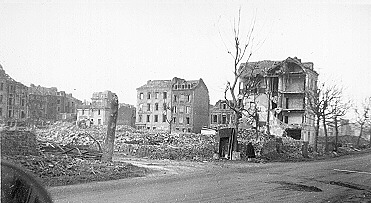
Le Havre destroyed by ground action
[
source ]
<>1944je:1944se; England under 4-month German V-2 rocket attack
- 8000 pilotless flying bombs were launched
- The beauty of this new weapon on the modern scientific and industrial battlefield
was that it was so fast and, since supersonic, so silent, the enemy did not know or could do nothing about it until
the first heavy explosions rocked the target
- Eyewitness Lionel King described [Eye:596-8]
<>1944jy:Algerian-born
French writer Albert Camus wrote letter explaining his resistance
to Nazi occupation of France [P20:256]
- As the Soviet Army moved with ever greater speed toward Germany, and as the western Allies finally opened the
second front, domestic insurgencies rose up everywhere against Nazi occupation
- Under conditions of war, dissent became active as
resistance, and resistance had all the qualities of both war and revolution
\\
*--Robert Gildea, Fighters in the Shadows: A New History of the French Resistance
*--Olivier Wieviorka, Histoire de la Résistance, 1940-1945
[English translation soon]
<>1944jy01:jy22; USA New Hampshire| All 44 nations allied
against Axis powers gathered at the "Bretton Woods Conference"
- These fateful days of deliberation defined the role of world capital market institutions &
policies and projected them globally over the next two post-war decades
- The Soviet Union participated but found it impossible to ratify a final agreement based on
the capitalist global economic system
- This was also also a time of defeat for John Maynard Keynes
at the end of his career. His efforts at Bretton Woods to globalize those central economic measures
that had contributed to the salvation of the west European and North American capitalist economy in the 1930s
were rejected by the dominant USA conference delegates and their financial
models for the post-war world
[W.ID]
\\
[Wki]
*--LOOP on "finance"
<>1944au01:Poland | Warsaw uprising against Nazi
occupation broke out
- Tadeusz Bor-Komorowski described the rising [P20:261]
- It appeared to many that
the Soviet Red Army purposefully delayed entering the city and reinforcing
insurgents
- The uprising was thus doomed to extermination at the hands of
retreating Nazi forces
- This was a heroic but tragic moment of domestic insurgency within the vast
international battlefield
\\
*--Jews in
Poland in WW2
[W]
<>1944se:USA diplomat George Frost Kennan wrote
"Russia -- Seven Years Later" =
There will be much talk about the necessity for
"understanding Russia"; but there will be no place for the American who is
really willing to undertake this disturbing task. The apprehension of what is
valid in the Russian world is unsettling and displeasing to the American mind.
He who would understand this apprehension will not find his satisfaction in the
achievement of anything practical for his people, still less in any official or
public [530-1] appreciation for his efforts. The best he can look forward to is
the lonely pleasure of one who stands at long last on a chilly and inhospitable
mountaintop where few have been before, where few can follow, and where few will
consent to believe that he has been. [Kennan,Mem:530-1]
*--Kennan was
soon in the thick of "understanding Russia"
<>1944oc:1945au; Pacific Front over the final ten months. USA experienced
Kamikaze [divine wind] attacks, suicidal Japanese airships crashed on Allied naval vessels
*1945my09:Attack described by eyewitness Michael Moynihan [Eye:630-1]
*--Modern industrial war and
ancient tradition
combined artificially on the aerial and naval battlefield
<>1945:English economist Barbara Wootton
[Wki] criticized
Hayek's extreme laissez faire doctrine in her book
Freedom under Planning [CCS,2:356-72]
*--Her thesis here and in other works was that public planning
need not conflict at all with democratic freedoms
<>1945:Austrian-born political philosopher Karl
Popper published The Open Society and Its Enemies (2vv)
- When Popper delivered his telling critique of Karl Marx, here at the very
dawn of the Cold War, "The West" applauded
- When he traced his story to its
roots and found Plato (a "Founding Father" in "The West") and discovered him to be the first
important and profoundly influential enemy of the open society, applause fell
silent
\\
*--[W]
<>1945fe04:fe11;
Yalta Conference
[TXT] [Related territorial agreements
which the USSR entered into at this time in BNE:287-91
& RFP2,3:71-4]
*--Yalta agreements declared =
- War to complete defeat of Hitler Germany, followed by
Four-power occupation
- Create UNO
with Security Council and veto power [ID]
- Secret agreement about USSR entry into Pacific
war against Japan 3 months after defeat of Hitler Germany, giving Sakhalin and Kurile
islands and Port Arthur to USSR; joint USSR/Chinese administration of the Manchurian
railroad [no consultation with China on
this one] [ORW:231-6]
<>1945fe14 (Saint
Valentine's Day):Germany, Dresden, a refugee center in
the final months of WW2, was destroyed
- As Soviet troops advanced on the eastern
front, they requested of the Allied bombing command that Dresden be
"neutralized"
- US planes blanketed the city with percussive bombs during the
day. By night, British planes covered the rubble with incendiary bombs
- The
attacks and the resultant fire storm killed over 130,000 of the enemy (mostly
civilian enemies) in less than 24 hours [P20:277]
- Destruction illustrated [pix]
- American novelist Kurt Vonnegut was in Dresden at this time and took shelter
and survived
in Slaughterhouse 5. His moving account of that experience bears that name as
its title
- Eyewitness Margaret Freyer described attack [Eye:608-12]
\\
*--Charles K. Webster and Noble Frankland,
The Strategic Air Offensive Against Germany, 1939-1945,
4 vols. (1961)
<>1945ap14:my01; Germany, Berlin under
2-week siege,
then taken by USSR when the
Soviet Red Army entered the Nazi capital [FLM]
- 1945ap30:Berlin underground bunker | Adolf Hitler penned
his Political Testament and then shot himself to death [P20:274]
- Hitler's 20-year career and nearly all who latched themselves to it came to a tragic end
- 1945my01 (May Day):German citizen Claus Fuhrmann described Red Army entering Berlin [Eye:625-30]
- English POW also witnessed fall of Berlin [Eye:614-18]
- Hitler Germany was defeated, and Berlin was utterly destroyed =
[pix#1 |
pix#2 |
pix#3 |
pix#4 |
pix#5 |
pix#6}
- Once again a major world city, an erstwhile great metropol [ID],
was a battlefield
- More WW2 era photos by Ivan Shagin [W#1 |
W#2]
- "BBC NEWS - 2nd MAY 1945 - Overview of WW2" [YouTube]
- The nearly 4-year-long second phase of WW2 was over
- 1948:As anti-Soviet passions rose in the early stages of the Cold War, German woman
who suffered at the hands of victorious Soviet soldiers, Marie Neumann, wrote notes about her
sorrowful experience [P20:271]
\\
*--Some Soviet women officially recognized for their war-time heroism [E-TXT]
<>1945my28:Syrian capital
Damascus shelled by French artillery in an effort to consolidate post-WW2 French imperialist authority
in its old colonial possession
<>1945je05:Germany, Potsdam | After Four-Power Declaration of victory over Hitler
Germany, Soviets hosted victory banquet
- Generals Eisenhower and Montgomery refused the invitation
- 1945je24:Moscow victory parade [FLM]
<>1945je26:USA, San Francisco |
Charter of the United Nations Organization [UNO
official website] signed [CCC2,2:1232-51]
*--Avalon documents
website [W#02 | W#03 |
W#04 | W#05 |
W#06 | W#07 |
W#08 | W#09 |
W#10 | W#11 |
W#12]
- UNO addressed some of the weaknesses of its predecessor, The League of
Nations [LOOP], but on the whole the UNO replicated the
fundamental weakness of the League =
- The sovereignty of the global nation-states remained intact
[League and UNO document access]
- Unwilling to address the central problem of nation-state sovereignty, the UNO
gave less attention to the business of diplomacy and greater attention to world issues like education, economic
development, health, disease, and hunger
- As membership climbed to over 140, the General Assembly functioned as a diplomatic clearing house
- Who knows what the lateral contact among and between these countries meant, below the stratospheric
or intercontinental conflict of the USA and the USSR?
- That can be determined only by careful and detailed analysis of the auxiliary or outside agencies: UNESCO, etc
\\
[W#1]
<>1945jy17:au02; Germany | Potsdam Conference
reaffirmed first paragraph of Yalta Agreement
- USSR, USA, England and France (to the surprise of some) would occupy Germany as a whole
- But the great capital city Berlin was at this time in ruins and occupied by the Soviet Red
Army [Amazing
YouTube footage of Berlin in these days]
- Nonetheless, the Soviets agreed that Berlin would now be divided into four parts,
each administered by one of the Four Powers [RFP2,3:102-4]
<>1945au06:Asia | USSR joined the Pacific Front,
precisely according
to the Yalta agreement, with declaration of war on Japan and movement of troops along
eastern-most stretch of Trans-Siberian railroad, spilling into Manchurian and
Korean
territories
- More SE-Asia
- Delicate
Soviet-Japanese
neutrality, nurtured since beginning of WW2, now broken
- On this very day, USA dropped A-bomb on Hiroshima [SWH:397-414].
A new era in warfare was upon the globe
- Six years earlier German-born physicist Albert Einstein wrote USA President Roosevelt
an ambiguous warning that an atomic bomb was a theoretical possibility demonstrated by
experiments already under way [BNE:286-7]
- The very scientist who tipped the world in the direction of nuclear physics, and became
the very icon for modern genius, was increasingly concerned about the technical results
of his 40-year-old scientific achievement
- 1945se09:Japan, Hiroshima | Marcel Junod visited and described [Eye:638-40]
- In other words, the A-bombs are said to have been dropped on staggering Japan as a warning jab at USSR
- WW2 ended on an ominous diplomatic note, just as it had begun
<>1945au09:USA dropped a second A-bomb, this time on Nagasaki
- USA airman William T. Laurence described attack [Eye:631-8]
- Website statistics and photos
- Nuclear weaponry was the final industrial, engineering and
scientific contribution to the
6-year-long WW2 battlefield
- It now caste its noxious shadow over the future of humanity
- Some have argued that these Atomic bomb attacks were the opening salvo of another new era,
the era of USA-USSR competition, called the "Cold War"
<>1945au17:Indonesian independence denied by the Netherlands
*--High-minded declarations of progressive allies were at first contradicted by
their reluctance to support freedom and independence to colonial peoples
*--CF=The stated ideals of Allied participation in WW2
[EG]
<>1945au28:Soviet troops reached 38th parallel in
Korea
<>1945se01:USA General George C. Marshall, "Biennial Report" (summary
history of World War Two) [SPE2:9:960-3]
<>1945se02:Vietnam
President Ho Chi Minh declared independence from French colonial rule [P20:326
| BNE:309-12]
- The Viet Minh had for several years fought a guerilla war against imperialist Japan,
which had come to replace previous imperialist French dominion
- 1944fe:Congo, Brazzaville | France resolved to reconstruct a unitary French empire
[BNE:306-9]
- At war's end, France returned to reclaim its colonies in Indochina (Vietnam, Laos and
Cambodia)
- Ho Chi Minh appealed to USA to protect Vietnamese national independence, but USA
refused
- At the end of WW2, the world was sprinkled over with imperialistically dependent
territories [MAP]
<>1945se11:oc02; London.
Allied
Council of Foreign Ministers meeting #1. USA Secretary of State Byrnes report
[W TXT]
<>1945se13:Events in AfroAsia
("the Middle East) hinted at a dawning post-WW2 world, adumbrating a central feature
[ID] of the "Cold War" and of the early 21st century=
- Iran demanded withdrawal of all Russian, English and US troops, now that WW2 was over
- 1945se23:Egypt demanded revision of 1936:Treaty with England and thus a serious adjustment in its colonial subordination
- These trends had been brewing for years and broke into the open even before WW2 ended =
- 1945mr22:Egypt, Iraq, Transjordan
(renamed Jordan in 1949), Lebanon, Saudi Arabia, and Syria
formed the Arab League [W-ID]
- Two related questions were being raised in Iran
and Egypt, in fact all around the world =
- Was WW2 a war of liberation from forcible subordination of weaker nationalities to stronger?
- Or was it a war to restore and protect European ("Western") imperialist subordination
and exploitation of weaker nationalities?
- Imperialized AfroAsia was like Southeast-Asia and other dependent regions of the world = It was
ready to break free from foreign dominion, and liberationist movements took on organized existence
<>1945oc05:Paris | Charles de
Gaulle created École Nationale d'Administration [ENA]
[ID] to train a
French administrative or managerial elite
- The guiding impulse was to recruit national leadership on a more egalitarian basis, on the
basis of "careers open to talent"
- By the 21st century, the school relocated in Strasbourg at the eastern edge of France
on the Rhine River border with Germany in order to expand its services to the whole EU community
[Official website]
- The school has also inspired educational programs in AfroAsia and other areas of
the "emerging world" [EG]
- YouTube features ENA
- Managerialism continued to shape post-WW2 institutions
and practices in Europe, North America and the wider world, sometimes extolled as free-market commercialism
and industrial modernization and other times deplored as a "communist menace"
\\
*--LOOP on "AfroAsia"
<>1945oc21:French Constituent Assembly revealed significant
political shift "leftward". Communists took 152 seats and socialists 151
<>1945no14:1946oc01; Germany, Nuremburg.
Trial of the Major War Criminals
Before the International Tribunal... (42 volumes)
- This represented the first dramatic moment in which "war crimes" would be prosecuted according to something like
international law [best described as transnational law] in close institutional association with something like a transnational court
- Two questions presented themselves to victorious Allies =
- Is this simply the familiar exercise of the power of the victor over the weakness of the defeated? OR=
- Is this an actual historical novelty, the establishment of transnational legal precedence?
- Max Rheinstein and Quincy Wright joined this debate [RWP1,2:178-200]
- Indictment of individuals and organizations (Nuremberg: Secretariat of the
International Military Tribunal, 1949) [CCC2,2:1183-93]
- Auschwitz (Poland) concentration camp commandant Rudolf Hoess
testified [TXT | P20:252]
- Hermann Graebe’s sworn testimony at Nuremberg described mass slaughter of Jews and
others in Dubno in Ukraine [P20:250]
<>1945de16:de21; Moscow Allied
Council of Foreign Ministers (USA, USSR, England)
interim meeting dealt further with post-war arrangements in defeated and/or occupied
territories, especially on the Soviet eastern front
[W TXT]
Return to top
Next SAC
|
|
|
|
|
|
|
|
![[pix]](images/Kemal%20Ataturk%20CIV340.jpg)
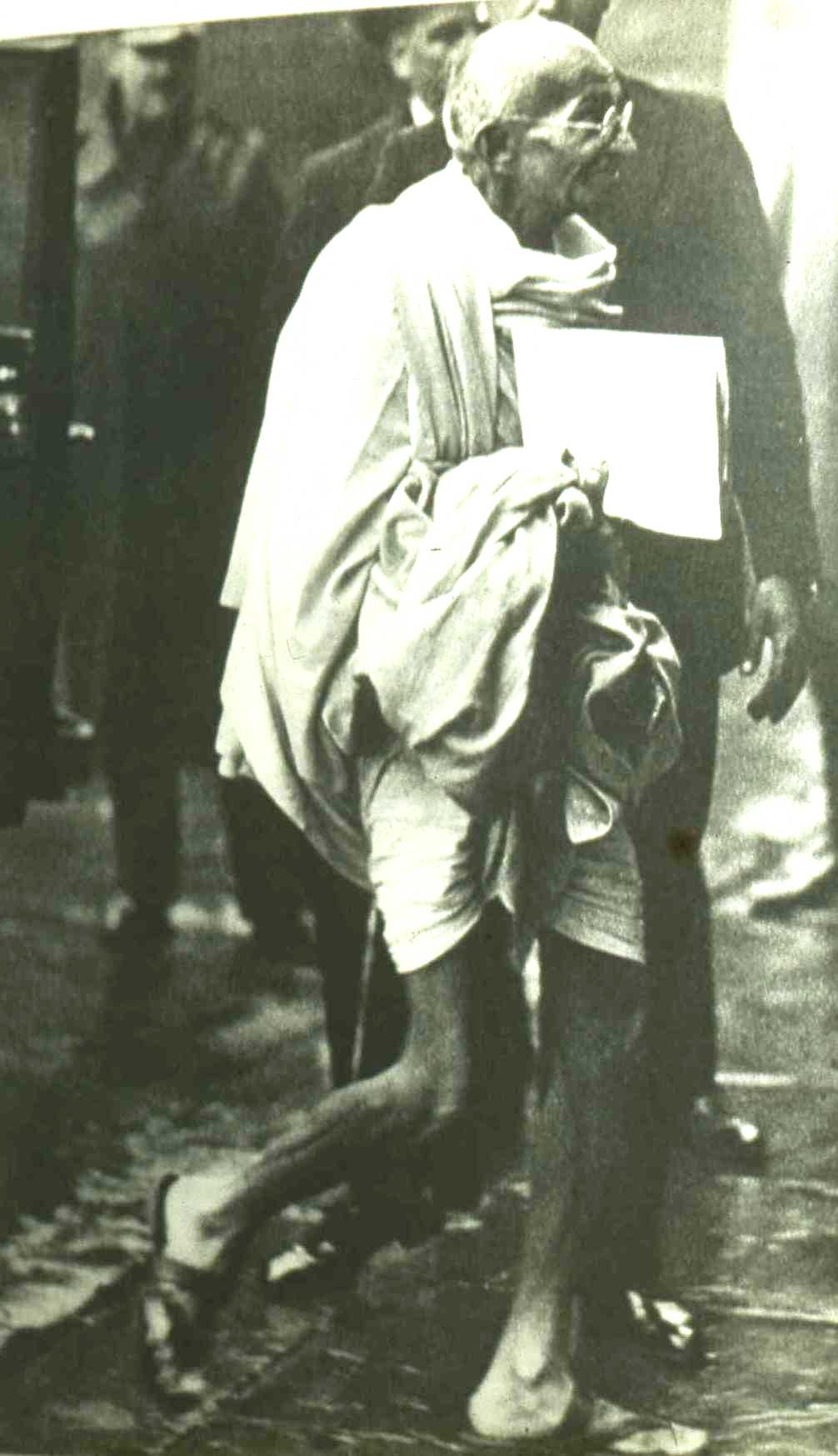
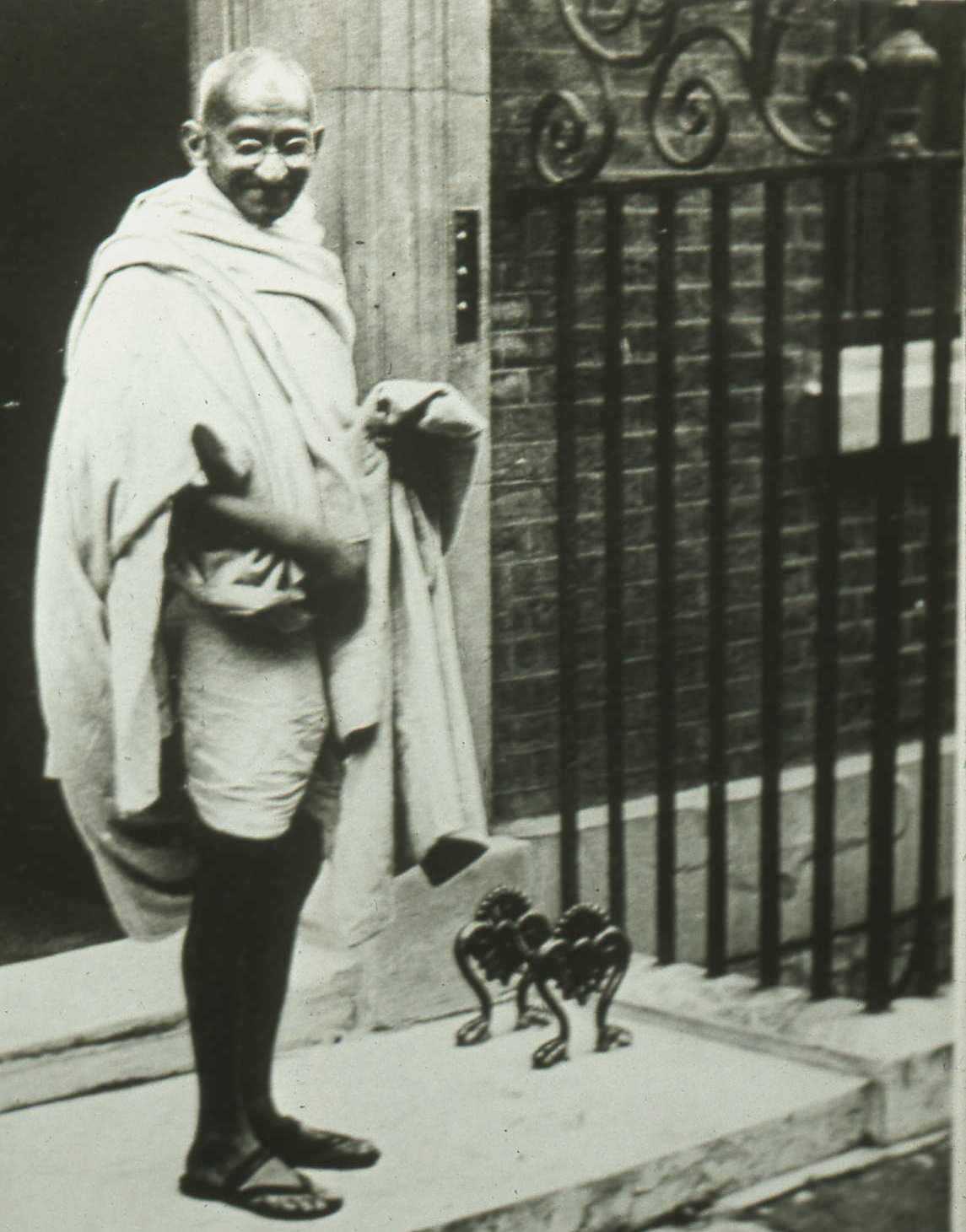
![[pix]](images/1935.MVA.plan.jpg)
![[pix]](images/1942su%20Htl%20broke%20SSR%20treaty%20xdj%20CIV851.jpg)
![[pix]](images/1941su%20krx%20flee%20GRM~%20Wgn20.jpg)
![[pix]](images/1941fa%20GRM~%20in%20SSR%20mud%20CIV192.jpg)
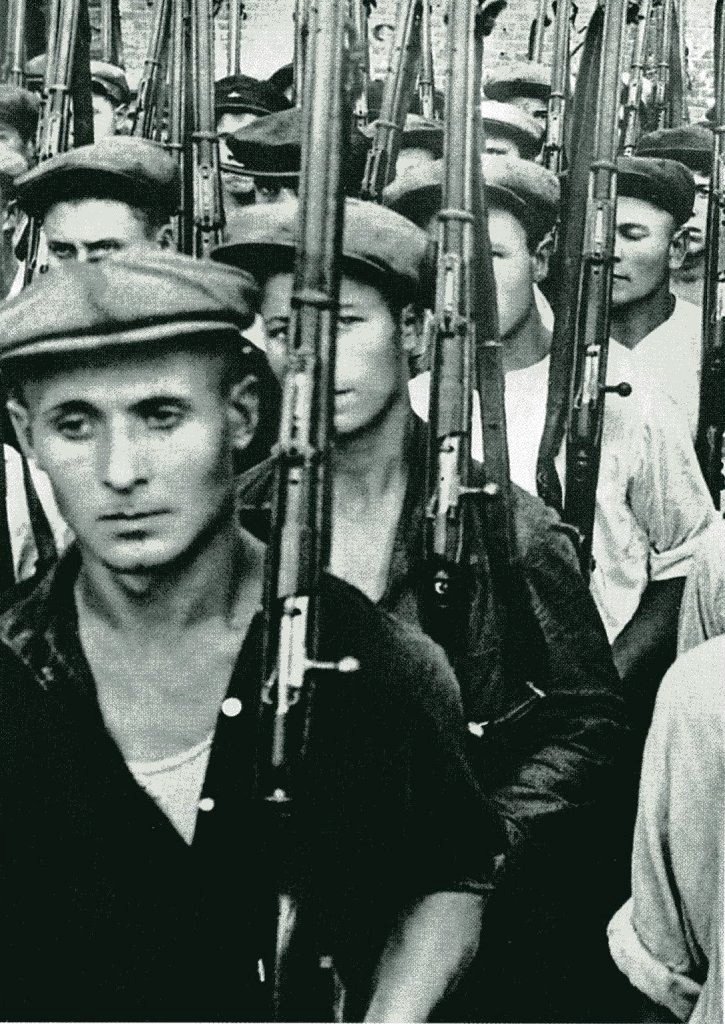

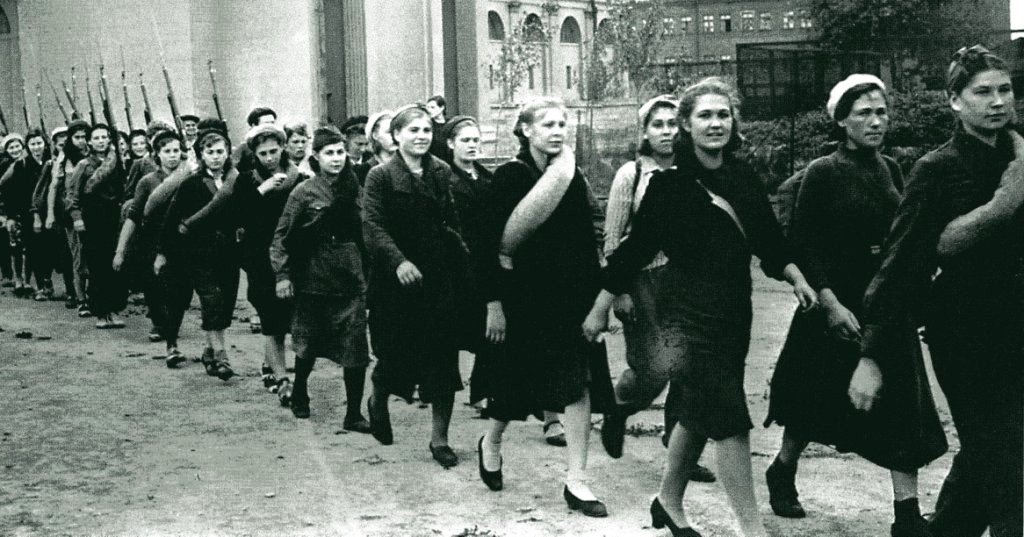
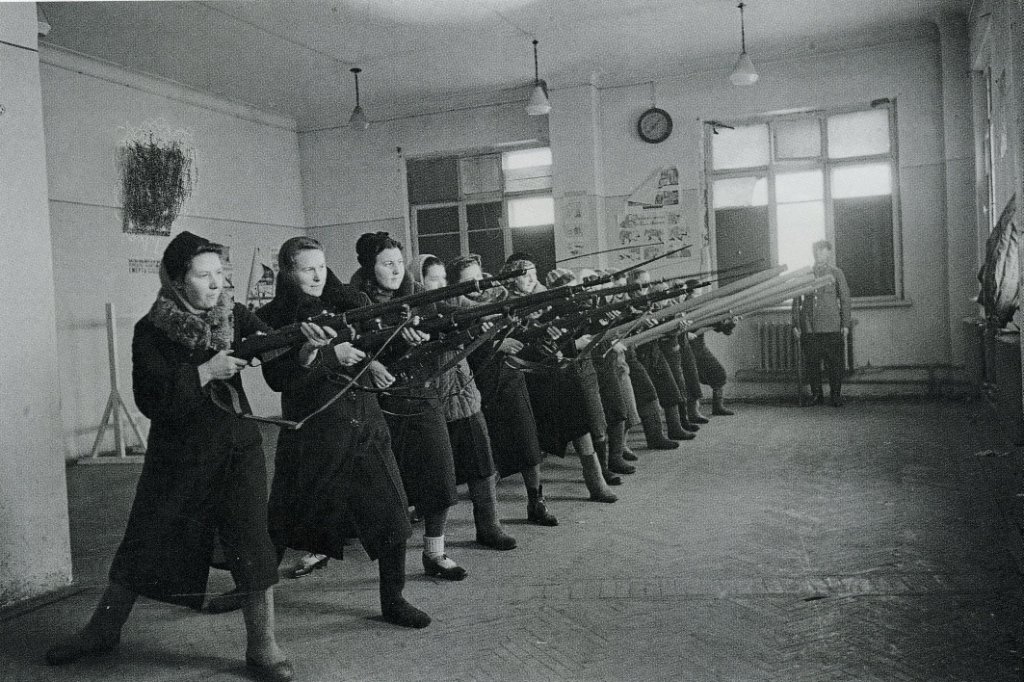
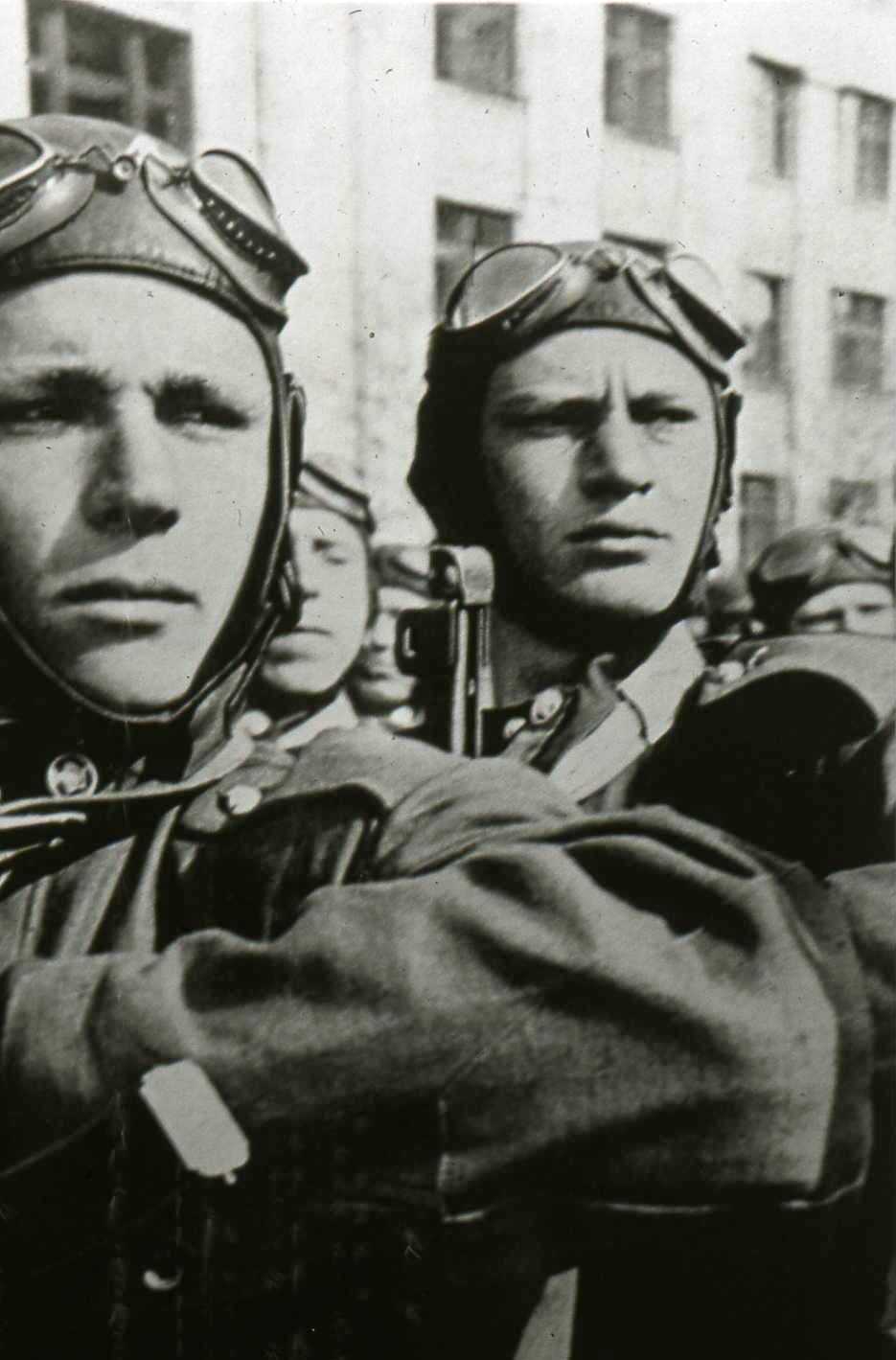
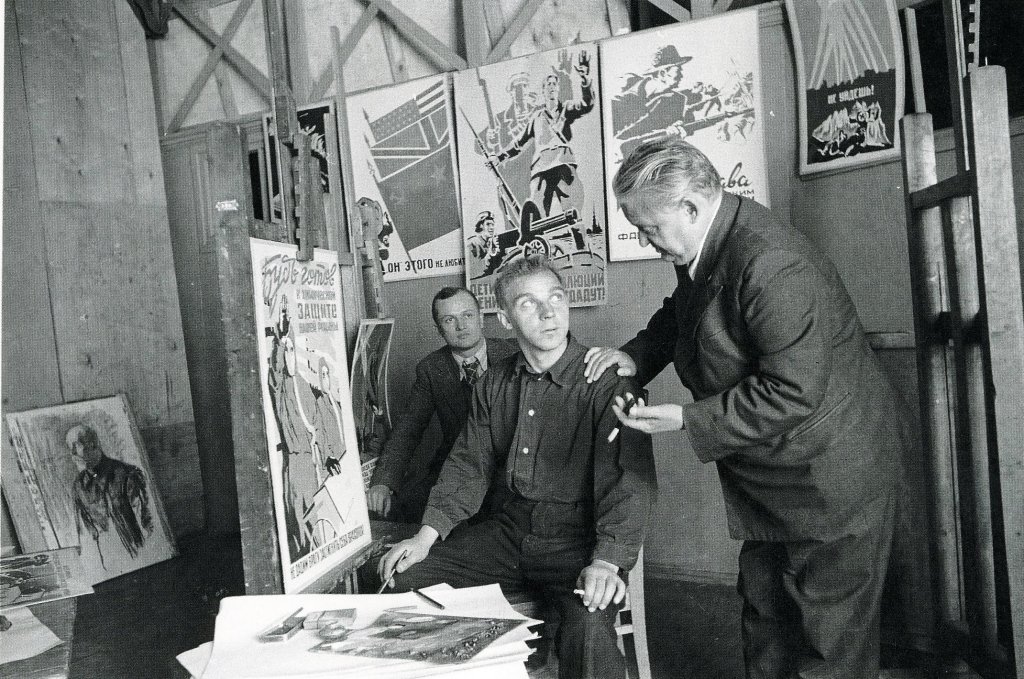
![[pix]](images/1941c%20Rodina-mat'%20zovet%20CIV852.jpg)
![[pix]](images/1942%20How%20to%20kill%20Nazi%20tank%20xdj%20CIV323.jpg)
![[pix]](images/1942%20Partizans%20kill%20enemy%20xdj%20CIV322.jpg)
![[pix]](images/1941%20MVA%20Gorkii%20u.%20unloading%20wood%20Wgn39.jpg)
![[pix]](images/1941fa%20MVA%20wmn%20inspects%20shells%20Wgn38.jpg)
![[pix]](images/1941su%20MVA%20Pl.Revoliuts%20GRM%20airplaine%20down%20Wgn30.jpg)
![[pix]](images/1941no07-MVA.Kras.plw.to.front-DNa120.jpg)
![[pix]](images/1941no%20Red%20Sq%20parade%20xdj%20CIV854.jpg)
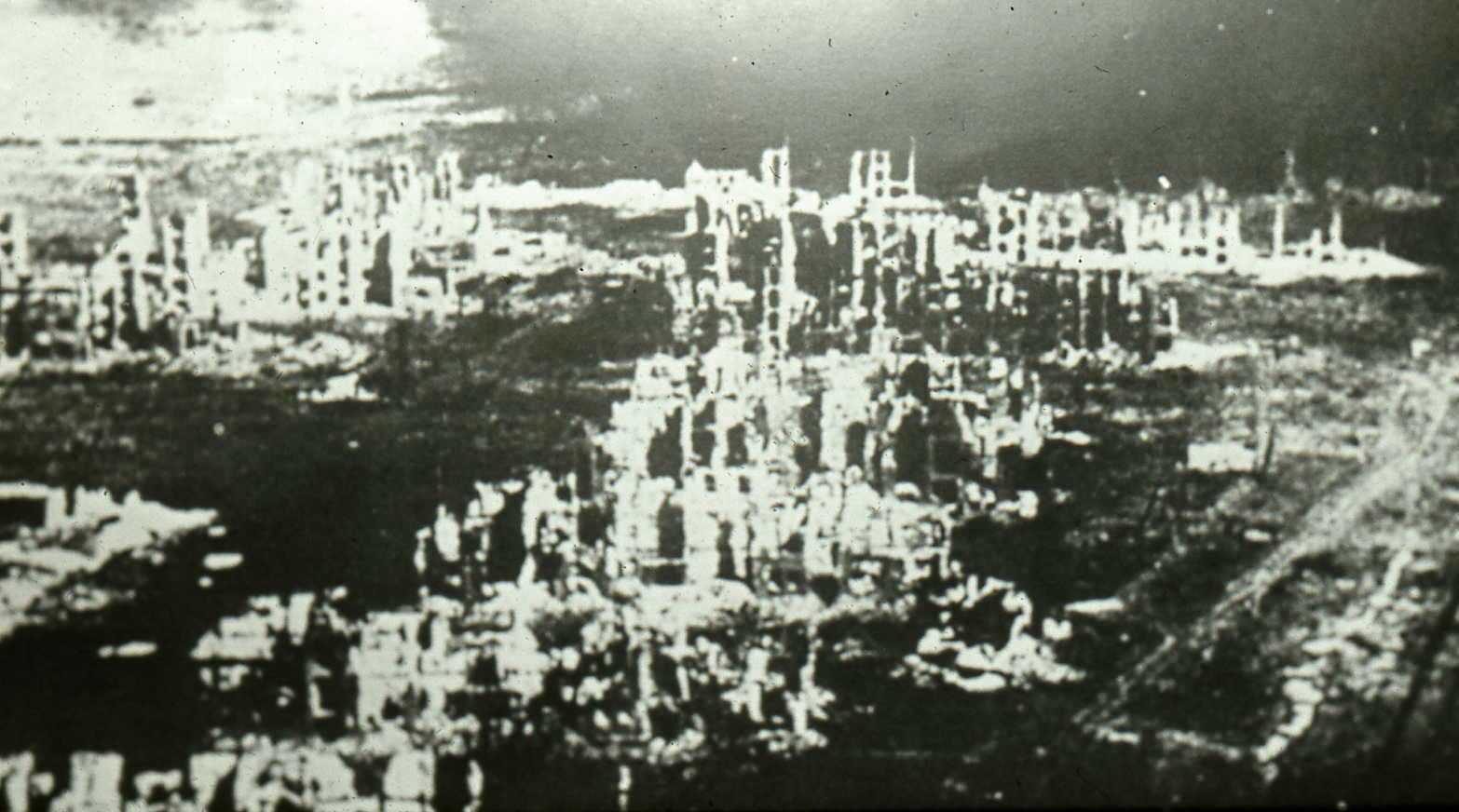
![[pix]](images/1942c%20WW2%20SSR%20sld.jpg)
![[pix]](images/1943%20GRMans%20retreat%20CIV353.jpg)
![[pix]](images/1943no%20KIV%20Krewwatik%20blvd%20liberated%20Wgn25.jpg)
![[pix]](images/1943no%20KIV%20liberated%20Wgn24.jpg)

![[pix]](images/1945.Dresden.jpg)