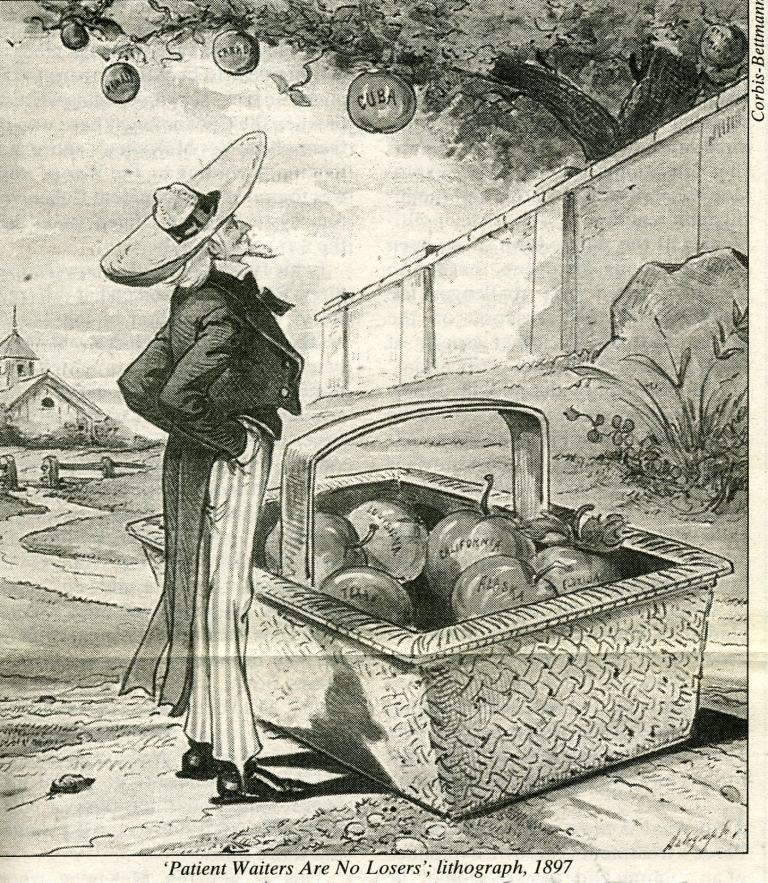
The influence and authority of Russian mass media -- both official and
independent publishing outlets -- continued to grow [ID]
\\
*--Karel Durman, The Time of the Thunderer: Mikhail Katkov, Russian Nationalist Extremism, and
the Failure of the Bismarckian System, 1871-1887 (1988)
*--Michael R. Katz,. Mikhail N. Katkov: A Political Biography, 1818-1887 (1966) [noUO]
*--Louise McReynolds, News Under Russia's Old Regime: The Development of a Mass-Circulation Press (1991)
*--LOOP on Censorship
<>1863ap13:Russian Interior Minister Petr Valuev submitted
memo on the relationship of state and society, a statist version of "civil
society" [Raeff2:122-131
- Valuev was a master of
political "co-optation", that is, the harnessing of independently
mobilized social energy to officially authorized tasks
- Valuev also led the official assault on the spontaneous public movement to
create a nation-wide system of elementary education
- 1880s:Ivan Kramskoi portrait of older Valuev in
Olga's Gallery
\\
*--Alan Kimball, TXT on Valuev and public
mobilization in the 1860s
<>1863je18:Russian
university reform and other educational reforms [VSB,3:610-11]
*--Russian texts, Obshchii ustav... etc. [RA2:382f, 411f, and 417f]
*--The "great reforms" continued, but notice later
official reactionary measures
\\
*--P. Alston, Education and the State in Tsarist Russia
*--Danierl R. Brower, Training the Nihilists: Education and Radicalism in Tsarist Russia
*--Abbott Gleason, Young Russia: The Genesis of Russian Radicalism in the 1860s (1980)
*--Alan Kimball, "Student Interests and Student Politics: Kazan University"
<>1863fa:Russian pundit Chernyshevskii
while imprisoned by tsarist authorities published a novel, What Is to Be Done? [1989 translation is better than 1986 |
E-TXT#1 |
E-TXT#2 |
E-TXT#3]
- It has been described as an awful novel but the greatest awful novel ever written
- Its greatness derived mainly from the immense popularity and influence it had on
an emerging reading public and, subsequently, on Russian political
culture [EG | CF:KMM:141-54]
- One of the novel's characters was modeled on the physiologist and psychologist Ivan Sechenov
- See Sechenov's Autobiographical Notes and Selected Physiological and Psychological Works (MVA)
\\
*2016de11:Politico| "The Most Politically Dangerous Book You’ve Never Heard Of"
[E-TXT]
<>1864:1866; USA | Second railroad act
followed first
- Western-Union effort to link USA and Europe via Alaska and Siberia failed
when Atlantic cable [pix] eliminated need, but
great Atlantic-to-Pacific project moved ahead
- 1864fe09:USA government grant to the State of Kansas was accepted and handed directly to the newly formed
private industrial company, Achison, Topeka and Santa Fe Railroad Company [AT&SF]
- AT&SF was driving a line from Kansas, through Indian Territory, to the Gulf of Mexico at Galveston, Texas
- Railroads found their way directly into US folk culture, for example the popular song "Wabash
Cannonball" [TXT with
great variations sung by = Hank Snow |
Boxcar Willie |
Ernest Tubb |
Roy Acuff |
James Coffee (dandified by orchestral accompaniment) |
Randy Latshaw |
Tomy (homemade w/toy trains) |
Johnny Cash |
Carter Family |
Flatt and Scruggs |
Minnesota Ranch Hands |
Tumble Weeds |
Kansas State University pep band (at 1min 10sec mark) |
Ronny (auf Deutsch)] |
Off the Wabash theme, but beautiful, look at this more recent footage of
diesel
enjine clearing snow from the tracks
- As suggested in that last performance of "Wabash Cannonball" just above,
railroads found their way into pop-art cultures the world around
- So we give full rein to our iron horse as we gallop over a wide global
terrain on the railroad LOOP
- The end of the Civil War can be taken as the beginning of the era of industrial transformation of
USA economy
\\
Saul,1:360-70
<>1864:1876; London was the HQ of
The International Workingmen's Association [later known as "The First International"]
- 1871:General Rules of the International Workingmen's Association [DPH:205-7]
- "Socialism" was beginning to take on organized existence in
Europe, sometimes in close association with wage-labor, sometimes less close
- A epoch of international organization was dawning in "The West", a step
up from temporary conferences and congresses [EG]
towards creation of permanent institutions of international arbitration
- EG=See 1864:1949au12; just below
\\
*--Wki
<>1864:1949au12;
Geneva Convention signed as an international treaty, then augmented and
perfected over the next nine decades
- The Geneva Convention would be augmented by 3 further conventions over the next 84
years [TXT~]
- 1906:Second Geneva Convention signed
- 1929:Second augmented
- 1949au12:Third and fourth Geneva Conventions signed,
with signing of renewed and augmented First and Second conventions
\\
*--Wki
*--LOOP on "international organization"
<>1864wi:Russian novelist Fedor
Dostoevsky criticized Chernyshevskii-style materialist philosophy in 1st half of Notes
from the Underground [TXT | CF=
Edie,2:240-9]
*--Dostoevsky presented one of the first powerful critiques of emerging
European "scientistic" trends
<>1864ja01:Russian state made significant
concessions to
provincial and local public and their need for self administration = The "Zemstvo
Reform" [VSB,3:613-4 | DPH:285-7]
- Russian text, Polozhenie o guberskikh i uezdnykh zemskikh uchrezhdeniiakh [RA2:212f]
- This was arguably the second most important "great reform"
- For one thing, zemstvos became the institutional home of a significant
liberal oppositional movement
\\
*--Terence Emmons and Wayne S. Vucinich, eds. The Zemstvo in Russia: An Experiment in Local Self-Government
*--Abbott Gleason, Local Opposition to Autocracy, 1864-1905
*--Emerging Democracy in Late Imperial Russia
<>1864fe19:Polish rebellion
allowed Russian officials to pass "progressive" reforms that weakened indigenous
Polish resistance to Russian power
<>1864oc29:Russian
Foreign Minister Aleksandr Gorchakov distributed to other European powers a
memo on Central-Asia [VSB,3:610 | BNE:168-70]
- Gorchakov compared Russian imperialism with general European imperialism, that of "all civilized
states that come into contact with half-savage nomadic tribes without firm social organization".
Here's what he said =
- Like USA, France, Holland [Netherlands] and England, Russia felt compelled
to cross its borders and its frontiers to establish "a certain authority over its
neighbors, whose wild and unruly customs render them very troublesome"
- Expansion into new territory created another even more remote frontier where yet other "wild and
unruly" peoples begin to cause trouble
- Preventive movement outward forced yet further movement, and then further
- The choice was to give up or "advance farther and farther into the heart of savage lands"
- Russia advanced "not so much from ambition as from dire necessity, where the greatest
difficulty lies in being able to stop" [SAC emphasis]
- Compare this argument with the English argument [ID] and with an
early US argument [ID] and a later US argument [ID]
- Map of Russian Empire and
its "sphere of influence"
- Note the long southern sphere of influence toward the English dominated Near Eastern territories
- The future WW1 "Southern Front" located itself within this long southern sphere of
influence [ID]
- Don't miss Alaska there on the far left of the map, and notice the North American "sphere of influence" further
south down the Pacific Coast
- Gorchakov's memo was in part defending and justifying Russian imperialism
- But at the same time he sought to cool growing competitive heat in the relations between European
powers as they careened outward toward one another's jealously guarded imperialist peripheries =
- He hoped to keep Europeans from interfering in what he took to be
Russian affairs in that NE half of the "Middle East" the Russians called "Central-Asia"
[Continue LOOP on "AfroAsia"
]
- He also sought to prevent Europeans attacking Europeans as they all responded to the imperatives
of the Great Game
- 1867: "South-Asia", in the Indian city Deoband, near Dehli, local Muslims took action to bring an end to that
very condition described by Gorchakov as "tribes without firm social organization"
- In Deoband, Muslim's organized themselves against English rule
- They were beginning to take up defensive self-organization against European imperialism
- They sought to define Islamic civilization as a force such as Gorchakov called "a firm social organization"
- They centered their activities on the village madrasa, the fundamentalist Islamic school
- The madrasa emphasized training the young, especially the poor, in fundamentals of the Koran and
the sharia (Islamic law)
- Over the next century and a half, Deoband issued about 250,000 fatwa (instructions on proper Muslim behavior)
- By the late 20th century, the Taliban, with US help,
had in much the same way become a serious force among Islamic peoples of that region
\\
*--Robert D. Crews, For Prophet and Tsar: Islam and Empire in Russia and Central Asia
*--E. Allworth, ed., Central Asia
*----------, Nationality Question in Soviet Central Asia
*----------. Tatars of the Crimea: Their Struggle for Survival...
*--S. Becker, Russia's Protectorates in Central Asia: Bukhara and Khiva, 1865-1924
*--Richard A. Pierce, Russian Central Asia, 1867-1917:A Study in Colonial Rule
*--Serge A. Zenkovsky, ed., Pan-Turkism and Islam in Russia
<>1864no:USA CO Ft.Lyon area | In good faith, CO Volunteers
Colonel Edward Wynkoop convinced Native American Cheyenne tribe to place selves under
protection of the US military [Hutton:56]
- Shortly, Colorado Governor John Evans and the Colorado Volunteers, under the command of
John Chivington, attacked the peaceful village and declared a war of extermination against
the Cheyenne
- The event came to be known as the Sand Creek Massacre and marks the symbolic
beginning of several years of warfare on the Great Plains
- The ambush unsettled the whole territory from the Platte.R south to Red.R
- Military commander/administrator Philip Sheridan, a well-known Civil War commander, was now
assigned to duties in the war against Native Americans on the Great Plains
- He later put stress on the importance of this period in his and his nation's life
- He referred to it vaguely as the beginning of Indian harassment of settlers and disruption of stage
and railroad routes [ShePH.vsp,2:282. (03):this number in parentheses
records the order in which Sheridan's memoirs accounted these events]
- Sheridan made no mention of the Sand Creek massacre
- 1864:1870; KS the scene of "Indian troubles" as military shifted its
attention from Civil War and occupation of the defeated South in the era of Reconstruction
- 1883:Early Kansas historian William Cutler described the era
[W]
- 1864:1868; KS Ft.Larned | Significant construction of bridges, stone & lumber buildings
- Military projects were designed for "protection" of the Santa Fe Trail
- 1866:USA Great Plains divided into military administrative units, "divisions", "with a view
to controlling the Indians"
- Division of Missouri was created and put under the command of General Sherman
- "Former temporizing" had made Native Americans "confident" & "defiant" [(15) ShePH.vsp,2:297]
- 1866:Major General William Hazen, a veteran of the Indian wars even before the
Civil War, described his policy outlook: "allot to each tribe, arbitrarily, its
territory or reservation, and make vigorous, unceasing war on all that do not
obey and remain upon their grounds" [Hutton:43]
- 1866su:KS | "military operations" against "hostile tribes"
of Native Americans commenced
\\
*2016ap15(3:30-5pm): UO campus, 375 McKenzie | Ari Kelman, the McCabe Greer Professor of History at Penn State
University, will present a talk based on his A Misplaced Massacre: Struggling Over the Memory of Sand Creek.
The Sand Creek Massacre is one of the most infamous cases of state-sponsored violence in US history. Kelman'
lecture and book examine the ways in which generations of Americans have struggled to come to terms with the
meaning of both the attack and its aftermath, most publicly at the 2007 opening of the Sand Creek Massacre National
Historic Site
<>1864no20:Russian legal
reform [VSB,3:614-16] Russian text Uchrezh. sudeb. ustanovlenii [RA2:278f]
- Legal reforms created independent judiciary, trial by jury, the right to legal representation, and
a large promise of "rule by law" in civil cases
- They extended to recently freed peasant the right to bring suit at court
- They also caused large numbers of professionally oriented Russians to take up careers as lawyers
- This was an important moment of "modernization" in the long history of
Russian "rule of law" [LOOP on history of Russian "law codes"]
- More than a dozen years later, the trial of Vera Zasulich
confirmed the worse fears of those who opposed this "great reform"
\
*--Mironov,2:223-365 puts late Imperial law in the broadest Russian historical
and social context, reaching back to medieval times
*--Richard Wortman, The Development of a Russian Legal Consciousness
*1981ap:JGO:161-84 | T. Taranovski, "The Aborted Counter-Reform: The Muravev
Commission and the Judicial Statutes of 1864"
*--S. Kucherov, Courts, Lawyers and Trials under the Last Three Tsars (NYC:1953)
<>1864de08(NS):Vatican issued Pope Pius IX's "Syllabus
of Errors" [DPH:233-41], including "Errors about civil society, considered both
in itself and in its relation to the Church" [237-9]
*--Other Catholic Church/state documents [241-5]
<>1865:1869; Russian novelist at the dawn of world fame,
Leo Tolstoy
(1828:1910) produced his first great novel War and Peace
- Just for fun, try this brief comic-book version of the massive novel =
[TXT,part.1 |
TXT,part.2]
- Tolstoy was a central figure of the Russian "golden age" in its late novelistic phase, from the 1850s to the 1880s
- His most important writings in this "golden age" =
- 1851:1857; Childhood, Boyhood, Youth (written while serving in the military in the Caucausus)
- 1854:Sebastopol or Tales of Sevastopol, Crimean War battle reportage in the journal
Sovremennik
- 1861:1862; Tolstoy on Education and very similar translation (as if a close copy)
Tolstoy on Education: Tolstoy's Educational Writings
- 1875:1877; Anna Karenina
- 1884:"Death of Ivan Ilyich"
- He outlived the Golden Age, and was possibly even more widely influential in
the Russian "Silver Age" a quarter of a century later
\\
*--Wagar on the Golden Age of Russian culture [TXT]
<>1865ja11:Moscow noble
(gentry) assembly, following the lead of the great landowner V.P. Orlov-Davydov, addressed
Alexander II with a request that he complete the zemstvo reforms "by calling
together a general assembly of elected representatives from the Russian land"
[VSB,3:616 | "Vsepoddaneishii adres moskovskogo
dvorianstva" (GRV:201-2)]
- The Moscow noble assembly presumed that only nobles would elect and be elected
- However "establishmentarian" the Moscow assembly was, the nobles gathered there suggested
something quite radical = A national representative political body to complete
the local, district and provincial Zemstvo institutions
- Moscow nobles sought to "crown the edifice" of national representative
government, expanding from the grass-roots upward
- Officials were shocked to read the following words addressed to Emperor Alexander =
The nobility has always been the firm mainstay of the Russian throne. Not being officials of the
government and not enjoying the rewards that such service brings, doing their duty without remuneration
for the benefit of the fatherland and the public order, these men, by virtue of their very position
within the state [as elected representatives], will have the mission of preserving those moral and
political principles that are so valuable for the people and so necessary for their true
well-being, and upon which rests the structure of the state
<>1865mr:China| English firm, the Hongkong and
Shanghai Banking Corporation, Ltd, [HSBC] founded. Continuous existence into 21st c.
*--HSBC became a major expression of British global financial projection of metropol power in Asia and the rest of the globe
*--Internet home page, official bank history
\\
*--Wki for a full summary of the bank's globe-striding history
*2013je:TED|>Gooch,Charmian, "Meet Global Corruption's Hidden Players"
[E-TXT]
Well, it's not going to come as any surprise for me to tell you that banks accept dirty money, but they prioritize their profits
in other destructive ways too. For example, in Sarawak, Malaysia. Now this region, it has just five percent of its forests left
intact. Five percent. So how did that happen? Well, because an elite and its facilitators have been making millions of dollars
from supporting logging on an industrial scale for many years. So we sent an undercover investigator in to secretly film meetings
with members of the ruling elite, and the resulting footage, well, it made some people very angry, and you can see that on
YouTube, but it proved what we had long suspected, because it showed how the state's chief minister, despite his later denials,
used his control over land and forest licenses to enrich himself and his family. And HSBC, well, we know that HSBC bankrolled the
region's largest logging companies that were responsible for some of that destruction in Sarawak and elsewhere. The bank violated
its own sustainability policies in the process, but it earned around 130 million dollars. Now shortly after our exposé, very
shortly after our exposé earlier this year, the bank announced a policy review on this. And is this progress? Maybe, but we're
going to be keeping a very close eye on that case.
*--LOOP on "finance"
<>1865ap06:Russian censorship granted
writers, publishers and readers "some degree of relief" in a two-minded reform [VSB,3:616-17]
*--Russian text O darovanii nekotorykh oblegchenii... etc. [RA2:438f and 440f]
*--"Great reforms" continued
<>1865je28:Russian State Council and Interior Ministry
reformed laws on Jewish pale, allowing mechanics, distillers,
brewers, master craftsmen and artisans in general to live anywhere in the Empire [VSB,3:617-18]
<>1866ja03:Russian financial reform
(Vrem. polozh. o kontrol [RA2:204f])
*--The deep need for fiscal and military reform was addressed only late in the process
*--Then it had to proceed under the influence of an official reactionary mood that arose
following an attempt on the life of the tsar =
<>1866ap04:Russian terrorist Dmitrii Karakozov
tried to shoot Alexander II
- This was the second blow to civic activism and reform [ID the first]
- In "society", revolutionary activities now intensified and went underground
- A larger body of political activists were "burnt away" by tsarist suppression and fear of serious commitment to conspiracy
and revolution
- A small body of largely youthful activists, with "nothing to lose", continued the struggle
- Among government figures, reactionary officials felt vindicated in their opposition to progressive change
- They could now assert that there was a causal link between reform and terrorism
- The pace of "great reforms" slackened
\\
*--Claudia Verhoeven, The Odd Man Karakozov: Imperial Russia, Modernity, and the Birth of Terrorism
*--Alan Kimball review of Verhoeven [TXT]
*--VRR, ch.14
<>1866:Russian novelist
Fedor Dostoevsky published Crime and Punishment
[E-TXT]
<>1866su:USA Assistant Secretary of
the Navy Gustavus Fox in Russia [VSB,3:618-20]
<>1866no24:Russian state peasant reform
*--State peasants represented about half the village population of the Empire
*--This reform preserved their advantages over ex-serfs recently emancipated from private gentry
ownership [VSB,3:620-1]
<>1867:London | Karl Marx, Das
Kapital, volume one, published
*--This first volume and the volumes that followed achieved a status equal to that of Adam Smith's Wealth of Nations
[ID], the original globally influential study of political-economy
*--Here are two examples of influential concepts set afloat in world consciousness =
"Primitive accumulation" and "surplus value"
[ID]
<>1867:Paris Universal Exhibition (world's fair)
*--French engineers Léon Droux and Léon Rueff described technological and industrial
advancements [BNE:145-6]
<>1867:1876; USA Federal Government
imposed Reconstruction Act to administer defeated South for nearly ten years
<>1867mr30:Russia and USA signed treaty selling Alaska
to USA [DIR2:284-7]
- For decades, Russian Alaska had been filling with a spontaneous stream of
USA immigrants
from the "lower 48"
- This human influx helped convince the Russians that Alaska would someday soon be
dominated by American pioneers and should be sold while the selling was good
- A 120-year Alaska adventure was over for Russia
- Earlier Russian ambitions through Siberia to the New World gave way now to ambitions directed south and east from Siberia
toward an emerging global hot-spot, Manchuria and Korea
- In these years Secretary of State Seward also sought to gain possession of
the Virgin Islands, Canadian British Columbia, and Greenland
- Canada also got many long looks from ambitious USA officials in the
time of U.S. Grant'
s presidency
- A half century after purchase of Alaska, in a time of domestic US economic crisis, followed soon by
international crisis, the fate of Alaska Territory took another turn
\\
*--Saul,1:185-93, 267-311, 385-96
*--Howard Kushner, Conflict on the Northwest Coast: American-Russian Rivalry in the Pacific Northwest, 1790-1867
(see ch.6: "The Oregon Question and Russian-America")
*2008sp:PNQ#99,2:73-91 | Roxanne Easley, "Demographic Borderlands: People of Mixed Heritage in the Russian American Company and
the Hudson's Bay Company, 1670-1870"
*--Stuart Ramsey Tompkins, Alaska: Promyshlennik and Sourdough (1945)
<>1867ap:Vienna | Austrian Emperor Franz Joseph
declared the Empire divided into a "Dual Monarchy", the Austro-Hungarian Empire
*--The newly created dual monarchy went under several names =
Wki
*--Franz Joseph maneuvered his complex empire into position for its final half-century flare, an adventure that
ended in the catastrophe of WW1
<>1867ap01:India
became Crown Colony as rule of the transnational imperialist corporation, The East India Company,
was brought to an end
<>1867my:Moscow | Second Slav Congress a critical moment in
the shift of Panslavism from cultural doctrine toward Russian
imperialist ideology
- National liberation of the "little Slavs" from Ottoman Turkish (and perhaps
Austro-Hungarian) imperialist dominion was a useful idea as Russia
continued to play its role in the Great Game
\\
*--Hans Kohn, Pan-Slavism: Its History and Ideology
*--Donald Fanger, "On the Russianness of the Russian Nineteenth-Century Novel". In
Stavrou.ART:40-56
*--Charles Katsainos, The Theory and Practice of Russian Panslavism in the Light of Russia'
s Expansion
in the Balkans until 1912
<>1867jy20:USA WDC | In anticipation of the
67oc21:Great Council treaty gathering in KS Medicine Lodge, Congress created the Indian Peace Commission
- What followed was a growing and one-sided contest between civilian and military government officials =
- 1867se05:MO St.Louis | General Philip Sheridan was reassigned from
military administration of "Reconstruction" in the defeated South and now
transfered to Ft.Leavenworth KS,
- 1867oc21:KS Medicine Lodge | Great Council led to the Medicine Lodge
Treaty [W]
- 1868ja07:WDC | "Report to the President by the Indian Peace
Commission" [TXT]
- However, the government had already dispatched Sheridan and almost immediately got underway with
preparations for a massive attack on Native Americans in the plains states
- 1868fe29:KS Ft.Leavenworth | General William Tecumseh Sherman was now
commander of the Division of the Missouri, consisting of 6000 soldiers in 27 forts
- Sheridan took up command of Sherman's department #3 (of 4)
- Sheridan distinguished himself in the War Between the States
- He was ready now to distinguish himself in the war between USA and Native Americans, even as apparent efforts
at peace-making were under way
- 1868jy:WDC | Congress finally appropriated $500,000, not to the civilian Indian Agency but
to Sheridan and the military
- USA relations with the native nations were now securely in the hands of military and railroad managers
- In preparation for the war against Native Americans, Sheridan moved his HQ to KS Ft.Hays, now Union Pacific Railroad
terminus; good depot for supplies, a strategic storage point for the US
cavalry's "commissaries"
- "Protection of the railroad was Sheridan's primary
concern" [Hutton:39] [MAP]
- 1868jy:WY | The army forced Union Pacific Railroad President Thomas Durant to accept
Chief Engineer Grenville Dodge's route for building the railroad further
westward
- Dodge was an old comrade of the Civil War military
- All were West Point graduates
- US President Grant and General Sherman played a role here too [Hutton:40 lxt]
- Many motives swarmed around this tragic tale
- NB! also military effort to preserve and protect its budgets from demobilization after the Civil War
and "Reconstruction"
- For example = 1868:Fifth Cavalry was not demobilized when no longer needed for
"Reconstruction" of the South
- It was dispatched to KS [Hutton:50]
- Sheridan prepared 6-mo winter campaign (like the cavalries of Chinggis-khan [ID],
Sheridan's cavalries preferred to strike their targets in winter). Sheridan took these steps =
- "Asked for additional cavalry"
- "Applied for regiment of Kansas volunteers"
- Sheridan's application was approved, and the organization of regiment was well begun in KS Topeka =
- Supplies were amassed
- Guides were hired
- 1868au:se;KS & CO frontier settlers suffered 79 killed in Indian raids
- Now Sheridan began to attack villages in order to scatter Native Americans
- Only policy was that Indians "be soundly whipped, and the ringleaders in the present
trouble hung [i.e., hanged], their ponies killed, and such destruction of their property as will
make them very poor" [Hutton:38]
- Sheridan addressed a joint session of TX House and Senate =
These men, the buffalo hunters, have done in the last two years, and will do more in
the next year, to settle the vexed Indian question, than the entire regular army has done
in the last thirty years. They are destroying the Indians'
commissary; and it is a
well-known fact that an army losing its base of supplies is placed at a great
disadvantage. Send them powder and lead, if you will; but for the sake of lasting peace,
let them kill, skin, and sell until the buffalo are exterminated. Then your prairies can be
covered with speckled cattle, and the festive cowboy, who follows the hunter as a second
forerunner of an advanced civilization. [Rister,No Man'
s Land:29]
- Here Sheridan's military vision foreshadowed the famous but non-military vision of
the Turner Thesis
- Sheridan put the matter in the context of expanding USA power rather than expanding USA civilization
- Sheridan helps us see that the Turner thesis is able to frame both frontier and imperialist expansion
- 1868au:se; MO St.Louis |General Sherman turned against the Medicine Lodge Treaty which
had not in any event been ratified, nor had any of the promised gifts and assistance been
given to the Native Americans
- Military and civilian authorities were at loggerheads
<>1867au21(NS):North German Confederation's new Reichstag
had delegates August Bebel (1840-1913) and Wilhelm Liebknecht (1826-1900), the first socialists so elected
<>1868:1912; Japan entered
into industrial modernization in the 44-year era called "Meiji Restoration"
*1914:|_Japanese government documents, Walter Wallace McLaren, ed. [UO]
*--Japanese public figures Fukuzawa Yukichi [ID] and
Shibuzawa Eiichi [ID] gave expression to a new
entrepreneurial, industrializing and modernizing ethos [SWH:358-63]
*--In another reflection of late 19th-century global trends, Yamagata Arimoto
[ID] gave expression to a Japanese variation on
militant Chauvinism [ID] [SWH:340-5]
\\
*--"The Rise and Fall of the Japanese Empire 日本帝國的興衰" [YouTube]
*1975:NYC,Free Press|>Black,Cyril E., et al|_The_Modernization of Japan and Russia: A Comparative Study| ((UO))
<>1868:1869; Vologda Guberniia, in far NE
Russia | Politically exiled philosopher and social theorist Petr Lavrov (1823-1900)
wrote Historical Letters [cf. Edie,2:123-69 | VSB,3:650-1]
- Historical Letters explored the choice which the 19th century seemed to present
mankind, a choice between history and science,
between "humanities" (the record of human experience) and the more universalistic laboratory
and math-based ways of knowing
- Before arrest, Lavrov was a professor of mathematics and an almost pedantic historian of thought
- But now he came down on the side of history
- Lavrov sought to counter the hyper-scientism or positivism of Dmitrii Pisarev [ID]
- He encouraged youth and the older generation as well to the activist life in
the public realm as "critical-minded individuals"
- 1856:1866; In the "pre-revolutionary" decade that preceded arrest,
imprisonment, exile, and then commitment to revolutionary struggle, Lavrov inspired a whole generation of thinking
and reading youth [EG]
- He described his philosophy as "anthropologism"
- By anthropologism, Lavrov did not mean the emerging empirical social science "anthropology"
but a philosophy that put anthropos [ID] at the heart
of all questions about what was real, actual and right
- Lavrov emphasized the subjective (the experiential, even very individual)
human foundations of all knowledge
- But he also had his way of understanding and respecting the materialist view of the world and the dominant "positivist" trends of his
century
- For that he was sometimes accused of being "eclectic" ["cherry picking" among powerful intellectual trends]
- But he once wrote that the phrase "I WANT to know" was the matrix of advanced human consciousness. He emphasized
"want" or willful intellectual desire
- In his approach to that insight, he had in his time and place little by way of pre-planted
intellectual cherry orchards to pick among
- In this way he predicted ways of thinking more common to the century that followed
him, a post-scientistic century, than to any that had come before
- 1870:In NE Russian exile in Vologda,| Lavrov gave up on receiving a pardon from tsarist officials for
the largely trumped up charges brought against him in 1866 [ID]
- He fled from exile and went into west European political emigration in
Paris for
the final thirty years of his life
- As an émigré, Lavrov quickly (and somewhat surprisingly) assumed a
position of high moral esteem and editorial responsibility within burgeoning revolutionary
movements in Russia
- 1869:Nikolai Mikhailovskii (1842-1904), published "What is Progress" [Edie,2:170-98,
esp. 177-87]
- Mikhailovskii was at the very beginning of a long career in
journalism and was much influenced by Lavrov's "subjective sociology"
- Mikhailovskii was now launched on a career as "public intellectual"
- He was one of the first to come to maturity in the years in which Russians actually used
the word "intelligentsia" [ID]
- Like many of his generation, he took inspiration from Lavrov's realistic subjectivism
- However, also like many contemporaries, he had only a slight inclination toward Lavrov's
eventual full commitment to the cause of revolution
- Mikhailovskii remained a moderate supporter -- never "underground" or émigré --
of a progressive political trend that came to be called "legal populism" (in contrast with "revolutionary
populism")
\\
*--LOOP on "populism"
<>1868:CUBA rebelled unsuccessfully against Spanish
version of European imperialism
*--After the independence revolutions of the 1820s
[ID], Cuba and Puerto Rico were now all that remained
of the Spanish empire in the New World, and a pitiful remainder they were
<>1868:England, London | Herbert Spencer's Social
Statics described a new "social Darwinism" with emphasis on "natural
selection" and the beneficial results that came from "the survival of the
fittest", not just out there in the animal and vegetable world but also in
the social world of humans [CCC2,2:727 | CCC3,2:834]
- Social Darwinism influenced anti-welfare and anti-egalitarian politics
around the globe and gave an intellectual justification for some of the suffering that resulted
from "laissez-faire" policies at home and imperialism abroad. It gave scientistic plausibility
to various flourishing forms of militarism as well
- 1869:Robert Galton published Hereditary Genius, a pioneer study
inspired by Darwinian biological ideas
- Galton's work over the next few years resulted in the creation of a "science" of human
reproduction called "eugenics"
- Eugenics is a word based on Greek morphemes and implying "well-born"
- Galton's was a somewhat surprising refurbishment of an "aristocratic" concept that had fallen
into disrepute
- The post-French-Revolutionary European world that had moved far from medieval social concepts of
superiorities by birth
- Eugenics provided a modernized "scientific" version of that medieval hierarchical social concept
- Science now applied itself, via eugenics, to the problems and prospects of managing the most intimate feature of
the most local of all local human institutions, the breeding nuclear family
- The application of biology to society was not the central intention
of Darwin, but his science was becoming an "ism" = DarwinISM
- Nor was it Spencer's explicit intention, but popularizations of his teachings also fed into a
flourishing racism in the late 19th century
\\
*--Rimlinger [TXT] offers a paragraph
on social Darwinism
*--[W devoted to definition
of "eugenics", with useful bibliography]
*--[W devoted to the history and
current status of "eugenics"]
<>1868:Russian pundit Dmitrii Pisarev drowned
*--Pisarev wrote "Nineteenth-Century Scholasticism" (1861), "Bazarov"
[a powerful review of Turgenev's novel "Fathers and Children"] (1862),
"Flowers of Innocent Humor" (1864), "The Realists" (1864) [ VSB,3:641-3
]
*--More Pisarev essays, see Edie,2:66-108, and Pisarev, Selected Philosophical,
Social and Political Essays
*--Described USA [Plotkin,Pisarev:35f]
<>1868se01:Switzerland
| Russian political émigré, the
anarchist activist Mikhail Bakunin
wrote "Our Program" for the revolutionary journal Narodnoe delo [People's
Cause] [VSB,3:644]
- The movement that gathered around
this publication and the volatile and now revived old activist Bakunin was a clear sign that the
poet Nikolai Nekrasov was right when he predicted that the policies of the
tsarist state bred revolutionists, not citizens
- Years earlier, Bakunin caught European attention during the Revolution
of 1848 [ID], spent time in Siberian
exile, escaped, and more recently rose to prominence in the First International
- Now in the final eight years of his life Bakunin began for the first time
to have some influence on social movements in Russia in the era of revolutionary populism here on the
eve of the great "going to the people"
\\
*--VRR, ch.2 on Bakunin and ch.15 on Nechaev
<>1868no26:USA Oklahoma Territories, Washita River |
General George Custer launched surprise winter-season attack on large Native American
village [W]
[MAP]
- The four-year Great Plains wars were drawing to an end
- Superior logistical strength and a firm resolve to wage aggressive war against all aspects
of Native American life were paying off for Euro-American invaders
\\
*--Hutton:56-76, 99-100 summarizes the Washita winter war with special emphasis on lessons applied there
from the Civil War, for example, from the bombardment of civilian targets in Vicksburg
<>1869:1895; Central-Asia |
Over these thirty years, Turkmen territories were absorbed into the Russian Empire
*--West of the Black Sea, Balkan tensions mounted as relations
deteriorated between Russians and Turks and nationalism
waxed among the Slavic peoples under Ottoman
imperialist dominion
*--The focus of the Great Game shifted to
south-eastern Europe and began to concentrate on vast transnational economic
issues involved in the coming of the "petroleum era" of global industrialization
[ID]
throughout AfroAsia
<>1869:French democrat Leon Gambetta ran for election and asked electors to draw
up a program for him to follow if elected
*--Gambetta's Belleville Program became a model for French democratic politics for
years [DPH:309-10]
<>1869:Russian chemist Dmitrii
Mendeleev (1834-1907) stated his "periodic law" of the elements
- Mendeleev thus laid the foundation for much of the rapid
progress that followed in the study of chemistry around the world
- In that same year, pundit Nikolai Danilevskii, published his Russia
and Europe [Excerpts=KMM:195-211 | DIR2:328-37 |
DIR3:372-82 | RRC2,2#33]
\\
*--R. E. MacMaster, Danilevsky: A Russian Totalitarian Philosopher
<>1869su:Russian émigré revolutionist
Sergei Nechaev wrote program for his revolutionary journal Narodnaia rasprava
[People's Vengeance] [VSB,3:647]
- The extraordinarily rebellious 22-year-old Nechaev was, in a sense, adopted
by the 55-year-old Bakunin
- Bakunin had an international reputation, but his contact with
actual Russian politics had until these years been very theoretical and tangential
- He now welcomed even this darkly sinister Nechaev
- Together, Bakunin and Nechaev conspired to gain control over the resources that had
financed Herzen's highly esteemed Kolokol [ID]
- Together, Bakunin and Nechaev introduced
the element of extreme revolutionary conspiracy and life-dedication, "revolutionary professionalism",
into Russian populism
\\
*--Julicher: chapter 9
<>1869:English political-economist
John Stuart Mill, "The Subjection of Women"
[TXT]
*--He carried that liberal tradition a great distance
toward emerging European social-democratic views
*--John Stuart Mill was the last representative of the century-long "classical economist" tradition,
but macro-political-economic analysis continued its heavy influence =
<>1869au:German Marxists rejected Lassalle's
radical reformist approach to labor organization, especially its close association with
the Bismarckian state
- German Marxists formed an independent Social-Democratic Workers Party [Sozialdemokratische
Arbeiterpartei] and ratified its Eisenach Program [DPH:155-6]
- In these years, national workers movements were strengthened by association with an international
labor organization, the First International
- Now, in Germany, a political party for the first time based itself on the new
social formation, wage-labor
- In Russia this year, Nikolai Flerovskii [Bervi-Flerovskii] published his Condition of the Working Class
in Russia [LDH:253-8]
- Bervi-Flerovskii captured the imagination of the Russian reading public with his reportorial
precision and his moral indignation as he described rural, suburban and urban labor conditions
- Karl Marx was learning to read Russian so that he might make himself directly familiar with a new
generation of Russian social critics, including Flerovskii
- Marx was beginning to see that he had so far neglected or misunderstood the global meaning of
rural wage-labor in un-industrialized or agrarian "modes of production" such as Russia
- Marx and Engels made a bold but pseudo-appeal to "workers of the world" in 1848 [ID] without having much
of an idea at all about working people the world around
- Marx was in his final years making some effort to overcome this blind spot, to actualize that 1848
appeal to "workers of the world"
- He was just beginning to search for better ways to relate his political-economic
views to the non-European industrializing world
- Marx's late-life effort was taken up by others
- The search for a way to connect the objectives of revolutionary social-democracy to the non-European world
would became a central feature of the global spread of "Marxism"
\\
*--Alan Kimball, Marx and Russia: The Changing Meaning of a Semi-Asiatic
Empire, 1852-1883 [TXT]
*--LOOP on "Political-Economy"
<>1870:Saint Petersburg Association of Russian Playwrights
formed with Aleksandr Ostrovskii as president
- A Century of Russian ballet : documents and accounts 1810-1910
- Aleksandra A. Orlova, Musorgsky's days and works: A biography in documents CF= 1859my01
- Also, the Peredvizhniki or "Itinerants" or "Company of Itinerant Art Exhibits" formed
[Wki]
- EG= see Arkhip Kuindzhi's landscape "After the Storm" [Posle
grozy] 1879
\\
*--Alain Besançon, "The Dissidence of Russian Painting" in CSH:381-411
*--Richard Taruskin, Opera and Drama in Russia: As Preached and Practiced in the 1860s
*--Elizabeth Valkenier, Russian Realist Art: The State and Society; the Peredvizhniki and Their Tradition
<>1870:Japan, Tokyo Kyoto Nagasaki and
Hakodate. ??ROchx missions estab in JPN. Archbishop Nikolai(861:GO) est. TOK smnandscl.
1st JPN blt svt and ikon specialists
\\
*--Togawa"Russian and Slavic:6
*--KEJ,6:3-4
<>1870:USA | About 32 nation-wide labor unions
were in existence
*--Workers were organizing themselves in the face of forceful resistance of industrialists and financiers,
and their political allies
*--Self-organized wage-laborers represented a check and balance on self-organized "capitalists"
\\
*--LOOP on "finance"
<>1870:1899; Mature international grain
trade fully operational
*--Economic "Globalization" was not new [Beginning of LOOP
on "globalize"], but now globalization expanded exponentially in the emerging era of what SAC calls
"The Second Industrial Revolution" [ID]
- In addition to earlier corporations -- Bunge, Louis Dreyfus
[family name with dash, company without], and Pillsbury -- several more great
global grain-trading family corporations formed in these 30 years =
Cargill
General Mills
Continental
1877:Switzerland | Georges André
- 1870:USA | William Cargill began to buy grain elevators
- 1871:USA railroad connected Minneapolis with eastern markets
- 1871:An air-puff purification process made flour whiter
- 1874:Russia ceased to be the main source of grain for England
- 1878my02:Minneapolis | Washburn Mill exploded. Built new mill with stolen Hungarian mill technique, able to
mill hard grains
- 1880:Global grain-trade routes thickened and extended themselves vigorously in
the late 19th and 20th centuries [maps]
- 1883:Liverpool grain market allowed trading in
"futures"
- Very quickly grain exchange "clubs" or "rings" became active in the
London "Baltic Mercantile and Shipping Exchange"
- The Baltic Exchange was founded over a hundred years earlier (1746), but now economic modernization,
especially the growth of industrial urban centers, with huge non-agricultural
populations, "democratized" bread production and created a need to feed swelling
factory-labor populations
- The astonishing growth of the urban population in England created a novel situation in which England
was no longer able to produce sufficient agricultural product on the island to feed its exploding population
- The grain-trade was becoming a transnational corporate enterprise
- 1880s: world grain trade concentrated in USA, Russia, Canada, Argentina, Australia, and India
- 1875:Minneapolis produced 850,000 barrels of flour; profit = $0.50/barrel
- 1885:Minneapolis produced 5,000,000 barrels of flour; profit = $4.00/barrel
- But power was shifting to big grain dealers who were able to handle world-striding storage and transportation
- 1886:Minneapolis | Frank Peavey built world’s largest grain
terminal [W]
- 1890s:Russian branch of Louis Dreyfus grain trade
managed by the founder’s son, Charles, in the Black Sea ports
- 1895:OR Portland | Frank Peavey built a one million bushel grain elevator and shipped wheat down
the Pacific coast, then overland at the Isthmus of Panama into the Caribbean Sea
and across the Atlantic Ocean to Liverpool, England
- 1899:MN Minneapolis | Peavey constructed 80-foot high concrete grain elevator
- 1870:USA grain export = $60,000,000
- 1898:USA grain export = $200,000,000
- 1900s:Russian tsar invited Peavey’s son-in-law to visit
- The modernized world increasingly depended on huge, transnational industrial
companies for its food, its "daily bread"
- International grain trade, plus railroad construction and the appearance of
international energy competition are the three signs that the epoch of
"the second industrial revolution" was opening
- GO 1972su:USA-USSR
\\
*2011:SPB,Bulanin|>Kitanina,T | Khlebnaia torgovlia Rossii v kontse XIX--nachale XX veka :
Strategiia vyzhivaniia, modernizatsionnye protsessy, pravitel'stvennaia politika
*2008:ETC Group publication, "Who Owns Nature?" brings
the topic into the 21st century
<>1870je16:Russian urban reform
promoted municipal self administration [VSB,3:621-2]
- Urban reform belatedly expanding upon the Charter for the Towns
of Catherine II [ID]
- Russian text Gorodovoe polozhenie... [RA2:232f]
- Just as self-administration was apparently promoted now in the countryside (Zemstvo
institutions of self-administration), so also in the cities, in growing modern urban centers
- Only one "great reform" remained to be instituted
\\
*--Mironov,1:371-96 deals with the transition from traditional Russian urban communes
and corporations towards something like the modern idea of "community"
*--Hausmann,G
<>1870jy18(NS):Rome, Vatican City | The Papal See of the Catholic Church
handed down a pronouncement on the infallibility of the Pope [DPH:243]
<>1870jy16:1871fe; Franco-Prussian war
broke out when France declared war on Prussia. France was quickly humiliated [DPH:200-205]
- 1870se04:Emperor Napoleon III was defeated, was captured on the field of battle, and fell in disgrace
- 1871fe26(NS):In the great French national monument, the Versailles Palace near Paris,
a treaty was signed ending the Franco-Prussian war
- NB! this is in France, the great palace of the Sun King, Louis XIV
- The Prussians intended this location to be an insult to the humiliated France of Napoleon III
- Kaiser Wilhelm was soon crowned and a Second German Empire [Reich] declared, all in France at Versailles
- German "Kaiser" means "Caesar", just as does "tsar" in Russian
- Kaiser Wilhelm I (King of Prussia) offered views on the new united German imperial
throne [DPH:262-3]
- A united German imperial state was now created [MAP] [compare
with MAP of Germany before union]
- In the decade leading up to 1871, Otto von Bismarck was the man behind the Prussian throne
- 1871fe:1918no; For the next 47 years, the Prussian kingdom provided the backbone for a new north-central
European German Empire (called "the Second Reich", though it was in truth
more nearly a new-born "nation-state", aggressively expansive at its borders
but not yet much like the other European empires of the day)
- But the immediate European future would be shaped by the two great German-speaking central European
states = Germany and Austria
- 1888:Upon Kaiser Wilhelm I'
s death, Wilhelm II assumed the throne
- 1918no09:At the end of World War One, the Hohenzollern monarchy
collapsed and the "Second Reich" evaporated
- Fifteen years later came the "Third Reich"
- 1871mr18:my28; Meanwhile, back in Paris just after defeat and collapse of
the Second French Empire in the Franco-Prussian War, and after the declaration of the Third French Republic,
a revolutionary Paris Commune was declared [W]
[DPH:311-17]
- The Paris Commune claimed independence from the infant Third French Republic
- The great metropol Paris declared itself independent of its immediate periphery, the nation France
- 1871ap19:Declaration [BNE:140-3]
- The Paris Commune lasted about 9 weeks before the Republican French army crushed it resolutely
- International Workingmen's Association fell into an uproar
- 1871:Marl Marx, member of the General Council of the International, published The Civil War in France
[E-TXT]
- 1876:Paris | Prosper Lissagaray, a participant in these events, published History of the Paris
Commune of 1871 [E-TXT]
- 1891:Friedrich Engels wrote a "postscript" to a new edition of Marx's Civil War... (abv)
[E-TXT]
- F/prefacing/ in that Engels E-TXT just abv, near the very top, and read three paragraphs for a summary
of Engels' and Marx's premonition of rising militarism and political command and control in the late
19th- and early 20th-century| [CF=EREV3]
- F/America/ and read to the end for more of that. CF=Ostrogorskii
- F/Blanqui/ and read four paragraphs about the most influential ideologies among the Communards
- F/From the outset/ following just after the abv, and read one paragraph about the great failure of
Communards to take command of the French national bank
- 1917jy26(OS):In the midst of Russian Revolutionary turmoil, Vladimir
Lenin issued "State and Revolution", his unfinished study of the political and tactical lessons taught by the Paris Commune
\\
*--Wawro,Geoffrey (2003)
*1981:C.ENG,CUP|>Tombs,Robert|_The_War against Paris, 1871| Review by John G. Gallaher
[E-TXT]
*:|>Johnson,Martin Phillip|_The_Paradise of Association: Political Culture and Popular Organization in the
Paris Commune of 1871....|
*--Wki on the aftermath of the Franco-Prussian War
*--Crozier.VICTORY:3-4| What do you make of Crozier's characterization of the Paris Commune as "the first Communist attempt to seize power"?
<>1871:English biologist Charles Darwin
published Descent of Man
[excerpts = PWT2:227+]
- Darwin stated boldly, "The main conclusion here arrived at, and now held by many naturalists who are
well competent to form a sound judgment, is that man is descended from some less highly organized form"
- All biological observations, he wrote, "point in the plainest manner to the conclusion that man is the
co-descendant with other mammals of a common progenitor"
- He also stated bluntly that the educated person "cannot any longer believe that man is the work of
a separate act of creation"
- Over more than a decade, Darwin published his
thoughtful and extraordinarily systematic observations
- Whatever else he was, he was one of the world's most acute "naturalists"
- He looked widely, he saw much, he recorded and systematized his observations
- Then he generated powerful rational explanatory narratives that shocked the world
- The reading public found it easy to carry this science into realms of emotional social/political
debate [ID]
- Darwin did not always resist the temptation to do this himself
- It is possible that English social theories influenced Darwin as much as Darwin influenced English social theories
- Even ideological opponents of conventional English modernist social theories
could find inspiration in Darwin's science
<>1871:1872; Fedor Dostoevsky
caricatured Russian revolutionists and their soft-headed allies in his novel _The_Possessed
[cf. Edie,2:240-66]
<>1871sp:Russian Mennonites (German speaking
Protestant farming peoples who had lived in
Russia for a century) initiated plans
to migrate to USA
\\
*--Saul,2:75-85
*--Saul essay [TXT]
*2008:Journal of Global History#3(2):203-225 | Moon, David, "In the Russians’ steppes:
the introduction of Russian wheat on the Great Plains of the United States of America"
[UO
E-TXT]
<>1871je:Russian Education Minister
Dmitrii Tolstoi introduced counter-reform measures only seven years after
progressive reform of higher education [ID]
- His goal was to block entrance into universities for
all but privileged social formations whose children went through the elite gymnasia
- Tolstoi's "classical" education emphasized Orthodox theology, Greek and Latin
- These three topics took up about half of all instruction time [VSB,3:622-4]
- Compare the new elitist Russian elementary and secondary requirements with the knowledge emphasized in
a contemporary but more democratic educational system, the Kansas public-school eighth grade graduation
exam in 1895
- This Kansas 8th-grade exam might possibly also provide a comparison of democratic public education
in 19th-century USA [ID] with what it had become
by the early 21st century
\\
*--Samuel D. Kassow, Students, Professors, and
the State in Tsarist Russia (1989)
*--James C. McClelland, Autocrats
and Academics: Education, Culture, and Society in Tsarist Russia (1979)
*--Allen Sinel, The Classroom and
the Chancellery: State Educational Reform in Russia under Count Dmitry Tolstoi (1973)
*1968my:The Historian#30:412-38|>Zacek,JC| “Champion of the Past: D. A. Tolstoi as Minister of the Interior, 1882-1889”|
<>1871oc08:oc10; Chicago
burned [W]
<>1871fa:1872wi; Russian Grand Duke Aleksei (son of Alexander II) visited USA
and, among other things, hunted Buffalo with General George Custer in Kansas
*--Civil War General William Tecumseh Sherman, more recently commander of prairie Indian Territory, returned the visit
\\
Saul,2:54-75
*1872:Brooklyn-born painter John Gast portrayed US movement west,
titled "American Progress" [W]
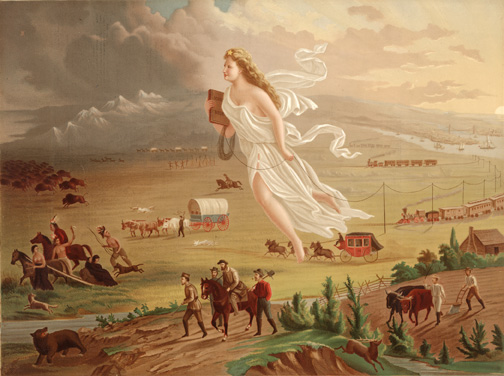
The action sweeps from right to left, as the bright eastern sky drives dark clouds
ever westward =
Far right, we see crowded east-coast ports (the Brooklyn Bridge is discernible) busy with globalized trade
Railroads, stage coaches, and Conestoga wagons course westward, laden with goods and folks from the bustling east
Telegraph lines run into the arms of a provocative angel,
also flying westward. And she carries a book in her arms
Is it a Bible?
No, it's Common School [ID]
Farmers follow miners who follow a trapper, as if to predict and thus confirm the "Turner Thesis" [ID]
In front of this onslaught, buffalo and bear (wildlife) and native savages flee from encroaching brightness of the good future
No obvious presence of
preachers or the US military can be seen
What we see is simply the natural force of secular "American progress"
pressuring alarmed Native Americans and their dogs out of the way
Read Tocqueville's account of Native-Americans forced to cross the Mississippi westward,
leaving their dogs on the eastern embankment [TXT]
Is this not a portrait of the "Westernization" of the "West"?
<>1872:1874; German state in struggle with Catholic
Church, the Kulturkampf [DPH:245-50]
<>1872:1883; German composer Richard Wagner created
theatre (Festspielhaus) in Bayreuth, Bavaria, where annual music festivals allowed for the first
time proper staging of his massive and revolutionary operas
<>1872:USA Senate rejected USA Presidential plan to build a military base in
Samoa Islands
<>1872:Japan, Hakodate | First Russian language schools established
*--Russian psalmist Vissarion L'vovich Sartov and Japanese assistant taught
languages, math, geography and history in Russian
\\
*--Togawa"Russian and Slavic:5
<>1872:International Workingmen's Association
[First International] collapsed
- The First International was wrecked in the titanic struggles between German-born
political-economist Karl Marx and Russian revolutionary
anarchist Mikhail Bakunin
- European (largely French) followers of peasant-born Pierre
Proudhon, also added their anarchist contentiousness to the mix
- Administrative HQ of the international organization transferred to USA NYC
- The First International, after eight years of active existence, limped on four more
years and was finally disbanded in 1876
- Twelve years later in Paris, Second International founded
<>1872de:Zurich | If the venerable rebel Bakunin
was revived in this new era of revolutionary opposition [ID], 47-year-old Petr
Lavrov, ex-artillery Colonel, ex-professor of mathematics, and an aspiring philosopher of notable promise, was now "reborn"
as revolutionary ideologist
<>1873:Tokyo | School of Foreign
Languages included Russian. ??NB! TOK.unv excluded Russian, showing stt comparative
indifference to Russia. Prior to Meiji, 6 samurai svt gt.Russia to std; 868:rtr.JPN and
fade away, while std frm zpd and USA bcm sig Meiji srv. BUT this scl hired Mechnikov, Lev
(ppl and Ntx1) and one of Russian samurai Ichikawa Bunkichi
\\
Togawa"Russian and Slavic:6-7
<>1873:USA PA Pittsburgh | Scottish-born
immigrant Andrew Carnegie (1835-1919) was now eight years into a brilliant career as
industrialist, concentrated on building a colossal steel manufacturing enterprise
- During the US Civil War, Carnegie served as a War Department railway division bureaucrat
- He instantly saw an industrial future opening before him
- Inspired by his war-time procurement experiences, in 1865 he entered the steel business
- Victory of the North in the American Civil War and an associated industrial productivity boom,
especially in railroad construction, launched the careers of several of the most famous entrepreneurs
of modern history, and Andrew Carnegie was among the first in line
- Pittsburgh PA was the base of operations for another future internationally connected billionaire
financier Andrew Mellon (1855-1937)
- Mellon inherited his father's fortune. The father wrote an
autobiography = Thomas Mellon and His Times
- In the boom years after the Civil War, Andrew Mellon built mightily on his father's fortune, concentrating on
banking, coal, oil, railroads, public utilities, steel, aluminum, and eventually in the aviation industry
- Mellon the younger showed a masterly control of diverse but vertically integrated
economic enterprises
- And he understood the central role of finance capital. He subordinated the manufacturing
process itself, and certainly labor, in favor of financial profit considerations
- But he also understood the role of governmental power and the sometimes shady political
manipulation of the "free market"
- The markets and industrial companies he worked in cannot be described as
altogether "free", or laissez-faire, or simply entrepreneurial, nor can they be
called simply "criminal"
- Mellon was an active supporter of the pro-business
and bribe-prone Republican-Party political machine in Pennsylvania and served in high governmental
posts up to the era of the Great Depression in the late 1920s
- 1874:1914; Russian industrial combination formed = Association of Southern Coal and Steel Producers
[ID]
- Coal, oil, railroads and banking,
a harmonious quartet of industrial/financial enterprises that came alive in the late 19th century, in USA, Russia and elsewhere
- Photos of Pittsburgh history
\\
*--David Cannadine, Mellon: An American Life
*--LOOP on "finance"
<>1874:1875; Russian "Going to the People"
movement [RRC2,2:344-57] Russian revolutionary populist movement intensified
- The "Going to the People" was one of the most spontaneous and dramatic confrontations in all of Russian
history between the state, urban elites and the laboring folk in villages and factories
- By the hundreds, Russians -- mainly college-age youths -- fanned out into
the countryside to learn about peasant life but also to educate peasants about
their best interests, to encourage peasant mobilization for causes presumed to
be popular
- These causes were, for certain, dear to radical youth, but were they dear to villagers?
- Some of these crusaders settled into village routine for a period, but others were repelled by
the hostility or indifference of villagers
- Nonetheless, the center of attention within democratic circles remained still
peasants
- Officials were deeply alarmed. Authorities had always controlled and restrained
spontaneous "inter-soslovie" intercourse
- Official policy prevented anything like a "public sphere" to evolve within the tightly restricted
social/service hierarchies [ID]
- Now thousands of city folk broke with conventional practices and
spilled out into wage-labor work environments and into the countryside to mix
with and open conversations with the narod [the Russian people; laboring folk]
- 1873oc:Young urbanite spoke with construction workers about their plight
(as remembered during interrogation after he was arrested)
[TXT]
- 1875:Justice Minister Konstantin Pahlen
reported that his investigation of the "Going to the People" had so far turned up 770 activists from all "strata" of
imperial society, active in 37 provinces. And these were just the ones snared in official investigations
- In Pahlen's view, the failure of students and others to adhere to assigned roles defined
by their "stratum" was a symptom of wide moral decay
- Pahlen was shocked to report that students shed themselves of their university uniform,
the outward sign of their stratum, and that they took on the garb of villagers as they attempted to mix freely with them
- One soslovie imitating another and unauthorized socializing by any group were illegal in Russia
- Pahlen emphasized the broad sympathy for this movement among all strata of Russian society
- He expressed amazement that "many persons no longer young, fathers and mothers of families, who enjoy
material security and a more or less honored social position, not only failed to oppose the young people but, on
the contrary, often gave them open encouragement, help, and support"
- In Pahlen's view, these folks seemed not to understand that this movement to the people threatened the
very foundations of Russian life
- These folks were breaking free of those foundations, namely, the social/service hierarchies
- Activists among the folk distributed illegal books and other publications by Russian émigrés abroad
[VSB,3:654-6]
- The most characteristic Russian "ideological" trends in the 1870s were associated with Petr
Lavrov, Mikhail Bakunin (with Sergei Nechaev [ID]), and Petr Tkachev
- In the early years, populists received much intellectual guidance from the émigré publications
of Alexander Herzen [ID]. But Herzen was now dead
- Mikhail Bakunin [ID] and Petr Lavrov sought to replace
him as inspirational theorists and publicists
- Bakunin died in 1876, bringing and end to a spotty but unforgettable three
decades of revolutionary activity. His influence continued in Russia and abroad
- Lavrov occupied a place of esteem in the minds of thinking and fighting Russians
(and these were not always the same people) for another quarter of a century
- Bakunin and Lavrov did not quite reach Herzen's level of polemical brilliance, but they were
important émigré revolutionary leaders with Europe-wide reputations
- Petr Tkachev's influence on events back in Russia was different from that
of Lavrov, Bakunin and Herzen, but like these others, Tkachev exerted his influence from a distance
- These pundits, ideologues and theorists have been lumped together under the term "populism"
[narodnichestvo]
- The term is fine so long as we remember that the central concept was radical rural egalitarianism with a good dash of
late-nineteenth-century socialism
- Populism [narodnichestvo] was an "ism" based on "the people" [narod, with is wide
implications of "nation", "the people", "peasants" |
TXT on the word "narod"]
- Populists were democrats in so far as they put their faith in the possibility that the Russian "people"
(90% of whom were villagers) were in a position to shape their own better future,
much like all other European common folk, whether rural or urban
- Not all populists saw things that way. Some populists veered from democracy when
they pondered the possibility that a "backward" people might need the guidance of an
advanced "minority" -- an "intelligentsia" [ID]
- Even when it was not always democratic, even when it veered toward managerial elitism, Russian
populism remained at heart radical rural egalitarianism and in stark opposition to
Russian social/service hierarchies
- Populists put a lot of faith in the progressive implications of a pre-modern, pre-industrialized, largely rural population
- In their view, villagers represented a promise every bit as bright as -- maybe brighter than -- that of
any other European people
- Why should one presume that labor ghettos in the big industrialized cities were better able than
the Russian village to produce citizens of a wholly transformed future egalitarian and socialist world?
- A bit dreamy, a bit idealistic, but no more so than all other European
progressive radical-liberal or socialist visions of future egalitarianism
- Democracy just might be univerally implausible or at least unlikely
- Polulists put a lot of faith in the narod
- Emerging new and broad public interactions were essential for a democratic future
- The political system called democracy could not exist without the social
structures of broad public interaction among the whole people, the whole nation, the narod
- Russian contemporaries described this interation as obshchenie (ID)]
- Populists put a lot of faith in the narod, but they also put a lot -- maybe a lot more -- faith
in themselves
- They were sure that they were the active ingredient in an emerging new social mixture, a new
free socialization among all the people, so unlike historical and exclusive social structures
- In just this era, the Russianized Latinate word "intelligentsiia" came into wide
usage [ID]
- The spreading use of the words "narod" and "intelligentsia" can very properly be
thought of as a serious subversion of customary Russian imperial social/services hierarchies
- But the various deliberations on the relationship of "narod" to
"intelligentsia" also contained fertile seeds of 20th-century Soviet
managerial elitism,
a future radical version of traditional social/service hierarchies
- Intelligentsia are often accused of "idealizing" the Russian peasant, but
they were far more often guilty of idealizing themselves
- Justice Minister Pahlen had enough sense to know that much of the energy of the epoch flowed from cultural sources far
broader and indigenous than the ideological publications of a few pundits in west European emigration, broader
even than the small and harassed home-bred oppositional movement
- An intense nationalistic Russian self-consciousness had long ago attached itself to
the notion of "the folk" [narod], and it flourished in a generalized atmosphere of dissent against
the established and seemingly foreign or "un-Russian" autocratic order
- For the second time in Russian history, in the 1860s and 1870s, a wide debate arose on the virtues
and shortcomings, but mainly the virtues, of the peasant village assembly [mirskoi skhod], the
communitarian practices associated with "mutual assurance" [krugovaia poruka -- almost always and
misleadingly translated as "collective responsibility" (ID)]
- The first epoch of such debate was in the 1830s and 1840s [ID]
- Russian peasant villagers lived in an unusually ancient and traditional institutional environment
- Very old European community practices survived as nowhere else in Europe
- These timeless Russian peasant practices seemed capable of serving as a foundation for the construction of
that bright egalitarian future that so many 19th-century Europeans -- and not only Russians -- expected just around the corner
- As an artifact of Russian political culture, idealization of the village assembly
was not unlike that ubiquitous English political-cultural artifact = The idealization of
the Magna Carta and the early parliaments [ID]
- It is odd and noteworthy that Russian idealization of the ancient
urban veche [LOOP] was slower to arise, and idealization of
the early-modern Zemskii Sobor [LOOP] was weak
- Traditional agrarian ways in Russia, however, also included a whole set of primitive agricultural practices -- strip
farming, three-field system, periodic redistribution of land-holding responsibilities among village households
- Redistribution seemed a bit like "socialism", but it also functioned as a sort of "temporary private property",
in which households held land as if their own. [TXT on these village land practices]
- Hop to this page
of portraits and other contemporary visual representations of peasant/village life
- BIBLIOGRAPHY OF PRIMARY AND SECONDARY SOURCES ON THE POPULIST ERA
- The great "going to the people" originated six years earlier but
was now being transformed, in part by state action, into resolute revolutionary conspiracy
- The tsarist state arrested hundreds of these youths and eventually brought the most vulnerable to
trial
- As the political struggle of the Russian state with radical political opposition intensified,
the populist movement back in Russia took a turn toward terrorism
- Efforts at close contact with peasants and other working folk slackened
\\
*--Mironov,1:286-370 analyses the history of Russian rural social institutions
*--VRR, ch.18 on the group conventionally called "Chaikovtsy"
and the movement "to the people"
<>1874:1896;
German historian and "chauvinist" [ID] ideologist Heinrich von Treitschke dealt
with the contradictions between individual freedoms and national unity [ID]
by shifting increasingly in the direction of militaristic and nationalistic "chauvinism"
- Treitschke inspired a war-fever even in the final years of the great and peaceful
inter-European 19th century with his influential "Politics" [BNE:143-5 |
CCC3,2:989-1004 | PWT2:258-60]
- 1882mr11:French intellectual Ernest Renan, who had been a serious Germanophile
prior to the Franco-Prussian War, now turned against Germany, but stopped short of affirming
French nationalism in ethnic or racist terms
- In a famous article, "What is a Nation?" [E-TXT],
he emphasized group action together, the vast community of national accomplishment
- He also cautioned that a nation can remember its glories, but it also has to learn how to think about (perhaps forget)
its atrocities
- Here are some of his words =
Man does not belong to his language or to his race, he belongs
to himself alone, for he is a free being, a moral being. We no longer condone
the persecution of people in order to change their religion; persecuting them to
make them change their language or homeland appears just as evil to us.
What makes a nation is not speaking the same language or belonging to the same
ethnographic group, it is having done great things together in the past and
wanting to do more great things in the future. [...] Language invites unity,
without, however, compelling it. The United States and England, Latin America
and Spain share the same languages, but do not form single nations. Conversely,
Switzerland, so solid because it is based on the consent of its various parties,
has three or four languages. There is in humanity something superior to
language; it is will. The will of Switzerland to be united, despite the variety
of its tongues, is much more important than the similarities often obtained by
means of persecution. [TXT |
RWP2:281-91]
<>1874:China accepted Japanese control of Ryukyu Isl
<>1874:Russian philosopher Vladimir Solov'ev
published The Crisis of Western Philosophy
*--Solov'ev's remaining 26 years of life were devoted to a most creative critique of standard forms of
contemporary European "Positism" [W.ID]
\\
*2014au01: "Vladimir Solovyov on Sexual Love and Evolution" [E-TXT]
*--Wagar on Solov'ev [TXT]
*--LOOP on Vladimir Solov'ev
<>1874:USA, Kansas, Howard Co., Cedar Vale |
Wm. Frey (Geims) headed up a Progressive community, a populist commune = Russkaia
obshchina [Hasty:54-82]
*--KS prairie described by Grigorii Machtet [Hasty:16-53]
\\
*--Saul,2:213-25
<>1874:USA | John Fiske, Outlines of
Cosmic Philosophy, influenced American religious thinkers on the question of the harmony of the
Christian faith with the Darwinian concept of biological evolution and with its social corollary,
"Social Darwinism"
\\
*--Wagar on Fiske [TXT]
<>1874ja01:Russian military reforms
instituted universal military service [VSB,3:625 | RA2:338f = Russian text
Ustav o voinskoi povinnosti]
- This was the last of the "great reforms" actually implemented
- In the waning years of reform, War Minister Dmitrii Miliutin reflected on rise of
reactionary attitudes among high officials =
What an amazing and lamentable comparison with the situation as it was when I entered the top echelons of the
government thirteen years ago [1860]. Then everything surged forward; now
everything drags back. Then the sovereign was sympathetic to progress, he moved
things forward himself; now he has lost confidence in everything he himself
created, in everything that surrounds him, even himself [VSB,3:624-5]
- 1874:1881; Seven years passed without further reforms. The tsarist state
was turning toward reaction
- Then one crucial but belated and still-born reform gesture
was made on the very eve of Alexander II's assassination
<>1875:1876; Central-Asian
Uzbek territories conquered by Russia
*1876:Kyrgyz people also conquered
*--AfroAsia imperialist
competition intensified
<>1875:Japan and Imperial Russia in tense
negotiations
*--Japan took northern Kuril Islands in exchange for dropping claims on Sakhalin Island
*--Russia was forced to put the "Far-East" on a back burner in order
to concentrate attentions on a looming crisis in
AfroAsia
\\
*1962:JGO#10:337-48| G. A. Lensen, "Japan and Tsarist Russia: Changing
Relationships, 1875-1917"
*1942:LND| B. H. Sumner, Tsardom and Imperialism in the Far East and Middle East, 1880-1914
<>1875:Russian revolutionist in exile, Petr Tkachev
published his revolutionary journal Nabat
[Tocsin; the alarm bell] [VSB,3:656 | LDH:286-93 |
"Nabat (Programma zhurnala)"| GRV:212-19]
- Tkachev was the first "populist" [ID] to express a strong critique of rural native tradition.
Russian backwardness demanded a greater leadership role from a dedicated "intelligentsia" [ID]
- Tkachev was less interested in egalitarian or democratic obshchenie [ID] than
he was in effective command and control at the head of a national assault on the Russian old order
- Tkachev urged tighter organization and more decisive action than either Bakunin
or Lavrov [IDs]
- Tkachev was inclined toward "internal war" rather than politics
- He argued that terror was the only way to cure Russian
ills [Russian TXT]
- The active political career of Tkachev was not very long, but his legacy lived on. Some have seen
a premonition of Lenin in the politics of Tkachev
\\
*--VRR, ch.16
<>1875:Russian censorship officials
planned restrictions against Ukrainian publications [DIR3:268-70]
<>1875my:German wage-laborers
and socialists united to form the Social Democratic Party [SDP] of Germany and to sign their
"Gotha Program" [DPH:263-5]
<>1876:Japan forced a trade treaty on Korea which
opened two Korean ports
- Japan sought to "Westernize" itself fully
- 1880s:Meiji Restoration economic development in its second decade, the beginning
of the "Zaibatsu" [statist corporation] era [CF=Chaebol (S.KOR)]
- As Japanese industrial modernization progressed, so did Japanese imperialist ambitions
\\
*--W#1 |
W#2 |
Wki
*--Shibagaki Kazuo, "The Early History of the Zaibatsu"
[E-TXT]
*--Kaoru Sugihara, _Japan, China, and the Growth of the Asian International Economy, 1850-1949 ((UO))
*--LOOP on "finance"
<>1876:USA | Last Federal Troops of occupation left the
South as "Reconstruction" came to an end
*--Philadelphia World's Fair (Centennial Exposition) on the occasion of the 100th anniversary of the
American Revolution
\\
Saul,2:138-43
<>1876:1885; USA and Russia | First decade in
which great transnational petroleum corporations consolidated their grip on that industry =
- 1859:USA PA Titusville discovery [pix]
- 1863:USA Cleveland, Excelsior Works of John Davison Rockefeller began kerosene
production
- 1869:1874; USA economic depression, 2nd worse in USA history
- Standard Oil adjusted by gaining control of full process, "upstream" and "downstream", and introduced
rebates, kickbacks, secret rates, etc
- 1876:Baku Tovarishchestvo brat’ev Nobel [Nobel Brothers Company] soon
had Russia involved in the emerging world petroleum market
- Three Nobel brothers, Liudvig (1831-1888), Alfred (1833-1896) and Robert, were sons of a Russian military
contractor of Swedish origin who lived in Saint-Petersburg
- The family fortune rested on their profitable industrial enterprise, bolstered by government contracts to
produce explosives and gunpowder for the military
- 1867:Brother Alfred developed nitroglycerine into an effective explosive, but accepted a French government
contract to build a modern gunpowder plant there
- When Alfred died in 1896, he left a portion of his immense fortune to Stockholm University to support a peace prize
- Oldest brother Liudvig inherited the father's Russian business and took over management of Russian factories
- Liudvig was given a procurement contract to supply field artillery to Russian
forces in the Russo-Turkish War
- With his brothers' participation, Liudvig now branched out of "military-industrial" enterprise
into petroleum production
- He founded great works in the Baku (Azerbaijan) fields [pix]
- At first they shipped kerosene in barrels by sail to the mouth of the Volga
- Barrels were reloaded on river boats and transshipped upstream to the great yarmarka [faire]
in Nizhnii Novgorod, to be marketed throughout Russia and to the east
- This was expensive, and the Nobels could not compete with cheaper USA kerosene
on the Asian market
- Protective tariffs helped, but Liudvig innovated on his own to lower the price of his product
- He introduced railroad tankers
- He invented pipeline delivery methods which made his kerosene competitive even on the USA market
- He transported crude oil to the Black Sea port of Batumi, and he pioneered transportation by sea-going oil tankers
- He introduced effective petroleum reservoirs near all major cities [BrE,41:216]
- Nobel Brothers Company value =
1879 = 3,000,000r
1916 = 45,000,000r
- Should we think of the Nobels as "Swedish" or "Russian"?
- What of "European" émigrés at heart of US economic development in these years?
- Was Pierre Samuel Du Pont de Nemours [ID] French or "American"?
- Was Andrew Carnegie [ID] British or, more exactly, a Scot, or was he an "American"?
- 1877-1881:USA| Standard Oil "gobbled up" domestic business rivals and began to build network of trunk
and side pipelines
- 1882:USA oil refining capacity 95% under the control of the giant energy
company Standard Oil, a "trust company"
- One great novelty was that Standard became a business well beyond Cleveland, well beyond the borders of Ohio
- Standard was a pioneer "transnational corporation"
- There were no USA nationally chartered corporations, only state chartered
- Of course, there were no "international" charters in this ultra-nationalistic 19th century
- Standard expanded beyond the reach of geographically limited city legal and governmental authorities
- By the 1880s, kerosene = main product (over 1/2 of all USA oil output; 4th largest USA export)
- The European office of Standard Oil boasted that oil "forced its way into more nooks and corners of
civilized and uncivilized countries than any other product in business history emanating from a single
source [i.e., emanating from this vast new transnational corporation]"
- Another novelty = "The concept of hands-on management by owners had evolved to the policy of
financial management by an active insider board of directors [Standard Oil Executive Committee]
- The Standard Oil Executive Committee met daily to determine which policies and decisions were
in "the general interest" [Gnrg]
- In this way, Standard represented the first huge example of the fiduciary problem caused when "ownership" and
"management" are dissociated from one another, a problem explored in 20th-century. USA pop-arts = OTHER PEOPLE'S MONEY
[ID]
- This problem was later famously described by Adolph Berle
- This great weakness of corporate free market capitalism made its first appearance on the world economic
scene and survived into the 21st century
- Standard Oil was a pioneer "trust company" [W ID]
- 1886:Rothschild banking company, a transnational financial institution, formed Caspian and
Black Sea Petroleum Co. [Bnito]
- The Russian Nobel Brothers Company worked in close financial association with the Paris-based Rothschild banking company
- These enterprises were from their beginning "transnational" corporations
- The oil or petroleum epoch with its great transnational industrial companies
and financial and banking institutions, was upon all who would play the Great Game
- Petroleum was the energy basis and the organizational paradigm
in "the second industrial revolution"
- Look at 1991 publication on international banking below
\\
- SAC Narrative Extension on "Energy and Politics"
- Saul,2:143-8 deals with the petroleum industry
- Daniel Yergin, The Prize: Epic
Quest for Oil, Money and Power
- R. W. Tolf, The Russian Rockefellers: The Saga
of the Nobel Family and the Russian Oil Industry
- LUKoil magazine article about the virtues of kerosene [E-TXT]
- 1991:International Banking, 1870-1914| A
joint USA/USSR scholarly project. Especially note the following chapters =
- V.I. Bovykin and B.V. Anan'ich, "The role of international factors in the formation of the banking system in Russia
- Mira Wilkins, "Foreign banks and foreign investment in the United States"
- B.V. Anan'ich and V.I. Bovykin, "Foreign banks and foreign investment in Russia"
- Ruth AmEnde Roosa, "Banking and financial relations between Russia and the United States"
- A.A. Fursenko, "The oil industry"
- 2003su:Russian publication with wide circulation offered its views on how the great Rockefeller
and J. P. Morgan industrial/financial empires were built in USA, with explanations of why they eventually
failed [TXT]
\\
*--Rothschild family home page
*--LOOP on "finance"
*--LOOP on "banks"
<>1877:1879; Russian author Gleb Uspenskii, Village Diary
[RRC2,2#30]
<>1877:English
pundit Donald Mackenzie Wallace, Russia
[excerpts: VSB,3:626-9 | WRH3:291-375]
<>1877:Russian Samara-Orenburg railroad
complete, linking Bashkir steppes east of the middle course of the Volga River to the main lines of
Russian transport to the west
<>1877ja28:USA poet Walt Whitman
delivered speech "In Memory of Thomas Paine"
[E-TXT#1 |
E-TXT#2]
<>1877ap12:1878jy13;
Ottoman and Russian empires engaged in a 15-month-long but vastly significant
Russo-Turkish War [MAP]
*--Photo-panoramic view of 1876:Istanbul [lxt]
- 1876:Eugene Schuyler's investigations of Ottoman atrocities in Slavic
lands [ID]
helped stoke anti-Ottoman sentiments among Russians and a wider reading public
- In addition, a three-year-old Bulgarian independence movement, led by Stefan Stambulov, inspired a Russian
desire to help a Slavic "brother"
- Bulgarians under Ottoman authority had ceased centuries
before to live in a sovereign nation-state of their own
- Now there was much sympathy among Slavic peoples for the creation of an independent Bulgaria in eastern Macedonia
- Panslavism and Russian imperialist ambition seemed to some to be in harmony
- Panslavism was based on a growing sense of ethnic "brotherhood" among Slavic peoples =
East Slavic (EG=Russian, Ukrainian, Belarusian)
South Slavic (EG=Serbian, Montenegrin, Bosnian, Herzegovinian, Bulgarian), or
West Slavic (EG=Polish, Czech, Slovak)
- The sense of ethnic sodality was strongest among Orthodox Slavs, especially among East Slavic and South Slavic peoples
- That sympathy was not shared by the great European powers, especially England and Austria, who were jealous of
growing Russian influence in that part of the world and had their own ambitions there
- In fact not all Russians shared that sympathy =
- Serbia and its close neighbor Montenegro were earlier declared independent from Turkey
- An 1876 Serbian war against Turkey, occasioned by Serbian support of Bosnia-Hercegovina independence,
prompted much public support in Russia
- But the war turned ugly for Serbia, helping convince Russia to intervene
- At that time, poet and prominent tsarist establishment official, Prince P.A. Viazemskii, criticized the intensity
of Russian enthusiasm for the cause of Serbia and Montenegro =
Let the Serbs tend to their own affairs, and us Russians to ours. This is
indeed our chief error, our chief misunderstanding, that we consider
ourselves more Slav than Russian. [...] Any time now Europe will catch fire,
and a general war will spread. Do [the Slavophiles] really think that Russia
will be strengthened by the resurgence of Slavic nations? Nothing of the sort;
rather the contrary. We shall only ensure and confirm the ill will and ingratitude
of a neighbor whom we have revived and put on his feet. [...] It is better for us
to have as a neighbor a feeble Turkey, old and decrepit, than a young, strong,
democratic Slavic land that will be wary of us but will never love us [... All] their
sympathies are for the West [VSB,3:629]
- Serbs were now to be vindicated =
- Russian declaration of war [VSB,3:629-30]
- Turkey and Russia fought and negotiated on their own, without any concern
for Austrian or English interests and, at first, without overt interference from European
states to the west. It seemed at first that Russia and the Ottomans might resuscitate and
consolidate the on-off but very real cooperative trends of the previous half-century
- 1878mr17:The Russian and Ottoman empires negotiated and signed the bilateral San Stefano
treaty [TXT] [Excerpts DIR2:317-28]
- The dominant provision of the San Stefano treaty was creation of an enlarged Bulgaria
[now including a sizable portion of Macedonia, a vaguely defined territory running roughly from the
eastern border of Albania to the Aegean Sea and populated by Bulgarian, Albanian, Greek and many other
Illyrian and Balkan peoples]
- The new Bulgaria would be semi-independent and with an elected princely monarch
- NB! no Russian authority over Bulgaria was implied
- In fact, the new Bulgaria was to pay "tribute" to the Turks
- Russia did gain significant territory around the southeast shores of the Black Sea
- Bosnia-Hercegovina [Bosna i Hercegovina] were promised reforms from Turkish overlords
- NB! B-H was not made independent of the Turks nor given over to Serbia
- This area had since medieval times been a rich potpourri of religious confessions
- Catholics, Orthodox and Bogomils vied with one another
- From 1463 and for the next four hundred years, B-H was ruled by Ottoman Turks
- Elites accepted Islam, and thus added another ingredient to the complex
B-H stew
- As the 19th century wore down and the storm clouds
of WW1 gathered, the fate of Bosnia-Hercegovina and
other Yugoslav peoples was not shaped by hatreds among the
population so much as by the maneuvers of the great imperialist powers that
competed for influence or gain in and around these territories
- As of 1878, B-H was a fruit on the Ottoman tree that Austria sought to pick
- The Russians still thought of it as unripe and made no overt effort in
the San Stefano Treaty to gain advantage there
- They simply demanded that the Turks reform their administration
- The Austro-Hungarian Empire played the most unsettling role in this
region =
- Watching from the sidelines, Austria and other western and central European powers were alarmed at
the extensive provisions of the bilaterally negotiated San Stefano Treaty
- Some western European capitals feared a possible re-establishment of the earlier trend toward
rapprochement between traditional rivals, Russia and Ottoman Turkey, a trend that Western allies had
once before
disrupted in the time of the Crimean War [ID]
- They feared that Russo-Turkish rapprochement might isolate western and central European powers
and preempt the benefits just for them, benefits "The West" expected to follow from their own careful long-term dismantlement of Turkey
- Austrian imperial power had designs on B-H, grander than the modest San Stefano
concessions, yet it was happy to pretend, along with the other "Western empires" (EG=England
and Germany), that it was the Russians who sought unnatural expansion of imperial authority
- Austro-Hungary roosted quietly nearby, like a superannuated
dual-monarchical vulture and its hungry adolescent chick
- In view of this portentous bilateral Russian/Turkish diplomatic success, "The West" decided to intervene
- They claimed that Russia had overturned the Treaty of Paris [ID] without
sufficient international consultation
- Making bald threat of war, a small group of European great powers, with England in the lead, forced a
new treaty on Russia and Ottoman Turkey
- Ambitious "Western" powers took this opportunity to alter San Stefano in such a way as to
enhance their own positions in the eastern Mediterranean and to weaken the positions of Russia and Bulgaria
and, for that matter, Turkey itself
- They pretended to enhance the position of Ottoman Turkey, but time was
to show that was but a diplomatic ruse
- The Berlin Congress followed, a sorrowful inning in the "Great Game"
and a fundamental cause of some of the most tragic 20th- & 21st-century "AfroAsia" crises
\\
*--Yavuz.WAR
*--Kennan.DECLINE, chapters 5-7:103-54 emphasizes the central role of the Bulgarian question, 1878-1886
| A vague and personality-centered narrative
*--Barbara Jelavich, The Ottoman Empire,
the Great Powers, and the Straits Questions, 1870-1887
*--David MacKenzie, The Serbs and Russian
Pan-Slavism, 1875-1878
*--B. H. Sumner, Russia and the Balkans, 1870-1880
*--LOOP on AfroAsia
<>1877su:USA experienced 45 days of intense
and wide-spread labor unrest when thousands of railroad workers went on
strike [ID]
- Some of the nation's biggest cities -- Baltimore
[pix],
Philadelphia, Pittsburgh, Chicago, St.Louis -- were gripped in violent clashes between wage-laborers and authorities
B
- These confrontations ending frequently in military intervention and use of live ammunition against strikers
- John Hay [Wki] was inspired by this shocking, modern
industrial strike action to publish in 1883 an anti-labor novel, The Breadwinners: A Social Study
[E-TXT]
- Earlier, through the Civil War, Hay served as secretary to USA President Abraham Lincoln but was now
married into a millionaire railroad family in Cleveland OH, and was involved in the family business
- Hay's novel is "anti- wage-labor", and maybe more than a touch anti-modern,
but not narrowly so
- The novel is filled with fascinating every-day detail related to life in
a growing and "progressive" late-19th-century city,
"Buffland" [fictional amalgamation of Buffalo NY and Cleveland OH]
- The novel's treatment of man-woman courtship is of particular historical interest
- John Hay later became Secretary of State in a particularly
critical period of US history
<>1877:1881; Russian second "revolutionary
situation" (4 years) intensified in the months of Russo-Turkish War and expanded
into a crisis of Russian revolutionary populism and the beginnings of modern political parties in Russia
- More dark thoughts in diary of War Minister Miliutin [VSB,3:632-4]
- He observed a contest within the highest circles of tsarist state authority
- In his view the contest was between authentic reformers and those who now sought to reverse reform
trends, those who dreamt of return to a past never really experienced (perhaps a good definition of political
reaction [ID], in this
case "official reactionary politics")
- Two big historical questions =
- Did the terroristic revolutionary movement cause the crisis within the
autocratic state and provoke the shift toward reactionary measures?
- Or did reactionary measures precede terrorism (and perhaps cause it to appear on the
scene)?
- Political ferment was very much alive among émigré Russians
- But back in Russia, it is harder to say because unlicensed self organization or voluntary associations of any sort were
illegal, especially political groups
- After the unorganized, largely spontaneous "Going to the People" [ID], all
populist oppositional movements were of necessity at first underground and conspiratorial, revolutionary parties
- 1876fa:Underground political party "Land and Liberty" [Zemlia i volia] issued its first
program ["Programma "Zemli i voli": Pervonachal’naia redaktsiia" (GRV:219)]
- Activists in the second revolutionary situation concentrated on
- Peasants. But another and soon dominant feature of this
phase came to the fore =
- Revolutionary terror
- A small number of activists moved from the village, rejected terrorism, and shifted attention
to the industrial workplace
- Field, Rebels:112-207,
contains documents on village rebelliousness fomented by "revolutionary populists" [CF=1861ap]
- Sergei Kravchinskii [Stepniak], The
Russian Peasantry: Their Agrarian Condition, Social Life, and Religion (1888)
[Excerpted TXT] [Print excerpts: VSB,3:754-6]
- Kravchinskii's first-hand account of revolutionary
conspiracy, Underground Russia (1883),
was written five years after his own traumatizing act of political terror [ID]
- Women played an unexpected and active role as political opposition in
Russia became violent
- The optimistic era of revolutionary populism, with its faith in the possibility
of imminent success of a rural socialist transformation of Russia, was nearing its end as "Land
and Liberty" broke up
\\
*--Petr A. Zaionchkovskii, The Russian Autocracy in
Crisis, 1878-1882 (1979)
*2009jy:Russian Social Science Review#50,4:36 - 48|
Boris N. Mironov| "The Myth of a Systemic Crisis in Russia After the Great Reforms of the 1860s-1870s"
*--VRR, ch.20 on Zemlia i volia, ch.21 on Narodnaia volia
*--Julicher: chapter 9
*--Amy Knight, "Female Terrorists in the Russian Socialist Revolutionary Party" [TXT]
*--Vera Broido, Apostles into
Terrorists: Women and the Revolutionary Movement in the Russia of Alexander II (1977),
esp. ch.10 "Apostles into Terrorists", ch.11 "Towards Terrorism", & ch.13 "Regicide"
*--Has the early 21st century witnessed yet more "revolutionary situations" in Russia?
[EG]
<>1877se27:London| Karl Marx to F. A. Sorge
on the Russian revolutionary movement =
This [Russian] crisis is a new turning point in European history. Russia--and I have
studied conditions there from the original Russian
sources, unofficial and official (the latter accessible to but few persons, but obtained
for me through friends in Petersburg)--has long been standing on the threshold of an
upheaval; all the elements of it are prepared. The gallant Turks have hastened the
explosion by years with the thrashing they have inflicted [ID] not
merely to the Russian army and Russian finances, but to the very persons of
the dynasty commanding the army (the Tsar, the heir to the throne, and six other
Romanovs). The upheaval will begin secundum artem [according to the rules of the game], with
some playing at constitutionalism, et puis il y aura un beau tapage [and then follows the
brawl]. If Mother Nature is not particularly unfavorable towards us, we shall yet live to see the fun!
The stupid nonsense the Russian students are perpetrating is merely a symptom, worthless in itself.
[Kazan demonstration, involving future Russian Marxist leader George Plekhanov among
others] But it is a symptom. All sections of Russian society are in full decomposition
economically, morally, and intellectually.
This time the revolution begins in the East, hitherto the unbroken bulwark and reserve army of
counter-revolution [M&E, Selected Corr:374 | Itenberg,RS2:4 selective citation]
- 1878fa:A year after his letter to Sorge (above), Marx composed a letter to the editor of the Russian
journal Otechestvennye zapiski [Notes of the Fatherland]
- In the letter Marx suggested that Russia need not traverse the same historical path that Germany
or England have followed as revolutionary workers advanced toward the better future [SLM]
<>1878:Russian religious
philosopher Vladimir Solov'ev,"Lectures on Godmanhood" [Edie,3:62-84 |
KMM:214ff]
<>1878ja24:Saint Petersburg | Vera Zasulich with a
pistol wounded Petersburg Governor-General Fedor Trepov
- Zasulich’s act was eye-for-eye in her view
- Prison authorities had apparently tortured a fellow political activist in their charge
- Zasulich held Trepov personally responsible
- She dropped the gun and awaited arrest
<>1878mr31:A jury trial [sud prisiazhnyi] found Zasulich not guilty
- Zasulich confessed to the attack, but the jury would not find her guilty
- The jury, the defense lawyers, and the wider public seemed ready to accept a higher moral law justifying
this violent act of generic self-defense or righteous revenge
- It was understood that the police state would now try to use its absolute administrative power to get
her back into prison
- Society just didn’t want her or any of its members abused by state power
- So, a huge crowd greeted her outside the courtroom, shielded her from officers who sought to arrest her, and
helped spirit her away to safe haven in west-European emigration
- Once there, she became an important figure, contributing to the rise
of Marxism within Russian oppositional movements
- In the Zasulich trial, as in the Nechaev trial earlier, Russians could follow proceedings in newspapers
- Thousands of readers thus learned how the new reform-era legal system [ID] might work
against arbitrary administrative justice, might even seem to favor terrorists over police officials
1878my11(NS):German tin worker made unsuccessful attempt on the life of Emperor Wilhelm the First
*1878je02(NS): Less than one month later, a second would-be terrorist assassin lightly wounded the German Emperor
*--CF=1861jy01
<>1878jy13(NS):Berlin Treaty reversed
the San Stefano Treaty [ID] [VSB,3:630-1 |
DPH:207-09]
- Russia agreed to congress only after "The West" threatened war
- Such bellicosity in connection with AfroAsian ambitions was not new to European powers
[EG]
- Otto von Bismarck agreed to mediate
- Berlin Treaty nullified Russian, Bulgarian and Serbian gains from war with Turkey
- With the internationally enforced nullification
of the Russian/Turkish bilateral San Stefano Treaty, England and Austria won
great concessions. Russia was stripped of nearly
all advantages, and Turkey was locking into its sick decline
- Bulgarian independence was nullified and the nation divided
- The northern half fell under indirect Ottoman authority
- The southern half completely under Ottoman rule
- Macedonia was taken from Bulgaria and placed under complete Ottoman suzerainty
- The main push for this reversal came from England and Austria
- In addition to their own fish to fry, these two powers were concerned about expansion of Russian power and
the "dangerous" rise of authentic independence in the Balkans Here are some of the details =
- England took this occasion to acquire the strategically located island of
Cyprus with its large population of Orthodox Greeks and Moslem Turks
- Austro-Hungarian imperial interests were connected with an ancient authority
they exercised over restless Slovenes and Croats
- These were Catholic Slavs whose native language was basically the same as the
Eastern Orthodox Serbs
- Slovenes and Croats write with the Latin rather than the Cyrillic alphabet since literacy came to
them in its Roman Catholic form
- Austria did not want events to inspire national independence movements among these
people, but Vienna’s interests were more directly touched by developments in Bosnia-Hercegovina
=
- Serbia was declared independent, but suffered two serious insults
- First, Bosnia-Hercegovina was taken from Turks and Serbs, and placed under
Austrian administration and military occupation
- This represented a slap in the face for both Turkey and newly independent Serbia
- Austria gained great expansion of power from Russian victory, and denied any advantages to Russia
- This move was the most aggressive and least defensible in an era and area that
required wise diplomacy rather than unrestrained opportunism
- This move at this time and place will echo down through the 20th century
- Second, Montenegro [Crna gora] declared independent (but not a part of
Serbia)
- This represented an insult but also a serious threat to Serbia
- Montenegro was over the centuries the mountain fastness, the last refuge, of
Serbian independence from Turkish and German power
- It was also the oldest of Russian allies in the Balkans
- 1516:1851; Montenegro was ruled for more that three centuries by Orthodox bishop/princes [vladikas]
- From 1715 Montenegro was in close alliance with Russia, recognizing the spiritual
leadership of Russian emperors over the vladikas
- Romania became independent, but ceded southern Bessarabia to Russia in return for Dobruja
- NB! "The West" took strong and significant stand
against national independence for Bulgarians and other South-Slavic [Yugoslavian]
peoples, so long as that independence threatened -- or failed to further --
their own imperialist aims
- "The West" took an equally strong but ironic stand in support of
Ottoman imperial rule, so long as that Ottoman imperialism suited their needs
and could be controlled by them
- The Berlin Treaty, however, failed to meet significant needs in the area
under its purview. The treaty laid the foundations for European catastrophe =
- Unrestrained imperialist practices were now employed within the European homeland
- "Life support" applied by "The West" to the Ottoman Empire ("the sick man of Europe")
was breaking down
- A Turkish nationalistic and militaristic movement
arose [ID] in the same year
that Austria seized Bosnia and Herzegovina [ID]
- The ground was laid for the vicious Balkan wars of 1912-1913
- As a result of English and Austrian diplomatic/military affront, national independence terrorist
groups, komitadjis, arose there under Bulgarian sponsorship
- One such group later assassinated the Austrian Archduke Ferdinand
and triggered the outbreak of WW1
- The dysfunctional relationships expressed in the freakish 1878:Berlin Treaty
sickened European diplomacy
- The near-sighted and low-content alliances that grew out of these deliberations distorted
international events from this point forward into the catastrophe of WW1. EG=
- Turkish/Russian accommodation was forestalled
- Austria and England teamed up against Russia and Turkey
- Bulgarian/Serbian enmity was provoked
- Foundations were laid for an unnatural life-death alliance of England and Russia against Germany
- As WW1 approached, a large symphony of even more broadly freakish diplomatic alliances
arose, unrehearsed and unstable in membership, but sectioned up for the
first time and sounding forth in the noisy concert that SAC editor has named "Imperialism Comes Home"
- Under the constant distorting influence of global industrialized militaristic competition, the
events of 1878 initiated an adjustment of the post-Napoleonic "balance of powers" over the next 36 years,
up to 1914 [ID]
- The "Near-East" half of AfroAsia was not the only arena of emerging world conflict that weighed in
on 1878 Berlin Treaty deliberations =
- 1878:Afghanistan had become a site of imperialist military clashes between Russia
and England
- Each country tried to play the Great Game in this region through subordinate emirs, native Islamic rulers,
and propped-up war lords
- Central-Asia was falling under Russian dominion
- But England gained the upper hand in the imperialist struggle for predominance
in Afghanistan and the "South-Asian" edges of AfroAsia
- Also England's position grew stronger on the "Near-Eastern" edges of AfroAsia
- England had already nailed-down Egypt [ID]
- After 1885 England consolidated its position in Africa, even at the cost
of alienating Ottoman Turks
[ID]
- The Ottoman Turkish Empire, the original "sick man of Europe", and its "Near-Eastern"
[ID] spheres of influence were becoming a main arena
of action in the unfolding of the great and "sick" European tragedy
- Kindling for that great conflagration WW1 was being laid in
- In just over three decades, WW1 burst into flames there
- The final open battles of WW1 would be fought there
- Our notions of WW1 need to be expanded to add a vital "Southern Front" to the famous Western and Eastern
fronts [ID]
- The Berlin congress was a "big inning" for England and Austria, and now Germany entered
actively into AfroAsian affairs as the "Great Game" rushed towards its
destructive conclusion = WW1 [ID]
\\
*2005:Byzantine and Modern Greek Studies#29,2:167–186| Andrekos Varnava, "Punch
and the British occupation of Cyprus in 1878"
[E-TXT]
*--Carlton J.H. Hayes, Generation of Materialism:33 addressed in his way the issue that SAC above
describes as "freakish" [ID] =
If before 1878 the "Eastern Question" concerned one "sick man" [Ottoman Turkey], after 1878
it involved a half-dozen maniacs. For the Congress of Berlin drove the Balkan peoples
mad [quoted in Yavuz.WAR:17]
*--Yavuz.WAR is an anthology of essays on the
Russo-Turkish War and the subsequent Berlin Conference. It's contribution to our
historical understanding has been described in the following way =
Beginning of the end of the multiethnic Ottoman Empire were (1) The
Russo-Turkish War of 1877-1878 and (2) the Treaty of Berlin. These
permanently transformed the Balkan and Caucasus political landscape. The treaty
marked the end of Ottoman hegemony in the Balkans by formally recognizing the
independence or de facto sovereignty of Romania, Serbia, and Montenegro, and the
autonomy of Bulgaria. By introducing the unitary nation-state as the new
organizing concept, the treaty planted the seeds of future conflict, from
the Balkan Wars of 1912-1913 [ID]
and WW1 [ID] to the recent civil
wars and ethnic cleansing in former Yugoslavia
[ID]. The magnitude of the defeat of the Ottoman Empire by Russia -- and
eventually by the other great powers -- and the human, material, and territorial
losses that followed proved fatal to the project of Muslim liberal reform and
modernization that the Ottoman state had launched in the middle of the 19th
century [ID].
*--LOOP on "Imperialism and Revolution"
*--LOOP on AfroAsia, Great Game and WW1a as these three items merged
<>1878au04:Petersburg | Sergei Kravchinskii (with
assistance of A. I. Barannovskii) killed Third-Section police chief N.V. Mezentsov in broad daylight as he was
out walking
- This early act of successful political assassination was taken in revenge for what was
considered extreme and unjust state action in the execution of I.M. Koval’skii
- These early acts of terror in the second revolutionary situation were frequently explicit acts of revenge
<>1878oc18:1879ja23; Petersburg | The great "Trial of the 193"
followed soon and lasted three months
- The great trial was only indirectly related to recent sensational physical assaults on authority
carried out by Zasulich [ID] and Kravchinskii [ID]
- This was a trial of leading figures from amng the more than 4000 activists who had been arrested
over the previous four years, almost all in connection with the "Going to the People" [ID]
- Prisons overflowed. Nearly 100 died or went insane before the trial
- At least 30 different actual organizations and voluntary political associations were involved
- About one-fourth of the defendants were women
- Defendants were represented by independent lawyers, according to the new legal reforms
- The trial showed that "The Going" was an expression of widely felt impulses that realized themselves in
individual and small group actions without any central coordination
- For its own purposes, the tsarist state treated this expression of national political discontent and
optimism as a single conspiracy, a single "criminal association" [prestupnoe
soobshchestvo] with the goal of "overthrowing the government" [s
tsel’iu gosudarstvennogo perevorota]
- Against the towering power of the state, and the obduracy of villagers, some of the
increasingly isolated individual activists felt they had only one weapon -- terror
<>1878oc21(NS):German Empire outlawed political parties
organized by socialists or wage-laborers
[DPH:265-6]
\\
*--[W]
<>1878oc25:Russian
revolutionary political party "Land and Liberty" [Zemlia i volia] ] issued its
final program [VSB,3:662-3 | Russian TXT]
- As "Land and Liberty" faded from the scene, "The People's Will" [Narodnaia volia] stepped in
to fill the gap with heavy accent on terrorism
<>1878no:Tver Zemstvo presented address to the tsar =
In his concern for the welfare of the Bulgarian people after their liberation
from the Turkish yoke [ID], the sovereign emperor
has deemed it necessary to grant this people true self-government, the
inviolability of the rights of the individual, an independent judiciary, and
freedom of the press. The zemstvo of Tver Province dares to hope that the
Russian people, who bore the entire burden of the war with such complete
readiness and with such self-sacrificing love for their tsar-emancipator, will
be allowed to enjoy the same blessings, which alone can lead them, in the words
of the sovereign, along the path of gradual, peaceful, and legal development
[VSB,3:634]
- The Bulgarian constitutional initiative was a third moment in the
history of Russian political culture when constitutional reforms were
offered non-Russian peoples under
imperial power but denied to Russians themselves
- Zemstvos became increasingly political as its technical functions began to take hold after a
slow 15-year startup, and especially as Zemstvo activists gained control over increasing tax revenues
- Zemstvos were discovering links between their technical functions
and their political needs, a discovery characteristic of the general European
experience of political institutional modernization
<>1879:1880; Russian novelist
Fedor Dostoevsky [pix] wrote his most widely acclaimed work
Brothers Karamazov
*--Petrozavodsk State University Russian-language complete works of Dostoevsky
[W]
\\
*--Wagar on Dostoevsky [TXT]
<>1879:Russian Workers, Northern Union of, issued
program in defense of wage-laborer interests [Harding:41f]
- The rise of modern urban centers -- cities -- introduced, as always, three new
elements to social/political life =
- Industrial labor -- the proletariat
- Urban industrial/professional elites -- capitalists, business people, and all others whose interests
were meshed with modern enterprise in the "post-agrarian" era
- The institutional expression of modern urban enterprise = industrial and business "companies"
- 1879oc:Lithuanian provinces, Vilnius | Formation of General Jewish Workers
Union in Lithuania, Poland and Russia [Vseobshchii evreiskii rabochii soiuz v
Litve, Pol'she i Rossii], Jewish Bund for short
- As old skins of social/service hierarchies were being shed on all levels, Russia
experienced a beginning of political movements among wage-laborers (#1 above)
- But what about those other European-style "liberal" urban social/economic and
political formations? (#2 & #3 above)
\\
*--VRR, ch.19 on the Russian working class movement
*--J. Frankel, Prophecy
and Politics: Socialism, Nationalism and the Russian Jews, 1861-1917 (1981)
<>1879:USA reformer and economic theorist Henry George
published Progress and Poverty
[UO E-TXT excerpts
with brief introductory essay]
- Henry George subsequently had a startlingly successful political career, running on a reformist/progressive
platform with his infamous "single tax" at the center
- He believed that the growth rate of poverty was always greater than the growth rate of wealth
- This sad fact was caused, in his view, by increase over time of land rents and values
- Larger social forces caused the increase, but isolated owning individuals cashed in on that increase
- He felt that a single tax on land would solve the problem
- Critics found much to dislike in this scheme, but the biggest force at work against George was the transformation
of economic life from agriculture to industry, the shift from the countryside to the city
- Still, it is worth noting Thomas Piketty's 2013 revival of Henry George's central
insight [Wki] = In capitalist
economies, the growth rate of poverty was always greater than the growth rate of wealth, even
into the era of advanced capitalism in Europe and North America. Therefore capitalism automatically
works against the economic interests of labor and in favor of the capitalist, unless specific
governmental policy intervenes to assure democratization of economic life [GOOGLE/Piketty and
Henry George/ to discover the similar anxious establishmentarian refutations that arose about 130 years apart
(EG) ]
<>1879ja11:jy04; South Africa| English imperialist war against powerful but
non-industrialized indigenous Zulu people
\\
*--BBC
*--South African History Online
(carries the story of Zulu destruction as "sovereign" African people up to 1896)
*--Wki
||
*--LOOP on AfroAsia, Great Game and WW1a as they merged
<>1879fe:Russia| Kharkov Governor-General D. N.
Kropotkin was assassinated
- 1879mr13:Petersburg | L. F. Mirskii fired a pistol at Third-Section Chief Gendarme Drentel'n and escaped
- 1879ap02:Petersburg Winter Palace Square| A. K. Solov’ev fired 3 times at Alexander II, without hitting
him. He acted also without approval of the underground revolutionary party Land and Liberty, but with a revolver they
supplied
- 1879ap:Congress of constitutionalists made up of representatives of Tver, Chernigov, Moscow and
Tula Zemstvos, with reprentatives of Kharkov and Kiev Zemstvos in attendance, plus prominent
public figures and Moscow University professors, EG= Maksim Kovalevskii and V.A. Gol'tsev, Ivan Petrunkevich
and Fedor Rodichev played key roles in framing constitutional and civil libertarian positions, and in promoting
the cause of Zemstvo independence from state control [1929ja:SEER#7,20:319-20]
- 1879ap05:Russian Emperor Alexander II, having narrowly escaped a terrorist
attempt on his life, issued counter-reform decree strengthening the power
of governor-generals [VSB,3:665]
- Tsarist state moved from statist reform toward statist reaction
- 1879my:Within Zemlia i volia, a dedicated terrorist group formed, calling itself "Freedom or
death" [Svoboda ili smert’]
- 1879jy25:au05; Odessa "Trial of the Twenty-Eight". These 28 "revolutionists", including a
14-year old girl, V. L. Gukovskaia, held in camera because oficials no longer
trusted open trial by jury, such that acquitted Vera Zasulich [ID]
- 1879fa:Narodnaia volia [People's Will] party program [DIR3:355-9]
- 1879au25:Narodnaia volia handed down a death sentence against Alexander II
- Here monarchical subjects "turned the tables" by handing down a sentence of capital punishment against their
sovereign
- 1879oc01: "The People and the State" [SLM:219-23]
- What could be in principle more authentically revolutionary than that, taking possession of the state's monopoly
on violence?
- The mode of execution was to be dynamite
- At first Narodnaia volia concentrated on mining railroad lines at three points [VRR:681-3]
- At Odessa, Kibal’chich, Kviatkovskii and Vera Figner set up the
attack [Figner, Memoirs of a Revolutionist].
Kolodkevich, Frolenko and Lebedeva were to carry it off. It had to be canceled
- 1879no18:Aleksandrovsk | Andrei Zheliabov improperly triggered the dynamite
under the tsar’s train. No explosion, no assassination
- 1879no19:Moscow | Sof’ia Perovskaia and Stepan Shiriarev blew up the wrong train. The tsar pulled
into Moscow unscathed
- Andrei Zheliabov (1850-1881), was born into a serf family, was liberated and given the opportunity
for a higher education at Odessa University
- Before turning to terrorist plots, he was involved in the great "going to the people" [ID]
- He was arrested and a defendant at the Trial of the 193 [ID], found innocent and
turned to political organizational work, helping organize "Land and Liberty" [ID]
- He was now a member of the executive committee of "People's Will" [ID]
- Zheliabov was a "man of the people", he was not an "intelligent"
- Zheliabov spanned a life in the village to a life of underground political organization and terrorist action
- Though Bolshevik leader Vladimir Lenin rejected nearly every feature of Zheliabov's political creed and
commitment, he always cited him as proof that the Russian people could produce revolutionists of
world quality [ID]
<>1879my02:Moscow Medical Practitioners'
School for Women [BRW:196-7]
<>1880:Russia enforced corporal punishment in military [Page]
<>1880ja01:Russian revolutionary political party
"People's Will" [Narodnaia volia] issued program, written mainly by
Lev Tikhomirov, Nikolai Morozov, and Aleksandr Mikhailov
[SLM:207-212 | VSB,3:664 | Kennan,Siberia,2:495-503 |
WRH3:399-402 | DIR2:309-13 | DIR3:335-9 |
RN7,2:170-4 | "Programma ispolnitel’nogo komiteta" (GRV:229]
- The "People's Will" party put terrorism at the head of its agenda
- 1880ja17:Petersburg apartment of Narodnaia volia party members raided by police. Gunfire resulted in several
casualties and arrests [VRR:685]
- 1880fe05:Petersburg | Stepan Khalturin, working closely with the Narodnaia volia Executive Committee
(Aleksandr Kviatkovskii and Zheliabov), blew up the tsarist dining room in the Winter Palace, a
spectacular achievement
- Eleven were killed and 56 wounded, but the tsar was not one of them. He had not yet joined the banquet
- Rifts opened among the terrorists who accepted the need to kill the tsar but were opposed to more generalized terrorism
- These were unhappy with what the contemporary world calls "collateral damage"
- 1880wi:As village-centered "Land and Liberty" came apart and terror-prone "People's
Will" [Narodnaia volia] formed up, a small group led by Georg Plekhanov moved in a third direction
- Plekhanov and his group formed "Black Repartition" [Chernyi peredel' | Russian
language TXT = GRV:222-9]
- 1880fe12:Count Loris-Melikov became head of a newly created state
institution, "Supreme Administrative Commission for the Protection of State Order and Public Tranquility"
- 1880fe20: Young activist I. O. Molodetskii attacked Loris-Melikov, without success
- Molodetskii acted alone as something of a "freelance" terrorist
- Narodnaia volia disavowed Molodetskii's personal attacked because it was
uncoordinated with any defined political program
- Still, Narodnaia volia praised his bravery
- 1880sp:People's Will tactical Program [SLM:223-31 | RN7,2:175-183]
- 1880sp:Odessa grocery store was the site at which Vera Figner and Sof’ia Perovskaia prepared a dynamite attack on
the tsar
- Another woman, A.V. Yakimova, was also involved
- Nothing came of these preparations
- 1880su:Terrorism seemed in fact to have results
- Terrorism succeeded in its desire to influence official behavior in the direction of political concession
- Loris-Melikov engaged certain public figures in the Zemstvo constitutionalist movement
- In secret, he even engaged in negotiations with some who were close to Narodnaia volia with the aim
to bring an end to terrorist attacks and to initiate governmental reforms
- Perhaps Loris acted deceitfully, perhaps not. In any event, talks broke down
- 1880oc25:The Executive Committee of the Revolutionary populist journal Narodnaia Volia [NaV]
wrote a letter to Karl Marx [SLM:206-7 | RN7,2:228-9]
- 1880oc25:oc30; SPB Military District court conducted the in camera Trial of 16, the Narodnaia volia Executive
Committee
- Kviatkovskii was sentenced to death
- 1880no:Narodnaia volia Workers’ Organization Program [SLM:231-7 |
RN7,2:184-91]
- 1880au:Loris-Melikov's Commission was disbanded and the Count became Interior Minister
- Melikov pursued a policy of vigorous hunt for revolutionaries
- But he also continued to give out hints at concessions to a fledgling civil society in the form of
European-style liberal reforms
- Even terrorist opponents of the tsarist state backed off for a moment
- Certain leaders of the terrorist party "People's Will" were willing to give Loris-Melikov
a chance to make something of his so-called "dictatorship of the heart"
- Some concluded from this momentary calm and concession that political terrorism brought results
\\
*--Spartacus Educational www on Tikhomirov and terror
(with no mention of his 1888 publication [ID])
<>1880je08:Moscow | Leading cultural figures
pulled together a large Pushkin Commemoration
<>1880de:Geok-Tepe, a
semi-independent Turkmen stronghold in Central-Asia,
captured by Russian army
- Dostoevsky described the meaning of this event in his journal-like
publication Diary of a Writer
[RFP2,1:18-24 | Excerpts= VSB,3:659-62]
- 1880fe: Petr Saburov, newly appointed Russian Ambassador to Germany and in close
association with German Chancellor Bismarck, wrote a memo to Alexander II in which he defined the fundamental
objectives of Russian foreign policy = "the security of Russia's military and political position in the
Black Sea (which clashed with Britain); and the emancipation and political organization of the kindred races
in the Balkan Peninsula (clashing with Austrian interests)" [The Saburov Memoirs:124]
<>1880de11(NS): German Imperial Military Chief of Staff, Baron Helmut von Moltke,
wrote a letter to a leading German jurist in which he revealed a great deal about his militaristic ideas on the nature of war
[E-TXT]
*--Moltke was responding to an 1880se09 manual on "The Laws of War on Land" issued by the Institute of International
Law at Oxford [E-TXT]
<>1881:Ottoman Turkish sultan Abdul Hamid II agreed to
"Decree of Muharrem" which created joint "Council of the Public Debt", further consolidating English fiscal power
over the Turks
- Russia had done well on its own in dealing with the Turks, but "The West" was not going to let that succeed
- The big financial dimension of the Great Game was too much for Russia [EG] even at
the outer edge of Ottoman Turkish power directly on Russian imperial frontiers in Central-Asia
- And in these years, a new contestant for influence and advantage in the Ottoman world
flexed its muscle = Germany
\\
*--LOOP on AfroAsia
*--LOOP on Great Game
*--LOOP on WW1a
*--LOOP on "finance"
<>1881:USA, Pittsburgh | Leaders of National Labor Union, Knights of
Industry, and Knights of Labor formed Federation of Organized Trades and Labor Unions of the United States and Canada
- This represented the beginnings of organized wage-labor on the national level
- 1881:In a development not unrelated to economic struggles of labor, Henry James published
his most enduring novel, Portrait of a Lady
- While born into a comfortable establishment Boston family, a scion of US social/cultural elite, James
had fled abroad into émigré status
- He now depended in some measure on income from his publications
- He lived in Europe like his good friend, the Russian novelist Ivan Turgenev
- Not only was high culture transcending "national" limits, it was becoming a commodity
- Creators had to sell their "product" or perish. James had to publish or perish
- He had no professorial salary like his brother, the Harvard philosopher William James [ID]
\\
*--Sheldon M. Novick, Henry James: The Mature Master
<>1881:Tver activist Fedor Rodichev
memo on peasantry [*1934ja:SEER#12,35:361-2]
<>1881ja28:Russian state
servitor Count Loris-Melikov, memo to Emperor Alexander II [Raeff2:133-40]
- Other Loris-Melikov memos suggested that constitutional reform might be under
consideration [VSB,3:665-7]
- Political/institutional reform of this sort had been on nearly everyone's mind since Alexander II ascended the
throne a quarter-century earlier
- But by now the time of significant progressive reform was over in Russia
- Loris-Melikov's brand of official liberalism was too little, too late
<>1881wi:Nikolai Kibal’chich
[ID] wrote an article on political revolution
and the economic question [SLM:212-8]
- Kibal’chich thus suggested something of the
broader political goals or purposes
beyond his party's simple terroristic violence
- This was a busy season of reconsideration all across the political spectrum =
- 1881fe:Zasulich drafted a letter to Marx asking about the possibility that Russia rural mode of
production might give some promise of a progressive future in her homeland
- 1881fe:mr; Marx drafted a reply to Zasulich letter
- 1881mr:Marx settled on a final text of the letter to Zasulich in which he
conceded that the Russian village institutions might contribute to a Russian variety of socialism
<>1881fe15(NS):German chancellor Bismarck's
opening speech to the Reichstag [parliament] [CCC2,2:835f CCC3,2:1005-6]
- Over the preceding half decade, Bismarck worked hard to maintain best possible
relationships with Russia [DIR3:337-9]
- His final decade in power was devoted to the maintenance of a balance of power in central and
eastern Europe [DPH:209-14 | DIR3:339-45]
- German imperialist ambitions complicated this process [DPH:268-71]
- 1879:German theologian Friedrich Fabri posed the question -- Does Germany Need
Colonies? -- and gave a resounding answer = YES [P20:27]
- The German version of European imperialism caused special inter-European problems. European imperialism was "coming home"
\\
*--LOOP on "Imperialism and Revolution"
<>1881mr01:Russian Emperor Alexander II was assassinated
[RRC2,2:368-77]
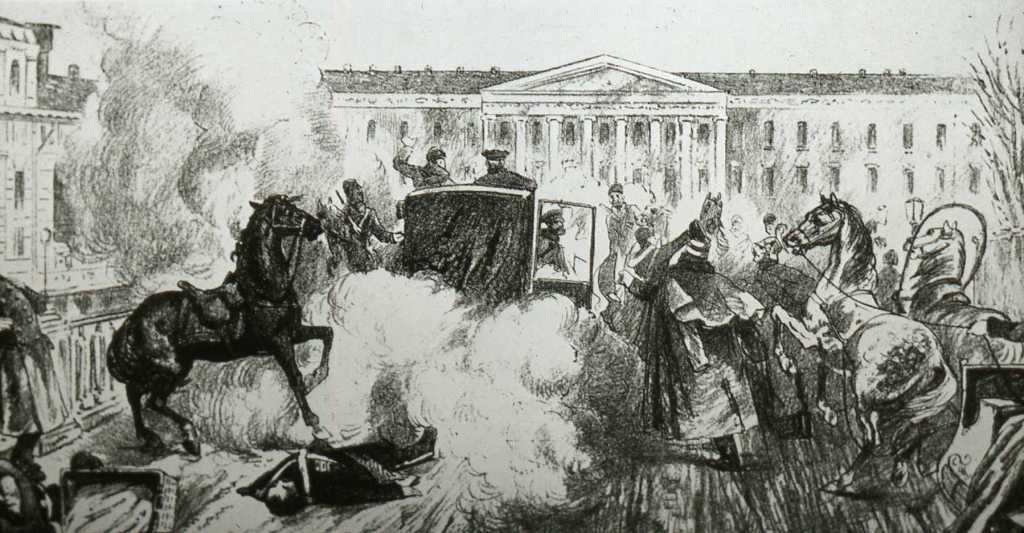
Spas na krovi [The Savior on the Blood]
A cathedral build in Petersburg on the spot
where Emperor Alexander II was assassinated
<>1881mr02:1894; Russian Emperor Alexander III reigned
in a time of official reactionary policy [ID] following the second revolutionary situation
and terrorist assassination of his father, Alexander II, the "tsar liberator"
- 1877se17:1882my06; Alexander III was much influenced by the political ideas of reactionary
Ober-prokurator of the Holy Synod, Konstantin Pobedonostsev
- Pobedonostsev dispatched a steady stream of advisory memos over the critical
five-year period surrounding the assassination of Alexander II [VSB,3:671-5]
- 1881ap25:1887mr04; Mikhail Katkov wrote monarchist and imperialist editorials in his
daily newspaper Moskovskie vedomosti [Moscow News] [VSB,3:677-9]
- In the last four years of his life Katkov was rewarded with high aristocratic/service rank on the Table
of Ranks and put in charge of the Moscow University printing presses
- Katkov's quarter century of journalistic service to the Russian imperialist
establishment ended with an ironic mirror-image reversal of Nikolai Novikov's publishing career one
century earlier [ID]
- 1881mr08:1882ap10; reform-minded ex-Minister of War Dmitrii Miliutin's diary
described atmosphere of crisis in governmental circles [VSB,3:679-80]
- 1881su:1882fa; Petersburg court insiders (government ministers, generals,
grand dukes and other high-ranking members of the royal family, statist elites close to the tsarist throne)
formed the Holy Retinue [Sviashchennaia druzhina]
- This covert organization was designed to do combat with the revolutionary movement
- A secret Central Committee of the Holy Retinue directed operations under the leadership of
Prince P.P. Shuvalov who commanded a widely ramified network of spies and provocateurs
- These operations were independent of regular police agencies, "off the books", and they were
kept secret both from revolutionaries and the public
- Operatives raided underground printing presses and worked to identify and entrap political suspects
- The organization was especially active abroad. It published two newspapers
in Geneva, Vol’noe slovo [The Free Word] and Pravda [The Truth]
without revealing the organization behind the publications
- Security operations, political opposition and war conflated in a time of generalized terrorism,
not just that of revolutionists but of high insiders as well
- Yet it might be said that profound, possibly even "progressive", changes took place in these
years of reactionary policy, the reign of Alexander III
- Over the next quarter century, the tsarist state made its contribution
both to the promotion and the suppression of impending revolution
- USA opinion of Russia, and thus USA-Russian relations, deteriorated to some degree
- A new era of macro-economic struggle, in which world markets in grain and,
very soon, petroleum increased the stakes in the Great Game
- N. Kh. Bunge, The Years 1881-1894 in Russia: A Memorandum Found in the Papers of N. Kh. Bunge [ORBIS]
- British documents on foreign affairs--reports
and papers from the Foreign Office confidential print. Part I, from the mid- nineteenth century to
the First World War. Series A, Russia, 1859 -1914 v2
\\
*--Saul,2:240-310
*1961de:JMH#33:384-97 | Hans Heilbronner, "Alexander III and the Reform Plan of Loris-Melikov"
*--Heide W. Whelan, Alexander III and
the State Council: Bureaucracy and Counter-Reform in Late Imperial Russia (1982)
*--Petr Zaionchkovskii, The Russian
Autocracy Under Alexander III (1976)
<>1881mr08(NS):German chancellor Bismarck's
justification for the first accident insurance bill, a component of a wider program of social
welfare [CCC3,2:1007-10 | DPH:266-8]
*1884mr10:Bismarck speech on the need to promote the welfare
of wage-laborers [PWT2:192-4]
<>1881mr10:Russian
revolutionary political party Narodnaia volia [People's Will] wrote letter to
new Emperor Alexander III [DIR2:313-16 | DIR3:359-63]
- Manifesto to Europe [DPH:288]
- 1882fe16:Last will and testaments of revolutionary populists A.Mikhailov and A.Barannikov [SLM:239-40]
- In its short two years of existence, People's Will left a big mark on Russian history
without furthering the cause of radical reform or revolution
Execution of terrorists involved in the assassination of Alexander II,
including Andrei Zheliabov
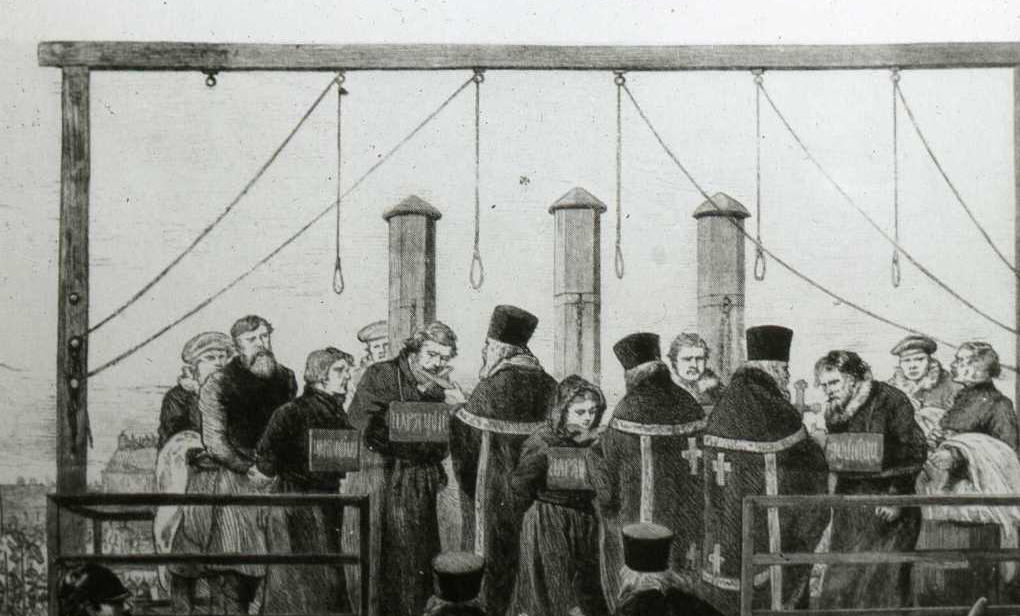
<>1881sp:Ivan Aksakov
repeated Panslav
and Slavophile themes in his "Address to...Benevolent Slav
Society" [KMM:112-15 | RRC2,2#32]
- 1861:1883; Selections from Ivan Aksakov's long journalistic
career [VSB,3:657-9] suggest distinction between Slavophilism and panslavism
- 1883:Aksakov asked what panslavism was and answered first with what it wasn't =
- "It does not exist as a political party, nor as a political program, nor even as a definite political ideal"
- "The unification of all the Slavs of east and west in a single political body has so far never
been envisaged by anyone in any clear form, nor even as a dream"
- Then Aksakov took up what it was =
- "Yet panslavism indubitably exists in our time as the
awareness, shared by all the manifold branches of the Slavic race, of their
common Slavic character and common ethnic origin"
- [To help define "Slavic" consult this table organized by language groups]
- Aksakov said panslavism was not a "political party" but insisted that the Russian state could
not renounce a panslav mission "that can bring existence, life, and freedom to
the Slavic peoples and to the entire Orthodox-Slavic world"
- That would force Russia to renounce "her very self, her very essence, and her mission among
mankind"
- Aksakov was disturbed that Germans regarded any Russian nationalism in literature or politics as
panslavic and therefore odious =
We repeat: there exists neither a political panslavic program nor a political
panslavic ideal. But as the spiritual solidarity and the gravitation of various branches of
the same race toward each other, as the awareness of Slavic
brotherhood, as an Orthodox-Slavic world headed by Russia
[emphasis added] and asserting its claim to exist, live, and develop side by
side with the Roman [Romance-language cultures = France, Italy, Spain, etc.] and
Germanic [including England] worlds, panslavism exists both as an idea and as a
fact.
- NB! Aksakov's anticipation of certain powerful European trends of thought about
the meaning of modern civilization and its impact on popular cultural traditions
- GO TO Ivan's father Sergei and his brother Konstantin
\\
*--LOOP on WW1a
<>1881ap29:Alexander III's manifesto
reaffirmed inviolability of autocracy [VSB,3:680]
<>1881au14:Russian statute sought to strengthen law and
order [VSB,3:680-1]
*--The tsarist state sought to reaffirm what it took to be the fundamental truths
of Russian politics
*--These truths were increasingly embodied in reactionary policy, but occasionally
in certain reform measures
<>1881oc:Russian revolutionary groups Narodnaia volia
and Chernyi peredel' joined forces to compose a program [DPH:288-9]
*1881fa:1882wi; Narodnaia volia Military-revolutionary organization composed a
Program [SLM:238 | RN7,2:196-200]
<>1882:Switzerland | Friedrich Engels
published Socialism: Utopian and Scientific, a summary of Marxism published in the last year of Marx's
life [CCC3,2:701-24 | CCS:775-801 | CCS,2:265-291]
- Engels' summary was a simplification, and its claim to be "scientific"
might be questionable to some
- But it eventually achieved a popularity as wide as The Communist Manifesto, the publication which
opened the public careers of Marx and Engels in 1847-1848
- In comparison with Marx's condensed and high-impact "A Preface to A Contribution..."
(1859), Engels' summary, is an explanation of what "Marxism" was all about.
It was more detailed and self-explanatory
- 1882ja:Marx and Engels composed a preface to the 2nd Russian edition of
the Communist Manifesto. The preface concluded =
If the Russian Revolution becomes the signal for a proletarian revolution in the West, so that both
complement each other, the present Russian common ownership of land [the
peasant obshchina] may serve as the starting-point for a communist devlopment
- "Marxism", as ism, survived Marx and Engels
- 1883mr14:Karl Marx died
- The political careers of these two specific thinking and acting individuals (to distinguish them from
their "ism") had by this time spanned 35 years
- The "ism" continued for more than a century to inspire a significant variety of political movements
in Germany, Russia, China and elsewhere around the world
- The complexities and contingencies of the specific thinking and acting individuals who had
created the "ism" faded from memory as they became global celebrities
- Distinct "socialist" ideologies and movements were forming in Europe, much as
had happened with revolutionary liberalism over the previous century
<>1882:1890; Russian welfare
legislation (child labor [TXT], working hours, factory
inspection) [VSB,3:752-4 | cf. RRC2,2#36]
- As Russian urban life expanded, the state made efforts to incorporate the new
social formation -- proletariat or wage-labor -- into traditional social/service hierarchies
- These reforms can be seen as acts of official co-optation (in the sense that they were acts
designed to neutralize or win over wage-labor through assimilation into an established order of things)
- In this famously "reactionary" era of Alexander III, tsarist bureaucrats displayed as much reform
initiative in these realms as did new urban social formations
- Officials presumed that Russia might not need a progressive liberal bourgeoisie if it had a progressive state
- Russia might curb an activist wage-labor class, might replace it with an activist state
- 1898:Mikhail Tugan-Baranovskii [ID]
published The Russian Factory in the 19th Century.
For his independent views, officials had him fired from his post at
St.Petersburg University
<>1882my02:je09; Russian state sought to give relief to
its Jewish subjects [VSB,3:682]
<>1882my18:Russian statute
established Peasant Land
Bank [TXT] | VSB,3:751]
- Three years later it established the Noble's Land Bank [ID]
- Clearly the "reactionary" autocratic state was capable of notable reform initiatives
and, however belatedly, was beginning to see the fundamental importance of banks in
the modern world
<>1883:USA and world tours of ex-frontier scout William
Frederick Cody ("Buffalo Bill") and his Wild West Show got under way
- The Native American hero of the Battle of the Little Big
Horn, Sitting Bull, performed in this early version of US commercial culture
- From the beginning, pop-arts mixed the authentic and the artificial without any
conscious desire to do harm to either
<>1883:1891; Switzerland | German philosopher Friedrich
Nietzsche (1844-1900) published his most influential work, Also
sprach Zarathustra [TXT]
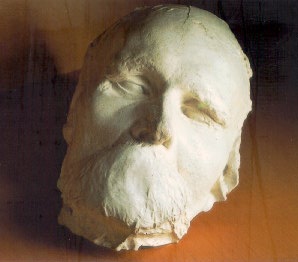
Nietzsche's Death Mask
Which calls to mind the finest-ever graffito that I personally saw =
*1965su:On the entrance to the NYC subway at the main gate of Columbia University, someone had written =
"God is dead -- Nietzsche"
Just below this, someone else wrote =
"Nietzsche is dead -- God"
<>1883je27:France | Ivan Turgenev letter
to Leo Tolstoy (Turgenev's last letter) [GPR:627-8]
<>1884:English theorist Herbert Spencer, The Man
Versus the State [PWT2:179-80 |
P20:6]
*--Spencer continued to develop his concepts of "Social Darwinism" and aquisitive individualism
<>1884:Geneva | Russian émigré Marxist
Georgii Plekhanov, "Our Differences" [TXT |
Excerpts = Edie,3:359-89 | VSB,3:705-7 | SPW]
- A quick read would be from beginning through ch.1 pt.1 (ca. 69pp)
- Then ch.3 pt.1-3 (ca. 17pp)
- Then ch.4 pt.1-3 (ca. 48pp)
- Finally ch.5 (ca.22pp)
- Here Plekhanov laid out with some clarity the differences between his brand of Marxist socialism for Russia and
the now extinguished "populism" of the 1860s and 70s
- Plekhanov began as a populist activist, but in
exile he now based his revolutionary socialism on industrial wage-labor
- Program of his Marxist group "Liberation of Labor"
[DIR2:353-7 | DIR3:400-5 |
VSB,3:707-8 | DPH:290-4]
- Vera Zasulich, the famous one-act "terrorist" [ID], was an active member of Plekhanov's
émigré group where she became again famous for a "one-act" ideological moment (letter to Karl
Marx [ID])
\\
*1980:JHI#40,1:89f| Henry Eaton, "Marx and the Russians" [TXT]
<>1884my:Paris | Sarah
Bernhardt (1844-1923) thrilled audiences with her popular portrayal of Lady Macbeth in a stunning French
translation of the Shakespeare tragedy
- "The Divine Sarah" might be thought of as the first great popular entertainment
"celebrity" [TXT], the pioneer of commercial-culture pop-arts
<>1884au23:Russian University statute
[VSB,3:682-4] reversed reformist gains in the 1863 University statute [ID]
*--By placing new restrictions on university life, the tsarist state
pursued a recognizable reactionary policy goal to reserve "careers open to talent"
only for presumed old regime elites rather than for an increasingly dynamic Russian population at large
<>1884fa:Korean court struggles
roused Japanese and Chinese appetites and caused tensions [Beasley,MHJ:161]
*--Paul George von Molendorff, a high-ranking German administrator or "adviser" within the Korean government,
tried to draw Russia into conflict [KEJ,6:341]
*--Manchuria was also becoming a prize in this global imperialist conflict
\\
*--George Alexander Lensen, Balance of intrigue: international rivalry in Korea and Manchuria, 1884-1899 (1982)
<>1885:USA Congregationalist minister Josiah Strong
wrote Our Country (purchased
by 185,000 readers [Zimmerman:46])
- Americans, he preached, are a "race of unequaled energy, with all the majesty of numbers and the might of wealth
behind it—the representation, let us hope, of the largest liberty, the purest Christianity, the highest civilization"
- The preacher noted with approval USA'
s development of "peculiarly aggressive traits calculated to
impress its institutions upon mankind" [46-47]
- He predicted that USA will "spread itself across the earth". He added, "Can any one doubt that this
race, unless devitalized by alcohol and tobacco, is destined to dispossess many weaker races, assimilate
others, and mold the remainder, until, in a very true and important sense, it has Anglo-Saxonized mankind?"
- Later he expressed racist views on Anglo-Saxon
Predominance [TXT]
<>1885:1901; Asian kerosene market the scene
of a 15-year competition among emerging transnational petroleum corporations
- 1885:Russian crude oil discoveries allowed significant involvement in
the early world petroleum
market
- More than one half of all Russian petroleum production was exported, 2/3 of this
to Europe
- Standard Oil had not yet extended its control of the market beyond New York City docks
- 1888:Russian kerosene dominated 22% of the world market as a result of low production
costs, proximity to markets, and government support
- 1888ap24(NS):USA | Standard Oil Company founded the Anglo-American Oil Company to market
its products in England
- 1890:Black Sea | Marcus Samuel, an English
import/export businessman, saw the world’s first oil tankers, operated by the Russian
company "Nobel Brothers"
- Samuel realized that bulk transport in Nobel-type oil tankers was superior to Standard's method of shipping kerosene in metal
cases by clipper ship
- He signed a ten-year supply contract with Rothschild banking interests in Russia
- He ordered eight tankers for shipping Russian kerosene in bulk through the Suez
Canal [ID] to Asian markets
- 1891:Marcus Samuel won contract with Paris branch of the great Rothschild banking house
to sell Russian kerosene
- He would ship this kerosene in his specially designed tankers (based on a Russian innovation)
from Russian Black-Sea ports to the markets of the world east of Suez
- 1890:Sumatra oilfield | The Royal Dutch Company for the Working of Petroleum Wells
in the Dutch East Indies formed, J.B. August Kessler, manager
- Petroleum shipper Samuel moved into business association with Royal Dutch [above]
- A Dutch-English transnational petroleum company was forming around these partnerships
[GO 1892 just below]
- 1891mr10:Netherlands & Belgium | American Petroleum Company (51% Standard owned), then
two Italian companies (60% Standard owned) and a Scandinavian firm (21.45% Standard owned)
- 1892:Suez Canal plied by Samuel’s tanker Murex, followed by the Conch
[shell names on tankers eventually gave name to whole company]
- 1892:Sumatra, Pankalan Brandan | Royal Dutch Pipeline and refinery began operations
- 1895:1899; British merchant ships carried 70.8% of world sea trade
- 1896:Royal Dutch manager Kessler hired young banker and accountant Henri Deterding who
was to launch that company on its global career
- 1896:Samuel finagled a Dutch concession on Borneo, where he struck oil and then built
refinery in Balik Papan
- 1897:Borneo oil business so extensive that Samuel formed a separate "Shell" Trading and Transport Company
- 1898:England knighted Marcus Samuel for services to the Empire = Shell ship freed a Navy warship
that ran aground in the Suez Canal
- 1899:Samuel first formally tried to persuade the Navy to test oil as a fuel, the fuel his own fleet used
- Samuel pioneered the use of oil as marine fuel and tried to get the Navy to convert to oil
- So it happened, but Samuel was not allowed by the British establishment to play the central role
- 1900:Dutch East Indies production encouraged Samuel to renew contract with the Rothschilds
to purchase Russian petroleum products for overseas transport and marketing
- Shell expanded everywhere and determined to market gasoline in Europe by purchasing
a German company from the Deutsche Bank
- Shell now intended to enter into active competition with the companies that controlled the market
there = Standard, Nobel and Rothschild
- 1901fa:Shell was Britain's largest oil company, second only to Standard
worldwide. As it prepared to enter the European market, it was the only company
with global sources of crude
- Certain industrial companies were by definition "transnational" and began to
act their spheres of influence like sovereign nation-states, at first like small sovereign states and
then later like largish ones
- The stage was set for a titanic struggle between Standard and Shell. Nobels of Russia fell by
the wayside. The contemporary struggle for world dominance in the new and every-day more
imperative petroleum age was well under way
<>1885fe26(NS):Berlin Conference agreed on General Act
whereby European imperialist powers settled on a division of Africa among them
- Bismarck offered himself as the "honest broker", but
he was a less-than-neutral host, seeking advantages for Germany as the western European states
sliced the cake of Africa and took possession of their respective assigned pieces
- Clearly the slicing was well under way before the Berlin Conference =
- 1877:Englishman Cecil Rhodes,
on the eve of a great career of personal aggrandizement and imperialistic adventure in
African diamond extraction, jotted down his most heartfelt views on the need to prepare
an organization to consolidate and expand English imperialist control [TXT]
- Rhodes dreamt of an international shadow state designed to repair historical damage to the global British Empire
- EG= Repossess USA, earlier lost in the colonial revolution
- Expand English control over Africa, etc., where other European states were competing with England
- Protect English imperialist dominion everywhere
- Rhodes envisioned a vast, world-wide secret society, a colonial/imperialist version of the Jesuit order or Free Masons
[Wki]
- Rhodes' company, De Beers Consolidated Mines, controlled 90% of the world's diamond production
and had a huge stake in south African gold mining
- 1882:England claimed all of Egypt, having already taken possession of the Suez Canal
- These
English moves in AfroAsia weakened the English position in Istanbul and persuaded Sultan Hamid to shift
away from England and toward Germany
- 1883jy06:Hamburg Chamber of Commerce laid out its views on German interests in West Africa
[BNE:171-4]
- Before long German economic advisers began to supplant the English
- 1884:1896; Istanbul| German Field Marshall Colmar Freiherr von der Goltz
[ID] served as
Hamid's military adviser. He was soon awarded the Turkish title pasha and eventually
was designated an Ottoman Imperial mushir (field-marshal)
- The Berlin Conference now moved to build on these pre-1885 beginnings and
to bring
them under some sort of international diplomatic management
- The 1885 Berlin Conference made multiple cuts through areas and populations of Africa, dividing large
chunks of the continent among European colonial powers, usually with no serious regard for
existing territorial regions of native African peoples
- 1889:English Queen Victoria's Viceroy of India, George Curzon, wrote a powerful interpretation of British/Russian
imperialist competition [Curzon.RUS]
- 1892se16:English Foreign Secretary justified taking Uganda as an English
imperialist possession on the basis of the need to protect English control
over Egypt and the Suez Canal
- 1908:English Lord Cromer justified the taking of Egypt in much the same way
[E-TXT]
- This was Africa's route to European imperialist domination
[1914:MAP of Africa]
- The Berlin Conference made "The West" temporarily happy, if not the Africans or those Europeans
(EG=Russia)
excluded from the Conference =
- While England presumed the right a few years earlier [ID]
to become intimately involved in Russian affairs after the Russo-Turkish war, it now joined other ambitious
central and west European states in the exclusion of Russia from the Berlin Conference and its fateful
deliberations
- Africa was in the grips of the imperialist powers of north-west Europe
- The Great Game was not child's play, and the story of it is not
a soothing lullaby
\\
*--LOOP on WW1a
<>1885ap21:je03; Russian government established
the Nobles'
Land Bank [VSB,3:751-2]
- The autocratic state saw the need to give gentry landowners some economic
relief [TXT]
- But it did not come until three years after the establishment of the Peasant Land Bank [ID]
- Finance Minister N.K. Bunge's banking reforms were essential
but spongy foundations for the Witte System of
industrialization that was soon to follow
- Still, this was a long quarter century after the beginning of the "era of great reforms"
[ID] and well off the pace of general European banking and financial trends
<>1886:French
journalist, racist (particularly anti-Jewish) and
rabid conservative Édouard Drumont published La France Juive [Jewish France, excerpt
in P20:32]
<>1886:Russian musician Vasilii Andreev
began to appear in public with his popular balalaika orchestra [ID]
*--Pop-arts were often linked with nostalgia for the pre-industrial
or "folk" world
*--Also with an awakening of a broad public interest in art that treated simple every-day life ubiquities
<>1886my04:USA Chicago,
Haymarket Square the site of violent labor disorder
- Police moved to break up a large crowd of demonstrators gathered in support of the eight-hour
working day
- In the midst of the assembly, a bomb detonated, killing seven policemen and four others
- More than 100 were injured. Riots followed
- Public hysteria forced "rush to judgment" against eight "anarchists"
- No evidence was found or presented at trial linking these eight to the manufacture or
use of the bomb that detonated at Haymarket
- But they were all found guilty of "inciting violence"
- Four were hanged and one committed suicide
- In 1893 the Illinois Governor pardoned the remaining three in view of the evident injustice of the trial
- In the "trial of public opinion" the Haymarket riot served
- not only those who sought to criminalize organized labor
- but also those who sought to condemn establishment legal culture
- In the broader political culture of the late-19th-century world, "terror"
had a place in the arsenals of many different persuasions, "left" and "right" and in between
- Another thing Haymarket did was instill a new urgency to the labor movement. Organized self protection
and self assertion became imperative =
- 1886:AFL [American Federation of Labor] formed out
of 1881:Federation of...Unions. Federal structure (local, city, national, and international levels)
- The United Mine Workers and the Brotherhood of Carpenters and Joiners came in
- But the four big railroad unions did not
- Samuel Gompers, AFL leader until 1924, struggled =
- Against company-sponsored pseudo-unions
- For higher wages, lower hours, and unemployment insurance for factory labor
\\
*--Gompers website
<>1886je06:Russian Finance Minister
Nikolai Bunge [ID] took leading role in
creation of the first Russian labor code [TXT]
- Bunge's code incorporated all the demands made earlier by striking wage-laborers at
one of Savva Morozov's large cotton mills [Harding:72-3 | See
"Morozov" in MERSH]
- Bunge was a stellar representative of those who chose "butter" in the eternal economic policy conflict
between "guns or butter"
- The "guns or butter" financial conflict was especially intense in the era of mature modern imperialism
- Since 1882, Bunge pushed through both welfare
and banking reforms (creation of peasant land banks [ID] and
then noble land banks [ID]) in an effort to stem the tide of
official reactionary policy under Alexander III
- Within a year, the tsarist state forced Bunge to
resign under pressure exerted by those who sought tax increases in order to bolster military expenditure
\\
*--LOOP on WW1a
*--LOOP on "finance"
<>1886se12:USA NYC | The World#27:13.
Anonymous article, "Theosophy in New York: Facts about Mme. Blavatsky, Her Powers and Her Religion"
[TXT]
- Russian "spiritualism" swept USA high society [W]
- Growing popularity of figures like Blavatsky [Portrait] built on the accomplishments of
talented spiritualists like
- Altogether, these entertaining figures might be taken as warning against
making crude generalizations about
the "positivist" or "scientistic" mentality of 19th century "Western Civ" [ID]
- Also, for that matter, they recommend skepticism about the profound "sea-change" as European thinkers made effort to
escape cliché positivistic simplicities [EG]
- Perhaps most important, these supernatural "psychic" figures represented a religious, mystic or spiritual side
of the burgeoning pop-arts
- In the longer terms of "Western Civ", these spiritualist trends were heretical whether viewed from the
position of traditional European Christianity OR science
- Blavatsky's pop-arts spirituality adumbrated trends that flourished into
the 21st century
[EG#1 |
EG#2]
\\
*1995:|>Johnson,K. Paul|_Initiates of Theosophical Masters
[Excerpted E-TXT] pt3:113-61 = Ukhtomskii,
Dorzhiev, Gurdjieff(Georgii Ivn*) Lubovedsky Mystery
*1997:| The Occult in Russian and Soviet Culture
<>1887:German theorist
of peasant origins, Ferdinand Tönnies, wrote powerful and influential critique
of modernizing/industrializing society, Gemeinschaft und Gesellschaft [Community and Society]
[CCS:227-51 | CCS,1:543-67]
- Tönnies contrasted artificial modern Society with an idealized recollection of
pre-industrial everyday life in the rural Community
- Tönnies influenced a significant growth of a public reactionary mood in
Europe (the desire to return to a mythic past, a past not in fact ever experienced)
- Where his influence did not reach we find other thinkers headed down the same
path. EG=Russian pundit Ivan Aksakov's contrast between publika [the public]
and narod [the people, the folk], a close parallel with Tönnies' Society and Community
- Disenchantment with the modernizing contemporary world was shared by many who,
unlike Tönnies and Aksakov, had no personal experience with life "down on the farm"
- 1887:USA author Edward Bellamy expressed a very different view when
he published Looking Backward: 2000-1887 [TXT]
- This bit of "science fiction" was intended to promote progressive values by
refuting the claim often made by elite establishmentarians of the time --
1887 -- that contemporary everyday life approached perfection [ID]
- So far Bellamy seemed in line with the views of Tönnies or Aksakov, but he
was in fact headed in the opposite direction =
- He contrasted what he took to be the sorrowful truths of his contemporary 1887 with the good life in an imagined
future year 2000
- Looking Backward offered a complex variation on
the "utopian" tradition
- If Tönnies can be called "reactionary" (as he was above), Bellamy can be called "radical"
in the sense that he recommended movement forward toward an idealized
industrialized, scientific and technological future, hitherto not
actually experienced by anyone
- English visionary William Morris wrote his utopian novel, News from Nowhere,
in part to correct Bellamy's many perceived deficiencies
- Some American social critics, reacting in part to Bellamy, expressed their version
of the growing general-European unease with conditions of everyday life caused
by industrial modernization [Further aspects of Russian/USA "shared history" reveal
themselves = TXT ]
<>1887:USA reading public
was captivated by Leo Tolstoy or, more accurately, "Tolstoyanism", which exploded
into a virtual "Tolstoy craze"
- In his late years, the great Russian novelist was becoming a moral force
throughout the world
- Tolstoy's broad appeal and his turn toward popular preachment linked the high art of his novels with the
emerging era of pop-arts [TXT]
- "The Kingdom of God is Within You" (1893) and 1894:"Christianity and
Patriotism" [VSB,3:733]
- What is Art? (1897:1898)
- 1873:Ivan Kramskoi's portrait of Tolstoy in Olga's
Gallery
- 1884:Nikolai Gay's portrait (detail) of Tolstoy in Olga's
Gallery
- 1890s photo of Leo Tolstoy walking in a
pasture at his Tula Province country estate "Yasnaia poliana"
- LOOP on pop-art continues
\\
*--Saul,2:311-34
<>1887:Russian religious thinker Konstantin Leont'ev became
a monk [cf. Edie,2:271-80]
\\
*--Stephen Lukashevich, Konstantin Leontiev (1831-1891):A Study in Russian "Heroic Vitalism" (NYC:1967) SUMMIT
<>1887mr01: Here on the sixth anniversary of Alexander II's
assassination, Aleksandr Ulianov (Lenin's older brother) was arrested with others who were planning
the assassination of the dead tsar's son and heir, Alexander III
*--Terrorism had slackened, but had not disappeared from Russian political culture
\\
*--Philip Pomper, Lenin's Brother
<>1888:Russian publicist Lev Tikhomirov [ID],
an ex-leader of revolutionary terrorist party [ID] now on his way toward a new loyalty to his
tsar, published a revealing interpretation Russia,
Political and Social [v1
E-TXT | v2 E-TXT
| Bad translation of 1886:PRS|_La
Russie, politique et sociale
\\
*--Two remarkable website entries -- Wki and
"The Mad Monarchist" --
feature Tikhomirov and his holy transition from terror to religious reactionary support of the Russian
Imperial throne, but they do not mention his significant big book above
<>1889:Russian philosopher Vladimir Solov'ev
on Slavophilism, and "On Sins and Ailments" [VSB,3:731-3]
*1885:Ivan Kramskoi portrait of Solov'ev in Olga's Gallery
\\
*--LOOP on Vladimir Solov'ev
<>1889:1905; Russian statesman Sergei Witte came
to St.Petersburg from Odessa as head of the railroad department of the Finance Ministry
- 1892: Witte was appointed Finance Minister and launched an amazing quarter-century transformation that can be named =
Russian Imperial Industrial Revolution
[Russian language website with primary and secondary documents]
[TXT on general European industrialization]
- "The Witte System" guided the destiny of Russia over an intense period (16 years)
- His reforms continued after he was dropped from power
- These were fateful years in which industrial modernization was combined with two other transformational features
of the general European experience in these years =
- IMPERIALISM [TXT on general European imperialism |
Also LOOP on Japan]
- REVOLUTION [TXT on general European experience of revolution |
Also LOOP on 1905 Revolution]
- The great challenge of industrialization lies at the root of these two transformations
- In Russia, the state seemed determined to play the leading role in urban-centered industrial modernization
- Russian everyday life would never again be the same
- Welfare legislation, including urban
and wage-labor policies, took on new meaning
- But was an urban "middle class" evolving as well?
- And what about the vast majority of Russian Imperial subjects = peasants?
- Didn't the state continue its customary and largely reactionary policies under conditions
of radical modernization?
- Perhaps the biggest question of all = Was Russian industrialization essentially unlike earlier processes of
European economic modernization? [TXT]
- "The Witte System" in Russia was inspired by a clear sense of a global industrial future
in which agrarian nations would be gobbled up if they did not modernize [table]
- The challenge was to solve the "riddle of economic backwardness", and finances were at the heart of the matter =
- An impoverished consumer economy was squeezed in order to restrict imports and win export capital for investment
in heavy industry [EG]
- The state took the central role in this process, rather than independent entrepreneurial companies or individuals
- The imperial state grabbed the initiative, sometimes pushing independent enterprises to the
side (most notably railroads)
- Governmental "tutelage" over the economy and society (rather than social independence and
free-market decision-making) was the norm
- Was this altogether different in USA? [EG]
- 1895:1898; As for reform of Russian finances, the Russian Imperial State Bank became the central bank of issue in the Empire
- This came after Witte brought an end to the paper ruble (with negligible foreign exchange value)
and introduced the gold standard (with an exchangeability equal to that of any European currency)
- Witte gave Russia for the first time an internationally recognized monetary system
- Foreign investment was encouraged, but always with an eye to restricting "repatriation" (profits
on foreign investment transfered out of Russia and back to the home country, IE= draining profits out of Russia)
- Tariffs on certain imports were introduced to protect the young and vulnerable Russian industrial
economy from other more "advanced" economies
- In this connection Witte was opposed to open markets and pure laissez faire measures
- Like so many world statesmen who addressed the problems of economic modernization in the face of the intrusive or
imperialistic advanced economies of "The West", Witte was influenced by the economic ideas
of Friedrich List
- "Big ticket" items, like railroads, mining,
large-scale industrial companies were given heaviest and disproportionate attention
- The consumer market was thus further squeezed
- These measures restrained consumer expenditures and raised revenue for focused state investment in further
heavy industrial development
- The Russian agrarian economy was weak on the world market
- Now USA became increasingly powerful, and thus an effective competitor with Russia
on world grain markets
- USA competition weakened Russian export trade and, thus, capital accumulation for investment in the
domestic market
- Many Russians were committed to a Russia in which peasant traditions might be protected
from the standard ruinous processes that accompanied industrialization [EG]
- Russia's sluggish role in the early evolution of a global petroleum industry showed other
weaknesses in comparison with competitors
- 1947:JEH#7:149, Alexander Gerschenkron measured "The Rate of Growth of
Industrial Production in Russia since 1885" came up with these measures of Witte's success =
| 1885-1889 |
6.10 % per year |
|
| 1890-1899 |
8.00 % per year |
1894:1899; nearer 9.00 % |
| 1900-1906 |
1.45 % per year |
|
| 1907-1913 |
6.25 % per year |
1910:1913; ca. 7.50 % |
| 1885-1913 |
5.72 % per year |
Roughly = 1928:1955 levels of growth |
- Olga Crisp (in an important comparative historical survey of European banking and
finance, Banking in the Early Stages of Industrialization:184) created
this comparison of gross national product in rubles per capita, Russia and four other major nations, 1897-1913 =
| NATION |
1897 |
1913 (AS PERCENT) |
| Russia |
63 |
101.4 (62%) |
| Germany |
184 |
399.4 (46%) |
| France |
233 |
NA
(NA) |
| Great Britain |
273 |
460.6 (59%) |
| United States |
346 |
682.2 (51%) |
- High ranking official and public activist Vladimir Gurko evaluated Witte's
accomplishments as Finance Minister [VSB,3:759]. Here is a passage from his
posthumously published memoirs, Features and Figures of the Past:56-57,66-67 =
Witte's economic policy was but a program to meet the current need and showed
that simplicity of conception which was his distinctive trait. This policy was,
in brief, the accumulation of funds in the state treasury and the accumulation
of private capital in the country. Realizing that the best method of increasing
state resources was to develop the country's economic life, he encouraged such
development; but he considered that the only means to attain this end was to
develop industry, heavy industry especially, since it was the source of all
great private fortunes. . . . Witte held that agriculture is but a limited field
for the application of human labor, while industry, unconfined by material
limitations, may develop indefinitely and thereby use an indefinite amount of
labor. Agriculture to him was a necessary but purely subordinate branch of
public economy; agriculture was necessary to feed the population, but could not
serve as the sole source of its well-being. This explains his negative attitude
toward all measures designed to improve the agricultural situation. [?EG?] As to
selection of method, Witte was . . . an opportunist; he was facile also in
shifting his opinion when he considered such shifts advisable. But his aim of
promoting the economic development of Russia as a basis for political strength
was steady and unswerving. In summary, Witte's accomplishments as Minister of
Finance reveal his great merit as an organizer of our state economy. He brought
order into the state budget, avoided deficits, and achieved even a pronounced
increase of revenues; he strengthened Russian finances as much by the
introduction of the gold standard as by his successful conversion of state loans
to a lower rate of interest, to four instead of six per cent. He extended the
network of our railways; he introduced and developed university and secondary
technical education; he assembled a fine group of assistants and other officers
in the Ministry of Finance; he organized the department of tax supervision; he
most successfully introduced and organized the large-scale liquor monopoly. All
these were the fruits of Witte's strenuous labor. Thanks to him our industry
began to develop at an almost incredible speed and attracted a part of the
population away from agricultural pursuits which could not absorb all the
peasant labor as the population increased.
- Sergei Yu.Witte,. The Memoirs of
Count Witte [Excerpts, CCC2,2:611-14]
- More on Sergei Witte
*--LOOP on "finance"
Some images of Russian industrialization =
Moscow Peasant women factory workers [pix]
Moscow Factory dormitory [pix]
Petersburg on banks of the Neva River | Cotton Mill [pix]
Petersburg, same factory, peasant workers [pix]
Moscow Morozov Factory hiring hall [pix]
Baku Oil field [pix]
Siberian gold mine [pix]
Central-Asian petroleum pipelines [pix]
- The following items (Russian industrial bureaus, companies
and societies) have entries devoted to them in MERSH =
- Bureaus
Industrial Labor Legislation in the Russian Empire [LOOP on "welfare"]
Manufacturing Council
Congresses of Representatives of Industry and Trade [GSE
article TXT]
Councils of Congresses of Russian Industrialists
Factories and Plants owned by the Tsarist Russian Government
War-Industries Committees [GSE
article TXT]
Central War Industries Committee [ID]
Nationalization of Industry and Finance after 1917
- Companies
Factories and Plants in Russian Empire
Manufactories in Tsarist Russia
Morozov [powerful manufacturing family]
Oil Production
Putilov Works [great iron-works on the southwestern edge of Petersburg]
Russian Commercial-Industrial Bank [
GSE article TXT]
Russian Steam Navigation and Trade Company [Wki]
Russian Timber Company of the Far East [ID]
- Societies
All-Russian Society of Sugar Manufacturers
Association of Industry and Trade, 1906-1917
[ID]
Russian Industrial Society
Societies of Plant and Factory Owners
Union of Ship Building Factories [Wki]
Zhurnal Manufaktor i Torgovli [Journal of Manufacturing and Trade]
\\
These first secondary sources provide significant comparison with USA =
*--White: Chapters 7 & 8
*--Rimlinger:245-52 [TXT]
*--Saul,2:148-53, 409-20, 451-5
*--Fred V. Carstensen, "American Multinational Corporations in Imperial Russia: Chapters on Foreign Enterprise and Russian Economic
Development" | 1977mr:JEH#37,1:245f
*--Thomas C. Owen, Russian Corporate
Capitalism, chapter 3: "Corporations in the Russian Empire, 1700-1914" (pp. 16-49), and the discussion
of Russian capitalism in a comparative perspective [TXT (pp. 78-83)]
*--J. P. McKay, Pioneers for Profit: Foreign
Entrepreneurship and Russian Industrialization, 1885-1913
*--George Sherman Queen, The United
States and the Material Advance in Russia, 1881-1906| Tells of McCormick Harvesting Machine Co.,
Remington Rand, Allis-Chalmers Mfg Co., Robins Conveying Belt Co., and several banking
firms
*--The great German sociologist Max Weber was fascinated by the
modern experience of the two peripheral European peoples, Russians and Americans
\\
The following secondary sources deal more directly with Russia =
*--James H. Bater, St. Petersburg:
Industrialization and Change
*--William L. Blackwell, The
Beginnings of Russian Industrialization, 1800-1860
*----------. The
Industrializaton of Russia: An Historical Perspective
*--Daniel Chirot, ed. The Origins of Backwardness in East Europe: Economics and Politics
from the Middle Ages until the Early Twentieth Century
*--Jonathan Coopersmith,The Electrification of Russia, 1880-1926
*--Olga Crisp, Studies in the Russian Economy before 1914 (LND:1976)
*--Malcom Falkus, Industrialization of Russia, 1700-1914 (LND:1972)
*--Alexander Gerschenkron, "Agrarian Policies and Industrialization: Russia, 1861-1917". The Cambridge
Economic History of Europe. Vol. 6, pt. 2. Cambridge:1965, pp. 706-800
*----------. "Problems and Patterns of Russian Economic Development". In his Economic Backwardness
in Historical Perspective. Cambridge MA:1962; Reprint in CSH:282-308
*----------. "The Rate of Industrial Growth in Russia since 185l" *1947:JEH#7:144-174
*--R. W. Goldsmith, "The Economic Growth of Tsarist Russia, 1860-1913", Economic
Development and Cultural Change 9 (1961):441-75
*--Paul R. Gregory, "Economic Growth and Structural Change in Tsarist Russia: A Case
of Modern Economic Growth?" Soviet Studies 23 (January 1972):418-34
*----------. "Russian Industrialization and Economic Growth: Results and Perspectives of Western
Research". 1977:JGO#25:200-18
*----------. Russian National Income:1885-1913. Cambridge ENG:1982
*--M. S. Miller, The Economic Development of Russia, 1905-1914. London:1926
*--Roger Portal, "The Industrialization of Russia". The Cambridge Economic History of Europe 6, pt. 2:801-872
*--Theodore Von Laue, Sergei Witte and the Industrialization of Russia
*--Post-Soviet Russian-language studies = Search UO library catalog with KEYWORD "vitte"
<>1889:English stevedores, longshoremen and other
unskilled dockers organized massive and finally successful strike, marking the beginning
of modern wage-labor union movement in England
- Strike organizer Tom Mann wrote memoirs of the strike [CCC2,2:827f CCC3,2:877-84]
- Socio-economic map of London that year gives
insight into the population-geography of European industrial urbanization
- 1889:English cultural elite, led by Sidney and Beatrice Webb, published Fabian Essays in Socialism
[Sidney Webb's contribution in CCC3,2:953-70]
- LOOP on Socialism
<>1889:USA Theodore Roosevelt published The Winning of
the West
- Roosevelt was the son of a wealthy New York importer
- As he pursued a legal and political career in NY, he was able to purchase ranch lands in Dakota territory
where Native American Lakota Sioux were being pushed off their lands and pressed into reservations
- After a political setback and devastating personal loss of close family members, he retired for
two years (1884-1886) to his ranches
- His book reflected his experience on the range and his desire to be identified with the mythic vigor of
pioneer life
- He praised the supreme "righteousness" of war against indigenous "savages" of the prairie, "though it is
apt to be also the most terrible and inhuman"
- Wide-eyed acknowledgment of this gruesome reality lies at the heart of his "heroism"
- He wrote further, "American and Indian, Boer and Zulu,
Cossack and Tatar, New Zealander and Maori, -- in each case the victor, horrible though many of his
deeds are, has laid deep the foundations for the future greatness of a mighty people"
- NB! his future-forward view that horror today might eventually be justified by a great tomorrow
- "Though unsuccessful as a rancher", as one popular US desk encyclopedia put it, "he gained in
the West many of the picturesque mannerisms that complimented his positive personality"
<>1889ja01:USA NV Paiute native, Wovoka, fell into a
trance and had visions that became the basis of a new mystery religion called the
"Ghost Dance"
*--Within a year, the Native American reservations on the Great Plains were alive with Ghost Dancers
<>1889je:USA journal North American Review
published article "The Gospel of Wealth" [TXT
| Excerpts = CCC2,2:803f CCC3,2:885-99], written by
industrialist Andrew Carnegie
<>1889jy12:Russian counter-reform measures established
"firm governmental authority" in the villages, in the form of Zemskie nachal'niki [Land Captains]
[VSB,3:687-8]
- As a rule, only those gentry who chaired regional noble assemblies could hold this office
- The tsarist state sought to restore the power of the nobility over peasants, and
thus, in part, to reverse one of the essential elements of serf emancipation [ID]
- But the state also sought to extend its own authority more intimately into the post-emancipation village
- The tsarist state made this final half-hearted institutional effort to resuscitate
its most privileged but seriously damaged soslovie
[social-estate]
- This was the last effective moment in the life of the noble assembly as
organizational center of aristocratic political life
- Gentry politics moved into more clearly "modern" institutional frameworks
- Now other organizations -- zemstvos and then political parties --
seemed better to meet the felt needs of the Russian well-born
- More Russians, even in privileged circles, were beginning to see
that reactionary policy and the old order were indeed doomed
- Finance Minister Sergei Witte deplored the creation of Land Captains
- He understood that it met no authentic aristocratic need and that it did harm to the most
numerous soslovie, the peasantry
- In his memoirs, Witte described how those officials who created Land Captains
presumed that villagers were "eternally under age, so to speak. This belief seems to me profoundly erroneous"
- Witte prophetically predicted that this belief "is fraught with disastrous consequences for the future"
- Not only were gentry politics, per se, increasingly a failure, the Russian nobility, as a legally-defined and defended social formation [soslovie],
was not actually prospering in the countryside. On the whole, rural gentry were weak and poor, and thus generally dispirited
- EG= View these film dramatizations = FLM#1 based on Turgenev story |
FLM#2 based on a Chekhov story
- But for some gentry, life was still sweet, or at least had the external trappings of sweetness =
- 1894:Tea-time on a Kharkov province country estate
[pix]
- 1894:Cadets prepare to practice dancing at the exclusive Corps of
Pages [pix]
<>1889:Paris World's Exposition on the centennial of
the Great French Revolution was less focused on "liberty, equality and fraternity" than on the muscular
accomplishments of economic progress
*--This world's fair followed in the emerging tradition [ID] by
featured the newly built steely symbol of French industrial modernization, the Eiffel Tower
[W lxt]
*--Painting of the entrance into the Central Dome of the Gallery of Machines
[lxt]
*--This was the "Beautiful Era" [Belle Époque] that immediately preceded the WW1 catastrophe
\\
*--Wki
<>1889jy14:jy20; Paris | In the year of the
Paris Exposition [just above], an equally global or universal-minded organization, the Second International, held
its founding congress
- The First International had faded from the scene in acrimonious factional
dispute among leading figures [LOOP]
- But now European (and soon world-wide) social-democracy was becoming a public force
- From this time forward for over a quarter century, the Second International worked to mobilize European, North
American and world-wide progressive political parties and workers' unions
- The goal was to hasten labor-friendly economic reform and to limit the economic power of capitalism
and the political power of industrial companies
- The liberal revolution over the previous century had gone
only so far to break free of the old feudal hierarchies
- Activists felt that the liberal or "bourgeois" revolution had in fact created a new hierarchy based on wealth
- That hierarchy was depicted in a pamphlet published by the International Workers
of the World [pix]
- The long-term goal of the Second International was to replace the capitalist
or bourgeois "mode of production" with a radically democratic socialist mode of production
in which wage-laborers assumed the roles of both management and labor
- However, European socialism was splitting, giving birth to two main trends in Social Democracy =
- Moderate socialism, or left-wing-liberal or radical-liberal, an increasingly overt
movement (EG=Eduard Bernstein)
- Revolutionary, conspiratorial socialism, an increasingly covert movement (EG=Vladimir Il'ich
Lenin)
- The first trend expressed optimism about the ability to build on the successes of the earlier liberal revolution
- The second trend presumed that the earlier liberal revolution would have to be overturned
by domestic war, by violent revolution
- This split represents for socialism a functional equivalent of the contradictions built into European liberalism
[ID]) =
- European Marxism broke into corresponding factions, and the Russian
movement was soon to do the same
- The Second International lasted a quarter century
- The size and strength of the Second International did pressure industrializing
nations of Europe and North America to follow Bismarck'
s lead
in Germany in the direction of social welfare reform
\\
*--Rimlinger's comparative history of welfare, ch. 1:1-10 (Intro)
[TXT]; chs. 6-7:193-301 (USA [TXT]
and Russia [TXT]); ch. 9:333-43 (Conclusion)
*--P. Flora and A. J. Heidenheimer,
eds., Development of Welfare States
in America and Europe
*--GO 1927 to see how welfare comparison looked four decades later in a time of
crisis, between WW1 & WW2
*--GO 1964 to see how welfare comparison was done yet four
more decades later, in the era of the Cold War
*--GO 2007 to see a TABLE that compares affluence in USA with
affluence in welfare-oriented Norway
||
*--LOOP on The Second International
*--LOOP on WW1a
<>1889se:USA, Chicago | From an 1892 speech by founder
Jane Addams, Hull House was described in the following way=
It represented no association, but was opened by two women, backed by many friends, in the
belief that the mere foothold of a house, easily accessible, ample in space, hospitable and tolerant in spirit,
situated in the midst of the large foreign colonies which so easily isolate themselves in American cities, would
be in itself a serviceable thing for Chicago. Hull House endeavors to make social
intercourse express the growing sense of the economic unity of society. It is an effort to add the social function
to democracy [boldface added to highlight sense of "civil society" [ID] embedding
in Addams' comments]. It was opened on the theory that the dependence of classes on eachother is reciprocal;
and that as "the social relation is essentially a reciprocal relation, it gave a form of expression that has
peculiar value" ["The Subjective Necessity for Social Settlements" (TXT)]
<>1890:African Cape Colony under the control of
English imperialist adventurer and free-wheeling colonial entrepreneur Cecil Rhodes
*1888:1889; Documents describe Rhodes administration [CCC3,2:1138-49 | CCC2,2:841f]
\\
*--LOOP on WW1a
<>1890:English public activist William Booth, founder
of the Salvation Army, published In Darkest England and
the Way Out
*--William Booth compared the degradation and suffering of English wage-laborers with
those of the peoples of Africa under imperial/colonial subjugation
[PWT2:173-6]
<>1890:Finland brought more tightly under Russian
imperialist control
- While Russification rushed ahead in Finland and Poland,
opposition to reactionary policy grew within the highest ranks of Russian officialdom =
- 1892ja:Russian diplomat Vladimir Lamsdorf warned of the harm that Russification policy caused
in Poland [VSB,3:690]
\\
*--E. C. Thaden, Russification in the Baltic Provinces and Finland, 1855-1917
<>1890:French imperialist legislator and occasional
Prime Minister Jules Ferry stated sacred claim to Vietnam
in Le Tonkin et la Mère-Patrie
[E-TXT] =
Colonial policy is the child of the industrial revolution. For wealthy countries where capital
abounds and accumulates fast, where industry is expanding steadily, where even agriculture
must become mechanized in order to survive, exports are essential for public prosperity. Both
demand for labor and scope for capital investment depend on the foreign market ... All over the
world, beyond the Vosges, and across the Atlantic, the raising of high tariffs has resulted in an
increasing volume of manufactured goods, the disappearance of traditional markets, and the
appearance of fierce competition. Countries react by raising their own tariff barriers, but that is
not enough [...] The protectionist system, unless accompanied by a serious colonial policy, is like
a steam engine without a safety valve [...] The European consumer market is saturated; unless we
declare modern society bankrupt and prepare, at the dawn of the twentieth century, for its
liquidation by revolution (the consequences of which we can scarcely foresee), new consumer
markets will have to be created in other parts of the world. [...] Colonial policy is an international
manifestation of the eternal laws of competition [Heineman, Readings in European History:184]
*1870s:Ferry held liberal views on democratic education
[CCC2,2:512-21 | CCC3,2:1030-]
*1884mr28:French Chamber of Deputies heard Ferry speech on the need for French imperial
expansion [E-TXT]
*1885jy28:The Chamber heard Ferry on the question of French interests in Madagascar
[BNE:174-9]
\\
*--LOOP on WW1a
<>1890:Russian mathematician Sonia Kovalevskaia described
her everyday life
in A Russian Childhood, a significant
account of women's education
- Other women left significant memoirs of their experience, sometimes highly
political. See Barbara Engel, ed., Five Sisters: Women
against the Tsar
- Vera Broido, Daughter of
Revolution: A Russian Girlhood Remembered (1998)
- Vera Figner, Memoirs of
a Revolutionist
- Russian-born Emma Goldman emigrated to USA and launched herself on a
remarkable half-century of anarchist activism
\\
*--Anna Hillyar and Jane McDermid, Revolutionary
Women in Russia, 1870-1917 (2000), chapters 1, 2 & 3
*--Barbara Alpern Engel, Women in Russia,
1700-2000 (2004)
*--Nataliia Pushkareva, Women in Russian
History from the Tenth to the Twentieth Century (1997)
*--Dorothy Atkinson, et al., Women in Russia
(1977)
*--Rochelle Ruthchild, Women in Russia
and the Soviet Union: An Annotated Bibliography (1993)
<>1890:USA naval
strategist Admiral Alfred Thayer Mahan
published The Influence of
Sea Power upon History, 1660-1783 [TXT]
<>1890:USA Harvard University Professor William James
(1842-1910) marked the beginning of an epoch in American intellectual history with the publication
of Principles of Psychology
- James always claimed that his ideas were derived from the principles of Charles Sanders Peirce (1839-1914)
[W#1 | W#2 |
W#3]
- James popularized "Pragmatism", a broad school of philosophy so dominant in
USA in the generation before WW1 [CCC2,2:1035-41 | CCC3,2:1173-91] =
- Consciousness is not a mirror of actuality, it is selective, interested, goal-oriented
- Action is a function of consciousness. The mind "carves out" a vision of actuality
from "the jointless continuity of space"
- Knowledge is instrumental. "Truth" is not absolute but "only the expedient in our way of thinking"
- "Radical empiricism" [see below] is a philosophy that exalts "pure experience"
- It rejects transcendent principles and seeks meaning in the "conjunctive relations" that variously
link ideas with one another and join thought with experience. [1935:CDE:995]
- 1897:The Will to Believe
[TXT]
- 1902:The Varieties of Religious Experience
[TXT]
- 1907:Pragmatism [TXT]
- 1909:The Meaning of Truth
- 1912:Essays in Radical Empiricism [TXT], published
posthumously
\\
*--[W]
*--Wagar on Pragmatism [TXT]
<>1890mr18:German Emperor
Willhelm II dismissed Chancellor Otto von
Bismarck [DPH:271-4]
*--This dismayed many contemporaries [pix]
*--Bismarck's public career of 30 years, one of the most decisive and brilliant in the
European 19th century, was at its end
\\
*--George Frost Kennan, _The_Decline of Bismarck's European Order: Franco-Russian Relations, 1875-1890
*--Retallack,James, _Germany's Second Reich: Portraits and Pathways
<>1890je12:Russian Zemstvo electoral and
voting laws were altered
- One result of these alterations was strengthening the position of landlords and
marginalizing villagers within Zemstvos
- More generally, whether for landlords or for villagers, the range of zemstvo authority
was seriously constricted
- This happened on the very eve of the great 1891:1892; Russian famine [ID] when
the Zemstvo was much needed [VSB,3:688-9]
- The tsarist state seemed bent on scuttling the Zemstvo and
other "great reforms"
- This and other clumsy official reactionary measures provoked Witte to
compose a bitter and ironic "more rightist than thou" tirade
- In this year the world-famous chemist Dmitrii Mendeleev resigned his
St.Petersburg University post in protest over the refusal of Minister
of Education I. D. Delianov (an acolyte of Dmitrii Tolstoi) to accept a student petition
which Mendeleev had agreed to deliver
<>1890jy02:USA passed Sherman
Anti-Trust Act
[Wki]
*--The Act was originally intended for use against large corporations and other business
conglomerates [ID]
engaged in the unchecked pursuit of their own perceived interests
*--But the Act was more frequently and effectively employed against wage-laborers who
sought to organize themselves in the pursuit of their own perceived interests
*--NB! these words on the question of "trust" in market-economic transactions
[*2009:E-TXT]
<>1890de15:SD Standing Rock Reservation,
not far from his family cabin, Sitting Bull was killed by US Government Agency
forces in connection with the policy of forceful suppression of native religious practice
<>1891:English artist, craftsman and writer
William Morris published his novel in the "utopian"
tradition, News from Nowhere, or , An Epoch of Rest [TXT]
- Morris described a humane ideal future in 22nd-century England, where the observation of communitarian and
libertarian principles eradicated cultural, political, social and economic exploitation
- Morris refused to accept the rampant vulgarities of mass-production industrial urbanization and commercial
culture or pop-arts
- He was steeped in an esthetic of rural virtue that harmonized with a European cultural nostalgia for
a "down-on-the-farm" life-style
- He reacted to the narrowness of Bellamy's utopian concept of
industrial progress. Morris, perhaps looking down his nose, called Looking Backward
"a horrible cockney dream". The refined Englishman Morris certainly put the
American author in his place
\\
*--Website of Wm.Morris
Society
<>1891:Russian
scholar Maksim Kovalevskii published Modern
Customs and Ancient Laws in Russia [TXT]
<>1891:1892; Russian famine
*--Not long before, Finance Minister Ivan Vyshnegradskii foolishly stated, "We may starve, but
we WILL export". Who did he mean by "we"?
*--Also not long before, the reactionary state took steps to confine Zemstvo
operations [EG], severely limiting the ability of Russia to deal with famine
*--Nizhnii-Novgorod region| Pioneer Russian news-photographer Maksim Petrovich Dmitriev recorded
village and urban life in this difficult time
[pix#1
(opening pix is of a mirskoi skhod [village assembly) | pix#2].
News photos presented the suffering of the peasantry as only quality
photographic realism can, immediate and horribly beautiful =
Dmitriev photo of dying peasant woman
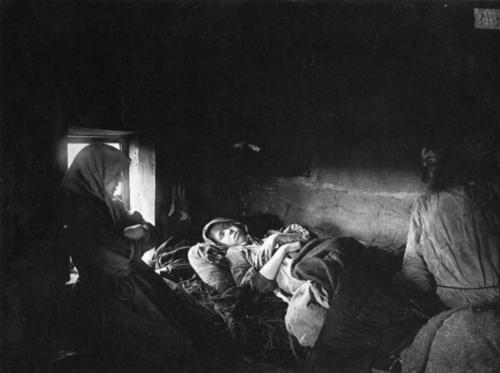
\\
*--Saul,2:335-64
*--R. G. Robbins, Famine in
Russia, 1891-1892: The Imperial Government Responds to a Crisis
<>1891:1903; Russia | Trans-Siberia railroad, after a
half-century delay, nearly completed in nine years
- Rail connection between Europe and the markets of Korea, China and Japan now
established [pix] [MAP]
- Ussuri River (north of Vladivostok) steamboat [pix]
- Russia now poised to become vigorous Pacific Rim presence, but would it be a commercial or a
military/imperialist presence?
- Or would it be cultural/spiritual? Consider future Trans-Siberian railroad
administrator and Chairman of the Russo-Chinese Bank, Prince Esper Ukhtomskii
[Wki-ID |
Excerpts from his account of travel "To the East" as companion of tsarevich Nicholas Aleksandrovich
(E-TXT)]
- 1893:Russia published an official explanation of the railroad's significance [CCC2,2:616-20]
\\
*--Trans-Sib website, w/ good map
*--WEBSITE on Russian railroads, esp. Trans-Siberian
*--Steven G. Marks, Road to Power: The Trans-Siberian Railroad and the Colonization of Asian Russia, 1850-1917
*--Marléna Laruelle, "'The White Tsar': Romantic Imperialism in Russia’s Legitimizing of Conquering
the Far East" [E-TXT]
||
*--LOOP on WW1a
<>1891:USA traveler and lecturer George Kennan
published Siberia and the Exile System
with its powerful condemnation of Russian tsarist state's oppression by means
of removal and frontier development in Siberia
[Excerpts: VSB,3:684-7 | WRH3:387-404]
*--As that great symbol of progressive modernization -- the Trans-Siberian Railroad --
reached for Pacific shores, Siberian exile expressed but another facet of reactionary state policy
<>1891my01:Russian industrial workers delivered
and listened to speeches on May Day [Harding:84-91]
*1891fe04:French Labor Party and the National Federation of Trade Unions urged French workers to join the
international labor day of protest (May Day) against miserable conditions
of wage-laborers [BNE:146-7] GO my15
<>1891my11:Japan, Otsu | Terrorist Tsuda Sanzo, an escort policeman, slightly
wounded future Russian Emperor Nicholas II during state visit
*--Kojima Iken, Supreme court, ruled against the death penalty, showing unusual independence of the law and its courts, but
also diplomatic slight to Russia
\\
*--KEJ
<>1891my15:Vatican issued Pope Leo XIII's radical
encyclical Rerum novarum [TXT]
- The encyclical gave Church sanction to the burgeoning world wage-labor movement
and strengthened the Church's claim to be the spokesperson for the working masses
- 1931 anniversary of this radical encyclical struck a very different tone
- The German Kulturkampf spread to France [DPH:258-61]
<>1891oc:German Social-Democratic Party adopted its Erfurt Program
[DPH:274-7]
*--German miner Nikolaus Osterroth wrote later memoirs about his first confrontation with the Social Democratic
Party [PWT2:170-3]
<>1892:1894; Russian religious
philosopher Vladimir Solov'ev
published The Meaning of Love [Excerpts
= Edie,3:85-98]
<>1892:Geneva | Russian Marxist Georgii
Plekhanov published On the Tasks of the Socialists in the Campaign against Famine in Russia
[VSB,3:708-9]
<>1892je11:Tsarist
state revised the 1870 city-duma reform statute
- The revised statute on city dumas increased central control over municipal
self administration and reduced the number who could participate in elections [VSB,3:689-10]
- The center of gravity in Russian economic and social life was shifting from the
countryside to the city
- This trend also called forth labor legislation (e.g., "police socialism")
and welfare legislation were designed to meet the needs of a small but crucial
and growing urban wage-labor population
- Semen Kanatchikov wrote an autobiography, A Radical Worker
in Tsarist Russia which illustrated in great detail the life of a fresh-minted Russian proletarian
or wage-laborer in the years up to the 1905 Revolution
- Photos of early 20th-century Petersburg street scenes =
- Russian Empire, 1895-1910. Pictures of St.Petersburg. Photographs from stereoscopic negatives in
the Keystone-Mast Collection. They are presented by California Museum of Photography, University of
California, Riverside (comments: edward.earle@ucr.edu)
- Photos of early 20th-century Moscow street scenes =
- But what about urban elites? Was there a non-bureaucratic "bourgeois" liberal political culture?
Was there anything of that much debated European bürgerliche Gesellschaft [urban or civil society]?
Did modern city life come to Russia only at the end of the great European epoch of urban
capitalist liberalism?
- Tighter restriction on the evolution of urban institutions was another example
of reactionary state policy
\\
*--Website E-TXT
of comparative essays on the Russian city Odessa and the USA city New Orleans
*--Metropolis, 1890-1940
[Another edition]. See
Kenneth T. Jackson, "The Capital of Capitalism: the New York Metropolitan Region, 1890-1940":319-353;
and R. A. French, "Moscow, the Socialist Metropolis":355-379.
*--L. S. Bourne., et al., eds., Urbanization
and Settlement Systems: International Perspectives, section 1, ch#1:23-48 (USA); section 4, ch#1:335-55 (USSR)
*--Thomas C. Owen, Russian Corporate
Capitalism from Peter the Great to Perestroika (1995), NB! "Russian Entrepreneurship in Comparative
Perspective" [TXT pp.78-83]
*------------------------, Capitalism
and Politics in Russia: A Social History of the Moscow Merchants, 1855-1905
*--Henri Troyat, Daily Life in Russia Under the
Last Tsar [1903 fictional social history = everyday life, business & other elites in touch w/ folk]
*--Alfred J. Rieber, Merchants and
Entrepreneurs in Imperial Russia
*--Jo Ann Ruckman, The Moscow Business
Elite: A Social and Cultural Portrait of Two Generations, 1840-1905
*----------. Savva Morozov: A Moscow Entrepreneur on eve of the Russian Revolution
*--Daniel R. Brower, The Russian City
Between Tradition and Modernity, 1850-1900
*--Joseph Bradley, Muzhik and Muscovite:
Urbanization in Late Imperial Russia
*--Hamm, ed. City in Late
Imperial Russia (Bloomington:1986)
*--M. C. Kaser, "Russian Entrepreneurship". In Cambridge Economic History of Europe 8, part 2. Cambridge ENG:1978
\\
The following articles devoted to Russian wage-labor organizations are
in MERSH (KNIGHT library reference) =
All-Jewish Workers Union
Assembly of Russian Factory and Mill Workers of Saint Petersburg [~~Zubatov]
Bakinskii Proletarii
Belorussian Workers and Peasants Party
Labor Groups of the War Industries Committee [Central War Industries Committee]
Ludinovo Workers' Disturbances 1861, 1865-66
Putilov Strikes
Union of Oil Industry Workers
<>1892jy04:USA | Platform of the Progressive or Populist
Party addressed central issue of economic inequality and criticized the growing role of government in fostering and
protecting that inequality
- Much rhetorical energy was exerted to praise laissez faire and "free" markets
- But there was by this time little authentic dispute among US political factions, left, right or center, about
whether a vigorous government should or should not be involved in social and economic matters
- In practice (if not in rhetoric) all factions agreed that government should play an active role in the economy
- The only real issue was this = Whose social and economic interests ought to be fostered
and protected by vigorous government action
- The new Progressive Party opposed use of governmental power to support privilege
- It sought to break up the close alliance of government and wealth
- It did not seek to curb governmental power, rather to shift the focus of governmental power from protection
of industrial companies toward protection of the needs of the vast majority of working people, to convert government
into an active agent of popular welfare
- Among their goals was the institution of a graduated income tax, introduction of initiative and referendum,
and democratic election of senators
- At the same time, the Progressive or Populist Party, as a "third party", challenged the near
monopoly on political power held by the two main political parties
- The Progressive Era in USA gave Russian scholar Moisei Ostrogorskii [ID]
grounds for optimism about the general European future of democratic politics
- The Progressive Era:
Primary Documents...1890-1914 (2004)
- The Muckrakers . . .
\\
*2003au03:Kommersant (a progressive business-oriented post-Soviet Russian serial) described what happened in
USA progressive era when big oil and big finance became too big [TXT]
*--Michael McGerr, A Fierce Discontent: The
Rise and Fall of the Progressive Movement in America, 1870-1920 (2003)
*--Robert D. Johnston, The Radical Middle Class: Populist
democracy and the question of capitalism in progressive era Portland, Oregon (2003)
<>1892jy06:USA Homestead Strike (near Pittsburgh)
[W#1 |
W#2]
- Five-month labor dispute with the huge industrial company, Carnegie Steel, turned
violent
- Corporation manager Henry C. Frick hired 300 Pinkertons
- Pinkertons were a private police force founded by Allan
Pinkerton [W]
- Pinkerton was also involved in Civil War espionage and contributed thusly to the creation of the Federal Secret Service
- Frick organized military operations against workers, eventually involving the Pennsylvania National Guard
- Carnegie, the owner, and Frick, the manager, broke with one
another, in part because of Frick's hostility toward wage-labor
- Occurring within two days of one another, the formation of the Progressive Party and the Homestead Strike
announced that the Progressive Era was going to be a highly fretted quarter century in US history
\\
*--James Howard Bridge, The Inside History of the Carnegie Steel Company: The Romance of Millions (1903)
*--Paul Krause, The Battle for Homestead: Politics, Culture and Steel
<>1893:1934; Russian cultural phenomenon,
lasting nearly a half-century, called "The Silver Age"
- The Silver Age opened with Dmitrii Merezhkovskii's "On the Present Condition of Russian Literature"
- Merezhkovskii also wrote on revolution and religion, and the Jewish Question [RRS:187-224]
- The Silver Age of Russian Culture: An Anthology
- Russian art of the avant-garde: Theory and criticism, 1902-1934
- The diary of Valery Bryusov (1893-1905)
- Some would extend this remarkable epoch 41 years, through the 1917 Revolutions, into
emigration, but also into the early Soviet period, up to the imposition of Stalinist
"Socialist Realism" in 1934
- The Silver Age coincided with new trends in Russian
philosophical and religious thought
- Russian artistic developments are best understood in a pan-European, perhaps one should say "global", context
\\
*--William Brumfield, The Origins of Modernism in Russian Architecture
*--Robert C. Williams, Russian Art and American Money, 1900-1940
<>1893:English theorist Thomas Huxley
published Evolution and Ethics
[excerpts = CCC3,2:855-66] which encouraged application of Darwinian biology
to the analysis of human morality and behavior
- 1894:US scholar, diplomat and President of Cornell University, Andrew D. White, summarized some
telling moments in the emerging struggle between science and religion, with special reference
to the impact of Darwinian biology, A History of the
Warfare of Science with Theology in Christendom [Excerpts = PWT2:229-31]
- White described how Darwin's biology "had come into the theological world like a plough into an ant-hill"
- White and his university were accused of teaching atheism and "infidelity"
- Darwinian concepts gladdened some and outraged others
- Science continued its original role as challenger to received or customary ways of seeing the world
- And science expanded its second role = A new totalistic explanation and solution
of human problems, a substitute for received or customary ways of seeing the world
<>1893:French philosopher and social
critic Elie Halévy (1870-1937) and associates (largely from the elitist
Ecole Normale) founded Revue de métaphysique
et de morale
- The march of "Western" scientism was resisted in "The West", but not with a view to turning back to old spiritual
ways =
- The new journal stated that "it is necessary to act against the miserable positivism, which we
are departing from, and the irritating religiosity, which we risk getting stuck in, to
build a philosophy of action and reflection, to be rationalists with a passion"
- Halévy at this time devoted serious attention to the English classical liberal economic thinkers,
the philosophical radicals of the early 19th century [ID] =
- 1904:He published Growth of
philosophic radicalism
- He sought to install an economic foundation, so to speak, under his neo-Kantian
philosophy [ID Kant]
<>1893:French
sociologist Émile Durkheim
published The Division of Labor in
Society [Excerpts = CCS,1:483-515]
- He sought to round off the extreme individualism of the "classical economists" who emphasized the atomized individual
- Durkheim emphasized the essential social or communitarian setting of individual choices
- Still he felt the need to distinguish between "mechanical solidarity" and "organic solidarity"
- He made that distinction, but he presumed that advanced society required a bit of both
- We see again that the "Westernization" of the "West" was not a smooth or natural process
<>1893:Hawaiian Islands under control of USA sugar plantation owner
<>1893:Russian government focused on industrial
companies when it launched a review of national manufacturing industry and trade [CCC2,2:603-10]
<>1893my01:Chicago World's Fair (Columbian Exposition)
- In a year of economic crisis in USA, Chicago put on the best show possible
- George Ferris, Jr., constructed the first modern Ferris wheel, powered by a 1000 horse power engine
- Thirty-six wooden cars were suspended around the 264 feet high wheel. Each car held 60 riders
- More than one million paid fifty cents for a ride
- At this same fair, Wisconsin University [old "Northwest Territory"] Professor
Frederick Jackson Turner pronounced his great theory about US history, "The
Significance of the Frontier in American History" [TXT]
- He later published a book-length study [TXT]
- Some idea of the target of Turner's remarks can be gained from this paragraph of
Tocqueville's Democracy in America
- East Coast elites had reason to be affronted [EG] by the frontier-oriented and westward-looking
cultural radicalism of Turner's thesis
- Sitting Bull'
s SD reservation cabin had been crated up and shipped to Chicago for
exhibit at this World's Fair
- The transported cabin was situated just down the lanes from where Turner held forth on the essence of the American
frontier experience
- When the Fair closed down, the cabin — so it is said — was packed off to the city dump
- Turner announced the closing of the American frontier, then Sitting Bull's cabin was trashed
- In this same year, the Russian Trans-Siberian Railway Committee issued
provisional regulations to promote peasant emigration to the Bashkir Steppes and Siberia
\\
*--White:18-40 compares RUS-USA indigenous populations, rates of geographical
expansion, and early commercial phases of economic development [TXT]
*--D. W. Treadgold, The
Great Siberian Migration: Government and Peasant in Resettlement from Emancipation to the First World
War [TXT]
*--Wagar on Turner [TXT]
*--Saul,2:365-77
*--Andrei Lobanov-Rostovsky, "Russian Expansion in the Far East in the Light of the Turner Hypothesis",
in Walker D. Wyman and Clifton B. Kroeber, The
Frontier in Perspective
*--D. W. Treadgold, "Russian Expansion in the Light of Turner's Study of the American
Frontier", 1952oc:Agricultural History:147-152
*--William Wykoff and Gary Hausladen, "Settling the Russian Frontier: With Comparisons to North
America", 1989mr:Soviet Geography [now titled Eurasian
Geography and Economics] #30, 3:179-89
*--Continue "Eurasia" LOOP
<>1893de14:Russian law restricted peasant ability to
buy or sell land independently from village community [VSB,3:756]
*--Reactionary policy resisted evolution of independent peasant farmers just as the
Siberian frontier opened for them
*1893:English traveler F. J. Wishaw, Out of Doors in Tsarland described peasant village
life [WRH3:426-34]
*1894:Konstantin Korovin painting of wintry scene, a sleigh in front of peasant hut,
in Olga's Gallery
<>1894:USA NYC | William Dean Howells published a
utopian novel, A Traveler from Altruria
- One of Howells' characters described the main change in American life, 1850-1890 =
- In 1850, a person who ran into difficulties, who did not at first succeed, turned his hand to something else
- As a last resort, a person "went West, pre-empted a quarter section of public land, and grew up with the country"
- But, as the theorist/historian Turner declared, the frontier was now closed [ID]
- "The struggle for life", Howells wrote, "has changed from a free fight to an encounter of disciplined forces,
and the free fighters that are left get ground to pieces between organized labor and organized capital".
[Kazin:17]
- As the 19th century wound down, the giganticism of the "second industrial revolution"
presented a looming menace to the contemporary imagination
- Heavy stripes of disenchantment ran through cultural life, not excluding the fine arts
- Events seemed to contradict the naive "liberal" belief in progress
- A feeling of disenchantment drove Max Weber into deeper theoretical
and sociological searches for sources of current problems
- For others it encouraged a romantic affirmation of earlier, simpler, often rural virtues. For example, Thorstein
Veblen praised life "down on the farm" and contrasted it with urban and industrial dehumanization
- Disenchantment stimulated both dreamy projections of utopian escape (remember Tönnies)
as well as terrifying projections of utopian hell (in the emerging anti-utopian
trends of the 20th century)
- Industrialization of farm production moved ahead [pix]
- Some concluded that the era of urban-based "bourgeois" liberalism was over
because the laissez faire, entrepreneurial and true free-market foundations for its existence were transformed to meet the
needs of transnational finance and corporate industrial giganticism
- The economy had outgrown its original liberal political ideology
- Nonetheless, at the turn of the 20th century, some Americans took courage
from the saving graces of modernizing European civilization [EG]
- These might have been a latter-day USA example of that general trend labeled "Westernizer" when it appeared
a half century earlier in Russian cultural debate [ID]
- Howells, for example, was much influenced by Tolstoy and the more clearly "Western"
Ivan Turgenev
- However, American-born but Europe-centered author Henry James, an important
representative of the US "Westernizer" trend and a friend of Turgenev,
expressed his fear that old Europe was stagnant. Its future "is more likely to be one of disintegration, with Russia
for the eccentric on one side and America on the other" [Kazin:17]
- Missouri-born provincial Samuel Clemens took the pseudonym "Mark Twain" and left a very complex legacy
in connection with the issue of "Western" modernity
- See Twain's wondrously unwieldy novel/memoir Life on the Mississippi
[E-TXT#1 |
E-TXT#2]
- 1922:USA culture critic Van Wyck Brooks wrote a surprisingly negative literary biography of Twain
in which Twain is portrayed as a failed artist because he could not break free of the "low-brow" forces of USA
commercial culture, The Ordeal of Mark Twain [
E-TXT]
- Van Wyck Brooks showed a deep affinity for the "Westernizing" and critical,
dissent-oriented traditions of the Russian intelligentsia [TXT]
\\
*1910:NYC| Howells,William Dean| My Mark Twain: Reminiscences and Criticism
[E-TXT]
*1912c:| Paine,Albert Begelow| Mark Twain: A Biography [E-TXT]
<>1894:NYC,Harper|
USA Progressive Era muckraking journalist and critic, Henry Demarest Lloyd,
published Wealth against the Commonwealth, a general warning about how newly arisen giant corporations
organized on a transnational basis ("wealth"), especially Standard Oil,
the Russian oil company Nobel, and the Europe-wide banking house Rothschild, threatened democratic civil society ("the commonwealth")
*--He warned against US/Russian collusion to control the world's oil supply
[ID]
\\
*--LOOP on "finance"
<>1894:English journalist William Thomas
Stead [ID] published Chicago Today: The Labour War in America
[TXT]
- Stead was a wealthy supporter of Progressive Era reform who felt
that Chicago was the hot-spot of American wage-labor problems, and
a lesson to the world
- Stead had a great interest in Russia and USA. In 1888 he published The Truth about Russia which placed emphasis
on the religion of Leo Tolstoy
- In 1890 he began publication of the journal Review of Reviews
- Stead died on the Titanic
\\
*--Joseph O. Baylen, The Tsar's Lecturer General: W.T. Stead and the Russian Revolution of 1905
<>1894ja04(NS):Franco-Russian Alliance signed,
a "secret" military treaty, based on the 1892au17(NS):French and Russian Military Convention
[Fay, Origins,1:118-9 | DIR2:358-9 | DIR3:405-7]
- The diplomatic system forged by Bismarck [ID] was breaking down
- Powerful nations on eastern and western borders of Germany were taking action to protect themselves
from "The Triple Alliance"[ID]
<>1894ja22;1897mr31; English Parliamentarian Joseph
Chamberlain delivered three rousing imperialist and racist speeches, The British Empire:
Colonial Commerce ... [P20:23 | PWT2:213-15]
English version of European imperialism
<>1894je:Korean peasant uprising
caused the anti-Japanese Korean monarchists to ask China for help
*1894jy24:Japan works with pro-Japanese Korean forces to craft a treaty pledging Korean/Japanese alliance to drive China
out of Korea [E-TXT]
*1894au01:1895; Manchuria| China and Japan at war
\\
*--LOOP on WW1a
<>1894su:USA Pullman Strike (south
of Chicago) became a national crisis
- The American Railway Union, led by Eugene Debs, had grown
strong over the preceding two years and was now backed by a wide-spread, well-organized labor movement
- President Cleveland sent in nearly 2000 US army troops to join the nearly 4000 National
Guardsmen and about 8000 police and private security forces
- These paramilitary forces deployed against laborers
- At the same time, steps were taken to make self-organization of wage-laborers a federal crime
\\
*-- [W#1]
[W#2]
<>1894oc20:1917mr; Russian Emperor Nicholas II,
the last tsar and emperor, reigned for a quarter century that can be summarized in the following fashion =
- Nicholas II ruled via brutal official reaction inherited from his father Alexander III, but he responded with
half-hearted reforms as revolution loomed
- This pitiful reign nonetheless continued the Witte economic transformation [ID] and witnessed
one of histories most remarkable high-cultural awakenings, the Russian "Silver Age" [GO]
- At the beginning of Nicholas' reign, political opposition to the tsarist state
was centered on the Zemstvo movement
- Tver Zemstvo address to the new emperor Nicholas II called for progressive social, economic and political
change [1934:SEER#12:347-67]
- By this time the Zemstvo movement had expanded into a whole complex network of enterprises
- Now politics in Russia increasingly involved a broader spectrum of opinion and social action than ever before
- Zemstvo functions new and essential to the modernizing Russian rural civilization
were neglected by traditional administrative institutions
- By the time of Emperor Nicholas II's reign, Russians spoke with approval of a new "Third Element" in national life
- By this they meant locally active Zemstvo professionals, distinguished from government officials
(first element) or elected representatives to Zemstvo boards (second element)
- The Third Element was made up of specialists who tended to health, educationsl and economic needs,
EG=Doctors, veterinarians, agronomists, teachers, statisticians, engineers and technicians
- In a broader colloquial sense the Third Element positioned itself between Imperial officialdom (first element)
and the nation, the people, the narod\ (second element)
- The political implication of the broader colloquial sense of Third Element was obvious --
representational government
- Nicholas characterized such liberal political objectives expressed in the Tver Zemstvo
address as "senseless dreams" [ID]. HOWEVER =
- The 1905 Revolution [GO] stripped Nicholas of his absolutist,
autocratic authority =
- 1906:1917; The Russian State Duma was created in the institutional place of the old
absolute and autocratic tsarist authority [GO]
- But the autocrat remained and the new representative or "parliamentary" governing
institution was slow to put down roots
- The most significant legislative initiative taken in the time of the Duma was under the leadership of
Prime Minister Petr Stolypin [GO]
- In the midst of disastrous World War One [GO], when
confronted with the 1917 February Revolution [GO], the
Duma and all its initiatives collapsed with tsarist authority = Emperor Nicholas II resigned the Russian
throne and the Duma dissolved itself [GO]
\\
*2016:|>Berar,Eva|_Империя и город : Николай II, "Мир искусств" и городская дума в
Санкт-Петербурге, 1894-1914
*2014:|>Davydov,MA|_Двадцать лет до Великой войны [1894-1914]: российская модернизация Витте-Столыпина
*2010no29:RSH#20,1:5-63|>Pirumova,NM| "The
Elected Members of Zemstvo Assemblies and the 'Third Element' "
*1890:1905; Tver Province Zemstvo politics in the 15 years leading up to the Revolution of 1905 are
characterized by Charles Timberlake in Emerging
Democracy..., pp. 30-59
<>1895ja17:ja19; Tver liberals addressed new tsar Nicholas II about need for
representative government, and Nicholas replied with rebuke of their "senseless
dreams" about a constitution in Russia [*1934ja:SEER#12,35:349-50 & 352-4]
*--To the dismay a a large segment of the Russian educated population, Nicholas
seemed to be saying that reactionary policy would
continue as before
<>1895fe12:Petersburg New Port strike leaflet
- That summer, a Moscow "Workers Union" stated labor demands [Harding:143-6]
- 1895de:Tsarist police arrested leaders of this movement, some of
them wage-laborers and some of them representatives of the
educated Russian population, active as a revolutionary intelligentsia [ID]
- An important example of this new generation of dedicated labor-oriented intelligentsia
was ex-student Vladimir Il'ich Ulianov
- In this year of mounting labor organization, Ulianov helped organize a Petersburg
Union of Struggle [Soiuz bor'by] [Harding:149-215]
- Ulianov's father was a tsarist education official who had received noble status as
a result of long and high quality service
- The family lived a comfortably established "middle class" provincial
life [pix]
- But Vladimir's brother Aleksandr [pix] went
off to the university where he got involved in political circles associated with
terrorist plots
- He was arrested and executed
- Now, for his acts of labor agitation, younger brother Vladimir Ulianov was sent into Siberian
exile in the valley of the Lena River
- He changed his family name, adapting the Siberian river of exile to label his new
identity = "Lenin" [pix]
- Lenin's wife, Nadezhda Krupskaia wrote memoirs of their experience in the three years of
Siberian exile [StH:6-15]
<>1895:1908; English pundit, historian and
sociologist, H.G. Wells (Herbert George, 1866-1946) wrote fantastic
science-fiction, often projecting a future in a prophetic tone, sometimes utopian, sometimes dystopian
- Here are some of the most widely read Wells publications =
*1895:The Time Machine
*1896:The Island of Doctor Moreau
*1897:The Invisible Man
*1898:The War of the Worlds
*1908:The War in the Air
*--Examples of 19th-c pop-arts magazines
[UO E-TXT]
*--With its fixation on modern technological, industrial life, pop-arts science fiction seemed always
to be asking of science and technology, "Is you is, or is you ain't my baby?"
<>1895:USA efficiency expert Frederick Winslow Taylor
(1856-1915) delivered a technical paper to the American Society of Mechanical Engineers, "A Piece-Rate System: A
Step toward Partial Solution of the Labor Problem"
- For Taylor, the essence of the matter was the need for closer and more detailed structuring of worker
behavior, near mechanical and scientifically scrupulous managerial attention to
every productive movement of workers and machines
- Economic efficiency -- profit -- was the ultimate virtue, whether in connection with machines or
humans or the products they created for the market
- The industrial commodity might be shabby, but the productive process must be highly regulated and production
costs reduced to a minimum
- This was a "partial solution" not so much of the workers' own "labor problem" as it was of the
capitalist managers' labor problem
- Taylor's inauspicious presentation marked the beginning of a globally significant "managerial revolution"
which was redefining the functional meaning of "ownership" and old-fashioned notions of capitalist property, as well as
the increasingly mechanized image of labor in the productive process
- Taylor was a child of the petroleum phase of the industrial revolution
- His insights had especially important implications as the European
industrial revolution expanded fully into its gigantic, corporate phase
- His importance lies in his adumbration of the coming "Second Industrial Revolution", the
petroleum phase [ID] mounting toward the managerial phase [ID]
of economic modernization =
- Taylor's insights had important implications far beyond the board rooms of corporate enterprise
- For one thing, the "Taylor system" had political/institutional implications. The increasing application
of various aspects of the Taylor System to wider areas of public life had two larger effects =
- It undermined the liberal phase of the European revolution [ID]
- It presented a powerful obstacle to the growing European social-democratic movement
[ID] and to the US progressive movement [ID]
in the Progressive Era
- It laid a scientific foundation for the coming third political/institutional phase of the
European and world Revolution [ID]
- Analysis of this phenomenon in secondary accounts =
\\
*--Merkle:7-8
*--Alfred Chandler, Jr [ID]
authored two powerful interpretive histories of contemporary business organization and operation
- The Visible Hand: The Managerial Revolution
in American Business (1977)
- And later, on the global stage, Scale and
Scope: The Dynamics of Industrial Capitalism (1990) =
- A relatively small number of gigantic corporations -- DuPont, Westinghouse, Dunlop,
Armstrong-Whitworth, Farben, Siemens, etc. -- were beginning to function
in the world like nation-states unto themselves, struggling to be winners in the
quest to organize the earth
- This was not so much a process of "Darwinian" survival of the fittest in some natural competitive process
- This was an exercise in rational economic planning rather than "natural selection"
- The "hand" was not "invisible" [ID], even if it was
kept out of public view
- Chandler argued that mass production expanded levels of productivity to such heights that by
merging plants, bringing unit costs down, "economies of scale" were possible
- Corporate organizational and distributive power gave them further close control over the process
- Petroleum refiners gained control over oil wells "upstream on the
pipeline" and also filling stations "downstream on the pipeline"
- Thus they positioned themselves profitably up and down the full spectrum of production and distribution
of oil, gasoline and other petroleum products, all increasingly critical industrial commodities
- This required meticulous or micro-control of humongous financial resources -- investment and income related to
colossal industrial enterprises
- This required extremely disciplined and ornate organizational structures, yet structures
always open to intervention and control from a central administrative point
- Elaborate structures -- marketing, engineering, accounting, research, finance, etc. departments --
were under centralized managerial control
- This was called "scientific management"
- Scientific management laid the organizational foundations for what can be called
"the second industrial revolution"
- In the age of imperialist competition, scientific management also marked the opening of the European, North American and,
eventually, world-wide "managerial revolution", the 20th-century
political history of the "European Revolution" [ID],
now globalized
\\
*--LOOP on WW1a
*--LOOP on "finance"
<>1895mr06:German Reichstag
heard racist (particularly anti-Semitic
[ID]) speech by Hermann Ahlwardt, The Semitic
Versus the Teutonic Race [P20:30]
<>1895ap13:Kansas, Salina | Eighth-grade
final exam [E-TXT]
*--Universal and compulsory public education, at least through the eighth grade,
was a central component of the Progressive Era
<>1895ap23:Japan and China brought
their war to a close
- Shimonoseki Treaty gave Japan Liaotung Peninsula, w/Port Arthur and Dalny (Japanese:Dairen
Chinese:Dalian or Ta-lien
- Russia, France and Germany considered Japanese gains to be excessive, so they launched
a tripartite intervention. [Beasley, MHJ:163 has strange list of motives, including German
desire "to edge Russia away from European politics", perhaps to render Russia
vulnerable with its back turned to Germany]
- German Kaiser Wilhelm corresponded with tsar Nicholas II over the next weeks urging Russia eastward, "to
cultivate the Asian Continent and to defend Europe from the inroads of the Great Yellow
Race" [VSB,3:693]
- Russian-Japanese relations, up to this point, had been businesslike, now
relations w/Asia embittered by the tripartite intervention, especially as both Russia and Japan turned their
greedy eyes toward Korea and Manchuria
- Sir Ernest Satow, British Minister Plenipotentiary to Japan (1895-1900) and
China (1900-1906) wrote Korea and Manchuria
between Russia and Japan, 1895-1904
<>1895my19:Cuban
revolution against Spain led by Jose Marti from USA
- Spain suppressed the rebellion and moved
rebellious groups -- ex-slaves, mulattos and small holders of Spanish descent -- into
areas called reconcentrados in garrison cities
- Reconcentrados were a grim variation on now familiar frontier or imperialist
policies of removal, transport and concentration
- Cuban economy suffered, especially the $50m worth of USA investments
lost
- USA business shifted to support rebels and a Cuban shadow government
- A junta, settled in NYC under watchful USA eyes
- The Spanish version of European imperialism was coming unglued
- A new imperialist competitor arose in the "New World", the first serious
overseas efforts of US imperialism
\\
*--Chronology
of USA "intervention" in Latin America
*--John Lawrence Tone, War and Genocide in Cuba, 1895-1898 (2006)
<>1895je02:Russian women
trained to become doctors at the Petersburg Women's Medical Institute [BRW:197-9]
<>1896:1916; Central-Asian expansion over two decades brought
Russian power into Kazakhstan
\\
*--G. J. Demko, The Russian Colonization
of Kazakhstan, 1896-1916
<>1896:Austria | Hungarian-born
Jewish leader Theodor Herzl (1860-1904), Der Judenstaat [The Jewish
State, (TXT)]
*--Soon a Zionist movement arose in favor of the creation of a Jewish nation-state,
preferably in Arabic Palestine
\\
*--LOOP on WW1a
<>1896:French philosopher Alfred Fouillée criticized
dominant positivist traditions of European thought in Le mouvement idéaliste et la réaction contre la
science positive [BMC4:618-23]
*--Science, or shouldn't we say "scientism", was coming under increasing critical scrutiny
<>1896:Russian Procurator of the Holy
Synod [ID] Konstantin Pobedonostsev, Reflections of a Russian Statesman
[TXT] gave expression to the most extreme official reactionary views on modernization
of Russian life [CF= VSB,3:736-9 | WRH3:434-46 |
RRC2,2:390-401]
- To what degree did these official reactionary views reflect views among the public, or beyond
the urban public and out into the countryside?
- Does Pobedonostsev represent an "official reactionary world view" or does he represent
a "public reactionary world view", or more broadly a "Russian reactionary world view"?
- Were his extreme views the expression of a hot-house statism or the expression
of a wide-spread national outlook? Were they the views of ordained Russian Orthodox Church functionaries?
- In any event, Pobedonostsev, as ideological anti-secular but
institutional secular bureaucratic head of the
Russian Orthodox Church (trained as
a lawyer, not as a priest), became the representative figure
of Russian reactionary policy in the late 19th and early 20th centuries
- Are his views essentially different from those of prominent Oregon public
figures in the same late-nineteenth century epoch? Consider this historical
evaluation by Russell Sadler [TXT] which appeared
in 2006mr29:ERG
- Concentrated in this one person, Pobedonostsev, Russian secularization presented
itself in both of its two most significant forms =
- World view = Pobedonostsev exercised his zealous power against what he
perceived to be the diabolical threat of modern intellectual secularism
- Institutions. The unordained lawyer Pobedonostsev administered (managed)
the Russian Orthodox Church in the decades that preceded the 1905 Revolution
- Over the previous half-millennium, secularization
was a central component of "modernization" or "Westernization"
- Secularism continued to pose profound difficulties everywhere it was experienced around this
wide globe, in "The West" or in the north, south and east, in Christian, Islamic, Jewish, Buddhist, Hindi
and all other faith-based communities in the grip of seemingly inevitable modernization
\\
*--Mironov,1:425-518 deals with the secularization of Russian urban and rural
consciousness in the imperial period
*--Robert F. Byrnes, Pobedonostsev:
His Life and Thought (1968). How comfortable with secularization is this near-contemporary US scholar?
*--Vera Shevzov, Russian Orthodoxy on the Eve of Revolution (2004) explores tension in Russia between
the Church as bureau of central government (the Petrine Church [ID]) or the
Church as a "grass-roots" expression of Russian spirituality, a place not so much for official doctrine as for popular
religious and nativist communitarian ceremony, as seen by Khomiakov and other Slavophiles [ID]
*--John Shelton Curtis, Church and State in Russia: The Last Years of the Empire,1900-1917 (1940)
<>1896mr01:Ancient
AfroAsian nation Ethiopia defeated aggressive
and reckless imperialist Italy
*--A shocking moment in which a non-European peoples defeated a "Western" aggressor
*--Ethiopia was the only African nation to defeat an invading European colonial power in the
age of modern imperialism [W]
<>1896ap19:Saint Petersburg League for the Struggle to
Emancipate the Working Class, secretly organized by Russian Marxists in the previous
year, issued a proclamation [VSB,3:709]
*--The Russian Social Democratic Workers Party [SDs] was coming into existence, and in these months,
future SDs were active in labor strikes [Harding:121-208]
<>1896my22:Moscow | Russia-China
treaty was hostile to interests of Japan and Manchuria
[DIR2:360-2 | DIR3:407-9]
- Russia secured a shortcut for the Trans-Siberian Railroad through Manchuria
- In this same month, Seoul [Korea] Memorandum exchanged between Russia and Japan
- The two powers shied away from Yamagata Aritomo proposal to divide Korea into North and South
- Korean King Kojong had fled to the Russian embassy when his Queen Min was killed by Japanese
"henchmen"
- Russia and Japan now agreed that the King would return to his palace, and Japan would impose some
control over its "henchmen"
- Japanese military expenditure had this year reached 53m/yen, up from 15m/yen three years earlier
- The Japanese military budget remained this high till
Russo-Japanese War
- Japanese naval expenditures wavered as army expenditures were much increased
- Japan made decision at this point to head inland into the area of Russian threat
(Manchuria) rather than overseas toward Taiwan [Beasley,MHJ:165
- Insightful contemporary French journalist, Pierre Leroy-Beaulieu
wrote The Awakening of
the East: Siberia, Japan, China (1900)
- At a great trans-oceanic distance, US imperialism was on a
collision course with Russian imperialism
- USA advanced by railroad and sea power, Russia by railroad
\\
*--Zabriskie on USA/Russian rivalry in the Pacific, 1895-1914
*--Don C. Price, Russia
and the Roots of the Chinese Revolution, 1896-1911
*--A. Malozemoff, Russian
Far Eastern Policy, 1881-1904
*--B. A. Romanov, Russia in
Manchuria, 1892-1906
*--Matsusaka Yoshihisa Tak, The Makiing of
Japanese Manchuria, 1904-1932
<>1896je:Saint Petersburg labor strikes [MR&C2:350]
<>1896je09:Japan and Russia signed
Yamagata-Lobanov
Agreement, apparently guaranteeing Korean independence
*--Russian-Japanese relations seemed deceptively harmonious as they jockeyed with one
another to cash in on China's weakness and to gain advantage in
Manchuria, Korea, Sakhalin Island and the southern Kuril Islands
\\
*--LOOP on WW1a
<>1896jy09:Chicago, at the
Democratic Party's National Convention | William Jennings Bryan delivered his stirring oration
against what he thought was an urban elitist assault on rural
America, "Cross of Gold" [TXT]
*1896:USA Chicago | Russian
visitor Vladimir Korolenko recorded his impressions of wage-labor
conditions in a US "Factory of Death" [Hasty:83-94]
*--Vladimir Korolenko, History of My Contemporary (memoirs
of his upbringing and youthful populist radicalism up to 1885, concentrating on the years of Siberian exile)
\\
*1918:In the last year of her life, the Polish-born German Social
Democrat Rosa Luxemburg wrote an appreciative review article
devoted to the German translation of Korolenko's
autobiography [E-TXT]
<>1896jy31:London | French and German
ambassadors to England met for long and serious (though informal) conversation about how their
two nations might be marginalized by recent global developments
- The two ambassadors feared that Europe was in danger if strong and innovative measures were not taken
- They were not thinking only of the old imperialist monster England
- They noted also the recent rise of two new giants, Russia and USA
in Japan and China [BNE:195-8]
- Russian and USA imperialism seemed to flourish, but serious conflicts among other
European imperialists threatened disastrous war =
- Imperialism was coming home
- Subsequent events in China and Japan only
deepened these concerns
<>1896au26:Twenty-eight men and women,
activists from the ranks of the Armenian Revolutionary Federation [DASHNAKTSUTYUN, OR Dashnaks for
short], took over the Ottoman Imperial Bank in the Ottoman Turkish capital for 14 hours, a remarkable act of
urban guerilla warfare [W]
- NB! The Ottoman central bank was not managed by a Turk but rather by an English diplomat (an auxiliary
feature of the financial imperialism, the "capitulations"
that served English interests so well, and coincidentally thwarted the interests of other European
competitors for advantage in the Ottoman Empire, especially as England was
right there holding the keys to the vaults of "The Sick Man of Europe")
- "Capitulation" agreements with Turkish officials had long ago brought the bank under the executive
and administrative control of English and French financiers [LOOP on "finance"]
- Dashnaks didn't much care about capitulations. Still two decades before the notorious Armenian
genocide [ID], the Dashnaks sought to bring attention to
Turkish massacres of Armenians
- Atrocities against Armenians increased after the bank takeover
- Nervous influential Europeans convinced Sultan Hamid not to bombard the bank but to defuse the
situation with a grant of safe passage to France for Dashnak survivors
\\
*--Turkish source on Dashnaks and other Armenian political groups
[E-TXT]
*--LOOP on "Imperialism and Revolution"
<>1896au26:Philippine Islands rebelled against Spain
- USA closely followed stirrings for independence in the Philippines and Cuba
- This sort of US "anti-imperialism" was designed to weaken Spanish control, not
necessarily to promote revolution
- Rebel Filipino leaders were at first pro-USA, then they were betrayed by USA
- 1896:USA political leader, Henry Cabot Lodge (1850-1924) wrote "For
Intervention in Cuba" [TXT]
- Lodge was imperialist in one direction (overseas) and isolationist in another
("the homeland"), free-trader in one direction and protectionist in another, so
long as advantage flowed in a direction beneficial to his cohort
- Pressures for a new US imperialism were mounting, but it
had to cloak itself in anti-imperialist rhetoric
- 1897:Cartoon showed Uncle Sam "patient" as he waited for his colonies to come fully ripe
before picking [pix]
- Uncle Sam is dressed in the mode of a tropical plantationist, and his basket already
holds Louisiana [ID], Texas [ID],
California [ID], and Alaska [ID]
- On the branch above his head hangs Cuba, soon ripe for the picking
- Notice that the large fruit tree is rooted behind a high and deteriorating wall of some possibly
declining power, yet the branches now stretch out toward the new plantationist, ready to take up the
old plantationist's "burden" [ID]
\\
*--LOOP on WW1a
<>1896au31:Leo Tolstoy wrote
open letter [TXT] with political advice to Russian liberals who were upset
because of Russian reactionary state actions to shut down volunteer societies devoted
to cultural life
<>1897:1899; Russian
philosopher Vladimir Solov'ev, Foundations
of Theoretical Philosophy [Edie,3:99-134 |
VSB,3:732]
*--"The Enemy from the East" and "The Russian National Ideal" in RRS:41-60
*--Excerpts [VSB,3:731-3]
<>1897:French
sociologist Émile Durkheim published Suicide:
A Study in Sociology [CCS,1:383-420]
<>1897:Italian nationalist and imperialist political
figure Ferdinando Martini reacted to Italian defeat on the borders of Ethiopia [CCC2,2:571f]
- This late blooming modern European nation-state, Italy, found itself in deep conflict
between original half-century-old liberal principles of Italian nation-state
formation and the emerging European imperative of imperialist dominion over non-European peoples
- Tensions were mounting between Austria and Italy as they pursued overlapping imperialist objectives
along the Adriatic shores of the Balkan Peninsula
- Forty years later, Fascist Italy took revenge on Ethiopia as
it sought to carve a niche out for itself among the other European imperialist states
\\
*--LOOP on WW1a
<>1897ja28:Russia conducted first modern
census, Obshchii svod po Imperii rezul’tatov razrabotok dannykh pervoi vseobshchei perepisi
naseleniia, proizvedennoi 28 ianvaria 1897 goda
*--The Perepis' counted 129 million (13 million in cities) [CF= RRC2,2#38]
Translated title page [W]
*--Eastview Press reprinted the census on CD and described "the first and last census of the Russian
Empire". Its initiator was the famous Russian geographer and public figure Petr Semenov-Tian-Shanskii.
He lobbied three decades to make this census happen. To test and improve the census questionnaire,
he conducted an experimental census on his family country estate, Gremiachka. The final version of the
questionnaire was designed for a household and included 14 questions. The announced goal of the
census was "to learn more about the population and to study it ... to understand precisely the
various conditions of popular life". It was also promised that the census would not "generate new
taxes or other burden". The 1897 Census continues to be the most authentic source on the number of
Russia's population and its ethnic composition at the end of the 19th century
*--Red Book of the Peoples of the Russian Empire
provides population statistics for
almost 90 "minority" peoples of Russia
<>1897je02:Russian factory law [TXT] expanded
on previous welfare legislation [VSB,3:719]
*--Reactionary policy mixed with "progressive" reform
<>1898:France rocked by "Dreyfus Affair"
(with its origins in 1894 and final resolution not until 1906)
- 1894se:Evidence of a French officer's treasonous communications with
German authorities was found
- The culprit was Major Ferdinand Walsin-Esterhazy, scion of a French branch of a Hungarian aristocratic family
- But he was an ardent Catholic and French patriot, well-connected in French upper-class circles
- Thus a scape-goat was needed. A Jewish officer, Alfred Dreyfus, was framed, found guilty and sent to
exile on Devil's Island where it was expected he would soon die
- French public protest grew stronger and found sympathetic support among a few high-ranking
military and civilian officials
- At a first glance, the Affair pitted progressives (liberals and
socialists), humanists of all political stripes and defenders of Enlightenment and French Revolutionary
traditions against racists (anti-Jewish elements), militaristic patriots, Catholic Church activists, and a wide
spectrum of "right-wing" politicians
- Closer examination reveals a painfully complex picture [CF=Harris below], but the larger European
meaning of the more than 10-year long Affair was a victory over anti-Semitism, over
Church ambitions to dominate politics, or at least national education, and over
chauvinistic [ID] military ambition and the
still active movement to restore the French monarchy
- But it took more than ten years, and the way to victory was rocky =
- 1897:Esterhazy was put under pseudo-court martial where he was hastily cleared by fellow officers
- Officers who questioned Dreyfus' guilt and who resisted the expanding political charade were demoted
and/or reassigned in punishment
- 1898ja13:Paris | Great French novelist Émile Zola's J'accuse exposed in a most public
way the injustices of the Dreyfus Affair [DPH:323-5]
- The racist/nationalist press thought it was sufficient rebuttal to accuse
the great French author Zola of being an "Italian"
- Zola was himself put on trial, charged with political libel
- Outside the courtroom a mob called for blood
- Anti-Jewish riots broke out across France and across the Mediterranean in French Algeria
- Masked beneath the racist mob mentality was a struggle that pitted civilian national virtue -- justice -- against mounting
military virtue -- chauvinistic patriotism
- Among the many high-ranking military officers who took the stand against Zola was Chief of Staff General Charles
Le Mouton de Boisdeffre who identified support of the military as the central issue, as he put it = "confidence in the leaders of the army, in those who bear
the responsibility for national defense"
- Zola was found guilty, spent a year in prison, and then went into political emigration in England
- Rival volunteer associations formed = The Ligue des Droits de l'Homme [League of the Rights of Man (a clear evocation of the French Revolution)] arose
against the Ligue de la Patrie Française [League of the French Fatherland]
- Jean Baffier defended the racists [BNE:148-52]
- Charles Maurras denounced those whom he felt had subverted the nation, not just Jews but also
Freemasons, Protestants and other foreigners
- Maurras argued that France -- like England, Germany and Russia -- should be ruled by a monarchy
- Influential Church leaders took this opportunity to reassert their desire to control national education
- 1899je03:French Appeals Court overturned Dreyfus' conviction
- Dreyfus was brought back from Devil's Island. A ravaged and deteriorated Dreyfus now faced another
trial
- Military judges found him guilty again
- The President of the French Republic took steps to forestall further appeals and to bring an end to the national
agony
- He pardoned Dreyfus. Neither justice nor chauvinistic patriotism prevailed;
political expediency prevailed
- In order to minimize the possibility of a military coup d'état, all military leaders responsible
for the persecution and prosecution of Dreyfus were pardoned
- In another direction, the state took action against what it called "occult forces" in the Catholic Church
- The Assumptionists [ID] were expelled
from France
- 1905:French law now formally created a separation of church and state
- The most important consequence was the end of a century of post-Napoleonic state
financial support of the Catholic Church (and to a much lesser extend support of Protestant churches)
- 1908:A right-wing extremist assassin attempted to kill Dreyfus
\\
*--Ruth Harris, Dreyfus: Politics, Emotion, and the Scandal of the Century
*--Louis Begley, Why the Dreyfus Affair Matters | Begley emphasizes the weakness of reason against hysterical demands of emotionalism in public
life. He draws explicit parallels = Devil's Island and the post-9/11 Guantánamo Bay
prison. Even the details of Dreyfus' shackles and those employed by USA on captured and
imprisoned "terrorists" one hundred years later, the use of military rather than civilian courts, the danger of rigged justice under the influence of aggressive chauvinism, and
punishment of military officers who criticize all this
<>1898:German
Social Democrat Eduard Bernstein, Evolutionary Socialism
[TXT~ | Excerpt = CCC2,2:934-8 |
CCC3,2:971-5]
*--Bernstein was a moderate influence in the Second International
*1899:He published a reply to his critics, The Preconditions of Socialism
\\
*1994my06:TLS:27 | A summary of the main "revisions" that Bernstein is
thought to have made in Marxist socialist ideology and tactics [TXT]
||
*--LOOP on The Second International
<>1898:Russian Foreign Affairs Minister Murav'ev [Muraviev] to Cassini, with Cassini reply
to Murav'ev and Lamsdorf [Zabriskie]
<>1898:USA Chicago |
Theodore Roosevelt delivered speech "The Strenuous Life" [CCC3,2:1127-37]
<>1898:1902; Russian Riazan
Provincial peasant village the subject of intensive ethnographic
study designed by Olga Tian-Shanskaia and K.V. Nikolaevskii
*--Results were published as Village Life
in Late Tsarist Russia
*--In the half-century preceding the 1905 Revolution, Russian ethnography made
tremendous strides toward full and accurate ethnographic description of Russian
village life and culture. See Reeder (2nd
ed.):85-104 (agriculture-ritual songs) and 109-136 (love, marriage, family)
\\
*--Mironov,1:123-196 subjects the history of imperial Russian family life,
rural and urban, to close scrutiny in an effort to refute wide-spread notions of Russian
backwardness and stagnancy
<>1898ja01:Spain launched a reform of Cuban
administration, designed to introduce self-rule to the island
*1898fe:Puerto Rico granted independence
*--No one much liked these seemingly progressive measures = It was too little too late for stumbling Spanish
imperialism
<>1898fe15:Spanish imperial colonial
territory, Cuba, Havana Harbor | USA Battleship Maine exploded and sank
- Without any evidence, USA officials and an expanding jingoist newspaper press—particularly
the William Randolph Hearst and Joseph Pulitzer sheets—blamed Spain for the murderous attack and called for
righteous revenge
- One headline read, "THE WARSHIP MAINE SPLIT IN TWO BY ENEMY'S SECRET INFERNAL MACHINE"
- Only one authoritative investigation of this event was ever completed, that by Admiral H. G.
Rickover, How the Battleship Maine was Destroyed
- Rickover concluded that it was the US navy's fault for poor management of fuel and powder storage
on the big ship, rather than some infernal Spanish "weapon of mass destruction"
- Admiral Rickover's 1976 revelations about the true story of the Maine did not win him any friends
in the US military-industrial "community"
- This explosive moment may be taken as the symbolic opening of a distinctly
imperialist era in USA foreign policy
- The sinking of the Maine was a catastrophe that could be linked to the "evil-doing" of an international competitor
- The hand of military-industrial adventurers and profit-seekers (some of whom were actually responsible for lax security
on the Maine) was freed of restraint
- Manipulated public opinion fell in line behind ambitious USA imperialists
- Now USA offered its version of European imperialism
- Documents of USA foreign policy 1898-1914
<>1898mr:1898ap; USA pursued a dual policy in the Cuban situation =
- USA tried to insert itself between Spain and Cuba in defense of independence for the Cuban people
- USA tried to purchase the island from Spain. In other words, it tried to
achieve "ownership" for itself, thus betraying Cuban independence
\\
*--Hugh Thomas [ID]
in 98ap23:NYR#45,7:10-12
*--Website related to US imperialism LOOP
<>1898mr:China leased Port Arthur to Russia, Kiaochow
to Germany and Kowloon to England
- In this year in China, wide-spread traditionalism, anti-modernism, and
anti-imperialism helped create an anti-"West", anti-Christian movement called the
Society of Righteous, Harmonious Fists [better known as Boxers]
- Imperialism was producing local revolutionary resistance to expansionist European states
- Imperialism was also producing inter-state violence among these very expansionist European
states. Imperialism was coming home
<>1898mr01:Russian Social-Democratic Workers' Party
[SDs] opened first congress in Minsk
*--The SDs issued a proclamation, written from a Marxist
perspective [VSB,3:709-10]
<>1898ap10:Egypt |
Eyewitness accounts of the English attack southward against the Sudanese at the Atbara River
- The English were under the command of Lord
Kitchener [ID]
- Kitchener's army built a railroad as they advanced to the south from Egypt into Sudan
- The indigenous anti-imperialist forces against Kitchener were led by an Islamic al-Mahdi [Savior]
- A participant, Winston Churchill, described the one-sided or
"asymmetric" battle [Eye:398-407]
- Primitive dessert warriors were confronted with all the might of industrial Great Britain, EG= machine guns
and abundant ammunition carried to the battle by railroad
- The Sudanese lost 20,000 and the English, 500
<>1898ap25:Japan displeased with
Russian/Chinese agreement in Liaotung Peninsula region (Port Arthur)
- However, Japan offered Russia free hand in Manchuria for Japanese free hand in Korea
- That initiative failed, but Nishi-Rosen Agreement pledged both sides to provide no military or
financial advisers to Korea w/o prior agreement, and Russia recognized Japan's
preponderant economic interests in Korea
<>1898ap25:USA declared war on Spain
*--Tensions with Russia mounted as the Spanish-American war got under way
\\
*--Library of Congress narrative,
a part of a multi-page website devoted to the Spanish-American War
*--Saul,2:421-51
*1998sp:WiQ#22,2:42-65 | Warren Zimmerman (Z was 1989:1992; US ambassador to Yugoslavia)
<>1898my01:Philippine Islands, Manila Bay | USA Admiral
George Dewey destroyed Spanish Pacific fleet
<>1898jy01:Cuba | Rough Riders with Teddy
Roosevelt fought the Battle of El Caney
*--James Creelman described the battle and the USA author Steven Crane described the
aftermath [Eye:407-9]
*--Roosevelt had recently resigned as Assistant Secretary of the Navy (in part responsible
for the vigorous expansion of US naval readiness for war, and for the way the Maine was
loaded with fuel and powder [ID])
*--He now decked himself out in a new Brooks Brothers uniform and charged onto the pages of history,
a hero of imperialist "asymmetric" warfare
<>1898jy03:Cuba, Santiago Bay | USA fleet captured
entire Spanish Caribbean fleet.
<>1898jy07:Hawaiian Islands annexed to USA as territory
<>1898jy08:Puerto Rico Islands come under US imperialist administration
<>1898se:USA journal North American Review |
Charles A. Conant published "The Economic Basis of 'Imperialism' "
[TXT]
- Conant was a major figure in US financial affairs
- He was editor of the Wall Street Journal and a trusted adviser to presidents from McKinley to Wilson
- His central message was that recent disorders in American capitalist market would be solved by expansion of
USA imperialism
- Modern capitalism needs overseas expansion
- From the bankers perspective, Conant looked at the relationship of imperialism to capitalism much as did
leading socialist theorists [EG#1 | EG#2]
- But, of course, leading socialist theorists took a stand against the
relationship, while Conant recommended it
- In another sense, Conant was merely extending
overseas the time-honored concept of frontier expansion
\\
*--LOOP on "Imperialism and Revolution"
*--LOOP on "finance"
<>1898se16:USA Senator from Indiana Albert Beveridge
delivered campaign speech "The March of the Flag" [TXT]
- Senator Beveridge expressed an evident patriotic, imperialistic and racist pride
- US imperialism was supported by something like a political ideology
- 1900ja09:Beveridge spoke on US policy in the Philippines [RWP2:265-9]
\\
*--LOOP on WW1a
<>1898oc14:Moscow Art Theatre founded by Konstantin
Stanislavskii [real name=Alekseev] and Vladimir Nemirovich-Danchenko
*--Russian homepage
*--VIDEOTAPE history of the Moscow Art Theatre
*--Russian playwright Anton Chekhov, with his sparse language and quotidian themes, seemed at odds with
contemporary avant-garde trends in the fine arts
*1899:1900; Maksim Gorky (1868:1936; real name "Aleksei
Maksimovich Peshkov"; "Gor'kii" means "bitter") had been a struggling provincial
writer (born in Nizhnii Novgorod). He now made the acquaintance of Chekhov and
the great novelist Leo Tolstoy and, with his distinctly radical social and
political ideas, he broke into the capital-city big-time. A few years later,
Gorky wrote brilliant memoirs of his early acquaintance with
Chekhov [TXT#1 |
TXT#2]],
Leo Tolstoy
[TXT],
Aleksandr Blok and Leonid Andreev.
[Webpage devoted to Gorky]
*1902:Moscow Art Theatre production of Gorky's play, THE LOWER DEPTHS [Na dne]
won international fame. At some odds with the prevailing sensibilities of the
Russian "Silver Age", Maksim Gorky
dealt with the Russian lower classes, the laboring poor of the neglected Russian
backwaters, and did so in an increasingly "realistic" or descriptive style
\\
*--W. H. Bruford, Chekhov and His Russia: A Sociological Study (1947)
<>1898oc18:USA, Chicago
Peace Jubilee | AFL President Samuel Gompers delivered speech which expressed labor union dissent,
"Imperialism--Its Dangers and Wrongs"
- 1898:Boston | German-born Karl Schurz founded Anti-Imperialist League,
supported by unions of wage-laborers and major
business leaders, EG= Andrew Carnegie
- 1898: 278,000 members in AFL
- 1900: 560,000 in AFL
- 1904: 1,670,000 in AFL
- 1915: 2,500,000 in all USA labor unions
<>1898de10:Paris Treaty. Spain ceded Philippine Islands,
Guam Islands and Puerto Rico to USA
*--Spain renounced sovereignty over CUBA and USA established military governance there
\\
*--LOOP on WW1a
<>1899:USA PA Pittsburgh |
Andrew Carnegie consolidated his vast steel holdings and created Carnegie Steel Company
- 1901:Two years later, Carnegie merged with United States Steel and retired
- In retirement, he funded hundreds of local libraries across the USA,
supported public education, and world peace. He endowed the Carnegie Corporation
of New York, with $125 million for use in support of various charitable causes
- Andrew Carnegie devoted the final two decades of his long
and remarkably productive career to philanthropy
<>1899:USA sociologist, born of émigré
Norwegian farmers in Minnesota, Thorstein Veblen
defined and criticized The Theory of the
Leisure Class [CCS:699-725 | CCS,2:126-52]
*--Nostalgia for life "down on the farm" had become a
persistent feature the world in the grips of modernizing political-economic systems
\\
*--LOOP on "Political-Economy"
<>1899:1902; Philippine-USA War
*--Charles A. Conant published his analysis of the new
USA imperialism, The United States
in the Orient: The Nature of the Economic Problem (1900)
<>1899:1908; China market
now felt new USA presence. US imperialism had its distinct economic side
*--Compare 10-year change in Russian and USA kerosene export (in millions of gallons)
[Laserson:324]:
|
Russia |
from 25 to |
3.0 |
88% decrease |
| USA |
from 42 to |
122.0 |
195% increase |
\\
*--LOOP on WW1a
<>1899:Atlantic crossing to New World. Russian anthropologist Vladimir
Bogoraz [ID] visited USA [Hasty:95-110]
*--Bograz crossed USA from coast to coast by rail. Wrote on "Black student" [Hasty:111-27]
<>1899:England | Russian émigré anarchist
philosopher Petr Kropotkin [ID] Memoirs of a Revolutionist
*--USA anarchist (Russian émigré in NYC
since teenage years, factory worker) Emma Goldman (1869-1940)
into the first decade of her 50-year activist career [W]
\\
*--Vivian Gornick, Emma Goldman: revolution as a
Way of Life
<>1899:German (English-born) dilettante cultural figure
Houston Stewart Chamberlain (1855-1926) championed "Pan-Teutonism", a political and cultural association based on
crude racist presumptions, as expressed in Foundations of the Nineteenth Century
[BMC1:554-7 | BMC4:606-10]
<>1899:Russian Finance Minister
Sergei Witte memo to Emperor Nicholas II, "Autocracy and Zemstvo" [TXT]
- The profound ambiguities embedded in Witte's memo can be taken as a signal of
impending political crisis in the highest ranks of the state bureaucracy
- Over the previous two decades of largely reactionary
policy, frequent contradictory and arguably "progressive" state actions had been taken
- The time had now arisen in which the contradictions (as that between centralized autocracy and
flourishing institutions of local and provincial self-administration) could no longer be brushed over
- Witte's remarkable pamphlet aroused the political exile Vladimir Lenin to
new polemical/theoretical heights as he was completing his massive study of the Russian economy
- Zemstvos came under attack from all sides, left
and right, as the tsarist state wavered
<>1899fe:English writer Rudyard Kipling celebrated manly
virtues and touted Anglo-Saxon imperialism with his poem "The White Man's Burden", published in McClure's
Magazine [E-TXT#1 |
E-TXT#2]
- Here he urged the USA to quit lagging and take up the cause of European imperialist expansion and global dominion
- Underneath Kipling's aggressive imperialism there lurked also a certain disdain for the sorts of radical-liberal
or proto-socialist politics that arose in the US Progressive Era
- And there also lurked an impatience with the still lingering USA hostility toward the old
imperialist master England. In essence, Kipling urged that racial brotherhood should erase the memory
of actual historical division. And something like that erasure was well under way in USA
- 1899:USA NJ | United Fruit Company [ID]
incorporated under ownership and management of Andrew Preston and M.C. Keith (1848-1929)
- Their plantations were arrayed around the shores of the Caribbean Sea and grew bananas
- The company formed a near monopoly in the harvesting, transportation and marketing of bananas
- They soon included other fruits as well, all cultivated in ways very destructive of natural environments
- Maintenance of this economic monopoly was assured by political domination over local authorities, control over
native wage-laborers bound in conditions approaching slavery
- United Fruit in some cases gained near total command over the routing, construction and
management of Central American railroads
- Regions in the grip of these large agribusinesses were thus denied the possibility of self-administered and
independent economic modernization
- This growing transnational corporation wielded considerable insider influence with the US government
- United Fruit closely coordinated its own profit-centered foreign policy with Washington, DC. For example =
- 1911:Honduras was invaded by US forces with United Fruit Company collusion
- 1928:Columbia massacred striking workers on United Fruit Company lands
- Kipling's appeal to USA (above) appeared to be getting results
\\
*--LOOP on WW1a
*--LOOP on "Imperialism and Revolution"
<>1899fe08:St.Petersburg University hit by student demonstrations
*--Over the next three years, the student movement spread to other institutions of higher
learning and intensified [VSB,3:739-41]
*--University student unrest was a harbinger of the 1905 Revolution,
and the tsarist state perceived it as such
<>1899mr:Russian political
exile Vladimir Lenin published The Development of Capitalism
in Russia [W TXT],
based on careful analysis of Zemstvo statistics on the village-level
and region-level agricultural economy
- Lenin's main contribution here was to assert that peasants were not a distinct social class
but were a complex and transitional social formation
- There were three sorts of peasants in this account
- "Rich peasants" (kulaks) were akin to a social class considered by
Marxists to be genuine, the bourgeoisie
- "Poor peasants" were akin to another genuine social class, proletariat
- "Middle peasants" made up the rest of the rural population in this analysis
- The curious thing here is that this third, very large but theoretically
inchoate portion of the Russian population (a large majority) who were neither "rich" nor "poor"
held the future of Russia in their hands
- Everything depended on which direction this unstable middle element moved as it fell into
orbit with one of the two social classes deemed authentic in Marxist political-economy
- It had to move either into the ranks of the "rich" (bourgeoisie) or the "poor" (proletariat)
- Peasants thus were granted no intrinsic
status in this socially dualistic Leninist world-view, based as it was on an
orthodox understanding of Karl Marx's teachings
\\
*--David Mitrany, Marx Against the Peasants
<>1899mr20:Canada, Ottawa | Down and out D.H. Davies
described how he had a foot severed while trying to jump a train [Eye:409-11]
<>1899mr22:Russian Finance Minister Sergei Witte
submitted another significant report to Emperor Nicholas II
- "Report of the Minister of Finance to His Majesty on the Necessity of Formulating and
Thereafter Steadfastly Adhering to a Definite Program of a Commercial and Industrial
Policy of the Empire" [Translated with an introductory article, by T. H. Von Laue,
*1954mr:JMH#26,1:60-74 | TXT excerpts
| Other published excerpts= RRC2,2#37 | VSB,3:757-9]
- Witte was working hard to convince the Emperor to support the "Witte System" [ID]
- Witte placed great emphasis on shortage of investment capital to promote vigorous expansion of
the coal and oil sectors of the modernizing Russian Imperial economy
- Witte's views of Russian imperialist foreign policy were consistent
with his policy of economic modernization [VSB,3:693-6]
- 1899je03:French government seemed to awaken rather late, but very perceptively, to what
was happening in China, and reacted with alarm at Russian/English
agreement on "spheres of influence" that allowed Russia to build railroads north
of the Great Wall, and England, south [BNE:180-3]
- Aleksandr I. Fenin [ID] wrote his memoirs,
Coal and Politics in Late Imperial Russia: Memoirs of a
Russian Mining Engineer
<>1899my18(NS):Hague Conference got
under way [W] (International Peace Conference)
[DPH:215-20]
- Hague Conferences were international gatherings of representatives of the "Great Powers" in
response to a Russian proposal offered to the increasingly aggressive European states
- Russian railroad magnate and administrator Ivan Blokh's remarkable analytical studies of
modern war [ID] influenced Emperor Nicholas II's decision to
sponsor this unprecedented international peace conference
- Blokh predicted a European disaster if industrialized war were to break out
- Hague Conferences sought to reduce armaments and monitor peace treaties
- Do "arms races" cause or prevent wars?
- Do peace treaties prevent wars?
- How about mediation? =
- Hague Conferences created Permanent Court of Arbitration (Hague Tribunal) to mediate international discord
- USA opposed because international arbitration or enforceable international law seemed a threat to
nation-state sovereignty and to US imperialist ambitions
- USA was not alone among other reluctant "Great Powers"
- Second Hague Conference
\\
*1843+: Website summary of major European peace conferences,
with bibliography
*--Sheehan.WHERE:22-8
<>1899jy:USA President McKinley appointed Elihu Root, a
prominent member of the USA imperialist party, to the War Department for the purposes of administering the islands taken
from Spain in the recent war [W]
- Elihu Root (1847-1937) was a corporation lawyer in the service of powerful NY businesses =
- William A. "Boss" Tweed [Wki]
- E. H. Harriman [Wki]
- J. P. Morgan [Wki]
- In the previous year, McKinley hesitated to pursue imperialist war against Spain
- For this reason, Teddy Roosevelt compared his fortitude to a chocolate éclair
- Now the US President was on board the imperialist project and ready to enjoy the fruits of victory
over old imperialist Spain
- 1899no21:McKinley interview outlined justifications for US imperialist expansion, recapitulating
arguments long familiar to old Europe [BNE:183-4]
<>1899se06:USA proposed "Open Door"
policy [TXT] to Germany, Russia, England, Japan, Italy
and France, one of the first US foreign policy initiatives to gain immediate international attention, if not assent
- 1899no30:English reply [TXT]
- 1899de18:Russian reply showed great reluctance [TXT]
- USA Secretary of State John Hay was the author of the "Open Door" doctrine
- John Hay (1838-1905) began his public career as Secretary to President Abraham
Lincoln whom he had met when both practiced law in Springfield IL
- After marrying into a wealthy Cleveland family of financiers, he devoted his life to travel and literature
- In 1879 he became Assistant Secretary of State and moved to WDC, where he was an important member of the
cultural/intellectual group that formed up around Henry Adams
- He served as Secretary of State from 1898 until his death
- In these years USA sponsored a "trust company" to build a railroad
across China, Canton-Hankow-Peking [Beijing]
- The concession was handed over to the American China Development Co. controlled by
prominent USA capitalists
- Russia sensed competitive pressure from USA businessmen in northern China
(Manchuria) and suspected official support from the US government
- Suspicions deepened when USA-Japan agreements became known and rapprochement
between USA and England matured
- The larger significance of USA Secretary of State John Hay at the turn
of the 20th century derived from the way he helped re-orient early 20th-century US policy toward
international outreach, IE=Imperialism
- USA was forging a new closeness to the "mother culture" of the ex-enemy Great Britain (England)
- USA was in fact picking up what Kipling called "the white man's burden" [ID]
- England was showing some signs of fatigue, and USA was showing ample signs of potential imperialist
vigor [EG]
- In a sense, the Hay re-orientation squelched the ambitious hopes of certain Englishmen to repossess their
American colonies, lost over the previous century [EG]
- The intellectual impact of the US sea-change is reflected in the now widely
employed abstract unifying concept "The West"
- The concept is reflected, for example, in a curricular innovation that spread across US university campuses
in the early 20th-century, "Western Civ"
- The idea of "Western Civ" is based on a transnational notion that Classical Athenian Greeks and Romans of the
great empire were closely related to USA
- In USA the concept provided a refutation of the provincial New-World democratism or geo-egalitarianism implied, for
example, in the Turner Thesis [ID] and other anti-East-Coast enthusiasms of
the Progressive Era
- "Western Civ" was fashioned persuasively into a story of a vast European
(mainly northwest European and, for some, Anglo-Saxon European) mission of global progress and civilization
- USA efforts to cool down European imperialist rivalry, such as the "Open Door" initiative,
did not work, perhaps in part because these efforts were always accompanied by efforts to
enhance US imperialist advantage
- As for Russia, it felt surrounded by "The West" and didn’t want
to "open its doors" to romping/stomping "Western" self-assertion
<>1899fa:1902my31; South Africa|
English/Dutch [Afrikaaner] imperialist/colonial Boer War
- The war pitted two European colonial peoples against one another, the English and the Dutch
- "Boer" in Dutch and Afrikaans (a Dutch colonial dialect) means "farmer"
and is pronounced like the English word for an oppressively uninteresting person
- The Boer War was, for the English, an effort to grab -- and for the Boers to hold
onto -- the lands of indigenous African peoples at the southern tip of the continent
- 1899no:German Social Democratic leader Karl Kautsky wrote about the
Boer War, emphasizing how European imperialism in the wide world was suffocating liberalism and socialism
at home [Daly.SDs,ch#6 "The War in South Africa"]
- In Kautsky's view, the great French Revolution launched two dominant trends of European civilization =
- Socialism, which Kautsky thought of as the original liberal political tradition
evolving in natural rhythm with 19th-century industrial modernization
- Imperialism, which Kautsky thought of as the desperate and ultimately futile effort
of the industrializing European ruling class to sustain itself in its waning years of
political and financial dominance at home via exploitation of the wider non-European world abroad
- The Boer War roused Kautsky to the fear that the forces of militant imperialism were growing stronger and
were deployed, in a sense, as much against domestic socialism (by posing patriotism as a check against the home-grown threat
of wage-labor activism) as against indigenous peoples abroad in the pursuit of profitable resources
- 1900sp:J.E. Neilly described civilian suffering in the course of the Boer War
[E-TXT |
Eye:412-13]
- The direct grappling of two European imperialist cultures with one another at the peripheries of
colonial dominance, rather than solely with indigenous peoples of Africa,
was an ominous premonition of WW1 [ID]
- So also was the powerful mechanized cruelties put on display in the Boer War
- Afrikaaner leader, at the beginning of a remarkable career, Jan Smuts,
played a major role in negotiating settlement with the British
\\
*--Wki on Smuts' role in the Boer War and post-war settlement
*--BBC E-TXT
*--LOOP on WW1a
*--LOOP on "Imperialism and Revolution"
<>1900:Austrian
psychologist Sigmund Freud published Interpretation
of Dreams [TXT]
*--Freud was at the beginning of a public career that transformed modern ideas about how the
mind works [CCC2,2:1061 | CWC:155 | CCS:73,623]
*--While "Western" power shot outward, "Western" consciousness ducked inward
<>1900:English mathematician Karl Pearson delivered
lecture "National Life from the Standpoint of Science"
[ID], in which he explained the
meaning of social Darwinism and expounded the cause of eugenics [ID],
with emphasis on selective breeding of the very best "stock" [PWT2:215-17]
*--In voguish contemporary scientistic terminology, Pearson
justified the re-imposition of earlier rejected medieval concepts of inherent status by birth, as well
as European racism and imperialism
*--Pearson was proud of his "free-thinker" reputation and his association with the English socialist movement
*--Eugenics was at the beginning of a sorrowful career through the first half of the 20th century
*--Hop ahead a half century
<>1900:USA census counted 76 million
(17 million immigrants). EG= Mennonites, Jews
*--Michael Kraus, The North Atlantic Civilization:151-80
presents documents and commentary on the immigrant experience
*1845:1846; Scottish minister described emigration from his point of view. Also German
emigration explained [BNE:155-8]
\\
*--Charles A. Ward, et al., eds., Studies
in Ethnicity: The East European Experience in America
<>1900je:German Imperial Naval Act (#2) passed with goal of building
vast, modern oceanic navy to rival English dominance of the high seas
<>1900je:China | Boxer
Rebellion [W] occupied capital city
Peking [then called Peiping; now Beijing]
\\
*--Robert Bickers, The Scramble for China (2011)
*--Joseph Esherick, The Origins of the Boxer Uprising (1987)
*--Cooper.PACIFISM gives special attention to
this example of overseas imperialist practice and its contribution to the
brutalization of Europe in WW1 = [TXT]
*--LOOP on WW1a
<>1900je:Russian state continued its
campaign against Zemstvos
- Extending the reactionary trends of father Alexander III's reign into the young son Nicholas' reign,
reactionaries took steps to strip Zemstvos of the authority to maintain warehousing of cereal grains and
other provisioning against possible future famine (such had so seriously devastated
Russia one decade earlier)
- Officials were forced to reverse themselves in the coming winter (1901) when famine once again
stalked the Russian countryside
- In this crisis, Zemstvos had to be called back into action to perform essential public
welfare functions which the state was unwilling and unable to perform
<>1900jy04:USA, KS City Democratic Party National
Convention. William Jennings Bryan delivered speech [TXT]
against US imperialism
*--The American "two-party" system was under great strain to accommodate the several varieties of political interest and
opinion growing within the old political party system in the Progressive Era
<>1900se19:Russian Chief Gendarme,
Count Viacheslav Plehve, received and eventually approved a secret
report by Sergei Zubatov, Chief of the Moscow bureau of the Okhrana [secret anti-revolutionary police]
- As a result, state-sponsored labor unions were created in Moscow, a policy known
as "police socialism", lasting three years
[VSB,3:697-8 | WRH3:466-7]
- Police Socialism can be understood as an official reactionary measure against
growing unrest among workers
- But it was much more than that. It also harmonized perfectly well with a long-term and
sanctioned relationship of state to society
- It sought to bring the Russian proletariat under the wing of officialdom, in the
tradition of the 1722ja24:Table of Ranks and
Catherine II's Charters for the nobility and the towns
- State action in the direction of organizing wage-laborers brought to mind earlier action among village
laborers = Arakcheev's "military settlements"
- And it expanded Russian labor/welfare reforms of the previous decade
- Muscovite tsars and Russian emperors worked constantly to shape the social structure to
statist needs
- Police Socialism could be seen as an extension of
traditional social/service hierarchies into the ranks of a
newly erupting and still amorphous social formation, wage-labor
- 1901:A new and simplified version of the Table of Ranks was issued [VSB,3:760-1]
- The tsarist state was suspended and oscillating between reformist and reactionary
policy
- Revolutionary and other oppositional political parties had their own ideas about the appropriate way to
organize workers
- Some treated them as a new social formation, others as a variation on the
ancient peasant soslovie
- And, of course, labor had views of its own on this question
[See workers' memoirs in Victoria Bonnell, ed., The
Russian Worker]
- 1898fa:1900ja31; Skilled laborer Semen Kanatchikov went by train from Moscow to
Petersburg and, for more than one year, was active in independent-minded
worker circles
- This group of wage-laborers was arrested and sent into
exile [Kanatchikov:83-120]
\\
*--Rose Glickman, Russian Factory Women: Workplace
and Society 1880-1914
*--Robert Eugene Johnson, Peasant
and Proletarian: The Working Class of Moscow in the Late Nineteenth Century
*--D. Pospielovsky, Russian Police
Trade Unionism: Experiment or Provocation?
<>1900oc:1905fa;; Saint Petersburg | Russian Assembly
[Russkoe sobranie] as the first large "nationalistic" public reactionary political party
- Membership was, however, not so much generated from among members of Russian society at large as
from the ranks of high state servitors and could be called a feature of official
reactionary policy
- It is sometimes hard to separate out the "official" and "public" facets of this movement
- The political party came to be known
as Union of Russian Peoples [Soiuz russkikh liudei]
<>1901fe:Moscow the site of a secret conference
of Zemstvo activists
<>1901:1906; Spanish-born
painter Pablo Picasso: blue and rose period
- At first, Picasso seemed to assault all conventions of the fine arts,
but before long his creations were taken to be the modern standard
<>1901:Polish-born English-language
novelist Joseph Conrad published his provocative
fiction Heart of Darkness [TXT] set in the Belgian Congo
- Is it racist? Anti-imperialist? Pro-imperialist?
- Two editions of this fabulous novel were published by Norton with EXTENSIVE
historical documentation about Europe and the Belgian Congo [ID], plus critical
commentary [1st ed]
[2nd ed]
- Contemporary socialist critique of European imperialism in the Congo
can be compared with Conrad's complex views on the matter [BNE:187-90]
- A great "English" writer, born in Poland,
gives one of many indications that European high civilization transcended
nation-state borders and adds a special historical nuance to Conrad's choice
of topics, the brutalization of a grand European civilization as a result of
imperialism, colonial militarism and revolution
-
- Over a century, the LOOP on
"Imperialism and Revolution" described the origins of a central and
morally challenging feature of 20th-century world history
- And so it continued to be into the 20th century
\\
*--Mary Ann Gillies, The Professional Literary Agent in Britain, 1880-1920 | A new middleman entered into
the process of (increasingly "the business of") English literary production. The literary agent stepped
between writers and their presses/publishers | This book concentrates on agents A.P. Watt and J.B.
Pinker. Watt developed "agent's clauses" in agreements with publishers, settled "agent-client
agreements" on writers, and sold copyrights. Pinker served as agent for Joseph Conrad, as well as for
Rebecca West and D.H. Lawrence
*--LOOP on "Imperialism and Revolution"
<>1901:Panama Canal
project was transferred by treaty from England to USA
- The canal would connect the Atlantic to the Pacific Ocean at the balmy global mid-waist --
thus avoiding the distant and stormy tip of South America and the remote and icy Arctic seas above Canada
- USA took the project out of European hands
- US imperialism was now at full steam in
the Progressive Era
<>1901je:Japan | Ito Hirobumi [PH&G:217-8] replaced by Katsura Taro, protege
of Yamagata Aritoma [PH&G:741]
*1901:1904; Russian/Japanese diplomatic exchanges [White, The_Diplomacy of the Russo-Japanese War:349ff]
\\
*--LOOP on WW1a
<>1901je:Russian
émigré theorist in Switzerland, fresh from Siberian exile, Lenin published analysis "THE
PERSECUTORS OF THE ZEMSTVO AND THE HANNIBALS OF
LIBERALISM" [TXT]
- Lenin expanded on Sergei Witte's 1899 Memo and laid down a
thorough Social-Democratic critique of all liberal reformers AND political
opposition since the beginning of the "Era of Great Reforms"
- Lenin was forming his own political conceptions through a careful study of the past four decades of Russian politics,
oppositional and official
- He sought to bring national traditions or radical opposition into proper
relationship to Marxism
- "Leninism" was about to make its historical appearance
<>1901no:1901de; Japanese negotiator Ito and Russian
negotiator Lamsdorf tried to rebalance Russia-Manchuria Japan-Korea exchange, but failed,
propelling Japan diplomatically into arms of England
[Beasley,MHJ:169-70]
<>1901de12:Canada, Newfoundland | Marconi described waiting
for the first trans-Atlantic radio signal [Eye:414]
- The era of electronic media was opening
<>1902:French "decadent" literary figure and nationalist ideologue
Maurice Barrès [ID]
published Scènes et doctrines du nationalisme [CCC2,2:522f | CCC3,2:1040-4]
<>1902:Geneva | Vladimir Il'ich Lenin published
"What's to be Done?" [TXT | Excerpts = CCC3,2:976-86 |
DIR2:363-78 | VSB,3:710-11 |
BBMC1:620-2]
- The title question, Chto delat'?, was the Russian thinking person's
eternal question, in this case very distinctly remindful of Chernyshevskii's notorious novel
40 years earlier [ID]
- Lenin's essay was devoted to a very local dispute over editorial power in an
émigré journal of limited circulation
- But it became one of the most influential political tracts of the 20th century
- Lenin expanded on his critique of statist
reforms and liberal civil society in Russia
- He now went even further, questioning the applicability to Russia of standard
social democratic tactics as devised in the Europe-wide movement centered on the Second International
and practiced among most other Russian SDs, those whom he would soon label Mensheviks ["minoritarians"]
||
*--LOOP on The Second International
- Lenin explained why the better future of Russia depended on the creation of a
disciplined cadre party organization
- A comparison of "What's to be Done?" with Lenin's last sustained piece of political
writing two decades later, "Better Fewer, But Better",
gives a simple two-point measure of his political evolution
- Lenin, with considerable justification, claimed to represent Karl Marx's original recommendations
to Russian revolutionists, thus he claimed to be the only authentic Marxist
- It is worth considering also the degree to which he might have justifiably
claimed to inherit the traditions of oppositional politics within the broader
Russian political culture [documents on this question in Late Marx...]
- Lenin never openly claimed the inheritance from earlier decades of Russian political opposition because he did
not want to be associated with the widely discredited legacy of "Russian populism"
- Nor did he wish to be confused with the large rival Social Revolutionary Party which
did claim to be the heir to the legacy of revolutionary populism
- Lenin "went along" with the standard Social Democratic ridicule heaped on earlier movements
- Nonetheless, he mined them carefully, for lessons about the peculiar features of the
Russian "mode of production" and the political tactics those features recommended to all,
whatever their ideologies
- As the general revolutionary crisis intensified
in the first years of the 20th century, Russian SDs
began to split into two factions, in fact two political parties,
eventually to be called Bolsheviks ("majoritarians", though they were the minority on
all but a very few issues) and Mensheviks ("minoritarians", though they were the larger
part of the party)
- Vladimir Lenin led the Bolsheviks
- Menshevik leaders were Yulii Martov, Plekhanov and
other more moderate social democrats who represented Russian variations on the general
European, labor-leaning, "left-wing liberal" or "radical liberal"
trend associated primarily with Eduard Bernstein
[VSB,3:713-14]
- Russian Marxism expressed itself in a variety of interpretations of
Russian realities
- The party was caught by surprise when the 1905 Revolution
broke out, and it thus played only a marginal role
<>1902:London | Russian émigré
anarchist Peter Kropotkin, Mutual Aid, a Factor of Evolution,
refuted Spencerian notion of "social Darwinism"
- Excerpts from this and other works [VSB,3:729-30]
- Russian-language website with general-European anarchist
texts [W]
\\
*--Wagar on Russian anarchism [TXT]
<>1902:Russian political
thinker Maksim Kovalevskii
published Russian political
institutions; the growth and development of these institutions from the beginnings of Russian history
to the present time (1902) [EXCERPTS]
<>1902:USA | Great coal strike
forced into arbitration by President Theodore Roosevelt
*--National Association of Manufacturers [NAM], etc., resisted
*--Courts used 1890:Sherman Anti-Trust Act [ID] against labor
unions and the organizational efforts of wage-laborers
*--Coal was still, after nearly two centuries
the central energy component of national industrial modernization
*--However, the petroleum products were increasingly sought as replacement for coal energy [Brief
3-hop sub-LOOP on "coal"]
<>1902se:USA
journal National Review published a piece by
Alfred Thayer Mahan which put into wide
circulation the artificial "compass-point" geographical term "Middle East"
[AfroAsia in SAC (ID)]
- With little other authentic identity, the label echoed on down through the century
- Mahan predicted that the "Middle East" would be pivotal in the dawning 20th century
- The power competition centered there may be defined as control exercised by expansive sovereign
nation-state "metropols" over vulnerable and overlapping territories and resources located on near-by or
distant "peripheries" [ID theoretical terms "metropol"
and "periphery"]
- In this same year, English economist John Atkinson Hobson wrote Imperialism
[ Excerpted E-TXT |
Full E-TXT |
W&P,1:5-11] |
PWT2:217-19 | Wki]
- Hobson was an early and influential critic of competition among these European metropols for colonial predominance over the
entire global periphery
- He was apprehensive about the dangerous threat this posed to the wider world but also to "The West" itself
- LOOP on "AfroAsia"
- LOOP on "Imperialism and Revolution" absorbed hereafter in LOOP on WW1a
<>1902ja:je; USA citizens
were jolted by emerging details of imperialist atrocities committed by US forces in
the Philippines during the Spanish American War [ID]
- For six months a specially created "Lodge Committee" gave all appearances of an effort to get to the bottom of this matter
- The Committee achieved only an effective "cover up" of US actions in the
Philippines [W]
- No one was surprised at the outcome. In the chair sat Senator Henry
Cabot Lodge (MA Republican), a powerful pro-imperialist figure in Congress
- He was closely associated with fellow Senator Albert Beveridge
(IN Republican)
- The two were sympathetic to the rising Anglo-Saxon racism sweeping over the US establishment in these exciting
years of Progressive Era debate on the question of projecting US power across the seas
<>1902ja30:Anglo-Japanese Alliance
\\
One historian of Japan wrote that this Anglo-Japanese Alliance, plus Russo-Japanese
War, made Japan very "Western" and, at the same time, very "anti-Western". Pressure from Europe and US,
brought revenge, self-confidence and a sense of mission. Japan was set on the
road that was to make her in the following forty years an exemplar of Western civilization, transplanted;
a champion of Asia against "The West"; and the megalomaniac
builder of an empire overseas [Beasley,MHJ:173]
<>1902mr26 (NS=ap08):Chinese/Russian agreement said
Russian troops would leave Manchuria after 18 months, but they stayed on the
Manchurian frontier, now a bone
of contention between Russia, China and Japan (with increasing USA economic
presence and constant English and German diplomatic entanglement)
\\
*--LOOP on WW!a
<>1902ap:Russian Interior Minister D. S. Sipiagin
was assassinated
*--Sipiagin's assassin was a member of the newly organized mass Party of Socialists-Revolutionaries [SRs],
which from the beginning served as home for a group dedicated to violent struggle by means of terror
*--The group was called "The Battle Organization" [Boevaia organizatsiia |
Two-paragraph ID]
*--The specter of political terror again raised its head twenty
years after the assassination of Alexander II
*--Notorious statist reactionary Police Chief Viacheslav Plehve replaced Sipiagin and was the
last gasp of official reactionary policy
\\
*--Jonathan Daly [ID] helps explain how harsh
and arbitrary bureaucratic (rather than judicial) incarceration and punishment
can provoke "terrorism" [Begin
TXT w/first full pgf]
*--Amy Knight, "Female Terrorists in the Russian Socialist Revolutionary Party" [TXT]
<>1902my:Russia/Ukraine, Poltava and Kharkov
provinces | Peasant disturbances provoked new Interior Minister Plehve to take
reprisals [MR&C2:369]
- Forty years of peasant reform had by this time failed to meet the needs of the
rural population
- Chernigov Province police reported on political "propaganda" among local peasants =
In one or another region there appear unknown young people, who pass through in railroad
trains and in carriages, or on horseback along country roads, or on foot through
the villages. They scatter revolutionary books and pamphlets about.... The books
and pamphlets are eagerly read by the rural populace and ... are passed on from
one person to the next, without any thought of evil. In some cases public
readings of them have been delivered to whole crowds of peasants. When peasants
learn the contents of the literature, rumors spread among them about imminent
partition of proprietors' lands. Relations with local landowners become more or
less strained
- Police did not identify agitators, nor had they apprehended any. Local
police resources were limited, so it might be best "to take measures to alert
peasants themselves to seize agitators and hand them over to authorities and
thus nip the evil in the bud" [Based on Page:53]
- Plehve and the Interior Ministry seemed to prefer
reactionary policies, but =
- At the same time more constructive measures were taken under the leadership
of Finance Minister Sergei Witte, who argued that "the evil" perceived
among restless villagers perhaps did not reside in scattered books and pamphlets but in
conditions of rural life
- Witte created local committees of the Special Conference on the Needs of Agriculture in 49 provinces
- All-Russian assemblies were instructed to discuss the agricultural crisis [MR&C2:347]
- 1903:Aleksandr Rittikh summarized early deliberations of the Special Conference
and defended peasant practice of periodic redistribution of land within the village
commune [VSB,3:761]
- The tsarist state moved in contradictory directions
<>1902je08:1905; Germany, Stuttgart | Russian
émigré publication "Liberation" [Osvobozhdenie] was for three years edited by Petr Struve
and expressed the strenuously liberal oppositional political viewpoint of the Union of Liberation active
back in Russia [VSB,3:721-4]
- The journal was published abroad rather than in Russia because censorship
and police suppression of political movements made domestic publication impossible
- 1902je20:je22; Germany | The Union of Liberation
[Soiuz Osvobozhdeniia] held its first informal meeting
- Soon the political organization, more or less a political party, was able to operate in Russia
itself. The Russian old regime was sagging
- In this year a Saint Petersburg publisher issued two-volume Russian-language
edition of Locke's Two Treatises of Government [ID],
the classic, and now pan-European, statement of liberal political principles
- Petr Struve was at the beginning of a political career
that shifted "left" to "right", from socialism to conservatism
\\
*--Richard Pipes, Struve: Liberal on the Left, 1870-1905
and Struve: Liberal on the Right, 1905-1944
<>1902je25:Russian Social Revolutionary
Party [SRs] political proclamation [VSB,3:719]
- The SRs grew directly out of populist socialist traditions of the 1870s
- 1900:London | A newly formed "Agrarian-Socialist League" published The
Immediate Tasks of the Revolutionary Cause by Viktor Chernov, the leading
figure among SRs [VSB,3:717]
- 1925:A quarter-century later, in Prague exile, Chernov looked back and summarized the essential platform
of his political party [VSB,3:717-19]
<>1902jy02:jy03; Russian Zemstvo
activist Dmitrii Shipov met with Plehve and Witte
to discuss possible truce and cooperation [GFF:691-703]
<>1902au:Russian commander Kuropatkin reported on political "propaganda"
within the Russian military [MR&C2:373-4]
<>1902de30:Russian State Council met to discuss economic
problems [MR&C2:373-4,325-6]
- In these months, high-ranking state servitor Aleksandr Polovtsev entered
into his diary depressing observations about tsarist-state
dysfunction [VSB,3:698]
- 1902:1904; These two years of mounting crisis fed into the 1905
Revolution [1905 Revolution LOOP]
<>1903:1904; TIBET the object of Russian
and English competition as Chinese authority waned
- England invaded, ostensibly to counteract Russian inspired religious propaganda in Lhasa by Buryat-born
Buddhist monk Agvan Dorzhiev [BrE]. As English troops approached they surrounded Tibetan fortress
- Six hundred twenty-eight Tibetan soldiers who
surrendered were slaughtered by the English
- More Russia in Asia and more on the Great
Game
\\
*1997je12:NYR:45
*--Bibliography on Buddhism in Europe [W]
<>1903:English
mathematician, philosopher, pacifist and anti-dogmatist Bertrand Russell published
his essay, "A Free Man's Worship" [CCC3,2:1213-20]
<>1903mr:Dmitrii
Shipov met a second time with Plehve and Witte
- In these months police action against political opposition sharply increased
- An institutional or structural crisis matured within the tsarist state,
along with all the familiar forms of economic and social crisis
<>1903mr20:Finnish
autonomy further limited by Russian imperialist decree,
reacting to mounting nationalist independence sentiment in Finland
f[VSB,3:701]
<>1903ap06:ap07; The Kishinev Pogrom
[TXT]. Jews suffered one of the most severe of several pogroms [maltreatment and
even murder at the hands of irregular gangs who invaded and terrorized Jewish settlements]
[VSB,3:698-701 | PWT2:205-8]
- Kishinev is the central city in a largely Ukrainian and Moldavian
(Romanian-speaking) region, sometimes referred to
as "Right-bank Ukraine". Today it is the capital of Moldova, but
for almost a century it had been part of the Russian Empire and would eventually become a component of the
Soviet Union
- Pogroms first broke out in the aftermath of the assassination of
Alexander II, then fell off for almost 20 years
- The Kishinev pogrom occurred in Easter Week and marked a new wave of racist disorder that extended into the 1905
Revolution and beyond
- In many cases, officials looked on without acting. Some degree of local military and police participation was noted
- Certain ministers, Plehve for example, were
distinctly anti-Semitic
- Some sought to divert growing mass discontent away from official circles
and to disfocus it with racist distractions
aimed particularly, but not exclusively, against Jews
- Ukrainian/Russian writer and journalist Vladimir Korolenko reported on the
scene a few days after the pogrom [TXT]
- It is possible to see a parallel in the rise of the Ku Klux Klan in USA, but a difficult interpretive maneuver
is called for = Both a connection and a distinction must be made between "official" and "public" attitudes and behavior,
between governmental tactics and outlook, on the one hand, and popular attitudes and actions, on the other
- Racist attitudes in society grew in late 19th-century Europe, along with nationalism and imperialism
<>1903my:Siberian city Ufa's Governor-General Bogdanovich was assassinated by
political terrorist
<>1903su: Manchuria "Russian Lumber
Company" sent "workers" (actually soldiers in disguise) down the Trans-Siberian Railroad
to enforce Russian business interests in the far east
- Businessman Aleksandr Mikhailovich Bezobrazov was the leading proponent of this action
- Bezobrazov was an entrepreneurial adventurer with huge timber concessions in Russian maritime provinces and
in North Korea
- He and his business adventures were carried out in close association with the Russian imperial military establishment
- Bezobrazov's action was a sign of Witte's failure
- Witte failed to convince tsarist officials that a military approach to Asia was not in the best interests of Russia
- He failed to convince them that the best approach was "peaceful economic penetration" along the
full length of the Trans-Siberian railroad
- The Russo-Japanese War was the most important consequence of
Bezobrazov's Manchuria victory over Witte
- Failed domestic policy of the tsarist state now contributed to
its failure in international relations. Parallel railroad-related events transpired elsewhere =
- 1903:Iraq| German imperial ambitions caused
the "Berlin-Baghdad Express" railroad project to be launched
- For over a decade, action groups like "Pan-German League" had been urging expansion
of German technical and industrial might eastward toward Pacific waters and southward into AfroAsia
[E-TXT]
- German-Ottoman relations quickened as German diplomats, bankers and military leaders perceived
an opportunity to project their power along rails through Istanbul to Baghdad
- The railroad agreement granted extraction and transportation rights to natural resources 12 miles
on either side of the tracks
- It also granted marketing rights to German goods in the northern heart of Ottoman Turkish Arabia
- In these same years, Ottoman-German cooperation created the Hejaz Railroad
[Wki], from Damascus in the north to the holy city Medina
in the south [Hejaz indicates the western half of what would after WW1 be known as Saudi Arabia]
- So we see that German-Ottoman railroad cooperation stretched track west to east and then north to south,
a simple rail network of profound implication for the future of AfroAsian
territories of The Ottoman Empire
- Over the previous 60 years, the railroad had everywhere become the
powerful expression of industrial might and promoter of economic prosperity. And railroads still had a big role to play =
- It was now clear that the railroad could be turned to imperialist and military uses
- Imperialist and military uses were often at odds with the needs of domestic national
industrial might and economic prosperity
- Liberal economic arrangements had come to dominate domestic policy in European nations
- But these liberal European domestic arrangements showed very little resemblance to those imposed on non-European peoples
- As the 20th century opened, Europeans were beginning to feel the bite of militarist statism in their own realms
- Imperialism after 200 years of "reaching out" to revolutionize
the wider world was now "coming home"
- European imperialism (and not just Russian imperialism) forged close ties between military establishments and
large economic enterprises
- The financial opportunities created by the need to prepare for modern industrial-era warfare were unprecedented
- These were years in which the phrase "merchant of death" came into wide usage
- Expanding transnational banking and financial organizations came into play
- These organizations frequently operated in stark contradiction to standard laissez-faire ideas of Adam
Smith [ID] and other liberal political economists
- Was liberalism, as a general European experience, coming to an end just as the 1905 Revolution imparted
a sudden new energy to liberalism in Russia?
\\
*--Eric Rauchway on early history of USA railroads [TXT]
*--Continue LOOP on railroad
*--LOOP on WW1a
*--LOOP on "finance" (IE=global financial trends | This LOOP absorbs the LOOP on global
imperialism and colonialism)
<>1903jy17:Brussels and London |
Russian SDs Congress #2 issued program [McC1:25-8 |
H05:263-8 | VSB,3:711-13]
- Party rejected Lenin's draft of Party rules [DPH:294-5] Some saw a connection
between the way a political party governed itself and the way it might govern a whole
nation [TXT]
- 1903au:Russian SDs agreed with difficulty on a single party
platform [W]
[DIR2:394-9 | DIR3:426-31]
- Lenin's concepts of "democratic centralism" and his insistence
on "managerial" manipulation of the larger political
association did not harmonize with standard Social Democratic notions of the
future democratic and egalitarian order
- A serious ideological crisis grew within the ranks
of Russian Marxists
<>1903au31:Plehve wrote revealing letter
to retired General Aleksandr Kireev, in response to Kireev's Slavophile critique of Plehve's official reactionary
policies [VSB,3:701-2]
- Plehve said constitutionalism might be unworkable, but the desire for
it flowed from "pure springs" of political inspiration
- But some other political actions flowed from muddier sources = ambition
for personal power and the machinations of a "non-Russian origin"
- Best thing was to place "various obstacles" in the way of those whose inspiration
was muddy and to remove the reason for activism among those of pure inspiration
- In summary, the best way "to pacify agitated minds" was by "gradually and organically
improving norms of civil life"
- Does Plehve conflate "norms of civil life" with "government policies"
- Plehve seems to be recommending suppression of independent or "ambitious" political action
and "co-optation" of those who simply needed a bone tossed their way
- But he did at least concede that significant improvements in government were called for
- The "official reactionary" Plehve thus conceded
the need for "official reform" in response to cultural conservative Kireev's complaint
about reactionary tsarist state policy
<>1903no:Russia | Union of Zemstvo Constitutionalists [Soiuz
Zemtsev-Konstitutsionalistov] founded
*--The liberal movement continued
organize itself
within Zemstvo institutions
*--It appeared now as a political party,
not abroad but in Russia itself
<>1903no18:USA treaty
authorized seizure of Panama Canal
Zone [TXT]
*--South American nation Columbia had the Zone cut out of its hide by a USA sponsored separatist revolution
\\
*--LOOP on WW1a
Return to top
Next SAC
|
|
|
|
|
|
|
|
|

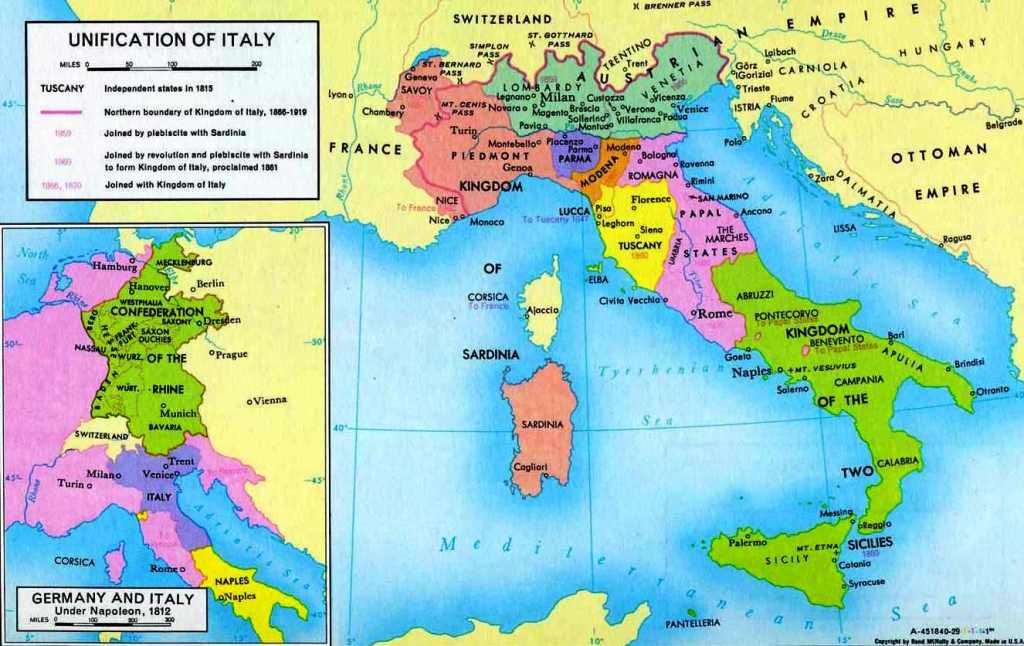
![[pix]](images/obx~%201700s-1870.jpg)
![[pix]](images/obx~%201860s.jpg)

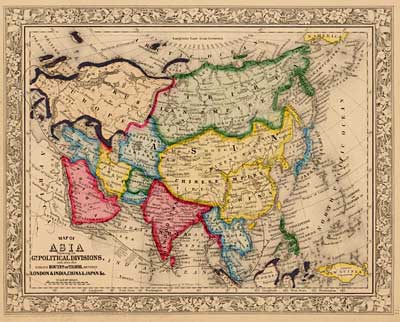
![[pix]](images/MxvM.cnp.reject.jpg)
![[pix]](images/1860.farm.locomotive.engine.jpg)
![[MAP]](images/1871.GRM.unified-CWA168.jpg)
![[pix]](images/mfgR/mxx.1866.ATL.O.cable-CIV484.jpg)


![TXT,part.2]](images/ToiL%20W&P2%20as%20comic%20book.jpg)
![[MAP]](images/frn.MPR.1869wi.USA.prairie.wrx.Rister-68.jpg)
!["After the Storm" [Posle grozy] 1879](images/kuindzhi.posle.groza.jpg)
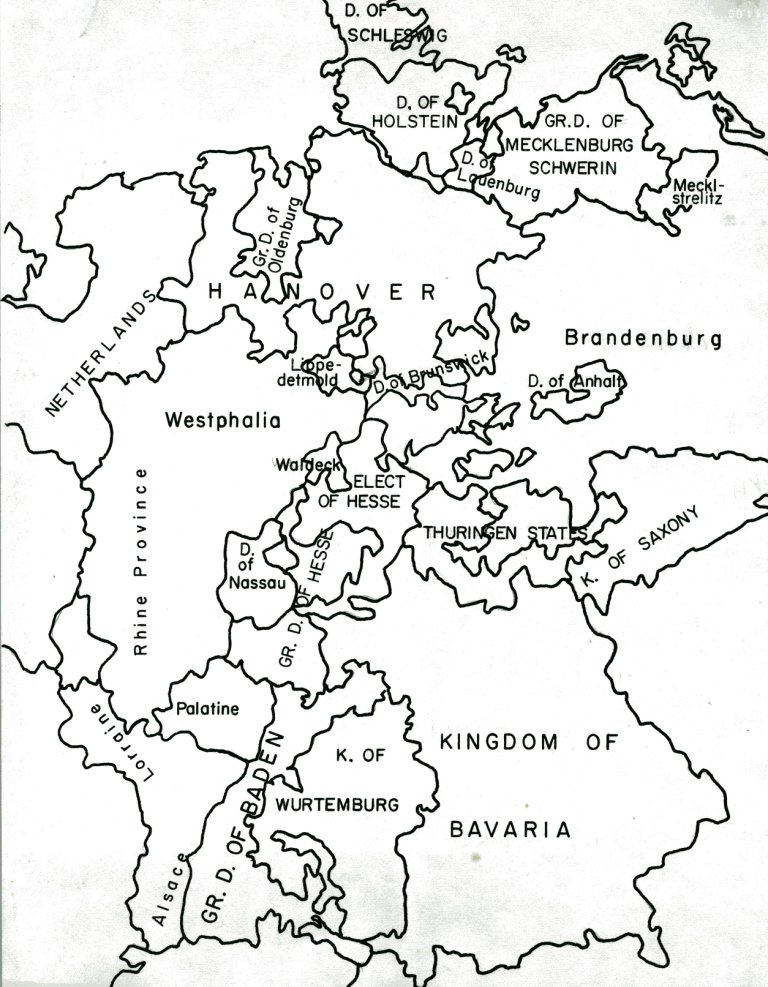
![[MAP]](images/frn.MPR.1877.78.RTwrx.Ctq29.jpg)

![[pix]](images/DstFM.1878.jpg)
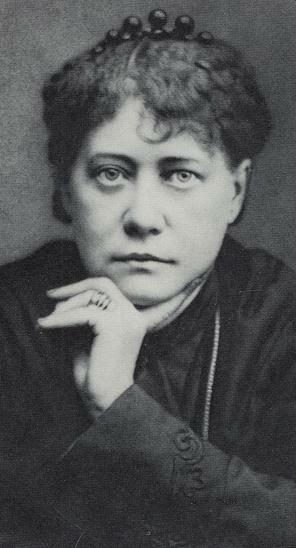
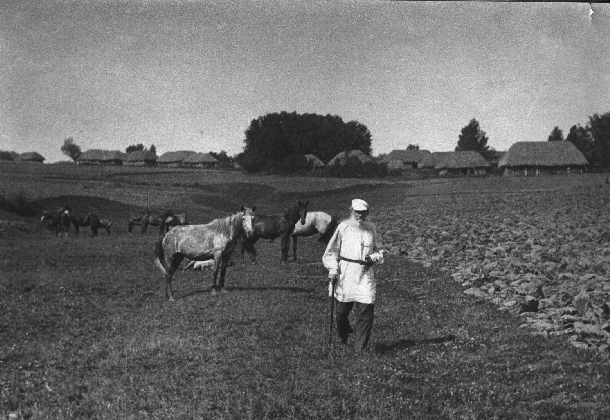
![[table]](images/1870+%20mfgR%20xtx.jpg)
![[pix]](images/1891.MVA.Fabique%20de%20Soleries.prl-krx~.FitzLyon132.jpg)
![[pix]](images/1891.MVA.Fabrique.dormitories.FitzLyon133.jpg)
![[pix]](images/1895oc.SPB.Nevsky.Cotton.Mill.FitzLyon131.jpg)
![[pix]](images/1895oc.SPB.Nevsky.Cotton.Mill.prl-krx~FitzLyon131.jpg)
![[pix]](images/1915.MVA.Morozov.hire.hall.FitzLyon152.jpg)
![[pix]](images/1891.Baku.Nobel.oil.field.FitzLyon135.jpg)
![[pix]](images/1913c.SBR.grn.FitzLyon134.jpg)
![[pix]](images/nrg.o.CAS.pipelines.gif)
![[pix]](images/dvr.chd.GlcaEliz.1894.XRK.dqa-FitzLyon92.jpg)
![[pix]](images/dvr.Paj.Korpus.dance.1894-FitzLyon85.jpg)
#/image/File:Vue_générale_de_l%27Exposition_universelle_de_1889.jpg)
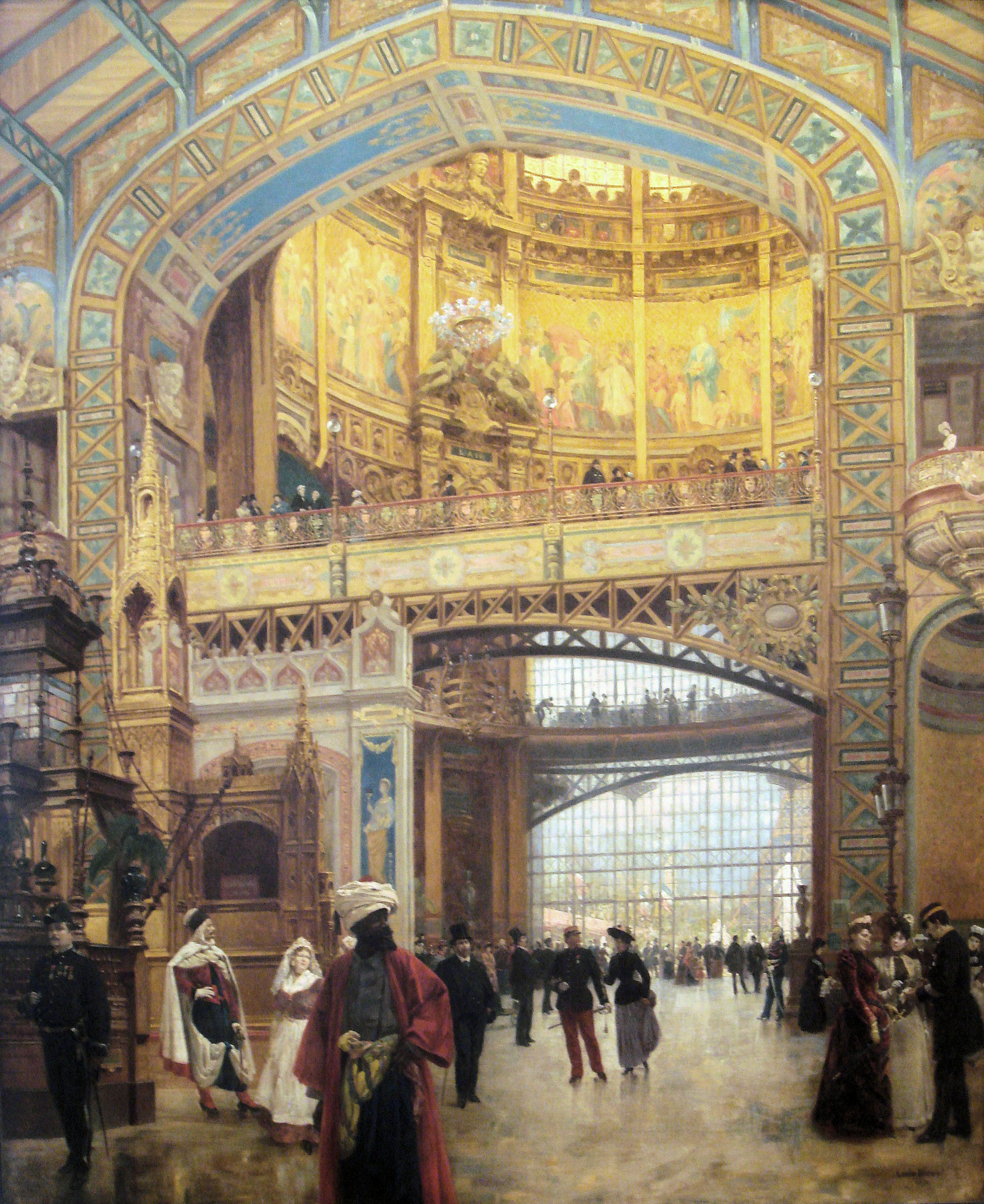
![[pix]](images/1891c%20TSBR.rrd%20CIV835.jpg)
![[MAP]](images/frn.MPR.1891.1904.TSBR.rrd.Ctq27.jpg)
![[pix]](images/1895.ussuri.steamer.jpg)

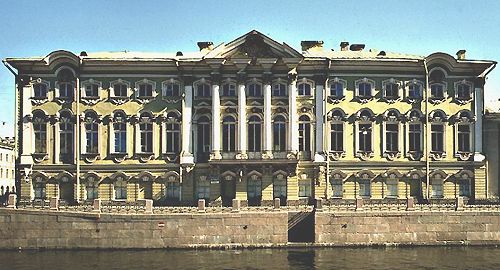
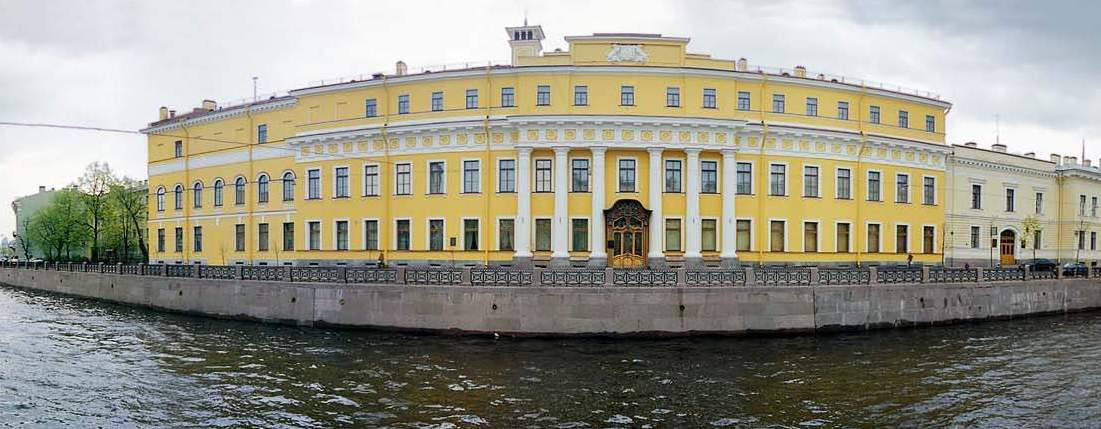
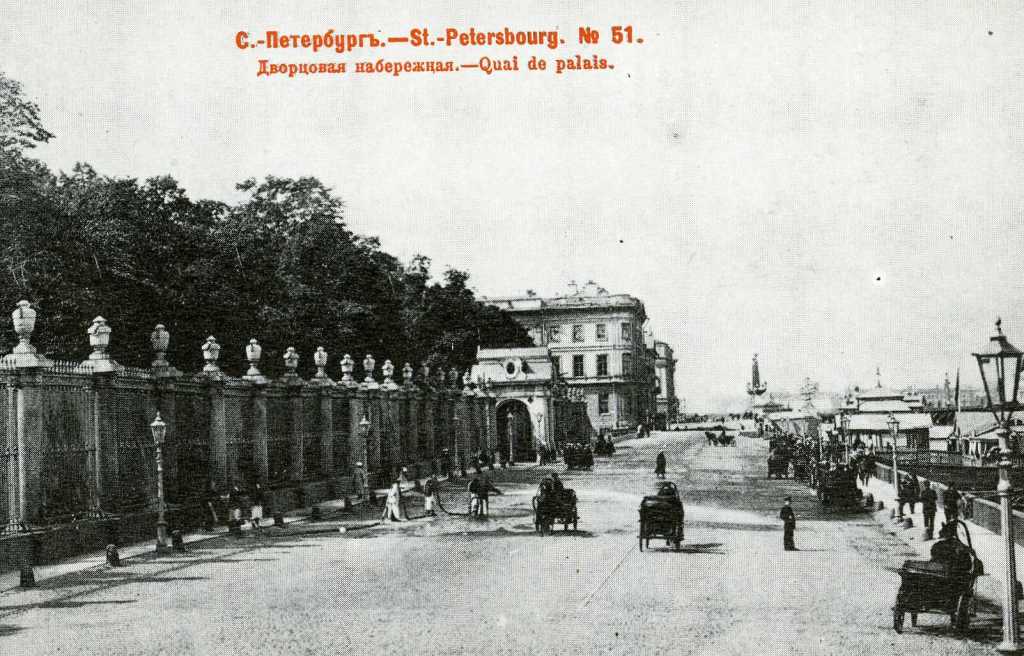
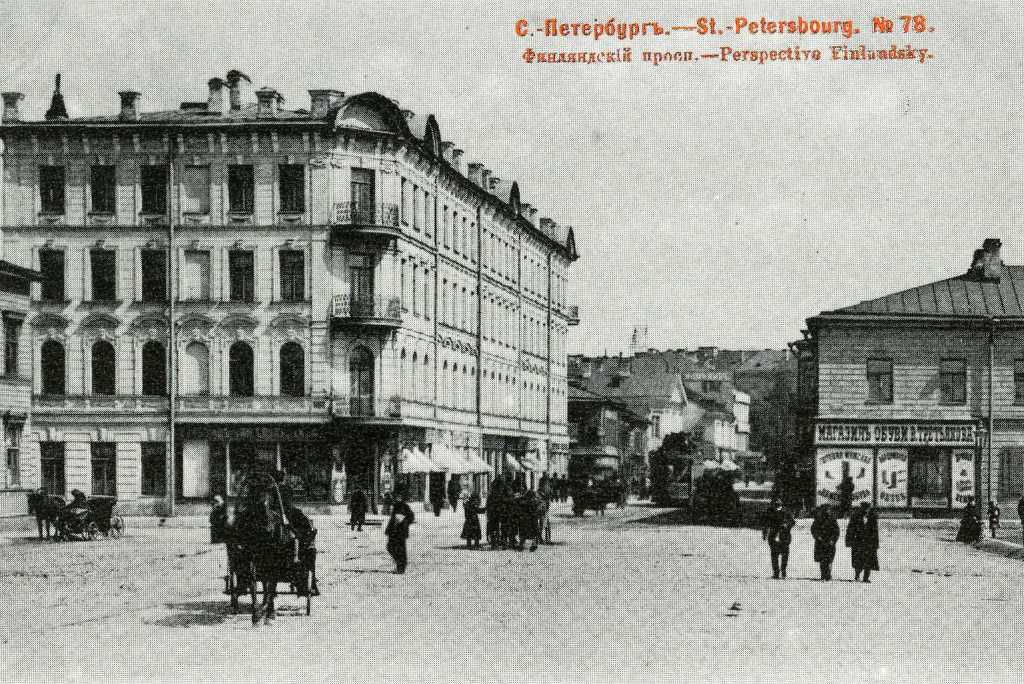
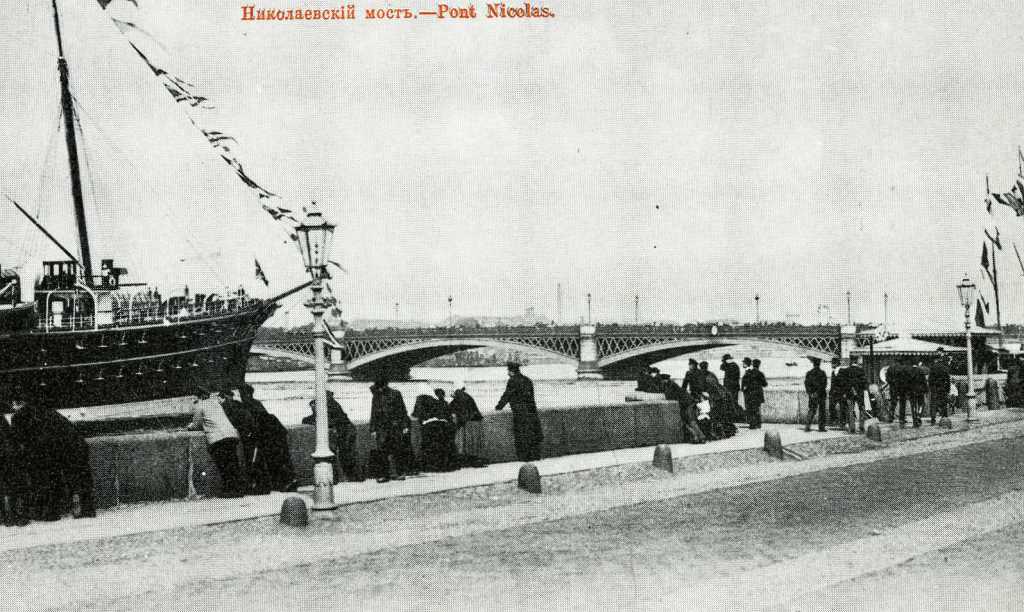
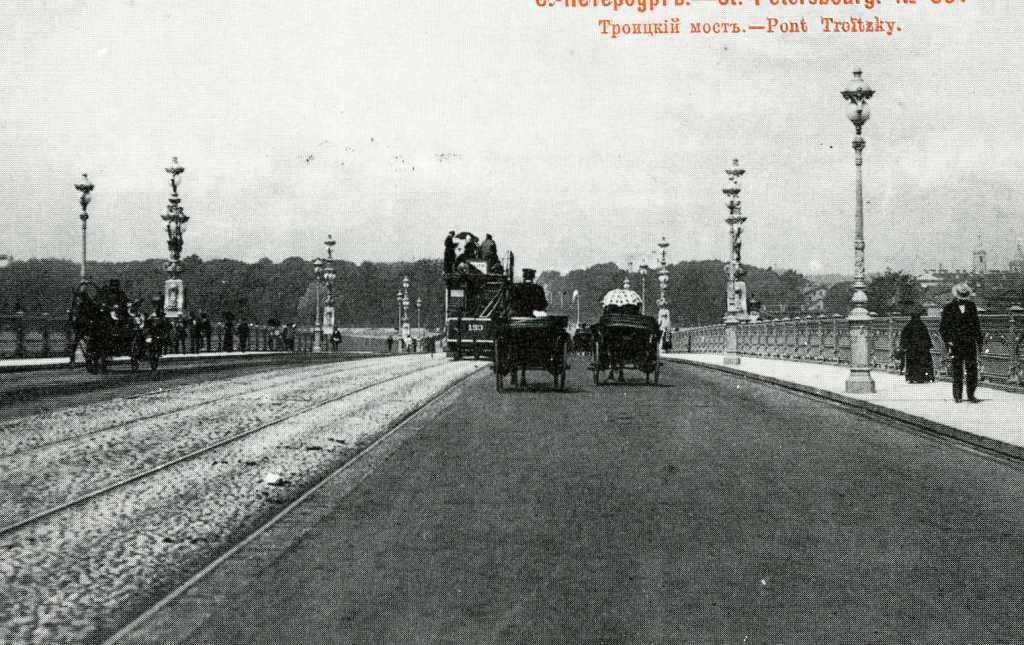
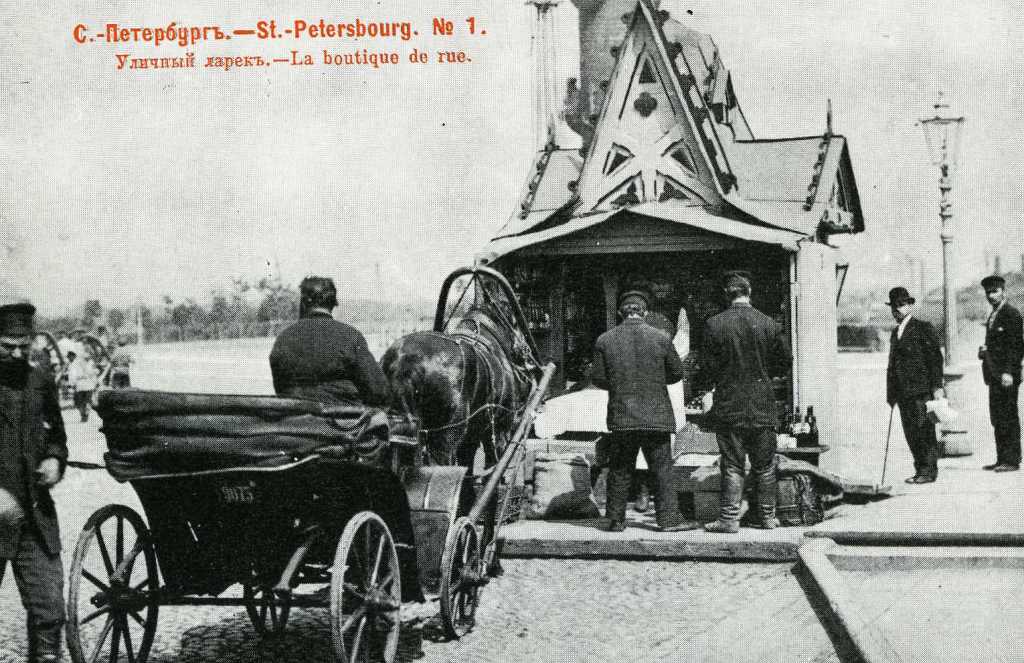
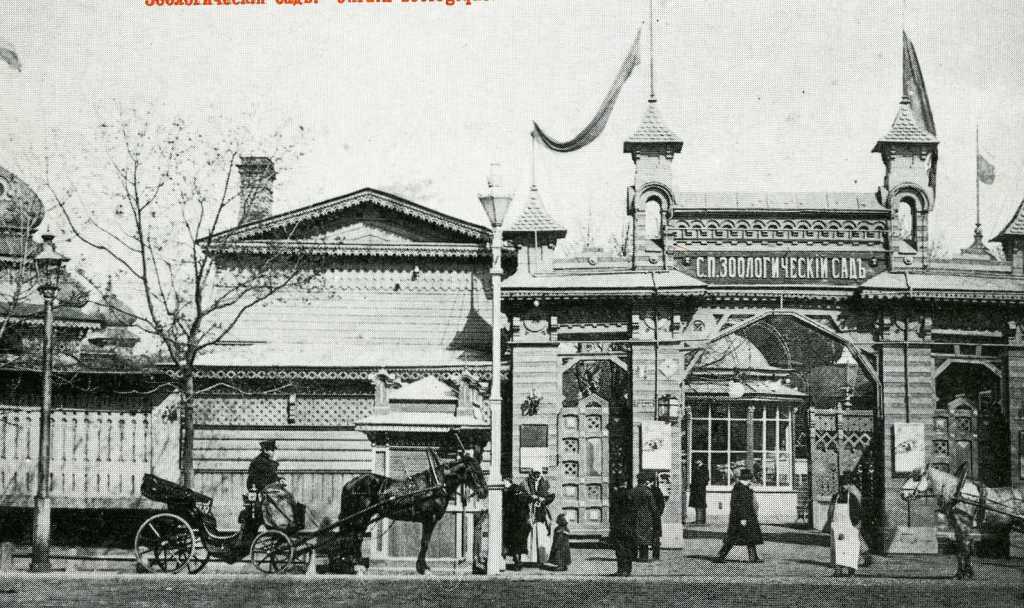
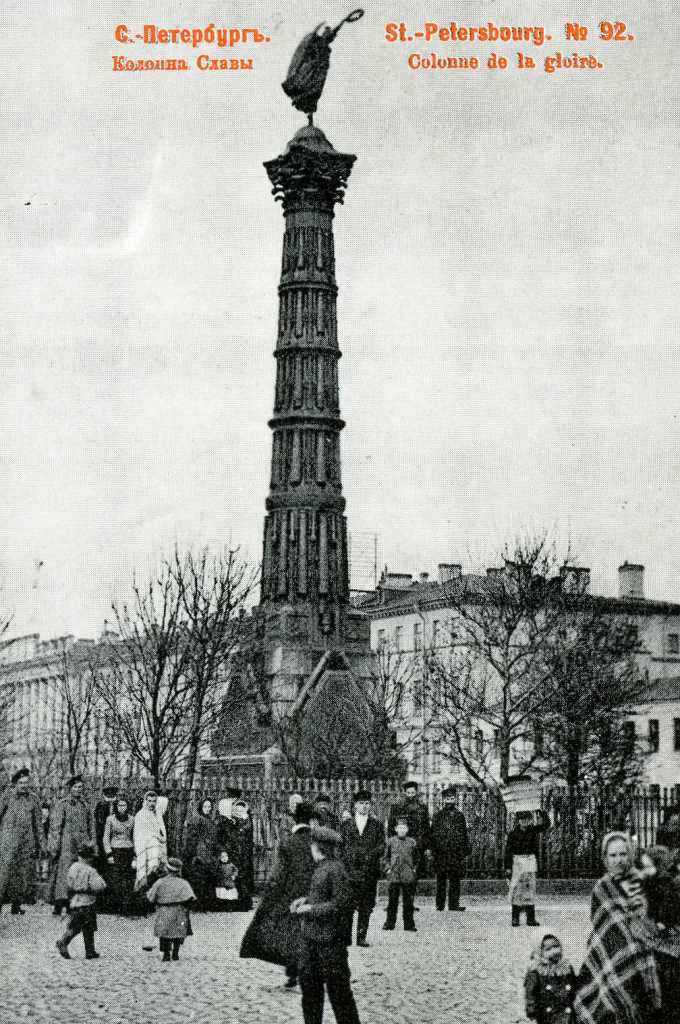
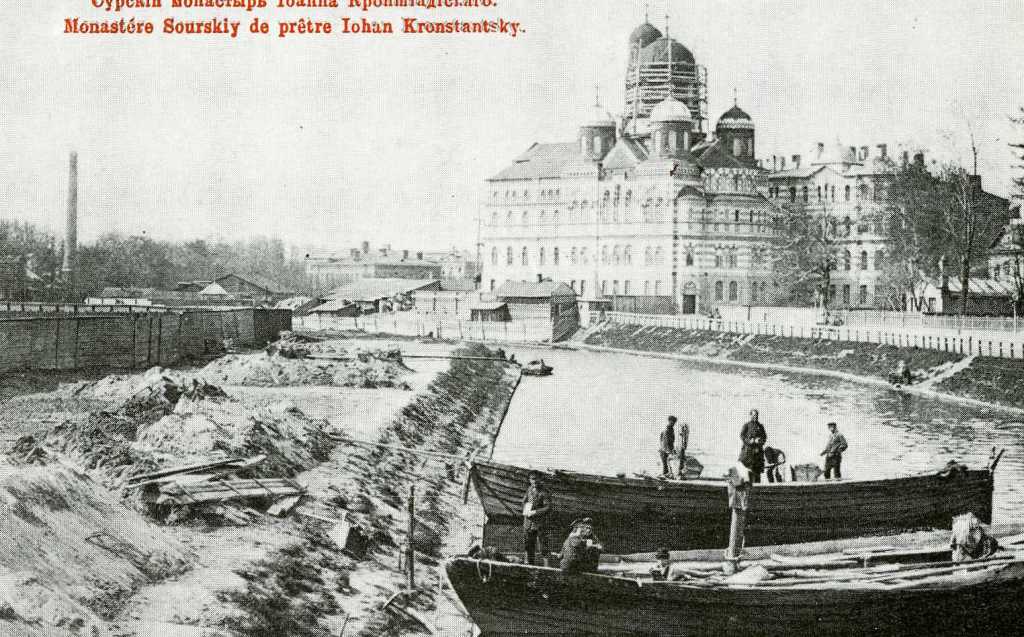
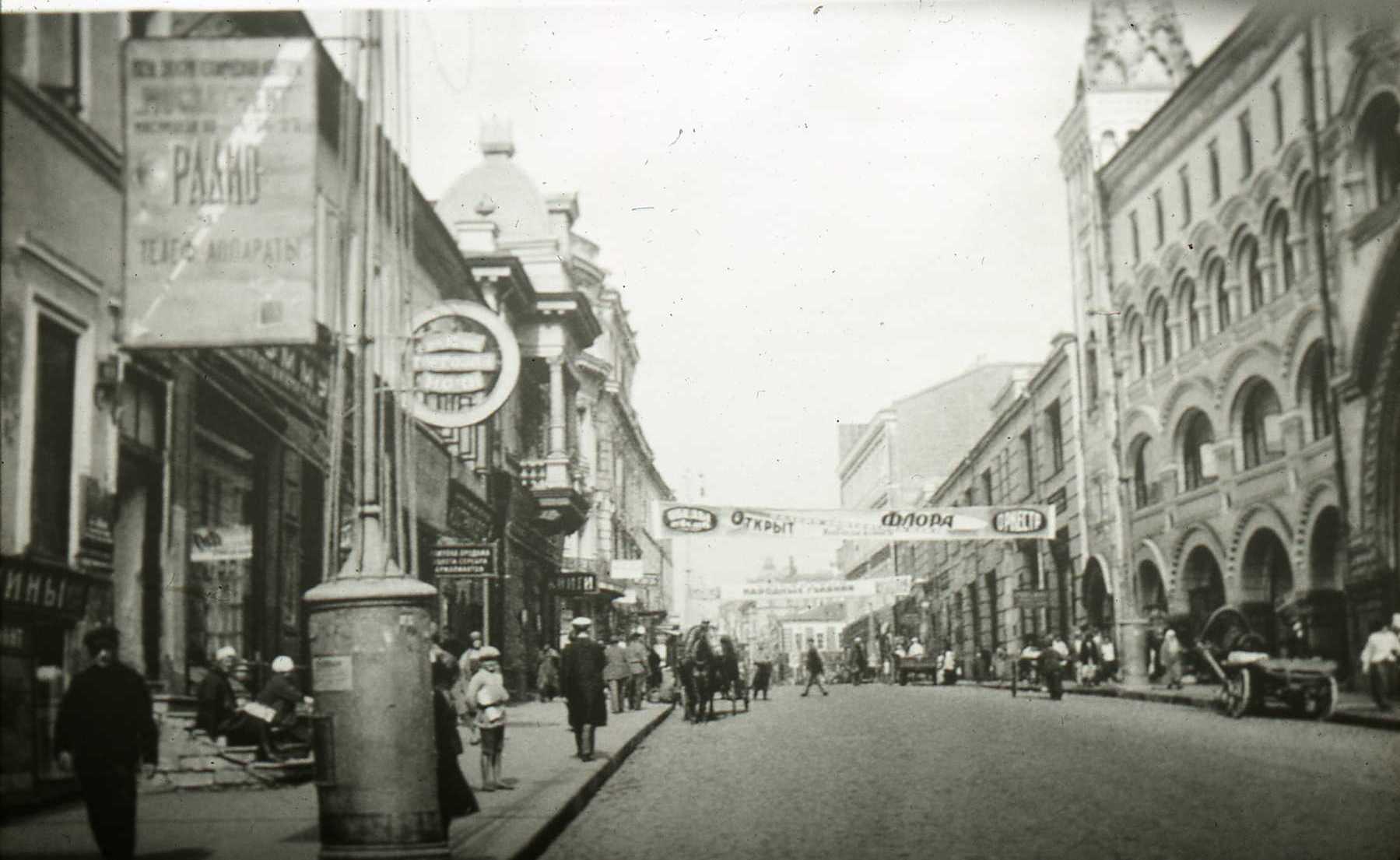
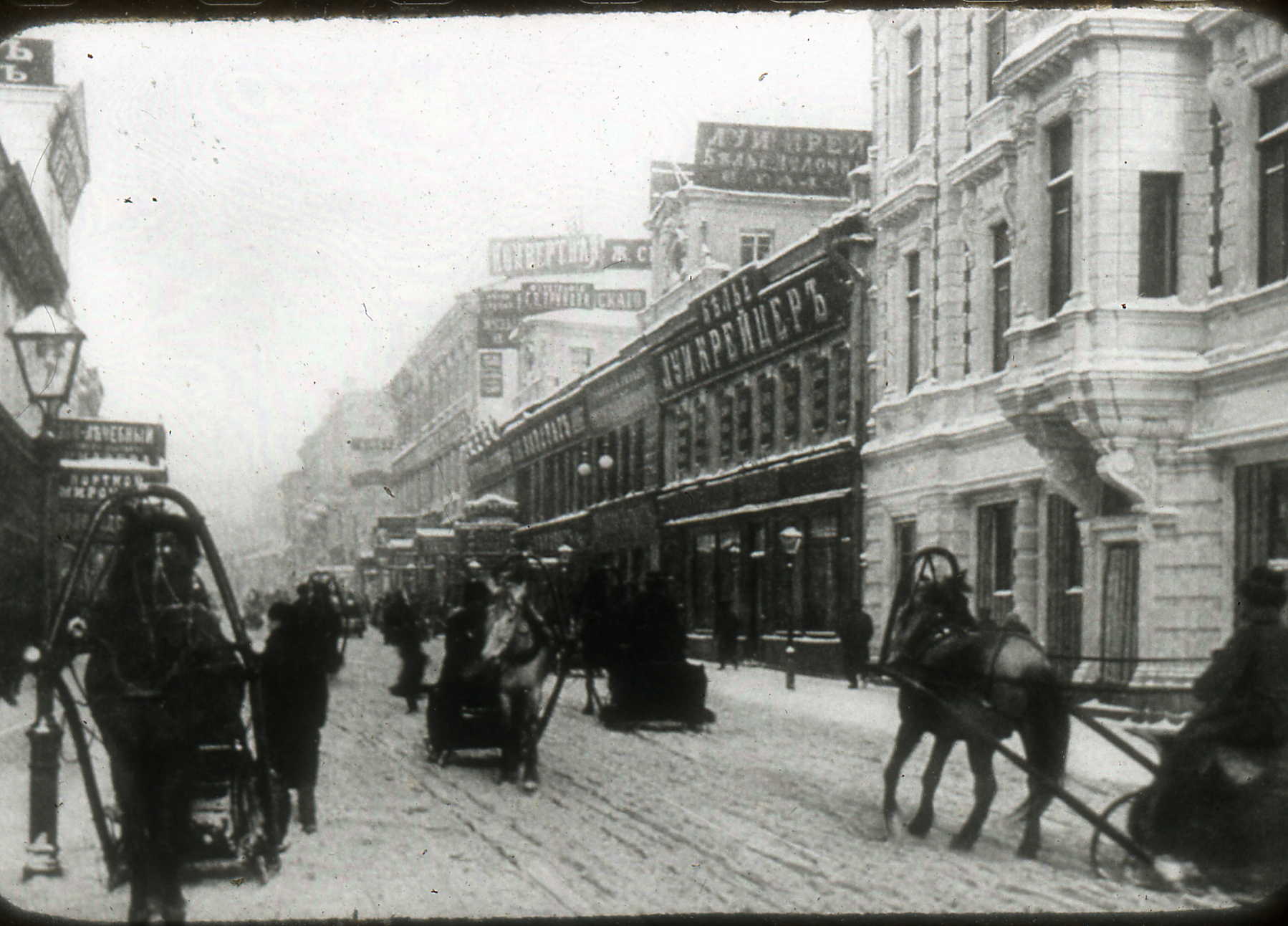
![[pix]](images/1892.USA.IA.John.Froelich.tractor.jpg)
![[pix]](images/1880c%20Ulianov%20fmy.jpg)
![[pix]](images/1880s%20Ulianov,Axr%20CIV777.jpg)
![[pix]](images/1890c%20Lnn%20as%20youth.jpg)