<>1904:1907; Russia
experienced four years of extreme political disorder with the First Russian
Revolution (the 1905 Revolution) at the center
- Main sources of disorder =
- Main streams that flowed into the flood of events called the 1905 Revolution
- Main results of the 1905 Revolution =
- Widespread rural disorder [LOOP on "peasants"] lent
urgency to broad public political mobilization [LOOP on "union"]
- First formal, elected legislative assembly in Russian
history, THE STATE DUMA
- Last great gesture of the imperial reform tradition, the agrarian reforms
of PETR STOLYPIN
- Activism as an expression of civil society and what might be
called grassroots interest-politics did not achieve this broad scope or reach these levels again for
eighty years [ID]
- English scholar Bernard Pares was on the scene and
observed some of the major political events of this era [bibliography]
- The 1905 Revolution is frequently called 'The First Russian Revolution"
- "The Second Russian Revolution" followed 12 years later, in the winter
of 1917 [ID]
- "The Soviet Revolution" (aka "The Bolshevik Revolution" or "The
Communist Revolution" or "The October Revolution" or -- throughout the Soviet period
of Russian history -- "Great October") followed eight months later [ID]
\\
*--"The Deepening of the Russian Revolution"|An
extensive E-TXT collection of primary and secondary sources
*--Boris Nikolaevich Mironov, The social history of Imperial Russia, 1700-1917 (2000)
presents the most comprehensive historical analysis of the rise of civil society and the rule of law in the centuries prior
to revolutionary crises in the early 20th century. On traditional patterns of state-building, Mironov,2:1-65
*--Andrew Verner, The Crisis of Russian Autocracy: Nicholas II and the 1905 Revolution
*--Thomas S. Pearson, Russian Officialdom in Crisis: Autocracy and Local Self-Government, 1861-1900
*--Jacob Walkin, The Rise of Democracy in Pre-Revolutionary Russia: Political and Social Institutions
Under the Last Three Tsars
On the 1905 Revolution itself =
*--Abraham Ascher, The Revolution of 1905. Volume 1:Russia in Disarray. 2:Authority Restored
*------------------------, "German Socialists and the Russian Revolution of 1905", MIR:260-77
*--Sidney Harcave, The Russian Revolution of 1905
*--A. E. Healy, The Russian Autocracy in Crisis:1905-1907 (Hamden CN:1976)
||
*--LOOP on 1905 Revolution
<>1904:1905; German
sociologist of world fame and influence, Max Weber (1864-1924), published
articles, later a book, The Protestant Ethic and the Spirit of Capitalism
- This famous book revealed the depths of Weber's "disenchantment" with the
direction of his beloved "bourgeois" European culture in the years just prior to WW1
- The rise of market economies in the 19th century promised liberal freedoms
- In Weber's view, the Protestant ethic inspired the early spirit of capitalism and was inspired
by it in turn. The market economy liberated human energies
- Entrepreneurial enterprise rested on the "saintly" European shoulder like a light and welcome cloak
- But now economic enterprise in this great "second industrial revolution" had become
routinized and bureaucratic
- In these years Weber's attentions were pulled west and east, westward toward USA
and then eastward toward Russia
- First, he visited USA in order to give a lecture at the St. Louis "Louisiana Purchase Exposition" [world's fair]).
As a result of this visit, he wrote a long article "Protestant Sects and the Spirit of Capitalism" (1906)
[E-TXT]
- This noteworthy article has been neglected, perhaps because of the similarity of its title with the famous book above
- Here Weber wrote, "In the past and up to the very present, it has been a characteristic precisely
of the specifically American democracy that it did not constitute a formless sand heap of individuals, but
rather a buzzing complex of strictly exclusive, yet voluntary associations"
- On this trip to USA, Weber visited and described the great mid-continent city Chicago
- He was amazed by the vibrancy, energy and verve of the sprawling urban center, stretching westward from the
banks of Lake Michigan, and he was appalled by it in equal measure
- The biography of Weber written by his wife Marianne Weber quotes his descriptive letter back home in which
he marveled at the vastness of the powerful city, more extensive than London
- Weber's most vivid impression of Chicago was of a raw, crude power
- Except for the better residential areas, Chicago
resembled to him a wild, giant human being with skin removed and all organic processes revealed
- Compare Weber's 1904 reaction to Chicago with Hippolyte Taine's 1872
reaction to London [TXT]. Two sensitive Europeans came face-to-face with modernity
- Weber's dark vision of corporate capitalism in "The West" was somewhat eased but not cleared by what he saw
in USA here in the Progressive Era
- Back home in Germany, Weber turned his attentions eastward,
toward Russia (for which he studied Russian in order to follow the portentous 1905 Russian Revolution)
\\
*--Reinhard Bendix was one of the most influential Weber acolytes in the USA. He relied heavily
on Weber for his essay "The Cultural and Political Setting of Economic Rationality in Western
and Eastern Europe", in Reinhard Bendix, ed., State and Society: A Reader in Comparative Political
Sociology (1973, on shelf next to 1968:First ed.)
*--LOOP on "Political-Economy"
*--LOOP on "finance"
<>1904:Russian writer of growing world
fame Leo Tolstoy on church
and state [VSB,3:733]
<>1904:USA Senator from Indiana
Albert Beveridge published The Russian Advance after traveling the Trans-Siberian Railroad
[RFP2,1:153-67]
- Beveridge made a "pilgrimage" to Leo Tolstoy's Tula estate "Yasnaia
poliana" [ID]. Kurt Grotz has kindly supplied photos
relating to Beveridge's visit = [pix#1 |
pix#2 | pix#3]
- For Beveridge this railroad trip across Siberia and Russia
was a sobering personal revelation about "racial" harmony among Russians
and Chinese in Manchuria, and thus a direct challenge to his famous
imperialist speeches in the previous decade [ID]
- Having absorbed the lessons of the Progressive Era, Beveridge late in life wrote a biography of Abraham Lincoln
(much as Ida Tarbell turned her energies to the study of Lincoln's legacy)
<>1904:USA State of Oregon, much under the influence of
national "populist" trends in the Progressive Era, passed "Initiative and Referendum" law
*--One century later, "conservative" Oregon political activist Greg Wasson
sought to inform and inspire voters with some history about initiative &
referendum and the role of political parties, Oregon Catalyst:
Oregon's Premier Conservative Political Blog (since 2005)
*--Another essay by Wasson [E-TXT]
"1913-Supreme Courts Begins Attack on Initiative"
*--Initiative and Referendum Institute at the University of Southern California [IRI]
webside features Oregon with a few
inaccuracies, but still useful as a gauge of how the USA Progressive Era continues to influence politics, sometimes
seeming to illustrate how late-19th-century "left-wing liberalism" or "radicalism"
has been captured in the "Tea-Party" movement in the early 21st-century
<>1904:Geographical Journal 23:424-31.
Geo-politician H. J. Mackinder published "The Geographical Pivot of History" [E-TXT]
*--Russia, he wrote, was the geo-political heartland, at the center of the "world island"
[MAP] within which
the future of the world was to be determined [ID]
\\
*2014ap02 = Geopolitics of Empire: Mackinder's Heartland Theory and the Containment of Russia -- Puppet Masters -- Sott.net
[E-TXT]
An attempt to bring Mackinder into 21st c.
*--Look at how the SAC webpage "Geography" uses Mackinder's geo-political
theories [SAC-TXT]
*--Parker, Historical Geography:29, 329, 371-4, 377
<>1904:British diplomat Roger Casement compiled a report that exposed imperialist brutality of the
Belgians in the Congo [E-TXT
excerpts | Full E-TXT]
*--The report followed three years after Joseph Conrad's novel Heart of Darkness appeared
[ID]
\\
*--Wki
*--LOOP on "century of peace"
<>1904:USA
sociologist Thorstein Veblen
published The Theory of Business Enterprise [excerpts in CCC3,2:900-27 |
CCS:660-7 | CCS,2:40-7]
*--Veblen emphasized historical particularities of time and place rather than universal laws of economics
*--He felt that an industrial and engineering elite offered the best resolution -- a "technocratic" resolution --
of social and economic dislocations caused by large-scale industrial modernization
\\
*--LOOP on WW1a
<>1904:USA
Chicago| Russian history professor and political activist
Pavel N. Miliukov delivered lectures which were one year
later published in book form as Russia and Its Crisis
- Miliukov strove to explain Russian politics to Americans [CF= RRC2,2#35]
- He found part of Russian particularity in its medieval history, so unlike that
of "The West" [TXT]
- He also put great weight on the shape Peter the Great gave to Russian
history [ID]
- Miliukov was close to the Zemstvo liberal movement, only now
in the process of organizing itself formally as a political party back in Russia
<>1904ja02:ja05; Saint Petersburg |
Union of Liberation [Soiuz Osvobozhdeniia] founding conference agreed
on political program [DPH:296]
- Liberals in novel political parties
were now functioning more or less openly within Russia
- And a vigorous union movement added strength to a surprising and broad public
mobilization that appeared before the Russo-Japanese war broke out and
continued at a heavier pace thereafter
<>1904ja26:1905au23;
Manchuria | Russo-Japanese war opened when Japan attacked Russian
outposts [MAP]
- 1904fe10:Russia and Japan mutually declared
war [TXT | Excerpts = RFP2,1:168-70]
- 1904au22:Japan/Korea treaty [ID]
- 1905:1909; British documents on foreign affairs--reports and papers from the Foreign Office confidential
print... Series A, Russia, 1859 -1914
- Russian commander, General A. N. Kuropatkin, wrote The Russian Army and the Japanese War
- The war lasted only 20 months but brought
an end to over 200 years of promising and largely peaceful relations
between these two Pacific powers
- Thus the war helped shape the 20th-century experience of both nations =
- For Japan. military victory inspired confidence in its ability to defeat a great European power, but
diplomatic failure at the end of the war embittered Japan for decades[ID]
- For Russia, this remote and unpopular war, like the Crimean War before
it [ID], contributed a sharp
political-institutional and social bump as the Empire simultaneously
- was again [ID] forced into
costly military reform and
- and again [ID] tumbled into an era of revolutionary disorder, this time
leading to the First Russian Revolution (1905 Revolution)
\\
*--Narrative summary of the war [TXT]
*--The Russo-Japanese War in Global Perspective: World War Zero [a subtitle not developed in the text]
*--Denis Warner and P. Warner, Tide at Sunrise: A History of the Russo-Japanese War,1904-1905
*--J.N. Westwood, Russia Against Japan, 1904-1905:A New Look at the Russo-Japanese War
*--LOOP on WW1a
<>1904fe:Plehve approved
charter of Assembly of Saint Petersburg workers. Recreated state-controlled
labor unions or "police socialism"
- Soon Orthodox priest Father Gapon was in charge
- The union movement expanded well beyond the factory floor and flourished
well beyond state control
- Wage-labor, like all other Russian social formations in these years, was
shaking off state efforts to protect and expand old tsarist social/service hierarchies
- In "actual fact" (de facto) -- even if not by "legal prescription" (de jure) --
increasingly large functioning groups of people in the Empire could no longer be packaged within traditional
social/service hierarchies [ID]
- Russian society was transformed, in part as a result of natural demographic shifts and economic transformations,
but also in part as a result of reforms introduced by the state itself over the previous four decades
- A modernized version of traditional social/service hierarchies was needed, but it didn't
happen until after the Soviet Revolution
<>1904ap:France and England
signed Entente Cordiale, a bilateral imperialist diplomatic refinement of the 1885 inter-European
Berlin Treaty {ID}
- The long-standing French/British rivalry for control of the Mediterranean
and Atlantic shores of north Africa was not settled until now
- England authorized France to have its way along those western shores, from Algeria into
Morocco (the last independent African state)
- France authorized England to have its way along the eastern shores, most particularly in Egypt
- The Entente unexcpectedly synchronized with other imperialism-related conflicts and opened a
decade-long "arms race" and
general-European crisis
- England seriously expanded its military budget
briefly after the imperialistic Boer War
[ID]
- Russian efforts to restore its military after the
Russo-Japanese War dovetailed with these threatening European trends, as did
growing bellicosity within disordered Russian domestic politics
\\
*--LOOP on WW1a
<>1904sp:Zemstvo
liberal Dmitrii Shipov met a third time with Plehve
and Witte in the hope that the state might cut some
slack for expanding Zemstvo movement
- That very spring, Plehve refused to approve several Zemstvo elections of
popular liberal activists who were associated with
vigorous Zemstvo mobilization on an Empire-wide scale to
aid the failing official war effort
- A Union of Liberation conference deliberated on the possible need to organize
a coup d'état against the jealous and exclusionary state [Ganelin:54]
<>1904my04:Socialist Revolutionary
Party [SRs] Draft program [H05:268-73]
*--The big agrarian socialist movement was working to define itself as an organized political party
<>1904jy15:SRs new
and terroristic "Battle Organization"
assassinated Russian Interior Minister, Count Viacheslav Plehve, ending
his 15-year career
- Plehve was the last powerful "official reactionary" Interior Minister. His was the last gasp
of a policy that dominated the reign of Alexander III and, so far, that of Nicholas II
- And yet Plehve was a reactionary who with reluctance and without consistency understood
the need for certain measured and tightly controlled reforms [EG]
- Still, we can see that over the previous twenty years of quickened public mobilization, statist
reactionaries were rolling back the Great Reforms, shifting the body-politic toward their imagined
two-part pre-modern order =
- Autocratic absolutism, managed in the interests of certain ensconced insider elites who
nested at the bureaucratic upper tip of
- Enforced pyramidal social/service hierarchies
- SRs and their "Battle Organization" issued a declaration to peasants explaining their position on
political terror [TXT],
giving specific emphasis to Plehve's role in the suppression of Peasant disorder in Kharkov and Poltava
provinces [ID]
- Boris Viktorovich Savinkov (1879-1925), a leader among SRs,
was an active participant in the assassination of Plehve
- Six months later, he helped carry out the assassination of Grand Prince
Sergei Aleksandrovich [ID]
- Savinkov was an aristocrat with strong affinities to Imperial military culture
- He was an admirer of Napoleon and served briefly in the French army during WW1
- Savinkov described his life of dark personal deracination and moral
indirection in novels and in a memoir [bbl]
\\
*--Amy Knight, “Female Terrorists in the Russian Socialist Revolutionary Party” [TXT]
<>1904au26:1905ja;
Russian Interior Minister Sviatopolk-Mirskii abandoned reactionary policies of
his assassinated predecessor and tried moderation for five crucial months
- Assassination of Plehve and elevation of Sviatopolk-Mirskii marked the end of a quarter-century
era of reactionary state policy [LOOP back two decades]
- And they marked the beginning of the 1905 Revolution [read on to
1904de12 to continue the LOOP on 1905 Revolution]
- Political concessions made by Nicholas II only whetted the appetite of oppositional forces
- An old revolutionary truth appeared vindicated = Opposition intensifies when authorities make concessions to it
- Once again (as in the first Russian epoch of political terror)
the state appeared to bend before the threat of terror when it made political concessions to a fledgling civil society
- It was both tragic and ironic that the immaturity of Russian civil society -- its inability to respond with
strength to governmental concession -- followed straight from oppressive state policy over the previous decades,
eased now only in a time of revolutionary crisis and terrorism
<>1904se01:SPB| Russian News Agency (eventually known as TASS) founded
[E-TXT]
<>1904se17:se25; Paris conference of
revolutionary and oppositional political parties
[H05:54-5 | Ganelin:13-15,54]
<>1904oc25:Dmitrii Shipov met with
Sviatopolk-Mirskii to seek approval of national Zemstvo Congress
[Ganelin:16-22]
*--A sign of crisis, the tsarist state wavered between repression
and concession
<>1904no:Union
of Liberation issued program [VSB,3:724]
*--Over the next months, the Union encouraged formation of various separate
unions of vocational intelligentsia, engineers and technicians
*--These were not state-sponsored but voluntary "grass-roots" unions
<>1904no04+: Sviatopolk-Mirskii
report [GARF, cited in Ganelin:56] Nicholas I agreed with the report [Ganelin:32]
<>1904no06:no09; Saint
Petersburg | First national congress of Zemstvo, led
by Dmitrii Shipov, issued 11 theses
[VSB,3:741-3 | H05:279-81 |
MR&C2:385]
*--Banquet campaign began
<>1904de:Paris meeting of Russian
liberal & revolutionary political parties agreed to cooperate (SDs did not participate)
- Delegates signed a declaration which stated, in part =
None of the parties represented at the meeting, in uniting for concerted
action, thinks for a moment of abandoning any point of its particular
program, or of the tactical methods of the struggle which are adapted to
the necessities, the forces, and the situation of the social elements,
classes, or nationalities whose interests it represents. [Extreme
expropriation of property and terrorism
sharply divided this wide spectrum of oppositional
parties.] But, at the same time, all declare that the principles
expressed below are recognized by all of them:
(1) The abolition of the autocracy; revocation of all the measures curtailing the constitutional
rights of Finland
(2) The substitution for the autocracy of a democratic régime based on universal suffrage
(3) The right of every nationality to decide for itself; freedom of the national
development, guaranteed by the law; suppression of all violence on the part of the Russian
government, as practiced against the different nationalities.
- Points (1) & (2) addressed the central concern of Russian political opposition, expressed
time again over the previous century = the autocratic-bureaucratic state and traditional social/service hierarchies
- Point (3) now moved toward political center stage after many decades thundering in the wings like a threatening storm
- Miliukov acknowledged that this declaration left out any reference to economic reform
- The groups could not agree on that, but decided to put off the political struggle
between liberals, who were moderate on the matter of economic reform,
and socialists, who pushed for economic egalitarianism
- First, defeat the common enemy, the tsarist state
- Second, substitute democratic for old tsarist social relations
- Third, tackle the divisive economic issues
- It seemed prudent at this time to concentrate on clearing autocracy and
dysfunctional social/service hierarchies out of the way before
these political parties renewed struggle among themselves on economic
questions [MR&C2:381-2]
- These negotiated maneuvers correspond very closely to one plausible
visual representation of just what a civil society is [TXT]
<>1904de02:de06 & de08; Russian ministers
debated Sviatopolk-Mirskii report
*--Witte wrote draft of de12:Ukaz
(below) [MR&C2:387]
<>1904de05:Russia | Union
of engineers & technicians, the first professional union [PR&R]
- In this same month an Academic union formed to link publicly active
forces in universities. Chemist Vladimir Vernadskii at Moscow University was
a major force in this movement. Over the next few weeks, under the urging of
the Union of Liberation, SPB
Elektrotechnicheskii Institut professor A. A. Brandt pulled together a programmatic
statement of higher educational issues which was signed by 342 professors, and was
issued in early 1905 as "The Declaration of the 342"
- State manipulated labor unions
began to show some independence from official control
- Institutions of higher learning were at the forefront of aroused public
activism, but professional organizations, universities
and other scholarly institutions acted in close harmony with movements throughout
the whole imperial social-political-economic organism
\\
*--WCS
<>1904de11:(NS?)Saint Petersburg labor
demonstration [MR&C2:366-7]
<>1904de12:Russian
Emperor Nicholas II decree [Ukaz] to Russian Imperial Senate [H05:282-5 |
MR&C2:387-8 | Ganelin:39-41]
- The tsarist state acknowledged,
"When ... the need for a given change seems advisable, WE consider it necessary to proceed with the execution of
that change, even though it leads to substantive innovations in the law"
- What seemed at first to be a specific concession to Zemstvo political
demands was also a "crack in the edifice" of unlimited autocratic authority
and decades of reactionary state policy. As Tocqueville put it, "The most
dangerous moment in the life of any bad government is when it starts to improve itself"
- Thus this de12:Ukaz might be taken as the first moment of formal
state involvement in the Revolution of 1905
- Zemstvo liberals rose to the forefront of broader national political
mobilization. Thus the LOOP on 1905 Revolution parallels the LOOP on "Zemstvo"
<>1904de13:de31;
Azerbaijan, Baku oil fields |
General strike among workers in this vital center of Russian Imperial petroleum potential
<>1904de20:
Manchuria | Russian forces in Port
Arthur capitulated to the Japanese. Russian international and domestic crises
peaked together
\\
LOOP on 1905 Revolution
<>1904de30:French socialist movement tried to
create Union of French Socialists Parties [DPH:325-6]
<>1905:1916; Germany |
Albert Einstein's relativity theory published
*--The idea of "relativity" resonated far beyond the science of physics
<>1905:English
political theorist A. V. Dicey published his Harvard University lectures on
liberalism and collectivism, Introduction to the Study of the Law of the
Constitution, which were nothing less than a history of democracy in England
in the 19th century [CCS,1:791-802]
<>1905:USA | Western
Federation of Miners [WFM], a radical labor union that broke with AFL seven years earlier,
met secretly with Daniel De Leon [W], the head of
the Socialist Labor Party [W], and Eugene Debs,
ex-leader of the American Railway Union and now head of the Socialist Party (founded in 1900)
- The Industrial Workers of the World [IWW or "Wobblies"] grew out of this meeting
- William "Big Bill" Haywood was a leader who opposed ordinary labor unions because they sought compromise
and non-revolutionary resolution of the "class struggle"
- Haywood opposed compromise with political institutions unless they promoted revolution
- Haywood reflected a US version of the by-now familiar split within socialism [ID]
- The IWW thrived mainly in the USA West and had fewer than 100,000 members
- World War One weakened the IWW, especially since its opposition to USA involvement after 1917
seemed to some unpatriotic
- University of Oregon "Labor Project"
- In these years Eugene Debs ran for the Presidency three times on the Socialist Party ticket
- 1908my23:During his third campaign for the Presidency, Debs delivered a speech in his hometown, Girard KS = "The Issue"
[TXT]
- His two-decade political career has been all but forgotten in American
political culture
- Political parties, protest movements and labor unions were coalescing
- In this process, civil society sometimes expanded. At other times it narrowed or became more tightly focused.
- Social-economic concepts of "class warfare" reflected the stubborn refusal of social elites to cooperate
in the establishment of an appropriate place for wage-labor in the post-industrial body-politic
- The more radical wing of the labor movement thus largely ignored the political-institutional concepts
embodied in the notion of civil society [ID]
- Social-economic formations raised barriers against one another
- Those oriented toward the interests of industrial workers found it hard to include elite social formations
- Elite social formations, for their part, intensified their efforts to limit the success of organized wage-labor
- The center of attention shifted
- from how social-economic groups might adjudicate differences via effective political-institutional mediation
- to how one or the other social-economic faction might seize the state and wield it in its own particular interests
- Elite formations were more often successful at turning governmental power against working folks
- Wage-labor efforts in this direction were declared to be criminal conspiracy
- These most bitter competitive political/social factions matured in
the Progressive Era
<>1905ja09:St.Petersburg | "Bloody Sunday" opened
when a large but peaceful assembly of factory workers and their families marched toward the Winter Palace,
residence of Emperor Nicholas II and his family
- The assembly carried a petition composed by union leaders Father Georgii Gapon & Ivan Vasimov
[TXT | Print =
H05:285-9 |
DIR2:380-3 | CCC2,2:593-6 |
DPH:297-300 | VSB,3:743-4]
- Troops opened fire, thus showing that indiscriminate violence was not a
monopoly of revolutionary terrorists
- Terrorism served official purposes as well as it
served revolutionary oppositional forces
- Father Gapon described Bloody Sunday [Eye:415-18]
- Working woman Vera Karelina described events [BRW:346-53]
- The diverse union movement was consolidating its forces. Labor unions increased
pressure on officials and added to that already exerted by growing peasant
and Zemstvo political mobilization. Here at the beginning of this
revolutionary year 1905, Russian factory workers made their dramatic entry
\\
*--If you would like for now to skip over the detailed account of wage-labor in the Russian 1905 Revolution,
click here
*--Otherwise, the LOOP on wage-labor continues in the First Russian Revolution,
the 1905 Revolution
<>1905ja11:Russian ministers
ignored Sergei Witte request to discuss the tragic implications of Bloody Sunday [see above]
<>1905ja17; Moscow Agricultural Society member
Aleksei Ermolov reported to Nicholas II about the Gapon incident [H05:124-5
| *1925:KrA#8:49-69 |
Page:68-9]
<>1905ja18:Russian Council of Ministers met
[Ganelin:69]
<>1905ja22:oc22; A.G. Bulygin replaced
Sviatopolk-Mirskii as Interior Minister. Bulygin lasted nine months, through the
October crisis
<>1905ja22:Moscow Noble Assembly
passed "loyal" conservative resolution and a liberal
resolution [H05:105] Gentry politics
vacillated
<>1905ja29:Saint
Petersburg | Shidlovskii Commission was created to investigate labor situation
in the capital city. The commission was named after its leading figure, Senator
Shidlovskii; not to be confused with Sergei Shidlovskii,
a founder of the Octobrist political party. Commission members were not only bureaucrats
as in traditional imperial politics but now also representatives of workers
themselves. Politically aroused workers overwhelmed bureaucrats on the
Commission, and it soon had to be dissolved
*--Official fear of spontaneous popular initiative, especially that
among wage-laborers, was so great that the commission was
quickly dissolved [H05:122-3]
<>1905fe03 and 1905fe11:Council of Ministers met
[Ganelin:85f] Topic = Should elected representatives of the public be brought
into government?
<>1905fe04:Moscow | SRs
"Battle Organization" assassinated the Emperor’s uncle, Grand Prince Sergei
Aleksandrovich, with a bomb
- Boris Savinkov participated in this shocking terrorist attack, but
double agent Azev (with ties both to the SRs and the tsarist Interior Ministry police)
played the central role [H05:127]
- Political terror was a two-edged sword, it cut in all directions,
deranging both those who wielded it and those against whom it was wielded
- Similarly, terror served the interests of both radicals who hoped to "disorganize" the
government and state reactionaries who were quick to use the fear of terror as an excuse for
broad reactionary measures and the cessation of reform
- Nonetheless, for about a year terrorism was diluted in the
great flood of revolutionary actions coming in from all sides
<>1905fe18:Tsar Nicholas
II issued ukaz authorizing ordinary subjects to petition him for relief of grievances
*--Interior Minister A.G. Bulygin's rescript followed, stating that the tsar would soon
"assemble the most trustworthy men, having the confidence of the people and elected by
them, to undertake the preliminary examination and consideration of legislative measures"
[CF=H05:129-30, and MR&C2:394-5]
<>1905fe24: Manchuria,
Mukden | Japanese forces defeated Russian forces [wrx&REV]
*--For the tsarist state, international crisis continued to mix with domestic crisis
*--For that reason, the LOOP on 1905 Revolution extends through the next 30 or so SAC entries
<>1905mr31(NS):Morocco,Tangiers,
NW African coast| German Kaiser Wilhelm on a state visit declared his support for the sultan of Morocco
[Wki-ID]
- France now thought of Morocco as its own, as established in the British/French agreement, the
year-old Entente Cordiale [ID]
- Both France and England felt threatened, not just
by Kaiser Wilhelm's theatrical visit and declaration, but also by virtue of his transport
there on a great new German warship. Morocco was France; the high seas were Britain
- But then Germany also had reason to feel threatened =
- Even though the Entente Cordiale was not an alliance against Germany,
it was an aggressive and narrow bilateral agreement
- It upset the balance of power in central and western Europe
- It broke with earlier broad inter-European efforts to prevent global imperialist and colonial
competition and militaristic practices from spilling into Europe itself [EG]
- Neither earlier nor now was Russia allowed into these decisions about the disposition of the lands
of various African peoples [AfroAsia]
- Russia made no strenuous effort to get involved, but in these and other matters of
European-wide importance, the much admired "European balance of power" with its foundations in the vaunted
Congress of Vienna ninety years earlier [ID] had been crumbling since
the 1850s [EG], and frequently at Russia's expense.
Power imbalance between ambitious European powers was not new to Russia
- This 1905 episode became known as the First Moroccan Crisis, part of the run-up to WW1
- French and especially English politicians, perhaps influenced by Russian experience in
Manchuria [ID], reacted to this theatrical show of German naval power
- They divided on whether to become more militant against Germany or to build stronger economic ties with
Germany so as to forestall war [BNE:199-200]
- In that very season of Moroccan Crisis, the esteemed French socialist leader Jean Jaurès
was refused permission to deliver a speech in Berlin which argued that the looming threat of war among
competing European nation-states did not derive from conflict between peoples, for example, not from
conflict between the great majority of French and German wage-laborers
- Instead, the quickening pace toward international war arose inevitably from capitalist/European
imperialist conflict, unrestrained on the global scene over the previous century
plus [BNE:200-1]
\\
*--H-History
*--LOOP on WW1a
<>1905fe28:Russian office clerks & bookkeepers
union came to life
<>1905mr:1905my; Paris |
Russian politicos, away from home, issued the program of the "Union of Liberation" [H05:273-9]
<>1905mr:Russian Monarchical
Party [Monarkhicheskaia Partiia] founded by state servitors [chinovniki],
high-ranking aristocrats, and other "official reactionaries"
*--Compare this "official aristocratic" group and its political views with the
rural gentry aristocrats
<>1905mr12:Russian teachers formed grammar-school
union; soon physicians & lawyers formed unions
<>1905mr14:Russian Emperor issued Ukaz on freedom
of religion
<>1905ap03:Russian pharmacists'union
<>1905ap05:Russian
writers'union
- 1905:1907; Maksim Gorky organized the publishing house "Znanie"
[knowledge] dedicated to the promotion of works by progressive writers
- He also composed radical pamphlets in connection with the revolutionary
events of this year, for which he was imprisoned, only to be released after
wide public protest
- 1906wi:He left Russia, traveled to USA, visited France, and settled in
Italy for seven productive years
- 1906:USA, NYC | Maxim Gorky,
"City of the Yellow Devil" [Hasty:128-43], "Boredom"
[TXT]
- On USA/Russian cultural relations in these years, see Saul,2:387-96, 459-65, 557-67
<>1905ap07:Tver Governor Urusov reported
on "general dissatisfaction" or rebelliousness among peasants. Villagers, the high official said,
were not much interested in "the anti-government struggle on questions of constitutions and political rights"
- Peasants were interested only in land, taxes and the war
- On that last subject, peasants were patriotic, but "in truth
the present war is not popular among the peasants since it is carried on far from
Russia, and is fought for the benefit of profiteers ... and not really for
Russian interests"
- Peasants read newspapers closely and "are closely acquainted
with all questions found in papers of various political views
- Of course, they "interpret all news from the point of view that suits them"
- Urusov noted that, whatever their political tendency, newspapers tended to rile
up peasants. Peasants nearly everywhere entertained the assumption that redemption payments
and other forms of taxation would soon come to an end
- Contradicting himself, Urusov reported that peasants closely followed national events in
newspapers, and when they read of the reform promises in the tsarist ukaz, followed
by even clearer promises in the Bulygin rescript, they moved ahead with their own
initiatives, keyed to their perceptions of their own interests
- Increasingly villagers decided to cease unbearable payments now
- Then there is the matter of robbing wood from the privately owned forests, all justified
on the basis of felt inadequacy of land distributed to peasants at the time of emancipation
[ID] and more recent injustices worked on rural labor
- Urusov described how
four or five years ago the government office of agriculture and State lands took away from peasant
use, and enclosed, many publicly rented fields, long under lease of peasants who had raised the fields
to a fine condition after many years of labor. Then these areas were
turned over to the protection of the forest guards. This ruined the peasants and
placed them in unbearable straits since they needed the land badly. Besides
that, the peasants ..., under the influence of recent events [i.e., spread of
violent seizure of land by peasants], are openly saying that since they have
insufficient land of their own they intend to use that of the landlords....
Villagers who work in urban factory environment return home and stir up trouble.
Peasants do not much sympathize with factory workers. Agitators have little
influence. [Page:69-71]
- S. D. Urusov, Memoirs of a Russian Governor
- Petr Stolypin wrote report on the year 1904 in Saratov Province
[VSB,3:801-2]
- Statistics on landed property in Russia in this year [VSB,3:764-6]
<>1905ap17:Russian Emperor
issued Ukaz re. religious tolerance for Old-Ritualists [Raskolniki], sectarians and
followers of other previously illegal faiths [VSB,3:766]
*--The tsarist state moved to heal
an old and great wound to the Russian "body-politic"
\\
*--Andrei Conovaloff of has made valuable suggests to SAC editor on this topic. See his "Taxonomy of Molokane,
Pryguny and Dukh-i-zhizniki" [E-TXT]
<>1905ap19:Geneva & Paris
| Russian SDs debated at Congress #3
- SDs split and issued Bolshevik Party and Menshevik Party programs [McC1:28-30 |
Harding:313-4]
- 1904:German (Polish-born) social-democrat
Rosa
Luxemburg (1871-1919 [ID]) joined the
debate about how Marxism ought to be applied to "backward" Russia
- She was a thinker able always to anchor theory in solid practical experience
and political-economic actualities
- Her essay was published in the German Social-Democratic Party newspaper Neue Zeit
[New Times] under the title "Organizational Questions of the Russian Social
Democracy" [E-TXT]
- This essay was later published under a more polemical title, "Leninism or
Marxism?" [And even later translated and published in reverse chronological
order with her 1918 essay "Russian Revolution", edited by Bertram
Wolfe, Russian Revolution and Leninism or Marxism?]
- Rosa Luxemburg became a central figure in the European social-democratic
movement | Her translated writings = E-TXT
- Bolshevik resolutions on the peasant movement, on SRs, and on
liberals [VSB,3:714-15]
- Henceforward Russian Marxists, who had formed one
Social Democratic Party for nine years, operated as two parties -- Bolsheviks and Mensheviks
- In the meantime, back home in Russia, far from émigré doctrinal squabbles, events slipped more deeply into
actual revolution
\\
*--LOOP on "Political-Economy"
<>1905ap22:26; Moscow
Zemstvo Congress #2 deliberated on need for new election law (the so-called
"Four-Tail" election policy: Voting should be equal, direct, universal, and
secret) [H05:142-3]
<>1905ap27:Russian women's
rights union were a reflection of mounting revolutionary crisis in Russia, but
also of general European trends
- Organizations grew in number, size and ambition (for example, the suffrage [election rights] movement intensified)
- Voting rights for women meant one thing in lands were men could vote; it meant yet more in lands where no one had the
right to vote
- Feminism was becoming a public movement for women's rights
- 1906:English suffragist Emmeline Pankhurst [ID] photographed
as she was arrested [pix in P20:1]
- She and her daughter, Sylvia Pankhurst, were powerful figures in English social/political life
- Later memoirs of Russian upper-class women's everyday life in this revolutionary
epoch, Memories of Revolution
- 1907:Tatiana Shchepkina-Kupemik, short story “First Ball” described woman
revolutionist [BRW:324-35]
- Henri Troyat, a Russian émigré author in France, wrote a fictionalized memoir/social history of
Russian everyday life in the early 20th
century, Daily Life in Russia under the LastTsar
\\
*--Anna Hillyar and Jane McDermid, Revolutionary Women in Russia, 1870-1917 (2000), chapter 5 & conclusion
*--Nataliia Pushkareva, Women in Russian History: From the Tenth to the Twentieth Century
*--Richard Stites, The Women's Liberation Movement in Russia: Feminism, Nihilism, and Bolshevism, 1860-1930
*--Linda Harriet Edmondson, Feminism in Russia, 1900-1917
<>1905my:Russia | Kokovtsov kmm
re.mfg [Roosa"Russ.Ind"(1975)]
<>1905my08:my09; Moscow |
Union of Unions [Soiuz soiuzov] founding meeting as a national organization of all
unions of working and professional people, including 14 unions of academics, lawyers, agricultural
accountants, medical doctors, veterinarians, railroad personnel, journalists
and writers, zemstvo constitutionalists, women's and Jewish rights
activists, and other engineers and technicians
- Program = convene Constituent Assembly [Uchreditel'noe sobranie] with representatives elected
according to universal, direct, equal and secret ballot to determine the
political/institutional future of Russia [ID
"Constituency" | Russian words imply original foundational institution,
a gathering which disolves self after it agrees on new governmental
structure | CF=Izbiratel'nyi or Sostavliaiushchii]
- Pavel Miliukov presided over a 32-person Central Bureau which included
AA Brandt, AI Ventskovskii, YaN Gordeenko, IN Denisevich, SM Kliachko, LI Lutugin, DF Sverchkov,
GD Sidamonov-Eristov, ND Sokolov, and FR Ul'man
- 1905my22:Moscow | Union of Unions, congress #2. Representatives of the radical
intelligentsia joined workers in this union
- The Union of Unions blossomed quickly over the previous three months. It
played the role of central clearing house for many union organizations over the next half year. It continued
in that role into the intense weeks of revolutionary mobilization after the huge Peasant Union
joined forces with it. It lost some of its momentum in 1906 as activists fanned out into now-legal political
parties campaigning for seats in the new State Duma
- 1926:MVA | Professional'noe dvizhenie: Materialy i dokumenty
[ORBIS UW]
- Zemstvo constitutionalists withdrew after this initial meeting, but by the summer others joined
<>1905my14:my16;
Tsushima Straits between Korea and Japan | Japanese annihilated 32 Russian naval
vessels that had come all the way from European waters
<>1905my24:my26; Zemstvo
congress #3
\\
*--H05:159-60
<>1905je14:je25;
Russian Black Sea fleet, Odessa port | Russian sailors revolted on naval
Battleship Potemkin (pronounced PaTIOMkin) [Page:76-7]
- 1905je20:SDs issued a leaflet titled "To the Whole Civilized World"
- The leaflet acknowledged the relationship of foreign war to domestic war (i.e.,
revolution) when it announced that "a grandiose picture of a great war of
liberation has presented itself before your very eyes"
- The battleship rested in the Odessa port long enough to hold a funeral
on shore for a sailor killed in the uprising on board
- Authorities were alarmed at the great mass of city residents who took to the streets in
sympathy
- Troops were dispatched to regain control over the great port city Odessa
- The Potemkin disembarked and sailed hither and yon seeking a safe port and also
trying to enlist other ships of the line to join them in revolt
- 1905je25:Romanian authorities allowed the ship a safe harbor in the
Black Sea port of Constance
<>1905je09:Tver guberniia village elder
Nil Smirnov issued declaration based on decisions taken at the Ryleev village assembly
[Page:73] =
- The person of the peasant is inviolable
- The people must be given freedom of conscience, speech, press, assembly, unions and
strikes
- Peasant courts must function like all other courts
- Peasants, and "yes, all persons", who suffer for their religious beliefs must at once be pardoned
and released
- Free grade schools must be introduced that teach various trades
- Higher education must be as open to peasants as to other classes
- "All government organs without exception must be under control of popular
representatives, elected by the people themselves under their own system without
any educational qualifications
- Those elected should also require no property and educational standards but need
only to be literate and of legal age"
- The Land Captain and the separate peasant status must be abolished
- District bureaucracy must be restricted in its guardianship over peasants
- Local village institutions should replace district administration
- Land should be available to those who work it
- Every peasant should receive an adequate amount of land from the village, and
the government must provide material aid for its cultivation
- Collective responsibility for taxes and all forms of indirect taxes should be
abolished
- Government should convoke an assembly of the people to decide if the
Russo-Japanese war should continue
- Peasants suffer such hardships that death might be preferable to life
\\
*--LOOP on WW1a
<>1905jy:Russia, Peterhof | Secret state
conference [H05:161(foolish description) & 165]
<>1905jy06:jy09; Moscow |
Zemstvo congress#4 petitioned Nicholas II [H05:160]
<>1905au06:Saint
Petersburg | Interior Minister S.G. Bulygin submitted his constitutional project
which called for the creation of a State Duma with
limited advisory powers [Raeff2:142-52 |
VSB,3:702-3 | DPH:300]
*--Full Russian text in GDR:30-54]
<>1905au13:Moscow |
All-Russian
Peasant Union [Vserossiiskii Krest'ianskii Soiuz] founding Congress
*--Kursk guberniia peasants followed actions of Congress through the journal
Russkoe slovo [Russian word] [VEO, Agrarnoe dvizhenie v Rossii v
1905-1906 gg., 1:56]
*--For
past three years, rural dissatisfaction mounted. Now
peasants mobilized in a way not unlike all other social groups caught up in
the 1905 revolutionary era [PR&R:446-8]
\\
*--Robinson,
ch6 (hungry villages), ch7 (peasant world), ch8 (decline of nobility & rise of
"Third Estate"), ch9 (origins of 1905)
*--Maureen Perrie, Agrarian Policy:107-111
*--Stephen Dunn, Peasants of Central Russia
*--Beatrice Farnsworth and Lynne Viola, eds. Russian Peasant Women
*--Sir John Maynard, The Russian Peasant and Other Studies
*--Mary Matossian, "The Peasant Way of Life". In The Peasant in Nineteenth-Century Russia
*--Christine D. Worobec, Peasant Russia: Family and Community in the Post-Emancipation Period
<>1905au17:Russia | Provisional regulation of
university promised university autonomy
<>1905au23:se05; USA NH |
Russia-Japan treaty negotiations to end Russo-Japanese War lasted 2 weeks
and ended with the signing of the Portsmouth Treaty [TXT]
[E-TXT] [McC1:11-12
|
RFP2,1:170-2]
*--USA President Theodore Roosevelt lent his good offices in the negotiations
between Russia and Japan
*--Ten
years earlier, few could have foreseen the rise of USA as a new overseas
imperialist state, USA was now a noteworthy factor in global politics, even
if old Europe might not yet have been ready to take USA seriously, or Japan, or
Russia, for that matter. Old Europe was on the eve of destruction. Of the three
nations represented on the postcard just below, only two, USA and Japan, were to
survive WW1 intact
A postcard commemorating New Hampshire negotiations
Left to right =
Russian Finance Minister Count Sergei Witte, Baron Rosen,
US President Theodore Roosevelt,
Japanese Ambassador to the US Kogoro Takahira, and Japanese Foreign Minister Jutaro Komura
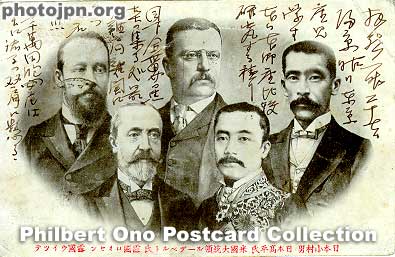
[SOURCE]
*--In this year, an early case in international law (i.e., law beyond the
limits of nation-state sovereignty), was heard when an English/Russian
Commission of Inquiry convened [RWP1,2:167-70]+
*--For Russia, crises in international relations and domestic politics seemed to
be abating, so
the tsarist state entered the critical October days still hoping to suppress
mass unrest with a combination of force and uncertain promises of reform
\\
*--Saul,2:153-8,
459-507
*--Alan Kimball, "The United States and the Soviet Union: Toward a Mutual Pacific Frontier" (1984)
{TXT on long-term background to 20th-21st cc. Russian/Japanese international relations]
*--John A. White, The Diplomacy of the Russo-Japanese War
*--LOOP on WW1a
<>1905se12:se15; Moscow |
Zemstvo congress #5, 194 members attended
*--LOOP on 1905 Revolution
<>1905se19:Moscow
railroad strike [H05:175-6]
<>1905fa:Buryat gatherings represented indigenous
opposition to tsarist imperialist authority in their lands [GDR:162]
<>1905oc:Baltische
konstitutionelle Partei formed, made up of conservative German gentry
aristocrats
*--Lithuanian & Latvian nationalist movement under way
*1905oc:Kursk | People's Party [Narodnaia Partiia implying "National Party"]
*--Was this party representative of aristocratic gentry conservative politics
or aristocratic state servitor conservative politics?
<>1905oc07:Russian railroad
strike began after a union member was arrested [VSB,3:744]
<>1905oc08:Petersburg
Governor General Trepov issued decree limiting rights of public assembly
*--This futile act flew in the face of mounting, near-universal public mobilization
which was filling public places in all the larger cities of the Empire
<>1905oc09:Sergei Witte,
fresh back from
treaty negotiations that settled the Russo-Japanese War, submitted a bold
memo to Nicholas II [VSB,3:703-4]
<>1905oc11:Russian
wage-laborers submitted petition on working conditions to
Witte & he replied [Nevison:18-19]
<>1905oc12:oc18;
Moscow | Partiia narodnoi svobody [Party of Popular Freedom], a bold new
liberal party, the first openly organized political party in Russian history,
held its founding congress. They were not best known by their formal name.
Instead, the name "Constitutional Democrats" came into wider usage. In fact,
they became best known by the Russian initials for Constitutional Democrat,
"KD". And these two Russian letters sounded like the unflattering French word
for an adolescent in military training, "KA-DEH" [cadet]. Thus a back-formed
nickname also came into wide usage = Kadety (Cadets) KDs]
*--Program [McC1:33-5
|
H05:292-300 |
DIR2:405-10 |
DIR3:438f |
VSB,3:724]
*1905oc14:Pavel Miliukov addressed the congress of this most
liberal of the Russian political parties
[VSB,3:726]
*--KDs prepared for the anticipated State Duma
\\
*--Terence Emmons, The Formation of Political Parties and the First National Elections in Russia
<>1905oc13:Witte
submitted yet another bold memo to Nicholas II.
Witte's personal views did not get in the way of his practical political
good sense [VSB,3:704-5]
<>1905oc13:Saint
Petersburg
Soviet [of Workers'Deputies] met for the first time as the wage-labor
strike movement spread along Russian rail lines
*--The Soviet representing a new and more explicitly political-institutional
form of wage-labor mobilization
\\
*--Oscar Anweiler, Soviets: The Russian Workers, Peasants, and Soldiers Councils,1905-1921
<>1905oc14:Moscow general
strike began after more than a week of mounting work stoppage, led by the
railroad unions.
Georgii Khrustalev-Nosar, described the strike movement =
Within ten days strikes had seized the entire network of Russian railways,
extending over 40,000 kilometers and employing 750,000 clerks and workers.
Out of Moscow, as the center, the strike flame sent its rays spreading to
the periphery. The railway strike predetermined the general strike.
The strike movement traveled on steel rails and shut down factories, plants,
-- all of life in the industrial centers. [...] The strike revolution gave
birth to the Soviet [Page:80-1]
*--Railroads
were vital to all participants in modern life
<>1905oc14:Russian Emperor issued Ukaz in order
to gain some control over freedom of assembly, which was now an altogether
"voluntary" association, totally out of the control of official "assignment"
<>1905oc15:Council of Ministers closed all Russian
universities
<>1905oc16:All-Russian general strike began;
a remarkable, massive, open, national rebellion [H05:180-9]
*--
Wage-labor political behavior was so far in essence not unlike the behavior
of other "working people", rural, urban, clerical, professional (including
university professors and students) -- they all went out on strike
<>1905oc17:Russian Emperor Nicholas II
issued October Manifesto [TXT]
[Russian TXT] [VSB,3:705 |
Mehlinger:331-2 | DIR2:384-5 |
McC1:13-4 | H05:195-6 |
CCC2,2:596 | DPH:301-2]
- This simple manifesto seemed to promise much. The projected State Duma
seemed to be an elected parliamentary organization with apparent authority
over the tsarist "cabinet" (ministers, "the government") and over all new
legislation
- This was the first progressive reform of governmental/administrative
institutions since the creation of the Zemstvos forty years earlier
ID, and its immediate institutional
implications exceeded anything since the time of Alexander I
[ID] or perhaps since the time of Peter I
[ID]
- Two days after signing the Manifesto, Nicholas II wrote in his diary =
Through all these horrible days, I constantly met Witte.
We very often met in the early morning to part only in the evening when
night fell. There were only two ways open; to find an energetic soldier and
crush the rebellion by sheer force. That would mean rivers of blood, and in
the end we would be where had started. [Petersburg Governor General
Trepov had earlier issued orders to troops in the Petersburg garrison, "do
not spare the bullets", but he now bowed to practical considerations = force
would no longer work.] The other way out would be to give to the
people their civil rights, freedom of speech and press, also to have laws
confirmed by a State Duma - that of course would be a constitution. Witte
defends this very energetically. [Boldface added]
Almost everybody I had an opportunity of consulting is of the same
opinion. Witte put it quite clearly to me that he would accept the
Presidency of the Council of Ministers only on the condition that his
program was agreed to, and his actions not interfered with. We discussed it
for two days and in the end, invoking God's help, I signed. This terrible
decision which nevertheless I took quite consciously. I had no one to rely
on except honest
Trepov. There was no other way out but to cross oneself and give what
everyone was asking for.
- Suppression or concession, that was the debate. After
several decades of reactionary state policy, or at least irresolution with
respect to the reform legacy of Alexander II, tsarist officials were now
forced at one moment to both quell vast disorder AND pick up the
pace of
reform.
- The Manifesto made extensive concessions to society, but Nicholas II and
the insider elites around him may not have meant to fulfill all the promises
of the October Manifesto. The promise of a
State Duma calmed a nation in the grip of near universal and
spontaneous rebellion. Only the most radical elements among mobilized
wage-laborers and discontented villagers were ready to push toward further
revolutionary accomplishment. The irony was that these contrary trends
-- general calm and worker radicalism -- allowed certain voices within the
tsarist state once again to resist reform and to entertain the
dream of statist reaction through suppression
- Much hung on the big and immediate question about how the grand promises
of the October Manifesto might be actualized in newly drafted
Fundamental Laws
\\
*--H05:193-5,
210
<>1905oc17:Saint
Petersburg
Soviet newspaper Izvestiia [News] began publication [VSB,3:745]
<>1905oc17:Sergei
Witte reported to Emperor Nicholas II in connection with his assignment to
coordinate the actions of the several ministries in preparation for the
formation of a State Council
- Witte told his Emperor that unrest has seized various sosloviia and has
its roots much deeper than partial imperfections of government or in
society, or as result of political extremists. Roots are found "in the
disturbed equilibrium between the aspirations of conscious elements [in
society] and the external forms of their life"
- In other words, Russian society had outgrown the old order. It would
have a new order based on "civic liberty". Political institutions must be
"raised to the level" of the "moderate majority of the people". Witte urged
immediate granting of civil liberties and the equalization of "all Russian
citizens before the law, without distinction of religion and nationality"
- He urged the creation of an elected legislature, and he insisted that
the Imperial State Council should also be elected
- He advised Nicholas II to understand that a great empire like Russia was
filled with a wide variety of factionalized interests. The monarch should
rise above them. Do not interfere in any way in the elections, he advised.
Stand by the 1904de12 decree
[ID]
- When the Duma meets, do not oppose it unless it presents a clear
threat to the grandeur of Russia. Public activism should be suppressed only
when it threatened society itself or the state
[Mehlinger:333-5 |
Doctorow, "Government" | H05:289-92 |
Russian text GDR:91-4]
- This began the final phase of Witte's career as statesman, serving as
Russia's first "Prime Minister", but perhaps, without his knowing it, also
serving as a stop-gap concession while certain tsarist insiders regrouped
and revolutionary fervor abated
- Witte urged the necessity for authentic concessions to society. It would
be a half year later, after the revolutionary storm was weathered, that
Witte and the rest of Russia learned in detail what tsarist authority
intended to do [ID]
- Meanwhile, Witte and Russia as a whole had
a long and difficult winter ahead =
<>1905oc18:Moscow workers passed labor strike
resolution [VSB,3:744]
<>1905oc19:oc20; Saint
Petersburg | Nicholas II issued a second Manifesto in connection with the revolutionary crisis
- Now the irresolute Emperor restructured the State Council into an appointed legislative chamber
- A second chamber was now attached to the earlier unicameral and fully elected Duma which had been promised
in the first manifesto
- He also structured the Council of Ministers into a body independent of the Duma and under direct
tsarist authority
- There would be no authentic "cabinet" and no formal interdependency between Duma and ministers
[McC1:17-18]
- Sergei Witte moved ahead as if the promises of the October Manifesto were still
fully realizable
- He called a government conference on upcoming elections to the new State Duma
- "State Duma" was still just a revolutionary promise [ID] and not yet fully defined
- But Witte could not delay the novel and delicate task of courting for revolutionary government service
certain of the "public men" associated with Zemstvo activism and other forms of
elite urban activism
\\
*--LOOP on 1905 Revolution
<>1905oc19:1906wi; Emperor Nicholas II letters to
his mother [PFM:89-92]
<>1905no:1907; Union of
Russian Peoples [Soiuz russkikh liudei], a reactionary political party,
formed and composed its program [VSB,3:728
|
DIR2:410-16]
*--Later founded
Black Hundreds [Chernye sotny] (anti-Semitic, reactionary
political party)
*--What is the relationship of "reactionary social movements" like this and
"official reactionary" policy?
<>1905no:Russian
SRs program [McC1:32-3
|
DIR2:399-405 |
DIR3:431-8]
<>1905no03:Russian
Imperial Decree cut peasant redemption payments in half for next year &
abolished them altogether as of 1907 [DIR2:385-6
|
DIR3:415-17 |
DPH:302]
*--A
forty-year-old deficiency in the greatest of the great reforms thus was
corrected
*--Reforms continued under high-pressure revolutionary circumstances
<>1905no06:no10; Moscow |
All-Russian
Peasant Union Congress #2 [H05:219]
*--Max Weber numbered members at 500, but more nearly 200 [MWG:243-4]
*1907:1915; Journalist report on
peasants in Saint Petersburg [Nevison:49f]
<>1905no06:no13;
Moscow |
Zemstvo congress #6 (last)
*--Pavel
Miliukov was admitted to organizational committee and claimed readiness to
support Witte government [PR&R:533]
*--Congress sent deputation to see Witte = Sergei Muromtsev,
Fedor Kokoshkin, and
Ivan Petrunkevich. These deputies insisted that ministers in the new
government be responsible to (under the authority of) the Duma rather than to
the tsar [PR&R:534 | Manning,Crisis:187 says
Witte refused to see deputation]
*--Ivan Petrunkevich, Memoirs of a Social Activist [ORBIS]
<>1905no10:no14; Moscow-Saint Petersburg | Octobrist
Party [Soiuz 17 Oktiabria; Union of October 17] founded
<>1905no15:(oc15??) Saint Petersburg dmx fnd PPP [MWG:64 or259]
<>1905no16:Moscow | Committee of the All-Russian Peasant Union
arrested six days after their second congress
<>1905no16:Perm Postal Employees passed political resolution [FFS:212-23]
<>1905no17:Vladimir
Province, Kovrov District Land Captain reported to the Provincial Governor about
rural disorders =
In the city of Kovrov a nest of troublemakers has been stirring, and they
include people of various classes [sosloviia] and professions. They
cover themselves by functioning as local zemstvo officials, working
on agricultural committees and economic councils and serving on the
committee for public temperance. This group has grown significantly and
persistently carries on its evil work. They distribute pamphlets by Henry George, revolutionary
leaflets and proclamations. They circulate appeals [off-prints?] of an edition of Donskaia rech' [voice of the
Don, a newspaper] which contains the French 18th century Declaration of the
Rights of Man and Citizen, and distribute large quantities of harmfully oriented newspapers to the peasants free of charge.
They make tours of the villages and conduct secret discussions with [...]
ruinous effects upon the population. Many workers among the peasants (I
assume that they are paid by the agitators) promise all kinds of future
gains and recruit their fellow villagers, who, as is known, are extremely
ready to trust the tale-bearers and know-it-alls of their own villages. In
daily mass meetings in the workshops even visiting orators lecture on all
manner of subjects. It is rumored that some of the workmen are armed. In the
evenings, youth walk about boldly singing revolutionary songs. The
townsfolk, fearing unpleasantness, try to avoid leaving their homes at such
times. In these meetings both the workers and the peasants of my region take
part. Seeing that they get away with their illegal activity these people act
insolently and teach this to the peasants. || All pronouncements of the
Moscow Peasant Union appear in the villages in the form of proclamations which
call for changing the old ways ... yes, even of banishing the chiefs, the clerks and land captains from
the district peasant assembly [volostnoi skhod] [Page:72]
<>1905no17:no20; Moscow Union of Landowners [Soiuz
zemlevladel'tsev] meeting called for statist reactionary measures and suppression
of peasant
disorder [MWG 1/10:250] Gentry politics
<>1905no19:no20; Saint
Petersburg | Sergei Witte conference with political moderates within the Zemstvo congress, most of
them members of the recently formed Octobrist Party [PR&R:534] =
- Who? Aleksandr Guchkov & Mikhail Stakhovich; also Evgenii Trubetskoi, & Dmitrii Shipov
- Over the previous month, Witte had been courting other "public men", representatives of progressive Zemstvo and
urban economic life [GFF:703-10 | MWG:265-6]
- He also conferred with Fedor Golovin, Georgii L'vov, & Fedor Kokoshkin
- He offered to cooperate with these "public men" if they moderated their political stance
- These "public men", however, still demanded a Constituent Assembly & universal suffrage
[PR&R:532]
- In demanding a Constituent Assembly, they sought to wrest from the tsarist ministerial elite and to give to
elected representatives the power to design the new Fundamental Laws
- In other words, they sought to take from tsarist bureaucrats and give to the public the power to make an
actuality out of the grand and vague promises in the October Manifesto
- Still, Witte offered Ministry of Manufacturing and Industry to wealthy industrialist Aleksandr Guchkov
- Guchkov refused on grounds that Witte named reactionary career police administrator Petr Durnovo to
the all-important post of Interior Minister [MWG:116 & 264]
- Other Zemstvo liberals and figures from the urban public
shared Guchkov's scrupulous unwillingness to be compromised
- Thus the Witte effort to form a mixed government of tsarist bureaucrats and "public men" collapsed
- Witte was all alone now with only the state, and most powerful state servitors
were anxious to see him fail [GO de05]
- Forty-years of Zemstvo politics had come to this,
though the Zemstvo continued to play an important role in national life
\\
*--LOOP on 1905 Revolution
<>1905no22:Committee of the Post & Telegraph
union arrested
<>1905no22:Moscow then Saint Petersburg |
Georgii Khrustalev-Nosar became chairman of workers' Soviet
[WRH3:496-7 | *1913:RRe#2:89-100]
<>1905no24:Russia | End of
preliminary censorship in early phases of the 1905 Revolution
*--The imperial state brought an end to the 110-year-old constraint [ID]
on Russian print culture
*--Unfinished business of the "great reform" era [ID] was taken up
again under revolutionary pressure
*--After end to preliminary censorship, a steady trickle of reform continued
\\
*--Daniel Balmuth, Censorship in Russia, 1865-1905
*--Charles Ruud, Fighting Words: Imperial Censorship and the Russian Press, 1804-1906
<>1905no26:Moscow |
President of workers'Soviet, Khrustalev-Nosar arrested, and 26-year-old Leon
Trotsky (1879-1940) replaced him
*1905no26:de05; Saint Petersburg | Foreign newspaper correspondent
Nevison:77-80 (diary) covered these critical 11 days
<>1905de02:Saint
Petersburg workers'Soviet issued Financial Manifesto calling on peasants to
refuse to make redemption payments, demanding all wages be paid in gold or hard
coin, full weight, and recommending all wage-laborers
withdraw deposits from banks, "demanding all payments in gold"
[VSB,3:746 | DPH:303-4 | Postgate:385 (part)]
*--State moved to suppress eight newspapers, and this just over one week after the passage of a new and
progressive censorship reform [ID]
<>1905de03:Saint Petersburg Soviet members
arrested during meeting in Free Economic Society building
- Trotsky mug-shot [pix]
- 1906oc:Nosar and Trotsky testified at their trials [VSB,3:748]
- The workers'Soviet faded from scene after two vigorous months of existence
- 1907:Trotsky wrote Our Revolution, a description of those two vigorous months or organized revolutionary
politics. This early work by Trotsky was based on his Marxist vision of history and his personal experience
[TXT of ch.5]
- Trotsky's more general study of the 1905 Revolution [E-TXT]
grew out of Our Revolution and contained the first versions of Trotsky's contribution to general Social Democratic
ideology, the notion of "permanent revolution" [TXT of preface]
- The memory and myth of the workers'Soviet lingered. Twelve years later, the Soviet revived and
Trotsky returned from exile and emigration just as the old
Regime collapsed in the 1917 Revolution
<>1905de04:Kostroma newspaper reported debates in peasant gatherings
- Sameti village assembly [sel'skii skhod] passed two resolutions =
- in view of land shortage, all land should be gathered in common property on
conditions determined by representatives elected nationally, and
- in the realm of politics it is essential that the people rule, without
regard for soslovie or other qualifications at the central and the
district levels, with freedom of conscience, association, assembly and
expression
- Sameti village furthermore insisted that the passport system must be abolished and amnesty of all those earlier
prosecuted for political activities and rural disorders
- The Sameti assembly voted to join the All-Russian Peasant Union
- An assembly in Tonkin district vowed not be pay taxes until
the following measures were taken =
- End the oppression by Land Captains,
- institute peasant administration, carried out by peasants themselves, not
just on paper, but in fact,
- institute an assembly of all soslovie,
- create equal rights for all peasants,
- institute a constituent assembly on the basis of the four-member formula
[? four-tailed electoral formula?],
- refuse to participate in the Duma elections,
- land must be the the free property of those who work it [GDR:161-2]
- Peasants, like other sosloviia, like
others pinned to positions on the Imperial social/service heirarchies,
enjoyed a maturing political culture
- They clearly had more in mind than burning gentry estates
<>1905de04:Petersburg
|
Octobrist Party held its second conference
<>1905de05:de07 & de09; Tsarskoe
Selo "monarchical cnf" included Wtt gvt & ShpD, Gch Korf, PL Bobrinskii, VA
[MWG:266 | protocol, Byloe 3(25) (1917 September):217-65]
<>1905de07:de19; Moscow
strike & revolutionary disturbance [Nevison
in Moscow?]
*--Resolution [VSB,3:746-8]
<>1905de11:Russian Election law
for State Duma signaled governmental retreat from promises in the
October Manifesto [ID] [Russian text GDR:94-102]
*--Official reaction regained some of its momentum after the setbacks of the
previous 18 months
\\
*--LOOP on 1905 Revolution
<>1906:French highway engineer and
political ideologist, often associated with movements called "syndicalist", Georges Sorel (1847-1922) wrote Reflections on Violence
[Abridged
E-TXT | CCC2,2:954-63 | BMC1:566-71 |
BMC4:633-41]
- Sorel, among other things, extolled the positive virtues of political violence or terrorism
- Terrorism was working its way into the European political fabric
- Political terrorism was a nearly identical twin -- the domestic political twin --
to European imperialist administration and emerging practices of international or global "total war"
[ID]
- The Wki entry
on Sorel is especially good at showing
the near impossibility of using traditional notions of "left" and "right" (notions appropriate to what SAC calls the first and
second phases of the European Revolution [ID] ). Sorel was a definite harbinger of
the looming third phase [ID] here on the eve of WW1 and the new era of "total war"
<>1906ja:Persia
(Iran), Tehran and its suburbs the site of mounting popular disorder
- Iranian people over the preceding decade demanded a
curb on royal authority and the establishment of the rule of law
- The shah ignored the challenge to his authority
- Now the religious establishment, the merchants, and other classes mounted open protests
- Merchants and clerical leaders fled from probable arrest by the shah
- They sought sanctuary in mosques
- 1906je:Tehran | Persian shah reneged on a promise to permit the establishment of
a "house of justice", or consultative assembly
- In response, 10,000 people, led by merchants, took sanctuary in the compound of
the British legation in Tehran
- 1906au:Persian shah was forced to issue a decree promising a
constitution
- 1906oc:Persian elected assembly convened and drew up a Constitution
that provided for strict limitations on royal power, an elected parliament,
or Majlis, with wide powers to represent the people, and a government
with a cabinet subject to confirmation by the Majlis
- 1906de30:Persian shah signed the revolutionary Constitution and died
five days later
- Within the year 1907, Supplementary Fundamental Laws provided, within
limits, for freedom of press, speech, and association, and for security of
life and property
- The hopes for constitutional rule were not realized, however, as a result of (1) internal political weakness and (2) imperialist interference =
- 1907:1921; Persian shah Mohammad Ali Qajar and the Majlis engaged in constant struggle,
then Bakhtiari chiefs and other grandees took over
- 1907au18:1919; For 12 years, leading up to and through the duration of WW1, English-Russian
entente divided Persia/Iran into English and Russian spheres
\\
*--LOOP on WW1a
<>1906ja:ap26; St.Petersburg events described by Nevison:309-16
<>1906ja:Socialists-Revolutionaries
[SRs], now a huge, unified and nation-wide party, held their First Congress and
issued a program, which included reaffirmation of the need for "terroristic
struggle, central and local, individual and mass". The program furthermore
stated that "the new debauch of arbitrary rule finds the party once again at its
battle station" [VSB,3:719-21]
- By this time the SRs concluded that the autocratic state had betrayed
the promises in the October Manifesto [ID]. This purely
institutional issue, the betrayal of democratic political promises made in
October, remained an issue over the next decade and fed popular discontent in
the year 1917 [EG]
- That month in Tambov Province, Battle Organization activist Mariia
Spiridonova assassinated Luzhenovskii, an important activist in the "Black Hundreds" movement
- A half-year later, the Black Hundreds were responsible for the assassination of Mikhail
Gertsenshtein, member the new State Duma (KDs) and labeled "Yid" by the
Black Hundreds
- In this new era of legal public mobilization across the full political
spectrum, terror had become also a weapon in the struggle between different
political parties and factions
- However, within the ranks of the SRs, a "right-wing" broke
away (IE=revolutionary moderates -- if such a phrase is not wholly oxymoronic). These
"moderates" lost patience with underground conspiracy and terrorism
and committed to open political action. They formed a new party known variously as
the Narodno-sotsialisticheskaia (Trudovaia) partiia [People's Socialist (Labour)
Party] or Trudovaia narodno-sotsialisticheskaia partiia [Labouring People's Socialist
Party]. In short, they were called Narodnye sotsialisti [People's Socialists
(it is uncomfortable and misleading but possible to translate that as "National Socialists")]. They
were nicknamed "NSs" or "EnEsses"
- 1906se:NSs expressed willingness to achieve their goals via political engagement in
the State Duma. Leading members were NF Annenskii, VA Miakotin, AV Peshekhonov, VG Bogoraz-Tan,
SYa Elpat'evskii, VI Semevskii, etc.
- Soon NSs issued their own journal, Narodno-sotsialisticheskii
obozrenie [People's Socialist Review] which sought to make Russia a
democratic republic, to transfer unused, privately owned land to the
peasantry (with compensation to the landowners), and outright
nationalization of (excessively) huge landed estates [latifundia estates]. Also
monastic land holdings, royal properties and governmentally owned land should be
nationalized and distributed to peasants
- NSs extended their organization down to the local level as they
campaigned for seats in the Duma. The following April, NSs
held their first party conference
<>1906ja:Russian Marshals
of nobility (i.e., chairmen of regional noble
assemblies) gathered and passed a resolution in which they declared
their willingness to help their sovereign restore peace and achieve the promises
of the October Manifesto. However, they acknowledged serious difficulties and
thus made recommendations [FFS:200-3]
=
- The state issued decrees [ap17
and oc17] promoting
freedoms that have never been defined, thus loosing
anarchy and disorder on the country. Political wavering creates an opening
for revolutionary outbursts. Suspicions grow that the promises from the tsar
will not be fulfilled. Disorder must be quelled
- Convene the Duma as soon as possible. Quickly issue instructions on how this is to be done
- Russia is a single, indivisible whole. No regional or national
separatism should be allowed
- Russians need to be protected when they are living among a majority of non-Russians
- Freedom of conscience must not limit the preeminence of the Russian
language and Orthodox Church
- Economic self-regulation should be granted in outlying areas while
protecting Russian interests
- The State Duma should take the fundamental solution of the agrarian
question to be its number one priority
- The inviolability of private property must be the guiding principles,
with certain defined exceptions
- Colonization of distant frontiers must be facilitated by local
discussion. State land should be offered to migrants
- Financial policy must be revamped so as to promote agricultural
productivity and marketing
- The state should promote consolidation of peasant landholdings and
termination of strip farming
- Allow peasants to claim their share of community land, consolidate it
as separate households, and sell them if they move [this an early call for
conversion of peasant villagers into farmers]
- The Peasant Bank should promote economic security of peasants. Government
should assume some of the financial burden of loans. Interest rates should be lowered
to the same level as those in the Noble Bank
- "Arable state lands and forests ... and also crown lands [should] be
made available to agriculturists with payment set according to accessed
value. [...] Twenty-four marshals hold a separate opinion: twenty one
marshals regard crown lands as private property, and three oppose
consideration of this question at the congress"
- Strong state authority must be exerted at the local level in order to
suppress violence and plunder
- Rules must be clearly stated and enforced to protect individual liberty
from violence and work stoppage or desertion
More Gentry politics
<>1906ja05:11;
KDs Party Congress#2
<>1906ja14:Nicholas II signed Council of
Ministers countermeasures against activism among state servitors [FFS:213]
<>1906ja22:Nizhnii
Novgorod peasant petition
outlined long history of discontent in their village Malyi Seskin,
ending with a list of seven demands =
- Forests, lands and ponds owned by institutions, ministries [kabinetskie],
private individuals, monasteries, churches
and gentry [pomeshchich'i] should be turned over to to those who work them,
under conditions of communal land management [obshchinnogo zemlepol'zovaniia]
- Direct and indirect taxes should be abolished and replaced by graduated
progressive taxes
- Universal and obligatory [primary and secondary] education and
accessibility to higher educational institutions to all who wish, at state
expense
- Freedom of expression, press, assembly, union and strike
- Inviolability of the individual, home and correspondence
- Abolition of capital punishment, military quartering and courts martial
- Swift convocation of the State Duma
*--Signed by 90 peasants in assembly, with their elder [starosta], and with
notary signature of district police captain [ispravnik] [GDR:163-4]
*--Minsk area ditto [164-5]
\\
*--Oleg Bukhovets subjected about 200 peasant petitions of this era to aggregate
analysis and offered a summary of their content
<>1906ja26:Moscow| Twenty-six Russian
business companies submitted a declaration to the Council of Trade and Industry in which they
took a stand against centralized organization of the Council and in favor of significant break-up
into thirteen regional councils [FFS:256+]
<>1906ja30:Russian
women's Progressive Party, program [FFS:303-8]
<>1906fe:gbx Zmv mtg, conflict pro-
& anti-lbx [MWG]
<>1906fe:German
sociologist
Max Weber published "Zur Lage...", the first of two monograph-length studies
of the Russian Revolution of 1905, for which purpose he learned the rudiments of
Russian. First and
second study published together in MWG [Weber]
<>1906fe05:Congress#1,
Vserossiiskaia Torgovo-promyshlennaia partiia [cf.1905no11:]
*--Liberal industrialist Pavel P. Riabushinskii used phrase "class
consciousness" & urged resistance to "intelligentsia
socialism" [OCP:274]
*--Urban
"bourgeois" consciousness came to life under conditions of revolutionary
crisis and struggled to make a clear distinction between
liberalism and socialism
\\
*--"Association of Industry and Trade, 1906-1917" in MERSH
*--"Riabushinskii", a Russian English-language website
[W] | Russian-language website
[W]
<>1906fe08:fe12;
Octobrist Party held a conference
<>1906fe20:Tsarist
manifesto and two ukazes about two chambers of the new legislative body
(1) The Imperial State Council [Sovet] would now be made up of delegates,
one half elected and one half appointed by the tsar. Earlier, all were appointed
by the tsar
(2) A "second house", the State Duma would be made up of elected delegates, but
elections were not to be direct. Delegates were chosen in a four-tier process
designed to mute the popular will [VSB,3:769-70
| MWG] [Russian text GDR:102-]
*--Ministries were not put under the authority of the two-chambered legislature.
They remained responsible only to the tsar
*--The tsar no longer was formally described as having "unlimited autocratic
power" [neogranichennaia samoderzhavnaia vlast']. The word "unlimited"
was removed from his title
\\
*--LOOP on 1905 Revolution
<>1906fe21:Russian National Congress of
Old-Ritualists [Raskolniki] sent address to Emperor Nicholas II [FFS:298-9]
<>1906fe22:fe23; Russian laws handed down with
respect to relationship of southern imperial possessions to the new legislative
institutions [GDR:123-33]
<>1906mr06:Russian
State Duma election began
<>1906mr08:Russia |
Ekaterinoslav guberniia Nobility submitted address to Emperor Nicholas II which
showed how village disorders vexed gentry politics, yet
also showed how anxious gentry were for the Emperor to honor the promises made in the
October Manifesto [FFS:203-6]
<>1906mr08:Russian Senate received two ukazes
about management of state budget [GDR:132-5]
<>1906mr08:mr11; Russian state took measures to
maintain control over the electoral process [GDR:136-41]
<>1906ap07:ap12; Russian Council of
Ministers deliberated with Nicholas II about the new Fundamental
Laws [VSB,3:770-2]
<>1906ap10:ap25; Stockholm | Russian
SDs Congress #4 (The Unity Congress [!!]) tried to bring Russian Marxists back together
- However, the Menshevik/Bolshevik split widened
- Mensheviks A.S. Martynov and P.B. Aksel'rod explained differences with
Bolsheviks [VSB,3:716-17]
- Agrarian program [VSB,3:801]
- In this year, the German Social Democratic leader Karl Kautsky [pix]
explained meaning of the 1905 Russian Revolution, w/ preface by Vladimir Lenin [Hardy:352f]
- German and Russian Marxists sought common ground in the interpretation of this
vital European event
<>1906ap14:Sergei Witte
resignation became widely known
- Witte memoirs gave bitter account of events leading to
this [cf. VSB,3:748-50 and DIR2:418-25]
- In mid April, Russian state secured loan and thus felt bolder in its desire to reverse large
parts of the concessions granted in the October Manifesto
- The state felt it had now weathered the revolutionary storm and was ready to repair the
damage
- It felt it could now dispense with Witte
<>1906ap18:San
Francisco earthquake described by USA author Jack London [Eye:418-21]
*--The first century in the history of a great
Pacific-Rim urban center was punctuated by a great natural calamity
[W#1]
[W#2]
[W#3]
[W#4]
<>1906ap22:ap23;
Russian nobles gathered in "Congress of Noble
Circles" and passed a resolution which reflected conservative gentry politics
- They called for restoration of law and order, especially the defense of the principles of autocracy
and the enforcement of noble soslovie privileges and exemptions
- Thus the Congress of Noble Circles came out in defense of the two central themes of political
opposition over the past century
- bureaucratic absolutism and
- the social/service hierarchies
- They objected to the way in which "unworthy members and aliens with inappropriate bloodlines"
had in recent times been elevated to prominent positions [FFS:206-10]
<>1906ap23:Russia's new
Fundamental Laws were issued [TXT] [original
draft, Council of Ministers draft, & final version: Mehlinger:336-44 |
cf. DIR2:387-93 | DIR3:417-25 |
VSB,3:772-4 | DPH:395-6 |
GDR:141-60]
- New laws defined the powers of the Duma and the relation of the Duma legislature to
the tsarist government (the ministries and their apparat)
- The public concluded, with considerable evidence, that the Fundamental Laws betrayed
the promises of the October Manifesto [ID]
- GDR:ff
<>1906ap27:1906jy08;
First State Duma formally opened with KDs playing a central
roll [VSB,3:774-6] but lasted only two months and two weeks
- 1906ap:SPB Bureau of state servitors sent letter to the First Duma
- First Duma heard Emperor Nicholas II’s speech from throne & responded in an oppositional
mood [RRC2,2#39 | PR&R:546-60 | Nevison:325-6]
- Ten weeks of intense struggle between elected legislators and tsarist government followed
- Over on the government side, the Emperor appointed confirmed monarchist Ivan
Goremykin [ID] in the post of Prime Minister
to replace Witte
- In 1894 Goremykin was Nicholas II's first Interior Minister, appointed in part because of his
record of service in putting down the 1863-64 Polish uprising, and because of his dabbling in peasant affairs
- Now at mid-stream in his reign, Nicholas again turned to the utterly unsuitable but utterly loyal and only marginally
competent Goremykin
- A far more promising and capable Petr Stolypin became Interior
Minister [WRH3:498-509]
- 1906ap29:ap30; Over on the public side, the State Duma granted political amnesty for many participants in recent
disorders and abolished capital punishment [GDR]
- The Second Duma was hardly more settled
<>1906ap27+: First Duma
Labor Group [Trudovaia Gruppa; best known as Trudoviki], a largely
peasant political faction, formed in
the midst of parliamentary proceedings
- Trudoviki counted 96 then 107 members, including Ivan Zhilkin, Aleksei Alad'in and
Stepan Anikin, these three being educated professionals, journalists or teachers
- Trudoviki were much influenced by the All-Russian Peasant Union and
the SRs
- But these peasants were less agents of older revolutionary parties and more a distinct product of the
actual and unprecedented political situation they discovered within the new Duma
- Newly elected peasant delegates -- many of them straight from villages -- shaped their politics to the
contours of the new parliament gathered in the splendid capital city
- 1906my03:Complaints were expressed on the floor of the Duma about police mistreatment of
enthusiastic villagers who came to Petersburg to meet with their elected representatives [GDR]
- To everyone's surprise, "backwards" peasants acted like seasoned politicos when they swiftly mobilized
themselves into the Trudovaia Gruppa,, actually the first loose political party
formed within the Duma itself, Russia's first purely parliamentary faction
- Trudoviki were an authentic product of labor political
mobilization
- "All politics is local" [ID], but not
necessarily successful
<>1906my:dvr.unx (??soiuz zemledel
GO 05no17) fnd; cnx gnt pty
<>1906my05:State Duma replied to Emperor Nicholas
II speech [RRC2,2:445-49 | Harper:40-1 |
VSB,,3:776-7]
<>1906my08:1906je01; In its first
month of existence, the State Duma debated a series of significant legislative bills but could get none
of the most important into law
=
- Agricultural problems were at the center of everyone's attention, including the old problem of
landed aristocratic estates
- 1906my08:Russian KDs position on agrarian question, "Project of the 42" [GDR:168-72]
- 1906my15:Duma took up bill on social equality [o grazhdanskom ravenstve]
- This was a very modern-feeling frontal legislative assault on widely despised but still-enforced medieval Russian social/service hierarchies
- The legislative agenda of the Trudoviki came to dominate proceedings =
- 1906my23:Trudoviki presented their agrarian bill, "Project of the 104" [GDR:172-4]
- The Duma debated but could not pass either the KDs "Project of the 42" or
the Trudoviki "Project of the 104"
- Serious land reform languished, and a feeling spread = the revolution was being "cooptated"
by authorities [GDR]
- 1906my30:Duma deliberations on bill submitted by 33 delegates to establish freedom of assembly in
Russia (never passed)
- None of the most significant and popular measures introduced in the month of May made it into law
- In late May, SDs subjected the Duma itself to sharp criticism and called for the convocation
of a Constituent Assembly [uchreditel'noe sobranie]
<>1906my13:Peasant representative to
the First Duma I.T. Losev protested a declaration handed down by Council of Ministers President Goremykin
<>1906je:Moscow| Postal and telegraph
workers' proclamation [FFS:216-17]
<>1906je07:Kolomna|
Factory managers petitioned the Chairman of the First Duma, asking him to
achieve a legal solution of the land question, even if it means taking lands
owned by factory managers [FFS:254-5]
<>1906je11:Russian
nationwide nobles congress sent address to Nicholas II defending the "inviolability of property rights"
of gentry landowners [VSB,3:800]
*--The previous seventeen years of gentry politics may be defined as promotion
and defense of exclusive noble soslovie interests and landowning power within social/service hierarchies
*--All this was a clear failure now, just as it had been a half century earlier
\\
*--Robert Edelman, Gentry Politics on the Eve of the Russian Revolution: The Nationalist Party, 1907-1917
*--Roberta Thompson Manning, The Crisis of the Old Order in Russia: Gentry and Government (1982)
<>1906je20:Duma received an "Agrarian
bulletin" [Agrarnoe soobshchenie] which hinted at impending agrarian
reform [GDR]
<>1906je20:Emperor
Nicholas II acknowledged privately that things were not going well in his Duma
=
- A "list" was drawn up outlining a possible new coalition government
- That list guided Stolypin and Governor General Trepov as they entered into negotiations with
KDs
- Stolypin, representing a new generation of tsarist officialdom, now moved
toward the center of governmental events
- Trepov, representing an older generation (though only 51 years old), died three months later, ending his
year and a half near the center.
\\
Tuck:127-8 says negotiations between the state and KDs failed because
(1) the government acted too late,
(2) conflict between bureaucrats and KDs was too deep, and
(3) Pavel Miliukov was too "doctrinaire"
<>1906je23:Duma took up the issue of whether to allocate 15 million rubles
to promote more vigorous economic productivity [GDR]
<>1906jy04:State Duma
Agrarian Commission reported [GDR:175-80]
<>1906jy06:Old-guard
monarchist-absolutist statesman Goremykin pushed out
of prime-ministership, and Petr Stolypin ushered in as Prime Minister
- Two days later =
- 1906jy08:jy09; First Duma was dissolved [VSB,3:778 |
CCC2,2:597-8 | DPH:306-7 | Russian
text, Rospuska Gosudarstvennoi Dumy in GDR:181-3]
- 1906jy09:Stolypin made further unsuccessful effort to form
coalition government [GFF:710-21]
<>1906jy10:Finland | Dissident delegates
from the suppressed State Duma, with KDs and Trudoviki at the center, fled
to Finland and issued
the Vyborg Manifesto [McC1:43-4 | VSB,3:779 | Meeting
described in Harper,Russia:50-51 | Nevison:351-2]
- The Vyborg Manifesto marked the end of the KDs'nine-month
liberal
revolutionary period
- There was no significant popular response to the radical proposals in the Manifesto
- That day, Pavel Miliukov described Duma and
"extreme parties" in a newspaper article
- Years later the more moderate liberal, Vasilii Maklakov, remembered
with regret this First Duma and, in his view, its extremism [VSB,3:780-2]
- Events sheared KDs of their bellicose behavior. They now settled into life as a
parliamentary party beginning with the Third Duma
- Moisei Ostrogorski (1854-1919)
revised his big theoretical study of political parties on the basis of his
disillusionment as a KDs
deputy to the First Duma
\\
*--LOOP on 1905 Revolution
<>1906jy10:London
International Peace Conference | Maksim Kovalevskii delivered
speech [Nevison:360-1]
*--Nevison described voluble crowds at the Conference, caught up in the
excitement of the Russian "march of democracy" [358]
<>1906jy17:In the style of
the Vyborg Manifesto [ID], revolutionary appeals continued from the dispersed groups
within the First Duma
- Trudoviki & SDs appealed to soldiers & sailors [Nevison:352-4]
Their slogan was "land and liberty"
- 1906jy18:Trudoviki & SDs,
in association with
SRs, All-Russian Peasant Union and
railroad unions, appealed to peasants [Nevison:354-6]
- 1906au06:Orel Province, Bolkhovskii District| Bunino village peasant
women protested [BRW:343-6]
<>1906au:Germany | Max Weber
published the second installment of his quick study of the First Russian Revolution
- Both the first and the second monographs
have been abridged, translated and pulled together in one book, The Russian Revolutions
- Weber was interested to see if liberalism could be united with social
democracy in Russia, thus to provide a model to be followed by other "disenchanted", dead-end and
"bourgeois" political parties in his world
- He was disappointed. He dubbed the political results of the 1905 Russian revolution
"Pseudo-constitutionalism" [Scheinkonstitutionalismus]
<>1906au19:Stolypin & tsarist Council of Ministers composed
law on field court-martial squads, empowering them to quell unrest in the countryside [VSB,3:783]
- A week earlier Stolypin's dacha was the target of a deadly terrorist attack
[ID] [VSB,3:782-3]
- 1905:1909; Government statistics on political crime reported 2,390 executions for "terrorism", most of them
following the Stolypin electoral-law coup [VSB,3:750]
- In these late summer days Stolypin issued several policy statements [VSB,3:783-5 |
McC1:44-6]
- 1906au27:Government issued decree announcing that measures were being deliberated upon with the goal
of distributing some state lands [kazennykh zemel] to peasants [GDR]
- 1906se15:Stolypin issued secret circular to governors calling for
decisive assault on disorder, investigation of revolutionary organizations,
suppression of all popular assemblies, strengthening
censorship and control of the press, mobilization of militant druzhinas of
Black Hundreds against the revolution
- 1906no09: tsarist state issued more indications of its intent to carry out agrarian
reform [GDR]
- Peasant unrest was being brought under some control while purely statist reforms, rather than parliamentary
reforms, were being designed within tsarist bureaucratic circles
<>1906se:Russian
universities reopened after nearly a year in official suspension
<>1906oc03:oc07;
Trudoviki held their first Conference in
preparation for the Second Duma
- That month the growing faction of terroristic and
action-oriented members of the SR Party broke away to form the Union
of SR Maximalists [3 paragraph ID]
- That fall, the right-wing party Black Hundreds also prepared for the upcoming
elections by issuing a position paper [W]
Prime Minister Petr Stolypin
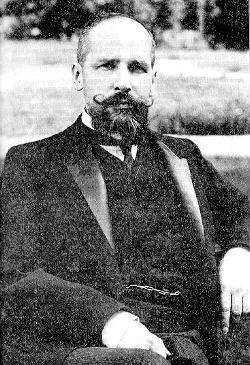
<>1906no09:Tsarist ukaz outlined ambitious new
departures in agrarian reform
[TXT] [VSB,3:803-4
|
McC1:142-4 | GDR]
- 1906oc05: Earlier tsarist state decree "On changes in certain of the limitations imposed on the
rights of rural residents and persons of other previously taxed sosloviia" [Ob otmene nekotorykh ogranichenii v
pravakh sel'skikh obyvatelei i lits drugikh byvshikh podatnykh soslovii] laid the groundwork for this ambitious November ukaz
- The October decree not only opened the new era in peasant reform but represented a long-delayed
finalization of the 1861 serf emancipation [VSB,3:802-3]
- The first year under the October Manifesto and the subsequent Fundamental
Laws seemed to be working more nearly in the interests of established bureaucratic absolutism and
less in the interests of those many activist subjects of tsarist authority whose political activism forced
the Emperor to issue the October Manifesto
- But this final reform
measure to come out of the 1905 Revolutionary period was the greatest
- The new policy was announced according to Article 87 of the Fundamental
Laws which gave the new Prime Minister Stolypin and the ministries authority
to legislate when the Duma was not in session
- The policy was formulated independently from the contentious debate in
the dissolved First Duma, even though the urgency for further peasant reform
was made apparent in that Duma
- Article 87 required that the State Duma eventually
ratify independent bureaucratic measures such as this
- But it was four years before that happened
- In the meantime, peasant political mobilization waned,
and Stolypin entered into the phase of his greatest accomplishments
- 1906no15:Land banks granted money for loans to peasants
\\
*--LOOP on 1905 Revolution
<>1907:1917;
Polish-born member of Russian Marxist socialist political party (SDs)
Felix Dzerzhinskii (1877-1926) was arrested and sent
to Siberian prison and exile for nine years, described in publication of his
Prison Diary and Letters
<>1907:Philippine
Islands | USA sponsored elections to a national legislature
*--This was the second such elected legislature in all of Asia
*--It was the first such in a client state closely supervised by a patron state (USA)
*--USA was inspired by the Progressive Era at its height
<>1907:Moscow
"Religious-Philosophical Society in Honor of Vladimir Solov'ev" formed
- Solov'ev died in 1900 at age 47, ending a
brilliant 26-year career that contributed to the reorientation of
Russian thought, from positivism to various shades of "spiritualism"
- 1901:1903; Saint Petersburg "Religious-Philosophical" meetings were a
prelude to the Moscow group [Florovsky,2:252-8].
Other events also characterized a new "spirit" in Russian high culture =
- 1905:Dmitrii Merezhkovskii, Peter & Alexis (v3
of trilogy "Christ & Anti-Christ")
- 1906:friends published Nikolai Fedorov's "The
Question of Brotherhood..." [Edie,3:16-54]
- 1906:Leo
Tolstoy, "Meaning of the Russian Revolution" [Raeff3:323-57],
then in 1908 The Law of Love and the Law of Violence
- 1906:Nikolai Losskii’s The Intuitive Basis of Knowledge became
first translation into English of a technical work of Russia philosophy [Edie,3:321-42]
- Evgenyi Trubetskoi was a leading figure in the Moscow group and author
later of "The Bolshevist Utopia and the Religious Movement in Russia" [RRS]
- Aleksandr Bogdanov, "Matter as a Thing-in-Itself" [Edie,3:393-404]
- Also see Nikolai Grot [RRS:61-80],
Vasilii Rozanov [91-104], Sergei Bulgakov [135-160],
Viacheslav Ivanov [161-74], Georgii Chulkov [on mystical
anarchism:175-86], Georgii Florovskii (George Florovsky) [225-46], Pavel
Novgorodtsev [247-64]
- Writers Aleksandr Blok and Andrei Belyi were involved in these developments
- The Vekhi group was influenced by this society
\\
*--Florovsky,2:233-83
<>1907:1913; Isle of Capri | Russian émigré author
Maksim Gorky produced some of his greatest works = the novel Mother
[TXT#1 |
TXT#2] and his three-part autobiography
which opened with part one, "My Childhood" [Detstvo] and concluded with, "My Universities" [Moi
universitety, not completed until 1923]
<>1907:French
philosopher Henri Bergson (1859-1941) published Creative Evolution,
an idealist critique of scientific knowledge [CCC2,2:1027-34 |
BMC1:594-6 | BMC4:623-6]
\\
*--"[Bergson] was awarded the Nobel Prize for Literature in 1927. Bergson argued
that the intuition is deeper than the intellect. His Creative Evolution
(1907) and Matter and Memory (1896) attempted to integrate the findings
of biological science with a theory of consciousness. Bergson's work was
considered the main challenge to the mechanistic view of nature. He is sometimes
claimed to have anticipated features of relativity theory
and modern scientific theories of the mind." [Source]
<>1907wi:Elections to Second Duma under way [GDR]
<>1907mr07:1907je03;
Second State Duma opened more than a half year after the First Duma was
dissolved, and it lasted just under three months before the state dissolved it
as well [GDR]
- 1907mr06:Stolypin appeared in contentious session with Duma [VSB,3:785-7 |
“Rech’ v Gosudarstvennoi Dume” (GRV:273-7)]
- 1907mr12:mr15; and again 1907ap17:Duma boldly debated Stolypin's 1906au19:
Courts Martial
- 1907mr19:my16; From the beginning to the end of its existence, the Duma again debated the contentious
agrarian issue| Peasant deputies Zimin and Nechitailo were active participants
- 1907mr20:Duma began its debate on state revenue and expenditures
- 1907ap16:ap20; NSs held their First Conference
- 1907my03:Duma delegates again [EG] complained about police mistreatment
of peasants trying to get in touch with their delegates
- 1907my03:Agrarian Commission received SRs agrarian program, signed by 104 deputies
- Trudoviki and the All-Russian Peasant Union submitted their own program
- There was not enough time left to the Second Duma to consider either at length
- The Trudoviki were near the end of their one-year existence
- The Peasant Union was at the end of his 18-month revolutionary existence
- 1907my10:Stolypin delivered speech to Duma on peasant question with
the famous concluding line, "Those who oppose our state system [...] require great upheavals; we require a
great Russia!" [VSB,3:804-5 | RRC2,2#41]
- 1923je:Slavonic Review#2,4:36-55 | Bernard Pares, "The Second Duma" (an English eyewitness account)
[More Pares]
- Not until the Third Duma did parliamentary politics settle
into a more permanent pattern of relationship with the tsarist state
<>1907my12:London |
Russian SDs at Congress #5 heard Lenin's report on peasantry [VSB,3:808-9]
- Marxism was never strong in its comprehension of peasants, but now
Lenin worked to bring his doctrine in line with Russian economic
realities and revolutionary opportunities
- Many felt he was just importing the agrarian program of the SRs
- Peasant mobilization over the preceding two and one half years
was effectively at its end, but the peasant question was far from settled
- 1907je01:Stolypin asked the Second Duma to expel its SDs. He accused them of plotting
insurrection. Moving ahead on their own one day later, police arrested SDs delegates, and on
the day after that the state dissolved the Second Duma
<>1907je03:Manifesto
dissolving Second Duma [TXT]
[VSB,3:787-8 | McC1:47-8]
- This became known as the Petr Stolypin coup d'état when
the tough Prime Minister imposed a new election law
- 1907se25:oc01; Stolypin handed down new election laws
- He employed Article 87 of the Fundamental Laws which allowed ministerial legislation if the Duma was no
longer in session [GDR:357-95]
- As revolutionary disorder subsided (or should we say "was suppressed") and as the statist-oriented
new election law took effect, the Third Duma met and became the first session of
the Duma to last its full five-year term
- Stolypin's coup marked the end of the political crisis known as the
"First Russian Revolution"
- 1934:Three decades later, as Stalinism began to set down its roots in Soviet Russian life, the
increasingly rightward leaning west European political refugee
Petr Struve wrote memoirs about Russian
liberal activists in the 1905 Revolution [*1934ja:SEER#12,35:366]
- Struve asserted that if at any time in the history of the First or the Second Duma
the liberals had succeeded in forming a cabinet, they would
have had to fight revolutionary maximalists to the death, just as did Stolypin
- Or they would have had to "capitulate pitiably before the triumphant mob"
- One sniffs in this 1934 statement about "the triumphant mob" the anti-democratic
European political atmosphere in the era of Stalin, Hitler and Mussolini
rather than the remarkably democratic 1905-1907 Russian political atmosphere
<>1907je:Hague |
Second International Peace Conference
- 1899:The First Hague Conference [ID]
opened an era of intensifying public mobilization for the promotion of peace
- 1901de10:First Nobel Peace Prize awarded [Wki]
- Major conventions signed at the two Hague peace conferences aimed to strengthen the
possibility of international law [TXT]
- USA in the Progressive Era supported these internationalist conventions, now
that the Spanish-American War [ID] and Panama
adventure [ID] were behind it
- Russia, which had promoted the First Conference, opposed the 1907 conventions. Russia was at this
time engaged in post-Russo-Japanese War rearmament [ID]
- 1914jy29: On the very eve of the outbreak of WW1, the Second International's
Stuttgart Resolution on militarism and International Conflict supported the Hague resolutions [DPH:224-6]
- German feminist and pacifist Bertha von Suttner [Wki ID]
judged the Conference "not a conference about peace, but about the customs of war"
- The weak "enforcement mechanisms" associated with Hague Conventions were replaced after WW1 by World Court
[ID]
\\
*--Saul,2:521-3
*1991:Cooper.Pacifism
*--LOOP on The Second International
<>1907jy30:(13.7.40 Meiji):
Saint Petersburg | Russian-Japanese treaty re. Manchuria, Korea & Mongolia [DIR2:432-4 |
DIR3:473-78]
*--In essence, the treaty divided Manchuria into "North Manchuria"
under Russian authority and "South Manchuria" under Japanese authority
*--Korea was granted fully to Japan (with "most favored nation" status assigned to
Russia). Outer Mongolia was granted to Russia
*--Ernest B. Price, The Russo-Japanese Treaties of 1907-1916 Concerning Manchuria and Mongolia
*--More treaties in Japanese-Russian international relations [DIR2:]
<>1907au18:1919; English-Russian entente
lasted 12 crucial years [E-TXT |
DIR3:467-72]
- This entente divided Iran (Persia) between Russia & England throughout WW1 and into the first post-war years
- Two competing European empires agreed to divide a third party, Persia, into their own spheres of influence
- Russians took the northern sphere, British the southern and eastern
- A central neutral sphere was preserved between the two where they were free to
compete with one another for economic and political advantage
- The unexpected close ties being forged between the two nearly eternal enemies,
Russia and England, froze Germany out of the "Great Game" in AfroAsia
- Working together, the two European imperialist rivals hedged in another ambitious European state,
but also ended the hope that the Iranian Constitutional Revolution might inaugurate a new era of independence
- Iran had struggled to preserve its own Persian spheres of influence
over the previous century, but now it appeared to be fully under European imperialist dominion =
- 1908je:Persian shah deployed his Persian Cossack Brigade, under Russian
command, to bomb the Majlis building, arrest deputies, and close down the
assembly. However, Iranians continued to resist =
- 1909jy:In Tabriz, Esfahan, Rasht and elsewhere, Iranian resistance to the shah
coalesced in a wide-spread constitutional movement which marched from Rasht and Esfahan
to Tehran, deposed the shah, and reestablished the constitution
- The ex-shah went into Russian exile
- Constitutional forces triumphed, but they faced serious difficulties
- Upheavals in the time of Constitutional Revolution and civil war undermined stability and trade
- 1910jy:Persian shah in Russian exile, and with Russian imperial support, landed troops in
Persia in an attempt to overthrow parliamentary rule and regain his throne
- Afghan independence was brought under "protection" of England
- Also at this time Russia and England settled disagreements over
Tibet. The mountainous region Tibet had for 200 years suffered vulnerability in its
relationship to great powers
- Eight years earlier, Lord Curzon, who was then English Viceroy of India, explained the interlocking relationship
of Iran (Persia), Afghanistan,
India and other English imperialist domains. He emphasized the threat
posed by Russia to these territories "which Great Britain regards with good reason as falling within her sphere
of influence" [BNE:185-7]
- But now, eight years later, England sought to placate Russia in anticipation of the need for wide
alliance against Germany, here on the eve of WW1
- In this same year, 1907, English Foreign Office official Sir Eyre
Crowe [ID] reacted to growing German naval power and outlined
one of the first European descriptions of how an "arms race" might be managed and how it might run out of
control
- The sourcebooks P20:55 and PWT2:262-4 emphasize those pages
from Crowe's long report that indicated Germany's yearning for expansion and power
- In contrast, BNE:201-8 presents a far more subtle excerpt that does more justice to Crowe's honest
and intelligent assessment of the world situation]
- This English/Russian entente completed the "Triple Entente" (France,
Russia and England) which isolated Germany and set the European diplomatic stage for alliance among
core "allies" in WW1 [DIR2:426-31 | ORW:147-8 | CCC2,2:620-1]
- We see clearly how energy politics (oil) played a role in two powerful trends of the day =
- The struggles to gain control over Near- and Middle-Eastern petroleum fields
- The coming of WW1 in an era of declining imperialism yet of waxing military-industrial competition for
global dominance, an arms race to construct and power up great war machines, especially oil-age "weapons of
mass destruction" = the petroleum-powered globe-plying battleships and the military
navies arrayed around them
- Great Game was coming home, and it was increasingly
obvious that Russia was the least competent of the big players, now having linked up with her
number-one competitor, England, and having allowed herself to be put in a hostile relation to
her number-one economic trade partner, Germany, contrary to her own interests. Contrary to Russian
interests, yes, but this diplomatic re-alignment was powerfully beneficial to England and France. Look
ahead to the eloquent objection to this trend expressed by high ranking reactionary Russian ministerial
figure, Petr Durnovo [ID]. Use this occasion to free yourself of the presumption
that "reactionary" means "stupid"
- British documents on the origins of the war, 1898-1914 v4
- 1907au18:au24; Stuttgart GRM| Second International passed resolution
against militarism and international conflict, with its essential message embedded in the final two
paragraphs. A later "Manifesto of Extraordinary International Socialist Congress on the International
Situation" repeated those final two paragraphs [B&WW1:57-9; 81-5]
The Europe-wide peace movement intensified
- European imperialist strife and modern European war were fertilized together, and nowhere more
abundantly than in AfroAsia
\\
*2011fa:WiQ:69| Review of David Rose’s The Man Who Drew the Fatal Durand Line
[betweem Afghanistan and India] [E-TXT]
||
*--LOOP on The Second International
*--LOOP on WW1a
<>1907oc15:St.Petersburg
director of the Chief Prison Administration A.M. Maksimovskii assassinated by
Ragozinnikova [VSB,3:809-10]
- 1908:NYT article
[E-TXT]
described assassination, execution of Ragozinnikova, and then the revenge killing of another tsarist official
by Ragozinnikova's brother
- Revolutionary terror abated, but would not cease
- Insider police-administered state terror ("white terror") also lived on =
- A tangled web of conspiracy, propaganda and controversy, implicated the tsarist secret
police (Okhrana or okhranka) in an attempted assassination of
Russian statesman, ex-Finance Minister (and ex-Prime Minister) Sergei Witte
- 1907:1912; Witte wrote his Memoirs, covering
the big moments in his illustrious career
[Excerpts = DIR3:451-60]. Witte was "retired", but obviously not out of the action
\\
*2001de02:Revolutionary Russia#14,2:1-32| Iain Lauchlan, "Security Policing in Late Imperial
Russia" [E-TXT] | Also see his
"The accidental terrorist"| (( A case study in the relationship between the tsarist secret police and
acts of political terror perpetrated by the extreme-right in late Imperial Russia))
<>1907no01:1912je09;
Third State Duma, elected according to the new Stolypin electoral law, lasted its full term, four and a half years
- The First and Second Dumas were less legislatures than revolutionary tribunals
- These obstreperous Dumas were overpowered by familiar autocratic statist forces
- With the Third State Duma, the three-year-long 1905 Revolution was at an end
- Now we ask, did the full-term Third State Duma accomplish anything =
- 1907no16:Stolypin defended his "get-tough" program before the Third Duma
[VSB,3:788-9 | Full Russian text GDR:398-402]
- 1908de08:Prime Minister Petr Stolypin's "wager on the strong" speech delivered to Third Duma and debated [VSB,3:805-7]
Stolypin pushed for serious peasant reform
- A notable accomplishment of the Third Duma was the first vigorous and effective official Russian primary education program
- 1908mr11:Evgraf Petrovich Kovalevskii introduced education bill [VSB,3:817]
- But still, restrictions on Jews were maintained [VSB:818]
- 1910:1911; Aleksandr Guchkov was elected president of the Third Duma
- About the importance of the Duma's new budgetary authority in the growth of parliamentary
power [WRH3:509-10 | *1912:RRe#1:14-48]
- About political parties in the mature State Duma period [WRH3:511-21]
- The "revolutionary era" of political party formation seemed over as groups got down to work within the Duma structure
- The Third Duma was a political environment within which the KDs, Octobrists and
other moderate political parties thrived
- However, the older, large and more radical groups, the SRs and SDs, were marginalized
- They continued to organize themselves in anticipation of a future revolutionary situation
- The obdurate revolutionary quality of SR and SD programs was not just a peculiarity of Russian experience =
- A darkening political mood influenced the evolution of political parties throughout Europe on the eve of WW1
- The Third State Duma was an opportunity for a new sort of Russian politics. It was
Stolypin's finest hour
- Aleksandr Izvolskii, Recollections of a Foreign Minister
- Vladimir Gurko, Features and Figures of the Past: Government and Opinion in the Reign of Nicholas II
- Vladimir Kokovtsov, Out of My Past: The Memoirs of Count Kokovtsov, Russian
Minister of Finance, 1904-1914, Chairman of the Council of Ministers, 1911-1914
- The Fourth Duma, elected in 1912, was to be more nearly a part of the history of WW1 than it was of Russian democracy, so
this Third Duma is the historical laboratory for testing Russian "readiness" for parliamentary democracy in a strong-state environment
\\
*--Jeffrey Brooks, When Russia Learned to Read: Literacy and Popular Literature, 1861-1917
*--Ben Eklof, Russian Peasant Schools
*--William H. Johnson, Russia's Educational Heritage
*--Geoffrey A. Hosking, The Russian Constitutional Experiment: Government and Duma, 1907-1914
*--R. B. McKean, The Russian Constitutional Monarchy, 1907-1917
*--Ben-Cion Pinchuk, The Octobrists in the Third Duma, 1907-1912
*--R. W. Thurston, "Police and People in Moscow, 1906-1914" | *1980jy:RRe#39:320-38
*--N. B. Weissman, Reform in Tsarist Russia: The State Bureaucracy and Local Government, 1900-1914
<>1908:Root-Takahira agreements
<>1908:USA Federal Bureau of Investigation [FBI] organized. The struggle
against crime was also a feature of the Progressive Era
<>1908jy23:Turkey (Ottoman Empire) |
"Young Turks", led by Enver Pasha [W.ID] (1881-1922)
and Mustafa Kemal (1880-1938), launched nationalist/reformist movement against old Ottoman elites
- These Young Turks aimed to modernize Turkey in order better to resist foreign manipulation
- The movement was less Ottoman and imperialist than it was Turkish nationalist,
a distinctly secular subset of a wider Islamic "renascence" in this era
- And the "diplomatic community" in The West found it a menace
- West Europeans had their own plans for the Ottoman Empire, and seemed to feel that indigenous
Turkish reformers -- and certainly Russian interests -- were negligible considerations
- Soon, however, the German Empire, via Deutsche Bank and Krupp Manufacturing, was supplying
the tottering Ottoman Empire with investment capital and heavy modern industrial-grade weaponry, including naval forces.
This challenged English and French interests as much as did indigenous Turkish nationalist rebels
\\
*--Meyer.TURKS
*--Rogan.FALL ch#1="A Revolution and Three Wars, 1908-1913":1-28
*2010: Sean McMeekin, The Berlin-Baghdad Express: The Ottoman Empire and Germany's Bid for World Power
*1959:BHR|>DeNovo on USA railroad project in Turkey
[E-TXT]
*2007je22:Geopolitics-Geoeconomics F. William Engdahl, "Oil and the Origins of the 'War to Make the World Safe
for Democracy' " [E-TXT]
*1917:P.PA,Lippencott|>Jastrow,Morris|_The War and the Bagdad Rail Way: The Story of Asia Minor and Its Relation to the Present Conflict
[E-TXT:82-121]
*1923:NYC,Macmillan|>Earle,Edward Mead|_Turkey, the great powers, and the Bagdad Railway: A study in imperialism
*--LOOP on WW1a
<>1908:All-Russian Women's Congress| Anna Kalmanovich speech [BRW:321-4]
<>1908au:London | Russian SRs held
First General Party Conference under leadership of Viktor Chernov [VSB,3:810-11]
<>1908se:Austria annexed
Yugoslavian territories of Bosnia and
Herzegovina [W]
- 1908oc18(NS): French cartoon portrayed the "Bosnian Crisis" [VIEW]
NB! the role of Bulgaria in harmony with Austria and vs-Turkey
- Russia imperial attention was called back to the Balkans nearly 30 years after chastisement in
Berlin [ID]
- The Bosnian Crisis had significant impact on Russian Imperial governance
[W-ID]
- The "Bosnian Crisis" lasted a half-year, into 1909su
- The Great Game was about to make its final contribution to the catastrophe of World War One
\\
*--Wki ID
*--LOOP on WW1a
<>1908no:Russian poet Aleksandr Blok seemed to welcome a
revolutionary future, though with dread, as he anticipated the destruction of the intelligentsia:
"The People & the Intelligentsia" [Raeff3:359-63]
*--Blok took on other interpretive issues in "Catiline: A Page from the History of World Revolution" [RRS:291-320]
*--Blok never let go of his revolutionary fascination and dread
*--Andrei Belyi, another Symbolist poet, wrote on "Revolution and
Culture" [RRS:271-90] Some of his essays have been translated
\\
*1979:1980; ENG.OX| Avril Pyman, The life of Aleksandr Blok| v1= The distant thunder, 1880-1908|
v2= The release of harmony, 1908-1921 (rich in long translated citations from original sources)
<>1908de29:English financier Lord Furness
(Christopher Furness [W-ID] )
delivered a speech excoriating wage-labor unions and extolling virtues of controlling markets by combination of
large corporations, monopolies, economic cartels, or, here, "amalgamations"
[CCC2,2:795f | CCC3,2:870-6]
*--Three years earlier John P. Davis warned of overweening power of big business = Corporations: A
Study of the Origin and Development of Great Business Combinations and of their Relation to the Authority
of the State [E-TXT]
\\
*--LOOP on WW1a
*--LOOP on "finance"
<>1909:Austrian psychoanalyst Sigmund
Freud delivered lectures in USA on origin and development of psychoanalysis [CCC2,2:1061-83]
<>1909:Russian intellectuals published Vekhi [Signposts; Landmarks]
a collection of essays critical of the Russian intelligentsia [ID], especially its revolutionary radicalism
- New trends in Russian thought [ID] reflected in this anthology = Nikolai Berdiaev,
Sergei Bulgakov, Mikhail Gershenzon, Izgoev, Kistiakovskii, Struve,& Frank [VSB,3:812-14]
- Fellow
intelligenty
protested
- Struve, "The Intelligentsia and the National Face" [RRS:265-70]
- 1909ja30:Tolstoy wrote "A Letter to a Revolutionary" [VSB,3:816-17]
- 1909:Paris |Dmitrii Merezhkovskii, Zinaida Gippius, and D. Filosofov published Tsar i revoliutsiia
- 1917:Mikhail Nesterov portrait of Pavel Florenskii and Nikolai
Bulgakov, pix in Olga's Gallery
<>1909:Lenin published Materialism &
Empirio-Criticism [Edie,3:410-36]
*--Prominent Russian philosopher Liubov Akselrod [pseudonym "Ortodoks"], a powerful woman’s voice among
Russian Marxists, reviewed Lenin’s essay [Edie,3:457-63]
*--Still an émigré, Lenin had to content himself with philosophical ramblings in isolation from actual politics
<>1909fe12:USA NYC | The
National Association for the Advancement of Colored People [NAACP] formed
*--[W] describes how the group was "formed
by a group of black and white citizens committed to helping to right social injustices"
*--FOUNDERS: Mary White Ovington, Dr. Henry Moscowitz, Oswald Garrison
Villiard, William English Walling, Ida Wells-Barnett and W.E.B. DuBois led the
"Call" to renew the struggle for civil and political liberty
*--The Progressive Era put attention to racial issues
<>1909+: Cubism introduced in west European painting, with
Pablo Picasso playing a leading role
<>1909fe20:Italian newspaper Le Figaro
featured "Initial Manifesto of Futurism" on its front page
- Futurism was a movement that rejected 19th-century
esthetics [CWC:6-15]
- The author was the poet F. T. Marinetti, a man of great inherited wealth
=
We affirm that the world's magnificence has been enriched by a new
beauty: the beauty of speed! A racing car whose hood is adorned with great
pipes, like serpents of explosive breath -- a roaring car that seems to ride
on grapeshot is more beautiful than the Victory of Samothrace. We want to
hymn the man at the wheel, who hurls the lance of his spirit across the
Earth, along the circle of its orbit.
- Marinetti drove a 1908 four-door, four-cylinder Fiat Brevetti convertible, top speed, forty miles
an hour [pix]
- Marinetti wrote,
We will glorify war -- the only true hygiene of the world -- militarism, patriotism, the destructive gesture of
the anarchist, the beautiful Ideas which kill, and the scorn of woman
- On the question of WW1, and chauvinistic militarism in general [ID], the
Dada [ID] movement moved in a direction opposite to the Futurists
- These movements opened an epoch of extreme innovation in European fine arts
<>1909fe26(NS):London| International Declaration concerning the Laws
of Naval War [E-TXT]
*--Many nations signed, but not one state ratified this effort at transnational regulation of warfare
*--Naval blockade was a widely used tactic in WW1, but England was the most effective practicioner
<>1909jy14:1917jy; German Kaiser Wilhelm II
appointed Theobald Bethmann-Hollweg as Chancellor
*--As successor to the high post held earlier by Otto von Bismarck [LOOP],
Bethmann-Hollweg guided the German Empire into WW1 and remained in office until near
the end of "The Great War"
\\
*--W#1 | Wki
*--Moyer.VICTORY:50-54
<>1909jy25:English Channel first crossed by air|
French pilot Louis Blériot described feat [Eye:422-3]
<>1909au03:St.Petersburg| First of four sessions of the Special Council for the
distribution of war budget between army and navy, chaired by Petr Stolypin
\\
*--Many historians see this Council as a sign of positive improvement in Russian preparedness for modern war, but
Russian historian K.F. Shatsillo sees it very differently ["The Roots of the Armament Crisis in the
Russian Army
at the Start of World War I", WWI&XXc:206-10] = "As early as
1909/1910, the decisions of the Council planted the roots of the armaments crisis faced by [Russian] ground forces
at the beginning of World War I" [clumsy English translation adjusted by SAC editor]
*--Other historians emphasize tensions mounting in the relationship of foreign and domestic politics, at this time
particularly connected with reckless Foreign Ministry action with respect to Austria, Bosnia/Herzegovina and the
Turkish Straits [ID]. When Prime Minister Stolypin inserted himself into the business usually
reserved for Imperial insider-elite foreign-policy and military establishments, he demonstrated yet another
positive feature of his tough-minded but reformist policies
[E-TXT of
Melissa Bokovoi review of McDonald.UNITED praises McDonald's strong
interpretation of the relationship of Russian domestic and foreign politics in the years after 1905 and before WW1] =
- Foreign policy was the traditional preserve of the Emperor, his Foreign Minister, and a small clutch of
royal insider elites
- McDonald recounts the intricate play of Nicholas's informal and official
advisors in the "great game" in Asia from 1900 to 1905 [ID]
- Eying endless spoils, both of money and of prestige, the various factions
[vied with one another] =
- Informal advisors whom the author calls "Bezobrazov and Co."
- Minister of Finance, Sergei Witte, who came to view the Far East as his
private domain [?!], and
- Nicholas' other ministers
- All fought for the tsar's confidence. By autumn 1903, decisions had been
made which would lead Russia into war with Japan, much to the consternation
of Witte whose advice the tsar discarded for that of the informal advisors [ID]
- After the Russo-Japanese War and the 1905 Russian Revolution which followed directly,
the newly structured Council of Ministers [Sovet Ministrov, SoM] and its chairmen, Witte to
some degree and with limited success, but especially Petr Stolypin [StpP], "increasingly brought
foreign policy under [civilian governmental] review and control"
- As the Third Duma and "civil society" found their voices,
McDonald contends, "they too would play a part, even if it was more passive, in
the foreign policy arena"
- In his last years as Prime Minister, before he was assassinated, StpP insisted on "reviewing foreign
policy because of its link with domestic tranquility", as everyone knew who thought about the leadup to the 1905
Revolution
- "Surveying the domestic scene, Stolypin reined-in Aleksandr Izvol'skii's
[ambitious but uncharacteristically adventurous] plans for the Balkans and Straits"
negotiated in secret with Austria
- McDonald
convincingly argues that Stolypin's forays into this traditional province of the
tsar and the insiders around him was an attempt [...] "to integrate foreign
policy into the council's [SoM] area of responsibility"
- "Not surprisingly, conservatives [IE=royal court insider elites jealous of
their "endless spoils, both of money and of prestige"] decried Stolypin's
interference and invoked images of Stolypin as 'grand vizier' and pleaded for
Nicholas to control his ambitious advisor"
- In the years after Stolypin's assassination in 1911, McDonald asserts
that "the government fell into the same type of factional bickering and jostling
for position that had led Russia to war in 1904"
- Under new chairmen, first the hesitant and professional bureaucrat, Kokovtsev, and then
the ineffectual and tottering A. I. Guchkov, the various silenced factions within the Council,
the Duma, and society found themselves once again able to to pressure Nicholas into
relying less on his formal officials and more on informal channels and public
opinion
- McDonald concludes that the unfortunate move away from "the course that Stolypin had meticulously followed after 1906"
gave rise to the series of crises that led to war. "Once domestic policy becomes divorced from foreign policy, trouble
inevitably follows"
- But at this point McDonald drops the ball and leaves only a sketch of
how Russia was after all drawn into WW1a
- And he does not carry his story into the hyper-chaos among Russian
Imperial elites during WW1b
- Thus he misses an opportunity to show the important similarities of
superannuated old-regime hold-over monarchical elites in Russia and among
other WW1 combatants, most notably Austro-Hungary
<>1909oc12:Japanese Prince Ito killed by
Korean terrorist, causing Japan to impose an imperialist dictatorship in Korea
- China and Japan in conflict this year over Manchuria
- Old Russian interests still relevant to this question, as were the interests of the new
player on the block, USA
- USA alarmed, proposed neutralization of the entire Manchurian
railroad network, but Japan and Russia rejected this idea
- USA Secretary of State-to-be, Philander C. Knox
[W-ID] received letter from Theodore Roosevelt
warning about Japan [F/Russia/ and /mainland/ in E-TXT]
<>1910:English journalist and pundit
Norman Angell [Wki], in The Great Illusion
[E-TXT | Excerpt CCC3,2:1277-96]
disputed the possibility that modern warfare could in any way bring benefit to a nation
- In Angell's view, the modern era was a creative and productive era, and war threatened all that.
War was the opposite of modern liberal market economics
- Angell led a life that stretched over more than 90 years. He was a sort of epitome of the
20th-century "citizen of the world"
- He engaged with the great global changes, 1880s-1950s, including the perception that capitalist finances
were at the heart of all the big action
- He thus put a lot of energy into explaining "money" to the public, particularly to children
[E-TXT]
- LOOP on "finance"
- In this same year, French intellectual Charles Péguy published Notre Jeunesse
- Here he exposed what he thought was a two-pronged attack on his beloved French Republic,
one from the left and the other from the right [CCC3,2:1045-66]
- Born of peasant parents, Péguy refused in WW1 to accept a commission as
officer in the French army
- He fought in the ranks with his fellow citizens, and he died fighting at the
Battle of the Marne
- An Italian Nationalist Association founder declared,
Just as socialism teaches the proletariat the value of class struggle, so we must teach Italy
the value of international struggle. But international struggle is war? Well, then, let there
be war! And nationalism will arouse the will for a victorious war, ... the only way to
national redemption" [P20:3]
- French socialist leader Jean Jaurès published
L'Armée nouvelle ["A New Army", excerpted in CCC2,2:1107-16 | CCC3,2:1067-76]
- Jaurès took a position in favor of democratic control and universal participation of
the whole adult population in that governmental institution called "the military"
- In his view, a thoroughgoing popular military, not for offensive purposes but solely for authentic national defense, would
promote diplomatic, peaceful solutions of international conflict, would promote international arbitration.
If a whole population is prepared to defend itself, it will not have to do so
- In other words, he opposed "professional armies" and insider-elite
foreign policy establishments
- He opposed what he called capitalist-imperialist and aggressive militarism
- All this in the name of democratic and civilian control over the institutions of national defense
- The work was written in 1907 (seven years before WW1 broke out), but could not be published until 1910
(four years before WW1 and the assassination of Jaurès)
- 1916 (2 years into WW1): C.G. Coulton translated excerpts from the French original and summarized the
remainder under the English title Democracy & Military Service
[E-TXT].
Coulton's "Editorial Note" provides a useful summary of the whole work
[E-TXT]
- The sorrowful fate of Jaurès made him something of a socialist martyr
- In these pre-WW1 years, Henri Massis and Alfred de Tarde published The Young People of Today
- They attacked the liberalism and positivism [ID] of the older
generation
- They praised the patriotic, religious, and heroic future of French youth
- They promised the following =
Nothing can be more useful for the renewal of the fatherland than a generation that is
athletic, realistic, un-ideological, virtuous, and fit for economic struggles,
since nothing can better insure the revitalization and the health of the race [CWC:16-35]
- Militarism and the peace movement flourished together
<>1910:Russian political activist and
theorist Moisei Ostrogorskii published Democracy and the Party System
in the United States: A Study in Extra-Constitutional Government,
based on a vast earlier book, Democracy and the Organization of Political
Parties [TXT]
- In the late 19th century, Ostrogorskii lived in the USA and made a
serious study of its constitutional politics
- He was much influenced by the
critical atmosphere of the US Progressive Era
- By 1910 Ostrogorskii had also experienced Russian party politics
- He had been an active member of the KDs in the
First Russian Duma [ID]
- And he had been deeply disappointed by that experience
- On-the-scene study of politics in England and USA, plus direct
experience of Russian politics in the 1905 Revolution, made him skeptical
about political parties
- Like so many Europeans of the day, he was now unsure
of the received tradition of 19th-century optimism and liberalism
- He described a tendency toward oligarchic [minoritarian elitist] manipulation
of the larger party membership
- He called such parties "cadre parties"
- "Cadre" came to mean a designated and trained managerial elite
- "Cadre party" meant designated and trained political managerial elite
- Contradictions vexed liberalism from the outset [ID]
- Now in the early 20th century it suffered also from a degree of internal corruption of central principles
\\
*1976:Political Studies##23,4 on Ostrogorskii's political ideas
*--LOOP on WW1a
<>1910:Petersburg liberal
intelligentsia [ID] defended their cause against the attacks launched the year before by
the Vekhi group
- Pavel Miliukov, Maksim
Kovalevskii, Ivan Petrunkevich, Konstantin Arsen'ev, Mikhail
Tugan-Baranovskii, and others contributed chapters to Intelligentsiia v Rossii: Sbornik statei
[Excerpts = VSB,3:814-16]
- 1991:In the last year of the Soviet Union, Vekhi and Intelligentsia were republished together
<>1910:Russian Bolshevik branch of
the SDs -- SDs(b) -- drew up pessimistic platform. They anticipated no Marxist
revolution soon [VSB,3:811-12]
<>1910:Russian photographer Sergei Mikhailovich Prokudin-Gorskii
at the height of his career. He pioneered color photography [TXT]
*1912:Selo Kolchedanskoe (SE from Ekaterinburg, eastern slopes of Ural Mts.), founded 1673 as frontier
fortress [color pix by Prokudin-Gorskii]
<>1910ja18:England, Liverpool | Suffragette
[a woman fighting for the right to vote] Lady Constance Lytton, disguised as a
laboring-class woman, described how police force fed her in the Walton Gaol [jail] [Eye:423-5]
- Women's issues were not limited to the vote = *1901:Maria Pokrovskaia
offered a woman’s perspective on prostitution and alcoholism [BRW:359-62]
and the question “Should Men Be Chaste?” [BRW:135-8]
- 1910ap21:Russian Prostitutes'Petition [BRW:138-40]
- 1910:Ekaterina Gardner’s speech on abolishing brothels [BRW:362-6]
- 1910:Russian woman Aleksandra Dementeva spoke on Prostitution as a Profession [BRW:199-205]
<>1910fe08:USA Secretary of State
Philander Knox memo to the Russian state
\\
*--Zabriskie
*1946au:The Far Eastern Quarterly#5,4:461-463 [E-TXT
of Albert Parry's informative review of Zabriskie]
<>1910je14:Russian Third Duma passed complicated Stolypin land law,
four years after the initial tsarist ukaz [VSB,3:807-8]
- Stolypin Land Law sought to allow peasant families to claim farming land as their own that had been traditionally
subject to periodic redistribution within the village assembly [mirskoi skhod] or peasant commune
- Later these scattered holdings could be consolidated into single farmsteads
- The technical and social complexity of consolidation was never fully resolved
- These reforms also promoted peasant migration to the new lands of Siberia, Central-Asia, and the piedmont of
the northern Caucasus Mountains
- Costs and other passport difficulties associated with migration to Siberia via the Trans-Siberian Railroad
were eased for pioneer-minded peasants in European Russia [TXT]
- Witte's confidence in railroads, central
to his system introduced two decades earlier, was being confirmed
- Serious agrarian reform preceded Stolypin [GO 1649:Moscow |
1797mr24 | 1837:1841]. The
Emancipation of the serfs in 1861 was the single most famous event. Now
the state returned to the countryside to complete the job only started in the 19th century
- Andrei Koefoed, My Share in the Stolypin Agrarian Reforms
- Old "Russian hand" among English pundits,
Donald Mackenzie Wallace offered a few "whiggish" remarks on the
State Duma and Stolypin in the 1912 edition of his famous book
Russia [VSB,3:790]
- The Stolypin reforms may be seen as a belated effort to put the various
modernizing reform measures of the previous century on a more solid basis
- Having worked on the upper stories of this new tsarist structure for over 100 years, the imperial
state now got serious about work on the foundations and first floors
- Too little, too late?
- These reforms may also be seen as part of a conceptual development in macro-economic thought
in Europe since the time of Adam Smith [ID]
- Teodor Shanin has argued [Roots of Otherness,2:4-7] that
Stolypin represents "the second amendment" to classical economic theory, in which
the state takes charge of social relations and the economy in the interests of the state,
in which the state follows a failed peasant revolution with a "revolution from above", a
state revolution designed to transform peasant life and guarantee the
strength and security of the state
- Friedrich List [ID] represents what Shanin
calls "the first amendment"
- Peasant life at the turn of the 20th
century was difficult. Everyday life in the Russian village seemed doomed by glacial changes associated with
economic "modernization" around the whole globe. Those who struggled to preserve village traditions, or to
build a future based on recapturing them, could be "conservatives" [EG],
could be "revolutionaries" [EG#1 |EG#2],
or could be cultural idealists, reactionary atavists or just plain curmudgeons. Consider
this idealized peasant market scene painted by Boris Kustodiev
- 1911:Piatnitskii Folk ensemble formed [ID]. "Folk art"
and "pop-art" flourished together, but were not the same thing
- Everywhere in the world, the forces of industrial modernization and/or imperialist intervention into
traditional village life were eradicating ancient rural ways. One of the last great theoretical efforts to defend the
vitality and survivability of village life was the Russian theorist Aleksandr Chaianov [ID]
(Remember Howells, Weber and Veblen)
- 1909ap19:Law on trans-Ural settlement encouraged villagers to pack off
to the Siberian frontier = "Go east, young man" [VSB,3:818]
- In the waning years of the Russian Empire the Stolypin reforms aimed to
transform the institutional foundations of Russian village everyday life. The largest socio-economic
objective was to convert villagers into farmers and to find a way to accommodate those who were willing
to become Siberian settlers to get this done [pix of peasant pioneers
at rail station]. Promotion of rural prosperity via pioneer settlement to open lands put Russia in line with earlier trends
of US history [ID] which seemed to encourage the hearty "yeoman farmer". The future of
rural life did not seem to hold the same promise as the past. Still, a certain number of
Russian farmers prospered
- 1910se:Stolypin returned from a tour of peasant settlement in Siberia and reported
to Nicholas II. He had earlier expressed the concern that "the democracy of Siberia will crush us". His
meaning of democracy was largely social, not political/institutional. He meant to say that a "peasant sea"
might wash over complex hierarchical Russia, but he was not frightened because he felt industrialization
would check that possibility. Now he reported that
after a fearful convulsion, Russia undoubtedly is going through a
powerful economic and moral upsurge, to which also the harvest of the
last two years contributes strongly. Siberia is growing fabulously; in
the waterless steppes which two years ago were regarded as unfit for
settlement, during the last few months there have grown up not only
villages but almost cities. And the mixed current of rich and poor,
strong and weak, registered and irregular migrants bursting through from
Russia into Siberia is in general a wonderful and powerful colonizational
element. I would add, an element that is firmly monarchist, with a
right, pure, Russian outlook.
- He went on to express this cautious excitement =
All this and much else -- these are urgent and immediate questions.
Otherwise, in an unconscious and formless manner will be created an
enormous, rudely democratic country, which soon will throttle European
Russia." In other words, his reforms were working, perhaps too well.
Thus measures had to be taken to make sure they did not tumble out of
state control. The very psychology of the people had changed.
Among the peasants already there have appeared apostles of land
settlement and agricultural improvements. I saw members of the First
Duma from the peasant-revolutionaries
[ID] who are now passionate homesteaders [khutoriane] and
devotees of order. And how right you are, Your Majesty, how rightly you
fathomed what is going on in the soul of the people, when you write that
the fundamental questions for the government are land settlement and
migration. One must apply enormous forces to these two problems and not
let them languish.
- 1912jy05:Another law on trans-Ural settlement built on apparent
successes [VSB,3:889]
- Here are some illustrations of traditional rural
ways in Russia =
- 1912:Russian Peasant women appealed for divorce and described abuse of
wives [BRW:102-107]
- Everyday life illustrated by photos =
[pix]
[pix]
[pix]
[pix]
[pix]
[pix]
[pix]
[pix]
[pix]
[pix]
[pix]
- Stolypin had little interest in protecting "traditional rural ways"
- And what of those in Russia and elsewhere who were squeezed off the land and into the ranks
of the burgeoning new class, wage-laborers?
\\
*--Corinne Gaudin, Ruling Peasants: Village and State in Late Imperial Russia
*--Robinson, ch11 and ch12
*--David A. J. Macey, Government and Peasant in Russia, 1861-1906: The Prehistory of the Stolypin Reforms
*--D. W. Treadgold, The Great Siberian Migration: Government and Peasant in Resettlement from Emancipation to the First World War
*--George L. Yaney, The Urge to Mobilize: Agrarian Reform in Russia, 1861-1930
*--A. V. Zenkovsky, Stolypin: Russia's last Great Reformer
*--Georgii A. Pavlovsky, Agricultural Russia on the Eve of Revolution
*--Vladimir P. Timoshenko, Agricultural Russia and the Wheat Problem
*--George Tokmakoff, P. A. Stolypin and the Third Duma
*1977se:SlR#36:377-98 | J. Y. Simms, "The Crisis in Russian Agriculture at the
End of the 19th Century: A Different View"
*--R. Hennessy, The Agrarian Question in Russia 1905-1917:The Inception of
the Stolypin Reform. Giessen:1977
*--Mary Shaeffer Conroy, Petr Arkadevich Stolypin: Practical Politics in Late
Tsarist Russia. Boulder:1976
<>1910jy07 (4.7.43 Meiji): Petersburg |
Russian-Japanese treaty (1912:and 1916:other treaties) [DIR2:434-9]
<>1910au08 (NS au22):Japan
annexed Korea. Tension between
Japan and
China over Manchuria
\\
*--Peter S. H. Tang, Russian and Soviet Policy in Manchuria and Outer
Mongolia, 1911-1931
<>1910no07:Leo Tolstoy
died, ending a career of national and international cultural and "spiritual"
influence that spanned about a half century
*--Vladimir Chertkov's memoir on the last days of Tolstoy [TXT]
<>1910no07:1920no;
Ten years of Mexican Revolution overlapped the
years of WW1
- 1911wi: Political crisis magnified by popular uprisings
- In the south, Emiliano Zapata
- In the north, Francisco "Pancho" Villa (originally named Doroteo Arango) and Pascual Orozco
- 1911my:Porfirio Díaz ousted after 35 years in power and exiled in France
- 1911oc:1913fe; Francisco Madero elected president
- 1913fe27:President Madero assassinated
- 1913fe:1914su; Victoriano Huerta, leader of the uprising against Madero, assumed the presidency,
but support from USA business leaders was not enough to secure his power
- 1913:Venustiano Carranza created an alliance of Northerners under the Constitutionalist banner
to struggle against Huerta
- 1914au20: With opposition from Villa, Carranza, the most
civilian-oriented among revolutionary leaders, declared self president
- 1914oc10-no09; Convention of Aguascalientes created flimsy alliance between revolutionary leaders
- 1915ap:Battle of Celaya| Carranza's Constitutionalist Army defeated Pancho Villa's forces
- 1915:Carranza consolidated his position as president of Mexico
- 1916mr14:1917fe07; USA sent troops into Mexico after Villa raided a USA border outpost in search of supplies.
US troops failed to locate Villa and his forces [Wki]
- 1917:Mexican Constitution enacted
- 1919ap10:Emiliano Zapata lured into false peace meeting and assassinated
- 1920my21:Carranza, whose popularity plummeted after the Zapata
assassination, was killed as he attempted to flee Mexico City
- 1920no:1924; Álvaro Obregón, who had been for years an active competitor for power among revolutionary
military leaders, was elected by a large majority to the presidency of revolutionary Mexico
- His administration engagged in moderate land reform measures and active support of wage-labor unions
- 1928: After running again successfully for the presidency of
Mexico, but before he could take office,
a Catholic zealot assassinated the forcefully secularist Obregón
\\
*--W#1
*--Wki
<>1911:English labor
activist and public intellectual L.T. Hobhouse defended liberalism in its modern
evolution toward welfare legislation, Liberalism [CCS,1:803-24]
- Hobhouse continued the tradition of Thomas Hill Green’s brand of English liberalism
- The Hobhouse variety of 20th-century liberalism devoted attention to the good of the whole community
as well as to individual liberty and democratic government
- Hobhouse added three vital policy concerns = health, education and welfare
- These three new concerns reflected the growing need to acknowledge and accommodate the rise of
wage-labor which was quickly becoming the majority of the population within
industrializing bodies politic [PWT2:176-9]
- The new liberalism grew out of what SAC calls the 2nd era of the European
and world revolution [ID]
<>1911:German Social Democratic Party activist
Robert Michels became pessimistic about prospects for
democracy in modern industrial societies and wrote critically about political parties,
A Sociological Study of the Oligarchical Tendencies of Modern Democracy
[CCS:507-31 | CCS,1:7 897-921]
\\
*--LOOP on WW1a
<>1911:USA abrogated
1832:treaty of Navigation and Commerce with Russia, in part because of
Russian treatment of Jews, but also in connection with growing global diplomatic
and economic competition between Russia and USA
- Powerful US banker and associate of the Harriman railroad
companies, German-born Jacob Schiff [ID], played
a role, as did the USA diplomat and Progressive Party activist, German-born Oscar
Straus [ID]. See Straus'The American spirit (1913), especially the section on Russia and America
- Jewish emigration to USA was fast making it a rival to
Russia in the size of its Jewish population
- Many Jewish emigrants from the Russian Empire in the late 19th and early 20th centuries came to USA
- Rose Cohen, Out of the shadow: A Russian Jewish girlhood on the Lower East Side [original
publication in 1918]
- Joseph Boyarsky, The life and suffering of the Jew in Russia; a historical review of Russia's
advancement beginning with the year 987 A.D. to the close of the nineteenth century; a description of the
special laws enacted against the Jews, and reasons thereof (Los Angeles, 1912)
- 1992:Yelena Khanga published her family’s unusual émigré experience
in USA, Soul to Soul: A Black Russian American Family,1865-1992
- The rapid growth of the Jewish population in USA can be compared with the Russian
experience in the 1770s
- This demographic fact helps explain growing US sensitivity to the problems of anti-Semitism, at
least helps explain sensitivity to the problems of anti-semitism in foreign or competing nations
- Quite aside from their ethnic heritage, banker Jacob Schiff had a deep interest in Japan, and Oscar Straus had an interest in the Turkish Ottoman Empire
\\
*--The Russian Empire issued forth many different emigrant peoples who chose north America as their new home [Thomas M. Prymak,
Gathering a Heritage: Ukrainian, Slavonic, and Ethnic Canada and the USA, a study of how these Slavic emigrants influenced
the development of ethnic studies in north America]
*--Tony Michels, A_Fire in Their Hearts: Yiddish Socialists in
New York|| Many Jews who migrated to USA came from the Russian imperial Pale of Settlement in
Ukraine and Poland
- Many of them thought of Russian culture as the model of modern, this-worldly spiritual greatness
- What the Jewish intelligentsia meant by Russian culture largely meant the progressive traditions of the Russian radical
intelligentsia [ID]
- They set about creating a political movement in the “Yiddish” language, a German-based language often written in
the Hebrew alphabet
- Most middle and eastern European Jews in the 19th century spoke Yiddish
- The movement formed up political parties and published a significant periodical literature
- These politically active intellectuals were not content to concentrate only on anti-semitism and injustice in
Russia; they saw them in USA as well
- By the early 21st century, Yiddish progressivism had disappeared in USA and
in Europe
- And the Yiddish language survived mainly as a significant enrichment of slang expression in English and other European tongues
*--Saul,2:233-57, 292-6, 396-401, 474-7, 523-7, 567-9, 582-4
*--Steven Cassedy, To the Other Shore: The Russian Jewish Intellectuals Who Came to America (1997)
<>1911my:1911de;
Persian government hired US businessman W. Morgan Shuster [ID]
treasurer general in an effort to reform national finances
- Shuster got into big trouble when he sought to collect taxes from powerful officials who were Russian protégés
- He dispatched a tax department police force into the Russian zone
- The Russians came to the support of their protégés
- 1911de20:Persian Majlis (parliament) unanimously refused a Russian ultimatum demanding Shuster's dismissal
- Russian troops, already in the country, moved to occupy Tehran
- Native Bakhtiari chiefs and their troops surrounded the Majlis building, forced acceptance of
the Russian ultimatum, and shut down the assembly, once again suspending the constitution
- Bakhtiari efforts prevented Russian occupation of the capital but momentarily terminated the Majlis
- 1911:1921; For a decade, through WW1 and its immediate aftermath, Bakhtiari chiefs
and other powerful notables governed Persia
- 1914:1918; Throughout WW1, Russian, British, and Ottoman Turkish troops occupied Persia
- Shuster returned to the United States and wrote The Strangling of Persia, a
scathing indictment of Russian and British meddling in Persian affairs
- Shuster decried the negative influence on Persian development exercised by the Great Powers
- He concluded that "it was obvious that the people of Persia deserve much better than what
they are getting, that they wanted us to succeed, but it was the British and the Russians who were determined
not to let us succeed"
- Iranian political modernization was delayed decades
<>1911my09:Serbia, Beograd | A secret,
nationalistic, paramilitary political organization, "Union or Death"
[Black Hand (ID)], composed their
"Constitution" [TXT]
*--They sought to wrest from Austro-Hungary AND Ottoman Turkish control
all territories they considered part of the Yugoslav "national" historical heritage
<>1911my21: At the extreme western edge of
AfroAsia [ID] on the Atlantic seaboard, the Second Moroccan Crisis [Agadir Crisis] shook European tranquility
- It was six years since the First Moroccan Crisis [ID]
- Now France invaded Morocco with a considerable force
- Germany answered quickly by dispatching a gunboat to the Atlantic coastal port Agadir,
in support of its ally, the sultan of Morocco
- English and (mild) Russian protest (against Germany, not against France) caused Germany to back down
- 1911:German general (retired) Friedrich von Bernhardi [W-ID]
published popular, pro-war book, Deutschland und der nächste Krieg [Germany and the next war,
English E-TXT] [CWC:55-69 (8x11)]
- Bernhardi felt that German dignity was gravely insulted by the Second Moroccan Crisis
- He followed with an essay on "The Inevitability of War"
[E-TXT]
- 1911oc:Further east along the southern shores of the Mediterranean Sea, imperialist adventurism intensified when
Italy declared war on the Ottoman Empire and gained control over Libya and the Dodecanese Islands
- Italian humiliation in Ethiopia 15 years earlier
[ID] appeared ready to be rectified
- These clashes in 1911 occurred at points along what must be considered the future WW1
Southern Front
and should be considered earliest beginnings of a WW1 that involved a great
deal more than the action along the Western and Eastern Fronts
\\
*--H-History
*--LOOP on WW1a
<>1911jy:USA | Great
international energy corporation Standard Oil broken into smaller companies
<>1911se01:Kiev opera
house, in the presence of Nicholas II, Dimitrii Bogrov, both a revolutionary
terrorist and and agent of the secret police, assassinated Prime Minister Petr
Stolypin, a premature end to a brilliant seven years at the official center of Russian events
- Over the previous decade of political terror SRs in their Battle
Organization had carried out 263 acts of terrorism. They assassinated 2
state ministers, 33 provincial governors, 16 city mayors, 7 generals, 15
colonels, and 26 police spies. Seventy seven terrorists were apprehended and
executed
- 1911:Polish-born English-language novelist Joseph Conrad
published Under Western Eyes [TXT],
a penetrating fictional account of Russian émigré revolutionist in
underground Geneva. The novel reflected European fascination with
"bomb-throwing anarchists" and political terrorism, but also reflected something of
Conrad's own Polish family history
- As the 20th century unfolded, did terrorism become a variety of
interest-politics [ID]? Whose interests were served?
<>1912:Russian avant
painter Wassily Kandinsky published Concerning The Spiritual In Art, And Painting In Particular
- View a large collection of Kandinsky paintings in
Olga's Gallery
- Innovation in the fine arts seemed to presage a new revolutionary epoch
for mankind, despite the fact that a large portion of the population felt little more than, at best,
puzzlement and, at worse, revulsion, when exposed to work like Kandinsky's
<>1912:USA election year
marked apex of "progressive" movement
<>1912fe12:1949oc01; Republic
of China declared by Sun Yat-sen (1866-1925). At least
de jure
, it lasted 37 years
- This the consequence of the Chinese Emperor's abdication and the collapse of
the nearly 300-year-old Manchu Dynasty here at the end
of a tragic half-century of subordination to "Western" imperialist powers
- 1912:1925; Until his death, Sun Yat-sen was the first president of the Republic of China [aka "Nationalist China"]
and the founder of the revolutionary party Guomindang [aka Kuomintang, "KMT"]
- 1912:1949; Full 37-year term of the Republic of China broken into many discordant periods. Mainly these three =
- 1912:1925; As WW1 brought imperialism back home to Europe and diverted the attentions of the great powers [ID],
China climbed out of the darkest period of foreign domination under the leadership of Sun Yat-sen,
though China would not yet shake off all traces of European imperialism
- 1925:1927; The Republic of China slipped into a period of internal or domestic war-lord disintegration
- 1927:1949; China fell into a 22-year full-scale civil and international war which burned away many war-lord factions and
others, and boiled down to the following =
- A Chinese domestic struggle or "internal war" between two forces that broke out of the earlier united Republic of China
- The militarized Guomindang Party [aka Kuomintang or KMT] which dominated the Republic of China
and claimed to continue the legacy of Sun Yat-sen, and
- The militarized Chinese Communist Party concentrated in its People's Liberation Army [PLA]
- International struggle or world war when Japan invaded and
occupied certain Chinese territories
\\
*--Richly detailed article on Sun Yat-sen places him in
an appropriate and significant relationship to 20th-century world politics [Wki]
*--Summary article on the Republic of China's rocky 37-year history
[Wki]
<>1912fe26:Saint Petersburg | Mikhail Rodzianko,
president of State Duma (a member of the Octobrist Party)
and loyal subject of the tsar, was brave enough to report to Emperor Nicholas II about the antics
of Grigorii Rasputin and the great harm they were doing to Russia
- Rodzianko wrote his memoirs of these pitiful events and this pitiful time, Reign of
Rasputin [Excerpt = DIR2:440-9 | DIR3:479-90]
\\
*--"Rodzianko" website with English-language quotes from
documents [W]
Contemporary cartoon showed
Nicholas II and his wife
in Rasputin's control
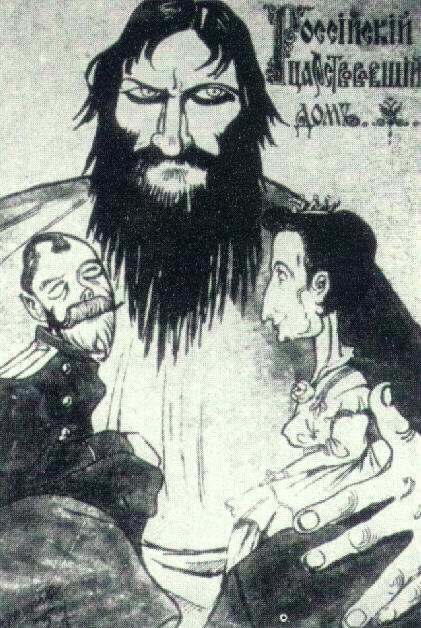
In an entirely other direction, in 1910 the Russian Orthodox Church recorded its liturgical best wishes to the tsar and his
family, "Many more years" [Mnogoletie]
At the one-minute mark the deacon wishes good health and long life to the young
tsarevich [W]
Another 1910 recording of the Orthodox liturgy [W]
<>1912ap04:Russia
experienced widespread labor demonstrations in protest against the massacre of something
between 200 and 500 Siberian workers in the gold fields of the Lena River region
- 1912ap09:ap11; State Duma discussed Lena incident [VSB,3:820-1]
- 1912:1914; Despite strict censorship intended to prevent any
inflammatory material reaching the screen, many early Russian films achieved a remarkably candid
portrayal of social conditions for the laboring poor [EG]
- 1912je23:Health and accident insurance act passed to protect industrial
workers. An elected "Social Insurance Council" was created (including labor
deputies) [VSB,3:820-1 | Rimlinger
outlined 1914:social insurance bill which the Council proposed to Fourth Duma =
TXT]
- Despite growing unrest, Russian Marxism (SDs and
others) found itself, after a
third of a century, with only a slim hope of success in Russia
- The industrial laboring class was just too small a portion of the population there
.
However, historian Leopold Haimson argued otherwise =
\\
*1964de & 1965mr:SlR | Leopold Haimson, "Social Stability.. [Part
one E-TXT | Part two E-TXT]
<>1912ap27:Russian military was beginning to pull itself out of
the 7-year slump that followed the Russo-Japanese War [ID]
*--EG=Decree ordered officers and soldiers of the Russian army in time of war to spare civilians and their
properties, to spare the wounded and imprisoned enemy, to honor the unarmed enemy soldier who sought
mercy, and to refrain from plundering the dead [VSB,3:819]
*--This on the eve of an early demonstration of the vicious possibilities of modern total war
<>1912je09:Full
five-year term of Third State Duma ended
<>1912je15:Russian
judicial reform reinstituted the elected justice of the peace [mirovoi sud]
[VSB,3:819-20]
*--The position of the Land Captain in the countryside was weakened, but
this widely despised institution continued to function more or less
as it had for 23 years
<>1912oc17:1913jy30;
European imperialist, colonialist and nationalist crisis in international relations resulted in two Balkan Wars,
the actual beginnings of WW1
- With these Balkan Wars, imperialist and colonialist opportunism took the third of four big, booted steps out
of Asia and Africa and back toward the heart of Europe itself
- Big booted step #1 = EG#01 just below
- Big booted step #2 = EG#04 just below
- Imperialist and colonialist opportunism shaped Europe's increasingly militarist and nationalist
international relations =
EG#01 |
EG#02 |
EG#03 |
EG#04 |
EG#05 |
EG#06 |
EG#07 |
EG#08 |
EG#09 |
EG#10 |
EG#11 |
EG#12 |
EG#13 |
EG#14 |
EG#15 |
EG#16 |
EG#17 |
EG#18
- Big booted step #3 (these Balkan Wars entered here) would be EG#19 if
the list above were extended
- Sixty percent of the full list of 19 important imperialist moments that fed
into WW1 were related to what SAC calls the "Southern Front"
- The three booted steps are nodal points along the 19 listed moments, and all of these were rooted
within this Southern Front
- The fourth booted step was the outbreak of WW1 itself, provoked by issues that would be EG#20 if the list
above were extended
- WW1 erupted directly in connection with events within the Southern Front
- Stretching over more than a half-century, these four big booted steps concentrated on
south Slavic ["Yugoslavian"] territories and the Turkish Ottoman Empire
- Two main forces were at work here
- Mounting complexities involved in the maintenance and expansion of the British Empire
- Austro-Hungarian imperial adventurism
- 1912-1913: Two vicious Balkan wars caused 142 thousand deaths
- The Ottoman Turkish Empire lost European territory in
war [MAP] (NB! the typo left center on the map, "GER" for "GRE")
- Turkey was fighting a losing battle against powerful financial and geopolitical interests of European powers
- As WW1 loomed, The West squabbled among themselves about who wasgoing to gain greatest advantage from the dying
Ottoman Empire, the"sick man of Europe"
- To the end the Ottomans threatened abolition of the corrupt and, for Turkey, debilitating
"capitulation" system
- USA Ambassador to "The Sublime Port" in these years, Henry Morgenthau, wrote memoirs that touched on this
issue and other vital Ottoman events [E-TXT]
- Big booted step #4 was in July and August, 1914, the period
traditionally taken to be the beginning of WW1
- Now on the WW1 Eastern and Western fronts the dust kicked up far beyond the
original "Southern Front"
\\
*--Hall,Richard C|_The_Balkan Wars, 1912-1913: Prelude to the First World War
[UO E-TXT]
<>1912no24:no25(NS):Basel (Switzerland)|
After the Balkan Wars broke out, the Second International convened
an "Extraordinary International Socialist Congress" to deal with impending militarist/imperialist
catastrophe. The Congress declared that European wars were no longer national wars but were imperialist
wars
*--Manifesto issued by the Congress [E-TXT |
Also see B&WW1:79]
- International imperialist conflict loomed, while domestic wage-labor problems intensified
in pace with the incredible growth of industrial productive power
- Representatives of the burgeoning European social-democratic movement warned that imperialism
abroad and the growing wage-labor political movement was leading to a deadly
international AND domestic political, economic and military crisis for world
capitalism [Day.SDs]
- 1894:1914; Correspondence between Tsar Nicholas II and Kaiser Wilhelm also shivered with this apprehension|
1914:Their telegrams (poorly translated) [E-TXT]
- British documents on the origins of the war, 1898-1914 vv9-10
- Russian Foreign Minister S. D. Sazonov wrote memoirs, Fateful Years, 1909-1916 (1928)
[Excerpts VSB,3:798-9 | DIR2:467-73]
\\
*--W. Bruce Lincoln, In War's Dark Shadow: The Russians Before the Great War (1983)
*--Donald M. Wallace, Russia: On the Eve of War and Revolution (1984)
*----------, Russia (LND:1912) [914.7 W155]
*--Masur.BRL, chapter "War and revolution":257-95| Berlin elites did not understand the power of
wage-labor [+ agricultural laborers for that matter] and the need for political power to compromise with this new clx
*--MacMillan.ROAD
*--Reynolds.SHATTER
*--Waites.CLASS
*--Blom.VERTIGO bears the 1912 photo below on its cover, as if to
illustrate the comment of a contemporary Frenchman, Pierre Loti, when he said, "Today humanity ... sees its evolution accelerating
too furiously, just as all things that topple into a deep abyss accelerate" (SAC editor's translation)
*1912:Great French photographer Jacques-Henri-Lartigue captured the energetic image of a passing race car
\\
*--Bibliography on the Great War [E-TXT]
*--LOOP on WW1a
<>1912no15:1917oc06;
St.Petersburg | Fourth State Duma lasted nearly five years
- Its first 21 months of peace-time existence were plagued by growing international
crisis as well as by deteriorating domestic economic and social conditions
- Its accomplishments did not promise to equal those of the Third State Duma
- See for example the statistics on state finances, 1900-1913, and Kokovtsov's report
on economic development, 1904-1914 [VSB,3:822-6]
- Even with the serious crises of war and
revolution, it can be said that the Russian economy,
since the introduction of the Witte system, had been very beneficial to
the grandee elites who were tapped into state power
- Economic conditions among the majority of the population, the wage-labor poor, were altogether another matter
- 1911:1914; Merchant P. A. Buryshkin's Russian memoirs described Moscow industrialists [Excerpts=
VSB,3:826-7]
- Then came World War One with two and a half years of military disaster
- After 1917mr02 the Russian Imperial State Duma exited the historical stage
with the Romanov dynasty [ID]
<>1913:German political
economist Werner Sombart published Zur Geistesgeschichte des modernen
Wirtschaftsmenschen [A contribution to the spiritual history of modern
businessmen, translated into English in 1915 as The Quintessence of
Capitalism], combining social science methods with the subtle new discipline
psychology [CCS,2:98-125]
*--Sombart began as a "scientific Marxist" but evolved in the direction of
Nazi-style nationalism [ID],
all this without letting go his desire to be "scientific"
<>1913:Spanish scholar
and essayist Miguel de Unamuno (1864-1936), Del sentimiento trágico de la
vida (1921: Eng. translation, The Tragic Sense of Life) [CCC2,2:1096-1104]
- In many ways an "anti-modernist", Unamuno was modern in his use of
paradox and irony, and his strong sense of individual independence
- He was also a firm defender of liberalism against the many
statist doctrines that gripped Spain in the 1930s
- He died defending this cause
<>1913:USA Federal Reserve Act
[ID]
<>1913mr01:Pravda | Russian émigré
revolutionary leader Vladimir Lenin, "Historical Fate of the Doctrine of Karl Marx"
(on Russia and Asia, among other things) [E-TXT |
Excerpts StH:3-5 | KMM:246-7]
*--In this year before the outbreak of WW1, Petersburg police filed ID photo
of young revolutionary from Georgia, Soso Dzhugashvili,
who would later gain world fame as Joseph Stalin
<>1913mr03:USA, WDC | "Votes for Women", a detail
from cover of the Official program - Woman suffrage procession [source]
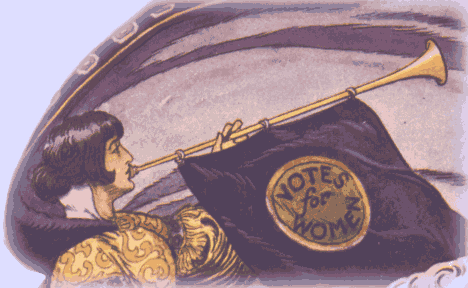
- In this year in USA (Hartford CN) English Suffragist Emmeline Pankhurst delivered
lecture on why feminists must be militant [P20:11 | PWT2:187-90]
- And the English physician Almroth E. Wright published book in which he
argued The Unexpurgated Case Against Woman Suffrage [P20:15]
- 1914wi:English Fabian activist Mabel Atkinson delivered lectures which demanded the
combination of women's social and political rights with the general progressive, scientific
platform of the socialist movement [CWC:35-54]
- Library of Congress website on USA suffrage movement
- WW1 was about to interrupt the quarter-century-long US Progressive Movement, but
"progressivism" was becoming a global phenomenon
- 1914:M.I. Pokzovskaya, Working Conditions for Women in the Factories [P20:95]
- Celebration of "International Women's Day" marked the beginning of the
end of the Russian old regime
- 1914:1915; Russian woman writer Marina Tsvetaeva wrote poem for Sofia Pamok on friendship [BRW:143-50]
\\
*--Joni Lovenduski and Jill Hills, eds., The Politics of the Second Electorate: Women and Public Participation,
Britain, USA, Canada, Austria, France, Spain, West Germany, Italy, Sweden, Finland, Eastern Europe, USSR, Japan |
ch.3:33-51 (USA) ch.13:278-98 (USSR)
*--Donald B. Meyer, Sex and Power: The Rise of Women in America, Russia, Sweden, and Italy
*--Julia Bush, Women Against the Vote: Female Anti-suffragism in Britain
*--Rose Glickman, Russian Factory Women: Workplace and Society 1880-1914
<>1913my29 (NS):Paris |
Russian composer Igor Stravinsky's ballet, "Rite of Spring". caused riots when premiered
[YouTube Joffrey Ballet recreation]
- Movie dramatization, RIOT AT THE RITE [YouTube | Short excerpt depicts
the riotous event itself YouTube pt2]
- Sergei Diaghilev's Ballet Russe staged the performance [Wki]
- Filmed narrative account of Ballet russes blends scenes from movie above with interview footage
[YouTube pt1 opens with maiden dancing in sacraficial rite |
YouTube pt2 |
YouTube pt3 in which maiden dances herself to death]
- Diaghilev, "Complex Questions: Our Imaginary Decadence" [RRS:81-90]
*1912:Paris | Vaslav Nijinsky [Vatslav Nizhinskii or Wacław Niżyński
(his parents were Polish)] [Wki]
danced in ballet set to Debussy's "Afternoon of a Faun"
[YouTube |
Wki]
<>1913se04:German provincial school teacher, Ernst August Wagner,
bludgened and butchered his wife and four chldren
*--He proceeded that morning to have a pitcher of beer at the home of his brother and family
*--He then took the train to nearby Mülhausen where he set fire to four houses
*--Furthermore, with two pistols in hand, he shot 20 people at random on the town streets. Eight
of his victims died [Blom.Vertigo tells
this story in order to suggest that the distance between these pre-WW1 years and our own
time might not be as great as we sometimes presume]
*--Certainly we need to remember stories like Wagner's (above) when we entertain ourselves with the myth of
the "long and peaceful European 19th century, 1814-1914"
1914sp:Berlin Frühlings-Schau [Spring Exhibition] poster
This was a fantastic
epoch of European high cultural and pop-art creativity
\\
*--Wagar on early 20th-century Russian arts
[three-paragraph TXT]
<>1914ja:Russian Prime Minister was
again the old establishmentarian Ivan Goremykin
*--Eight months before the outbreak of WW1, power was shifting toward anti-Witte/anti-Stolypin factions, IE=anti-reform,
but worse =
*--The Finance Ministry fell into the hands of insider profiteers, ready to rig imperial procurement in ways that
allowed large sums of state revenue to flow into their pockets
\\
*--LOOP on "finance"
<>1914fe:Russian statesman Petr Durnovo memo on futility of
war with Germany [TXT |
GRH:3-23 | Excerpts = VSB,3:793-8 |
DIR2:450-66 | RRC2,2#42]
*--The reactionary old police official and ex-Interior Minister was at the end of his career,
but he saw that the Russian Empire might also be at its end
*1914my10:Compare Durnovo's memo with conservative Duma member N.E. Markov's speech in the Duma which
encouraged patching up relations with Germany, and which warned of the unnatural and unreliable quality of
"Russian/English friendship" [GRH:24-8]
\\
*--JGO article E-TXT
<>1914mr13:St.Petersburg evening financial newspaper
with wide circulation ran a confidence-building piece "Russia Wants Peace, but is prepared for war" (possibly
written by War Minister V. A. Sukhomlinov) [GRH:190-2]
*--In just over a year, Sukhomlinov was dismissed, brought down by court intrigue [GRH:233-7]
<>1914ap:USA CO, Ludlow
mining region | US troops opened fire on striking miners and their families
temporarily housed in an encampment set up by the Rockefeller Co. The episode
came to be known as "The Ludlow Massacre"
*--This US military attack on US wage-labor was commemorated in a song written
by Oklahoma-born folk singer Woody Guthrie [E-TXT |
SOUND SNIPPET]
<>1914je28 (NS):Yugoslavia, Sarajevo
(a possession of the Austro-Hungarian Empire) | Heir to the Austro-Hungarian imperial throne, Archduke
Franz Ferdinand assassinated by Serbian nationalists
*--Borijove Jevtic, a conspirator in the plot, described events [Jevtic's memoir does not take up on the
following webpage until headline "A Royal Murder" [F/], but you might consider the remarkable presumptions
embedded in the editorial introduction -- the secondary commentary to Jevtic's memoir
E-TXT | Eye:441-4]
- 1914jy21 (NS):Belgrade | Austro-Hungarian ambassador Baron Wladimir Giesl von
Gieslingen [W-ID#1 |
W-ID#2] delivered response
to the assassination in the form of a harsh ultimatum
[E-TXT]
- Austro-Hungarian imperialists saw the assassination as an evil act
of terror with Europe-wide political/military implications
- They also saw it as further opportunity for imperialistic gain, and for bolstering their shaky "Dual Monarchy"
via militaristic adventure
- Austrian Chief of the armed forces General Staff Franz Conrad von Hötzendorf [generally known by
his family name "Conrad", W-ID]
sought justification for aggressive military action against Serbia. He insisted there had been official
Serbian governmental involvement in the assassination
- Prime Minister of the Kingdom of Hungary István Tisza
[W-ID] also supported war against Serbia, but
as developments unfolded in July, he began to have serious doubts about the wisdom of war
- Alexander Graf von Hoyos, Freiherr zu Stichsenstein was Chief of Staff in the Austro-Hungarian Foreign Ministry
- His very name and brief outline biography says a lot about the sort of old-regime elites who were
in charge on the eve of WW1 [W-ID]
- Notice the striking way Hoyos spans ancient Habsburg traditions with emerging very modern
military-industrial ways [EG]
- Among Imperial officials, Hoyos was one of the leading proponents of war
against Serbia, even before Sarajevo
- 1914jy04: Foreign Minister Count von Berchtold sent Hoyos to Berlin to secure German support for war
- Kaiser Wilhelm II pledged "full German backing", and the Vienna diplomatic delegation had this confirmed at
the highest levels of German Imperial authority
- Austria-Hungary had thus received the famous "blank cheque" to deal with Serbia as it wished
- 1914jy07: Hoyos was recording secretary at the meeting of the Common Ministerial Council, and repeated
that role 12 days later when the Serbian ultimatum was decided upon
- Hoyos' notes show nearly no evidence that Austrian officials gave serious consideration
to the possibility of Russian intervention on Serbia's behalf
- 1914jy16: St.Petersburg| The Austrian Ambassador told Russian Foreign Minister Sergei Sazonov that
there was no plan for any Austro-Hungarian action that might cause war in the Balkans
- Deliberate deception about the ultimatum to Serbia suggests strongly that
Austro-Hungary had set a course for war, not just against Serbia but also possibly against Russia
- The Serbian resistance movement saw the assassination differently than Austro-Hungarian officials. For them
the attack was something of a local triumph, certainly revenge against Austro-Hungarian actions in Slavic lands since
1878 [ID]
- The ultimatum delivered by Giesl was intended to be impossible for the Serbians to satisfy
- World War One -- the Europe-wide catastrophe that had been looming for years -- now was triggered
- Local South-Slavic national independence, the century-long dream,
was permanently injured as the agony of Yugoslavia stretched into the
20th century and beyond
<>1914jy29 (NS):Paris| Last meeting of
the International Bureau of the Second International
- European socialists tried unsuccessfully to control rising patriotic (chauvinistic
[ID]) fervor in their own midst as WW1 loomed [CWC:69-82]
- 1914jy30 (NS):French socialist leader of immense popular appeal, Jean Jaurès
[pix#1 | pix#2 |
pix#3], was assassinated by a fanatical French patriot
[Eye.WW1:13]
- An idealist, Jaurès sought to reconcile Marxist materialism with his own philosophy
- Jaurès did not promote revolution. Instead he worked for progressive and peaceful international
and inter-class relations
- He defended Dreyfus [ID] and worked for the
separation of church and state
- He believed that democratic political structures and socialist economic systems were compatible,
and they were a necessary and practical possibility in his time
- Jaurès struggled against the forces of war growing stronger by the day within the European capitalist
political-economies, as well as within the ranks of fellow social-democrats
- He advocated diplomatic rather than militaristic resolution of the European crisis
- The crisis, in his view, was caused by European policy itself
- The long and futile career of Jean Jaurès ended
when he was killed on the very eve of the great catastrophe, WW1
- Over the years preceding WW1, Social-democracy was not a sufficient force against the growing
power of nation-state chauvinism
- Socialist and wage-labor movements in Europe and North America faced a great crisis =
- Chauvinistic patriotism [aggressive popular identification of national grandeur with
the military assertiveness of one's own nation-state leaders] spread among the working people
- Chauvinistic patriotism dissolved the factional, interest-based struggle of wage-labor with employers into
a general emotional stew of fervent national bellicosity
- Chauvinistic patriotism displaced whatever transnationalism the public movements had been able
to impart over the previous decades
- French and German workers, just to mention one example, ceased to be brothers and became to one another ridiculous "frogs" and
beastly "huns"
- The people backed away from intensifying public activism and flocked to the flag to sacrifice themselves in this gross and holy struggle
- Socialist and wage-labor opposition fell quiet, at least in the earliest days of WW1
- WW1 dealt the Second International a blow from which it never recovered
- It dealt European social-democracy a blow from which it only very slowly recovered
- Militarism trumped socialism, but it also devoured the remains of post-Napoleonic European "conservatism"
and liberalism, at least for the time being
- Militarism assaulted the foundations of both the first and the second phases of the European Revolution
- In general, the modern command imperative -- disciplined management and control -- was first adumbrated in
the Russia of Peter the Great [EG] and, a century later, in the France of Louis
Napoleon [ID]
- It was brought to even higher levels of efficiency under Bismarck in
Germany [ID]
- Militarism amplified itself and generalized within imperialist political-economic systems undergoing
"the second industrial revolution" [LOOP]
- It was honed to perfection out in the imperialized world [ID]
- Now, with the outbreak of WW1, the command imperative was unavoidable
- Managerialism took center stage. Civil-societies were squeezed out of
shape, and the cost to Europe, west, east, north and south, was staggering
<>1914jy31: London Stock Exchange, the most
important financial center in the world, was forced to shut down for the first
time in its history. A week-long economic crisis forced this closure as markets
collapsed. Global financial crisis and WW1 loomed simultaneously
*--The financial crisis ran parallel with the diplomatic crisis described above
[ID]
*--What is the best way to explain the relationship between these two crises?
\\
*--Roberts.SAVING
*--LOOP on "finance"
<>1914au01:1918mr; World War One
represented the fourth big booted step of global European imperialist militarism back home to
Europe itself [ID]
- African anti-imperialist leader from Nyassaland, John Chilembwe [W ID], saw the
ironic relationship of Europe's WW1 to its colonial imperialism [BNE:293-4]
- Two years after the Balkan Wars [ID], the first mechanized total global war broke out and
washed over all Europe, eastern, central and western, as well as in the AfroAsian world on the Southern Front
- Great European metropol powers (England, France, Germany, Austro-Hungary, Russia and the Ottoman Empire)
came into conflict within Europe, dragging several lesser powers into the deadly and destructive conflict (EG=Italy, Bulgaria)
- The old European world that had flourished over 400 years of "globalization"
came shaking down in a short six year period of international imperialist competition [DPH:220-9, 268-71]
- It could be said that three-quarters of a century in "the Great Game"
now yielded catastrophe
- Not just for all combatant nations (except USA and Japan)
- But also for the small, elitist, royal and aristocratic social formations, hangers-on in the
post-French Revolutionary European world, the very diplomatic "dying class" of old-regime Europe whose actions
contributed so much to WW1
- And also for millions upon millions of "ordinary citizens" or "ordinary subjects", "the laboring poor",
all victims of modern mechanized militarism
- In Europe, WW1 lasted four years and three months and had two main fronts, the Eastern Front and the
Western Front [W#1 |
W#2]
- War on the Eastern Front lasted three years and seven months, until 1918mr
- Russian declaration of war [ORW:173-4]
- Russia's Great War & Revolution
[W]
- Maurice Paléologue, An Ambassador's
Memoirs [TXT] (Last French ambassador
to the Russian Court)
- General Sir Alfred Knox, With the Russian Army, 1914-1917 (1921)
- Stanislas Kohn, The Cost of the War to Russia: The Vital Statistics of European Russia During the World War (1932)
- Stanley Washburn, On the Russian Front in World War I: Memoirs of an American War correspondent. New York:1982
- CRH:311-335| Melissa Stockdale, "The Russian Experience of the First World War"
- W. Rutherford, The Russian Army in World War I (1975)
- Germany and the Revolution in Russia, 1915-1918: Documents from the Archives of the German Foreign Ministry
- War on the Western Front lasted eight more months, until 1918no
- The "Southern Front" -- the original WW1 front -- was active more than two full years after the cessation
of hostilities on the Eastern and Western fronts, at least until late 1920
- WW1 started and ended on the Southern Front
- Consider the vast consequences of these four facts =
- The two main fronts, Eastern and Western, fell quiet
at different times and for very different reasons [EG]
- The Southern Front stretched on until west European forces brought an
end to their military intervention into the Russian Revolution and until Turkey rejected the Treaty of Sévres
which west European powers tried to impose on it in 1920 [ID]
- Russia fought on both the Eastern and Southern Fronts, first as the
Russian Empire and then as the revolutionary Russian Soviet Republic
- Great Britain and France fought not only on the Western but also on
the Eastern and Southern fronts [LOOP on Southern Front]
- Eight million, five-hundred and fifty-five thousand died on the Eastern and Western fronts in 1563 days
of modern industrial total warfare, at the rate of 5470 deaths every day on average [different sources
count WW1 casualties in sometimes seriously different ways]
- 1914:1918; Total casualty figures for the main combatants
[W#1 | W#2]
- 2014au01: Birmingham, England commemorated 100th anniversary of WW1 with amazing melting ice sculptures
representing those who died [VIEW]
- The Berlin Historical Museum held the only exhibition in Germany to look at the war
and its European and global implications
[VIEW]
- Follow hypertext LOOP on ""battlefield"" to highlight
some characteristic and emblematic military moments in WW1
. An important historiographic question =
Should battlefield events be the core narrative of the Great War?
- BUT in 1914, every major European capital welcomed the prospect of war with
mass "patriotic" demonstrations =
- St.Petersburg, in the days before actual outbreak. was gripped in war frenzy, as described by
Sergei N. Kurnakov [Eye:448-50]
- Petersburg| Mikhail Rodzianko was enthusiastic at first
[VSB,3:831 | DIR3:511]
Others chimed in [GRH:29-39]
- Paris| Roland Doregelès, "That Fabulous Day" [P20:60]
- Vienna| Stefan Zweig, "The Rushing Feeling of Fraternity" [P20:62 |
PWT2:266-7]
- Berlin| Philipp Scheidemann, "The Hour We Yearned
For" [P20:63 | PWT2:267-8]
- London| Bertrand Russell, "Average Men and Women Were Delighted at the Prospect of
War" [P20:64]
- One year after the outbreak of war, the English professor L.P. Jacks, Principal of Manchester
College, Oxford, and Unitarian minister, expressed most remarkable views on how the war was pulling
Britain together, unifying the land. The title of the article was "The Peacefulness of Being at War"
[E-TXT]
- Not everyone was swept away by war fever, and soon euphoria that might be found waned =
- 1913de22:Anonymous Russia peasant soldier's letter [RWR:5]
- 1914au01:Norman Angell wrote protest letters to the editor
of The [London] Times
- 1914au01:English socialists organized a demonstration against the war [W&P,1:4]
- Remarque's
All Quiet... described trench warfare [P20:67 | PWT2:268-71]
- Siegfried Sassoon, Base Details [P20:69]
- Wilfred Owen, Disabled [P20:70]
- 1922:England | C. E. Montague, Disenchantment, an
elaborate narrative explored memories of first-hand experiences in WW1
[E-TXT |
Excerpt = BNE:211-5]
- In the largest sense, WW1 gathered together two unlikely coalitions
of sovereign nation states and empires pitted against one another =
- "The Triple Entente" (England, France and Russia). They were known later as "Allies" when Italy
European Revolutions and USA hesitantly joined this coalition
- "Central Powers" (Germany, Austro-Hungary
and, belatedly, Ottoman Turkey and Bulgaria)
- 1914my:Crimea, Livadia| Ottoman Interior Minister Talaat Pasha met
Russian Foreign Minister Sazanov and -- this late in the game -- discussed
Turkish/Russian alliance [Aksakal.OTM]
- War bred revolutionary discontent among them all, and pulled down four of them,
beginning with Russia =
- 1917mr02: The abdication of Russian tsar Nicholas II was the first decisive revolutionary turning point
in WW1 [ID]
- 1917oc25: The Soviet Revolution eight months later was the second [ID]
- International catastrophe of WW1 was the setting within which
the Russian old regime fell and out of which Soviet revolutionary events were born =
- Ponder the statistical table on the Russian wage-labor movement in
WW1 [GRH:186-7]
- Total war and total statism brought an end to the 200-year history of
Russian Imperial social/service hierarchies
- But over the next 77 years, those who would build much more powerful, hyper-modernizing social/service
hierarchies flourished [follow Stalinism LOOP]
- In the 77 years from WW1 to 1991, those who sought "liberal" or "social-democratic" transformation
of Russian social/service hierarchies fought an uphill battle| In Soviet Russia, the third phase of
the European Revolution [ID] expressed itself with great clarity
- Documents related to the WW1 context and to the 1917 Russian revolutions [HCV:1-19]
- Alexandra, Empress of Russia. The Letters of the Tsaritsa to the Tsar, 1914-1916 (1923)
- Nicholas II, Emperor of Russia, The Secret Letters of the Last Tsar.... (1938)
- ----------. The Letters of the Tsar to the Tsaritsa, 1914-1917 (1929) [ORBIS]
- A selection of these royal letters [VSB,3:847-56]
- Russian royalty was in a pitiful state of disorder which helped bring it
down [GRH:239-53]
- Many participants in events later described their impressions and offered their interpretations =
- S. A. Korff, Autocracy and Revolution in Russia (1923)
- G. T. Marye, Nearing the End in Imperial Russia (1929)
- A. A. Mossolov, At the Court of the Last Tsar, ... 1900-1916 (1935)
- P. P. Gronsky and N. I. Astrov, The War and the Russian Government (1929)
- Bernard Pares, The Fall of the Russian Monarchy: A Study of the Evidence (1939;
a secondary work, based on personal experience in Russia and filled w/ long quotes from primary
documents) [More Pares]
- WW1 was a vast macro-historical event, but it was also an everyday-life experience =
- Great World War, 1914-1945 documents the experience of populations in the two great world wars of the 20th century
- Role of print-media humor in wartime everyday life experience
[W]
- 1932:Sylvia Pankhurst wrote The Home Front, a revealing account of WW1
impact on everyday life
- Christopher Nevinson's painting "Paths of Glory"
[VIEW] was one of
the first realistic artistic renderings of the WW1 battlefield, and it was quickly censored
- The war was also the occasion for crude propagandistic posters
[EG]
- And photography [ EG#1 |
EG#2 ]
- BBC news item on another suppressed aspect of wartime everyday life, the man who invented the
concept "Shell shock" [W]
- LOOP on Censorship
\\
*--Russia's Great War and Revolution [E-TXT vast sbk]
*--MacMillan.ROAD, described in its publisher's blurb thusly =
Europe in the years leading up to World War I ...
illuminates the political, cultural, and economic factors and contributing
personalities that shaped major events. [...] Europe from 1900 up to the
outbreak of World War I. The century since the end of the Napoleonic wars had
been the most peaceful era Europe had known [NB! this ubiquitous exaggeration
needs the following qualifyer = "within its own borders"] since the fall of the
Roman Empire. In the first years of the twentieth century, Europe believed it was
marching to a golden, happy, and prosperous future [?!]. But instead, complex
personalities [NB! persons at head of this list] and rivalries, colonialism and
ethnic nationalisms, and shifting alliances helped to bring about the failure [?w.c.]
of the long peace and the outbreak of a war that transformed Europe and the world.
[NB! how this sentence is seriously modified
in MacMillan.PEACE]
[...] Military leaders, politicians, diplomats, bankers, and the extended, interrelated
family of crowned heads across Europe [celebrities all] failed to stop the descent into
war [... Add to this stellar list] the mercurial Kaiser Wilhelm II and the chief of
the German general staff, Von Moltke the Younger [.... Austro-Hungarian] Emperor Franz
Joseph [...] tried through sheer hard work to stave off the coming chaos in his
empire [.... More noteworthies = ] Tsar Nicholas II and his wife [...], King
Edward VII, Prime Minister Herbert Asquith [....] British admiral Jacky Fisher
[was] the fierce advocate of naval reform who entered into the arms race with
Germany that pushed the continent toward confrontation on land and sea. There
are the would-be peacemakers as well, among them prophets of the horrors of
future wars whose warnings went unheeded: Alfred Nobel, who [was a
military-industrial manufacturer and inventer of TNT, but who] donated his
fortune to the cause of international understanding, and Bertha von Suttner, a
writer and activist who was the first woman awarded Nobel's new Peace Prize.
Here too we meet the urbane and cosmopolitan Count Harry Kessler, who noticed
many of the early signs that something was stirring in Europe [?! "something
stirring"]; the young Winston Churchill, then First Lord of the Admiralty and a
rising figure in British politics; Madame Caillaux, who shot a man [here
insufficiently famous to be named] who might have been a force for peace; and
more. [...] The fateful decisions of a few powerful people changed the course
of history. [?No other causes?] [...] Wars happen in spite of the
near-universal desire to keep the peace
*2007je22: oilgeopolitics.net|>Engdahl,F. William| "Oil
and the origins of the ‘War to make the world safe for Democracy’ "
[E-TXT]
*--More Engdahl bbl
*--McMeekin.JULY
*--MS&WW1a
*--Otte.JULY
*2014oc: In a public discussion in the SPB Hermitage Museum, BBC hosted discussion by Russian experts of the role
of WW1 in the Russian revolutions of 1917 [W]
*--Robert PalmerHo and Joel Colton, A History of the Modern World, (1950s
general textbook) offered this description and evaluation of the culture out of which this war [WW1a] emerged
and the damage done to that culture by war's end [WW1c] =
All the belligerent governments during the war attempted to control ideas as
they did economic production. Freedom of thought, respected everywhere in
Europe for half a century, was discarded. Propaganda and
censorship became more effective than any government,
however despotic, had ever been able to devise. No one was allowed to sow doubt by raising any
basic questions. [...] People were trapped in a nightmare whose causes they
could not comprehend. Each side wildly charged the other with having started
the war from pure malevolence. The long attrition, the fruitless fighting,
the unchanging battle lines, the appalling casualties were a severe ordeal
to morale. Civilians, deprived of their usual liberties, working harder,
eating dull food, seeing no victory, had to be kept emotionally at a high
pitch. Placards, posters, diplomatic white papers, schoolbooks, public
lectures, solemn editorials, and slanted news reports conveyed the message.
The new universal literacy, the mass press, the new moving pictures, proved
to be ideal media for the direction of popular thinking. Intellectuals and
professors advanced complicated reasons, usually historical, for loathing
and crushing the enemy. In Allied countries the Kaiser was portrayed as a
demon, with glaring eyes and abnormally bristling mustaches, bent on the mad
project of conquest of the world. In Germany people were taught to dread the
day when Cossacks and Senegalese should rape German women and to hate
England as the inveterate enemy which inhumanly starved little children with
its blockade. Each side convinced itself that all right was on its side and
all wrong, wickedness, and barbarity on the other. An inflamed opinion
helped to sustain men and women in such a fearsome struggle. But when it
came time to make peace [ID] the rooted convictions,
fixed ideas, profound aversions, hates, and fears became an obstacle to political judgment.
*2014ja05:BBC explored the question of what ought to be said about WW1
[W]
*2014mr19:BBC dispatch reminds us that explosive remains of WW1 are still occasionally detonated
[E-TXT]
*2014ap15:BBC interviewed Michael Morpurgo, author of War Horse on pro and con attitudes
about WW1 [VIDEO]
*--Reuters dispatch compares 1914 danger of great war with contemporary [2014] tensions in international relations
[E-TXT]
*--Paul Schroeder, "World War One as Galloping Gertie..." [E-TXT]
*--Aaron J. Cohen, Imagining the Unimaginable: World War, Modern Art, and the
Politics of Public Culture in Russia, 1914-1917 (2008)
*--Boris L. Pasternak, Doctor Zhivago (a historical novel)
*--Alexander I. Solzhenitsyn, August 1914 (a historical novel)
*--Mikhail Sholokhov, Quiet Flows the Don (Made
into a movie)
||
*1914:1920; Six-year account of wartime origins and course of revolutions, particularly the
Russian revolutions and Civil War [LOOP on war & Revolution]
*1914:1921; Seven-year account of WW1 Southern Front =
LOOP on Southern Front
<>1914au03:British Foreign Secretary Edward Grey said, "The lamps are going out all over
Europe; we shall not see them lit again in our lifetime"
<>1914au04 (NS):Berlin | Hugo Haase,
the influential leader of the largest political party in
Germany, the Social Democrats, delivered a speech to the German Reichstag [parliament]. He
tried to explain why his party seemed to reverse itself and vote for war credits in support of the
German Imperial Army as WW1 broke out [CWC:83-7]
- Haase did not personally support the war
- He agreed with the European socialist and labor position
=
- He shared the view that the war was in the interests of European imperialist and militarist forces
- Also he shared the fear that he war could mean the death knell of social democracy and the negation
of the previous half-century of wage-labor activism
- He did, however, accept the nationalistic, German-patriotic argument that the war might
have positive progressive consequences, because it was directed against evil Russia
- Ernest Bevin [W-ID], a socialist leader
from the English wage-labor working class, active in the British Dockers' Union, argued that in 1914 the
country was on the eve of "one of the greatest industrial revolts the world has ever seen"
[Waites.CLASS:276-7]
- Bevin saw how WW1 suited the political and economic interests of those who were the targets of looming industrial revolt
- He became a central figure in the post-WW1c British Labour government [ID]
- Nationalism, chauvinism and militarism as "isms", had become stronger than socialism, as "ism"
- 1916:Polish-born German social-democrat Rosa Luxemburg knew that was at
least temporarily true, but she was unwilling to accept defeat or compromise
- In prison for her vigorous anti-war position, she wrapped up a longish pamphlet with these words =
The world war today is demonstrably not only murder on a grand scale; it is also suicide of the working classes of Europe.
The soldiers of socialism, the proletarians of England, France, Germany, Russia, and Belgium have for months been killing
one another at the behest of capital. Workers are driving the cold steel of murder into each other's hearts. Locked in the
embrace of death, they tumble into a common grave. "Deutschland, Deutschland über Alles! Long live democracy! Long live
the Tsar and Slavdom! Ten thousand tarpaulins guaranteed up to regulations! A hundred thousand kilos of bacon,
coffee-substitute for immediate delivery!".... [War profiteers are happy.] Dividends are rising, and the proletarians are
falling. And with every fall there sinks into the grave a fighter of the future, a soldier of the revolution, mankind's
savior from the yoke of capitalism. The madness will cease and the bloody demons of hell will vanish only when workers
in Germany and France, England and Russia finally awake from their stupor, extend to each other a brotherly hand, and
drown out the bestial chorus of imperialist war-mongers and the shrill cry of capitalist hyenas by giving voice to
labor's old and mighty battle cry: Proletarians of all lands, unite!
[source]
- Luxemburg's was an idle dream. For now, the Second International which
had built on the legacy of the First International [ID] was at its end
- 1917ap25:Petrograd Soviet
made perhaps the last effort to resuscitate the Second International after collapse of tsaarist power in the
early weeks of the Second Russian Revolution
- A half decade after the outbreak of WW1, in 1919, a very different sort of international took up
the cause = The Third International or Comintern, under the control
first of Russian revolutionary leader Lenin, then under Soviet dictator Stalin
||
*--LOOP on The Second International
- WW1 dealt a serious blow to all shades of European progressive politics. Modern statist
or elitist, managerial and authoritarian regimes arose naturally from the ruins of total war
- Over the next 25 years, "totalitarian" regimes, left and right, communist and fascist, encroached on all
varieties of independent civic activism
- However, moderate socialism and tightly constrained
wage-labor movements managed still to eke out a certain existence for themselves
- Furthermore, the 19th-century liberal tradition (which seemed to have lost its bounce
in the opening decades of the militaristic 20th century) never fully evaporated
\\
*--Dangerfield.STRANGE
*--LOOP on "fascist" and "fascism"
<>1914au08(NS):Russian
State Duma met in special session. Three memoir accounts of
this extraordinary patriotic session [VSB,3:831-3] =
- French Ambassador Georges Maurice Paléologue
- Mikhail Rodzianko
- Pavel Miliukov
<>1914au09:All-Russian Union of Cities founded
at a congress of city mayors in the first days of WW1, suggesting (falsely) that urban
political culture might strengthen under conditions of modern total war [GRH:130-2]
- A few days later, an All-Russian Union of Zemstvos formed with much the same goal =
- wartime mobilization of social forces to the cause of world war
- to supplement woefully inadequate efforts of government officials [VSB,3:840-1]
- War was just too important to be left to generals, or even to government officials
- Total war required total social commitment as well as official governmental commitment
- Russian Council of Ministers reacted in alarm at rumors that these public "unions" of urban and zemstvo
activists were not just deliberating on problems of wartime mobilization but were discussing ways to replace the
current tsarist government with "a new government which has the confidence of the country and possesses
full power" [GRH:132-4]
- 1914jy:England | No doubt about it, modern total war was big business
- Osbert Sitwell described confronting Basil Zaharoff [English pseudonym of Basileios Zacharias
(Wki-ID)], one of the great millionaire European
armaments dealers ("merchants of death") [Eye:444-5]
- The English made Zaharoff a Knight Grand Cross of the Order of the Bath after WW1
- 1914:1915; England, London | Russian born historian Pavel Vinogradov
[Paul Vinogradoff here] published works [ID] designed to show the
English that they were allied with a people of significant democratic potential
- Russians languished under tsarist authority, but longed for democracy in a way "Western" Allies could applaud
- Vinogradov thought that war might promote progressive change in Russia
- Vinogradov had been a professor at Moscow University until his resignation in protest over government repression
- He emigrated to England where he became professor at Oxford University
- A half-century of Russian university activism had by this time put higher
education near the center of the fledgling Russian civil society, and Vinogradov wanted everyone to know
that Russian civil society found roots in deep native traditions
- And in the early going he thought WW1 alliance with England might hasten
the further development of Russian civil society
- Wartime
conditions in Russia, as well as in other belligerent nations, did not,
however, promote local independence and civil society
- On the contrary, wartime
conditions promoted evolution
of state-centered social, economic and military wartime mobilizations
- Semen Zagorskii, State Control of Industry During the War
- These were early versions of the modern "military-industrial complex"
[ID]
- Oddly, modern war forced some form of egalitarianism on European civilization, but in a way that made
"freedom" [social or economic independence of populations] nearly impossible, and in a way that only occasionally
promoted democracy [people directly involved in governance]
- On both the Eastern Front and the Western Front
19th-century liberal traditions came under fire (so to speak)
- Documents relating to WW1 and Russian political elites [HCV:19-43]
- The first months of WW1 were a time of great patriotic outpouring, but many Russians perceived that the war was an
international catastrophe
- Some, like Vinogradov, thought WW1 might provide an opportunity for modern national transformation
\\
*2004:SlR#37,1:| Thomas Fallows, "Politics and the War Effort in Russia: The
Union of Zemstvo and the Organization of the Food Supply, 1914-1916"
*--Tikhon Polner et al., eds. Russian Local Government during the War, and the Union of Zemstvos (1930)
*--Michael T. Florinsky, The End of the Russian Empire (1931; a secondary work filled with long quotes
from primary documents)
*--R. Pearson, The Russian Moderates and the Crisis of Tsarism, 1914-1917 (1977)
|
*--LOOP on war & Revolution
<>1914au:Belgium on the
Western Front and Russia on the Eastern suffered early brutal defeats
- Invading imperial German forces swiftly destroyed Belgian fortresses with their powerful artillery,
notably at Liege [TXT] and very soon after
at Brussels [TXT], then Louvain [TXT]
- 1914au21: Brussels (the capital of the technically neutral country Belgium) was overrun by German forces
on their way to the strategic Channel ports and Paris. Richard Harding Davis described events [Eye:445-8]
- After the fall of Belgium, German intellectuals defended German war actions [E-TXT]
- Modern industrial-grade warfare shocked old-fashioned noble sensibilities about battle
- It also shocked the more modern sensibilities of those who had high expectations about 19th and
early 20th-century international agreements on the "rules of war"
- 1914au23:1914au30; Victory in Belgium was followed two days later by victory on the Eastern Front
against Russian Imperial armies [described by German General Paul von Hindenburg, Eye.WW1:43] =
- Russia suffered a massive collapse at the "Second Battle of Tannenberg"
[Wki]
(*1410:First battle of Tannenberg ID)
- Kalisz (Russia Empire) civilians, along with troops in uniform, suffered at the hands of
brutal invading German imperial army
- 1914fa:In Russian Poland, some of the first descriptions of withering machinegun fire, "The men
went down literally like dominoes in a row" [as described by United Press reporter Karl von Wiegand,
Eye.WW1:56
]
\\
*--BBC feature on how Belgian imperial subjects from the Congo joined the battle against Germany
[W]
*2009:Kritika#10,3:441-|>Engelstein,Laura| " 'A Belgium of our own': the sack of Russian Kalisz, August 1914"|
((UO E-TXT))
<>1914se03:Paris ordered evacuated
(prematurely) [W]
- City taxis in Paris delivered fresh recruits to the critical battlefield that would decide the fate
of the great French capital city. But that battle did not take place
- 1914se05:se12; The battle of the Marne was a vastly destructive and bloody victory for the French (with
timely help from the British)
- 1914se12:European Western Front | Brigadier General E.L. Spears described how a French General convinced a
soldier, soon to die before a firing squad for deserting his post, that his death was in its way
patriotic [Eye:450-1]
- For Germany the war in the west was not the desired swift victory, such
as was recommended in the Schlieffen Plan
- In the west, the war was already starting to bog down in trench warfare
- Germany would now have to fight on two fronts, west and east, splitting its troops and materiel in half
\\
*--Gerhart Ritter on the Schlieffen Plan
<>1914se03:Ottoman Turkey (still a neutral
power in WW1) announced termination of all "Capitulations" in the defense
of "sovereignty of the State" [HDE,2:2-3]
\\
*--Rogan.FALL
*--LOOP on Ottomans
*--LOOP on Southern Front
<>1914se09:German Chancellor
Bethmann-Hollweg outlined German war aims in which the treatment of
neighbor nations, both on the European battlefield and after victory, resembled German treatment of its
imperialist domains in Central Africa [BNE:208-11]
<>1914se22:German submarine attacks extended the
modern battlefield under the sea [W]
\\
*--Wki
<>1914fa:German WW1
effort enhanced by creation of Kriegsrohstoffabteilung [KRA or Wartime
Raw Materials Division], a hybrid civilian/military institution
- KRA was designed for effective wartime mobilization of economic
and military resources for the great war
- Brilliant industrialist Walther Rathenau (1867-1922) headed this early
example of modern "military-industrial complex"
- KRA drew private enterprise into tight association with government
- Soon, however, Rathenau was out and the German high command took full control over the institution
- 1915:Rathenau reported on KRA to a liberal
political group, "German Society 1914" [Deutsche Gesellschaft 1914, founded by
colonial administrator
Wilhelm Solf [Wki ID] [CWC:117-32]
\\
*--B. Grekov in WW1&XXc:100-105
<>1914no05:Petrograd | Five Bolshevik
deputies in Fourth State Duma were arrested
<>1914no10:Belgium, first
battle around the town Ypres resulted in startling casualties on all sides
*--YouTube footage
*--For German veterans in the post-WW1 years, this event was mythologized and made into a sacred moment
of German militaristic valor [EG]
<>1914no:Italy appointed Sidney Sonnino Minister of Foreign Affairs
*--Sonnino was disposed to see Italy's interests best served in alliance with Central Powers
*--However, he realized that Austro-Hungary was unlikely to concede certain Adriatic coastal territories to Italy
*--Therefore Italy shifted into alliance with France, Great Britain and Russia
*--Major combatants along the Southern Front of WW1, EG=Italy, Bulgaria, Turkey, were slow and unstable in their movement
toward commitment to one side or the other in the expanding WW1 conflct
<>1914de11:French soldier George Morillot was killed
in action. He had prepared a letter home in case this happened =
If this letter comes into your hands it will be because I am no more and because I shall have died the most
glorious of deaths. Do not bewail me too much; my end is the most to be desired. Speak of me from
time to time as of one of those men who have given their blood that France may live and who has died gladly.
\\
*--Quoted in In Maurice Barrès [ID],
The Undying Spirit of France (1918), a collection of soldiers' letters home from the front, illustrating
nationalistic views, often like the above in which the individual dissolves the self via blood sacrifice
into that great emotional European cognitive abstraction, "the nation" so that "the nation"
might live. Thanks to Richard A. Koenigsberg for sharing the quotation
<>1914de25:Troops on Western Front decided on their own to declare a
brief and touching "Christmas Truce"
[Eye.WW1:66]
<>1915:1916; Petrograd | Police
surveillance on Rasputin revealed ribald details in the everyday life of
the Empress'favorite holy man [VRX:21-56]
\\
*--Elem Klimov historical film about
Rasputin, Agoniia
<>1915:German (Czech-born)
writer Franz Kafka published "The Metamorphosis" [TXT]
<>1915:London | An
elite, insider group of English public men formed "The Round Table"
- The Round Table began publication of think-tank style analysis of official English policy in time of war
- Under the shocking impressions of war's unprecedented horror, they projected a post-war era in which
many of the members of this "private" club were to play an important role [CWC,9:102-117]
<>1915:1917; Austrian psychologist
Sigmund Freud delivered series of lectures at the University of Vienna which came to be known as his
General Introduction to Psychoanalysis [CCS:73-113 and
CCS,1:213-53, also includes some later general descriptions by Freud.
Other Freud texts in BMC1:611-17]
*--Freud also began to address everyday life
questions about broader public issues, EG= "Thoughts for the Times on War and Death" (1915)
[CWC,9:155-75 | CCS:179-200 | BPE:617-36]
<>1915ja18:Japan
confronted China with 21 demands [RWP1,3:224-8]
*1915mr15:USA Secretary of State William Jennings Bryan responded
*1915my11:Bryan outright rejected Japanese intentions
in China and reaffirmed "Open Door" policy
<>1915ja19:ja30;
German air attacks on ports in East Anglia extended the modern battlefield into
the skies. Submarine attacks at sea continued
<>1915fe:Russian soldiers of the 437th
Chernigov Infantry Brigade appealed for an end to the awful war [RWR:9]
*1915:1917; Excerpts from Russian soldiers'letters intercepted by censors give immediate sense of
battlefield experience [RWR:11-14]
<>1915wi:Austro-Hungarian armies seriously depleted and battered over the more than
three months of 2-front winter-time campaigning
*--In one direction on the Eastern Front, they moved northeasterly in poorly coordinated union with German
imperial forces against the Russian Empire
*--1915mr17:Russians captured critical fortress city Przemysl in Galicia ["right-bank Ukraine"]
[Wki w/ YouTube video | Eye.WW1:81,
109]
*1915de:Allies retreated
under pressure from Russian forces in bitter winter war along Carpathian Mt. passes
[Eye.WW1:136-46]
*--In another direction on the Southern Front, Austro-Hungary moved in the direction suggested by recent decades of
expansionist ambition [EG] into Serbian and other Slavic territories
\\
*--Tunstall.BLOOD
<>1915fe19:Russian Foreign Minister
Sazonov communicated Russian expectation to gain control over Istanbul and the Turkish Straits at
the successful completion of the war [full set of exchanges between Russia, Britain and France on
this vital geo-political point in HDE,2=7-11]
- 1915wi:Germany had been making every effort to drive a wedge between Russia and its western European
Allies
- Germany offered great rewards to Russia if it would conclude a separate peace with the Central Powers and
end the war on the Eastern Front [GRH:40-51]
- Most appealing, Germany offered Russia control over the Turkish Straits
- 1915fe27:British Ambassador to St.Petersburg Buchanan sent memo of complaint but acceptance, with
clarification, to Russian officials
- Russian claims in a fe19:Aide memoire "considerably exceeds the desiderata" foreshadowed by Sazonov (fe19)
- But was amenable to Russian claims, so long as the Russians themselves took responsibility to calm the Bulgarians
and Romanians about Russian possession of the Turkish Straits after the war
- In return, said the British Ambassador, the 1907 Russian/British division of Persia [Iran]
[ID] would have to be amended to grant the "neutral sphere" now
to England [GRH:60-2]
- The Turkish Straits were just then coming under west European Allied naval bombardment,
particularly from British and French ships
<>1915mr18:English-French attack on
Ottoman Turkish Empire, a WW1 ally of Germany and other Central Powers
- The website firstworldwar.com tells
of
the military actions carried out by London and Paris, two far-western European Allies, but more important, it fills in
the diplomatic background to this adventure onto the Southern Front, so remote from the scene of
English and French fighting on their own Western Front
- The purpose of the English-French attack was to gain control over the narrow sea lanes into
the Black Sea, starting from the south at the Dardanelles [Wki]
- The constricted maritime passage extended northward through the Sea of Marmara to the Bosporus
[Wki] and opened into the Black Sea
- The Ottoman capital city Istanbul (Constantinople) was on the western (European) shores of the Bosporus
- 1915fe19-1916ja; A naval assault failed over the winter and was followed in the spring
by "boots on the ground"
- The great battle at Gallipoli waged by the Allies was conducted with criminal disregard for the soldiers (largely
colonial recruits, not Englishmen) and was in the end an embarrassing failure =
- The English-French Allies landed 500,000 troops, of whom 300,000 fell as casualties in this ill-conceived
lost cause [W]
- Ottoman Turkish commander Mustafa Kemal became a national
hero as his forces slaughtered British troops
- 1915je:Ottoman Empire | Gallipoli assault described by Leonard Thompson [Eye:451-3 |
More eyewitness = Eye.WW1:87-90, 103, 110, 118-22]
- In the months surrounding the 1915 Gallipoli military crisis, Ottoman officials launched
what is often called "the Armenian genocide"
[YouTube]
- Eyewitnesses Hasan Etem on Gallipoli and Armin Wegner on Armenian genocide
[AUDIO]
- The WW1 Southern Front was seriously active at Gallipoli, but, more than that, another two-sided flashpoint heated up =
- Along the remote eastern frontiers of Turkish imperial authority, in vulnerable
peripheries of the upper drainage of the Tigris and Euphrates rivers
- Into the remote southern frontiers of Russian imperial authority, on vulnerable
peripheries along western shores of the Caspian Sea and into the Caucasus Mountains
- Russian and Turkish armies were poised to move against one another in
these two
overlapping peripheries of opportunity, more even than that =
- Growing ethnic ambition and unrest in these eastern regions, particularly among
Armenians, exacerbated Turkish fears of pro-Russian sedition
- 1915wi:Eastern territories of Turkish authority, the Lake Van vilayet [district]
in particular, experienced murderous Turkish action against Armenians
- 1915ap24:ap25(NS); On this night, Ottoman Interior Minister Talaat Pasha
[ID (an Armenian website) |
Wki ID] ordered the arbitrary arrest of
235 to 270 leading figures from the Istanbul Armenian community, among them politicians, clergymen,
physicians, authors, journalists, lawyers, and teachers
[Wki
photos and detail]
- 1915my30(NS): Turkish Department of Settlement of Tribes and Immigrants in the Interior Ministry issued
Regulation for the Settlement of Armenians, Relocated to Other Places because of War Conditions
- Armenians were to be removed en masse. They were not be be allowed within 25 kilometers of the
projected Berlin-Baghdad Railroad
- Armin Wegner secretly photographed many episodes of Armenian agony
[FLM#1 |
FLM#2]
- 1917: Talaat Pasha issued a report he hoped would show justification for the Armenian massacre
[E-TXT]
- 1920:Turkish court proceedings brought some Ottoman officials (EG=Talaat Pasha and Enver Pasha)
to justice in the matter of Armenian massacre [D&A:271-332 |
E-TXT#1 |
E-TXT#2]
- Talaat Pasha's memoirs were published posthumously by his widow, long after an Armenian student
shot him down on a Berlin street in 1921
- Talaat sought to show justification of the acts against Armenians by
reference to the revolutionary nation-building that he and his fellow "Young Turks" had worked
for since 1908 [E-TXT].
Back to the year 1915 =
- 1915de:Defeated Western Allies pulled out of Gallipoli [Eye.WW1:145-50]
.
The Southern Front was not going well for the Western Allies
- Six months before the Gallipoli disaster (1914fa) British forces landed at the southern tip
of Iraq at the mouth of the Tigris and Euphrates rivers (where they flow together and into the Persian Gulf)
- This vital oil-rich territory was administered from the city Basra
- 1915no:British colonial and military officials had to accept the fact
that both the Gallipoli offensive ended disastrously and the invasion of the
lower Tigris and Euphrates valley failed to take all of Iraq from the Ottoman Empire
- So for the time being they limited their grab to Basra
- After WW1 the British saw to the creation there of a closely supervised "nation" that has become known as "Kuwait"
- 1915oc24:England cultivated the rebellious spirit among Arabic subjects of the
Ottoman Empire
- However, England was wary of the rebellious spirit among Turks themselves
- England presented itself as a liberator of the peoples of modern-day Syria,
Iraq, Kuwait, Saudi Arabia,
Egypt, and other areas of AfroAsia
- English policy played on the ethnic tensions between Turks and Arabs [BNE:295-6]
- Note how England devoted considerable attention to distant battlefields
outside Europe
in Southern-Front territories essential to British imperial power
- Can this be compared with Austro-Hungarian or German behavior, once you take into account the contiguous
geographical quality of the main Central Power fronts? What about Russian actions in these areas?
\\
*1981:Clip from the movie GALLIPOLI [FLM]
*1920:|>Prothero,WG|_Armenia and Kurdistan [E-TXT]
*2004:NYC,Berghahn Books(pb, 6th revised ed)|>Dadrian,Vahakn|_The_History of the Armenian Genocide: Ethnic Conflict
from the Balkans to Anatolia to the Caucasus| ((UO))
*2008:|>Kevorkian,Raymond |_The Extermination of Ottoman Armenians by the Young Turk Regime (1915-1916)
[E-TXT]
*--The Armenian Genocide Museum
*--Cheterian.WOUNDS [E-TXT]
*--Rogan.FALL ch#7:159-185
*--Erickson.ORDERED:102-4 (re. Armenian massacre)
*2015:Eurovision music contest| Controversy arose about Armenian entry, a song about the Armenian genocide
[E-TXT |
YouTube]
*2016ja: News article about the
Armenian
Dashnaktsutyun Party ["Federation", aka Dashnaks], still active after 120 years
*2017mr16:WoP| Hollywood takes on a tragedy of history (Armenian genocide) in films from opposing viewpoints
[
E-TXT]
*--LOOP on Southern Front
*--LOOP on "AfroAsia"
2016ja:Yerevan airport poster [photo by Bob Berdahl]
<>1915ap22(NS): Germans the first to use
poison gas on the Western Front in the early hours of the unending Battle of Ypres
*--Engineering sciences and industrial technology contributed
to modern warfare [Wki#1
&
Wki#2
describe the battlefield]
<>1915ap26(NS): Italy signed secret Treaty of London with Allies,
after flirting with both sides in the Great War (much like the Ottoman Turks)
*1915my23(NS):Italy declared war on stumbling Austria-Hungary only after receiving from England and France promises of great
territorial rewards along the Southern Front [treaty E-TXT]
<>1915my27:Russian
Congress of War Industries Committee formed to promote entrepreneurial
cooperation with the imperial state in wartime mobilization of the Russian economy.
The requirements of modern total war were becoming clear to all, however belatedly
- Aleksandr Guchkov was president of the Russian Congress of War Industries Committees
through its stormy two years of existence
- The Association of Industry & Trade issued a resolution on the question of needed coordination of economic efforts
in war time [McC1:79-81]
- G/Shotwell
- General M.A. Beliaev informed the French ambassador,
You know all about the dearth of munitions. [...] Just think! In several infantry
regiments which have taken part in the recent battles at least one third of
the men had no rifles. These poor devils had to wait patiently, under a
shower of shrapnel, until their comrades fell before their eyes and they
could pick up their arms [VSB,3:835]
- General Sir Alfred Knox, _With the Russian Army, 1914-1917 (1921) reported much the
same (v1:282 ff.) [Excerpts VSB,3:836-40]
- Through the first months of WW1, military goods were in short supply [GRH:192-6]
\\
*--MERSH ("War Industries Committee" & "Labor Groups of the War Industries Committee")
*--Lewis H. Siegelbaum, _The_Politics of Industrial Mobilization in Russia, 1914-1917
<>1915je01
(?my31NS?):London| Germany spread its internal-combustion engine powered dirigible balloon attacks from the continent to the English island -- the famous
Zeppelins could now jump the Channel
- Another major world capital briefly became a battlefield
- 1915mr21: Two months before the London attack, English writer Katherine Mansfield
described two Zeppelins attacking the area around a Paris railroad yard =
There came a loud noise like doo-da-doo-da repeated hundreds of times. I never thought of zeppelins
until I saw the rush of heads & bodies turning upwards as the Ultimate Fish ... passed by,
flying high with fins of silk grey. It is absurd to say that romance is dead
when things like this happen -- & the noise it made -- almost soothing you
know -- steady -- and clear doo-da-doo-da -- like a horn. I longed to go out
& follow it .... [Source just below]
- 1915oc08:London bombed by Zeppelins [Eye.WW1:125-6]
- English writer D.H. Lawrence described the later Zeppelin attack on London =
Then we saw the zeppelin above us, just ahead, amid a gleaming of clouds:
high up, like a bright golden finger, quite small, among a fragile
incandescence of clouds. And underneath it were splashes of fire as the
shells fired from earth burst. Then there were flashes near the ground --
and the shaking noise. It was like Milton -- then there was war in heaven
[2014se05:TLS:14-15]
- Only seven died in the aerial attack on London, the great civilian administrative and financial metropol
- "Shells fired from earth burst", but in the early phase of these attacks, they could not reach
as high as Zeppelins flew
- 1916se:By this time, incendiary shells were able to bring the zeppelin down. Zeppelins as warships were phased out
- 1916oc01:Zeppelin shot down over London "like a ruined star falling slowly to earth"
[Eye.WW1:240]
- 1917oc:Last Zeppelin raid. Now airplanes brought aerial attack to the enemy
- 1915jy:German South-West Africa surrendered to English South African troops. Two
European imperialist powers struggled against one another in African lands
- Famous opponents of England at the time of the Boer War [ID] but
now popular South African leaders and powerful advocates of union with the British Empire, Louis
Botha [ID]
and Jan Smuts, led victorious South African troops against
German imperialist forces
- This was only the second German colony in Africa (after 1914fa:Togo) that Allies managed to defeat
- And it was the first significant Allied military victory in WW1
- German imperialist control in Africa was limited now to Cameroons and German East Africa
- 1915su:Eyewitness accounts of sorrowful scenes from the battlefield on the
Western and Eastern Fronts [Eye:453-6]
- 1915de19:Allied retreat on Western Front described [Eye:456-7]
\\
*--Jerry White, Zeppelin Nights: London in the First World War
*--Paice.AFR:347-50 accounts use of Zeppelin in the African colonial front
<>1915je14:Emperor Nicholas II, from GHQ on the Eastern Front,
dispatched "rescript" to the President of the Council of Ministers, Goremykin, urging intensification
of the work of a Special Commission, made up of members of the legislative institutions and representatives of industry,
to achieve adequate wartime mobilization of the Russian economy [GRH:121-3
| ]
*--The absence of basic governmental policies regarding wartime mobilization contributed to the deterioration of
economic and social conditions [GRH:179, 181-5]
*1915au30:Over two months later, the sluggish machinery of state got underway with specific measures
[GRH:123-4]
\\
*--Gatrell.WALKING
<>1915jy:Russian wartime
home-front economic mobilization aided by formation of Zemgor
- "Zemgor" is an acronym formed by combining Zemstvo [provincial and local
institutions of self-administration] with gorod [city], signifying an organization
that combined rural and urban groups, a nation-wide expression of civil society
- 1915jy11:jy13; All-Russian Union of Cities became a further aid to wartime mobilization
[GRH:131]
- These were the last significant gasps of two 1860s Great Reforms, the last reform gasps before
the old regime collapsed
- Government official A. N. Antsiferov, et al., Russian Agriculture
during the War
- Ernest Poole [Wki ID] wrote first-hand impressions of Russia at
war, The Village: Russian Impressions and "The dark people": Russia's crisis
\\
*--McC1:77-9
<>1915au:Russia | WW1 was now one year old,
but only now was a Special War Council created to address needs for wartime
mobilization [GRH:123]
*--In Russia and elsewhere, military mobilization in WW1 was a central component in the rise
of military-industrialism as a
20th-century transformation
of now global trends in economic modernization
\\
*--Murray N. Rothbard, a major "Liberatarian" political theorist and macro-economist, wrote "War Collectivism in World War I"
[E-TXT]
<>1915au12:Russian State Duma Chairman Rodzianko
appealed to the tsar to reconsider his decision to relieve and personally replace Grand Prince Nikolai Nikolaevich
as commander in chief of Imperial Russian forces. For a year, Russian high
command was in extreme disorder [GRH:194-212]
- Grand Prince Nikolai Nikolaevich, uncle to tsar Nicholas II, was the supreme commander of Russian troops
- While the Grand Prince inherited Peter the Great's physical stature, he did not inherit Peter's
leadership ability
- Emperor Nicholas II ignored Duma President Rozianko and went to the front in order to take
his uncle's place
- Thus the uncle, who had great stature but limited ability, was
replaced with a tsar-commander who possessed neither stature nor ability
- Rodzianko begged Nicholas II "not to subject your sacred person to the dangers in which you
may be placed" at the front
- He made so bold as to urge that the war had created a crisis so huge that it might drag Nicholas down if
he were to associate himself with it
- Indeed, Nicholas'decision to take personal command over a failing war effort
was a serious blow to tsarist prestige, to tsardom itself
- War failures could now be laid directly at the feet of the Emperor
- Rodzianko even more boldly proposed to the tsar, "Reassure troubled and already alarmed minds
by forming a government from among those who enjoy your confidence and are known to the country by their public
activities" [VSB,3:844-5]
- We are a bit surprised to see in this how the contingencies of WW1 forced
Octobrist Party member
Rodzianko into close political alliance with the arch liberal
Miliukov, a leading member of the KDs
- Rodzianko's memoirs lay out a complicated story of failed wartime mobilization in the first years of WW1,
made all the more grave by insider incompetence and duplicity [GRH:82-121]
- There is considerable evidence that the tsar himself leaked military
secrets through his letters to the tsaritsa, and via her to Rasputin and his
gang [GRH:213-219]
<>1915au17:Russian universities dealt with admission of
women [BRW:192-3]
<>1915au24:au27(se05-se08 NS):Switzerland| (First) Zimmerwald Conference
of Europe-wide Social-Democratic Party leaders
[B&WW1:309-70]
<>1915au25:Russian State
Duma faction, Progressive Bloc, issued a strong anti-governmental program [GRH:134-40]
- The Progressive Bloc program was signed by V. A. Bobrinskii, V. N. L'vov, I. I. Dmitriukov,
Sergei Shidlovskii, I. N. Efreimov. Pavel Miliukov,
D. D. Grimm, and Baron V. Meller-Zakomel'skii [GRH:134-6 | McC1:71-3 |
DIR2:475-6 | DIR3:515-17 | VSB,3:845-7]
- In these days, an amazing debate raged in the Russian Council of Ministers, the highest level of tsarist administration
- The disorderly deliberations were recorded by A.N. Yakhontov, Prologue to Revolution
[Excerpts = RWR:16-19 | GRH:136-45]
- The Eastern Front sapped Russian old-regime political vitality, promoted the
cause of war profiteers and opportunists, and emboldened spreading anti-old-regime political forces
<>1915se03; Autocratic Russian state
suspended [prorogued] the State Duma
<>1915se07:se09; Moscow Congress of
Representatives of Provincial Zemstvos
- Prince Georgii L'vov, a leading activist among "zemstvo liberals" delivered an address that
expressed a profound objection to autocratic/bureaucratic suspension of the elected State Duma
- L'vov emphasized that WW1 was a time of righteous and arduous struggle for
survival. National existence was at stake
- But L'vov emphasized with equal strength that WW1 was a time of "reorganization
of that existence"
- The great mass of the people display powerful solidarity with this vital dual effort,
but "we fail to observe solidarity between the ruling powers and the people"
- L'vov made bold to insist that the clear
absence of solidarity with the people (state estrangement from the nation) is "the only thing that
still obstructs our organization of victory" [GRH:146-49]
<>1915se09+:Russian War Industries Committee
and Association of Industry & Trade gave a boost to lagging official wartime mobilization
[VSB,3:841-2 | GRH:124-9]
*--Two Zemgor resolutions [GRH:149-52 |
DIR3:517-19]
*--Zemgor showed vigorous public effort to aid wartime mobilization
and bitter resentment toward official obstruction of that effort
<>1915se16:Russian Prime Minister
Nikolai Shcherbatov, new to the office since June 5th, reported on "very tense" public
reactions to the 1915se03:State Duma prorogation [GRH:152-4]
*--Ten days later Shcherbatov was himself dismissed
<>1915se26:1916my03; Aleksei Khvostov, a member of the
Black Hundreds and leader of rightist factions in the Fourth Duma, was
appointed Interior Minister [GRH:227-32]
*--Khvostov diverted huge sums from the state treasury, cutting into wartime
budgets, supporting cronies and their radical rightist publications
\\
*--LOOP on war & Revolution
<>1915se29:USA loaned $500M to England
and France [W]
*--The financing of modern war took its dimensions from the giganticism of the
second industrial revolution
*--Among the many fronts of WW1, there was certainly a looming financial
battlefield of unprecedented proportions
<>1915oc:German socialist
journal Der Kampf [The struggle] published Social Democrat Rudolf
Hilferding's "Co-Partnership of Classes?" [CWC:87-102 (8x11)]
- Hilferding's publication was an attack on party members who supported the war
- But he also criticized fellow socialists who rejected any cooperation with "the economic ruling class"
- He explained his political (in contrast to ideological) vision of a rational,
non-military socialist order in which big corporations
and businesses would have a certain role to play
- Hilferding was the leading theoretician of his party and a specialist on the Europe-wide significance of
finance capitalism [W-ID#1 |
W-ID#2]
\\
*--LOOP on "finance"
<>1915oc18:1918se30;
Bulgaria belatedly entered WW1 when it declared war on Serbia
[Eye.WW1:128-33]
- Bulgaria noted the successes of the Central Powers, especially against its old rival Serbia
- Bulgaria fought on the side of the Central Powers on what has been
called the Macedonian Front for almost three years and left the war after the
Thessalonica Armistice [W-ID]
- French commander of "The Allied Army of the Orient" on the Salonica or Southern Front, Louis Franchet d'Esperey,
alone represented the Allies [W-ID#1 |
W-ID#2]
\\
*--Wki
*--LOOP on Southern Front
<>1915no:Russian sailor rebellion
[VRX:57-70]
Military morale plummeted [GRH:220-6]
- The Western Front also experienced military/civilian disorder as the monstrous actualities of
modern industrialized war became clearer to all
- Documents on WW1 impact on ordinary people [HCV:43-63]
- The international battlefield on the Western Front, but especially on the
Eastern Front,
threatened to become a domestic revolutionary battlefield
\\
*--LOOP on war & Revolution
<>1916:Russian author
Andrei Belyi published his novel Petersburg,
a powerful piece of political fiction which explored in most creative ways the
meaning of the 1905 Revolutionary period. Does the novel reflect the realities
of WW1 every bit as much as those of the 1905 Revolution?
<>1916:Swiss Protestant
theologian, a leader of a
"neo-orthodox" movement in his church, Karl Barth delivered an address "The Righteousness of God"
[BMC1:667-70 | BMC4:664-7].
Is there any way to think of Belyi (above) and Barth as representatives of
war-time culture?
<>1916ja31:The Great
Zeppelin Raid showed that the heavens could be an effective battlefield in the industrial age
*--The Zeppelin showed the potential of military technology in a most
astonishing way [W]
<>1916wi:As the Gallipoli disaster wound
down [ID] and as the Battle of Verdun opened [ID],
English diplomat Mark Sykes began significant discussions with French counter-part François George-Picot
about joint war aims along the Southern Front
- George-Picot brought a third person into the discussion = the French ambassador to Russia, Maurice
Paléologue (rather than the Russians themselves, even though Russians were officially Allies
and much involved along the Southern Front)
- These three devised the “Sykes-Picot Agreement” which proposed to slice up all but a small
portion of the core territory of the Ottoman Empire
- More or less on their own, these three defined wartime policy in the vital "Near-East" =
- “The sick man of Europe” was now acknowledged to be terminal
- These "western" Allies were ready now -- after a half century of "life-support"
[EG=LOOP on "capitulations"] -- to
assist in what they thought of as some sort of diplomatic "death with dignity"
- These two Allies, England and France, were confident that they would be, on their own, the main heirs of Ottoman demise at war's end,
whatever the immediate outcome of the ill-fated Gallipoli Offensive
- But increasing evidence of failure in the Gallipoli Offensive took the edge off their hopes there
- And, maybe more important, concerns about possible defeat on the Western Front briefly trumped their ambitions for
gain on the Southern Front
- England and France had reason to be afraid that Germany might succeed in its effort to get Russia to sign a separate
peace and bring an end to the Eastern Front
- That would allow Germany to shift its war machine from the Eastern to the Western Front
- Germany had already offered Russia Constantinople and the Straits if it would withdraw from WW1
- The German offer was all the more remarkable in that Turkey was at the time a member of the Central Powers
and an ally of Germany
- The German offer was a major world-war diplomatic betrayal
- 1916ja:Erzurum| Add to all the above the distress caused the stumbling English and French by sudden Russian military
success deep in northeastern Ottoman territory. General Yudenich led Russian forces to victory, capturing this key Ottoman
outpost in northeastern Anatolia [Ulrichsen.MIDEAST:64ff]
- England and France felt compelled to counter German offers and to communicate their own enticing promise to Russia =
- The Sykes-Picot Agreement stated that Russia would inherit Constantinople [Istanbul], the Dardanelles and appurtenant
lands, but only after successful joint Allied victory over the Central Powers
- The offer might be thought somewhat flimsy = English and French actions earlier and later revealed their own
intentions in these critical "Turkish Straits"
- This was the diplomatic culture that so incensed USA President Wilson as he wrestled with the question of whether
USA should join WW1 as ally of such scheming old-world politicos
- The English and the French pressed their imperialistic claims to the Ottoman inheritance, as did Russia, who had to
be tossed some sort of bone in this largely "Western" inspired strategic process
- The Sykes-Picot Agreement left very little to "Turkey"
- Among ambitious "Western" imperialist schemers, Sykes especially feared home-grown, nationalistic and
independent-minded Turks, particularly evident within the Ottoman military establishment
- For example, Mustafa Kemal and the “Young Turks” [ID]
rose up out of the ruins of the crumbling Ottoman Empire
- Young Turks were ready, every bit as much as the Western Allies, to bury the Ottoman Empire
- Sykes perceived how these Young Turks threatened “western interests” simply by pursuing their and Turkey's own interests
- These Turkish progressives intended that they would be the heirs of Ottoman demise, not England, France or Russia
- They intended that Turks would create their own new-era 20th-century "Young Turkey"
- And in those eastern Anatolian territories where Russia was their main threat, the Turks were willing to crush Armenian and
Kurdish hopes for their own independence [ID]
- If the Sykes-Picot dismemberment of the old Ottoman Empire had worked, it would have served well the
interests of England and France and -- who can be sure? -- of Russia as well
- England and France set aside unlikely advantages on the Southern Front for increasingly war-weary imperialist Allies Russia and Italy
- 1916my16:By springtime, England and France were ready on their own to hammer out an
essentially bilateral agreement about remote Ottoman territory
- In their arrogance and in the face of increasing evidence that Italy did not much weigh in on
matters, and that Russia was unable to hold up its end of WW1 bargains, England and France now went
even further to exclude their WW1 Allies in these "Middle-eastern" or "Southern-Front" deliberations
- They agreed on how to divide the Ottoman Turkish Empire's Arabic
territories between them [BNE:296-8 |
MAP#1 |
MAP#2]
- Notice the far south-west corner of the maps where a specific scheme was proposed in the spring of 1916
to create an internationally administered territory for the relocation of European Jews after WW1
- CF= 1920au10:Treaty of Sévres
\\
*2016my|>Al Jazeera| "A century on: Why Arabs resent Sykes-Picot"
[E-TXT]
*2016my|>Al Jazeera| "Sykes-Picot is not to blame for Middle East's problems
[E-TXT]
*2016my|>Al Jazeera| "Iraq, Sykes-Picot and Mr Five Percent"
[E-TXT]
*2016my|>Al Jazeera| "A century on: What remains of Sykes-Picot"
[E-TXT]
*2016my16|>BBC News| "The map that spawned a century of resentment
[E-TXT]
*2016my16|>Reuters| "Bloodshed blurs Middle East borders set 100 years ago by UK-French pact"
[E-TXT]
*2016se25|>BBC News| "How Ethiopian prince scuppered Germany's WW1 plans"
[E-TXT]
*--LOOP on Southern Front
<>1916fe05:Switzerland, Zurich |
Hugo Ball, German avant-garde theater director, opened the Cabaret Voltaire and
demonstrated that culture could also be a battlefield
- Ball was a critic of WW1 and dissenter from the bourgeois culture that nurtured industrial militarism
- His cabaret was located in a Zurich neighborhood known to various "counter-culture" innovators, EG= James Joyce
and Vladimir Ilich Lenin
- But it was also a neighborhood of international war profiteers and covert spies
- The cabaret soon became the matrix of a shocking anti-establishment artistic movement
- Its leading exponents -- the Alsatian Hans Arp and Romanian Tristan Tzara -- named the movement “Dada”
- No one was sure what “Dada” meant, but many associated it with the Slavic expression “Yes-yes” =
Da, da
- An early Dada manifesto emphasized the unconscious, chaotic and irrational elements of creativity
in the fine arts [CWC:368]
- Here are some excerpts from the Dada manifesto, with SAC editor
intervention, hoping to enhance clarity of
this important but loose composition =
Every product of disgust capable of becoming a negation of the family = Dada
A protest with the fists of its whole being engaged in destructive action = Dada
Knowledge of all the means rejected up until now by the shamefaced sex
of comfortable compromise and good manners = Dada. Abolition
Of logic, which is the dance of those impotent to create = Dada
Of every social hierarchy and equation set up for the sake of value by our valets = Dada
Every object, all objects, sentiments, obscurities, apparitions and the
precise clash of parallel lines are weapons for the fight = Dada.
Abolition
Of memory = Dada. Abolition
Of archeology = Dada. Abolition
Of prophets = Dada. Abolition
Of the future = Dada
Absolute and unquestioning faith in every god that is the immediate
product of spontaneity = Dada
Elegant and unprejudiced leap from a harmony to the other sphere =
Trajectory of a word tossed like a screeching phonograph record =
To respect all individuals in their folly of the moment =
Whether it be serious, fearful, timid, ardent, vigorous, determined, enthusiastic =
To divest one’s church of every useless cumbersome accessory =
To spit out disagreeable or amorous ideas like a luminous waterfall, or coddle them --
With the extreme satisfaction that it doesn’t matter in the least --
With the same intensity in the thicket of one’s soul --
Pure of insects for blood well-born, and gilded with bodies of archangels
Freedom = Dada Dada Dada
A roaring of tense colors, and interlacing of opposites and of all
contradictions, grotesques, inconsistencies = LIFE
- Influenced by Italian “Futurists” [ID], the Dada movement refused to go the direction of Futurists into
the glorification of irrational chauvinistic militarism [ID]
- On the contrary, Dada sought to bring and end to war and the pull down the civilization that
depended on it
- They were pacifists, draft dodgers and political émigrés from many points of the European compass
- They were international and internationalists
- Culture could thus also be seen as a battlefield
- The movement attracted the French painter Marcel Duchamp [ID]
- Hugo Ball wrote a diary/memoir, Flight Out of Time (1996)
[E-TXT (with other documents) |
E-TXT]
- The Dada Reader: A Critical anthology
- Herschel B. Chipp, ed., Theories of Modern Art: A Sourcebook by Artists and Critics (1973)
- Robert Motherwell, ed., The Dada Painters and Poets
- Dada exerted influence on European artistic movements for almost two decades
\\
*--Wki
*2016jy19:BBC| "Cabaret Voltaire: A night out at history's wildest nightclub"
[E-TXT]
*2006au10:NYR:10, the poet Charles Simic wrote about Dada = “Their revulsion at the butchery of the Great War, in
which about ten million men died, over twenty million were wounded, and several hundred thousand lost limbs and sight, had a
lot to do with what Dada was to become”
*2007: Debbie Lewer on Hugo Ball and Cabaret Voltaire [E-TXT
with pix]
<>1916fe21:Battle of Verdun
[W] opened and raged for
weeks
- For their initial battle, the Germans brought up 2.5 million shells
- By June 1916 the artillery had grown to about 2000 guns
- In just over four months, a million shells had been rained upon the
field of battle, on average 100 shells per minute
- Verdun was captured by the Germans, then recaptured by the French
- The battle consumed 78 divisions and caused 350,000 casualties (wounded, dead or otherwise lost from the ranks)
- Others put the figures higher: At the end there were 650,000 dead soldiers
on this one battlefield
<>1916fe:German journal Die Frau [The woman] published
Max Weber, "The Laws of the Gospel and the Laws of the Fatherland" which
sought to explain why Germany had to worship the god of war, in the name of a great nation's destiny, and why at different
times one might worship the god of the Sermon on the Mount [CWC:151-5]
<>1916fe:Russian Prime Minister Goremykin relieved of
duties, his long career now at an end
- Goremykin's replacement was a notably unqualified Boris Stürmer
- Here, as nearly everywhere, the Russian name "Shtiurmer" is written in
the German orthography to emphasize one of the wartime
"Russian-nationalist"
reasons for wide-spread discontent associated with the appointment of a person whose name
was not patriotically "Slavic"
- Another reason for discontent was that Rasputin played a role
in this affair. This was perhaps the moment of Rasputin's most elevated influence
- Imperial domestic political life was disordered, and so was the Imperial military high
command at General HQ [RWR:19-21]
- Emperor Nicholas II demanded renewed efforts from his troops when he might better have demanded
renewed efforts from his imperial administrators [Eye.WW1:170]
<>1916ap:At sea, Adolf K.G.E. von Spiegel
described successful U-Boat attack on a steamer [Eye:457-9]
<>1916ap24:ap29 (NS);
Ireland, Dublin General Post Office, headquarters for a week-long rebellion
against English imperialist rule [Eye.WW1:178]
- About 1500 revolutionaries seized key British government buildings and
faced a counter-attack by British soldiers, many of them Irish
- A rebel manifesto read, ''In the name of God and of the dead generations from which she receives her old
tradition of nationhood, Ireland, through us, summons her children to her flag and strikes for her freedom''
[E-TXT]
- About 450 civilians, soldiers, police and rebels died in the uprising
- Great Britain was in the midst of WW1, therefore Irish independence seemed traitorous to many, even to many Irish
- Fellow Dubliners, especially wives of the more than 140,000 Irishmen fighting and dying in British
uniform on the Western Front, cursed rebel survivors who were led away in handcuffs
- However, British authorities executed 16 rebel commanders and subordinates, transforming them into martyrs
- W.B. Yeats [W-ID] expressed it this way
in his poem "Easter 1916" = ''A terrible beauty is born''
- The Irish electorate was radicalized in guerrilla warfare for independence. The Insurrection inspired
Ireland's successful war of independence from Britain
- The international battlefield was unquestionably provoking outbursts on various domestic battlefields
\\
*--The Guardian| " 'A terrible beauty': US festival reflects on Ireland's Easter Rising 100 years later"
[E-TXT]
*2016my11:The Guardian| "Republican dissident terror threat level raised in Britain"
[E-TXT]
*2016mr25:BBC News| "1916 Easter Rising: Dublin march commemorates rebel leaders" | BBC News
[E-TXT]
*2016mr25:BBC News| "The difficulty of marking the 1916 Rising" [E-TXT]
*2016wi:Politico, "Ghosts of 1916 haunt Irish election"
[E-TXT]
*2016ap:Eurotopics| "100th anniversary of the Easter Rising"
[E-TXT]
<>1916ap24:ap30 (NS); Kienthal in Switzerland| Second "Zimmerwald
Conference" of European progressive (largely socialist) activists and parties who were taking a stand against WW1
[B&WW1]
- Conference re-affirmed that WW1 was caused by imperialism and militarism
- The war can be ended only if the combatants on all sides abolish militarism in their own domestic policies
- Conference also re-affirmed condemnation of bourgeois governments, parties and press, and
- It went beyond the first Zimmerwald Conference in its criticism of social patriots and bourgeois pacifists
- The Conference also insisted more firmly that wars would end only if the working class took power and abolished private property
\\
*--Wki
*--LOOP on "Zimmerwald" movement
*--LOOP on war & Revolution
<>1916ap23:1916se21; Russian Grand Prince Nikolai Mikhailovich wrote seven remarkable letters
to his Emperor and kinsman, Nicholas II, in which he urged creation of a high-level, blue-ribbon commission to begin planning for
the end of the war and the creation of a New Europe [GRH:63-77 (my05 to oc04 on NS calendar)]
*--This was a rare moment. As WW1 approached its third year, very little efforts were being made among Allies or Central Powers to
formulate shared war aims
*1916jy26:Kherson guberniia|Grand Prince Nikolai Mikhailovich also tried to inform the tsar about conditions in rural villages in the lower reaches of the Dnepr River [Ditto:179-81]
<>1916my31:je01; British and German navies, with the great
industrial-era battleships at the center of action, squared off against one another on the
North Sea near Jutland [Wki with MAPS]
*--The battle was essentially a draw, with slight military advantage going Germany's way
*--But losses were so great that the German battleships never ventured in sortie again
*--The great battleship arms race that contributed to the outbreak of WW1 came down to this, but =
*--The submarine warfare continued, under and on the oceanic battlefield
<>1916je:Russian Central Asia| After tsarist decree
ordered military conscription of male Islamic youths, wide-spread anti-imperialist and anti-Russian rebellion arose
*--Ottoman military and political leader, Enver Pasha, rose to leadership
of a pan-Turkish movement in these areas, stretching over AfroAsia
\\
*1991:|>Paksoy,NV| " 'Bashmachi': Turkistan National Liberation Movement, 1916-1930s"
[E-TXT
F/Enver Pasha/]
*--Sokol.REVOLT
<>1916jy:Russian Bolshevik leader Lenin
issued his widely influential pamphlet
"Imperialism, the Highest Stage of Capitalism" [E-TXT |
CCC3,2:1079-88]
- It shocked many, including Marxists, to read Lenin's analysis of how the
overthrow of capitalism might come as much from the pre-modern non-European
social-economic formations, which were at this time stirring under stumbling imperialist control, as from a mature
western European workers movement within a mature capitalist mode of production
- Lenin insisted that the imperialized non-European world was capitalism's
"soft underbelly"
- Well into the 20th century, this text was the central Marxist critique of European imperialism
- It harmonized with the new age of national liberation in Asia and Africa, well beyond the industrializing European world
- 1916mr:Lenin issued an earlier influential pamphlet, "Socialist Revolution & the Right
of Nations to Self Determination"
- This pamphlet also harmonized deeply with -- and possibly had a direct influence
on -- post-WW1 efforts to put the world back together [EG]
- 1915mr:Bern, Switzerland | Even a year before the pamphlet just above, at a Conference
of Social Democratic groups, Lenin took a surprising "anti-patriotic" stand against supporting even
his own Russian Empire against opposing powers
- His was not a pacifist position
- On the contrary, he led the conference in its acceptance of a party declaration in favor of
converting WW1, not into peace but into Civil War =
The present war is, in substance, a struggle between Britain, France and Germany for the partition of colonies
and for the plunder of rival countries; on the part of tsarism and the ruling classes of Russia, it is an
attempt to seize Persia, Mongolia, Turkey in Asia, Constantinople, Galicia, etc. The national element
in the Austro-Serbian war is an entirely secondary consideration and does not affect the general imperialist
character of the war.
The entire economic and diplomatic history of the last few decades shows that both groups of belligerent nations
[Allies AND Central Powers] were systematically preparing the very kind of war such as the present. The question
of which group dealt the first military blow or first declared war is immaterial in any determination of the
tactics of socialists. Both sides’ phrases on the defense of the fatherland, resistance to enemy invasion, a
war of defense, etc., are nothing but deception of the people.
At the bottom of genuinely national wars, such as took place especially between
1789 and 1871, was a long process of mass national movements, of a struggle
against absolutism and feudalism, the overthrow of national oppression, and the
formation of states on a national basis, as a prerequisite of capitalist
development.
[To link Lenin's 1915 position more directly with general SAC themes, and to explicate Lenin's
words here in connection with other of his writings of this time, "genuinely national wars"
were "progressive" in Europe from 1879 to 1871, from the time of the French Revolution up to
the time of the Paris Commune [ID Lenin's period of "genuinely national wars"
with reference to our "first phase of the European Revolution]. Since then, wars became "genuinely imperialist
wars". We take up Lenin again as he identified one important residue of the earlier progressive period =]
The national ideology created by that [earlier progressive] epoch left a deep impress on the mass of
the petty bourgeoisie and a section of the proletariat. This [earlier nationalism] is
now being utilized in a totally different and imperialist epoch by the sophists of the bourgeoisie,
and by the traitors to socialism who are following in their wake, so as to split the workers, and
divert them from their class aims and from the revolutionary struggle against the bourgeoisie.
The words in the Communist Manifesto that “the working men have no country” are today truer than ever
before [ID]. Only the proletariat’s international struggle
against the bourgeoisie [not international war] can preserve what it [the proletariat] has won, and open
to the oppressed masses [of the world] the road to a better future.
“The conversion of the present imperialist war into a civil war is the only correct proletarian
slogan, one that follows from the experience of the Commune, and outlined in the Basle resolution
(1912) [ID]; it has been dictated by all the conditions of an
imperialist war between highly developed bourgeois countries.” [Source of the quote unclear]
Civil war, for which revolutionary Social-Democracy today calls, is an armed struggle of the
proletariat against the bourgeoisie, for the expropriation of the capitalist class in the advanced
capitalist countries, and for a democratic revolution in Russia (a democratic republic, an eight-hour
working day, the confiscation of the landowners’ estates), for a republic to be formed in the backward
monarchist countries in general, etc.[Source]
- Russian Marxism had experienced several ups and downs
since the 1880s, but it now found a way to incorporate the massive issues of war and imperialism
into its industrial-revolutionary ideology
- Unknown to even the most visionary European social-democratic leaders, Lenin's Russian Marxism was
about to insert itself onto center stage of world history
\\
*--Mayer:298-301 top
*--LOOP on war & Revolution
*--LOOP on Southern Front
<>1916jy01:1916no18; English and
French troops began the tragic Somme offensive [W]
- British General Douglas Haig planned the Battle of the Somme and many other disastrous WW1 campaigns
- Haig was responsible for the deaths of well over a million British soldiers
- Although he was criticized for persisting in wasteful and futile battle strategies, he
retained the title of commander-in-chief until the end of the war in 1918
- He received encouragement and support from the King and a substantial part of the establishmentarian British populace
- The following letter to Haig was found among his papers [De Groot,Gerard Douglas Haig (1989) ]:
“Illustrious General, the expectation of mankind is upon you -- the ‘Hungry Haig’ as we call you here at home.
You shall report 500,000 casualties, but the Soul of the empire will afford them. Drive on, Illustrious General!”
- This letter probably echoed Haig's own feelings. This and similar messages to Haig reinforced
his belief that there existed a great mass of people who shared his determination to fight on even at
the cost of the lives of hundreds of thousands of men [without threatening his own]
- Ponder the implications of the idea that the Soul of the empire can “afford casualties”. As “the Hungry Haig”
consumed the bodies of soldiers, England grew in greatness
- David Lloyd George stated that every nation in WW1 conducted its military activities as if
there were no limit to the number of young men who could be “thrown into the furnace to
feed the flames of war” [Haste, 1977]. WW1 was a perpetual, driving force that “shoveled warm human
hearts and bodies by the millions into the furnace” [Gilbert, 2004]
- 1916jy16:1917fe06: Forty-nine letters from the Somme front [Dawson.CARRY]
- An ad selling this publication explained that waging war constitutes a vehicle for giving or throwing away men and
resources. Waging war is like earlier cultures sacrifices to the gods, in this case the gods of one’s society
or nation. One throws away men and material objects (wealth) in order to prove the greatness of one’s nation, which
is measured in terms of its capacity and willingness to tolerate loss. In our hearts, the dream remains the
same. Loss is victory. Ad suggests that USA is like that too, as of 2014
- Reverend John M.S. Walker described the 21st Casualty Clearing Station
during the first 3 days of battle [Eye:463-4]
- The battle resulted in about 600,000 Allied casualties and 650,000
Central Power (German) casualties (died, wounded, missing)
- 1916se15:Somme battlefield saw first use of tanks, English Mark I, built
heavily around the chassis of a USA Holt tractor
- Bert Chaney described tank in action [Eye:466-7]
- Another eyewitness account [E-TXT]
- Other memoirs of this infamous battle and others [E-TXT]
- WW1 on its Western Front was bogging down in trench warfare punctuated by occasional and largely indecisive
yet massive murderous attacks back and forth
- Even here, sarcastic or ironic humor expressed itself [E-TXT]
- Add the casualties from the Battle of Verdun [ID], and you have a 1916 WW1 death toll of almost
a million men
- More than 6,600 were killed every day on average
- More than 277 every hour
- Nearly five a minute
- Humanity had never before experienced such colossal battlefields
- German machinegunner Otto Dix [W-ID] fought at
the Somme, then on the Eastern Front. Later (1924) he rendered his post-traumatic stress memories of the
1916fe:battlefield in the form of horrifying etchings [EG]
- WW1 strained the capacity of all belligerents
- Unrest in the ranks, and among civilians as well, added to the threat that the home front
might become a battlefield in many locales
\\
*2016se = Tank at 100: Baptism of fire, fear and blood [BBC News E-TXT]
*--Wki
*--Wkimedia
*2014se23:Library of Social Science [oanderson@libraryofsocialscience.com] emailed the following commentary on the Somme to Alan Kimball =
British General Douglas Haig planned and executed the Battle of the Somme, which began on July 1, 1916. Visiting
the battlefield on March 31, 1917, Haig reflected (De Groot, 1989) upon the hundreds of thousands of British
casualties: “Credit must be paid to the splendid young officers who were able time and time again to attack
these tremendous positions…. To many it meant certain death, and all must have known that before they
started.” [Gerard De Groot, Douglas Haig, 1861-1928 (1988/1989)] [NB! emphasis on "splendid young officers"
rather than all the slaughtered troops, including the lowly commoners in the ranks]
CERTAIN DEATH: Haig planned and executed a series of massive suicide attacks. [Library of Social Science inserted comment]
John Buchan described the first day of the Somme offensive: “The British moved forward in line after
line, dressed as if on parade; not a man wavered or broke ranks; but minute by minute the ordered
lines melted away under the deluge of high explosives, shrapnel, rifle, and machine-gun fire. The
troops shed their blood like water for the liberty of the world.”
Contemplating the nature of “heroic death,” Haig cited a speech by the Moghul Emperor Babur to
his troops on March 16, 1527 (De Groot, 1989) which, he said, was “curiously appropriate” now:
“The most high God has been propitious to us: If we fall in the field, we die the death of
martyrs. If we survive, we rise victorious the avengers of the cause of God.”
What is the difference between what Islamic leaders ask suicide bombers to do, and what Douglas Haig
asked British soldiers to do? [Library of Social Science inserted question]
||
*--LOOP on battlefield
<>1916jy:USA journal Atlantic Monthly #118:86-97 ran
Randolph Bourne's critique of the idea of "assimilation" and defense of a
more pluralistic or multi-cultural approach to citizenship,
"Transnational America" [E-TXT]
<>1916au27: Romania entered the war on the side of the Allies, fighting mainly in
Hungarian-speaking western regions
*1916oc: Romanian army medical officer described the battlefield [Eye.WW1:243-5]
*--Within four months the German army had shattered Romanian forces
<>1916oc01:London | Michael MacDonagh described
bringing down a German Zeppelin L31 [Eye:467-9]
*--The battlefield extended into civilian urban settings
via mechanized and industrialized new types of military hardware
<>1916oc:Okhrana police report on conditions of Russian everyday life
[Florinsky,End:133-7,143,165-7,191,214-15 | DRR:8-12]
*--More on Russian wartime economic conditions [RWR:23]
*--French ambassador to Russia, Maurice Paleologue, described a nasty Russian demonstration against their Allies
(and that included France) [Eye.WW1:249]
*1916no01:Russian liberal oppositional leader Pavel Miliukov spoke before the State Duma
[GRH:154-66 | McC1:88-90 | VSB,3:870 |
RWR:24-7 | ]. He said,
When the Duma declares again and again that the home front [IE=everyday life] must be organized for a successful war and the government continues to
insist that to organize the country means to organize a revolution, and consciously chooses chaos and disorganization -- is this stupidity or treason?
Voices from the left of the hall answered Miliukov's rhetorical question =
"It's treason!". Miliukov continued,
In the name of our responsibility to those people who elected
us, we shall fight until we get a responsible government which is in agreement
with the three general principles of our program. Cabinet members must agree
unanimously as to the most urgent tasks, they must agree and be prepared to
implement the program of the Duma majority, and they must rely on this majority
not just in the implementation of this program, but in all their actions
Miliukov clearly linked the sorry fate of the domestic political home front with the
sorry fate of the international Eastern Front of WW1
- Modern total war allowed the question of wartime mobilization to become
an occasion for settling accounts with the gross domestic political failure of autocratic elites over
the previous decade =
- Ten years before these events, in 1905, Nicholas II and his elite Imperial advisers made fateful decisions to betray
the promises to Russian "society" which were embedded in the October Manifesto
- They failed to link the new Russian Council of Ministers with the new elected and
representative Duma [ID]
- They left the Council of Ministers under standard tsarist/bureaucratic absolute control
- As the tsar and his Imperial advisers protected the arbitrary power
of the superannuated elite, they guaranteed a rocky and damaging beginning for parliamentary
government in Russia [ID]
- Now, ten years later, officials needed the support of society, but their betrayal came home to roost
- Miliukov seemed driven by the apprehension that this tragic Russian
political betrayal would soon prove fatal to all parties involved in the wartime struggle
- Indeed, it would have massive consequences for Russian, European-wide and world civilization
- Within a year, the autocracy and the Duma were swept
away [ID], as were liberals,
conservatives, social democrats and reactionaries
- All political parties but one were defeated in less than one year after Miliukov's
"treason" speech [ID]
<>1916no19:Russian State Duma reacted with
enthusiasm to delegate Vladimir Purishkevich's impassioned general critique of wartime government conduct
and to his sensational attack on Rasputin [GRH:166-75]
- Purishkevich was a founding member of the Union of Russian Peoples, a zealous
monarchist and extreme right-wing organization
- The Duma delegates -- right-wing, left-wing, moderate, never mind -- they all shouted Bravo
[VSB,3:872-3]
- After his fiery Duma speech, Purishkevich described in his diary how Prince Feliks Yusupov approached him
with the idea to assassinate Rasputin [GRH:175-7]
\\
*--These episodes and the murder of Rasputin are well presented in the movie AGONIIA [ID]
*--LOOP on war & Revolution
<>1916no25:Petrograd everyday life
conditions described by police [1992no29:MNe#48:4]
<>1916de:Russian rural conditions described in a
letter by Grand Prince Nikolai Mikhailovich to Emperor Nicholas II [DIR3:519-21]
<>1916de:London | First issue of Russian Co-operator: a Journal of Co-operative Unity
appeared with brief history of Russian cooperative movement since 1865 [VSB,3:842-4]
<>1916de14:Congress of the Nobility issued sharply critical resolution
on political conditions on high [GRH:177-8 | DIR3:521-2]
<>1916de16:Petrograd basement of Prince Feliks Yusupov's palace|
High-ranking conspirators, led by the dashing Prince, murdered Rasputin [RWR:27-30]
*--This was the end of Rasputin's four years of mischief at the highest tsarist level
\\
*2016de31:BBC News| "How was Russian mystic Rasputin murdered?" [E-TXT]
*--fontanka.ru| "Как убивали Распутина" [E-TXT with rare fotos]
*--Klimov's film AGONIIA portrays the murder in graphic and tense detail
*--LOOP on war & Revolution
<>1916de19:English government took over shipping
and mining in order to maximize efficiency of military mobilization
- Under wartime conditions, laissez faire or market economics were found inadequate, even in the original home
of "capitalist economics"
- 1917ja:British War Cabinet memorandum outlined effectiveness of trade
blockade imposed by the Royal Navy on Germany
[E-TXT]
- Total war meant that the enemy's economic wellbeing was part of the battlefield
- Widespread deprivation and hunger in the wider population weakened an enemy
- No laissez faire here. No invisible hand here. WW1 did not promote economic freedom
- Civilian values were sidelined
- Military values took center stage
- Under conditions of wartime mobilization, the home front also
became a battlefield
<>1916de25:On Christmas Day Russian Emperor Nicholas II
appealed to the troops to stand firm against Germany and Austria-Hungary [GRH:51-3]
- Two days later, Education Minister Pavel Ignat'ev personally wrote Emperor Nicholas II, asking to be relieved
of his duties
- Ignat'ev visited GHQ more than a month earlier to warn the tsar of dark forces in high places
- He begged Nicholas "not to oblige me to be an accomplice of these persons [IE=certain members of the Council of Ministers]
whose acts I regard as ruinous to the throne and the State" [Ibid:178]
<>1917:German industrialist and public figure
Walter Rathenau published Von kommenden Dingen [In days to come]
[E-TXT | CCC3,2:928-36]
SAC editor recommends the following passages from the E-TXT =
ch#2:49-60 ("The Goal")
ch#3,pt#1:111-28 ("The Way of Economics")
ch#3,pt#3:184-7 and 229-86, esp. 261 to the end ("The Way of the Will")
- Rathenau took economic lessons from three years of WW1-era wartime mobilization
- He presented in this book a model for a thoroughly planned "New Economy"
- The legacy of WW1 wartime mobilization reached beyond wartime
- It became a dominant feature of global historical development over the coming century
\\
*--Feldman in Chickering.GREAT:358-67
<>1917ja07:Nicholas II issued a
Special Order of the Day [DIR3:522 | GRH:51-3].
Central Powers had put out peace feelers, but Nicholas had no interest in them.
Nicholas replied =
Germany declared war and attacked Russia and her Ally France at the most unfavorable moment for
them. But now these two countries are supported by noble Italy and powerful England.
They have been fortified
by the struggle. They are able in their turn to enter into peace negotiations with Germany when they consider the
time favorable for them. This time has not yet come: [1] the enemy has not yet been expelled from the
provinces they have seized; [2] Russia has not yet attained the aims created by this war -- [2.a] the
possession of Tsargrad [Constantinople] and the Straits, and [2.b] the formation of a whole and independent
Poland out of its three existing but as yet separate parts [ID] is
still not assured
- In the same month, moderate Russian Social Democratic Workers' Party (Mensheviks) [SDs(m)] issued
a rather out-of-character call for revolution [RWR:35]
- Pavel Miliukov, a Kadet Party leader [KDs],
publicly disavowed the rumor that he had called on workers to launch a revolutionary protest on fe14
- He urged workers to stay at their posts
- Revolutionary strikes, he said, can only aid the enemy [GRH:185-6]
- One century later, a Russian newspaper in St.Petersburg offered an idealized illustrated comparison of
1917 with 2017, "Петроград - Петербург накануне 17-го" [E-TXT]
<>1917fe:French troops in the trenches on the
Western Front grew restive and soon were in open
rebellion against the dreadful war
- The French military mutinies were put down by Marshal Henri Pétain
- Pétain's memoirs accounted these WW1 days of soldier rebellion [CWC:132-51]
- Pétain would later be famous as WW2 Nazi puppet ruler of southern France
- As in Russia on the Eastern Front, so also in France on the Western Front,
modern total war developed a domestic battlefield all its own
- 1917fe06:British Soldier Dawson wrote one of his many "letters in wartime" [Dawson.CARRY]
HERE'S A PEAK AHEAD =
- 1917fe23:mr02; Eight days of intense disorder, sometimes
called "the February Revolution" or "the Second Russian Revolution"
- 1917fe23:Petrograd| International Women's Day|
NEXT WEBPAGE
- International wartime catastrophe and a simmering domestic revolutionary situation caused
the "February Revolution", but neither the fall of the old regime nor the subsequent eight-month era of ineffective
revolutionary and democratic "Provisional Governments" were able to cure the disorder
- Even before Nicholas passed from the scene and the State Duma ducked out of sight, a basis was laid for an
amazing eight-month contest of strength, a situation that came to be called Dvoevlastie [Dual Power] which pitted
two novel institutions against one another =
- The "Provisional Committee" (and subsequent series of "Provisional
Governments")
- The Petrograd Soviet of Workers and Soldiers Deputies (and subsequent much-expanded
"All-Russian Soviets of Workers, Soldiers and Peasants Deputies")
- For better or for worse, a remarkable thing can be said = Only one public person spoke out clearly,
persistently and consistently with his answer to the question, "what's to be done?"
[ID]
- Eight months after the February Revolution, armed units of the Petrograd Soviet, led now for only about
one month by members of the Bolshevik Party, seized power in an event known as
The Soviet Revolution
- In early 1918, after three months of troubled negotiations, new Soviet government officials
were forced to sign a costly peace treaty with Central Powers at Brest-Litovsk, ending WW1 on the
Eastern Front [ID]
- The treaty temporarily stripped from Soviet control much of the western
regions of the old Russian Empire
- By 1921, after more than two years of revolutionary Civil War, those disengaged
territories were partially brought under Soviet rule
- Twenty-five years later, at the end of WW2 [ID], yet more of the old Imperial
territory was brought under Soviet rule
- Then 45 years after that, in 1991-1992, the Soviet Union, the successor to the old empire, dissolved
[ID] in one of the most spectacular geo-political transformations
of modern world history
\\
*--LOOP on war & Revolution
<>1917no30:de04:Oklahoma City OK, USA|
Almost one century after these wintry days of WW1, contractors began remodel four classrooms of Emerson High School
[lxt]. When they
began to pull away the old white-boards, they made a startling discovery. Beneath rested another set of chalkboards --
untouched since 1917. Protected and undisturbed, the century-old writings and drawings looked like they were
made just yesterday
- Here, a November calendar rolls into December. A turkey marks the celebration of Thanksgiving
[lxt]
- A multiplication table gives us a glimpse into the curriculum and
methods taught in 1917, techniques perhaps lost in the passage of time. When
regarding this 100.year-old wheel of multiplication, Principal Sherry Kishore
told The Oklahoman, "I have never seen that technique in my life"
[lxt]
- But Oklahoma City school officials aren't just shocked by what is written, but how it is written. Penmanship
like this is clearly a lost art. This board reads, "I give my head, my heart, and my life to my God and One
nation indivisible with justice for all"
[lxt]
- Within each of the four rooms, the subject matter and lessons mirrored one another -- indicating, as an
Oklahoma Public School Twitter caption reads, "aligned curriculum in 1917"
[lxt]
- And though the boards' style and subject matter might be unfamiliar to younger folks, they certainly
resonate with older generations. Principal Kishore told The Oklahoman what it was like to show her
85-year-old mother the boards: "She just stood there and cried. She said it was exactly like her
classroom was when she was going to school"
[lxt]
- But these boards actually predate Principal Kishore's mother by 13 years. Two dates were found
on the boards: November 30, 1917, and December 4, 1917
[lxt]
- Some of the writings and drawings were done by students, while others were made by teachers --
but it's not always clear whose is whose
[lxt]
- Regardless, the work is a striking look into days long gone. While reading the boards -- like
this one listing "My Rules To Keep Clean" -- the past comes alive in a very personal way
[lxt]
- English teacher Cinthea Comer told The Oklahoman, "It was so eerie because the colors
were so vibrant it looked like it was drawn the same day. To know that it was drawn 100 years
ago... it's like you're going into a looking glass into the past"
[lxt]
- [lxt]
- Built in 1895, Emerson High School has seen many renovations and improvements throughout the
years -- but nothing like this has ever been discovered
[lxt]
- When removing old chalkboards in the past, contractors have only found broken pipes and wires,
so this is a shocking surprise. Oklahoma City and the school district are now working to preserve
these beautiful boards [lxt]
Return to top
Next SAC
|
|
|
|
|
|
|
|
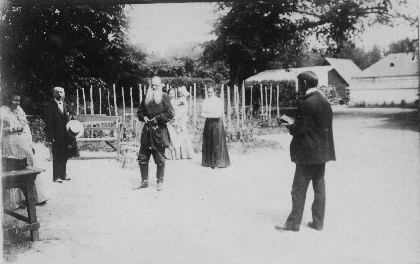
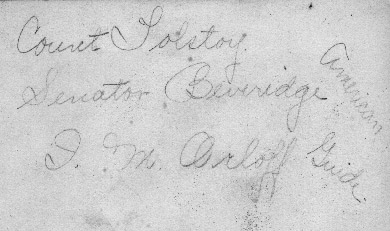
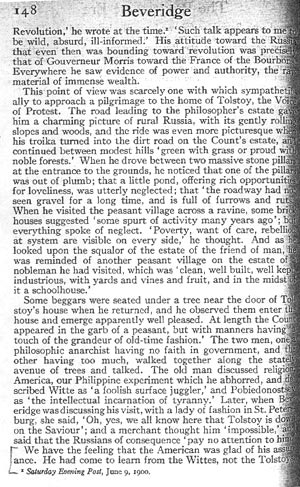
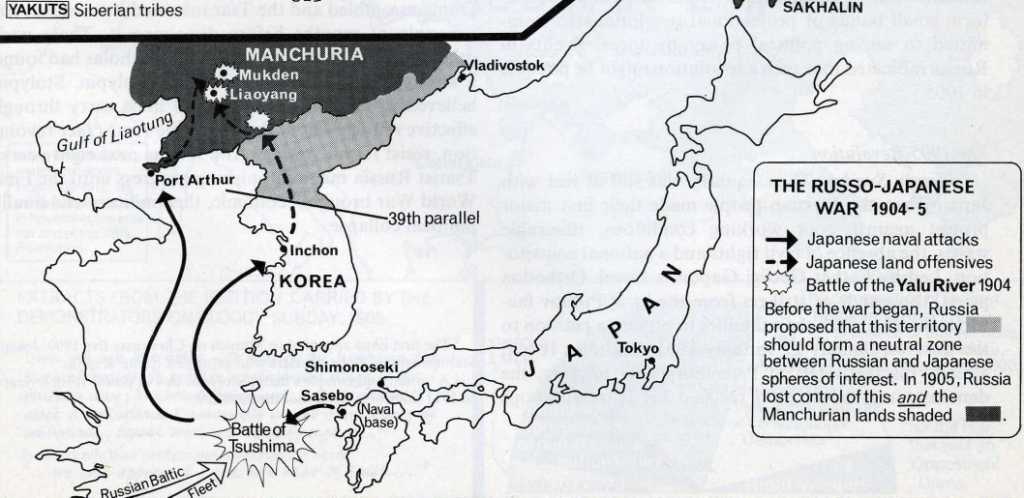
![[pix]](images/1905.Baku.oil.fields.kzk.patrol.FitzLyon135.jpg)
![[pix]](images/1905de.c%20TrtL%20mugshots%20CIV790.jpg)
![[pix]](images/Kautsky%20CIV151b.jpg)

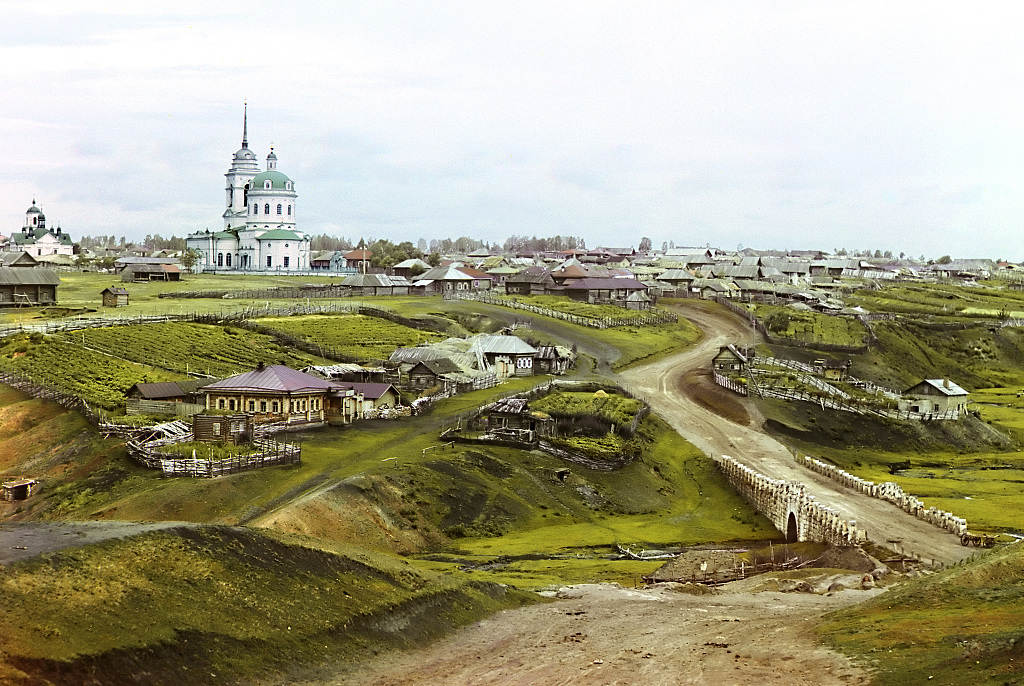
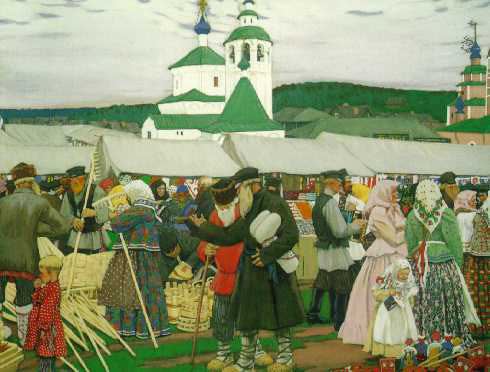
![[pix of peasant pioneers at rail station]](images/krx.gt-SBR.CIV601.jpg)
![[pix]](images/krx.hut.CIV739.jpg)
![[pix]](images/krx.hut.CIV740.jpg)
![[pix]](images/krx.hut.CIV741.jpg)
![[pix]](images/krx.hut.CIV742.jpg)
![[pix]](images/krx.hut.fisherman.CIV735.jpg)
![[pix]](images/krx.hut.Kiji.1875c.NIR1.jpg)
![[pix]](images/krx.hut.roof.edge.NIR14.jpg)
![[pix]](images/krx.hut.roof.ridge.NIR12.jpg)
![[pix]](images/krx.hut.wlt.CIV736.jpg)
![[pix]](images/krx.usad'ba.MNQ.Romanovka.vlg.Nakamura.8x11.jpg)
![[pix]](images/krx.usad'ba2.MNQ.jpg)
![[pix]](images/krx.window.jpg)
![[pix]](images/krx.window.1958.PNZg.NIR93.jpg)
![[pix]](images/krx.window.NIR7.jpg)
![[pix]](images/krx.windows.1969.PNZg.NIR95.jpg)
![[pix]](images/window.Rostov0.77wi.jpg)
![[pix]](images/window.Rostov1.77wi.jpg)
![[pix]](images/window.Rostov2.77wi.jpg)
![[pix]](images/window.Rostov3.77wi.jpg)
![[pix]](images/window.Rostov4.77wi.jpg)
![[pix]](images/window.SPB.73wi.jpg)
![[pix]](images/krx.xdj.clothes.Belgorod&RZNg.NIR132.jpg)
![[pix]](images/krx.xdj.box.lid.Palex.OWN.jpg)
![[pix]](images/krx.xdj.box.lid.VLAg.NIR152.jpg)
![[pix]](images/krx.xdj.dolls.NIR31.jpg)
![[pix]](images/krx.xdj.basket.plate.1970s.ARXg.NIR118.jpg)
![[pix]](images/krx.xdj.basket.upclose.NIR117.jpg)
![[pix]](images/krx.xdj.carved.bird.NIR125.jpg)
![[pix]](images/krx.xdj.Petuwok.NNGg.NIR51.jpg)
![[pix]](images/krx.xdj.Petuwok2.NNGg.NIR83.jpg)
![[pix]](images/krx.xdj.kbk.qaepitie.1875c.Lukutin.zvd.NIR154.jpg)
![[pix]](images/krx.xdj.bedspread.solar.rosette.ARXg.NIR50.jpg)
![[pix]](images/krx.xdj.towel.Peahen.ARXg.NIR64.jpg)
![[pix]](images/krx.xdj.tray.roses.MVAg.NIR157.jpg)
![[pix]](images/krx.CIV620.jpg)
![[pix]](images/krx.CIV811.jpg)
![[pix]](images/krx.chd.harvest.fest.MNQ.jpg)
![[pix]](images/krx.wmn.thrash.w.flails.MNQ.jpg)
![[pix]](images/krx.Gr.RUS.CIV738.jpg)
![[pix]](images/krx.hauls.wood.CIV619.jpg)
![[pix]](images/krx.make.hay.CIV806.jpg)
![[pix]](images/krx.UKR.CIV737.jpg)
![[pix]](images/krx.vlg.wagon.crossing.CIV807.jpg)
![[pix]](images/krx.wash.linen.MVA.CIV762.jpg)
![[MAP]](images/frn.MPR.1912-1913.BAL.wrx~Anchor120.jpg)
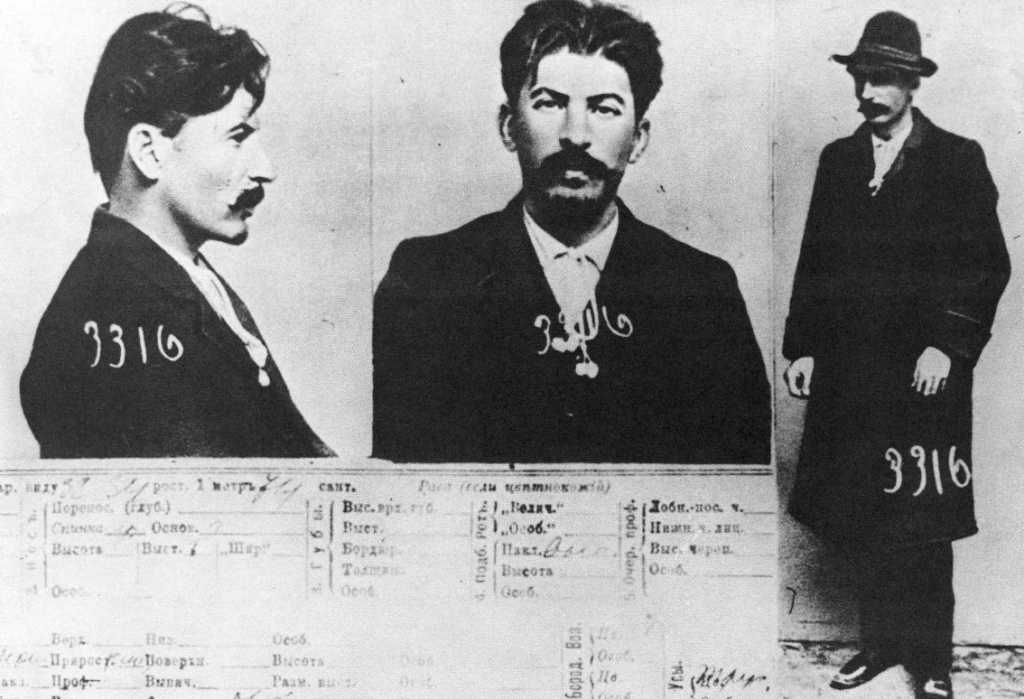

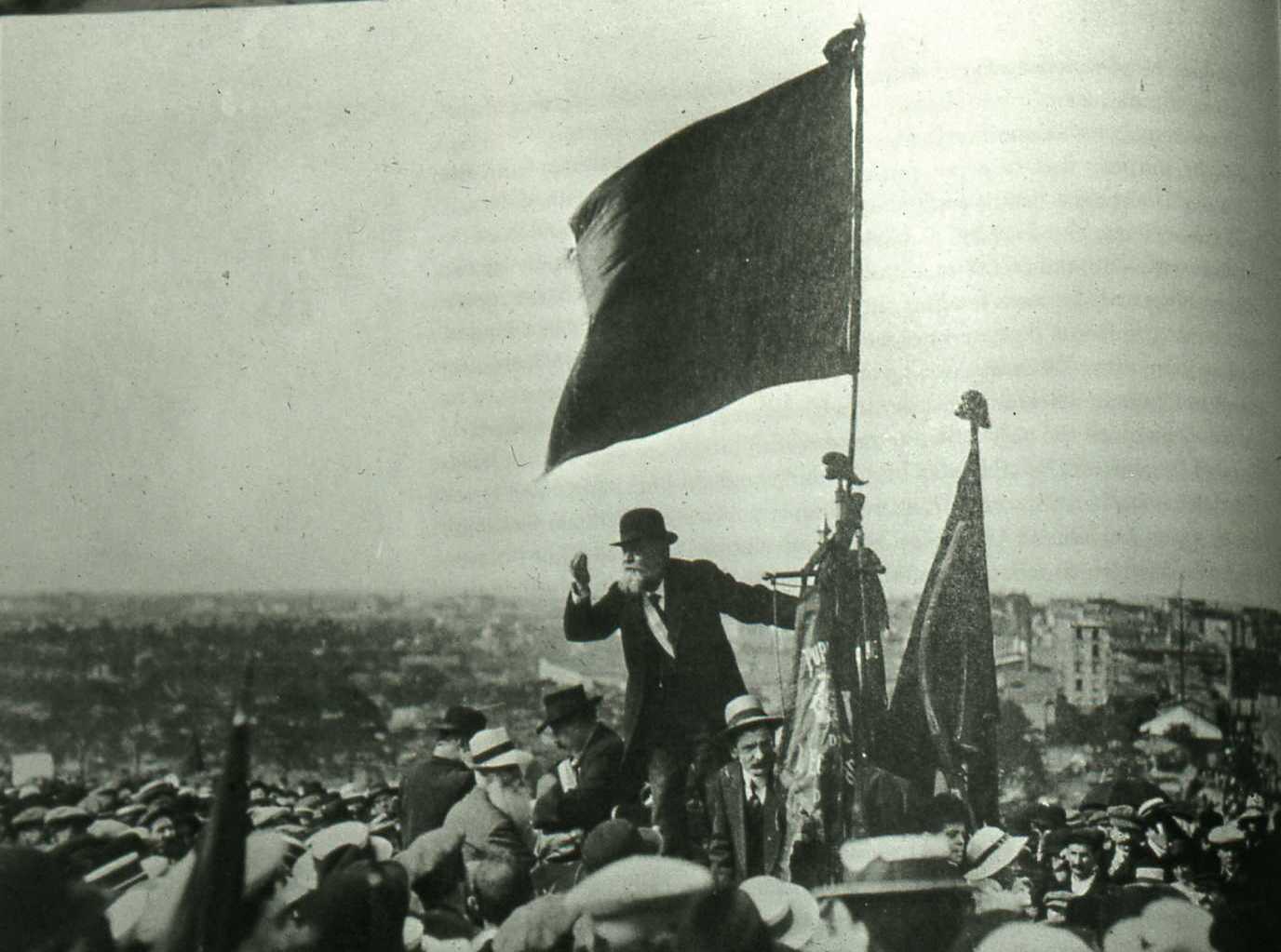
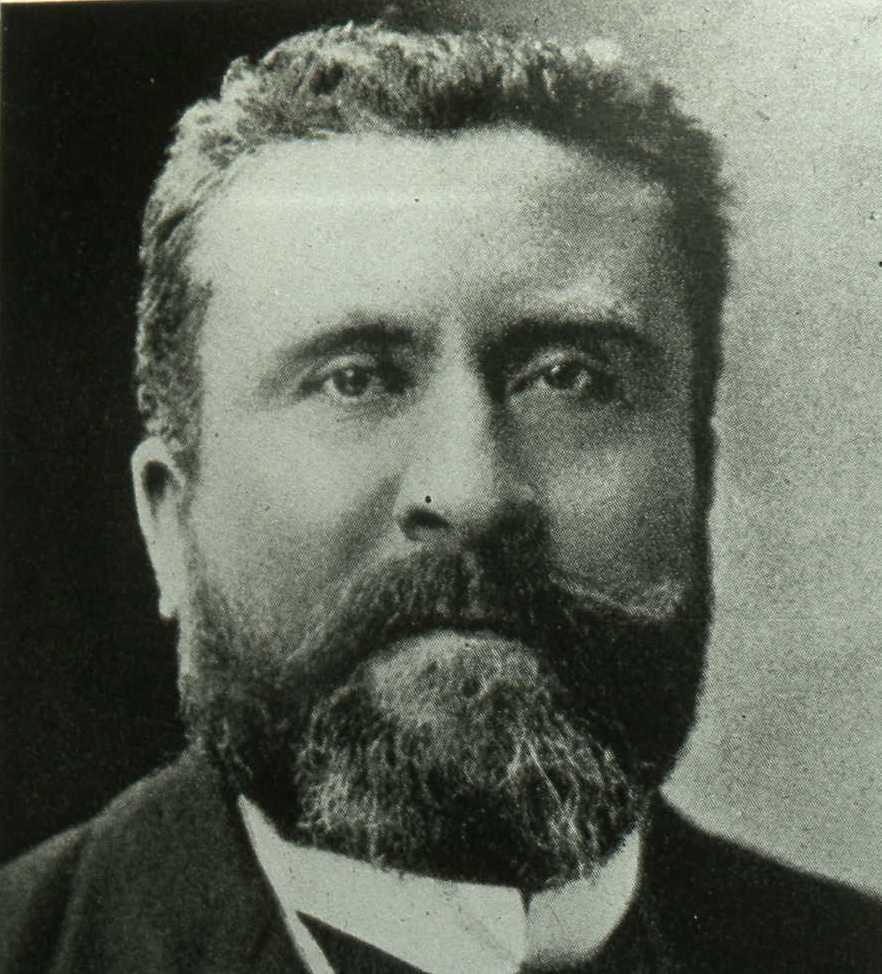
![[EG]](http://02varvara.files.wordpress.com/2011/02/01-destroy-this-mad-brute-wwi-propaganda-poster.jpg)