
<>1796no06:1801; Death
of Russian Empress Catherine II followed by brief (5-year) and most curious reign of Paul I
- Emperor Paul took strenuous measures to reverse much of his mother's legacy, just as she had feared he would
- For example, Nikolai Novikov and Aleksandr Radishchev were pardoned
- Novikov lived on to 1818, but never recovered from Catherine's suppression
and never returned to his earlier active professional life
- Radishchev tried to pick up where he left off. He returned to state service, but the era of Paul I
was so unlike the era of Catherine II
- He was pardoned, but never ventured again anything as bold
as his earlier optimistic and "enlightened" writings
- Still suffering from mistreatment at Catherine's hand and fearing a repeat of his earlier
prosecution, Radishchev committed suicide in 1802, a year after Emperor Paul's murder in a high-level coup d'etat
- 1796de12:Emperor Paul decreed serfs in southern Russia (Ukraine)
could not move freely from village to village [VSB,2:473-4]
- 1797mr24:Russian decree reduced peasant serf work-week
[DIR2:126-7 | DIR3:141-2]
- Serfdom had reached its nadir point in the time of Catherine II and seemed now to slacken its grip
on the throat of Russian peasants
- Piecemeal measures mounted over the next half century toward emancipation
in 1861
- Edict forbad Sunday Labor by serfs [VSB,2:474 | KRR:294-5]
- 1797au07:Russia moved to restrict expansion of government-owned and
administered property in the provinces
- This was followed by move to allot state lands to certain state serfs (but not gentry serfs)
- More piecemeal reform followed for those Russians whose labor provided the foundations
of Imperial social/service hierarchies [VSB,2:474-6]
- Still, Newspaper ads offered serfs for sale like any other commodity [DIR2:127 |
DIR3:142]
- Some of the same stop/go motion toward emancipation can be seen in the evolution of European slavery
- In 1794, the revolutionary French National Convention abolished slavery in all French territories
- But Napoleon soon (1802) repealed that law. War
was expensive. Economic productivity had to be as cheap as possible
- In the 30 years between 1784-1814, Rhode Island, Connecticut, New York, New Jersey,
Argentina, and Columbia all adopted laws providing for the gradual emancipation of slaves
- A global reform attitude, characteristic of the French Revolutionary era, intensified in connection
with unfree labor, but it was an uphill struggle
\\
*--Florinsky,1(24)
*--Peter Kolchin, Unfree Labor: American Slavery and Russian Serfdom
*--Stephen Hoch, Serfdom and Social Control in Russia: Petrovskoe, a Village in Tambov
*--Blum:326-44 (on Russian agriculture in the century before serf emancipation)
*--LOOP on "Slavery"
<>1796de:1797wi; Irish uprising, led by "United Irishmen" against British occupation, failed when heavy
winter storms prevented French Revolutionary armies, 13,000 strong, from making a sea landing at Bantry Bay to engage
the British in support of the armed uprising
*--Ireland was but one of several areas of Europe coming under influence and even direct control of French
revolutionary power
*--The rise of Napoleon to high command in France over the following 18 years (until
1814) moved the French Revolution into its distinctly military, expansionist and imperialist phase
<>1797:1804; Haiti, a French colonial possession in
The New World, was gripped in wide-spread and eventually successful slave revolt
- Black slaves were provoked to rebellion by inhuman treatment, and they were inspired by USA and French
revolutionary ideals
- Napoleon eventually withdrew the military forces he sent to put down the Haitian rebellion
- Before withdrawal, many of Napoleon's multinational troops defected to the Haitian side
- These were troops recruited or conscripted from Napoleon's wildly expanding European empire -- most notably
from Poland
- Rebelling black slaves later acknowledged the contributions of these "Euro-Americans"
to the cause of national liberations when the new 1805 Haitian Constitution declared all Haitian citizens
to be "legally Black" in this revolutionary New World republic
- Slaves imported from other lands now made themselves "Afro-Americans"
(in the generous and appropriate hemisphere-wide sense of the term "American")
\\
*--[W#1 |
W#2]
*--LOOP on "Imperialism and Revolution"
*--LOOP on "War and Revolution"
*--LOOP on "Slavery"
<>1797ap05:Uchrezhdeniia ob imperatorskoi familii
[Institutions of the Imperial Family] Emperor Paul and Empress Maria issued decree on succession to the
Imperial Throne [VSB,2:473 | DIR3:137-9]
- Exclusive and heritable udel prerogatives of the royal family were thus certified 700 years
after the institutionalization of an earlier, broader, more feudal definition of
udel [ID]
- Noteworthy statistic
= by 1857 the number of udel serfs (serfs "owned" by the royal family) = 838,000
<>1798:Indonesia, a group of islands stretching over
2000 miles west to east, cluttering the sea routes between the Indian and Pacific oceans, came under Dutch governmental
administration when the Vereenigde Oost-Indische Compagnie [United East India Company, aka VOC and in English
almost always called Dutch East India Company ("Dutch" is the standard English misnomer for the adjectival form
of "Nederland; the Netherlands) ]. In this year, VOC was liquidated and its assets "nationalized" by the Netherlands
government [W-ID]
- Before this time, the Dutch East India Company and the British East India Company had become the two most
powerful and classical mercantilist enterprises [ID], combining governmental and
insider-private interests in a huge state-managed corporation
- The Dutch East India Company (1602-1798) defeated the ambitions of the British East India
Company in Indonesia, "limiting" the great English international imperialist corporation to the Indian subcontinent
- But by the 1780s the Dutch company had rotted away at its core as a result of corruption and
unchecked exploitation of the region into which it projected its metropol power
- The Netherlands crown took direct imperial control over Indonesia, and began to colonize it
- For over a century and a half it would be called the Netherlands East Indies,
centered in Indonesia
- Here at the birth of European liberal reformism, and in the Netherlands, one of the nations that so much prospered
through international free-market commerce, imperialism came increasingly to seem both contradictory and unavoidable
- Imperialism abroad contradicted two most important new trends of domestic west European history =
- "free-market" economics [ID]
- liberal reformism
- The Russian state moved in the same direction and at about the same time as the Dutch with respect to
government control of its overseas corporate enterprise, the Russian-America Company
- But for Russia there was no possibility of contradiction with "free-market" economics or liberal reformism =
Russia enjoyed nearly none of that
- How about for England =
- The British East India Company held a monarchical charter which guaranteed it a monopoly on trade in the East Indies
- By 1740, the Company exercised control over only three centers of trade in India: Bombay, Calcutta and Madras
- But the great imperialist and industrial age was just then about to dawn
- The Company proclaimed itself the ruler of Bengal in 1765
- The Company not only benefited from trade revenue, it was authorized also to impose steep land taxes on all regions
it conquered
- Bengal territories were reduced to famine and economic collapse as the Company extracted greatest possible wealth
from the region
- In 1770, famine resulted in the death of about 1/3 of the Bengal population
- The area was not allowed to produce enough food in part because the Company needed to devote maximum acreage to
the production of opium
- Opium was a significant income-producing project
- Opium sales, most notably in China, contributed significantly to the financing of Company operations
- Only the Dutch Company rivaled the British Company when it came to one of the biggest items of
early 19th-century overseas commerce, opium
- Not long after the tragic Bengal famine, the English monarchy replaced the East India Company's
"entrepreneurial" directors with officially appointed state administrators in a "Board of Control"
- By 1815, the East India Company had managed to seize the greater part of India
- Its "private" corporate army had grown to 150,000 troops and was supplemented with detachments of
the regular British army and navy
- The Company thus became a hybrid military occupation, "free-market" and "bureaucratic" institution, satisfying
the interests both of a small number of insider "privateers" and of the British crown
- This was the situation until the Company was abolished [ID]
- Hybrid institutionalization of entrepreneurial and bureaucratic interests is an important factor
in the vigorous earliest years of steam powered industrialization
- This hybridization of government and business institutions also showed the persistent appeal of
mercantilism well into the modern era
- Modern European ("Western")
imperialist internationalism or globalization began to show its outlines clearly at the
dawn of the great industrial age [ID]
- Historians disagree about the material and financial contribution of imperialism to the growth of European
industrial economies. Could western Europe have industrialized on its own without those great overseas imperialist
corporations? [CF=The top half of this entry]
- Consider these surprising historical conclusions about the contribution of slavery to the growth of "Western"
financial prosperity [ID]
- British rule in India represented, among other things,
an imperialistic form of "primitive accumulation of capital", the simple taking of labor and commodities
available in this south Asian subcontinent, so vulnerable to English projection of its metropol power
- Primitive accumulation of capital is an early stage of economic modernization in the
emerging industrial era
, closely related to other large global trends
- After 1867, the term came into broad usage as a result of the growing influence of Karl Marx's, Das Kapital
[ID], volume one, part 8 "Primitive Accumulation", ch#26 "The Secret of Primitive Accumulation
[E-TXT]
- Does this vital and brief chapter presume that "primitive accumulation" occurs only at the original or early
stages of evolution within capitalist market economies?
- Primitive accumulation expresses itself in various forms of forceful extraction or expropriation of value
(land, labor, natural resources) [EG]
- It is further characterized by a concentration of this value in the hands of a fairly close-knit
set of entrepreneurial agents (individuals, companies, governmental institutions)
- Primitive accumulation of capital [theft -- Reaping without sowing (IE=Metaphorically harvesting fields planted by others) ]
should be contrasted with profitable expansion of invested capital stock [finance capital] through the successful or "profitable"
operations of industrial enterprise itself [economic growth within a market economy]
- This being so helps explain why so often "primitive accumulation" is taken to be characteristic
only of the early phases of capitalism
- However, we have to hold out the possibility that primitive accumulation is not just a passing
original phase of capitalism, or altogether particular to capitalism
- It appears a constant characteristic of all economic systems which are prone to
the expropriation of value from persons or places. It is historically visible in the experience of
pre-capitalist as well as capitalist and post-capitalist or non-capitalist economic systems
- What is distinct in capitalism is its insistence that the whole purpose of production is the
growth of capital; it is thus the essential and on-going form of capital accumulation. The main driving
purpose of capitalist production is not so much the "product" as it is the volume of capital gained in
the full productive and marketing process. The purpose is to maximize the accumulation of surplus-value. The
capitalist system economizes resources and labor in order to gain maximum possible increase in income and
capital assets ("business growth"), and to provide steady and growing return on investment
- Thus primitive accumulation and skimming of surplus-value could be described by
Karl Marx as early as 1844 in very philosophical as well as social-scientistic terms
[E-TXT]
- English behavior in India and China in these early decades might be compared
and contrasted surprisingly with a much later but similar era of "primitive accumulation of capital" in
Russian history = Stalinist collectivization and "five-year plans"
[ID]
- One contrast with England in India and China = Stalin's "primitive accumulation" was taken
altogether from the hides of a Soviet domestic population
- Therefore Soviet "collectivization" could best be seen as a Stalinist variation on English inclosures
[EG])
- But here we confront yet further but possibly nit-picking contrast. The sprawling multi-cultural qualities of the Soviet population
suggest that the people put in the grip of the collectivized and nationalized Soviet economy were arguably less "national" or
"domestic" than the English peasants who suffered inclosures. Therefore the contrast with the experience of India and China under
English imperialist rule is attenuated
- Another contrast = Stalin did not have to fret about state control contradicting any Russian "free-market" or "liberal"
traditions. Stalin did, however, need to claim -- much in the manner of "free-market" and "liberal" apologists --
that expropriation promoted progress and the general good
- Yet a further contrast = Stalin reflected the general European late-imperialist tendency toward genocide in dealing with
those who were targeted by his primitive accumulation = He dedicated agricultural collectivization to the
large macro-economic task of "abolishing the distinction between town and countryside"
via "class warfare" = "the elimination of the kulaks [rich peasants] as a class"
- Early 19th-century English Poet Laureate, Robert Southey [ID],
vacillated playfully between get-along-and-go-along establishmentarianism and powerful radical criticism of English policy
- He came up with a description for two increasingly popular English imperialist products imported from
distant points of European dominion
- Sugar from The New World
- Tea from SE-Asia
- Southey referred to the popular drink concocted from these two ingredients (the hot cup of tea) as
the "blood sweetened beverage"
*--LOOP on "Imperialism and Revolution"
*--LOOP on "finance"
<>1798:Etorofu
Island, off the eastern shore of Hokkaido at the southern end of the Kuril Islands | Russians landed,
planted the Orthodox cross, drove claim stakes with Russian inscriptions, and placed other indications of possession
- Shortly thereafter, samurai Kondo Morishige (1757:1815) explored the Hokkaido territories
- He tore down the Russian crosses and other claim stakes, put up Japanese posts saying Dai-Nippon-Etoru
[Etoru is a part of Greater Japan]
- He returned to Tokyo [Edo] and urged that Ezo [Hokkaido] be put under bugyo reign, under direct Bakufu rule
- This happened slowly over the next two decades
- 1800:Hokkaido and southern Kuril Islands | Japanese surveyor Mamiya Rinzo (1775:1844) at work
- In this year Matsumae family authority established itself over the whole of Hokkaido Island, after 3 great Ainu
rebellions (1643, 1669 & 1789) against the Japanese
\\
*--KEJ,2:238
*--PH&G:305-6
<>1799:Hokkaido | Takataya Kahei (1769:1827) volunteered as aid
to Kondo Juzo, Tokyo's agent there, to explore and survey Etorofu Island and check on Russians
- Takataya sought to establish for himself a monopoly on regional trade in the north
- He was from a poor family but had by now become a wealthy merchant who had founded his own shipping
firm, transporting clothing, tobacco, and salt to northeastern Japan
- Soon he set up his own headquarters in Hakodate
- Compare Takataya's relationship to Japanese National Seclusion policy
with Shelikhov and Rezanov's relationship
to Russian mercantilism
\\
*--KEJ,7:319
<>1799my08:Siberia | Irkutsk was the first
headquarters of the Russian-America Company
- Earlier action in Irkutsk was dominated by the merchants Myl'nikov; Golikov and Shelikhov
- The Company was founded to build on Shelikhov's grand ambitions
- Now with a royal monopoly, it worked to promote entrepreneurial exploitation of Alaska resources
- 1799de15:Emperor Paul granted special privileges to the Company for a period of twenty
years [DIR3:326-8]
- Within a year Russian-America Co. headquarters moved from Irkutsk back to Saint Petersburg
- The Company was being absorbed by the Imperial state, which gathered under distant state control
all private trade ventures in Siberia and Alaska
- Russian overseas corporate mercantilism took a lot of the steam out of spontaneous
pioneer frontier expansion
- As in other instances of huge European overseas mercantilistic companies, the stakes were simply too high for
ambitious monarchical elites to restrain themselves on the sidelines
- Not only internal conflict between privateer and bureaucratic interests, but serious international rivalries
arose against Russian presence in the northern Pacific Rim
- First, England (in the person of Captain Vancouver and eventually the Hudson's Bay Company)
- Then USA, in the person of John Jacob Astor and his American Fur Company
- Then other USA commercial companies often called "Bostonians" brought pressure on the Russian-America Co
- USA military financed Tlingit [Koloshi] indigenous hostility to Russia, supplying native insurgents with arms and
ammunition against Russia in Alaska
- England, Russia and the fledgling USA now entered into rivalry, via different forms of vast corporate enterprise, for
exploitation of natural resources in western North American territories and along Pacific shores
- Spanish imperial ambitions waned
- Russia now solidly in the north Pacific, even if it provoked some hostility with other expansionist nations
- Nikolai Petrovich Rezanov had been Shelikhov's main contact with the imperial Russian state in Catherine's time
- In Irkutsk, Rezanov fell in love with Shelikhov's daughter-in-law and they were soon wed
- Before long, the fate of the Russian-America Company would be
in Rezanov's hands
- Documents covering the Russian period up to the sale of Alaska to USA in 1867 [DC&V,3]
\\
*--Saul,1:42-8
*--P. A. Tikhmenev, A History of
the Russian-American Company
*--Howard Irvin Kushner, American-Russian
rivalry in the Pacific Northwest, 1790-1867
*--Lensen, Eastward:65-70
*--Clarence Manning, Russian Influence
on Early America:27-38
*--SIE,12:207
*--LOOP on Imperialism
<>1799:Russian/Ukrainian statesman,
with Cossack military family background, Prince
Aleksandr A. Bezborodko composed memo on
reform [Raeff2:70-74] "O potrebnostiiakh imperii
rossiiskoi" [GRV:115-9]
<>1799no09 (NS; 18 Brumaire according to French
Revolutionary calendar): Revolutionary France now ruled by Napoleon as First Consul
- He soon declared self Emperor and reigned for fifteen years, until 1814, and again briefly in 1815
- Historians still argue, was military commander Napoleon the child of the
national Revolution or the nemesis of it?
- The French overseas mercantilist empire had so far failed in the New
World [EG#1 | EG#2]
- Napoleon was prepared to look closer to home for imperialist opportunity, to the European continent itself
- At first, his ambitions stretched across the Mediterranean Sea to Egypt, though France did not have the strength
to hold Egypt on its own
- After the brief adventure in Egypt, Napoleon decided to take Europe as his "colony" =
- 1800je04(NS):[NW Italy] Battle of Marengo pitted 60,000 French and Austrian
troops against one another. Compare that with =
- 1812je:Napoleon invaded Russia with 600,000 French and
other allied troops, breaking earlier truce with Russian Emperor Alexander I [ID]
- Napoleon came a cropper on the east-European steppes and was driven back to
France and defeat, but on the way back =
- 1813oc16:oc19(NS): [Germany] Battle of Leipzig, or "The Battle of the Nations"
involved 500,000 troops from a coalition of Russia, Austria,
and Prussia against France
- The militarist/revolutionist acts of Napoleon represent a big epoch in European
history [W]
- Napoleon was a great imperialistic general, yet there was another
significant side of Napoleon, one in which he gave some appearance of being,
indeed, the "child of the Revolution" =
- As the European revolutionary era opened, the notion of La carriére ouverte aux talents
[careers open to talent] served to undermine the grip of old European notions of title by inheritance and
privilege by birth or establishmentarian assignment [See Pellicani just below]
\\
- Luciano Pellicani, The Genesis of Capitalism and the Origins of Modernity:84 discovered that the notion of "careers open to talent" dates from the beginning
of history and over the long haul has been a prominent and common presumption in global human culture
- It was the Western Roman Empire (Rome) and its successor states in "The West" that
were the exception to standard world-historical practice [at least until "Enlightened"
rulers and the Enlightenment commander-in-chief Napoleon moved to
re-link "The West" with global tradition]
- Almost a thousand years ago, the historian Giovanni Cinnamo was surprised to discover that birth gave privileged status in the Latin
kingdoms of western Europe [EG], while the socially more open Eastern
Empire (Byzantium) tended to reward merit
- Among the many medieval states that arose on the ruins of the destroyed
Western Roman Empire, feudal privilege and exemption by birth predominated
- From the classical through the medieval periods, the social/economic presumption of
status by birth distinguished "The West" from eastern Europe
- The "well-born" European aristocracy was the leading representative of that "Western" deviation
- Honoring status by birth always presented a serious obstacle to modernization or any sort of adaptation to social/economic
change
- The modern European notion of careers open to talent was not original with the Enlightenment, but it was expressed with
special force beginning then (for an early example, Thomas Paine [ID])
- The notion spread far and wide in the French Revolutionary epoch and was carried on by Napoleon and his army
- A powerful and largely successful assault on the notion of privilege by birth was
under way [EG]
- After the French Revolution, aristocratic dominance deteriorated rapidly
in "The West"
- From this point forward, a shockwave ran through 19th-century establishmentarian Europe
- Eventually, the assault on privilege and status by birth became the social/economic cornerstone of modernization there
- We Russian historians, with help from SAC, can expand on and refine Pellicani here. We can push the chronology of his insights
back 100 years and many miles into far northeastern Europe =
- We know that Peter the Great recognized the need for careers open to talent a century before Napoleon
- Peter introduced his Table of Ranks [ID] in order to free himself from
medieval Russian social hierarchies
- Like Napoleon, Peter was inclined toward a lopsided militarist notion of modernization
- In the process Peter conjured up a very early historical example of managerial elitism =
- Russian Imperial social/service hierarchies were a premonition of the modernizing 20th century
and its "civil-service" lists
- By the 21st century, counter-attacks are frequently launched against the idea of careers open to talent
- Counter-attackers often give it what they take to be a derisive label, "meritocracy" [EG]
- The critique of "meritocracy" has often been little more than a thinly disguised assault on the
concept of "careers open to talent", an assault on one of the pillars of European modernization
over the past two centuries, since the French Revolution
- David A. Bell, The First Total War: Napoleon's Europe and the Birth of Warfare as We Know It =
- Modern "total war" had its origins in French Revolutionary
politics [EG] and in the Napoleonic style of
warfare (see the statistics on growth in the numbers of troops accounted above)
- Oddly, the Revolutionary passion for absolute peace and liberty
contributed to the rise of an exterminationist logic, in
domestic as well as international politics
- The presumption was that political or military conflict had to be interpreted as a massive clash between
absolute and opposing principles
- Napoleon's 1799 coup d'état was a logical culmination of a gradual militarization of Revolutionary
politics
- Napoleon's Grande Armée was a great egalitarian mobilization of the whole
French nation and its allies
- Military virtue was becoming the very embodiment of civic virtue
- Critics accuse Bell of exaggerating the ruthless militarism of the Revolution
- They ask how Bell might explain the curious century of relative peace in Europe that followed the
Napoleonic era, 1814-1914, the century that preceded the first mechanized total
wars [ID] [2007no23:TLS:13]
- The Napoleonic era [beginning in 1797] might not have equaled the qualities
of "total war" demonstrated by WW1, but it did hint at the 20th century to come
\\
*--LOOP on "Imperialism and Revolution"
*--LOOP on "War and Revolution"
<>1800:Scotland,
New Lanark | Robert Owen (1771-1858) came from Manchester,
England, to Scotland to purchase local cotton mills
- Owen had worked his way up from laborer to owner of Manchester cotton mills
- He was now a wealthy, self-made industrial entrepreneur on his way toward founding
the
modern European social democratic movement, or socialism
- He was determined to establish a practical functioning cooperative community of working people
- He reorganized his New Lanark enterprise into a model industrial town in which public services were
delivered on a cooperative basis -- housing, public sanitation, schools, retail outlets (stores)
- The fame of New Lanark spread
- Often with Owen's support, experimental agricultural/industrial communities were
founded
- 1819:English Factory Acts grew out of Parliamentary inquiries into conditions
of labor in the new factory environment [ID] but
they were also inspired in part by Owen
- 1825:USA, Indiana, New Harmony utopian community established
with direct participation of Robert Owen [pix]
- Owen created National Equitable Labour Exchange and encouraged organization
of wage-labor unions and advised unions to unite with cooperative associations
- He personally experienced the profound transformation of everyday life
caused by economic modernization
- He sought to do something about it, but he fell afoul of English authorities who suppressed
wage-labor organizations
\\
*1994ap01:TLS:29, Ian Harris review of Selected Works of Robert Owen [TXT]
<>1801ja18:Caucasus Mountains southern slopes | Georgia [Gruziia] made a protectorate as
Russian frontier and imperialist expansion reached ever
more boldly southward, without hindering expansion to the east
\\
*--D.M. Lang,. A Modern History of Georgia. London:1962
<>1801:1825;
Russian Emperor Alexander I
reigned for a quarter of a century
- Twenty-four-year-old Alexander came to the throne as a result of a palace
coup d'état
- He was not unaware of this conspiracy which led to the murder of his father, Emperor Paul
- At Alexander's coronation, the Austrian Minister described in his report how the
new young Emperor marched in the procession "preceded by the
murderers of his grandfather [ID], surrounded by the assassins of his father and
followed by his own future killers" [that last was a prediction unrealized]
- Alexander's early letters expressed concern about conditions under his father's rule [VSB,2:477]
- Polish statesman in Russian service, Adam Czartoryski memoirs about this troubled
situation [VSB,2:478-81 | DIR2:128-39 |
DIR3:153-64] See his Memoirs
[more excerpts: WRH3:224f]
\\
*--Allen McConnell, Tsar Alexander I: Paternalistic Reformer (NYC:1970)
*--Marian Kukiel, Czartoryski and European unity, 1770-1861 (1955)
[DK435.5.C83k8]
<>1801ap02:Alexander I
issued a manifesto abolishing the
Secret Chancery [rudimentary secret police created even before Catherine's
reign] and transferred its authority to the Senate [VSB,2:481-2]
- 1801je05:Alexander directed a Commission to draft a new reformed
code of laws [VSB,2:482-3]
- 1801se27:Alexander abolished torture in criminal trials as reform spirit
mounted [VSB,2:483]
- 1801de12:Alexander decreed all free persons can purchase and own land, not
just aristocrats [VSB,2:483]
- 1801:Anonymously composed constitutional project = "Proekt vsemilostiveishei gramoty, rossiiskomu narodu
zhaluemoi" [GRV:119-25]
- Project was generated out of the deliberations of Alexander's reformist advisers:
A.R. Vorontsov, D.P. Troshchinskii,
V.P. Kochubei, N.N. Novosil'tsev, A.N. Radishchev
- M.M. Speranskii helped edit project
- Alexander did not, however, issue the project
- 1801:A. P. Vorontsov, "Zapiska o Rossii v nachale nyneshnego veka" [GRV:125-7]
- These first months show how Emperor Alexander hit the ground running with
plans for reform
<>1802jy:USA Delaware | French émigré Pierre
Samuel Du Pont de Nemours (1739-1817) and his son constructed the Brandywine powder works
- The Du Ponts were French citizens, but they helped consolidate the Hamiltonian
vision [ID] of a strong US economy independent of other national
economies but closely coordinated with US national goals and supported by governmental acts
- Pierre made a name for himself as a leading political-economic theorist
of the new era (the "Physiocrats", close cousins to the English-language "classical economists"
[ID])
- The Du Ponts fled the French Revolution as it became too radical for them
- Pierre returned to France briefly in the more congenial militaristic Napoleonic
times [ID], but returned to USA before Napoleon's death
- The company thrived on USA military-industrial contracting during the War of 1812
- 1822:Bank of America selected Pierre's son, Eleuthere Du Pont, as its head
\\
*--LOOP on war and revolution
<>1802se:Russian historian Nikolai
Karamzin (-1826), "The Book Trade and the Love of Reading in Russia" and other
essays [Raeff3:107-16 | KRR:412-14 | DIR3:165-74]
<>1802se08:Russian statute established Ministries and laid
out ambitious plan for Senate [VSB,2:483-5 | KRR:256]
- In these months Alexander I created, and was much influenced by, the Unofficial Committee
- Members = Pavel Stroganov, Viktor Kochubey, Nikolai Novosil'tsev, and the prominent Polish-born
Imperial statesman, Adam Czartoryski
- These believed in reform, but they meant "reform from above"
- They were not sympathetic to "grass roots" movements, particularly among the aristocratic elites who sought something like
social participation in legislation, perhaps through an augmented Senate
- Alexander's greatest reforming statesman, Mikhail Speranskii, made the last effort to elevate
the Senate, created by Peter I, into an authentic position of governmental authority
- However, statist reformers prevailed in Alexander's councils
- The old "colleges" of Peter I were juggled and renamed as eight "ministries" =
- Foreign Affairs
- War
- Navy
- Finance
- Interior
- Justice
- Commerce (NB! = soon abolished)
- Education (altogether new)
- Over the next few years five new universities were founded =
- Vilnius (Polish-language)
- Dorpat (German-language)
- Khar'kov
- Kazan and, finally,
- 1819:Saint-Petersburg
- The Unofficial Committee submitted several position papers, e.g., "Essay on the System to Be Followed in Restructuring
the Administration of the Empire", "On the State of Our Constitution", and "General Plan for Work with
the Emperor on Reform" [Raeff2:86-91]
- In the first year of Alexander's reign, Adam Czartoryski composed a "Project for a
Most Graciously Granted Charter to the People of Russia" [Raeff2:76-84]
- 1802:The vigorous reformer Mikhail Speranskii submitted a
memorandum to Emperor Alexander I in which he targeted imperial institutions and social classes for sharp criticism
- Speranskii was himself born into the social class [soslovie] "clergy"
- He worked his way out of that natal category and rose to a high position as close adviser to the crown
- His memorandum criticized old and "useless" governmental institutions, but also the
much compromised Russian social/service hierarchies [ID] =
Let us ask what is the nobility itself, when its person, property, honor, indeed
everything, depends not on the law but on a single autocratic will.... I should
like someone to point out the difference between the dependence of the peasants
on the landlords and the dependence of the nobles on the sovereign. I should like
someone to discover whether in fact the sovereign does not have the same right
over the landlords as the landlords have over the peasants. Thus, instead of all
the splendid divisions of a free Russian people into the very free
classes [sosloviia (ID)] of nobility,
merchants, and the rest, I find in Russia two classes: The slaves of the sovereign
and the slaves of the landowners. The first are called free only in relation to the
second, but there are no truly free persons in Russia, except beggars and philosophers.
- Speranskii went on to say that this situation made subordination and harsh
exploitation of the peasant a necessity for serf owners, and reliance on
absolutist state control over serf owners a necessity for peasants
- Speranskii understood how the mechanisms of Imperial social/service hierarchies naturally
reinforced one another and compounded their harmful effects
- Speranskii worked to limit the privileges of the aristocracy
(skipping ranks) as they sought to advance on the Table of Ranks
- Much reform followed, but Alexander's reform plans were grander than his reform accomplishments
\\
*--Marc Raeff, Michael Speransky: Statesman of
Imperial Russia, 1772-1839
<>1803:1808; Martha and Catherine Wilmot give
women's view on travel and
everyday life in Russia, in their Russian Journals
[Excerpts = WRH3:232f]
*--Anna Evdokimovna Labzina, Days of a Russian noblewoman :
The memories of Anna Labzina, 1758-1821 [Excerpts = KRR:370-6]
*--More everyday life in the memoirs of F. F. Vigel' [VSB,2:510-13]
<>1803ja26:Alexander I issued
preliminary directive on reform of public education [VSB,2:485-6]
<>1803fe20:Russian law created a new social
estate, Free Agriculturists, and seemed to promise easing of serfdom, as well
as other social reform [VSB,2:486-7 | DIR2:140-1]
<>1803ap30: USA doubled in size as result of
"Louisiana Purchase" [W] from France
- France had been stumbling in the New World for a half century, since the Seven Years
War [ID]
- Now Napoleon needed cash to finance his grand army of European conquest, so he was
willing to sell the remains of the old French New World empire [Continue LOOP on "finance"]
- "Lewis and Clark Expedition" -- formally "The Corps of Discovery" -- was dispatched to explore this territory
- The purchase can be described briefly as that territory from the left bank of the Mississippi River to the Rockies, including
the watersheds of all the tributaries to the Mississippi flowing from the west [W]
- NB! that the Ohio River basin to the east was already within USA jurisdiction
- The Rio Grande and Colorado river basins were still firmly within Spanish colonial territory
-
MAP of the river systems that flow into the Mississippi
- Corps of Discovery did not stop at the western extreme of the Louisiana Purchase
- It continued beyond the presumed limits of the purchase, over the Rockies, down the Snake and
Columbia rivers to the Pacific Ocean
- This might be taken as the beginning of the "Oregon question"
- That vast north-western Pacific slope of the great continental divide along the Rockies with its various
indigenous inhabitants (current day Oregon, Washington, Idaho and southern British Columbia) were not firmly
under the authority of any one sovereign European state and were not an aspect of the Louisiana Purchase
- A five-way shuffle for advantage was now under way between five sets of conflicting interest
(France no longer a factor) =
- Native American
- Russian
- Spanish (then Mexican)
- English and
- USA
- Another taxonomy of forces at work (another way to array the sets of
conflicting
interest) =
- The four sovereign Euro-American empires (as listed above)
- Several great overseas corporations
(e.g., Russian-America Co., Hudson's Bay Co., the North West Co.)
- Hitherto independent tribes, and
- Ambitious individuals and groups maneuvering for advantage
- Oregon Territory was defined as all the territory west of the Rockies, north
of Spanish New World colonial possessions (California, Nevada, Utah) and south
of Russian America (what is today a coastal panhandle of the state of Alaska,
but stretching ambiguously much further south in the days of the
Russian America Co.)
- Increasingly throughout the region the English mercantilist Hudson's Bay
Company was putting down roots, operating often in seeming independence of any
governmental control
- Soon there would be a new USA company in Oregon Territory
- USA citizens, "pioneers", moved in great numbers from east to west in the
first half of the 19th century
- It is wrong to remember only the rural and overland dimensions of the great "Go West, young man"
- There was a vital urban and overseas (around Cape Horn) component to this as well
- Notice the western N.American urban enclaves of US settlers in Santa Fe, Salt Lake City,
Portland, San Francisco, Monterey and Los Angeles
- Compare the USA Pacific rim urban development with the story of the mid-continental
metropolis Chicago [MAP]
- Contrast urban development in USA with that of Russia. Restrictions on population movement
and the particular conditions of Russian urban life [TXT, especially
the bold-face passages]
\\
*--Earl Pomeroy|_The_Pacific Slope: A History of California, Oregon, Washington, Idaho, Utah and Nevada
<>1804:1806; Russian Emperor Alexander I correspondence with Thomas Jefferson
[TXT letter #1]
\\
*--Saul,1:38-42
<>1804:Russian thinker Ivan Pnin, "Essay on Enlightenment...." [Raeff3:126-58].
The Enlightenment guttered still against the rising
darkness
<>1804oc07:Nagasaki | Rezanov
arrived on the ship Nadezhda, captained by Ivan Fedorovich Kruzenshtern
[Krusenstern, Adam Johann von]
- In the previous year, 1803,
Alexander I dispatched as official envoy Nikolai Petrovich Rezanov (1764:1807)
who sailed from Kronstadt in Gulf of Finland, via Cape Horn of Africa, to
Kamchatka in northeastern Siberia
- Rezanov planned to take up the permit given years before
to Laksman to visit Japan, misinterpreting that permit to allow trade w/Japan
- Rezanov was son-in-law of Russian-America Co. founder Shelikhov [PH&G:783] and
a majority stockholder in RAC
- He believed Japan would become the supplier to Russian outposts on Kurils, Aleutian Islands and
in Alaska
- Rezanov returned Japanese castaways and gave gifts. Japan put them all under close guard
- 1805:Sea of Japan and south. Kruzenshtern explored under Russian flag
- 1805ap04:Nagasaki. Only now was Rezanov granted meeting w/shogun envoy, who refused gifts and ignored requests for trade
- This despite R's careful observation of Japanese etiquette, removing shoes, sitting on tatami mats
- Rezanov was personally affronted [KEJ,6:307]
- 1806:Kronstadt (island protecting inlet to Saint
Petersburg) to Kamchatka-Kurils | Captain Vasilii Mikhailovich Golovnin
sailed aboard the frigate Diana on an around-the-world expedition
- This peaceful expedition ran into complications caused by Rezanov's corporate politics [BBL/Fraerman. Ivashchenko]
- 1806:1807; Hokkaido waters, Kurils (Etorofu), and Sakhalin
(Karafuto) | On Rezanov's orders, two captains who served the Russian-America Co., Nikolai
Aleksandrovich Khvostov and Gavriil Ivanovich Davydov, repeatedly raided Japanese
settlements and shipping, and drove off Japanese settlers [KEJ,6:341.
PH&G:774, 783]
- They looted the Japanese settlements, leaving a letter on their own corporate authority saying they would
return unless Japan came to terms with Russia
- Their purpose was to force Japan to abandon national seclusion [KEJ,3:45, 6:307]
- This was an early example of "gun-boat diplomacy", exercised in this case by an overseas corporation
- Such "gun-boat diplomacy" was taken up more successfully by USA a half century later
- Japanese officials stiffened defenses and wrote a defiant reply [SHJ,3:203-4]
- Mamiya fought Russians and was wounded
- 1806ap:The dominant figure in the Russian America
Company, Rezanov seemed a "loose cannon" as he took on the functions of a sovereign monarch in the
northern Pacific Rim
- He left Japan, now on another grand mission to the San Francisco Presidio, the seat of Spanish
administrative authority in Alta California
- He won the heart and hand of Concepción (Conchita) Argüello, the 16-year-old daughter of the Spanish commandant
- He seemed to think "nuptial diplomacy" might unite the ambitions of Russia with those of Spain in the Pacific
- Or maybe he sought to unite the ambitions of his own Russian-America Company with those of
a more independent Spanish "El Norte", the remote northern territories of the stumbling Spanish Empire
- Perhaps this was an especially ambitious moment in the history of transnational corporatism
- 1807:Siberia, Krasnoyarsk | Rezanov died while on his way to Europe seeking Papal permission for
a Russian Orthodox widower to marry the Comandant's young Catholic daughter
- Rezanov kept diary and other descriptions of his trip, now in the library of the Russian Academy of Sciences
- His exciting eight-year career on the Pacific Rim frontier ended
- His Spanish fiancée became first nun in California
- 1807:Hirata, a great Shinto scholar (1776:1843) [PH&G:159], wrote Chishima
shiranami [White Waves of the Kurils] as a guide on how to restrain barbarians (for example, Rezanov) and a manual
of modern coastal defense [Sansom,WWJ:244]
- 1808:1809; Sakhalin (Karafuto) Island explored by Mamiya w/ Matsuda Denjuro
- On his own initiative Mamiya followed the west coast of Siberia to
discover Tatar Strait
- He then sailed up the Amur River 100 miles or so to Deren (Te-jen), a Manchurian post established
for the collection of tribute
- Mamiya's adventure was a further sign that active international economic relations were maintained
despite various mercantilist or statist efforts to control them = Japanese Seclusion or Russian
mercantilism
- Mamiya published Kita Ezo zusetsu [an illustrated account of
northern Ezo (i.e., Sakhalin)] and Todatsu kiko [Travels in Tatary] which contained significant geographic and
ethnographic information [W]
- Russian/Japanese relations seemed promising over previous
decades, when largely limited to "private" commercial ties
- Events to the west again complicated Russian imperialist expansion
\\
*--Japanese ruling Bakufu felt they "had no need of foreign goods, to permit trade relations would merely deprive her of
useful commodities and risk the entry of foreign religious doctrine" [Sansom,WWJ:244]. Serious confusion and error within
the Bakufu explained in SHJ,3:202-3. Shinto scholar/statesmen were beginning to see the need for radical modernization,
rather than seclusion. Russia played a role in the coming of the
"Meiji Restoration"
*--Russian poet Andrei Voznesenskii has written an interesting historical fiction about the remarkable career of Rezanov,
Story under Full Sail
*--Chevigny, Lost Empire
*--Voenskii"Russkoe"
*--SIE,11:988
*--BrE,51:475
*--PH&G:776
<>1804de09:Alexander I decree reaffirmed
Jewish "Pale of Settlement" created by
Catherine II after the annexation of Polish territories
[ID]
*--Alexander I now added other measures, some
reformist, some not [VSB,2:487-8]
<>1805de02:Austrian town Austerlitz the site of a great
Napoleonic military victory over Russia and Austria
*--Coalition of England, Russia and
Austria having
little success against Napoleon
<>1806:England imposed "Continental Blockade" on
Napoleon's Europe and, step by step, all Napoleon's allies
*--Wars were becoming
"global" because national economies were becoming global
<>1806:Holy Roman Empire (after
1000 years of stuttered existence) destroyed by Napoleon
*--His next big
target would be yet further east in Europe = the Russian Empire
[ID]
- The Holy Roman Empire was later thought of as the
first German "Reich" [imperial regime], as in the name of the German-speaking nation-state translated
as "Austria" [Osterreich or Eastern Reich, indicating the
surviving eastern European edge of the great empire (Reich)
administered originally from the metropol Rome]
- But what of the developing vigor of northern German folk?
- The Protestant Reformation [ID] and the Thirty-Years
War [ID] had already destroyed any possibility of unity among
the German-speaking peoples of middle-Europe
- The Lutheran north and the Catholic south were spiritually and in other ways
at increasing distance from one another
- Two paths to modernity followed for the German-speaking peoples of Europe =
- Prussian path in the north of "middle-Europe"
- These Germans drifted ever further from the dominance of Vienna
- Prussia began its fretted development toward "nationhood"
[ID] many years later than the
geo-political nation-states known as France and England
- 1806:1807; Johann Gottlieb Fichte issued "addresses to the German nation" urging nation-state union
and independence in the north [E-TXT#1 |
E-TXT#2]
- Austrian path in the southeast
- Austria desperately clung to notions of imperial grandeur while actual power eroded
- Between 1867 and 1918, it glowed brightly for one last time as the Austro-Hungarian Empire
[ID]
- By the end of WW1, the deceptive glow was extinguished
\\
*--Notice how the title of Heinrich Winkler's
_Germany: The Long Road West (v#1, 1789-1933 and v#2, 1933-1990) presumes that the historical
evolution of northern Germany toward "The West" is a viable topic, much as we are so often asked to
presume "westernization" of Russia is a viable topic
- Winkler argues that the old pre-1806 dream of the holy “Reich” [imperial regime] inspired
the northern German-speaking peoples every bit as much as it inspired the Austrians
- The myth of the Reich postponed German nationhood in the north and squelched evolution of democracy there
- Furthermore, Lutheranism promoted authoritarian and "caesaro-papist" tendencies in government
- Look ahead 250 years for a summary of what follows for northern German-speaking peoples =
- In the era of the Revolution of 1848 [ID] the central contradiction of European
liberalism [ID] expressed itself with special
sharpness in Prussia =
- National unity and liberty were not easily combined. Nationalism and civil rights clashed
- The increasingly powerful European nation-states were not natural allies of human rights
- Two decades later in these northern German-speaking regions, Bismarck solved this contradiction
by creating a "Second Reich", a parliamentary, authoritarian, statist and militaristic German
nation-state "Deutschland" [ID]
- Liberty took second place behind national unity
- Militaristic chauvinism [ID] put civil society into a second position
- At the end of WW1, "democracy" was first tried under circumstances of humiliating defeat and economic
collapse [ID]
- In 1933 the Nazi movement jettisoned parliamentary democracy and revived the imperial legacy when
it created the "Third Reich" [ID]
- The Nazi regime was based on broad popular (if not technically democratic) assent
- Domestic life was increasingly militarized with an eye to revenge for national humiliation in WW1
- WW2 destroyed the myth of the Reich, and Germany was neutralized and divided between contending partners =
- USA led "The West" (England and France)
- USSR led world-ambitious proletarian internationalism [ID]
- Then in the 1990s, Germans in the divided north were united, not as Reich but as a recognizable democratic
nation-state
- In other words, national unity and liberty were, as far as possible, now combined
- The great modern European contradiction appeared finally accommodated in the German Federal Republic
- As of 1806, fully "Westernized" Germany was far in the future. There
still would be no "Germany" for 65 years [ID].
CF=Italy
- As of Napoleonic age, Prussia still had a perilous half century ahead of itself
as a German-speaking monarchy
- For many years yet, it would be dominated by the interests of a landowning aristocratic elite (Junkers)
- These Junkers in the eastern regions depended, as from days of yore, on the labor of
colonially subordinated Slavic villagers (Poles)
- In the Napoleonic era the German-speaking world, north or south, seemed to have little chance either for
traditional conservative or new liberal political futures
- But, as in Russia, there were Germans ready to struggle for one and/or the other
[EG=5-hop LOOP on Weber]
- Winkler reminds us that a history of what could be called "the Westernization
of The West" is more recent and more critical than we might presume
<>1807je25:Russian Emperor Alexander I
and French Emperor Napoleon signed alliance at Tilsit [VSB,2:488-90 |
DIR2:142-52 | DIR3:175-83]
- The two emperors played at the very un-revolutionary (technically reactionary) possibility of
creating anew the great East/West Roman Empire [origins ID |
destruction ID ], with Napoleon Emperor in the West and
Alexander Emperor in the East (once the Turks were defeated)
- Napoleon was well on his way to consolidating his power in "The West", but uncertainties about
the future of the Turkish Ottoman Empire in "The East" posed critical difficulties for this grand plan
- Russia had for decades been in a back-and-forth struggle with the Ottoman
Turks [EG]
- Napoleon's own ambitions had recently been tempted in "The East" when he achieved easy but brief
successes in Egypt [Wki],
the critical geo-political fulcrum point in AfroAsia
- In the years before Tilsit, Revolutionary Napoleonic France aided the Turks against Russia
- Now a secret provision of the Tilsit Treaty contracted France to mediate
Russia's diplomatic entanglements with the Ottoman territories. If mediation
failed, this secret provision specified joint French/Russian dismemberment of
the Sublime Porte (diplomatic term for Ottoman metropol authority centered in
the old Byzantine capital, Constantinople, pronounced "Istanbul" in Turkish) =
...if in consequence of the changes which have just occurred at Constantinople, the Porte should not accept
the mediation of France, or if after it has been accepted it should happen that, within the
period of three months after the opening of the negotiations, they have not led to a satisfactory
result, France will make common cause with Russia against the Ottoman Porte, and the two High
Contracting Parties shall come to an agreement to remove all the provinces of the Ottoman Empire
in Europe, except the city of Constantinople and the Province of Roumalia
[MAP], from the yoke and the
vexations of the Turks.
- A similar secret Tilsit provision applied to French diplomatic entanglement
with England, placing Russia in the position of mediator (friend or ally of
Napoleon), just as Napoleon agreed to be mediator (friend or ally of
Alexander) with the Ottoman Turkish Empire
- Despite Tilsit, Napoleon's and Alexander's ambitions remained far from harmonious
- Prussia was another place of competitive overlap between the two emperors
- At Tilsit, Alexander succeeded in protecting the integrity of the Prussian monarchy and its homelands
from complete subjugation to Napoleon
- Alexander reassured Prussian king Friedrich Wilhelm III that Napoleon's gains in Prussia were temporary
- Alexander said to Friedrich Wilhelm, "Be patient. We will get it all back.
We will break his neck"
- Five years later, with allied support from Prussia and others, Alexander did just that [ID]
- In the meantime, demands of the great Napoleonic wars shaped and gave direction
to Russian imperialist and frontier expansion, as well as to the course of Russian domestic reform
- While Prussian reform moved ahead, Russian reform came to a halt
- 1807oc09(NS):Prussia emancipated its serfs, but those old German-speaking Teutonic and
Livonian knights [ID], now landowning aristocratic elites within the
Russian Empire just over the northeastern border of Prussia clung tightly to their authority over serf labor in their
villages. These now Russianized "Baltic Barons" played an important role in delaying
emancipation of serfs in Russia for almost a half century [ID]
- Other Russian reforms were put on hold [EG]
- And, as so often in time of war, anytime and anywhere, Emperor Alexander felt it necessary to re-create the
national secret police administration he had largely disbanded six years earlier
\\
*--LOOP on Imperialism
*--LOOP on war and revolution
<>1808+: French political theorist
Charles Fourier (1772-1837) published Théorie des quatre mouvements
*--This and later works made Fourier one of the most
influential radical thinkers of his epoch
- Fourier was of the bourgeois class (like the English visionary Robert Owen
[ID]), and his family did well, but he dreamt of a
future far more egalitarian than that produced by the French Revolution
- Fourier believed in the liberating but also unifying power of natural human passions
- He felt, as did Rousseau, that modern society
was to be blamed for most of humanity's woes = "Civilization" hindered the realization of "harmony"
- He sought to restore human "feelings" to their proper superior relationship to "reason"
- Seeking to free humans for a fully emotional and passionate life, he conceived of a
highly rational economic unit called the "phalanx"
- He supplied a very precise number = 1620 people working together equaled one phalanx
- He thought of the phalanx as the basic cellular unit of his ideal self-sufficient social-economic system
- The community that formed the phalanx was called a phalanstery
- Fourier ran ads in newspapers inviting wealthy financiers to bankroll his transformational organization
- No bankers responded
- But many followers of Fourier later made efforts to create such utopian communities, many of them in USA (EG=Brook Farm
[W])
- Charles Fourier and Saint-Simon were very different
figures, but together they were thought of as founders of what a later
generation (mainly opponents and most famously Karl Marx) called "utopian socialism"
<>1808:1832; Weimar Germany|
Writer and cultural impresario Johann Wolfgang von Goethe publish his most famous
work, Faust
[PWT2:115-17]
- 1798:1717; Johann Sebastian Bach had been court organist in Weimar, the capital
city of the German Duchy Saxe-Weimar
- The city was a European literary mecca during the time of Goethe's residence there (1775:1832)
- Weimar was the cultural capital (much as as Prussia was the political capital) of
an emerging north German civilization
<>1808:USA and Russia initiated formal diplomatic relations
- In that same year, German-born but now USA citizen and NYC resident John
Jacob Astor (1763-1848) formed American Fur Company
- The Company included a Great Lakes subsidiary and a Pacific Fur Company
- The Pacific Fur Company provincial headquarters was in an Oregon Territory city named
after the boss = Astoria
- 1808ap09:Russian-America Co. directors complained about incursions of "Bostonians" into seas and
territories claimed by Russia [DIR3:328-32]
- By the 1820s, Astor's companies exercised a virtual monopoly on the fur trade in USA territories
- At his death he was the wealthiest individual in the USA
- Beyond USA proper, Astor's "capitalist" corporation was an active rival to the old Russian and English mercantilist
overseas corporations in North America and the Pacific region
- Astor companies were not mercantilist, but they worked to exclude "foreign" companies and
develop the middle and western regions of North America under USA dominance
- The Company was active in the development of Mississippi riverboat transportation
- As an early example of a "trust" corporation, Astor's American Fur
Company also worked to crush all competition, whether "foreign" or not
\\
*--Saul,1:27-55 & 64-69
<>1809mr23:Finland fully absorbed into Imperial Russia
[VSB,2:490]
*--Finland was granted its own constitution, suggesting that the Emperor might
be open to the thought of constitutional reform in Russia itself
*--Frontier and imperialist expansion was now mainly shaped by Napoleonic contingencies
<>1809oc:Russian minister Mikhail Speranskii issued
his bold project for extensive institutional reform [Raeff2:93-109 |
VSB,2:490-3 | DIR2:153-7 | DIR3:184-90]
- Over the next year, the State Council [Gosudarstvennyi sovet] was established
and the ministries reorganized [VSB,2:493-4 | KRR:256-7]
- The State Council was appointed from among old and experienced statesmen
- Its role was to consult with the Emperor, at his pleasure
- 1811:Speranskii wrote project for legal reform, "Vvedenie k ulozheniiu gosudarstvennykh zakonov"
[GRV:127-36]
- This was a great period of Alexandrine reform , but
by 1812 international crisis throttled domestic reform
- Speranskii fell from
power and favor with Emperor Alexander
- The legal reforms, designed in 1811, were
not implemented until 1832
<>1810:USA CA Fort Ross founded by 95 Russian
colonists who were expected to help supply the Russian Pacific-rim enterprises of the Russian-America Company
*1812:Russian-America Co. signed an agreement with Spanish officials to lease
territory around Bodega Bay, not far north of San Francisco Bay
*--USA-Russian economic relations intensified in the heat of the Napoleon wars [Saul,1:25-27,
111-32]
*--USA vessels carried 20% of all exports out of Saint-Petersburg
<>1811:Nikolai M. Karamzin
published Memoir on
Ancient and Modern Russia: A Translation and Analysis
[Excerpts: RRC2,2#23 | VSB,2:495-7]
*--Russian E-TXT
*--Letters of a Russian Traveler, 1789-1790: An
Account of a Young Russian Gentleman's Tour through Germany, Switzerland, France and England
\\
*--J. L. Black, Nicholas Karamzin and Russian Society
in the 19th Century (1975)
<>1811:1815; Netherlands East Indies (Indonesia) occupied by English
forces
*--Overseas imperialist corporations reacted to the globalization of European politics
in the Napoleonic era
*--Indonesia provides but one of many examples of how Napoleonic wars
were not unlike the "world wars"
of the 20th century
<>1811mr01:1849au02; Egypt ruled
for over 38 years by Albanian-born Islamic warrior, visionary and modernizing leader Muhammad Ali
[W ID]
- 1801:1811; Over this previous decade, Egypt provided yet further illustration of the increasingly
global implications of the Napoleonic era
- 1801:Napoleon's capricious and ill-considered invasion of Egypt,
then abrupt departure [ID], left the Nile-valley
western frontier of Ottoman Turkish power in the grips of serious disorder for a decade
- 1811mr01:Muhammad Ali massacred his main Mamluk competitors and gained ascendency over
fractious war-lords
- Over the next quarter century, an amazing "modernization" got under way in
Egypt under Muhammad Ali
- Ali's reform efforts lasted until further, post-Napoleonic entanglements with
suppressive European imperialist powers stymied his efforts
- 1821:Ottoman Sultan appointed Ali governor of Crete, which fed certain of Ali's own ambitions beyond Egypt
- 1824:With a growing naval force and newly modernized ground troops, Ali involved himself in the Greek independence movement
- He sought to protect Ottoman authority on the Greek peninsula
- Ali thus invited European intervention, since the English wished to
exert their authority on the Greek peninsula (in the name of "Greek
independence") =
- 1828:The English arrayed a strong naval force before Alexandria and threatened to level it if Ali did
not withdraw from Greece, and he did
- Until stymied, Ali moved ahead to create a relatively independent and sovereign Egyptian nation =
- Institutional modernization
- Created an Egyptian educational and health-services infrastructure
- Built a rational system of bureaucratic administration with trained (educated) functionaries
- Social reform
- Created modern urban workforce (but via something like serfdom rather than free "wage-labor")
- 1824:Upper Nile regions of Egypt up in revolt, in part provoked by imposition of bound labor requirements
- Rebels slaughtered. Modernizing Egyptian army clashed with peasants armed with nothing more than
pikes and mystic ferver
- Educated the sort of specialists needed in post-agrarian, early-modern economies
- Economic modernization under state control
- State expropriation of all Egyptian property
- State put in charge of all trade, foreign and domestic
- This was a radical variation of recognizable mercantilist policy
- But with surprising positive financial results for cotton growing farmers
- Imposition of extremely high taxes to fund modernizing projects, EG=
- Began construction of navigable canal to re-link the port of Alexandria with the great Nile River
- Manufacturing introduced (early "industrial revolution")
- Created textile industry to process Egyptian cotton
- Thus to ward off imports of European textiles and take advantage of domestic cotton
- Textile industrial dream was never realized
- State-financed and administered factories were devoted nearly exclusively to production of military hardware
- There is much here that replicates the Russian pattern established by Peter the Great a century
earlier [ID]
- Military modernization
- Already it was clear that wars could no longer be won by hearty sword-bearing, pre-industrial warriors on horseback
or camelback
- 1829+:Alexandria on the Mediterranean coast near the mouth of the Nile became a modern ship-building center
- In other words, Ali set out to make Egypt into a modern "European-style" nation
- However, he strengthened the sinews of militaristic mercantilist power
rather than anything like the Adam Smithian idea of "wealth [and welfare] of [whole] nations"
[ID]
- Ali did not seek more than a limited "national" independence for Egypt
- Instead he sought always to maintain close ties with the Ottoman Turkish Empire
- Entanglement with European powers was at first eased by growing closeness with France, an
ironic carry-over from the days of Napoleonic invasion, however =
- Muhammad Ali failed to deal effectively with other expansive European imperialists who sought
advantages and were not going to allow independence to flourish in this vulnerable part of the world
- 1840jy15:England, Russia, Prussia, Austria and Ottoman Turkey
signed the London Convention [ID] on limiting
the expansive claims of Egypt and rendering aid to the Turkish Sultan
- The London Convention was arranged without the participation of Egypt ally France
- As a result of growing competition in AfroAsian affairs, a threat of war arose between
France and the London Convention allies
- French King Louis Philippe, much like Russian Emperor Alexander II a third of a century
later in 1877 [ID], did not dare face-down the opposition
of powerful "Western" powers
- Louis Philippe abandoned Muhammad Ali and his dream of independent indigenous modernization
- However, as this historical
MAP
shows, Ali's dynasty carried on in Egypt until 1880 after which time
England stepped in to take over the earlier French imperialist project
\\
*--LOOP on "Imperialism and Revolution"
*--LOOP on a"War and Revolution"
<>1811jy11:Japan,
Kunashiri Island | Vasilii Golovnin
landed to make amends for 1807:raids
- Japanese lured, then captured Lieutenant Commander Golovnin and crew who were surveying
the Kuril Islands
- Golovnin put a man ashore further out to sea, on Etorofu Island, and
went ashore himself to join conversations with Japanese officers who gathered there
- Then Golovnin anchored for night off Kunashiri near "strongly garrisoned fortress"
- He went ashore again w/some men, was surrounded, bound, rough handled and packed off to Hakodate
for two years [SHJ,3:204]
- Tradition says this was in retaliation for Khvostov attacks [ID] on Japanese territories
- Golovnin later published his memoirs of his time in
Japan Narrative of My Captivity
[Excerpts in Lensen,Eastward:61-5]
- Golovnin's memoirs were quickly published and republished in English to satisfy deepening European curiosity about the
fabulous Asian Island civilization
- 1812:Kuril Islands | In retaliation for Golovnin kidnap, Lieut. Commander Petr Ivanovich Rikord seized the
powerful frontier merchant Takataya and took him to Kamchatka
- 1813:Takataya persuaded Russians to let him return to Japan
- Okhotsk commandant gave written assurance that Khvostov raids were without the authorization or knowledge of tsarist
authorities [Beasley,MHJ:40 said written assurance from Irkutsk provincial governor]
- Golovnin managed to repair Japanese-Russian relations
\\
*--KEJ,3:45
<>1812:German brothers Grimm published Kinder- und Hausmaerchen [Children's
and Home Tales]
- The publication had many pages of notes and explication. Jacob Grimm said
=
Above all it is important that these items should be gathered faithfully and
truly, without decoration and addition and with the greatest possible
precision and detail, from the mouths of the storytellers, where
practicable in and with their own authentic words
- The brothers hoped to discover in these folk tales from the village an
expression of something like an authentic "German character"
- But they were constantly confronted in these tales by a general,
anthropological universalism rather than a satisfying nationalistic particularity
<>1812jy06:Russian Emperor Alexander I issued
proclamation of war with French Emperor Napoleon [DIR2:158-9 |
DIR3:191-2 | WRH3:249-56]
*--MAP = Napoleon's central
European empire on eve of war with Russia
\\
*--Dominic Lieven, Russia Against Napoleon: The Battle for Europe
| This book brackets events between Tilsit [ID] and the
Congress of Vienna [ID]. First 59 pages, then pp. 215-41
and 449-528 are recommended for those who seek a "quick read". On Rumiantsev:69-72.
On Barclay de Tolly:124-32
<>1812au26:Russians defeated by Napoleon
at the Battle of Borodino
It looked like Revolutionary French Emperor Napoleon was about to rule and to transform all of Europe,
west, east, north and south
- 1812se04:Russian Field Marshal Kutuzov reported to Alexander I about
retreat from Borodino in the face of French invasion [VSB,2:497-8 |
DIR3:192-3]
- Borodino Battle museum
- Borodino "virtual
battlefield"
- Russian retreat left Moscow open for French occupation [Eye:278-80]
- Napoleon occupied Moscow which burned for over two weeks
- Napoleon awaited for Alexander I to capitulate, but he did not. Napoleon was forced to turn back without meaningful success
- MAP = Napoleon's Russian attack and disastrous retreat
- 1812no03:Alexander I issued a manifesto on the retreat of Napoleon from Russia [VSB,2:498-9]
- 1813ja01:Moscow scene [DIR2:160 | DIR3:194]
- 1813de25:Alexander's orders to the advancing Russian armies = "Your courage and valor have brought you from the Oka River
to the Rhine" [VSB,2:499]
- 1813:1814; Russian-led military campaign drove the French out of middle Europe and pursued Napoleon into the
heart of France
- Phillippe-Paul Ségur, Defeat: Napoleon's Russian Campaign
[earlier edition of this personal account]
- General Armand de Caulaincourt, With
Napoleon in Russia
- The pertinent section of the great French writer Stendhal's
published diary account of his experience on
the Russian campaign
- 1836:Nadezhda Durova's memoirs described how, during the Napoleonic wars,
she, a woman, masqueraded as a man so that she could join the cavalry [KRR:376-9]
- Statistics on Russian losses in these wars [DIR3:194]
- Russian imperial expansion had now taken a dramatic step westward, but only very briefly
\\
*--Saul,1:55-91
*--Kutuzov vs. Napoleon at Borodino featured in St.Petersburg Hermitage Museum
[W]
*--Jane Hartley article on invasion
[TXT]
*--J. David Markham essay on novelist Stendhal in the Napoleonic army that invaded Russia. FIND "Russia"
and read to end here = [W]
*--E. V. Tarle, Napoleon's Invasion of Russia in 1812
*--Michael Adams, Napoleon and Russia offers a good military history of the campaign that drove Napoleon out Russia
and all the way to Paris (though readers should be wary of Adams' weak grasp of the larger historical issues)
*--Jon Latimer, 1812: War with America is especially
good on the international context of the north American episode
*--LOOP on war and revolution
<>1813se:Battle of the Thames in Upper Canada during the
War of 1812. Tecumseh
[W], a brilliant Shawnee Native-American
chief, orator, and warrior at the Battle of Tippecanoe, shown below being fatally shot by Colonel Johnson
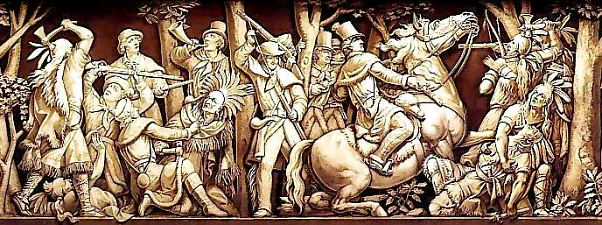
Death of Tecumseh
[Rotunda Frieze of the US Capitol, Washington DC]
<>1813:Japan | Golovnin released with help of Takataya. Much
mutual information exchanged in this tense but salutary confrontation [KEJ,6:341]
- Takataya regained monopoly in Hokkaido trade which he had managed for nearly 15 years
[KEJ,7:319, 3:45]
- Golovnin cooperated with Japanese interrogators, but exaggerated Russian strength, contributing to
Japanese fears of Russian threat
- Mamiya, already an accomplished explorer over the previous
decade and a half, exchanged surveying and astronomical navigation findings with Golovnin [KEJ, 5:88]
- Adachi Sannai(1769:1845) conversed with Golovnin about math
- Baba Sajuro (1787:1822) revised Russian-Japanese dictionary w/G's help
- "Golovnin had gained the esteem and affection of his captors. When he left there was a festive
farewell gathering in which Russians and Japanese took part in great harmony. The Japanese crowded round their
one-time prisoners with gifts and kind words, and some were on the verge of tears at parting. As the Diana
was towed out, the Japanese and Russians exchanged thunderous cheers. Such behavior was typical of the intercourse
between Japanese and Russians, which combined fear and attraction. Golovnin's was the last important attempt to
establish good relations with the Japanese in the Kurils. This intercourse, like a love affair with its quarrels
and embraces, played an important part in revealing to the Japanese their own weakness and in opening a breach
in the policy of seclusion" [SHJ,3:204]
- 1816:Saint Petersburg | Golovnin published memoirs of his adventure in Japan. "Remarkably objective
and sympathetic, Golovnin praised the high level of Japanese education, the concern of the Japanese government
for its subjects, the sensibility, astuteness, honesty, hospitality, and cleanliness of the Japanese
people. He portrayed the Japanese as fiery patriots, conscious not only of the harm that foreign
actions had brought in years past, but confident of their own superiority. He felt that
the Japanese lagged behind Europe in many respects, but he noted that their capabilities
were tremendous and predicted that they would catch up with the Europeans and become
potential rivals in the future" [KEJ,3:45]
- Golovnin did much to encourage positive relations, BUT =
- By 1821, Ezo [Hokkaido] came under direct reign of Japanese shogun for the first time, as
a counter to Russian pressures there and as a restraint on the evolution of independent relations
between Japanese and Russian frontier agents and adventurers
<>1813:Azerbaijan,
Daghestan and Georgian territories taken from
Iran (Persia) and absorbed into the Russian Empire
according to the stipulations of the Treaty of Gulistan [MAP#1
|
MAP#2]
*--Baku, an important Azery port city on the western shores of the land-locked Caspian Sea,
later a world-significant oil depot, came under Russian authority
[W]
<>1814mr30 (NS):Paris | Russia led allied
European forces
into the French capital
- Emperor Alexander astride his white stallion signified his key role in the liberation of Europe from Napoleon
- Which of the two Napoleons did Alexander liberate Europe from: "The child of the
French Revolution" or "the nemesis of the French Revolution"?
- And another question arose about whether the previous decade of war was
simply about the French Revolution and Napoleon or perhaps about a whole lot
more here in the early years of the 19th century =
- 1814au24(NS):English burned Washington DC as the
Napoleonic wars expanded onto the global stage even after Napoleon was defeated
- In the New World, that expansion was called the "War of 1812"
- Note that both Moscow [above] and WDC burned in this era
- The "European Revolution" slackened briefly as statesmen in the various
nations who claimed victory over Napoleon prepared to meet in Vienna with the
conservative and sometimes reactionary goal to restore the old pre-Napoleonic Europe and, wherever
possible, to restore the pre-revolutionary old regime ("ancient regime") =
<>1814no01:1815je09 (NS); Austria | The
Congress of Vienna met for over six months in an attempt to set Europe straight after the disruptions caused by
French Revolution and subsequent Napoleonic imperialism within Europe itself
- All European powers of any considerable size were invited to participate, including "defeated" France
- Mercurial French statesman Talleyrand, ex-priest, ex-revolutionary, ex-official under Napoleon, and
in all regards a powerful representative of the French nation, was allowed a serious role in this Congress
- [Contrast this generous-minded moment in European diplomacy with a moment of equal profound impact on the fate
of Europe one century later, the far less generous-minded Paris Peace Conference]
- 1815mr01:je18(NS); Even as the great Congress met, Napoleon escaped captivity on the island Elba
- He gathered a small armed force in a futile three-month effort to retake France
- Allied troops commanded by Prussian and English officers apprehended Napoleon this second time at Waterloo
- Historians in "The West" have inflated the importance of Waterloo out of all proportion, perhaps to shift credit from
Russian Emperor Alexander I and his generals who led the actual sustained Europe-wide campaign that brought Napoleon down
- Back in Vienna, Austrian minister Prince Clemens von Metternich played the key role
- His conservative actions and views (perhaps better to say reactionary actions and
views [ID]) made him the most powerful European continental spokesmen of
post-French Revolutionary "far-right" conservatism
- Anglo-Irish (Dublin-born) British parliamentary figure Edmund Burke was the chief representative of
English conservatism in this epoch
- Burke's views can be contrasted every bit as much as they can be compared with the ideas of the
continental conservative Metternich
- Burke played no personal role in the Congress of Vienna
- Among other things, the Congress of Vienna sought to ease European imperialist competition in
Europe itself
- On the whole the Congress approached its tasks with a very practical and sober-minded set of
expectations that corresponded well with the nationalistic spirit of the epoch. However =
- Russian Emperor Alexander I was inspired by the dreamy prospect of a universalistic or
pan-European Christian reconciliation [ID]
- However visionary and however global Alexander's scheming, actual Russian
frontier and imperial expansion slackened in the last decade of his reign
\\
*--Richard Elrod, "The Concert of Europe..." [E-TXT]
NB! Elrods efforts to revalorize the study of "international relations" in its relationship to domestic politics
*--Florovsky,5:162-238 surveys Russian spiritual life in the Alexandrine era of
the "Bible Society"
*--LOOP on "Imperialism and Revolution"
<>1814:1825de14; Russian activists, many of
them ex-officers in Alexander's armies that occupied Paris, took inspiration from the role of "liberator"
that Russia had just played and, on the other side of the ledger, grew increasingly alarmed as Alexander I
and his government lost its reforming zeal
- These inspired civic activists dreamt of European-style liberalization
[ID] or even revolutionary change in Russia
- They set about mobilizing themselves and others within a surprising network of voluntary action societies
- Their efforts culminated eleven years later in an ill-fated insurrection against Emperor Nicholas I at
the moment he prepared to ascend the throne [DIR3:207-29]
- This long decade of diverse and complex activism has been narrowed to a brief few days and conventionally
packaged in the all-too-simple phrase "Decembrist movement"
- The calendrical phrase is abrupt, singular and misleading but mainly artificial
- The phrase was never used prior to December, 1825
- That coincidental month in which the final futile act took place has been fastened onto a long-term, complex,
original and dramatic epoch in the history of modern Russian political culture
- 1813:1814; Almost all leading public figures in this era participated in the campaign through the
western provinces of war-ravaged Russia and into western Europe, all the way to Paris
- Life in occupied Paris was a "school in politics" [SIE]
- Life in Paris touched on more than politics per se. It also taught a good deal about the public
culture of an emerging general European civil society
- 1816:1819; Mikhail Lunin (1787-1845), lived in Paris, grew
close to Saint-Simon and left a powerful impression on him
- Lunin was a person of unusual integrity and reckless daring, traits that appealed to Saint-Simon
- Lunin was a dashing and wealthy gentry landowner who served as an
officer in the Russian army of liberation
- He was preparing to devote his life to public service
- Soon Lunin drew close to other "Decembrists" who shared the feeling that Russia could
join the general European transformation set loose by the French Revolution and tamed by their military defeat of Napoleon
- 1814:Two original organizations formed = The Order of Russian Knights [Orden
russkikh rytsarei] [NDD,1:132-9] and Sacred Workshop [Sviashchennaia artel']
[NDD,1:124-30]. The Workshop existed until 1817
- 1816:1817; Union of Salvation [Soiuz spaseniia] or Society of True and
Faithful Sons of the Fatherland [Obshchestvo istinnykh i vernykh synov
otechestva] lasted one year and had thirty members, including =
- Aleksandr Murav'ev, Lieut.colonel in the Imperial General Staff, was the founder
- Sergei Trubetskoi
- Ivan Yakushkin
- Sergei Murav'ev-Apostol
- Matvei Murav'ev-Apostol
- Nikita Murav'ev
- Pavel Pestel'
- and others soon became active
- Eventually four substantial societies -- Union of Salvation, Union of Welfare, Northern Society
and Southern Society -- represented the beginnings of organized political opposition (as opposed to
great uprisings or smaller conspiracies or isolated dissent) [SIO:11]
\\
*--SAC LOOP bows to convention and designates these years as "the Decembrist Movement"
*--LOOP on war and revolution
<>1815:Nikolai Karamzin,
History of the
Russian State (12 vols.) began to appear [Raeff3:117-24]
*--Karamzin had been a dominant figure in Russian cultural life
for more than a decade, but his influence was being
superseded by a more radical
form of progressive patriotism as represented by "Decembrists",
whose love of Russia insisted on moving
"forward" rather than venerating the past
\\
*--Wagar on Karamzin [TXT]
<>1815:Russian Finance Minister Dmitrii Gur'ev, "Ob ustroistve verkhovnykh pravitel'stv v
Rossii" [GRV:144-50]
<>1815ja:1817my08; Hawaii, Kauai Island, Waimea
River | Russian Fort Elizabeth established
- Hawaiian King Kamehameha refused cooperation with Russian America Co. and demanded it leave; which it did
- 1817au05:Russian-America Co. administrator reported to Russian Minister of Foreign Affairs
Karl Nesselrode about the Hawaiian Islands [DIR3:332-4]
- Russian expansion to the east, across Siberia and into the Pacific Basin and
the New World, began over two centuries earlier
- Imperialist expansion eastward was winding down as
new difficulties and complexities arose to the south, in Central-Asia
<>1815se14(NS=26):Paris | Austrian
Emperor Francis, Prussian King Frederick Wilhelm, and Russian Emperor Alexander I signed
agreement creating the "Holy Alliance" [VSB,2:499-500 |
DIR2:161-2 | ORW:66-7]
- Inspired mainly by Emperor Alexander's Bible-centered piety, the three monarchies
committed themselves to guide their "nations" in harmony with time-honored Christian
principles -- "sincerely" or with mendacity of forethought, we cannot always be sure
- They felt the need to add spiritual values to the very hard-headed or practical-minded
or solidly diplomatic Vienna settlements [ID], to combine "values"
with politics
- These righteous "Holy Alliance" monarchs felt that the other great
alliance to grow out of the Congress of Vienna [Quadruple Alliance (England, Russia, Austria and
Prussia -- later, erstwhile enemy France was admitted)] was too
purely political, too Machiavellian [ID], and thus lacking
in moral substance
- Not wanting to seem sacrilegious, nearly all great princes of Europe eventually
signed on to the "Holy Alliance". Three exceptions =
- English King George IV (spared the embarrassment by laws barring the king from any significant political acts)
- The Pope in Rome (whose religious obligation was to shun secular acts of this sort)
- The Ottoman Turkish Sultan (he simply was not a Christian -- no room was provided for an
Islamic presence within the alliance here called "holy")
- The "Holy Alliance" became an instrument in the hands of reactionary Prince
Metternich of Austria
- The "Holy Alliance" stirred revulsion, even direct opposition, within the British
Foreign Office
- The US Monroe Doctrine [ID] was in part inspired as a check
against aggressive reactionary policies aimed at the Western Hemisphere, supposedly justified
by European Christian virtues
- 1820:Austrian minister Metternich,
"Confession of Faith" [TXT]
- Over the next two years Metternich offered views on Russia and the Greek revolt
against Ottoman Turkey which pitted Christians against Muslims
- Metternich was pleased that Russian Emperor Alexander I stood behind the conservative
political principles of the Vienna settlement, rather than the religious, moral or ethical
principles of the Christian "Holy Alliance"
- Metternich underscored over and again how "the Emperor Alexander has given proof of
his noble and loyal character, his views and principles entirely agree with those of the
[Austrian] Emperor my august master.... The Emperor Alexander ... refuses all support and
help to the Greek insurgents" [VSB,2:508-10]
- Is it not equally plausible that Russia had ample good Realpolitik reasons
not to alienate the Ottomans?
- 1826fe24:Russian "Decembrist" activist Petr Kakhovskii explained in four paragraphs
[TXT] just how educated society reacted to Alexander's
reactionary measures
<>1815no15:Poland received constitution from Russia (i.e.,
those territories of old Poland taken by Russia in the three
partitions [ID]) [VSB,2:500-2 |
DIR2:164-73 | DIR3:196-9 | ORW:70-1]
- Poland was thus the scene an early experiment in "devolution" of political
power, in which political authority over domestic affairs moved downward from
the imperialist metropol to the regional periphery
- Russia sought to ease imperialist tensions in the westward direction, to
avoid the dangers of direct European imperialist competition in Europe itself
- As he did this, Alexander I again inspired hopes among many of his subjects
that a constitution might
be possible in Russia itself. But it is hard to escape the impression that
Alexander's fifteen years of zealous reform were largely at
an end
- Arakcheev replaced Speranskii as the symbol of Alexander I's political
programs =
<>1816:1821; Russian military leader and loyalist
General Aleksei Arakcheev administered "military settlements" [voennye poseleniia] in the Russian countryside
- Created in 1810 as a way of integrating the military with productive work,
particularly agricultural, these settlements also made peasant life like
barracks life, agriculture like a military mission
- Settlements grew to about 400,000 members in
1825 and constituted 1/4 of the Russian army [VSB,2:503-4]
- There is a sense in which these measures can be seen as a part of a larger
effort to extend state tutelage over society
- Village agricultural life was not recognized in the Petrine Table of Ranks, but military ranks were
- Military settlements opened the possibility that peasant plowmen could be organized in rational rank and
file (just like peasant "soldaty")
- These settlements also served to extend the reach of state authority into distant rural districts where the
authority of gentry landowners needed to be checked and balanced by official power
- So far as peasant disorder in the French Revolution inspired dread in every
European monarchical heart, the settlements can also be thought of as early
examples of change introduced as a restraint on change, or "change vs. change"
,
or "reactionary change" vs. "progressive change"
- Military settlements represent an end of an epoch of
"progressive" reform and the beginning of
an epoch of "reactionary" reform
- Often reactionary change disrupted traditional ways every bit as much as radical change
- Counter-revolution can be an mirror-image or functional equivalent of revolution, differing only insofar
as the action is launched by the state against society, rather than the other way around
- Significantly, counter-revolution can be thought of as internal war of metropol power vs. the domestic
periphery [ID]
- The Russian military settlements were not abolished until 1857 at the beginning of
the "Era of Great Reforms"
- "Decembrist" I.D. Yakushkin identified "military settlements"
as an important source of social opposition to autocracy [VSB,2:522]
\\
*--Jenkins, Michael. Arakcheev:
Grand Vizier of the Russian Empire
*2016oc17+| Novaia gazeta| «О военных поселениях Александра I». Лекция Андрея Зубова. Новый сезон
[E-TXT]
*--LOOP on war and revolution
<>1816:English Parliament formed a
committee to look into the national scandal of child labor and related social abuses caused by rapid
industrialization. An era of English reform opened
- 1815:Eyewitness accounts of working conditions in English factories [Eye:295-8 |
PWT2:142-50]
- Scene from English mines illustrated need for reforms [pix]
- 1819:English Factory Acts grew out of Parliamentary inquiries into everyday life
conditions of wage-labor in the new factory environment
- Robert Owen [ID] inspired some part of this progressive movement, though results
produced by a less reform-oriented Parliament disappointed some English liberals
<>1817:England | James Mill published
The History of British India which gained him a permanent appointment with the India
House, the managerial headquarters of the East India Company
- James Mill held that position until the company and its authority in India were abolished
and replaced by direct English imperialist rule [ID]
- Much influenced by the Utilitarian social critic Jeremy Bentham [ID]
and the philosopher David Hume [W],
Mill went on to write many influential studies in philosophy, government and political economy
- He contributed to the growing influence of a public movement of "liberal
economic theorists" or "philosophical radicals"
- Philosophical radicals were advocates of "progressive" reform in England, better
to rid the land of medieval obstacles to industrialization and promote economic, social and
institutional changes better to accommodate modernization
- James Mill's son, John Stuart Mill, extended the
"classical economic" legacy
into even more radical scholarly and political positions
- Significant variations can be found among "political-economic"
theorists"
- Even "liberal reformism" had to
be ready for political struggle and was forced into near revolutionary positions
with respect to European "old-regime" traditions
\\
*--Joseph Hamburger, James Mill and the
Art of Revolution
*---------------------, Intellectuals in
Politics: John Stuart Mill and the Philosophical Radicals
*--Richard Reeves, John Stuart Mill:
Victorian Firebrand
*--LOOP on "Political Economy"
<>1817:1832;
Alaska
| Colonial Russian America:
Kyrill T.
Khlebnikov's Reports
*--These were the years of increasing hardship for the Russian colonies and the
Russian-America Company
<>1817:1819; USA FL | Seminole wars
*--Major documents relating to USA foreign affairs prior to 1898, including many
treaties signed between USA and Native Americans peoples
[W]
<>1818:1872; Over
this critical half century, Pacific deeps were now crossed by USA whalers
sailing out of New Bedford CN and Nantucket MA, around the southern tip of the
South American continent, and out into the great South Sea
- This was the third and grandest phase of the global US whaling industry, lasting 54 years
- 1823oc07:Nantucket newspaper, The Inquirer, reported that
there are employed in the Southern Whale Fishery from the port of Nantucket alone nearly
twice as many ships as are engaged in that fishery from all the ports of France
and England, and that most of the whaling ships belonging to both these
countries are commanded by persons from Nantucket and New Bedford [Stackpole:382]
- Early in this half-century phase, the Pacific Rim came under USA
influence in a new way
- This took place some decades before over-land frontier expansion reached
westward beyond the Ohio Valley
- The efforts of William Rotch, Sr., the vision
of John Ledyard, the far-western extension of the Lewis and Clark expedition,
and the enterprise of Astor's American Fur Co. leapt over the North
American interior to the vast Pacific Rim
- US "Manifest Destiny" was guaranteed by the
east-coast/west-coast sea embrace of the North American mainland which only
later received its Euro-American settlers
- Whalers played a central role in this Atlantic/Pacific embrace of the
North American continent
- Melville wrote in ch. 111 of Moby Dick =
To any meditative Magian rover, this serene Pacific, once beheld, must ever after be
the sea of his adoption. It rolls the mid-most waters of the world, the Indian
Ocean and the Atlantic being but its arms. The same waves wash the moles of the
new-built California towns, but yesterday planted by the recentest race of men,
and lave the faded but still gorgeous skirts of Asiatic lands, older than
Abraham, while all between float milky-ways of coral isles, and low-lying,
endless, unknown Archipelagoes, and impenetrable Japans. Thus this mysterious,
divine Pacific zones the whole world's bulk about, makes all coasts one bay to
it; seems the tide-beating heart of earth.
- 1823:ships in the hunt = 203
- 1835:ships in the hunt = 421
- 1846:ships in the hunt = 736
- 1847:USA sent out individual whaling ventures from 34 ports
- New Bedford sent out three times as many ships as the second busiest whaling port, Nantucket
- By now San Francisco CA was engaged in the
international whaling industry and was soon the principle importing point for whale products
- 1840:USA | Socially conscious lawyer and pundit Richard Henry Dana
published Two Years Before the
Mast. This fictional but realistic account, based on personal experience,
exposed maltreatment of sailors and promoted labor reform in the whale fisheries
- 1840s:US whalers pushed through the Kuril Island chain which suspends like a necklace south
from the Kamchatka Peninsula
- They entered the icy northern waters of the Sea of Okhotsk [G]
- They also fished the Bering Sea and passed through the Bering Strait, past the Diomede islands and Russian
Alaska to the east, into the Arctic Sea, hunting northern Siberian coastal waters
- In these years, US whalers frequently dropped anchor in Russian ports and met with Siberian Russian
commanders and officials on friendly terms
- The Russians never thought in these years to enter the whaling
business in any serious way
- Whaling was a USA frontier experience largely unknown to Eurasia
<>1818:English
writer Mary Shelley published Frankenstein
- Mary Shelley's fantasy can be taken as the original work of "science fiction". The growth in the numbers of cheap penny-press publishers,
magazines and other forms of popular entertainment created just the right market for these
"fables of a technological age" [a phrase from Brian Aldiss' introduction to his anthology,
A Science
Fiction Omnibus]
- 1826:Shelley further contributed to the genre, and helped launch the
pop-arts era, when she published
The Last Man, which portrayed the suffering of the only surviving representative of human
kind after a global pandemic
\\
*2008fe01:TLS:19 | Dinah Birch emphasized the dominant tone of solitude in science fiction, as in all
varieties of Romantic literature [ID]. "Loneliness shadows science fiction." It allows "subtle ways of
exploring cultural anxiety and desire". What is scientific about science fiction?
<>1818mr15:Warsaw meeting of the Polish Sejm heard
Russian Emperor Alexander I suggest that the whole Russian Empire might soon be
ruled by constitutional law, perhaps on the model of the constitution he had
granted Poland three years earlier [ID]
- 1818:1820; Russian political thinker and state servitor, earlier a member of the
Unofficial Committee, Nikolai Novosil'tsev, composed a constitutional Charter of
the Russian Empire. He suggested true federalist relationships between the Russian metropol and the imperial
peripheries [Raeff2:111-20 | VSB,2:504-6]
- 1818:Aleksandr Kunitsyn, "O konstitutsii" [GRV:150-1]
- The constitutional project was never put in place, but Mikhail Lunin
remembered that the newly mobilized Russian "public" welcomed Alexander's speech as a "political pledge" to the nation
- Lunin's "Decembrists" circles presumed Alexander I intended to encourage them; perhaps Alexander I
was "blessing" this new, narrow and elite "public" and their aims
- Lunin wrote, "The Society gathered and intensified its forces to ensure that this promise should be independent
of the temporary will of an individual, and taught the nation to understand and appreciate the benefits of liberty and
merit them" [FBF:14]
- 1818:1821; Russian voluntary society, Union of Welfare [or Union of Prosperity =
Soiuz blagodenstviia] (Decembrists) formed with about 200 members when the Union of Salvation disbanded
- A leading member of the Union, Pavel Pestel, wrote that the central directorate [Korenaia
uprava] unanimously voted to work for a Russian republic
- They felt they moved in harmony with general European political trends
- They were several degrees more "radical" than Alexander's promise or Novosil'tsev's constitutional project (above), but
in general harmony with them as well
- Union of Welfare bylaws [Raeff3:117-24] Rules and
constitution [Raeff1:69-99]
- 1818:Society of United Slavs [Obshchestvo soedinennykh slavian] formed independently and went
through many changes
- Petr Borisov was an active member of the United Slavs [Raeff1:157-61]
- A very moralistic society, United Slavs required on "Oath" of all its members [TXT]
- Decembrist memoirs of M.A. Fonvizin, A.E. Rozen, and I.I. Gorbachevskii (on Society of United
Slavs) [VSB,2:522-8]
- Life on the SW borders of the Russian Empire showed members how they were all harmed by needless divisions among "Slavic
brothers" (religious, linguistic, ethnic, etc.) [Georges Luciani, La société des Slaves Unis 1823-1825 (Bordeaux:1963)]
- 1818:1826; Free Society of Amateurs of Russian Letters [Vol'noe obshchestvo liubitelei rossiiskoi slovesnosti]
- 1819:Free Society to Found Schools of Mutual Instruction [Vol'noe obshchestvo uchrezhdeniia uchilishch vzaimnogo
obucheniia]
- 1820:A spontaneous military mutiny, involving the elite Semevsky Regiment [Semevskii polk], convinced certain Decembrists that
the military was ripe for revolt
- They positioned themselves within the military establishment in the hopes that they might help avoid the horrors of destructive and
uncoordinated disorder among the people
- Clearly they also hoped to assure their own rightful and prominent place in the event of an uprising
- Public activism was gaining momentum and seemed at first in some harmony with larger
state-sponsored reform trends
- But with time those many societies we lump together under the rubric "Decembrists" became more oppositional
- And at the other end of the political spectrum, the increasingly internationalist
visionary Emperor Alexander I was beginning to sense a satanic global conspiracy against
all that was "holy"
- That's how Alexander and those around him began to see the "liberal"
transformation of Europe
- Alexander I was fully out of touch with the specific secular and domestic motives
for politics
- He was ready to betray even his own reformist projects, most notably those taken in Poland
- He wrote, "Our purpose is to counteract the empire of evil, which is spreading rapidly by all the
occult means at the disposal of the satanic spirit which directs it"
<>1819:French "public intellectual" Claude Henri,
Comte de Saint-Simon (1760-1825) published "First Extract from the 'Organizer'" (a serial publication) | See
Social Organization: The science of man and other writings [UO: 00274942]
- Many years earlier, Saint-Simon fought with French forces against England during the USA colonial
wars [ID]
- Back in France he surrendered his noble title ("derogated" his title) and supported the French Revolution
- Through various speculations he amassed a fortune, but contributed it all to the support of scientific and
scholarly research
- Until his death he lived in extreme poverty, supported only by his servant who awoke him every morning
with the reminder that he had "great things to do"
- Saint-Simon was the original "socialist" theorist
- He developed a view of the future which placed great responsibilities on what he
called "savants", trained specialists, an intellectual and technocratic elite
from all realms of business, productive, scientific, artistic and professional life
- Savants would supplant the old destructive and war-like feudal elites -- priests, warriors, kings and seigneurs
- In their place, savants would be the leaders of the peaceful and productive industrial future
- Savants would abolish the medieval legacy of privilege or position by birth
- Savants would hold responsible positions based on merit and contribution to modernizing society
- The socialist Saint-Simon shared much with the liberalism of industrializing, modernizing,
rationalistic Europe of the bourgeoisie, but he went a big step beyond standard European liberalism
- He moved from laissez-faire political-social egalitarianism to progressive goal-oriented
and managed social-economic egalitarianism
- Saint-Simon's legacy became entangled with that of the other pioneer French socialist Charles Fourier
[ID]
- Together they exerted considerable influence as European politics evolved so energetically in
the years after the French Revolution
- Saint-Simon's life and legacy had a special appeal for the emerging elite Russian civil society. EG=
- Auguste Comte -- the powerfully influential French theorist
of "positivism", emphasizing science and progress -- served as assistant to
Saint-Simon in his later years
- By the 1830s, the followers of Saint-Simon evolved into something like a cult, adopting habits
and outlook that could be called "religious", though one might argue that was the last thing
the socialist Saint-Simon would have wanted to be his legacy
- Still, the managerial and technological command instinct that often flourishes in cults was not
alien to Saint-Simon
<>1819:English industrial/commercial urban
center Manchester the site of large public demonstrations in support of serious
political/institutional reform
- Activists sought more democratic representation in an English Parliament
- Parliament was in this era in fact an exclusive club of landowning aristocratic elites
- Parliament had no room for representatives of newly expanding urban industrial and commercial centers
- Officials ordered the dragoons to break up the peaceful demonstration and arrest leaders
- What followed came to be known as "the Peterloo Massacre"
- Large numbers of men, women and children were killed or seriously wounded
\\
*--Edward Vallance, A Radical History
of Britain: Visionaries, Rebels and Revolutionaries....
*--Ben Wilson, What Price Liberty? How Freedom was Won and is Being Lost [Summit]
*2009se11:TLS:11
- The three secondary sources cited above harmonize with the following interpretive tune =
- Freedom and/or liberty are achieved or lost through the action or inaction
of those who would be free or at liberty
- This suggests a significant adjustment in received cultural presumptions about "progress" =
- There appears to be no natural historical escalator lifting the world onward and upward, "every day and in every way better and better"
- At the same time these sources reject a characteristic contemporary presumption about the past when they argue that Freedom and liberty
are not an enduring legacy of any given cultural heritage =
- The English have not enjoyed freedom and liberty because they are ethnic Anglo-Saxons or (most vaguely) citizens
of "The West"
- So far as the English have enjoyed freedom and liberty, it has been the
result of action in groups of shared perspectives
and interests, usually struggling against official effort to suppress freedom and liberty, sometimes via uniformed enforcers
of "law and order"
- As in the case of Peterloo, the struggle has not always been successful
- However, Vallance (below) concludes that the memory of rebellion and sacrifice in painful episodes like the Peterloo Masacre were
themselves "profoundly empowering"
- A final compound corollary of this line of analysis =
- Freedom and liberty are possible only for those who go get them, those who remain vigilant in active and engaged maintenance
and defense of them
- "Freedom does not move unimpeded through history", says Vallance, "but rather requires careful shepherding" (a comforting
but misleadingly peaceful agrarian metaphor)
- What is true for the English is also and equally true for any other historical peoples
- The "Westernization" of "The West" is a recent and
still unfinished project. Perhaps it is a perpetually unfinished project =
- Two largish interpretive questions are only touched upon in the secondary
sources above =
- Is there a conceptual and functional distinction to be made between freedom, liberty
and equality?
- What is the relationship of freedom, liberty and equality to "democracy"?
<>1819:German Carlsbad Decrees, inspired by
a Metternich-style conservative/reactionary outlook, sought to censor
all expressions of liberal and nationalistic dissent and to crush all voluntary (spontaneous)
social organizations, particularly university student organizations [the Burschenschaften]
[SPE2:472-3]
*--German liberal Ernst Moritz Arndt described how the Napoleonic wars in northern Germany set loose
a powerful nationalistic and liberal-reformist political movement
[PWT2:124-5; more on this era, 125-7]
*--Arndt might just as well have noted the growing militarism among German elites in the post-Napoleonic era
[G/Bismarck]
\\
*--LOOP back to beginning on war and French Revolution
<>1820:USA New York
State political boss and future President Martin Van Buren (1837-41) created "the Albany Regency",
something new in politics
- The Albany Regency was a political party machine
- The party machine was sustained by "the spoils system" and by its control over nominations
- If you have the power to choose the candidates, you have the power to choose officeholders in an otherwise
democratic electoral system
- This sort of "political machine" has been called a "cadre party"
- A cadre party is one in which large numbers of
relatively passive adherents are guided or manipulated or managed by a minority of professional party activists
<>1821:Central America | Wide-spread revolt against
Spanish imperial power and colonial authority
- Separate Central American states formed out of the old colonial departments=
- Guatemala
- Honduras
- Nicaragua
- El Salvador
- Costa Rica
- These separate new nation-states tried a "Republic of United States of Central America"
or "Central American Union" but they fragmented as the decades
wore on
- 1823:Mexico achieved independence from Spain, after more than a
decade of revolutionary struggle against European imperialist dominion, but soon began to
disintegrate under internal and external pressure
- This was a decade of anti-imperialist/anti-colonial rebellion in Latin America
\\
*2017fe11:NYT| "How We Overcame Tyranny Before"
[E-TXT]
<>1821:Ezo [Hokkaido] now no longer under direct shogun rule
<>1821:French reactionary political
philosopher and advisor to
Russian Emperor
Alexander I, Joseph de Maistre wrote The Pope
*1810:de Maistre wrote "Essay on the Generative Principle of Political
Constitutions" [W]
*1822:de Maistre wrote "On the Spanish Inquisition"
[W]
<>1821:Moscow meetings of the Union of Welfare [Soiuz
blagodenstviia] spawned two new and more politically oriented societies =
- Southern Society [Yuzhnoe obshchestvo] formed in Ukrainian regions where the
Second Army was quartered
- Pavel Pestel' organized the society on the basis of ideas he formulated in a document that
later came to be known as "Russkaia pravda" [TXT]
- Northern Society [Severnoe obshchestvo] formed in Petersburg
- Nikita Murav'ev was the founder of the Northern Society. Other leading
members =
- Nikolai Turgenev
- Mikhail Lunin
- Sergei Petrovich Trubetskoi
- Evgenii Obolenskii
- The society grew significantly
- It favored constitutional rule, but felt that only a Constituent Assembly had the authority to formulate a
constitution
- Nikita Murav'ev nonetheless offered his "Konstitutsiia" as one that might serve as a
model [TXT]
- The following Northern Society members strengthened its republican tendencies =
- Kondratii Ryleev
- Evgenii Obolenskii (prince)
- Nikolai Bestuzhev (baron)
- Aleksandr Bestuzhev
- Mikhail Bestuzhev
- 1822au01:Russian Decree prohibited Masonic lodges and all secret societies
(the definition of which was "societies not formally approved by the tsarist
state") [VSB,2:508]
- The decree was provoked, in part, by the growing intensity of the "Decembrist movement"
- 1823:Moscow | Despite decree, the Society of Wisdom-Lovers flourished with V. F. Odoevskii at its head
and future Slavophile philosopher Ivan Kireevskii and radical "westernizer" Petr Chaadaev as members
\\
*--Wagar on Odoevskii [TXT]
<>1822:Russia introduced elaborate protectionist and
tariff regulations that remained in force for nearly a quarter of a century
*--German economist Friedrich List praised this act [TXT],
but market economists generally criticized it
<>1822:1831; German philosopher of eventual world
influence George W. F. Hegel [W#1]
[W#2],
Lectures on the Philosophy of History
*1821:Philosophy of Right
[TXT#1]
[TXT#2]
<>1822jy22:Russian reformist statesman
Speranskii, recently maneuvered out of central power positions, was put in charge of Siberia
- Speranskii was a sacrifice to increasingly influential reactionaries around Alexander I, but he
plugged on in his reformist ways =
- He crafted a Statute for the administrative organization of Siberia
- He made Siberia more systematically a part of Russia
- He promoted entrepreneurial freedom, thus reforming old but persistent
mercantilist practices [VSB,2:506-8]
- His policies included regulations governing how Siberia natives were to be
treated [DIR3:230-4]
- How differently the Russian 19th century might have gone [a dangerous "counter-factual" question] if Arakcheev had lost
to Speranskii, rather than the other way around
\\
*--Raeff4:65-7
<>1823:1832; Russia suffered cholera epidemics
\\
*--McGrew, R. E.
Russia and the Cholera, 1823-1832. Madison WI:1965
<>1823au16:Alexander I issued secret order concerning succession to the throne [VSB,2:510]
<>1823de02:USA
President Monroe sent to Congress a message which declared opposition to any new European colonies
in the Americas (the western hemisphere) and warned against any further interference in the affairs
of the hemisphere
- The message (composed mainly by John Quincy Adams) came to be called the Monroe Doctrine
[TXT]
- This "Doctrine" aimed in part to check Russian imperialist ambitions along NE
shores of the Pacific down to California.
[MAP] Some of the background to this is
shown in the following =
- 1818, Oregon Territory was taken under "joint occupancy" by treaty
agreement between England and USA
- 1821, Russia decreed that its New World territories stretched southward to
the 51st parallel (at the northern tip of Vancouver Island)
- The New World Pacific Coast was in a state of flux
- With the fall of Spanish rule and the establishment of new but weak Mexican rule
in the northern reaches of the old Spanish imperialist domains, "El Norte", a new set of
possibilities opened up
- The Monroe Doctrine was designed to help limit and control those possibilities
- There was in this connection an imaginary threat from the Holy Alliance [ID] which
seemed ready to support Spanish New World possessions, slipping away by the day
- For the edification of Old World European imperialists, USA was flexing its young muscle
- USA turned a cold shoulder to England, refusing to issue the document as a joint USA/English resolution
- By 1825, Russia, USA and England were able to agree that 54 degrees, 40 minutes latitude would mark the
southern border of Russian power (and thus the northern border of Oregon Territory)
- Control of the large territory south of Russia, west of the Rockies and north of
Spanish California would have to be settled between England and USA over the next quarter
century [ID]
- As the century wore on, the Doctrine came explicitly to imply a "corollary"
right of the USA to intervene in hemispheric affairs in reaction. USA feared three different things =
- Possible European interventions
- Perceived self-mismanagement on the part of western hemispheric neighbors, as first seen in
the case of Mexico,
- Restrictions on maturing US national interests and ambitions
- Opponents of growing US power were quick to say that the Monroe Doctrine had in a sense reversed itself
by the time of Teddy Roosevelt
- Especially in Latin America, the Monroe Doctrine now seemed to justify and protect USA dominance rather than
hemispheric independence
\\
*--Saul,1:92-110, 126-34
*--Russell Bartley, Imperial Russia and the Struggle
for Latin American Independence, 1808-1828
<>1824:USA PA Beaver Co., Ambridge, north of
Pittsburgh in the upper Ohio R. valley | The Harmonists, religious refugees from Germany, finally settled
- George Rapp (1757-1847), a young weaver, was their leader, so the group was also
known as Rappists
- In 1804, the Harmonists originally migrated to
America from Iptingen (near Stuttgart) in southwest Germany. They came seeking
religious and economic freedom. Nearly 800 farmers and craftsmen followed Rapp,
first to Butler County, Pennsylvania, and then to Posey County, Indiana. They
stayed 10 years in each state, building and naming their towns Harmony
- The
towns were designed by Frederick Rapp (1775-1834), the adopted son of
the Founder. The son would have to be adopted because the commune was a celibate
society. Still, the Harmonists were one of America's most successful Christian
communal groups. And Oekonomie was its third and final home in USA
- The "utopian" and pacifist community built
Old Economy [Oekonomie] Village on their 3,000 acres in Ambridge. Excellent carpenters and
craftsmen, they built beautiful shops, homes, and a house of worship. They
cultivated well-planned herb, vegetable and flower gardens, and managed grape
vines [pix]
- The Society
gained worldwide recognition for its religious devotion and economic prosperity
[W]
- Despite the Society's economic success, time and certain events brought its
decline. In 1832, one third of the members left Economy under the leadership of
Count de Leon, a self-proclaimed prophet. [How often are prophets not
self-proclaimed?] And, in 1847, Father Rapp died.
By the end of the century only a few Harmonists remained. In 1905 the Society
was dissolved
<>1824:Russian provincial center Penza described in official report [BL&T:23f]
<>1824:Russian poet
Aleksandr Pushkin wrote one of his most popular verses, "Gypsies" (not published
until 1827)
*--He entered now into his mature period of creativity which lasted over the
next 13
years, until his death in a duel in 1837
*--Pushkin crowned the Golden Age of
Russian high civilization and also pointed the way out of the narrow traditions
of aristocratic-servitor culture and toward creation of an authentic modern Russian
national literary tradition. EG=
*1880:Moscow | Forty-three years after Pushkin's
death, Russian cultural figures saluted him in a great 3-day
commemorative celebration [ID]
*--This celebration confirmed that those enduring works of poetry, drama and
prose, mainly written over his last 13 years of life, made Pushkin Russia's
greatest writer
\\
*--[W]
<>1824:"Decembrist" Southern Society joined with
United Slavs. It now planned for a huge Slavic federation, including Russian, Poles,
Czechs, Moravians, Serbs,
Croats, and Dalmatians. Romanian-speaking but ethnically
Slavic Moldavians and Wallachians [Wki-ID
of this complex region], as well as
Trasylvanians and Hungarians were considered Slavs for this purpose
- Ambitions of post-Napoleonic international political thinking was as obvious here as at the
Congress of Vienna [ID]
- The big difference was that these "Decembrists" were planning "from the bottom up" rather
than from on high in the manner of the Vienna diplomats
- The United Slavs were in favor of mass revolution directed against domestic economic and political oppressors and
national revolution against foreign or imperialist oppressors
- Yet it is not surprising that, for one, Pavel Pestel harbored a Russian
nationalistic reluctance to consider federalist independence for regions
peripheral to the Russian Empire, for example, the Caucasus and Central-Asia
- 1824:Kiev fair | Mikhail Bestuzhev-Riumin in discussions of agreements between Southern Society
and Polish independence activists [TXT]
- 1824:Saint Petersburg | Something like a unity congress of these various
societies gathered
- Northern Society met in HQ of the Russian-America Co
- The congress received the full version of Pavel Pestel's Russia Truth [Russkaia prava]
[TXT]
- Petel's text called for a future, more decisive meeting of various related societies in 1826
- Then differences could be worked out and a general constitution agreed upon
- Circumstances, as we will see, intervened to prevent this great convocation of Decembrist
societies
\\
*--SIE,12:209 says Decembrists were closely associated with "incipient Russian
bourgeoisie" who wanted to shift the Russian America Co. to capitalist methods and
therefore were sympathetic to the Decembrists' "anti-feudal" outlook
<>1825:USA NY | Erie Canal completed connecting Hudson
R. with Lake Erie
- The Canal ran west from above Albany, through Lake Oneida,
past Rochester, and into the waterway above Niagara Falls, between Lake Erie and
Lake Ontario
- Its significance was that Atlantic seagoing transport now extended
deeply into the N. American continent via the Great Lakes [pix]
- The Erie Canal project was financed entirely by NY State tax revenues, then sustained in part by tolls.
The people paid, and business thrived
- The Canal guaranteed that NYC would become the principle US financial center, the financial American "metropol"
- But it also contributed to the rise of the great inland metropolis Chicago
- The growth of several regional metropols in USA represented a variation on the traditional European relationship between
the domestic metropol and its peripheries
- In the US tradition of federated union, several US metropols (NYC, Chicago,
San Francisco) grew in economic power in 19th and into the middle of the 20th century
- After the US Civil War and especially after WW2 this trend of multiple metropols reversed itself, and a process
of metropolitan re-centralization gained headway
\\
*--LOOP on "finance"
<>1825no:Siberia | Alexander I died unexpectedly, even
mysteriously
- Popular legend had it that he lost interest in being Emperor and
chose instead to become a simple itinerant monk, Fedor Kuzmich, begging and
blessing the folk in villages throughout the Russian eastern frontier
[pix]
- The previously established line of succession had already, in 1822, excluded brother
Konstantin. Grandmother Catherine
(the Great) had nurtured Konstantin and Alexander I to high power, but
Konstantin had little taste for the job [DIR3:202-3]
- That left only brother Nicholas, a much hated martinet and barracks hound
- In this way, without much plan or expressed desire, revolution became the order of the day. A meeting at Kondratyi Ryleev's decided on an uprising
that would take the form of a refusal to take the oath of allegiance to the new
Emperor
- If necessary, military force had a place in the plan in order to compel
the Senate to sign their revolutionary proclamation intended for circulation
among the Russian people
- The proclamation announced the overthrow of the Russian monarchy,
changes in serfdom, abolition of conscription, civil rights, convocation of
a Constituent Assembly to settle once and for all the question of
constitution and a new form of
government in the Empire
- Sergei Trubetskoi, an experienced military leader,
participant in the 1812 campaign, and well known to guards regiments, was
designated leader
of the uprising with dictatorial authority
- 1825de13:Trubetskoi's Manifesto of mutiny against the accession of Nicholas I [VSB,2:518
| DIR2:195-6]
<>1825de14:Decembrist uprising occasioned by a succession
crisis as the dreaded martinet Nicholas I ascended the Russian Imperial throne [DPH:278-81]
- The
coincidence of December 14, however, had roots in a prior decade
of social activism and political deliberations within several volunteer
organizations that
promoted radical reform, even revolution, in Russia
- On this fateful day, the long years of organized effort came down to this = About 3000 soldiers under the command of 30 officers
gathered under the banner of revolution on Senate square, boxed between the St.
Isaac's Cathedral (under construction), the Senate Building, the Admiralty and
the Neva River in Petersburg [pix]
- It is widely put about that many soldiers (peasants in uniform) thought the
formula they shouted -- "Konstantin i konstitutsiia!" -- referred to Konstantin
and his wife
- This tale is most likely reactionary calumny designed to belittle
the political acumen of peasant soldiers and to ridicule the leaders of the
insurrection
- It should in any case work less to reinforce possible regrettable
disdain for common folk than to underscore the incompetence and disorganization
of the so-called Decembrist leadership
- Trubetskoi [ID] even failed to show. Brief skirmishes broke out between
loyal and insurrectionary troops. Decembrist P.G. Kakhovskii killed
Governor-General Miloradovich.
- All too late, prince Evgenii Obolenskii was selected to
replace Trubetskoi in the role of "leader". Chaos ensued. Units fleeing the scattered struggle broke
through the ice of the Neva, many drowned. But the immediate crisis was over
- "Decembrist Uprising" (Anatole Mazour unfortunately called it "the first
Russian revolution") was no more than an abortive armed insurrection, perhaps
only a coup d'état aimed against the despised new Emperor Nicholas I. Events
followed from an unusual and unexpected succession crisis
- 1825de20:News of the failed uprising reached the Southern Society, but Pestel was already under arrest
(1825de13 NB!)
- Military resistance to Nicholas continued =
- 1825de29:Sergei Murav'ev-Apostol and M. Bestuzhev-Riumin led the Chernigov regiment
against Nicholas I, and composed a revolutionary proclamation, Katekhizis,
which freed soldiers from military service to Nicholas I and promised a republic
for Russia
- 1826ja03:Ukrainian regions where the Southern Society was active were pacified
- 1826jy13:Five Decembrists were hanged =
Pavel Pestel,
Sergei Murave'ev-Apostol
Matvei Bestuzhev-Riumin
Kondratyi Ryleev
Petr Kakhovskii
- One-hundred and twenty one were sent into Siberian exile, hard labor
- 579 persons were questioned in connection with the uprising
- The common folk were not directly involved in these early oppositional movements. An
educated elite was forming into something like a self-conscious activist leadership for
national political action. They addressed the plight of the folk, and even allowed that
the folk might at some future date play a role in shaping their own better future [WRH3:256-62
| DIR2:174-8 | DPH:278-81]
- Raeff1
- First Breath of Freedom [>FBF, an anthology of translated primary documents]
- Mazour,First:273-9
- Decembrist memoirs of M.A. Fonvizin, A.E. Rozen, I.I. Gorbachevskii (on Society of
United Slavs) [VSB,2:522-8]
- Over the next twenty years of Siberian exile,
Mikhail Lunin continued to struggle against the tsarist state, and he composed
reflections on the Decembrist epoch that were reprinted and read in later decades of political activism, "A Look at
the Secret Society in Russia (1816-1826)" [TXT]
\\
*--Saul,1:149-65 describes how Decembrists were influenced by USA constitutional ideas
*--N. Eidel'man, Conspiracy Against the Tsar:
A Portrait of the Decembrists
*--Anatole Mazour, The First Russian
Revolution, 1825:The Decembrist Movement; Its Origins, Development, and Significance
*----------. Women in Exile: Wives of the Decembrists. Tallahassee:1975
*--Patrick O'Meara, K. F. Ryleev: A
Political Biography of the Decembrist Poet
*--M. Zetlin, The Decembrists
*--LOOP on "War and Revolution"
<>1825de:On the eve of
the "Decembrist" rebellion, Aleksandr Pushkin finished his "Comedy about Tsar Boris and Grishka Otrepiev"
[The Uncensored Boris Godunov: The Case for Pushkin's Original Comedy]
- Pushkin reworked the poetic historical account of Tsar Boris and, six years later, published it as
a "tragedy" [ID]. The project was first a comedy then a tragedy, suggesting a certain historical (rather than simply
literary) sense of human experience as "tragicomic". Clearly, Pushkin had in mind the need for a Russian
equivalent of Shakespeare's great English-historical plays
- On the very day of the rebellion, Pushkin completed his poem "Count Nulin", a parody of Shakespeare's
"Rape of Lucrece" (and possibly rape of history). Pushkin raised a "counter-factual" question, always dangerous
for the historian = What might have happened if Lucrece had slapped the would-be rapist Tarquin, turning
him back. "Lucrece would not have stabbed herself, Publius would not have become enraged, Brutus would not
have driven out the Ceasars.... And so we owe the republic, the consuls, the dictators, the Catos, the Casears,
to a seduction similar to the one that took place recently in our neighborhood"
- Andrei Siniavskii (Abraham Tertz) [ID] wrote, in
Strolls with Pushkin, that the fictional character
"Count Nulin" absorbed energy from three actual historical episodes = the Decembrist rebellion,
Pushkin's own escape from arrest, and the rape of Lucrece. As in all complex moments
of contingency, said Siniavskii, history can turn in any direction
- Pushkin, the greatest of Russian poets, was scheduled to be in SPb on the day
of the Decembrist rebellion, but turned his carriage back from the imperial capital and thus perhaps prevented
arrest with other conspirators
- In the aftermath of the "Decembrist" rebellion, Pushkin was put under
the personal censorship of Emperor Nicholas I
\\
*2006je30:TLS:7, Rachel Polonsky review of Uncensored... (above)
<>1825de14:1855;
Russian Emperor Nicholas I reigned for thirty years, an epoch that seemed to some to be
reactionary in the extreme, a panicked retreat from the Decembrist
uprising and all the progressive implications of the era of European revolution
- Decembrists were transported to distant Siberian exile
- Within a few years a stream of
Polish "freedom fighters" followed them into what was to become a combination of
removal, concentration and frontier development = Siberian exile
- Yet Nicholas and his ministers paid close attention to the voluminous testimony they
gathered in interrogations of Decembrists and associates [VSB,2:528-30]
- Read through 1827oc:below, then follow "reform" hypertext hops to see how
measures taken in the time of Nicholas I combined "reactionary" and
"progressive" motives
\\
*--Curtiss, John Shelton. The Russian Army Under Nicholas I, 1825-1855. Durham,
N.C.:1965
*--Lincoln, W. Bruce. Nicholas I
*--Lobanov-Rostovsky, Andrei.
Russia and Europe, 1825-1878. Ann Arbor:1954
<>1826:1879; Russian state institutions were supplemented
by a set of "His Majesty's Own Chanceries"
<>1826:Kazan University
[W] Professor of Mathematics
Nikolai Lobachevskii
[W] published his
path-breaking studies in non-Euclidian geometry. The next twenty years witnessed a
provincial cultural and intellectual renaissance in the Russian/Tatar city Kazan, but
officials soon removed Lobachevskii from his academic posts
<>1826ap22:Russian censorship statute tightened control
over the printed word [VSB,2:533-4]
*1826de12:Admiral A. S. Shishkov sent supportive memo
to Nicholas I about censorship [DIR3:235-7]
<>1826my12:au09; Russian manifestos on peasant serf disturbances [VSB,2:541-2
| DIR2:197-8(ap20?)]
<>1827oc:Russian Emperor Nicholas I issued a decree on the education of peasant
serfs [BL&T:120]
*1827de12:Educational opportunities for non-privileged
sosloviia were
restricted [DIR3:237]
*--Nicholas I continued the innovations of earlier autocrats, but the
policy of Nicholas I might best be called "frightened absolutism" (rather than
enlightened absolutism). His reforms were "reactionary
reforms"
<>1827:1829:Caucasus Mountain, northern slopes |
Daghestan Muslim independence movement arose against Russian imperial control
- Daghestan imam Hazi-Mohamed [Hazi-Mulla] preached Islamic holy war against Russia
- But Russia faced growing resistance to its southward expansion, not just
domestic rebellion but international "interference" =
- A century-long epoch was fully under way, often called "The Eastern Question" or more broadly
and more playfully "The Great Game", a largely English-Russian competitive imperialistic struggle, first
in Central-Asia and eventually on a much expanded, even global scale
- The "Great Game" seemed at first to go Russia's way, particularly in the Caucasus Mt. region
[GO 1828]
\\
*--Gillard, David. The Struggle for Asia, 1828-1914: A Study in British and Russian Imperialism
<>1828:Armenian river valley of the middle Kura reached
by Russian imperial troops, "liberating" an old Christian nation south of the Caucasus, Armenia, from
Islamic Iranian (Persian) control
<>1829se02:Ottoman Turks and Russia signed Adrianople Treaty
[VSB,2:537-8 | DIR2:199-207 | DIR3:239-43]
*--The treaty acknowledged two developments, both advantageous to Russia, and suggested a third =
- Russian imperialist control over the northern 2/3 of the Black Sea coast
- Independence for two Orthodox Christian peoples, Serbs (Yugoslavs) and Greeks
- A significant easing or amelioration of diplomatic relationships between the Russian and
Ottoman Turkish empires, an amiability that did not suit west European imperialist competitors
involved in the emerging "Great Game". England especially sought to complicate the Russian/Turkish
path toward international reconciliation
In these years USA Protestant missionaries appeared in growing numbers in "the Middle East"
\\
*2016fe:The Nation| "Missionaries of the Middle East" [E-TXT]
<>1830fe04:Caucasus Mountains, northern slope, Chechnya
and Daghestan | First significant victory of expanding Muslim holy war against Russian dominion
- This was not directly a European imperial conflict, it was local revolutionary Islamic resistance
to one great power, Russia
- Indirectly, however, other great powers helped the rebels, less in the interest of local
self-determination than in the interest of weakening -- or at least vexing -- a competitor, Russia
- Much the same can be said about growing international support of Polish rebellion against Russian power
- Russia knew this tactic = It had itself earlier taken steps to help USA rebels against Great Britain.
Russia did not, however, get involved in growing English/Irish
conflict
- More locally, in Chechnya and Daghestan, divisions of indigenous warriors were led by imams, one of whom was Shamil =
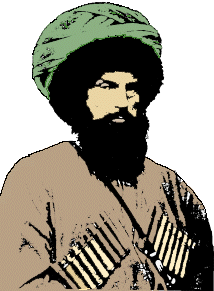
Daghestani resistance to Russian rule was led
in the first half of the 19th century
by Muslim holy warriors, such as the fabled
imam Shamil [Shamyl]
<>1830:USA NY Fayette | Joseph Smith (1805-1844) founded
the Church of Jesus Christ of the Latter-day Saints (most widely known as the
Mormon Church)
- Born in Vermont, Smith's family migrated westward to NY Palmyra.
Young Smith was always bothered by the multiplicity of religious creeds he saw
around him. Just a teenager, he reported a vision of two angelic figures who
warned him not to join any of these denominations because god was about to
restore the one true faith. In another vision he learned that the second coming
of Christ was imminent. Here he learned also the location of certain plates of
gold recording hitherto hidden sacred truths. Much later, in 1827, Smith
dictated to Oliver Cowdery, Martin Harris and others his translation of the
unique language and script of the golden plates
- In 1829 Smith and Cowdery announced that an angel appeared to them and ordained
them as priests of Aaron in a renovated faith. They were authorized to baptize one another
by immersion. The translation of the new gospel was published as Book of Mormon (1830).
This was nothing less than a "newest testament", an extension of the word of god
beyond the old and new testaments, building on the Mosaic revelations and the
synoptic gospels
- It described how the original native peoples of the New World
were the lost tribe of Israel, dispersed hither at the time of the Tower of
Babel.
- The original gold plates subsequently disappeared from this earth
- A new church, however, began to set down strong roots in the New World
- 1831:1839; USA OH Kirtland | Smith relocated the church. and the religious
community prospered with large business developments
- Various complications forced the congregation to migrate to MO briefly. They
were then driven from MO to IL
- 1839:1844; USA IL, on E bank of the Mississippi R | Smith renamed the town
Commerce "Nauvoo", which prospered under Mormon settlement, just as earlier
- But political embroilment and conflict with surrounding communities led to Smith's downfall.
For one thing, Smith experienced another heavenly revelation in 1843 which
sanctioned plural marriage (polygamy, defined in this community as one husband,
several wives). This did not jibe with the practice of neighboring frontier
settlers who, for the most part, took guidance in these and other matters from
the two previous divine testaments (i.e., the Old and the New testaments)
- Smith was commander of a city militia, the Navou Legion, which was created to
enhance the security of the eccentric Mormon community but which other Mormon leaders condemned
- Smith destroyed the printing press of the newspaper, Expositor, through which
the opposition expressed itself
- Smith appealed to the Legion to support him, but he and his brother were jailed in IL Carthage
- 1844je:USA IL | Carthage mob murdered Smith and his brother
- 1846:A large part of the Mormon community pulled out
of IL Nauvoo (and other locations) and headed for the high desert west, under
the leadership of Brigham Young, President of the Council of Twelve
- Not all Mormons left for the west. They stayed and created a Reorganized Church of Jesus
Christ of the Latter-day Saints
- Three years later, the largely abandoned city Nauvoo was occupied by a French utopian community,
the Icarians, led by E'tienne Cabet
- Seven years later, in 1856, the Icarians split up and abandoned the town
<>1830:English inventor George Stephenson
inaugurated the first rail line linking two industrializing cities, Manchester and Liverpool (a seaport)
*--The railroad age was at its dawn [ID], ushered
in by a new sort of individually owned industrial company
<>1830:Europe-wide revolution
was felt with special intensity in France. A broad assault was launched on the remains of the old-regime, this
in the name of a new "liberal" order
- 1830jy:"The July Revolution" toppled the French king, so recently restored to his throne after the Congress
of Vienna [ID]
- The last practical hopes of restoring the old regime -- of reconstructing
"The West" as it was prior to the 1789 French Revolution
[ID] -- were crushed
- 1830jy:1848; A restricted monarchy, known as "The July Monarchy" reigned under the authority of what
must be called a liberal or moderate "bourgeois" power, a power based on wealth and financial prominence
rather than on older heritable, aristocratic, or royal claims, or on priestly spirituality
- 1830se13:French liberal leader François Guizot (1787-1874) delivered a report
to the legislative chambers
- Guizot was professor of history at the University of Paris
- He was drawn into politics by the hope that a moderately liberal monarchical government
could pass progressive educational reform to elevate citizens to a level sufficient to sustain representative democracy
- Literacy had reached sufficient levels to sustain a newly emerging profession, vital to
the future of European civilization = journalism
- But what was needed was an educated "public" at large, and expanding and literate activist-citizens
- Over the next eighteen years, Guizot thrived as liberal minister and politician, a champion of that "Third
Estate" who toppled the Old Regime in the French Revolution [ID]
- He mainly identified, however, with the more prosperous stratum of that "Third Estate",
those commoners whom the French called the "bourgeoisie" = the new industrial urban financial elites
- As time went on, Guizot grew less certain of the natural political alliance of the well-to-do
members of the Third Estate with poor members
- He just naturally identified with the "middle class"
- In Guizot's time, middle class was coming to mean those between superannuated clerical
and aristocratic elites on one side, and a growing body of wage-laborers on the other
- From both sides, the waxing middle class confronted trouble
- Superannuated elites were being pushed from center stage, but wage-labor was
a disruptive social novelty which was growing rapidly in size and vitality
- Wage-labor was a natural product of the very economic modernization promoted by European "middle classes"
- The action was centered in expanding and industrializing urban metropolises,
the setting in which the middle class flourished
- Guizot's middle class was transforming life in France and throughout northwestern Europe, and
Guizot sought to promote that transformation, yet limit the social-economic disruption that came with it
- Over the next century the term "bourgeoisie" spread
from the post-French-Revolution European world to remote regions of the globe
where it was used to describe social formations that often bore no resemblance to that waxing
post-French-Revolutionary European social class
- Increasingly it was apparent that everyday life conditions
of wage-laborers were being altogether transformed in ways unimaginable in
pre-industrial eras [EG]
- And one of the two great contradictions built into modernizing European liberal doctrine
[ID] -- that between poor commoners and
increasingly rich commoners -- was about to bring down Guizot
- Everywhere in modernizing Europe, the relationships between institutional change, social change
and economic change were becoming tense
- For example, how could Imperial Russia move forward with its modernizing reformism so long as the
old bureaucratic social system, the social/service hierarchies, were kept in place?
<>1830:1842; French
socialist theorist and originator of "sociology" Auguste Comte
published Course of Positive Philosophy
*--Comte [ID] was an acolyte of
Saint-Simon. He systematized that powerful trend of European
thought called "Positivism"
\\
*--Wagar on Positivism [TXT]
<>1830de20:1832; Polish Revolt declared
independence and worked to strengthen independence of Sejm (or Seim; Polish
parliament) [VSB,2:534 | DIR3:199]
<>1831:1833; USA ambassador to Russia was James Buchanan.
His papers have been published =
James Buchanan's
Mission to Russia, 1831-33
<>1831:Italy | Giuseppe Mazzini
founded "Young Italy"
- Mazzini and Young Italy struggled for liberal republican national unity among the many
divided and competing political and administrative regions
- They sought to bring together all Italian-speaking peoples who lived along the southern
slopes of the Alps, south of Switzerland, all along the Italian boot, and on the Sicilian island
- They sought to dissolve the old independent feudal authorities and city-states
- Mazzini aimed to create one nation-state =
Italy [DPH:170-9 |
PWT2:127-9]
- 1852:Mazzini published "Europe: Its Conditions and Prospects"
[E-TXT]
- 1831oc31:England was caught up in the revolutionary spirit of the age | Bristol was the site
of popular disorders in support of reform
- The winds of liberal transformation blew even in
Burke's stable and conservative England [ID]
<>1831:Russia's greatest poet,
Aleksandr Pushkin wrote "Boris
Godunov" (tragic historical play) and "Evgenyi Onegin" (poetic drama)
*1827:Orest Kiprenskii portrait of Pushkin in Olga's Gallery
[pix]
*--The Ardis Anthology of Russian Romanticism.
Was Pushkin a representative poet of the Romantic era? This has been much
debated, with the edge going to those who point out Pushkin's clear debt to
neo-classical traditions and his particular "Russian" way of blending the two
great esthetic traditions. As the 19th century reached its middle, the long
Romantic era was on the wain
*--In the 1830s Pushkin went to
Orenburg to study the Pugachev rebellion
\\
*--Wagar on the Pushkin era [TXT]
<>1831:USA Chief Justice of the Supreme Court John
Marshall delivered his opinion on the legal cases dealing with indigenous Native American peoples,
the Cherokee Nation vs. the USA [E-TXT]
- Over the next few years, forced removal and concentration of Native American
nations was observed by French visitor Alexis de Tocqueville and described in his famous
book, Democracy in America [TXT excerpt]
- USA was at the beginning of its tragic and genocidal assault on
native-Americans
- In 1832, the Payne's Landing Treaty took away all Florida land claims from the tribe, and
provided for removal to "Indian Territory" [territories to which Native-Americans
were "removed"]
- 1834 ratification of that treaty allowed the Seminole three years
before the removal was to take place
- But under the U.S. government's interpretation, 1835 (not 1837) ended the
three year period prior to removal
- The Seminole disagreed, and their bitter opposition resulted in the second, or Great
Seminole War
- Among the worst chapters in the history of "Indian Removal", the war lasted almost seven years and cost
thousands of lives
- It finally ended in 1842 with the agreement that several hundred members of the tribe could remain
in Florida
- They stayed in the Florida swamps but never surrendered
- The Seminole of Florida today are among their descendants
\\
[W devoted to Seminole Nation]
<>1831:USA VA | Nat Turner's rebellion
\\
*--Kolchin:251
<>1831:USA inventor Cyrus McCormick (22 years old) successfully
introduced mechanical reaper into the grain production process [pix]
*--Industrial technology was beginning to transform traditional agricultural economies =
*1834:John Deere marketed a steel moldboard plow
*1840:USA ports began use of large steam powered shovels to load and unload grain from large sea-going transports
*1837:USA average = 148 man-hours/acre to cultivate, plant and harvest grain
*1890:USA average = 37 man-hours/acre to cultivate, plant and harvest grain
*--Industrialization allowed the rise of international trade in grain
<>1831:1864; French-born engineer and
entrepreneur Isambard Kingdom Brunel made his career in England after his family fled from the French Revolution
[W#1]
[W#2]
*--He
designed and built the remarkable Clifton Bridge [pix]
<>1831fe18:Russian decree limited foreign education
for Russian subjects. The reversal of the "progressive" reform spirit of Emperor
Alexander I picked up pace [VSB,2:543-4]
<>1831de06:Nicholas I refined the structure of the Noble Assembly (created
originally by Catherine II) in another reactionary reform
measure [VSB,2:543-4]
<>1832 and 1834:USA trapper and explorer Nathaniel Wyeth
kept journals of two expeditions
to Oregon Territory
<>1832:England passed its first reform bill
which addressed a series of political/institutional problems caused by industrial modernization
- Until this time, only one in sixty "subjects"
of the English throne could participate in Parliamentary electoral politics, as
voters or as members of Parliament (representatives, legislators)
- Many boroughs (electoral districts) were under the control of the crown or of insider
aristocratic elites
- Many boroughs had almost no population in them ("rotten
boroughs"), yet they sent two members to Parliament
- The great industrial cities Manchester and Birmingham sent no members to Parliament
- Certainly wage-laboring "people" were excluded from
formal political life
- But so also were the new financial elites, earlier simply "commoners",
now "bourgeoisie" created by industrialization
- These new elites were ready now to "step up" to political as well as
social and economic dominance in English life
- Over the next century, four more liberal reform bills were put through
expanding the franchise and gradually democratizing Parliamentary representation
<>1832:German liberal activist
Paul Pfizer explored the tension or maybe contradiction in the relationship of liberal civil
rights to nationalism. Here are two related samples [MDF:99-100] =
- "Freedom within and independence from without, a personal
liberty and nationality -- these are the two poles toward which all the life of
the century is directed"
- The stretch from one "pole" to the other proved very difficult in the liberal
tradition. Pfizer continued =
- "It is, of course, foolish to demand that Germans wholly forget about freedom within until
they have secured independence from without; but it is just as wrong, if not more so, to wish to
sacrifice nationalism to personal liberty" [emphasis mine]
- The liberal concept of "sovereignty" had two faces = domestic (civil liberties)
and international (independent nation-statism)
- Pfizer is not perfectly clear, but he does lean toward
privileging state sovereignty over civil liberties
- The German political-economist Friedrich List was
aware of this contradiction at the heart of modern European liberalism
- Irish movement for national independence showed
another face of this dilemma
<>1832:Russian laws gathered and systematically
indexed in a Digest of Russia Law [VSB,2:534-5 | WRH3:272-3]
- This was the first comprehensive compilation of Russian law since 1649
- Only now, in the reign of reactionary Nicholas, was this small portion of Speranskii's ambitious
reform project complete
- The ground-work was being laid for the great legal reforms of the 1860s
<>1832:USA and Russia sign first treaty of Navigation and
Commerce, in force until 1911
\\
*--Saul,1:111-32
*--Walther Kirchner, Studies in Russian-American Commerce, 1820-1860
(1975)
*--Alfred W. Crosby, Jr., America, Russia, Hemp and Napoleon: American Trade with
Russia and the Baltic, 1783-1812 (1965)
<>1832:USA MA | Ralph Waldo Emerson resigned
as Unitarian minister and founded Transcendentalist tradition
*1837au31: Emerson, "The American Scholar" [TXT]
*1842: Emerson, "The Transcendentalist" [TXT]
\\
*--Wagar on Transcendentalism [TXT]
<>1833mr21:Russian Education Minister Sergei Uvarov
announced the doctrine of "Official Nationality" [VSB,2:564-6 | BL&T:192]
- For more than ten years, Uvarov enforced this doctrine as something much like a modern state ideology
- The ideology rested on a three-part foundation = Orthodoxy, Autocracy, and narodnost'
[nationalist spirit]
- 1816:Orest Kiprenskii portrait of Uvarov in Olga's
Gallery
- The Uvarov formula was one of the first historical examples of a largely
secular state ideology
- Although "Orthodoxy" was the first of the three terms, it mainly signified the official Orthodox
Church as institution rather than the theology
- Such statist ideologies were found with frequency in Europe a century later, but at this early moment
Uvarov's was a pre-industrial, pre-mass-society state ideology
- Uvarov aimed to apply some control over that very small minority of educated governmental and cultural
figures, such as earlier fed into the "Decembrist" uprising [ID]
- The Uvarov doctrine was meant to do two big and not altogether harmonious things =
- Bolster caesaropapist [ID]
Petrine imperial control over the Russian Orthodox Church [ID]
- Overturn the Enlightenment spirit of the previous century
- The Uvarov doctrine seemed also to disavow the universalism of Alexander I [ID]
- It seemed simultaneously to insulate Russia both from its own universalist Christian traditions and from emerging
liberal, secularist and scientific ways of the 19th century
- In its complex ambitions it represented a novelty and was in this sense very much in keeping with
the reactionary reformist reign of Nicholas I
- From among that small minority of educated governmental and cultural figures
who were targeted in the Uvarov formula, the boldest resisted this official doctrine and sought to define their very
own "unofficial nationality"
- Two main schools of thought among these educated figures gained the simplistic labels "Slavophiles"
and "Westerizers"
- "Slavophiles" (an ambiguous term at first fabricated by opponents)
were "led" by representative figures =
- Some early stirrings of slavophilic ways of thinking can be seen in the
activities of those groups and individuals that have been packed together as "Decembrists" [EG]
- Slavophiles rooted their "nativism" in the life of society rather than in the
institutions of state power
- They were less Slavophilic than they were "Christophilic"
- They found inspiration in the deep history of what they took to be values of a universal Christian civilization best
preserved in ancient Eastern Orthodoxy, but potential in all Christian denominations (if these other
denominations could but find their way back to the common patristic fathers of the Church)
- Uvarov's official Church inspired them very little
- In their view, the Russian Orthodox Church was seriously damaged by state actions since the
time of tsar Aleksei [EG] and Emperor Peter I
- Slavophiles still believed that this damaged Church was capable of restoring itself and
putting itself in a position to lead all of Europe, maybe the whole
world, back to foundational principles of "Christendom", lost in recent centuries
- "Slavophile" intellectuals also found inspiration in the survival of native ways of
life out in the provinces after nearly two centuries of assault from tsarist and
imperial officials and under increasing encroachment from urban civilization
- However compromised and feeble they might be, native ways of life seemed to promise
the possibility of renewal and full-scale national -- maybe global -- revival
- We must make a distinction between
- Early Slavophiles and Panslavs
- Later imperialistic panslavism of the 1870s [ID]
- That distinction has been frequently blurred, but it can be largely clarified on the bases of
different attitudes of these early and later trends toward the three imperialistic states of eastern Europe =
- Russian Empire (earlier the main villain, later a big brother and
protector of all things Slavic)
- Austrian Empire (earlier tolerant, later a villain)
- Ottoman Empire
(earlier of little import, later a main villain)
- Ivan Aksakov, (Konstantin's brother) lived a long, active
life and experienced the transition of early Slavophilism and panslavism, from
cultural opposition and dissent to sympathetic support of Russian imperial expansion
- From the Russian 1830s onward, the opponents of Slavophiles were called "Westernizers" [zapadniki
should probably be translated as "Westerners"]
- A central bone of contention between Slavophiles and Westerners was the relationship
of "native" (or "national") culture to the modern world
of science, industry and "progress" erupting
as the century wore on everywhere
in Europe, in "The West"
- This was the question = Were the old ways of Russia sacred or superannuated?
- Moscow University History Professor Timofei Granovskii was a leading influence on
the "Westernizers" [VSB,2:574-5 | LDH:168-78]
- Petr Chaadaev was an extreme "Westernizer"
- He looked upon everything natively Russian in a harsh light
- He expected that improvement of deplorable Russian conditions was possible only in so far as Russia imitated
western Europe, especially Catholic western Europe
- 1829:He published "Philosophical Letters"
[E-TXT | Also
in LDH:67-78 | DIR3:246-52]
- More about a contemporary but very different concept of "Westernization"
- Alexander Herzen seemed in some ways to reconcile the
views of Slavophiles and Westerners
- Slavophiles and Westerners were joined in their rejection of official tsarist definitions of
the "nation" [ID]
- They were joined in their sorrowful acknowledgment of how the imperial state had disfigured native Russian ways of
life
- They shared a strong desire to draw themselves, as cultural elites, into closer relationship
with the Russian people, with the authentic Russian nation, the narod
- The Russian people -- and here for the most part the meaning was peasant villagers -- preserved
some traces of the "native" legacy, but at a very low cultural level
- The small minority of educated governmental and cultural figures represented high civilization, but
they were under constant threat of absorption into the imperial "agenda", and they were alienated
from the native ways of the Russian folk
- That had to be set right, yet the Uvarov formula seemed an intentional state effort to prevent things being
set right, either in the way of the Slavophiles or of the Westerners or of anyone else beyond the walls of state power
- The essential task can be expressed in its two main components =
- Resist statist ideological efforts to define and control the meaning of "Russia", like those of Uvarov
- Transfer a big part of that authority from the state and into the hands of society, the public, something like "civil society"
- Together, Slavophiles and Westerners were the first significant and numerous representatives of what would
in thirty years be called the "intelligentsia"
\\
*--Florovsky,5:238-68 describes "Church and State under Nicholas I", then in
vol. 6:1-101 Father Florovsky describes the vibrant new secular culture that arose in that era's
narrow but noteworthy new public sphere
*--Nicholas V. Riasanovsky, Nicholas I and Official
Nationality in Russia, 1825-1855 (1959)
*----------------------, A Parting of the Ways: Government
and the Educated Public in Russia, 1801-1855 (1976)
*----------------------, Russia and the West in the Teaching
of the Slavophiles(1952)
*--Peter Christoff, An Introduction
to Nineteenth-Century Russian Slavophilism (4 volumes)
*---------------------. The Third Heart: Some
Intellectual-Ideological Currents in Russia, 1800-1830 (1970)
*---------------------, K. S. Aksakov:
A Study in Ideas (1982) v.3 of Introduction
*--Andrzej Walicki, The Slavophile Controversy: History
of a Conservative Utopia in Nineteenth-century Russian Thought (1975)
*--E. C. Thaden, Conservative Nationalism
in Nineteenth-Century Russia (1964)
*--Cynthia H. Whittaker, The Origins
of Modern Russian Education: An Intellectual Biography of Count Sergei Uvarov, 1786-1855 (1984)
*--Edward J. Brown, Stankevich
and His Moscow Circle, 1830-1840 (1966)
<>1833je26:Ottoman Turks and Russia signed Unkiar-Skelessi
Treaty, creating an alliance and mutual defense arrangement [VSB,2:538
|
DIR2:207-9 | DIR3:243-45]
*--England and other players in the "Great Game"
were disturbed by the implications of growing Russian "friendship" with the Sublime Porte
*--They feared Russian-Ottoman Turkish reconciliation and
cooperation as
much as they feared successful Russian
imperialist expansion
<>1833je28(NS):French Minister of Education
François Guizot passed law reforming primary education [DPH:230-2]
*--The democratization of culture required public education
*--It also fed the growth of journalism and the popular arts
*--Popular education and popular arts raised in the minds of traditional elites the
specter
of "low-brow" corruption of high civilization
<>1833oc03:Berlin Convention granted Russia special
responsibility for Poland, Hungary, and the Balkans [VSB,2:535]
<>1834se19:Caucasus (Daghestan) leader Shamil became imam after death
of old imam, and after Shamil killed only competitor for Avar throne
<>1835:1840; French political
theorist Alexis de Tocqueville searched for the roots of USA political life, Democracy in
America
- Final chapter to volume one [TXT]
- The CONCLUSION of that chapter [TXT]
provides a fuller than usual context for thinking about the final famous
words about Russia and America, "prescient" words but all too
self-congratulatory [TXT]
- [Full E-TXT]
<>1835:1842; USA FL | Seminole wars
pitted US army against resolute Native Americans
\\
*--Kolchin:250
<>1835: English economic historian Edward Baines published his
explanation for English preeminence in the development of the "factory
system", The History of the Cotton Manufacture
in Great Britain , with emphasis on the entrepreneurial energies and skills of figures like Richard Cartwright
[Excerpts = PWT2:136-42]
<>1835:1842; Russian
railroad construction got under way. USA specialists involved
*--Nicholas I decree in 1842 [VSB,2:551]
*--Introduction of the railroad -- the greatest and most advanced industrial
technology -- seemed in stark contrast to general Russian agrarian stagnation, caused largely by
the continued plight of serfs, and yet it was further evidence that "reform" was possible, even if
it seemed to some like "reactionary reform"
\\
*--Saul,1:134-47
*--Richard Mowbray Haywood, The Beginnings of Railway Development in Russia and the
Reign of Nicholas I, 1835-1842. Durham NC:1969
*--J.N. Westwood, A History of Russian Railways. London:1964
<>1835jy26:Russian universities came under new restrictive counter-reform
regulations [VSB,2:562-4]
*--In this year, Russian Committee for Investigating Ways and Means of Improving
the Condition of Peasants of Various Classification issued memo written by its chairman, I.V. Vasil'chikov
*--The Committee attacked a widespread idea among serfs that, while they might be property of the gentry, the
land belonged to them [VSB,2:544]
*--Yet plans were being laid in secret for significant rural reform,
perhaps not reactionary at all
<>1836:Russian thinker Petr Chaadaev (-1856)
published "Philosophical Letters" [E-TXT | Excerpts =
Raeff3:160-73 | KMM:38-46 |
Edie,1 | RRC2,2#25 | VSB,2:566]
<>1836fe04:Ireland | Daniel O'Connell,
"Justice for Ireland" [E-TXT#1 |
E-TXT#2], attacked English imperialist rule
in the name of Irish national independence
<>1836sp:Texas Republic in
military struggle for independence from Mexico, itself only
a dozen years free from Spanish imperial dominion
[MAP]
<>1836ap:1836jy:Caucasus, the Chechen region | The Russian
Imperial army retreated
*--Rumors of local resistance leader
Shamil's strength spread all along the northern slopes of the Caucasus
<>1836oc19:Aleksandr Pushkin wrote a letter
to Chaadaev about his book Philosophical Letters
- Pushkin expressed astonishment that Chaadaev's work was published
- Pushkin didn't agree with all of Chaadaev's ideas
- Yes, Schism separated Russia from Europe [e.g., 1054:Great
Schism in European Christian Church, splitting East from West]
- But Pushkin asserted that Russians have their "own special mission"
- For one thing, Pushkin looked upon Russian imperialist expansion with favor
- Russia absorbed the blow delivered by Mongol conquest; thus Christian civilization was saved
- The Byzantine tradition was not such a fetid well as Chaadaev suggested
- Up to Feofan [Prokopovich] the Russian clergy was respectable
- And Pushkin praised the great moments, even grandeur of the Time of
Troubles
- Pushkin conceded that Chaadaev was right about the Russian public, about "the absence of public opinion, the
indifference toward all duty, justice, and truth...." [780] [Letters of P...:778-81,796-8]
- 1836:Russian journal Sovremennik [Contemporary] published
an article by Aleksandr Pushkin about John Tanner, a USA white man raised by Native Americans
- Pushkin's grandfather was a black African servant in the court of Peter the Great, so the great Russian
poet had a strong personal interest in "multi-culturalism"
- Pushkin also wrote a critique of Tocqueville's Democracy
in America. He discussed this critique in a letter to Petr Chaadaev [Ibid.:798, notes 9 and 10]
<>1837:Chaadaev,"Apology of a Madman" [KMM:50-7]
<>1837:Russian historian of peasant serf stock Mikhail Pogodin, "Letter on
Russian History" [KMM:60-8]
- 1841:Pogodin wrote the lead article in the new Moscow journal Moskvitianin, "Petr
Velikii" [GRV:173-6] =
Russians hardly know what to talk about and what to keep silent about when they tackle this giant Peter the Great. He casts such a
long shadow over us. How much he built; how much he destroyed and transformed. He made us European, but now we get a little older and
we look for our own identity, we seek to distinguish ourselves "to express our own natsional'nost' in
words, in ideas, in deeds, in life" [175] From Peter at Poltava to Alexander in Paris, Russia grew up. Emperor Nicholas said the students we send abroad to become professors must be
Russians who believe in the triune formula Orthodoxy, Autocracy and narodnost' [ID] Now
our European period gives way to our "national period" [175]
<>1837ja28:Petersburg | Aleksandr
Pushkin died as a consequence of a duel
*--Traumatic event inspired Mikhail Lermontov to a brilliant four years of poetic creation, which included his
1839 novella A Hero of Our Time
<>1837je:Caucasus battles as Russia advanced
against Shamil's mountain retreats
*--Russia struck deeper into his high fastness than ever before, but Shamil eluded capture
<>1837je03:Nicholas I issued instructions on the functions to be performed by
provincial governors, a counter-reform measure [VSB,2:535-6]
CF: reform act of Catherine II
- However, not all measures taken in these years were counter-reforms or reactionary in any common sense of those terms =
- 1837:1841; Russian minister Pavel Kiselev carried out emancipation
of state serfs, working as head of a separate and new Ministry of State Domains.
He sought to center local self-administration in the hands of the village assembly [mirskoi
skhod] on state domains and to promote private farm ownership [VSB,2:544-8,
550-1 (Zablotskii-Desiatovskii memo)]
- Before 1861 emancipation, Kiselev's measures were the most
sweeping reforms of serfdom ever attempted in Russia. Kiselev might be said to have revived a reform idea
from a half century earlier
- 1842mr30:Russian Emperor Nicholas I in speech to the State Council acknowledged that the problem of
serfdom was far larger than the scope of the Kiselev reforms. (There were, after all, well over 22 million "privately owned"
serfs untouched by the Kiselev reforms)
- Nicholas said, "There is no question that serfdom in its present state in our country is an evil, palpable
and obvious to everyone. However, to attack it now would be, of course, an even more disastrous
evil" [VSB,2:552-3 | KRR:295-6]
- A decree did encourage expansion of potato planting among Russian serfs [VSB,2:551-2]
- And a new category of serf, called "obligated peasants" was tried as a way to move gently toward reform of village
life [VSB,2:553 | See related documents from a few years later:559-62]
- Counter-reform continued, but some of Nicholas' "reactionary reforms"
were indistinguishable from just plain "reform"
- 1847:Russian Interior Ministry report on serf disorders [KRR:296]
\\
*--Blum:475-503 (conditions among state serfs and other categories of non-serf peasants)
*--Blum:536-51 (serf reform in the time of Alexander I and Nicholas I)
*--Steven Hoch, Serfdom and
Social Control in Russia: Petrovskoe, a Village in Tambov (1986)
<>1838:England | First Chartist Petition gathered
in support of a written constitution
- In this same year, England abolished slavery in its colonial possessions,
but stepped up its aggressive imperialist expansion in China
- The rising demands of modern imperialism exacerbated the contradiction between state sovereignty and
the rights of citizens which so often slowed the process of liberal reform
\\
*--LOOP on "Slavery"
<>1838:USA MA|
Horace Mann, Secretary of the MA State Board of Education, gravitated out of
politics into educational advocacy and administration
- Mann founded the The Common School Journal and launched a "Common School Movement"
[W-ID]
- Over the next decade Horace Mann helped put in place the fundamental US school system, based on
revolutionary principles of "universal obligatory public education" =
- A democratic public must be an educated public, so schooling should be compulsory
[this the political foundation of his pedagogy]
- Does this obligatory educational principle contradict liberalism?
- Public education should be financed and under the constant authority of the local public itself
- Public schools should gather together students from a variety of backgrounds,
a representative cross-section of the community
- In principle, Mann was, from the get-go against "school segregation"
- Public education must be secular
- The spirit, methods and discipline of public education must replicate the
values of a free society
- Professionally trained teachers should be put in charge of public education
\\
*2016no30:The Guardian| Nikhil Goyal, "Public schools may not survive Trump's billionaire wrecking crew"
[E-TXT]
*2017mr06|WoP| What the numbers really tell us about America’s public schools
[E-TXT]
<>1838:USA indigenous Cherokee lands, mainly in NC GA TN,
seized by US Army, under the command of General Winfield Scott,
with the avid support of an associated mob of "settlers"
*--Native Americans of the Cherokee Nation were then "removed" to OK and western AR
*--As elders of the tribe gathered for the last time on their ancestral land, they adopted a
resolution on Native American land =
The title of the Cherokee people to their lands is the most ancient, pure and
absolute known to man; its date is beyond the reach of human record.... The free consent
of the Cherokee people is indispensable to a valid transfer of the Cherokee title. The
Cherokee people have neither by themselves or their representatives given such consent. It
follows that the original title and ownership of lands still rests in the Cherokee Nation,
unimpaired and absolute. The Cherokee people have existed as a distinct national community
for a period extending into antiquity beyond the dates and records and memory of man.
These atributes have never been relinquished by the Cherokee people and cannot be
dissolved by the expulsion of the Nation from its territory by the power of the United
States Government. [Collier,Indians:124-5]
*--The US Army forcibly transported indigenous American farmers to "Indian
territory" and confined or concentrated them on what were thought to be
wastelands, the sites of the future states Arkansas and Oklahoma
*--Removal, reconcentration and frontier development
have long combined in global histories
*--"Indian Removal" was the genocidal policy of the 1830s
*--NB! Clash of two concepts of property: tribal-property and "fee simple" individual ownership
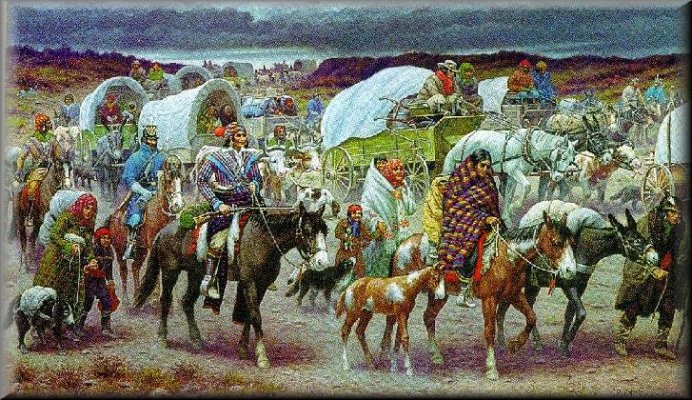
Artistic rendition of the 1838 "Trail of Tears"
[source blocked]
*--More on Native Americans
<>1839:Alaska | Russian-America Co. agreed on
a lease to the Hudsons' Bay Co. that gave the English overseas corporation access to the western sea from
inland Canadian territories
*--The access ran down the Stikhine River along a corridor through Russian new-world territory
*--In exchange the Russians were promised much
needed supplies for Russian posts further north in Alaska. For example =
- 1838:1846; USA Sauvie Island (12 m. north of current Portland OR) site of Hudson's Bay Co.| Two dairies there
contracted to provide eight tons of butter a year to the Russians up in Sitka AK
- Fort Williams on the western side of the Island on Multnomah Channel of the Willamette River (ran by Laurent Sauvé
whose name became attached to the Island)
- The second dairy was located on the eastern side near the banks of the Columbia River
- 1841:Hudson's Bay Co. administrator Sir George Simpson visited the eastern
dairy on the banks of the Columbia, concerned that the two dairies never managed
to provide more than 2-3 tons of butter a year for Sitka
- Simpson reported 100 milk cows producing an average of 60 lbs. of butter/year
- (By the 1950s, the modern minimum norm butter production per cow per year was 350 lbs.)
- Simpson also reported troublesome signs of US citizen incursions into
these territories which had been hitherto exclusively Russian and British playgrounds
- He did not know that Lewis and Clark visited and much admired Sauvie
Island on their great excursion
- The question of Oregon Territory had become a serious USA/English struggle
- The English claimed territory down to the Columbia River
- USA claimed territory to the southern limit of Russian Alaska =
- "54-40 or fight!" became the US slogan
- 1841:Fort Ross in California had became less critical to the Russian-America
Co., in part because of Sauvie Island butter, and was sold to John Sutter
- A few years later, Sutter's saw mill on the old Russian lease was the site of
significant gold discoveries
- The gold rush was on, and here came the American treasure seekers
- Russian presence continued to be important in the San Francisco area
- In 1846, Russians saw to the construction of the first steamboat on the San Francisco Bay
- But in truth the Russians were sidelined in the unfolding four-way struggle for ascendancy in California =
- Spanish vs. Russian vs. English vs.US frontier/imperialist ambitions
- 1846:Oregon Territory issue, after 40 years of uncertainty, was settled when
the current-day borders were accepted by USA and England
\\
*--Omar Spencer, The Story of Sauvies Island (1950)
<>1839:1842; China took steps to prohibit English
importation and sale in China of the debilitating drug opium
- The East India Company
produced the opium in India (largely in those western regions today called Afghanistan)
- They sold the opium in China to help finance English imperialist expansion
- In response to the Chinese effort to end the opium trade, the English attacked several Chinese ports
- A 3-year Opium War followed
- In the end, the English took possession of the vital Chinese port cities Shanghai and
Hong Kong [SWH:289-300]
- 1843:John Elliot Bingham, Narrative of the
Expedition to China
- 1842:1859; All major European states jumped in to impose on China what was called the "Treaty
System"
- The "Treaty System" amounted to "Western" control of all commercially significant
Chinese sea ports
- This was China's route to to a distinctly financial form of European imperialist
domination [1914:MAP of Asia]
- 1839:1842; Afghanistan | Ceaseless military clash between
England and Russia
- England checked Russian imperialist expansion in
SE Afghanistan but suffered massacre in the central city, Kabul
- The "Great Game" heated up as it expanded into more
subtle varieties of metropol projection of power
\\
*--LOOP on "finance"
<>1839je05:1839oc22; French aristocrat Astolphe, marquis
de Custine, visited Russia seeking inspiration from what he hoped would be a vibrant aristocratic tsarist monarchy
- Custine recorded his deep disappointment in La Russie en 1839, translated
as The Empire of the Czar...
[Excerpt= VSB,2:548-50]
- Here is an example of Custine's account = [TXT]
\\
*1971:A great USA diplomat of the early Cold War period, George Frost Kennan, was struck by the close parallel
of Custine's 19th-century impressions with his own 20th-century
impressions = The Marquis
de Custine and His Russia in 1839 | Whatever Custine's limitations, Kennan does tease out solid insights from
beneath Custine's dandy puffery
*--It would be of interest to compare USA diplomat Kennan's views with those of USA General Walter
Bedell Smith [in Smith's introduction to Journey
for Our Time: The Journals of the Marquis de Custine]. Both Kennan and Smith sought to tease out solid Cold War
significance from Custine's raffiné, down-the-nose account of Russian inadequacies
*--However long Custine's account has been celebrated as a brilliant first-hand vision of Imperial Russia
which foretold Soviet Russia, more recent scholarship suggests that Custine often based his account on
ordinary Parisian newspaper stories and rumors heard from his friend Baron de Barante, the French ambassador
to Russia [2000:CMR#41,1]
<>1839au:Caucasus | Another horrible siege finally
succeeded against Shamil, but he again fled
<>1840:French anarchist theorist and political
activist, Pierre Proudhon, published What is Property?
- Proudhon's answer to that question, "THEFT", made him famous
- He wrote many later influential pieces =
- 1846:System of Economic Contradictions, or, the Philosophy of Poverty
- 1848:Proudon was elected to the French National Assembly in the midst of the Revolution of 1848
- He fought for establishment of national banks to support the economic
interests of the common folk
- 1858:De la justice dans la révolution et dans l'église [On justice in the revolution
and in the Church]
- Proudhon was not an extreme anarchist in the sense that he was in favor of
government, even participated in it
- But he thought governmental institutions should always be adjusted downward to the lowest level
- Bring those who govern as physically (geographically) close as possible to the people governed
- He believed in checks and balances within a federated political structure and social security within
an egalitarian economic structure
- His moral belief was that individuals will evolve over time toward personal responsibility for their
own behavior, thus evenutally reducing the need for external authority to near nothing
- 1865:Proudhon died, but his followers, called "federalists", continued to play
a role in opposition to the "statist" Marx and his followers within
the First International
<>1841:1844; German political economist Friedrich List
published his National System of Political Economy (NYC: 1904)
*--See also List's Natural System of Political Economy, 1837 [TXT of chapters 8-10,
dealing with Russia, USA and general historical significance of his system]
- Friedrich List was Saxon by birth, but had been deported to USA after becoming involved in
liberal politics. He returned as US Ambassador to the Saxon court in Leipzig
- He was one of the most powerful European voices for protective measures, tariffs, as for
example in the Zollverein [a customs union, one of the early efforts at German unification]
- His macro-economics argued against "laissez-faire" [ID]
policies within late-blooming industrializing or marketizing economies
- In his view, "laissez-faire" significantly advantaged more developed foreign economic interests in
competition with immature home-grown enterprise
- "Emerging" nations must be protectionist so long as they are threatened by foreign incursions
- List was the first widely influential political-economist to emphasize how the increasingly
globalized world economy put late-developing market economies at the vulnerable periphery of more developed
and aggressive "metropol" economies
- Perhaps among equally developed economies, free trade might work, but
not among the widely diverse actual world economies in this era of
imperialistic competition
- Here are List's central paragraphs on that matter [TXT]
- List insisted that, for most promising results, political
or institutional liberalization had to precede economic modernization
- He did not confuse political freedom and democracy with market economic prosperity
- And he insisted that the former created the latter, rather than the other way around
- Consider how these two paragraphs of List [TXT] might be
thought to describe "the Westernization" of England
- Critics pointed out that List's brand of liberalism accepted laissez faire "within" (in domestic life), even
as it caused the owning class to rise above and exploit the home-land working class
- He was ready to abandon laissez faire "from without" (in international relations) in order to protect
the domestic owning class from superior owning classes abroad
- Nationalism gave rise everywhere to just this sort of
contradiction [ID] in European liberalism
- List's new brand of political-economy influenced Russian Finance Minister
Sergei Witte
- CF=1765
- GO= 1861:Turkey
\\
*--LOOP on "Political-Economy"
<>1841:England, France,
Russia, Prussia, and Austria agreed to
use force to terminate the slave trade on the high seas
*--While 1841 is certainly not the end of slavery in world history, it is time now to shift over
to the LOOP on wage-labor =
<>1842:English
Mines and Collieries Act passed, limiting working hours in
coal mines and
easing the conditions of wage-labor there
*--Some
testimony and illustrations gathered at this time [TXT
& pix]
*--Some illustrations of women coal bearers in these years [TXT
& pix]
\\
Wki
<>1842:Hawaiian Islands coveted by England. USA warned England off
<>1842:Russian writer Nikolai Gogol
(1809:1852) [W] published his magnum
opus, Dead Souls [TXT], marking
the beginning of what Pavel Annenkov called _The_Extraordinary Decade: Literary Memoirs
[cf. KRR:414-17]
*--Gogol earlier (1836) published a famous satirical play "Inspector
General" [TXT] which was taken as
a sharp critique of Tsarist officialdom and the backwardness of provincial life
*--Belinskii wrote a harsh and very personal critique of Gogol that shocked Russian culture
<>1842:Paris became home of Ivan Golovin, the first modern Russian
political/cultural émigré fleeing from Russian imperial power
*--Soon Golovin wrote a scathing expose, _Russia Under the Autocrat Nicholas the First (1846)
<>1843:1844; Prussian [German] conservative landowner
August, Baron von Haxthausen-Abbenburg traveled to Russia
- Haxthausen published Studies on the Russian Interior, translated under several different titles
[Excerpts: VSB,2:554-8 | WRH3:273-86]
- Haxthausen -- like many other "conservative" Europeans -- was appalled by this early era of
economic and social "modernization", especially as he witnessed it in his native Prussia
- Modern market economics and post-French Revolutionary politics were undermining traditional values
and social relations everywhere in Europe
- Centralized monarchical, bureaucratic states gathered increasing powers from provincial authorities
and from medieval elites
- Haxthausen resented intrusion of modern ways into established relations
among aristocrats and village laborers
- He went to Russia seeking confirmation of his firm faith in European old-regime tradition
- He sought ways to avoid the "Westernization of The West" [SAC editor's phrase]
- No surprise that Haxthausen was an inspiration to many traditionalist Russians who sought
similar confirmation in this era of nationalist awakening
- A certain resentment of post-Petrine statist reforms had long simmered in Russian
culture [ID]
- Modernization was met in Russia in a manner not unlike it was met everywhere else
- Post-Petrine transformations seemed artificial and "foreign"
- Native Russian discussions of these issues could not be broadcast as widely in Russia as in the German-language press
- For example, Kiselev and his reform associates [ID] were compelled to work in secret,
and public discussion of such topics was a crime
- Haxthausen's insights intensified the Russian debate on the virtues (or lack thereof) of village life
- For at least a decade, Russians had been engaged in a debate that was nothing less than a quest for discovery
of essentially what it meant to be "Russian"
- Slavophiles and Westernizers alike [ID] explored the implications of
certain native Russian traditions =
- An unexpectedly independent village assembly [mirskoi skhod]
- The curious survival among many peasants of periodic land redistribution and other
community-centered concepts of property in land
- Village customs of "mutual assurance" [krugovaia poruka (ID)]
- These issues arose again with a new political
urgency thirty years later
<>1843:Russian Emperor Nicholas I reacted
to English efforts to undermine the 1689:Nerchinsk [ID] and
1727:Kiakhta [ID] treaty privileges of Russia in China
<>1843au28:Caucasus
Mountains | Shamil delivered Russia a solid defeat, temporarily forcing Russia out of Daghestan
- For two or three years, Shamil's power reigned over large areas of Caucasus
- By year's end, Shamil was in full control of Chechnya and Daghestan
<>1844:USA, Boston to New York City | Margaret
Fuller, author of the pioneer feminist essay "Women in the Nineteenth Century", moved from the
old northeastern USA cultural center, Boston, to the big city, New York
- In NYC Fuller built on her commitment to women's issues. She moved outward
into a wider public sphere
- Fuller represented a further expansion on the pioneer career of Mary
Wollstonecraft [ID]
- She became an editor of Horace Greeley's liberal newspaper, New York Tribune
- She had been relatively happy in Boston, but now sought a wider audience for her favorite literary/cultural activity =
conversation
- She sought to break out of the narrow salon culture of Boston and set about on a quest for a
vast "American" landscape of meaning
- She believed that "newspaper writing is next door to conversation, and should be conducted
on the same principles"
- Those principles derived from a high ethical sense of what it meant when people talked with one another
- Talking was the most refined of all human interactions, one in which "souls" touched
- In the young democracy, everyone should be brought into contact with quality communication
- Her embracement of conversation also derived from a rare dialectic sense of truth
- In her view, truth was revealed only in discourse
- Truth was not simply discovered out there somewhere; it was not even the special realm of experts;
truth was forged and re-forged in the furnace of direct verbal interaction among people
- 1845:1848; Fuller began to change her views on USA, under the impact of the annexation of Texas and the war
with Mexico [ID]
- She had been for years an ardent American (US) patriot, one who disdained "bankrupt Europe"
- She wrote once that a great artist like Titian could never "float the heart on a boundless sea of
feeling, like the starry night on our Western Prairie"
- But her patriotism for the "country", for the "land", did not carry over into an acceptance of
US expansionism
- In her view, the American Eagle was beginning to look like a vulture = "her eyes fixed, not on the stars,
but on the possession of other men"
- So, she left USA and sailed for Europe and settled in Rome, one of the great
capitals of cultural emigration, a haven for those fleeing many different homelands, a most wide arena for her
philosophically defined "truth in conversation"
- 1848:1849; Fuller deplored the violence and destruction of the Revolution of 1848 [ID], but
she accepted the need for her new homeland Italy to become "modern"
- Unlike the growing number of tourists who flocked with their simple guidebooks to stare
at Roman antiquities, she mastered the Italian language, immersed herself in Italian life and
championed a new Italy
- She understood and acquiesced to the radical intent of Italian nationalistic leaders
like Giuseppe Mazzini [ID]
- 1850:Fuller, her partner, Count Ossoli (perhaps they were married), and their 2-year-old son, Angelino, sailed for
USA. Smallpox broke out on board. Angelino fell ill. The captain died. But that was not the end of misery =
- The ship ran aground only 300 yards from shore, where crowds gathered but would not or could not do anything
- "For nearly twelve hours the passengers and crew were left hanging on to the rapidly disintegrating
ship. Eventually, one of the crew attempted to swim to shore with little Angelino -- and they were both drowned. A few
minutes later Ossoli was washed off the ship by a wave.". [*2007de21 & de28:TLS:12, article by Clare Pettit]
- A survivor wrote, "Margaret sat with her back braced against the fallen foremast, still in her
white nightdress, her hair loose on her shoulders and her hands on her knees"
- Then she too was swept off the ship and drowned
\\
*--Charles Capper, Margaret Fuller: An
American Romantic Life
<>1845je11:Nicholas I issued manifesto
which took the edge off the Petrine Table of Ranks by
making it more difficult for commoners to become aristocrats on the basis of successful state service,
an example of social counter-reform [VSB,2:5558-9]
<>1845au15:Russia issued new Criminal Law Code [VSB,2:536-7]
*--Waves of European unrest also spread to Russia
*--Just as everywhere else, officials in Russia responded with more
vigorous reactionary reform
<>1846:1848; Mexican-American
War [W] brought USA firm title to
territories that would become the major SW states
- 1845wi:USA annexed recently independent Texas
- 1845no:USA President James Polk offered Mexico $5 million for New Mexico and
$25,000,000 for California. Mexico refused
- 1846my09:USA declared war when it learned that Mexican forces attacked USA troops. USA
forces commanded by Zachary Taylor
- 1847mr27:USA General Winfield Scott laid siege to Vera Cruz, Mexico
- He had just commanding first large-scale amphibious operation when he landed US troops on nearby shores
- Within days he moved toward Mexico City
- 1848fe02:USA and Mexico signed Treaty of Guadalupe Hidalgo, ending the Mexican-American War
- Texas became part of the USA, plus over 500,000 square miles of territory
(site of eight western USA states) =
- Arizona (almost all)
- California
- Nevada
- New Mexico (almost all)
- Utah
- Parts of Colorado and Wyoming
- Twenty-seven years of Mexican independence from Spain were now followed by
growing subordination of Mexico to expanding USA power
- A new element of militarism entered US life
\\
*1996sp:WiQ:96ff| Robert W. Johannsen, "America's Forgotten War"
*--Gary Clayton Anderson, The Conquest of Texas:
Ethnic Cleansing in the Promised Land, 1820-1875
<>1846:Russia,
Ukraine | Cyril-Methodios Society
formulated bylaws [DIR2:229-32]
<>1846:Czechoslovakia | Karel
Havlícek "Panslavistic editorial in his newspaper, Prague News [KMM:83-90]
<>1846:English Corn Laws repealed
["corn" in England means hard cereal grain in general]
- As the old land-owning aristocratic elite fought to protect its economic foundations it supported tariff measures that
allowed them a near monopoly to sell their agricultural product at prices higher than world-trade prices. These laws
restricted import and export of cereal grain
- to the advantage of elite landowners,
- to the disadvantage of the "consuming public", and
- with no advantage to rural laborers
- After long stubborn struggle, the liberal "Anti-Corn-Law League"
prevailed [pix]
- Old feudal/agrarian England was now nearly completely transformed into modern industrial England
- The old agricultural economy and all the social-economic relations that grew up
to support it (e.g., aristocratic squires and the agricultural tenants on their
lands) were being absorbed into the general market economy
- Nothing more dramatically than this illustrates the reason technical innovations in
machine manufacturing caused broad revolutionary change in human life
- Traditional agrarian ways withered away, greatly traumatizing some and greatly
benefiting others
- Should we be tempted to say that England was being "Westernized"?
- This dramatic, long-term struggle underscored one of the most profound changes caused by
industrialization =
- Most urbanized manufacturing economies, with burgeoning new populations clustered
around factory workplaces, could no longer feed themselves from within national borders
- World trade in grain was becoming a necessity like never before
- 1845+: Ireland in these years suffered
failed harvests as a result of fungal growth on potato crops
- Irish workers suffered deadly famine
- About a million died, and another million set sail for the new world
- Liberals in parliament did very little to aid Ireland,
in harmony with the same "hands-off" or free-market principles that had guided
them in the struggle against the corn laws
<>1847jy15:Russian journalist, critic and all-round
pundit, Vissarion Belinskii, published Letter to Gogol
[E-TXT]
|
Also in Edie,1:312-320 | Excerpts: Raeff3:253-61 |
KMM:135-7 | DIR2:221-8 | DIR3:252-61 |
RRC2,2#26], a scathing critique of Nikolai Gogol's emotional and religious
Selected Passages from Correspondence with Friends
*--Also see Gogol's Selected Letters...
*--More Belinskii [VSB,2:567-]
*--More Gogol
<>1848fe:France felt the first shocks of what
quickly became a Europe-wide "1848 Revolution", spreading from Paris, to Berlin,
etc [DPH:81-131] (All "1848" events are here dated NS)
[DPH:81-131]
<>1849:Russian political debating society, known as
the Petrashevskii circle or "Petrashevtsy", arrested and exiled to Siberia [VSB,2:571-3]
- Now all reform, reactionary or otherwise, waned
- And the combined policy of
removal
and Siberian frontier development waxed
- The most famous if not the most prominent Petrashevets was the novelist
Fedor Dostoevsky. See
Dostoevsky as Reformer: The Petrashevsky Case. Here we
read the official conclusion of the case =
The Military Court finds the defendant Dostoevskii guilty of, upon receiving in March
of this year from Moscow, from the nobleman Pleshcheev (a defendant), a copy of the
criminal letter by Belinskii, having read this letter at meetings: first, at the home of
the defendant Durov and then at the home of the defendant Petrashevskii, eventually giving
it to the defendant Mombelli to be copied. Dostoevskii was at the home of the defendant
Speshnev when the subversive work by the lieutenant Grigor'ev entitled "Soldiers'
Conversation" was read. Hence the Military Court has sentenced him, the retired
engineer-lieutenant Dostoevskii, for the failure to report the dissemination of the
litterateur Belinskii's letter that constitutes criminal offense against church and
government and of the pernicious work of the lieutenant Grigor'ev--to be deprived, on the
basis of the Code of Military Decrees, Pt. V, Bk. 1, art. 142, 144, 169, 170, 172, 174,
176, 177 and 178, of ranks, of all rights concomitant to his social estate and to be
subjected to the death penalty by shooting.
\\
*--Alan Kimball, "Who Were the Petrashevtsy?"
[TXT]
*--John L. Evans,
The Petrasevskij Circle, 1845-1849
(1974)
*--Franco Venturi, Roots of Revolution (1960) ch.3
*--LOOP on liberalism
<>1849:Paris | Fedor Tiutchev, tsarist diplomat
and poet, wrote article "La Russie et la Révolution" [KMM:94-103]
- Tiutchev equated opposition to Russian imperialist expansion with an
insidious global revolutionary movement, and he elevated the struggle to the highest spiritual level
- In eastern Europe, revolutions in 1848 [ID] inspired
Poles, Czechs, Hungarians, and many others against all forms of
imperial dominion, whether Russian, Austrian or Ottoman
- However, Tiutchev interpreted all "progressive politics" aimed against any European old-regime
oppressor as, in essence, "anti-Russian"
- In his view, Russia was in the world as a servant of God
- All who contested traditional power simultaneously contested God and thus Russian power
- All such contestants were agents of one diabolical power threatening everything holy in European civilization
- E-TXT translations
of Tiutchev's poetry
- _Poems & political letters of F. I. Tyutchev
\\
*--Roger Conant, _The_Political Poetry and Ideology of F. I. Tiutchev
<>1848jy:Caucasus Mountains in grip of Russian counter attack
against Shamil
<>1848:1896: Persia (Iran)
ruled for nearly a half century by Naser-e-Din Shah
- Over this half century, Persia introduced European science,
technology, and educational methods
- Economic modernization got under way, much as in western Europe only a
short while earlier
- This potentially great Persian era suffered from internal irresolution but mainly
from constant intervention by Russia and England
- "Westernization" in Persia was scuttled largely by "The West"
itself
\\
*--SAC Narrative Extension on this critical half century of Persian history
[TXT] shows how an early period of
self-sustained modernization in Iran (Persia) quickly passed. The TXT then
allows a hop back on the SAC
LOOP on Iran
<>1848:USA offered to buy Cuba from Spanish Monarchy
<>1849:1899; The half century in which six dominant
transnational or global grain-trade corporations came into their own
- 1849:1877; CA attracted Isaac Friedlander on the fabulous gold rush, then he turned to international
trade in grain, arranging shipment to England (14,000 mile haul). Finally he went bankrupt
- 1850:Belgium | Antwerp became headquarters of the Bunge family grain-trade business
- Business family formed up in the 1600s
- The business branched out in different directions, one into Russia, one into Prussia, and one into
the Netherlands
- Now well rooted and branched, the company put out feelers to the New World =
Argentina
- 1850:Switzerland, Basel | Leopold Louis-Dreyfus began grain trade, making flour in Hungarian mills, at that time
the world's best
- 1860s:MN Minneapolis | Pillsbury & Washburn families established milling and grain trade
- Louis Dreyfus opened business in the flourishing new Russian port city Odessa, and over the next decade
created the Odessa-Marseilles (France) grain trade route
- Global grain trade continued to expand
\\
*--Morgan, ch2:53-74, presents the early history of world grain trade
<>1849:Hawaiian Islands coveted by France. USA warned France off
<>1849my26(NS):Germany |Prussia, Saxony
and Hanover signed Erfurt Union Treaty [DPH:133-5]
<>1850:1864;
China | Taiping [great peace] Rebellion carried out by
native insurgents who sought to overthrow the Manchu dynasty which was now under
the thumb of European imperial powers and rendered feeble
- "The West", essentially England, reacted with alarm to this
nativist insurgency
- The compliant Manchu puppet regime was threatened by a mobilized indigenous
political force
- British troops (made up of recruits from around the far-flung Commonwealth)
were "invited in" to crush the revolt
- British action preserved the Manchu dynasty for another half century,
until 1912
- Much like Russian imperialist power in the Caucasus [ID],
English imperialist power met growing indigenous opposition to unwelcome invasive and
exploitative control [EG]
- On the international level at mid-century the "Great Game"
intensified and expanded into the regions of the Ottoman Empire
- Russian ambitions now concentrated on two directions of possible opportunity =
- Expansion eastward, particularly growing
frontier conflict with Japan, careening directly toward imperialist war
- Expansion southward, the main arena in the spreading "Great Game"
in which the "frontier" contest became sharply "imperialistic"
- In the south, a contest pitted Russia vs. Ottoman power in various
Islamic regions of the "Near East" or "Central-Asia"
- For Russia, a third direction of possible opportunity, "The West" was
much less an opportunity
than it was a distinct threat
- The "Great Game" got under way
along the southern frontiers of Russian power as early as 1827
- The Game's first half ended catastrophically 90 years later in World War
One, both in "The West" and along the Southern Front [ID]
- In its second half it re-ignited with new force in the era of "Cold War"
- Much of the complexity of these decades derived from the ambiguous reception of what
we call "Westernization", in "The West" itself as much as anywhere else [EG]
<>1850:USA | Nathaniel Hawthorne,
The Scarlet Letter
<>1850ja31(NS):Germany |
Prussian Constitution [DPH:136-9]
<>1850mr15(NS):French progressive laws on education,
passed by Guizot in the years prior to his 1848 fall from power, suffered reactionary setback
- Now the Falloux law put church schools on an equal footing with secular educational institutions and gave
the Catholic church hierarchy greater control over what was taught, even in public schools [DPH:232-3]
- The modern European liberal cause required broadly democratic and secular education
of the whole population, including wage-laborers
- Reactionary reform of education predicted the future of French politics
- Guizot-style civilian liberalism, which dominated French politics since the revolutionary
events of 1830, was about to be replaced by a swift transition from liberalism to imperialist statism
[ID] under Louis Napoleon (Napoleon III)
- Domestic politics in France, as in Russia, were falling under the grip of innovative reactionary reform
- Against optimistic liberal expectations, industrialization and economic modernization rendered
reactionary reform far more practical than earlier reactionary policies (EG=Congress of Vienna
[ID])
- Thus we might observe that at mid-century, the liberal era was giving way to the social-democratic era in Europe
- But we might also observe that the earliest beginnings of 20th-century statism [ID] appeared
on the scene
- Modern statism represented a negation of earlier conservative and liberal trends, and it took aim at the
newly emerging social-democratic trends
- We see here in France more clearly than anywhere else, quite yet, the central role of
militarist-imperialist-nationalism or "Chauvinism" (named after the zealous French politician and Napoleonic veteran,
Nicholas Chauvin) [ID]
- This new French Chauvinism contradicted the previous half-century of liberal ascendancy
- And it positioned itself in sharp conflict with rising social-democratic movements
- France was dominated for the next two decades by "the man on horseback", Louis
Napoleon or Napoleon III
\\
*--Peter Baehr and Melvin Richter, Dictatorship in History and Theory:
Bonapartism, Caesarism, and Totalitarianism (2004) [SUMMIT]
<>1851:London Great Exhibition (first world's fair
or exposition) was housed in the stunning Crystal Palace
- The Crystal Palace was a massive structure of decorative steel girders
- The girders were surprisingly visible from inside or out because curtain walls, ceilings and roofs were made of glass
- Joseph Paxton designed the Crystal Palace [pix~]
- The Crystal Palace structure was moved after the 1851 fair
- It burned in 1936
- In 1941 it was fully demolished because it served as a navigational landmark for yet a later demonstration of
industrial power = German Luftwaffe aerial bombing [ID]
- In anticipation of an unprecedented number of visitors to an urban event of
this vast proportion, 10,000 extra troops were stationed around London
- One-thousand new men were added to the urban police force
- 1828:English Police Act created this novel modern institution = urban police
- Six million visitors were counted through the turnstiles, but only 25 offenses were charged
in connection with misbehavior
- For the first time, public toilets were provided
- A special office was charged with the dispensation of the profits from the fair
- 186,000 pounds sterling were given in support of scientific and artistic
education
- The Great Exhibition was the "coming out" or public debut of the fast expanding industrial revolution
and the new European urban civilization
- It was a celebration of the startling and altogether novel distinctions arising between two types of nations =
- modernized and industrialized political economies (with, for example, their railroads) and
- traditional agrarian civilizations (with their quaint villages and natural resources for export)
- The Great Exhibition was an apologia for imperialism
- The World's Fair was a score-card for "The Great Game"
- Fourteen "world's fairs" followed over the next decades, into the time of WW1 =
- It wasn't until after WW1 that a "world's" fair was held anywhere else in the world but in west
Europe or N.America
<>1851:Saint
Petersburg-Moscow Railroad opened
<>1851: English public
activist and "public intellectual" George Holyoake apparently was the first to utter
the neologistic word "secularism"
- He later explained his meaning =
Secularism is not an argument against Christianity, it
is one independent of it. It does not question the pretensions of
Christianity; it advances others. Secularism does not say there is no
light or guidance elsewhere, but maintains that there is light and
guidance in secular truth, whose conditions and sanctions exist
independently, and act forever. Secular knowledge is manifestly that
kind of knowledge which is founded in this life, which relates to the
conduct of this life, conduces to the welfare of this life, and is
capable of being tested by the experience of this life.
- More than once in his career Holyoake demonstrated how difficult "Westernization" was
even in "The West" =
- 1842ap:England, Cheltenham Mechanics Institute| At the end of his public lecture, Holyoake uttered words in
response to a question from the audience which led to his arrest
- He soon became the last person in England (so far) convicted for blasphemy
- He spent six months in prison
- 1876au:He was the last person in England (so far) indicted for publishing a newspaper (his Secular Review)
without official approval
- 1878:Holyoake made a second major contribution to the modern English vocabulary
when he coined the term "jingoism" [ID]
\\
*--SecularISM is one thing, an "ism", a systematic point of view dedicated to the affirmation of things
"this-worldly"
*--SecularIZATION is another thing =
- SecularIZATION is much older and represents specific actions (rather than a general point of view)
- SecularIZATION in modern and contemporary historical periods has been characterized by the actions of "secular"
authorities and institutions to push religious authorities and their institutions (churches, mosques, synagogues, etc.)
from the center of public life, to subordinate them, to co-optate them to the needs of political power
[EG]
- In the history of SecularIZATION a very important issue was the economic power of the Church in states where the
challenge of early economic modernization required large capital investments =
- Confiscation of Church property [EG] is one of the models
of "primitive accumulation of capital" in the early mercantilist financial phases of "Western"
capitalism [ID]
- Don't forget that other popular source of "primitive accumulation of capital", confiscation of
peasant common lands [EG]
<>1851:USA | Herman Melville published his
"great American novel" Moby Dick, an adventure of the open seas
- In the same year another great adventure, this one out in the wide-open US West was under way =
- 1851:Salt Lake City | Brigham Young summoned all Mormons still in IL and MO to the new
"stake of Zion" in the shadow of the Wasatch Mts. in Utah Territory
- Mormons had some intention to create an independent and theocratic "State of Deseret"
- At the end of the Mexican War, USA Federal action forestalled that when it assumed administrative authority in
a newly designated Territory of Utah
- Still, the limits of church and secular authority were blurred
like nowhere else in USA since colonial days
- In 1852, Brigham Young further distinguished Utah Territory from others when he declared polygamy a church doctrine
- Continued controversy within the church and beyond, included constant federal governmental effort to outlaw
the practice
- 1890: Church President Woodruff issued a manifesto asking Latter-day Saints to respect standard USA marriage law
- The Mormon Church grew in size and financial strength as a result of world-wide missionary activities and
a strict policy of tithing among believers (gift of 10% of income to the church)
<>1851ja23:Russian universities fell under tighter
restriction [VSB,2:573-4]
*--In the Russia of Nicholas I, reaction, pure and simple, came to replace
reactionary reform
spirit of the previous 26 years
*--Nicholas I was not the only European leader for whom "reactionary reform"
worked = G/51de02 below
<>1851de02(NS):French National Assembly
dissolved by Louis Napoleon Bonaparte's Decree, followed immediately by his
Proclamation and Decree on a Plebiscite
- "Plebiscite" is a variation on mass participation in government, a variation designed to reduce
democratic or republican functions to a minimum
- Plebiscite asks for a simple "yes/no" response to a proposal crafted by authorities and presented to the whole people
for up or down vote (bypassing open debate among the many factions and within regular institutions of representative government)
- As time wore on, authoritarian governments that felt the need to appear "democratic" -- and from
the middle of the 19th century on, the need to at least appear democratic became almost universal in Europe -- resorted
increasingly to such plebiscite or sham forms of "representative government"
- A Resolution in protest by members of the National Assembly against
Louis Napoleon Bonaparte's
Decree on a Plebiscite had no effect [DPH:158-62]
<>1852:Petersburg | Nicholas I got news of USA plan
to force Japan out of its official "national seclusion"
- The tsar now moved finally to send Putiatin on that same mission
- Nikolai Nikolaevich Murav'ev had for years emphasized the necessity for Russia to control the Amur
River basin [DIR3:334-6]
- Murav'ev warned that USA and England threatened Russia's good standing in Asia
- Russia must establish strong ties with Japan as well as
with China [BBL/Putiatin]
\\
*--George Lensen,
Russia's Japan expedition
of 1852 to 1855 (1955)
*--R. C. Ashton, "Nikolai Nikolaevich Muraviev-Amurskii...", M.A. Thesis, University of Oregon, September, 1971
*--KEJ,6:341
<>1852:Russian Slavophile Ivan Kireevskii
(-1856), "On...European Culture..." [Raeff3:175-207 |
Excerpt TXT]
*1856:Kireevskii died, leaving "On the Necessity and Possibility of New Principles
in Philosophy" [Edie,1:180-213]
*--Other writings [VSB,2:576-7 |
LDH:79-88]
\\
Peter Christoff,
Introduction
<>1852:USA and Russia | Harriet Beecher
Stowe, Uncle Tom's Cabin, or Life Among the Lowly,
esp. chs.30 & 31,
consider also chs. 1, 4, 14
[TXT]
- Russian novelist Ivan Turgenev's Sportsman's Sketches occupied a similar place in Russian literary/social
history
- F/serf/ in
[TXT]
- On peasant life, see especially the episode titled "The Singers"
- Stowe's and Turgenev's works were fiction, but they were not examples of
"art for art's sake", nor can they properly be called "propaganda"
- But their fictional worlds did influence the actual worlds of their readers
- They struggled against the deplorable conditions of bound labor in their countries
- In 1860, Russian officials reacted with alarm when a publicly supported elementary
school (a "Sunday School") had its pupils read Uncle Tom's Cabin [BXO/Obolenskii,D]
<>1852ja14(NS):France given new constitution, prefaced
with a long proclamation written by Louis Napoleon defending this
action [DPH:162-5]
<>1852oc09:French Emperor Napoleon III
(as Louis Napoleon was now titled) delivered address at Bordeaux
[Stearns:553-4]
<>1852no:1870se;
French Republic fashioned into another Napoleonic
Empire [DPH:165-6]
- Louis Napoleon reigned as Napoleon III for 18 years
- Having endured the first Napoleon [ID], France was an empire for the second
time (third if you count Charlemagne [ID])
- This episode in 19th century statism more nearly predicted the 20th century than it imitated either
the Roman, Carolingian or great Napoleonic empires
- Some call the French Second Empire Europe's first fascist-style rule
- Karl Marx said, "History does indeed repeat itself -- first as tragedy, second as farce."
- 1856:Alexis de Tocqueville wrote L'Ancien Régime et la révolution
[English tlng =_The_Old Regime and the Revolution in France (E-TXT) ]
- The book ostensibly was about the Great French Revolution [ID]
- But it was obvious to every reader that it was very much inspired by the author's great distress over
the direction of French political life under Napoleon III
- Tocqueville's 20-year career as political observer, pundit and citizen-activist was at an end
- Napoleon III's reign was not without recognizable
European-style liberal moments [DPH:166-9]
\\
*--LOOP on "Imperialism and Revolution"
<>1852fa:Caucasus Mountain bands of
Shamil forced into guerilla warfare tactics against Russian imperial troops
<>1853jy08:Tokyo harbor | USA Commodore Matthew Perry anchored and threatened
bombardment if Japan did not abandon its "national seclusion"
- 1853au21:Nagasaki (the harbor sanctioned by national seclusion policy) | Russian
ambassador Putiatin arrived aboard his flagship Pallada, plus 4 other vessels, for diplomatic parley
- Perry declined Putiatin offer to join forces to open
Japan
- But Russian squadron helped persuade shogun to drop policy of national seclusion
- In these months, the Siberian far east was coming under
more ambitious Russia control
- Russian authorities occupied Sakhalin Island and Korean Peninsula
\\
*--KEJ,6:341
*--Sansom,WWJ:245, seems on the mark when he wrote, "American
and English historians sometimes overlook the important part played by Russia in
bringing about the opening of Japan by revealing to the Japanese their own
weaknesses". Therefore =
*--Beasley,MHJ:61, seems off the mark when he wrote that Putiatin was sent from Russia "to keep an eye on American
activities" and to say he was not "interested primarily in trade" because
"immediate preoccupation" was Crimean War. That war came later =
<>1853oc20:Crimean War
erupted (and dragged on for 2 1/2 years) [Various documents = DIR3:286-93]
- This was the first intense and decisive moment in the emergence of what Europeans
began to call "The Eastern Question", the center piece of "The Great Game"
[W-ID]
- French "Emperor" Napoleon III insisted at the Sublime
Porte that Catholic France was to be recognized as the protector of
Christians in the Islamic Ottoman Empire
- Russia countered with its own demand for better treatment of Orthodox
Christian subjects (mainly in Greece)
- Religiously inspired or justified imperialism played a role here, but Russia also
sought control over the largely Romanian-speaking areas of Moldavia and Wallachia [VSB,2:538-9]
- Eventually England and other allies entered the fray without an ounce of
religious, ethnic or neighborly pretense
- In something of a diplomatic coup, England and France were able to drive more deeply the
wedge between Ottoman Turks and Russia
- The growing diplomatic accommodation between Saint Petersburg and the Sublime Porte
over the previous quarter century was nullified when Turkey declared war on Russia
- Expanding the conflict, Russia declared war with England [English Parliamentary debates =
VSB,2:539-41]
- English nurse Florence Nightingale observed inhumanity of modern war first hand, and
did what she could to treat it [W#1]
- 1856 treaty that ended the war
- USA became involved in "Eastern Question" (IE=Russian-English rivalry
in Central-Asia, the Caucasus Mountains, and
north-western frontiers of the Ottoman Empire)
- The Crimean War signaled two important beginnings =
- Precipitous half-century decline of the
Ottoman Turkish Empire. The "sick
man of Europe" was dying
- Final and tragic half-century of (a) "Great Game" imperialism
in the era of (b) the "second industrial revolution"
- These were the central propellants toward WW1
\\
*--Andrew Rath, The Crimean War in Imperial Context, 1854-1856| ((Until now, accounts of Britain's and France's
naval campaigns against tsarist Russia in the Baltic, White Sea, and Pacific have been too narrowly focused . Rath considers
each campaign from an imperial perspective extending from South America to Finland. Ultimately, this regionally-focused
approach reveals that even the smallest Anglo-French naval campaigns in the remote White Sea had significant consequences
in fields ranging from medical advances to international maritime law. Considering the perspectives of neutral powers
including China, Japan, and Sweden-Norway, allows Rath to examine the Crimean conflict's impact on major historical events
ranging from the "opening" of Tokugawa Japan to Russia's annexation of large swaths of Chinese territory))
*--Orlando Figes, The Crimean War: A History
*--Saul,1:166-267
*--Saul,2:92-131
*--John Shelton Curtiss, Russia's Crimean War (Durham NC:1979)
<>1854:1867; Ezo [Hokkaido] under direct
shogun rule for the second and last time, for 13 years, in order to protect the
large northern island from Russia
<>1854:USA | Henry David Thoreau,
Walden, or Life in the Woods
\\
*--Wagar on Thoreau [TXT]
<>1854au10:Japan, Nagasaki then Shimoda on Izu Peninsula
| Russian Admiral Putiatin met with Kawaji Toshiakira (1801:1867) and Tsutsui Masanori (1778:1859)
- Kawaji was a major influence on the Japanese decision to end the 200-plus-year Seclusion policy
- He was influenced by his teacher Sato Issai [PH&G:547-8. Hayashi school related to the disputes between Confucian and emerging
Shinto schools] and associated with Fujita Toko, Egawa Tarozaemon, Watanabe Kazan [KEJ], and other learned specialists on
international relations
<>1854se:Japan, Nagasaki | English Rear-Admiral Stirling had been
pursuing Putiatin and his small diplomatic squadron through Japanese waters (fighting the Crimean War
[ID]
on its natural Pacific front)
- Stirling now made port in order to persuade Japan not to open that harbor to
Putiatin
- Japan however refused to cooperate with England in this European fray
\\
*--Alan Kimball, "Russia and Japan Expand to Their Pacific Frontiers..." [TXT part
three]
*--Beasley,MHJ:61
Return to top
Next SAC
|
|
|
|
|
|
|
|
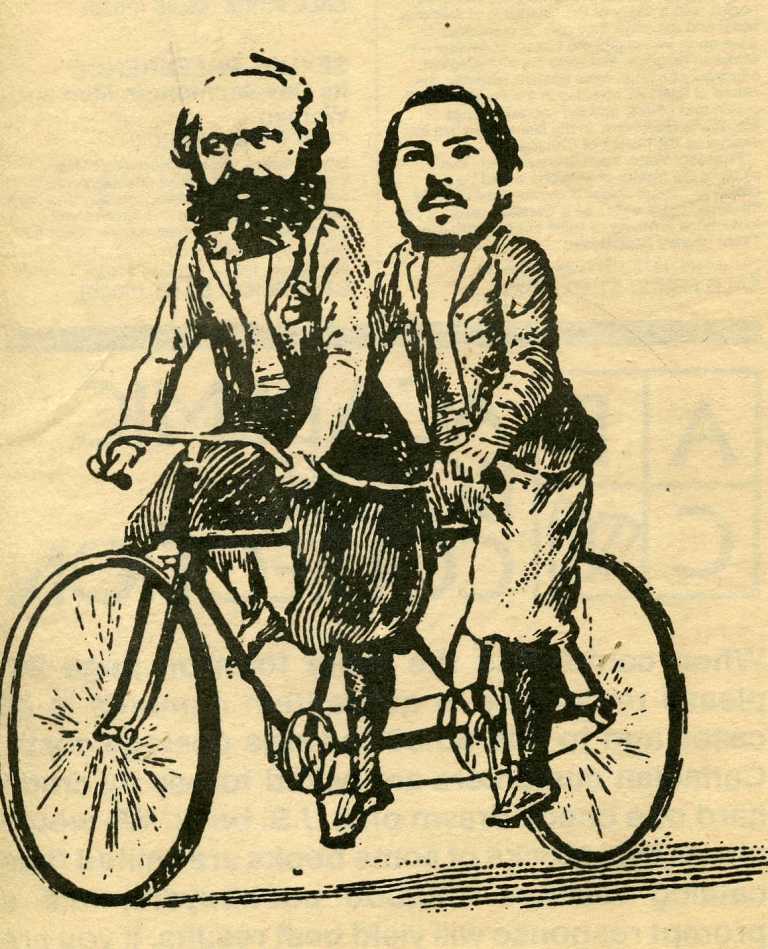

![[MAP]](images/1800-50.USA.go.west-CWA161.jpg)

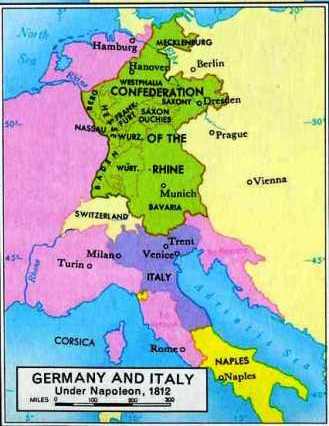
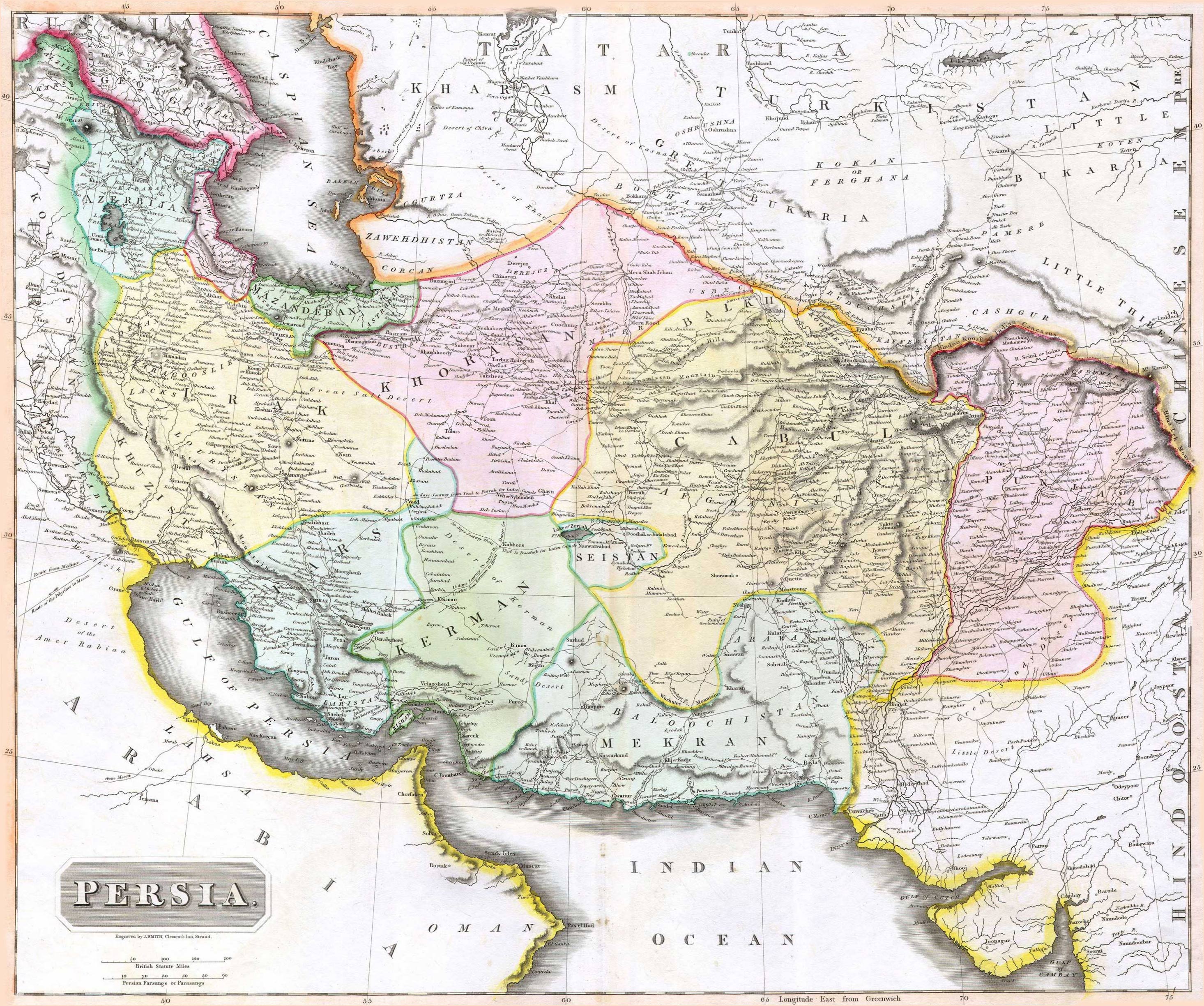
![[MAP]](images/1824.N.AM.Finley-CWA186.jpg)
![[pix]](images/Harmony.commune.grape.vines.jpg)
![[pix]](images/1825%20Fedor%20Kuzmich%20CIV728.jpg)
![[pix]](images/decembrists1.jpg)
![[pix]](images/1830s%20Shamil%20Kaziev%20Imam.jpg)
![[pix]](images/1830s%20Shamil2%20Kaziev%20Imam.jpg)
![[pix]](images/1834.McCormick.reaper.jpg)

![[W]](http://www.loc.gov/exhibits/treasures/images/am-reas.gif)