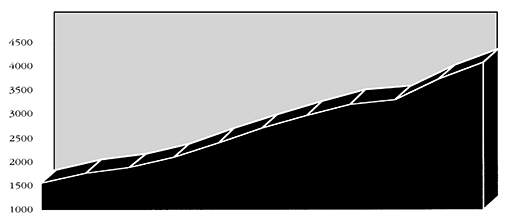
The Middle Fork of the Willamette River, which flows southeast from its headwaters at Timpanogas Lake, feeds Hills Creek Reservoir. The Middle Fork of the Willamette Trail follows the river for almost 30 miles. The trail is located along the route of the historic Oregon Central Military Wagon Road. This route was used by many of the early settlers of the area. There is a cabin site at Rigdon Meadows with an interpretive sign that provides a historical perspective. Today, technical rocky sections, steep switch backs and tricky water crossings challenge bike riders where wagon wheels once rolled.
Don't be fooled by this trails closeness to the river and road, it's more wild and remote than it looks. Constantly changing riverbed, bridge washouts, trail relocations and sometimes confusing route finding make this a challenging and potentially dangerous bike ride for the unprepared and unwary. With recent unusually high spring runoff (1999) the river has in many places been reclaiming the land, eating up the trail and causing the Forest Service and volunteer trail maintenance workers to construct many sections of new trail. Be careful as you ride to not follow old trail sections into the river! This is a place that should inspire a sense of awe; giant old growth Fir trees, rushing white water, peaceful meadows, divers flora, towering Ponderosa Pines, lush and mossy Northwest rain forest is laced with a trail that begs to be followed.
The trail begins at Sand Prairie Campground approximately 12 miles South of Highway 58 on Forest Service Rd. #21. Smooth and easy at the start, then gradually becoming technical and challening singletrack in its middle and upper sections, it offers beautiful and intimate views of the scenic river along the way. Several access points from road 21 and spur roads give riders many options in length and difficulty levels. Commonly used trail heads are at roads 2127, 2134, and 2143. From it's start at Sand Prairie the trail follows the river on the East side for nearly 5 miles to road 2127. There the trail crosses over the Rd. 2127 bridge to the opposite side of the river.
Now on the West side, it climbs upriver another 5.5 miles of more difficult trail to where roads 2133 and 2144 come together. Jumping back over the river to the East side again it follows the land between the river and road, passing through Ridgon Meadows, a popular place with equestrians. From here the trail enters a more wild and remote section where trees may be down and trail maintenance minimal. Another trail head is located near Indigo Springs.
Above here, the river valley becomes steeper and more gorge like with the trail sometimes climbing high above the rushing water. Again, ride at your own risk in this area and maybe take the time to clear a downed tree from the trail when needed. Upon entering Paddys Valley the terrain becopmes more gentle at the trail nears road 2153, approximately 26 miles from the start (depending on how many miles it took you to get unlost). Here the trail crosses the river again to the Southwest side. Its upper reaches then enter Big Swamp for about 1-2 miles where it crosses the river near another spur road access. This is where the trail is still under construction (Fall 1999), so be careful to not get lost. The truly adventurous, equipped with a map, compass, and survival gear can proceed at their own will along this barely discernible trail and climb up to the high country and Timpanogas Lake.
A popular method is to ride paved road 21 upriver to whichever trailhead fits your timeframe and energy level, then follow the trail back down to the starting point. Another option is to use two vehicles, parking one at each end of your ride. Most importantly, allow yourself plenty of time and don't assume the trail can be ridden quickly, or you just may run out of daylight!
Campgrounds along the way are plentiful; Sand Prairie, Sercret, Campers Flat, Sacandaga and Indigo Springs all offer water, picnic tables, tent sites and nearby trail access. Also, many places close-by are great for primitive camping, fishing, hiking, and wildlife observation. Parts of this trail are used a lot by hikers and other outdoor enthusiasts while some sections may see only half a dozen people in a years time. For the mountain biker, it may take several trips to explore the entire trail.
Norm Coyer
Printer Friendly Version