Basic principles
The EKG provides a record of the heart’s electrical activity.
A 12-lead EKG allows us to determine:
At rest, cardiac cells (myocytes) are INSIDE NEGATIVE.
Upon depolarization, cells become INSIDE POSITIVE, causing contraction of the myocardium.
Upon repolarization, cells return to INSIDE NEGATIVE.
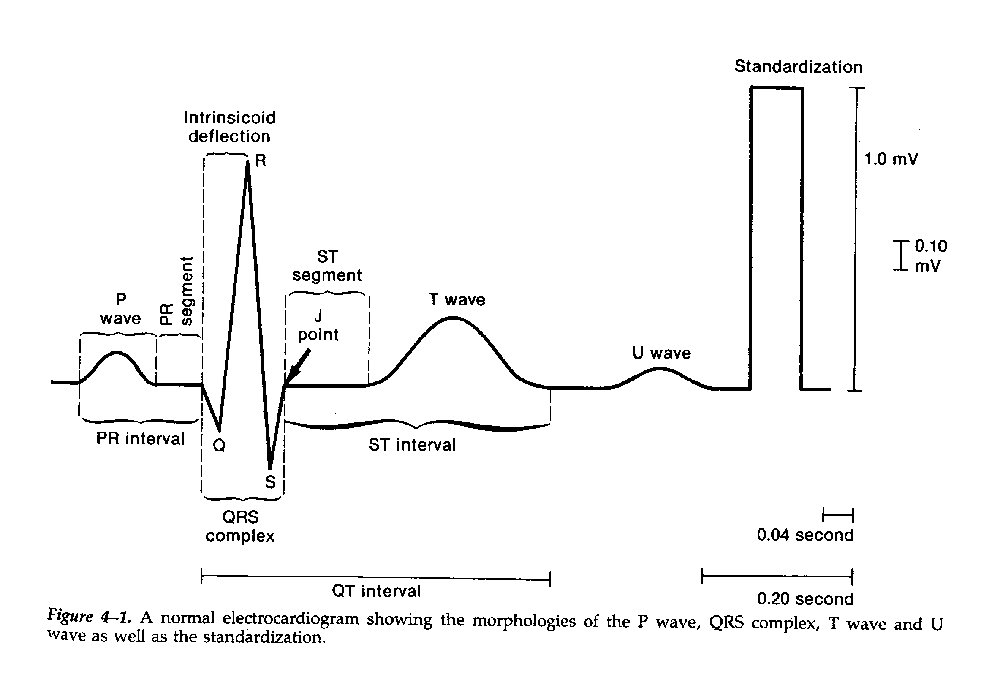
Waves:
Segments and Intervals (see below)
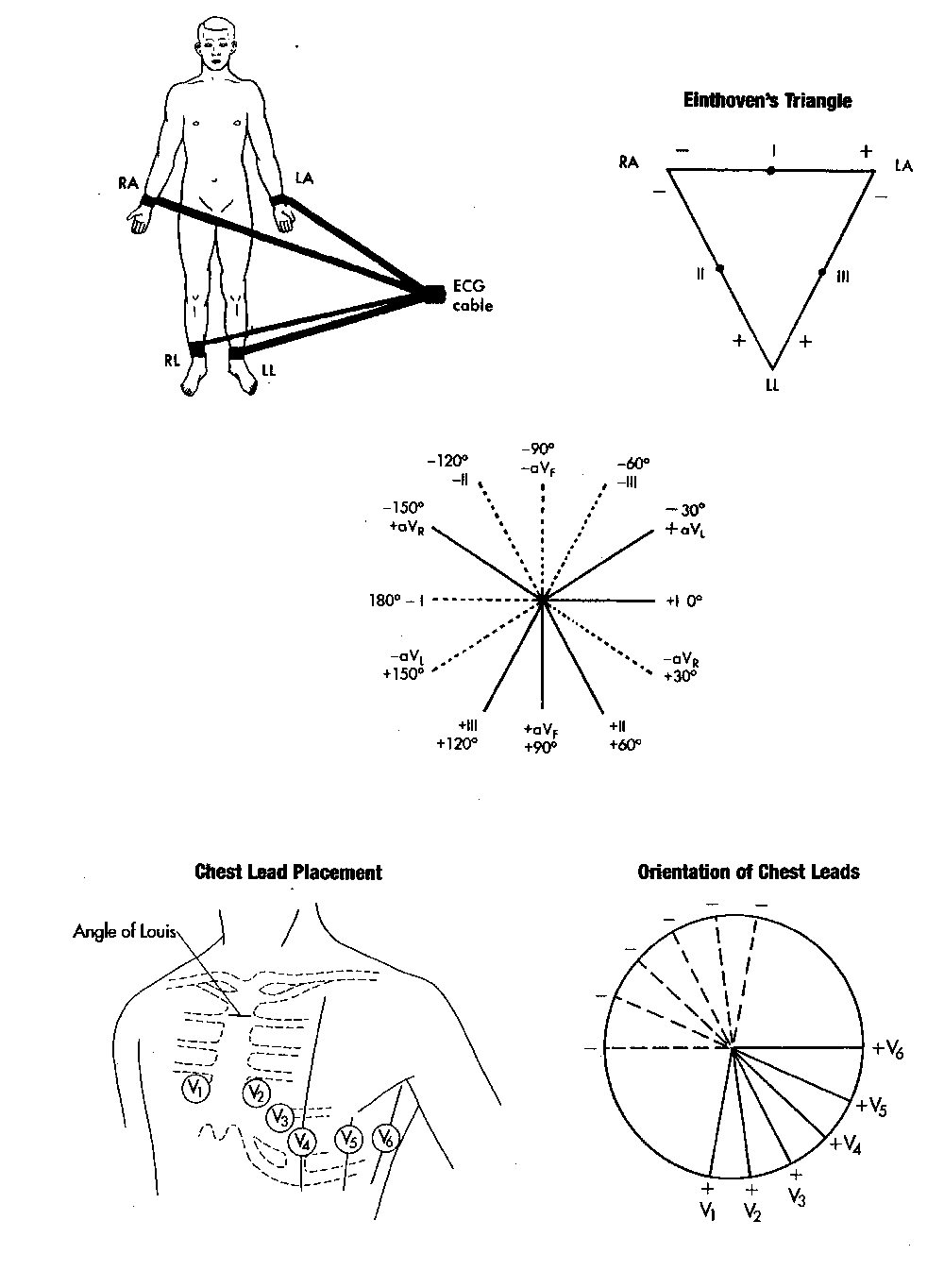
Electrodes and leads
Electrodes: You need 10 electrodes for a 12-lead EKGLimb electrodes: RA, LA, RL, LLChest electrodes: V1, V2, V3, V4, V5, V6
Leads:
The limb electrodes form the bipolar and unipolar limb leads
Bipolar leads: I, II, III (Einthoven’s triangle)Unipolar (augmented voltage) leads: avR, avL, avF
The chest electrodes form the precordial leads
V1, V2, V3, V4, V5, V6
Standardization
Speed: horizontalRuled paper travels through the cardiograph @ 25 mm/sec
1 tiny square = 1 mm = 0.04 sec
1 heavy square = 5 mm = 0.20 sec
How many heavy squares in 1.0 second?
5
How many 6.0 seconds?
30
How many in 1 minute?
300
Voltage: vertical10 mm (2 heavy boxes) of vertical displacement = 1 mV