![[Renascence Editions]](http://darkwing.uoregon.edu/%7Erbear/gifs/ren.gif) |
Return to Renascence Editions |
Poems
Phillis Wheatley
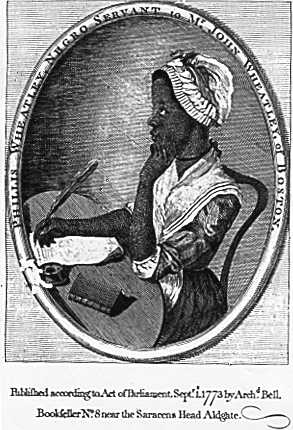
Note on the e-text: this Renascence Editions text was transcribed from the 1786 edition of J. Crukshank, Philadelphia, by Judy Boss in Omaha, Nebraska, and is provided by Renascence Editions with her kind permission. Title page is taken from the London 1773 imprint. The table of contents appeared at the end of the first edition. It appears here at the beginning. The engraving of Ms. Wheatley was a Frontispiece to the first edition. Footnotes have been shifted to the right margin for improved readability. This edition is in the public domain. Content unique to this presentation is copyright © 1998 The University of Oregon. For nonprofit and educational uses only. Send comments and corrections to the Publisher, rbear[at]uoregon.edu.
CONTENTS.
- Preface
- Copy of a letter sent
by the Author's Master to the Publisher
- To
the Publick
- To Mæcenas
- On Virtue
- To the
University of Cambridge, in New England
- To the King's Most Excellent Majesty
- On being brought from Africa
- On
the Rev. Dr. Sewell
- On the Rev. Mr.
George Whitefield
- On the Death of a
young Lady of five Years of Age
- On
the Death of a young Gentleman
- To a
Lady on the Death of her Husband
- Goliath of Gath
- Thoughts on the
Works of Providence
- To a Lady on the
Death of three Relations
- To a
Clergyman on the Death of his Lady
- An
Hymn to the Morning
- An Hymn to the
Evening
- On Isaiah lxiii.
1------8
- On Recollection
- On Imagination
- A
Funeral Poem on the Death of an Infant aged twelve Months
- To Captain H. D. of the 65th Regiment
- To the Right Hon. William, Earl of
Dartmouth
- Ode to Neptune
- To a Lady on her coming to North America
with
her Son, for the Recovery of her Health
- To a Lady on her remarkable Preservation
in a Hurricane
in North Carolina
- To a Lady and her
Children, on the Death of her Son and their Brother.
- To a Gentleman and Lady on the Death of
the Lady's
Brother and Sister, and a
Child of the Name of Avis, aged one Year.
- On the Death of Dr. Samuel
Marshall
- To a Gentleman on his
Voyage to Great-Britain, for the Recovery of his Health
- To the Rev. Dr. Thomas Amory on reading
his Sermons on Daily Devotion, in which that Duty is recommended
and assisted
- On the Death of J. C. an
Infant
- An Hymn to Humanity
- To the Hon. T. H. Esq; on the Death of
his Daughter
- Niobe in Distress for her
Children slain by Apollo, from Ovid's Metamorphoses,
Book VI, and from a View of the Painting of Mr. Richard
Wilson
- To S. M. a young African
Painter, on seeing his Works
- To his
Honour the Lieutenant-Governor, on the Death of his Lady
- A Farewel to America
- A Rebus by I. B.
- An Answer to ditto, by Phillis Wheatley
O N
V A R IO U S S U B J E C T S,
R E L I G I O U S A N D M O R A L.
B Y
P H I L L I S W H E A T L E Y,
NEGRO SERVANT to Mr. JOHN WHEATLEY,
Of Boston, in NEW ENGLAND.
_________________________________________
_________________________________________
L O N D O N:
Printed for A. BELL,
Bookseller, Aldgate; and sold by
Messrs. C O X and B E R R Y, King-Street, B O S T O N.
MDCCLXXIII.
_________________________________________
Entered at Stationer's Hall.
_________________________________________
D E D I C A T I O N.To the Right Honourable the
C O U N T E S S OF HUNTINGDON,
THE FOLLOWING
P O E M S
Are most respectfully
Inscribed,
By her much obliged,
Very humble,
And devoted Servant,
Phillis Wheatley.
-
1773.
P R E F A C E.
T
H E following PO E M S were written originally for the Amusement of the Author, as they were the Products of her leisure Moments. She had no Intention ever to have published them; nor would they now have made their Appearance, but at the Importunity of many of her best, and most generous Friends; to whom she considers herself, as under the greatest Obligations.As her Attempts in Poetry are now sent into the World, it is hoped the Critic will not severely censure their Defects; and we presume they have too
much Merit to be cast aside with Contempt, as worthless and trifling Effusions.As to the Disadvantages she has laboured under, with Regard to Learning, nothing needs to be offered, as her Master's Letter in the following Page will sufficiently show the Difficulties in this Respect she had to encounter.
With all their Imperfections, the Poems are now humbly submitted to the Perusal of the Public.
by the Author's Master to the Publisher.
P
HILLIS was brought from Africa to America, in the Year 1761, between seven and eight Years of Age. Without any Assistance from School Education, and by only what she was taught in the Family, she, in sixteen Months Time from her Arrival, attained the English language, to which she was an utter Stranger before, to such a degree, as to read any, the most difficult Parts of the Sacred Writings, to the great Astonishment of all who heard her.As to her WRITING, her own Curiosity led her to it; and this she learnt in so short a Time, that in the Year 1765, she wrote a Letter to the Rev. Mr. OCCOM, the Indian Minister, while in England.
She has a great Inclination to learn the Latin Tongue, and has made some Progress in it. This Relation is given by her Master who bought her, and with whom she now lives.
JOHN WHEATLEY.
Boston, Nov. 14, 1772.
A
S it has been repeatedly suggested to the Publisher, by Persons, who have seen the Manuscript, that Numbers would be ready to suspect they were not really the Writings of PHILLIS, he has procured the following Attestation, from the most respectable Characters in Boston, that none might have the least Ground for disputing their Original.W E whose Names are under-written, do assure the World,
that the POEMS specified in the following Page,* were (as we verily believe) written by Phillis, a young Negro Girl, who was but a few Years since, brought an uncultivated Barbarian from Africa, and has ever since been, and now is, under the Disadvantage of serving as a Slave in a Family in this Town. She has been examined by some of the best Judges, and is thought qualified to write them.
*The Words "following Page," allude to the Contents of the Manuscript Copy, which are wrote at the Back of the above Attestation His Excellency THOMAS HUTCHINSON, Governor.
The Hon. ANDREW OLIVER, Lieutenant-Governor.
The Hon. Thomas Hubbard,
The Hon. John Erving,
The Hon. James Pitts,
The Hon. Harrison Gray,
The Hon. James Bowdoin,
John Hancock, Esq;
Joseph Green, Esq;
Richard Carey, Esq;
| The Rev. Charles Chauncey, D. D.
| The Rev. Mather Byles, D. D.
| The Rev. Ed. Pemberton, D. D.
| The Rev. Andrew Elliot, D. D.
| The Rev. Samuel Cooper, D. D.
| The Rev. Mr. Saumel Mather,
| The Rev. Mr. John Moorhead,
| Mr. John Wheatley, her Master.
N. B. The original Attestation, signed by the above Gentlemen, may be seen by applying to Archibald Bell, Bookseller, No. 8, Aldgate-Street.
____________________________________________________
P O E M S
O N
V A R I O U S S U B J E C T S.
____________________________________________________
To M Æ C E N A S.
M
Æ C E N A S, you, beneath the myrtle shade,
Read o'er what poets sung, and shepherds play'd.
What felt those poets but you feel the same?
Does not your soul possess the sacred flame?
Their noble strains your equal genius shares
In softer language, and diviner airs.While Homer paints, lo! circumfus'd in air,
Celestial Gods in mortal forms appear;
Swift as they move hear each recess rebound,
Heav'n quakes, earth trembles, and the shores resound.
10
Great Sire of verse, before my mortal eyes,
The lightnings blaze across the vaulted skies,
And, as the thunder shakes the heav'nly plains,
A deep felt horror thrills through all my veins.
When gentler strains demand thy graceful song,
The length'ning line moves languishing along.
When great Patroclus courts Achilles' aid,
The grateful tribute of my tears is paid;
Prone on the shore he feels the pangs of love,
And stern Pelides tend'rest passions move.
20 Great Maro's strain in heav'nly numbers flows,
The Nine inspire, and all the bosom glows.
O could I rival thine and Virgil's page,
Or claim the Muses with the Mantuan Sage;
Soon the same beauties should my mind adorn,
And the same ardors in my soul should burn:
Then should my song in bolder notes arise,
And all my numbers pleasingly surprise;
But here I sit, and mourn a grov'ling mind,
That fain would mount, and ride upon the wind.
30 Not you, my friend, these plaintive strains become,
Not you, whose bosom is the Muses home;
When they from tow'ring Helicon retire,
They fan in you the bright immortal fire,
But I less happy, cannot raise the song,
The fault'ring music dies upon my tongue.The happier Terence* all the choir inspir'd,
His soul replenish'd, and his bosom fir'd;
But say, ye Muses, why this partial grace,
*He was an
African
by birth40
To one alone of Afric's sable race;
From age to age transmitting thus his name
With the first glory in the rolls of fame?Thy virtues, great Mæcenas! shall be sung
In praise of him, from whom those virtues sprung:
While blooming wreaths around thy temples spread,
I'll snatch a laurel from thine honour'd head,
While you indulgent smile upon the deed.As long as Thames in streams majestic flows,
Or Naiads in their oozy beds repose
While Phoebus reigns above the starry train
50
While bright Aurora purples o'er the main,
So long, great Sir, the muse thy praise shall sing,
So long thy praise shal' make Parnassus ring:
Then grant, Mæcenas, thy paternal rays,
Hear me propitious, and defend my lays.
O
Thou bright jewel in my aim I strive
To comprehend thee. Thine own words declare
Wisdom is higher than a fool can reach.
I cease to wonder, and no more attempt
Thine height t' explore, or fathom thy profound.
But, O my soul, sink not into despair,
Virtue is near thee, and with gentle hand
Would now embrace thee, hovers o'er thine head.
Fain would the heav'n-born soul with her converse,
Then seek, then court her for her promis'd bliss.
10 Auspicious queen, thine heav'nly pinions spread,
And lead celestial Chastity along;
Lo! now her sacred retinue descends,
Array'd in glory from the orbs above.
Attend me, Virtue, thro' my youthful years!
O leave me not to the false joys of time!
But guide my steps to endless life and bliss.
Greatness, or Goodness, say what I shall call thee,
To give me an higher appellation still,
Teach me a better strain, a nobler lay, 20
20
O thou, enthron'd with Cherubs in the realms of day!
IN NEW-ENGLAND.
W
HILE an intrinsic ardor prompts to write,
The muses promise to assist my pen;
'Twas not long since I left my native shore
The land of errors, and Egyptian gloom:
Father of mercy, 'twas thy gracious hand
Brought me in safety from those dark abodes.Students, to you 'tis giv'n to scan the heights
Above, to traverse the ethereal space,
And mark the systems of revolving worlds.
Still more, ye sons of science ye receive
10
The blissful news by messengers from heav'n,
How Jesus' blood for your redemption flows.
See him with hands out-stretcht upon the cross;
Immense compassion in his bosom glows;
He hears revilers, nor resents their scorn:
What matchless mercy in the Son of God!
When the whole human race by sin had fall'n,
He deign'd to die that they might rise again,
And share with him in the sublimest skies,
Life without death, and glory without end.
20 Improve your privileges while they stay,
Ye pupils, and each hour redeem, that bears
Or good or bad report of you to heav'n.
Let sin, that baneful evil to the soul,
By you be shun'd, nor once remit your guard;
Suppress the deadly serpent in its egg.
Ye blooming plants of human race divine,
An Ethiop tells you 'tis your greatest foe;
Its transient sweetness turns to endless pain,
And in immense perdition sinks the soul.
30
1768.
Y
OUR subjects hope, dread Sire--
The crown upon your brows may flourish long,
And that your arm may in your God be strong!
O may your sceptre num'rous nations sway,
And all with love and readiness obey!But how shall we the British king reward!
Rule thou in peace, our father, and our lord!
Midst the remembrance of thy favours past,
The meanest peasants most admire the last*
*The Repeal of
the Stamp Act.[10]
May George, beloved by all the nations round,
Live with heav'ns choicest constant blessings crown'd!
Great God, direct, and guard him from on high,
And from his head let ev'ry evil fly!
And may each clime with equal gladness see
A monarch's smile can set his subjects free!
A M E R I CA.
'T
WAS mercy brought me from my Pagan land,
Taught my benighted soul to understand
That there's a God, that there's a Saviour too:
Once I redemption neither sought nor knew,
Some view our sable race with scornful eye,
"Their colour is a diabolic die."
Remember, Christians, Negroes, black as Cain,
May be refin'd, and join th' angelic train.
1769.
E
RE yet the morn its lovely blushes spread,
See Sewell number'd with the happy dead.
Hail, holy man, arriv'd th' immortal shore,
Though we shall hear thy warning voice no more.
Come, let us all behold with wishful eyes
The saint ascending to his native skies;
From hence the prophet wing'd his rapt'rous way
To the blest mansions in eternal day.
Then begging for the Spirit of our God,
And panting eager for the same abode,
10
Come, let us all with the same vigour rise,
And take a prospect of the blissful skies;
While on our minds Christ's image is imprest,
And the dear Saviour glows in ev'ry breast.
Thrice happy faint! to find thy heav'n at last,
What compensation for the evils past!
Great God, incomprehensible, unknown
By sense, we bow at thine exalted throne.
O, while we beg thine excellence to feel,
Thy sacred Spirit to our hearts reveal,
20
And give us of that mercy to partake,
Which thou hast promis'd for the Saviour's sake!"Sewell is dead." Swift-pinion'd Fame thus cry'd.
"Is Sewell dead," my trembling tongue reply'd,
O what a blessing in his flight deny'd!
How oft for us the holy prophet pray'd!
How oft to us the Word of Life convey'd!
By duty urg'd my mournful verse to close,
I for his tomb this epitaph compose.
"Lo, here a man, redeem'd by Jesus's blood,
30
"A sinner once, but now a saint with God;
"Behold ye rich, ye poor, ye fools, ye wise,
"Not let his monument your heart surprise;
"Twill tell you what this holy man has done,
"Which gives him brighter lustre than the sun.
"Listen, ye happy, from your seats above.
"I speak sincerely, while I speak and love,
"He sought the paths of piety and truth,
"By these made happy from his early youth;
"In blooming years that grace divine he felt,
40
"Which rescues sinners from the chains of guilt.
"Mourn him, ye indigent, whom he has fed,
"And henceforth seek, like him, for living bread;
"Ev'n Christ, the bread descending from above,
"And ask an int'rest in his saving love.45
"Mourn him, ye youth, to whom he oft has told
"God's gracious wonders from the times of old.
"I too have cause this mighty loss to mourn,
"For he my monitor will not return.
"O when shall we to his blest state arrive?
50
"When the same graces in our bosoms thrive."
W H I T E F I E L D. 1770.
H
AIL, happy saint, on thine immortal throne,
Possest of glory, life, and bliss unknown;
We hear no more the music of thy tongue,
Thy wonted auditories cease to throng.
Thy sermons in unequall'd accents flow'd,
And ev'ry bosom with devotion glow'd;
Thou didst in strains of eloquence refin'd
Inflame the heart, and captivate the mind.
Unhappy we the setting sun deplore,
So glorious once, but ah! it shines no more.
10 Behold the prophet in his tow'ring flight!
He leaves the earth for heav'n's unmeasur'd height,
And worlds unknown receive him from our sight.
There Whitefield wings with rapid course his way,
And sails to Zion through vast seas of day.
Thy pray'rs, great saint, and thine incessant cries
Have pierc'd the bosom of thy native skies.
Thou moon hast seen, and all the stars of light,
How he has wrestled with his God by night.
He pray'd that grace in ev'ry heart might dwell,
20
He long'd to see America excell;
He charg'd its youth that ev'ry grace divine
Should with full lustre in their conduct shine;
That Saviour, which his soul did first receive,
The greatest gift that ev'n a God can give,
He freely offer'd to the num'rous throng,
That on his lips with list'ning pleasure hung."Take him, ye wretched, for your only good,
"Take him ye starving sinners, for your food;
"Ye thirsty, come to this life-giving stream,
30
"Ye preachers, take him for your joyful theme;
"Take him my dear Americans, he said,
"Be your complaints on his kind bosom laid:
"Take him, ye Africans, he longs for you,
"Impartial Saviour is his title due:
"Wash'd in the fountain of redeeming blood,
"You shall be sons, and kings, and priests to God."Great Countess,* we Americans revere
Thy name, and mingle in thy grief sincere;
*The Countess
ofHuntingdon,
to whom Mr.
Whitefield
was Chaplain.40
New England deeply feels, the Orphans mourn,
Their more than father will no more return.But, though arrested by the hand of death,
Whitefield no more exerts his lab'ring breath,
Yet let us view him in th' eternal skies,
Let ev'ry heart to this bright vision rise;
While the tomb safe retains its sacred trust,
Till life divine re-animates his dust.
of Age.
F
ROM dark abodes to fair etherial light
Th' enraptur'd innocent has wing'd her flight;
On the kind bosom of eternal love
She finds unknown beatitude above.
This known, ye parents, nor her loss deplore,
She feels the iron hand of pain no more;
The dispensations of unerring grace,
Should turn your sorrows into grateful praise;
Let then no tears for her henceforward flow,
No more distress'd in our dark vale below,
10 Her morning sun, which rose divinely bright,
Was quickly mantled with the gloom of night;
But hear in heav'n's blest bow'rs your Nancy fair,
And learn to imitate her language there.
"Thou, Lord, whom I behold with glory crown'd,
"By what sweet name, and in what tuneful sound
"Wilt thou be prais'd? Seraphic pow'rs are faint
"Infinite love and majesty to paint.
"To thee let all their graceful voices raise,
"And saints and angels join their songs of praise."
20 Perfect in bliss she from her heav'nly home
Looks down, and smiling beckons you to come;
Why then, fond parents, why these fruitless groans?
Restrain your tears, and cease your plaintive moans.
Freed from a world of sin, and snares, and pain,
Why would you wish your daughter back again?
No--bow resign'd. Let hope your grief control,
And check the rising tumult of the soul.
Calm in the prosperous, and adverse day,
Adore the God who gives and takes away;
30
Eye him in all, his holy name revere,
Upright your actions, and your hearts sincere,
Till having sail'd through life's tempestuous sea,
And from its rocks, and boist'rous billows free,
Yourselves, safe landed on the blissful shore,
Shall join your happy babe to part no more.
W
HO taught thee conflict with the pow'rs of night,
To vanquish satan in the fields of light?
Who strung thy feeble arms with might unknown,
How great thy conquest, and how bright thy crown!
War with each princedom, throne, and pow'r is o'er,
The scene is ended to return no more.
O could my muse thy seat on high behold,
How deckt with laurel, how enrich'd with gold!
O could she hear what praise thine harp employs,
How sweet thine anthems, how divine thy joys!
10
What heav'nly grandeur should exalt her strain!
What holy raptures in her numbers reign!
To sooth the troubles of the mind to peace,
To still the tumult of life's tossing seas,
To ease the anguish of the parents heart,
What shall my sympathizing verse impart?
Where is the balm to heal so deep a wound?
Where shall a sov'reign remedy be found?
Look, gracious Spirit, from thine heav'nly bow'r,
And thy full joys into their bosoms pour;
20
The raging tempest of their grief control,
And spread the dawn of glory through the soul,
To eye the path the saint departed trod,
And trace him to the bosom of his God.
G
RIM monarch! see, depriv'd of vital breath,
A young physician in the dust of death:
Dost thou go on incessant to destroy,
Our griefs to double, and lay waste our joy?
Enough thou never yet wast known to say,
Though millions die, the vassals of thy sway:
Nor youth, nor science, not the ties of love,
Nor ought on earth thy flinty heart can move.
The friend, the spouse from his dire dart to save,
In vain we ask the sovereign of the grave.
10
Fair mourner, there see thy lov'd Leonard laid,
And o'er him spread the deep impervious shade.
Clos'd are his eyes, and heavy fetters keep
His senses bound in never-waking sleep,
Till time shall cease, till many a starry world
Shall fall from heav'n, in dire confusion hurl'd
Till nature in her final wreck shall lie,
And her last groan shall rend the azure sky:
Not, not till then his active soul shall claim
His body, a divine immortal frame.
20 But see the softly-stealing tears apace
Pursue each other down the mourner's face;
But cease thy tears, bid ev'ry sigh depart,
And cast the load of anguish from thine heart:
From the cold shell of his great soul arise,
And look beyond, thou native of the skies;
There fix thy view, where fleeter than the wind
Thy Leonard mounts, and leaves the earth behind.
Thyself prepare to pass the vale of night
To join for ever on the hills of light:
30
To thine embrace this joyful spirit moves
To thee, the partner of his earthly loves;
He welcomes thee to pleasures more refin'd,
And better suited to th' immortal mind.
1 SAM. Chap. xvii.
Y
E martial pow'rs, and all ye tuneful nine,
Inspire my song, and aid my high design.
The dreadful scenes and toils of war I write,
The ardent warriors, and the fields of fight:
You best remember, and you best can sing
The acts of heroes to the vocal string:
Resume the lays with which your sacred lyre,
Did then the poet and the sage inspire.Now front to front the armies were display'd,
Here Israel rang'd, and there the foes array'd;
10
The hosts on two opposing mountains stood,
Thick as the foliage of the waving wood;
Between them an extensive valley lay,
O'er which the gleaming armour pour'd the day,
When from the camp of the Philistine foes,
Dreadful to view, a mighty warrior rose;
In the dire deeds of bleeding battle skill'd,
The monster stalks the terror of the field.
From Gath he sprung, Goliath was his name,
Of fierce deportment, and gigantic frame:
20
A brazen helmet on his head was plac'd,
A coat of mail his form terrific grac'd,
The greaves his legs, the targe his shoulders prest:
Dreadful in arms high-tow'ring o'er the rest
A spear he proudly wav'd, whose iron head,
Strange to relate, six hundred shekels weigh'd;
He strode along, and shook the ample field,
While Phoebus blaz'd refulgent on his shield:
Through Jacob's race a chilling horror ran,
When thus the huge, enormous chief began:
30 "Say, what the cause that in this proud array
"You set your battle in the face of day?
"One hero find in all your vaunting train,
"Then see who loses, and who wins the plain;
"For he who wins, in triumph may demand
"Perpetual service from the vanquish'd land:
"Your armies I defy, your force despise,
"By far inferior in Philistia's eyes:
"Produce a man, and let us try the fight,
"Decide the contest, and the victor's right."
40 Thus challeng'd he: all Israel stood amaz'd,
And ev'ry chief in consternation gaz'd;
But Jesse's son in youthful bloom appears,
And warlike courage far beyond his years:
He left the folds, he left the flow'ry meads,
And soft recesses of the sylvan shades.
Now Israel's monarch, and his troops arise,
With peals of shouts ascending to the skies;
In Elah's vale the scene of combat lies.
When the fair morning blush'd with orient red,
50
What David's fire enjoin'd the son obey'd,
And swift of foot towards the trench he came,
Where glow'd each bosom with the martial flame.
He leaves his carriage to another's care,
And runs to greet his brethren of the war.
While yet they spake the giant-chief arose,
Repeats the challenge, and insults his foes:
Struck with the sound, and trembling at the view,
Affrighted Israel from its post withdrew.
"Observe ye this tremendous foe, they cry'd,
60
"Who in proud vaunts our armies hath defy'd:
"Whoever lays him prostrate on the plain,
"Freedom in Israel for his house shall gain;
"And on him wealth unknown the king will pour,
"And give his royal daughter for his dow'r."Then Jesse's youngest hope: "My brethren say,
"What shall be done for him who takes away
"Reproach from Jacob, who destroys the chief.
"And puts a period to his country's grief.
"He vaunts the honours of his arms abroad,
70
"And scorns the armies of the living God."Thus spoke the youth, th' attentive people ey'd
The wond'rous hero, and again reply'd:
"Such the rewards our monarch will bestow,
"On him who conquers, and destroys his foe."Eliab heard, and kindled into ire
To hear his shepherd brother thus inquire,
And thus begun: "What errand brought thee? say
"Who keeps thy flock? or does it go astray?
"I know the base ambition of thine heart,
80
"But back in safety from the field depart."Eliab thus to Jesse's youngest heir,
Express'd his wrath in accents most severe.
When to his brother mildly he reply'd.
"What have I done? or what the cause to chide?The words were told before the king, who sent
For the young hero to his royal tent:
Before the monarch dauntless he began,
"For this Philistine fail no heart of man:
"I'll take the vale, and with the giant fight:
90
"I dread not all his boasts, nor all his might."
When thus the king: "Dar'st thou a stripling go,
"And venture combat with so great a foe?
"Who all his days has been inur'd to fight,
"And made its deeds his study and delight:
"Battles and bloodshed brought the monster forth,
"And clouds and whirlwinds usher'd in his birth."
When David thus: "I kept the fleecy care,
"And out there rush'd a lion and a bear;
"A tender lamb the hungry lion took,
100
"And with no other weapon than my crook
"Bold I pursu'd, and chas d him o'er the field,
"The prey deliver'd, and the felon kill'd:
"As thus the lion and the bear I slew,
"So shall Goliath fall, and all his crew:
"The God, who sav'd me from these beasts of prey,
"By me this monster in the dust shall lay."
So David spoke. The wond'ring king reply'd;
"Go thou with heav'n and victory on thy side:
"This coat of mail, this sword gird on," he said,
110
And plac'd a mighty helmet on his head:
The coat, the sword, the helm he laid aside,
Nor chose to venture with those arms untry'd,
Then took his staff, and to the neighb'ring brook
Instant he ran, and thence five pebbles took.
Mean time descended to Philistia's son
A radiant cherub, and he thus begun:
"Goliath, well thou know'st thou hast defy'd
"Yon Hebrew armies, and their God deny'd:
"Rebellious wretch! audacious worm! forbear,
120
"Nor tempt the vengeance of their God too far:
"Them, who with his Omnipotence contend,
"No eye shall pity, and no arm defend:
"Proud as thou art, in short liv'd glory great,
"I come to tell thee thine approaching fate.
"Regard my words. The Judge of all the gods,
"Beneath whose steps the tow'ring mountain nods,
"Will give thine armies to the savage brood,
"That cut the liquid air, or range the wood.
"Thee too a well-aim'd pebble shall destroy,
130
"And thou shalt perish by a beardless boy:
"Such is the mandate from the realms above,
"And should I try the vengeance to remove,
"Myself a rebel to my king would prove.
"Goliath say, shall grace to him be shown,
"Who dares heav'ns Monarch, and insults his throne?""Your words are lost on me," the giant cries,
While fear and wrath contended in his eyes,
When thus the messenger from heav'n replies:
"Provoke no more Jehovah's awful hand
140
"To hurl its vengeance on thy guilty land:
"He grasps the thunder, and, he wings the storm,
"Servants their sov'reign's orders to perform."The angel spoke, and turn'd his eyes away,
Adding new radiance to the rising day.Now David comes: the fatal stones demand
His left, the staff engag'd his better hand:
The giant mov'd, and from his tow'ring height
Survey'd the stripling, and disdain'd the fight,
And thus began: "Am I a dog with thee?
150
"Bring'st thou no armour, but a staff to me?
"The gods on thee their vollied curses pour,
"And beasts and birds of prey thy flesh devour."David undaunted thus, "Thy spear and shield
"Shall no protection to thy body yield:
"Jehovah's name------no other arms I bear,
"I ask no other in this glorious war.
"To-day the Lord of Hosts to me will give
"Vict'ry, to-day thy doom thou shalt receive;
"The fate you threaten shall your own become,
160
"And beasts shall be your animated tomb,
"That all the earth's inhabitants may know
"That there's a God, who governs all below:
"This great assembly too shall witness stand,
"That needs nor sword, nor spear, th' Almighty's hand:
"The battle his, the conquest he bestows,
"And to our pow'r consigns our hated foes."Thus David spoke; Goliath heard and came
To meet the hero in the field of fame.
Ah! fatal meeting to thy troops and thee,
170
But thou wast deaf to the divine decree;
Young David meets thee, meets thee not in vain;
'Tis thine to perish on th' ensanguin'd plain.And now the youth the forceful pebble slung
Philistia trembled as it whizz'd along:
In his dread forehead, where the helmet ends,
Just o'er the brows the well-aim'd stone descends,
It pierc'd the skull, and shatter'd all the brain,
Prone on his face he tumbled to the plain:
Goliath's fall no smaller terror yields
180
Than riving thunders in aerial fields:
The soul still ling'red in its lov'd abode,
Till conq'ring David o'er the giant strode:
Goliath's sword then laid its master dead,
And from the body hew'd the ghastly head;
The blood in gushing torrents drench'd the plains,
The soul found passage through the spouting veins.And now aloud th' illustrious victor said,
"Where are your boastings now your champion's dead?"
Scarce had he spoke, when the Philistines fled:
190
But fled in vain; the conqu'ror swift pursu'd:
What scenes of slaughter! and what seas of blood!
There Saul thy thousands grasp'd th' impurpled sand
In pangs of death the conquest of thine hand;
And David there were thy ten thousands laid:
Thus Israel's damsels musically play'd.Near Gath and Edron many an hero lay,
Breath'd out their souls, and curs'd the light of day:
Their fury, quench'd by death, no longer burns,
And David with Goliath's head returns,
200
To Salem brought, but in his tent he plac'd
The load of armour which the giant grac'd.
His monarch saw him coming from the war,
And thus demanded of the son of Ner.
"Say, who is this amazing youth?" he cry'd
When thus the leader of the host reply'd;
"As lives thy soul I know not whence he sprung,
"So great in prowess though in years so young:"
"Inquire whose son is he," the sov'reign said,
"Before whose conq'ring arm Philistia fled."
210
Before the king behold the stripling stand,
Goliath's head depending from his hand:
To him the king: "Say of what martial line
"Art thou, young hero, and what sire was thine?"
He humbly thus; "The son of Jesse I:
"I came the glories of the field to try.
"Small is my tribe, but valiant in the fight;
"Small is my city, but thy royal right."
"Then take the promis'd gifts," the monarch cry'd,
Conferring riches and the royal bride:
220
"Knit to my soul for ever thou remain
"With me, nor quit my regal roof again."
A
RISE, my soul, on wings enraptur'd, rise
To praise the monarch of the earth and skies,
Whose goodness and benificence appear
As round its centre moves the rolling year,
Or when the morning glows with rosy charms,
Or the sun slumbers in the ocean's arms:
Of light divine be a rich portion lent
To guide my soul, and favour my intend.
Celestial muse, my arduous flight sustain
And raise my mind to a seraphic strain!
10 Ador'd for ever be the God unseen,
Which round the sun revolves this vast machine,
Though to his eye its mass a point appears:
Ador'd the God that whirls surrounding spheres,
Which first ordain'd that mighty Sol should reign
The peerless monarch of th' ethereal train:
Of miles twice forty millions is his height,
And yet his radiance dazzles mortal sight
So far beneath--from him th' extended earth
Vigour derives, and ev'ry flow'ry birth:
20
Vast through her orb she moves with easy grace
Around her Phoebus in unbounded space;
True to her course th' impetuous storm derides,
Triumphant o'er the winds, and surging tides.Almighty, in these wond'rous works of thine,
What Pow'r, what Wisdom, and what Goodness shine!
And are thy wonders, Lord, by men explor'd,
And yet creating glory unador'dCreation smiles in various beauty gay,
While day to night, and night succeeds to day:
30
That Wisdom, which attends Jehovah's ways,
Shines most conspicuous in the solar rays:
Without them, destitute of heat and light,
This world would be the reign of endless night:
In their excess how would our race complain,
Abhorring life! how hate its length'ned chain!
From air adust what num'rous ills would rise?
What dire contagion taint the burning skies?
What pestilential vapours, fraught with death,
Would rise, and overspread the lands beneath?
40 Hail, smiling morn, that from the orient main
Ascending dost adorn the heav'nly plain!
So rich, so various are thy beauteous dies,
That spread through all the circuit of the skies,
That, full of thee, my soul in rapture soars,
And thy great God, the cause of all adores.O'er beings infinite his love extends,
His Wisdom rules them, and his Pow'r defends.
When tasks diurnal tire the human frame,
The spirits faint, and dim the vital flame,
50
Then too that ever active bounty shines,
Which not infinity of space confines.
The sable veil, that Night in silence draws,
Conceals effects, but shows th' Almighty Cause,
Night seals in sleep the wide creation fair,
And all is peaceful but the brow of care.
Again, gay Phoebus, as the day before,
Wakes ev'ry eye, but what shall wake no more;
Again the face of nature is renew'd,
Which still appears harmonious, fair, and good.
60
May grateful strains salute the smiling morn,
Before its beams the eastern hills adorn!Shall day to day, and night to night conspire
To show the goodness of the Almighty Sire?
This mental voice shall man regardless hear,
And never, never raise the filial pray'r?
To-day, O hearken, nor your folly mourn
For time mispent, that never will return.But see the sons of vegetation rise,
And spread their leafy banners to the skies.
70
All-wise Almighty Providence we trace
In trees, and plants, and all the flow'ry race;
As clear as in the nobler frame of man,
All lovely copies of the Maker's plan.
The pow'r the same that forms a ray of light,
That call d creation from eternal night.
"Let there be light," he said: from his profound
Old Chaos heard, and trembled at the sound:
Swift as the word, inspir'd by pow'r divine,
Behold the light around its Maker shine,
80
The first fair product of th' omnific God,
And now through all his works diffus'd abroad.As reason's pow'rs by day our God disclose,
So we may trace him in the night's repose:
Say what is sleep? and dreams how passing strange!
When action ceases, and ideas range
Licentious and unbounded o'er the plains,
Where Fancy's queen in giddy triumph reigns.
Hear in soft strains the dreaming lover sigh
To a kind fair, or rave in jealousy;
90
On pleasure now, and now on vengeance bent,
The lab'ring passions struggle for a vent.
What pow'r, O man! thy reason then restores,
So long suspended in nocturnal hours?
What secret hand returns the mental train,
And gives improv'd thine active pow'rs again?
From thee, O man, what gratitude should rise!
And, when from balmy sleep thou op'st thine eyes,
Let thy first thoughts be praises to the skies.
How merciful our God who thus imparts
100
O'erflowing tides of joy to human hearts,
When wants and woes might be our righteous lot,
Our God forgetting, by our God forgot!Among the mental pow'rs a question rose,
"What most the image of th' Eternal shows?"
When thus to Reason (so let Fancy rove)
Her great companion spoke immortal Love."Say, mighty pow'r, how long shall strife prevail,
"And with its murmurs load the whisp'ring gale?
"Refer the cause to Recollection's shrine,
110
"Who loud proclaims my origin divine,
"The cause whence heav'n and earth began to be,
"And is not man immortaliz'd by me?
"Reason let this most causeless strife subside."
Thus Love pronounc'd, and Reason thus reply'd."Thy birth, coelestial queen! 'tis mine to own,
"In thee resplendent is the Godhead shown;
"Thy words persuade, my soul enraptur'd feels
"Resistless beauty which thy smile reveals."
Ardent she spoke, and, kindling at her charms,
120
She clasp'd the blooming goddess in her arms.Infinite Love where'er we turn our eyes
Appears: this ev'ry creature's wants supplies;
This most is heard in Nature's constant voice,
This makes the morn, and this the eve rejoice;
This bids the fost'ring rains and dews descend
To nourish all, to serve one gen'ral end,
The good of man: yet man ungrateful pays
But little homage, and but little praise.
To him, whose works arry'd with mercy shine,
130
What songs should rise, how constant, how divine!
W
E trace the pow'r of Death from tomb to tomb,
And his are all the ages yet to come.
'Tis his to call the planets from on high,
To blacken Phoebus, and dissolve the sky;
His too, when all in his dark realms are hurl'd,
From its firm base to shake the solid world;
His fatal sceptre rules the spacious whole,
And trembling nature rocks from pole to pole.Awful he moves, and wide his wings are spread:
Behold thy brother number'd with the dead!
10
From bondage freed, the exulting spirit flies
Beyond Olympus, and these starry skies.
Lost in our woe for thee, blest shade, we mourn
In vain; to earth thou never must return.
Thy sisters too, fair mourner, feel the dart
Of Death, and with fresh torture rend thine heart.
Weep not for them, and leave the world behind.As a young plant by hurricanes up torn,
So near its parent lies the newly born--
20
But 'midst the bright ehtereal train behold
It shines superior on a throne of gold:
Then, mourner, cease; let hope thy tears restrain,
Smile on the tomb, and sooth the raging pain.
On yon blest regions fix thy longing view,
Mindless of sublunary scenes below;
Ascend the sacred mount, in thought arise,
And seek substantial and immortal joys;
Where hope receives, where faith to vision springs,
And raptur'd seraphs tune th' immortal strings
30
To strains extatic. Thou the chorus join,
And to thy father tune the praise divine.
W
HERE contemplation finds her sacred spring,
Where heav'nly music makes the arches ring,
Where virtue reigns unsully'd and divine,
Where wisdom thron'd, and all the graces shine,
There sits thy spouse amidst the radiant throng,
While praise eternal warbles from her tongue;
There choirs angelic shout her welcome round,
With perfect bliss, and peerless glory crown'd.While thy dear mate, to flesh no more confin'd,
Exults a blest, an heav n-ascended mind,
10
Say in thy breast shall floods of sorrow rise?
Say shall its torrents overwhelm thine eyes?
Amid the seats of heav'n a place is free,
And angels open their bright ranks for thee;
For thee they wait, and with expectant eye
Thy spouse leans downward from th' empyreal sky:
"O come away," her longing spirit cries,
"And share with me the raptures of the skies.
"Our bliss divine to mortals is unknown;
"Immortal life and glory are our own.
20
"There too may the dear pledges of our love
"Arrive, and taste with us the joys above;
"Attune the harp to more than mortal lays,
"And join with us the tribute of their praise
"To him, who dy'd stern justice to stone,
"And make eternal glory all our own.
"He in his death slew ours, and, as he rose,
"He crush'd the dire dominion of our foes;
"Vain were their hopes to put the God to flight,
"Chain us to hell, and bar the gates of light."
30 She spoke, and turn'd from mortal scenes her eyes,
Which beam'd celestial radiance o'er the skies.Then thou dear man, no more with grief retire,
Let grief no longer damp devotion's fire,
But rise sublime, to equal bliss aspire,
Thy sighs no more be wafted by the wind,
No more complain, but be to heav'n resign'd
'Twas thine t' unfold the oracles divine,
To sooth our woes the task was also thine;
Now sorrow is incumbent on thy heart,
40
Permit the muse a cordial to impart;
Who can to thee their tend'rest aid refuse?
To dry thy tears how longs the heav'nly muse!
A
TTEND my lays, ye ever honour'd nine,
Assist my labours, and my strains refine;
In smoothest numbers pour the notes along,
For bright Aurora now demands my song.Aurora hail, and all the thousand dies,
Which deck thy progress through the vaulted skies:
The morn awakes, and wide extends her rays,
On ev'ry leaf the gentle zephyr plays;
Harmonious lays the feather'd race resume,
Dart the bright eye, and shake the painted plume.
10
Ye shady groves, your verdant gloom displayTo shield your poet from the burning day:
Calliope awake the sacred lyre,
While thy fair sisters fan the pleasing fire:
The bow'rs, the gales, the variegated skies
In all their pleasures in my bosom rise.See in the east th' illustrious king of day!
His rising radiance drives the shades away--
But Oh! I feel his fervid beams too strong,
And scarce begun, concludes th' abortive song.
10
S
OON as the sun forsook the eastern main
The pealing thunder shook the heav'nly plain;
Majestic grandeur! From the zephyr's wing,
Exhales the incense of the blooming spring.
Soft purl the streams, the birds renew their notes,
And through the air their mingled music floats.Through all the heav'ns what beauteous dies are spread!
But the west glories in the deepest red:
So may our breasts with ev'ry virtue glow,
The living temples of our God below!
10 Fill'd with the praise of him who gives the light,
And draws the sable curtains of the night,
Let placid slumbers sooth each weary mind,
At morn to wake more heav'nly, more refin'd;
So shall the labours of the day begin
More pure, more guarded from the snares of sin.Night's leaden sceptre seals my drowsy eyes,
Then cease, my song, till fair Aurora rise.
S
AY, heav'nly muse, what king or mighty God,
That moves sublime from Idumea's road?
In Bosrah's dies, with martial glories join'd,
His purple vesture waves upon the wind.
Why thus enrob'd delights he to appear
In the dread image of the Pow'r of war?Compres'd in wrath the swelling wine-press groan'd,
It bled, and pour'd the gushing purple round."Mine was the act," th' Almighty Saviour said,
And shook the dazzling glories of his head,
10
"When all forsook I trod the press alone,
"And conquer'd by omnipotence my own;
"For man's release sustain'd the pond'rous load,
"For man the wrath of an immortal God:
"To execute th' Eternal's dread command
"My soul I sacrific'd with willing hand;
"Sinless I stood before the avenging frown,
"Atoning thus for vices not my own."His eye the ample field of battle round
Survey'd, but no created succours found;
20
His own omnipotence sustain'd the right,
His vengeance sunk the haughty foes in night;
Beneath his feet the prostrate troops were spread,
And round him lay the dying, and the dead.Great God, what light'ning flashes from thine eyes?
What pow'r withstands if thou indignant rise?Against thy Zion though her foes may rage,
And all their cunning, all their strength engage,
Yet she serenely on thy bosom lies,
Smiles at their arts, and all their force defies.
30
M
NEME begin. Inspire, ye sacred nine,
Your vent'rous Afric in her great design.
Mneme, immortal pow'r, I trace thy spring:
Assist my strains, while I thy glories sing:
The acts of long departed years, by thee
Recover'd, in due order rang'd we see:
Thy pow'r the long-forgotten calls from night,
That sweetly plays before the fancy's sight.
Mneme in our nocturnal visions pours
The ample treasure of her secret stores;
10
Swift from above the wings her silent flight
Through Phoebe's realms, fair regent of the night;
And, in her pomp of images display'd,
To the high-raptur'd poet gives her aid,
Through the unbounded regions of the mind,
Diffusing light celestial and refin'd.
The heav'nly phantom paints the actions done
By ev'ry tribe beneath the rolling sun.Mneme, enthron'd within the human breast,
Has vice condemn'd, and ev'ry virtue blest.
20
How sweet the sound when we her plaudit hear?
Sweeter than music to the ravish'd ear,
Sweeter than Maro's entertaining strains
Resounding through the groves, and hills, and plains.
But how is Mneme dreaded by the race,
Who scorn her warnings and despise her grace?
By her unveil'd each horrid crime appears,
Her awful hand a cup of wormwood bears.
Days, years mispent, O what a hell of woe!
Hers the worst tortures that our souls can know.
30 Now eighteen years their destin'd course have run,
In fast succession round the central sun.
How did the follies of that period pass
Unnotic'd, but behold them writ in brass!
In Recollection see them fresh return,
And sure 'tis mine to be asham'd, and mourn.O Virtue, smiling in immortal green,
Do thou exert thy pow'r, and change the scene;
Be thine employ to guide my future days,
And mine to pay the tribute of my praise.
40 Of Recollection such the pow'r enthron'd
In ev'ry breast, and thus her pow'r is own'd.
The wretch, who dar'd the vengeance of the skies,
At last awakes in horror and surprise,
By her alarm'd, he sees impending fate,
He howls in anguish, and repents too late.
But O! what peace, what joys are hers t' impart
To ev'ry holy, ev'ry upright heart!
Thrice blest the man, who, in her sacred shrine,
Feels himself shelter'd from the wrath divine!
50
T
HY various works, imperial queen, we see,
How bright their forms! how deck'd with pomp by thee!
Thy wond'rous acts in beauteous order stand,
And all attest how potent is thine hand.From Helicon's refulgent heights attend,
Ye sacred choir, and my attempts befriend:
To tell her glories with a faithful tongue,
Ye blooming graces, triumph in my song.Now here, now there, the roving Fancy flies,
Till some lov'd object strikes her wand'ring eyes,
10
Whose silken fetters all the senses bind,
And soft captivity involves the mind.Imagination! who can sing thy force?
Or who describe the swiftness of thy course?
Soaring through air to find the bright abode,
Th' empyreal palace of the thund'ring God,
We on thy pinions can surpass the wind,
And leave the rolling universe behind:
From star to star the mental optics rove,
Measure the skies, and range the realms above.
20
There in one view we grasp the mighty whole,
Or with new worlds amaze th' unbounded soul.Though Winter frowns to Fancy's raptur'd eyes
The fields may flourish, and gay scenes arise;
The frozen deeps may break their iron bands,
And bid their waters murmur o'er the sands.
Fair Flora may resume her fragrant reign,
And with her flow'ry riches deck the plain;
Sylvanus may diffuse his honours round,
And all the forest may with leaves be crown'd:
30
Show'rs may descend, and dews their gems disclose,
And nectar sparkle on the blooming rose.Such is thy pow'r, nor are thine orders vain,
O thou the leader of the mental train:
In full perfection all thy works are wrought,
And thine the sceptre o'er the realms of thought.
Before thy throne the subject-passions bow,
Of subject-passions sov'reign ruler thou;
At thy command joy rushes on the heart,
And through the glowing veins the spirits dart.
40 Fancy might now her silken pinions try
To rise from earth, and sweep th' expanse on high:
From Tithon's bed now might Aurora rise,
Her cheeks all glowing with celestial dies,
While a pure stream of light o'erflows the skies.
The monarch of the day I might behold,
And all the mountains tipt with radiant gold,
But I reluctant leave the pleasing views,
Which Fancy dresses to delight the Muse;
Winter austere forbids me to aspire,
50
And northern tempests damp the rising fire;
They chill the tides of Fancy's flowing sea,
Cease then, my song, cease the unequal lay.
an Infant of Twelve Months.
T
HROUGH airy roads he wings his instant flight
To purer regions of celestial light;
Enlarg'd he sees unnumber'd systems roll,
Beneath him sees the universal whole,
Planets on planets run their destin'd round,
And circling wonders fill the vast profound.
Th' ethereal now, and now th' empyreal skies
With growing splendors strike his wond'ring eyes:
The angels view him with delight unknown,
Press his soft hand, and seat him on his throne;
10
Then smilling thus: "To this divine abode,
"The seat of saints, of seraphs, and of God,
"Thrice welcome thou." The raptur'd babe replies,
"Thanks to my God, who snatch'd me to the skies,
"E'er vice triumphant had possess'd my heart,
"E'er yet the tempter had beguil d my heart,
"E'er yet on sin's base actions I was bent,
"E'er yet I knew temptation's dire intent;
"E'er yet the lash for horrid crimes I felt,
"E'er vanity had led my way to guilt,
20
"But, soon arriv'd at my celestial goal,
"Full glories rush on my expanding soul."
Joyful he spoke: exulting cherubs round
Clapt their glad wings, the heav'nly vaults resound.Say, parents, why this unavailing moan?
Why heave your pensive bosoms with the groan?
To Charles, the happy subject of my song,
A brighter world, and nobler strains belong.
Say would you tear him from the realms above
By thoughtless wishes, and prepost'rous love?
30
Doth his felicity increase your pain?
Or could you welcome to this world again
The heir of bliss? with a superior air
Methinks he answers with a smile severe,
"Thrones and dominions cannot tempt me there."But still you cry, "Can we the sigh forbear,
"And still and still must we not pour the tear?
"Our only hope, more dear than vital breath,
"Twelve moons revolv'd, becomes the prey of death;
"Delightful infant, nightly visions give
40
"Thee to our arms, and we with joy receive,
"We fain would clasp the Phantom to our breast,
"The Phantom flies, and leaves the soul unblest."To yon bright regions let your faith ascend,
Prepare to join your dearest infant friend
In pleasures without measure, without end.
S
AY, muse divine, can hostile scenes delight
The warrior's bosom in the fields of fight?
Lo! here the christian and the hero join
With mutual grace to form the man divine.
In H-----D see with pleasure and surprise,
Where valour kindles, and where virtue lies:
Go, hero brave, still grace the post of fame,
And add new glories to thine honour'd name,
Still to the field, and still to virtue true:
Britannia glories in no son like you.
10
of DARTMOUTH, His Majesty's Principal
Secretary of State for North-America, &c.
H
AIL, happy day, when, smiling like the morn,
Fair Freedom rose New-England to adorn:
The northern clime beneath her genial ray,
Dartmouth, congratulates thy blissful sway:
Elate with hope her race no longer mourns,
Each soul expands, each grateful bosom burns,
While in thine hand with pleasure we behold
The silken reins, and Freedom's charms unfold.
Long lost to realms beneath the northern skies
She shines supreme, while hated faction dies:
10
Soon as appear'd the Goddess long desir'd,
Sick at the view, she languish'd and expir'd;
Thus from the splendors of the morning light
The owl in sadness seeks the caves of night.No more, America, in mournful strain
Of wrongs, and grievance unredress'd complain,
No longer shalt thou dread the iron chain,
Which wanton Tyranny with lawless hand
Had made, and with it meant t' enslave the land.
Should you, my lord, while you peruse my song,
20
Wonder from whence my love of Freedom sprung,
Whence flow these wishes for the common good,
By feeling hearts alone best understood,
I, young in life, by seeming cruel fate
Was snatch'd from Afric's fancy'd happy seat:
What pangs excruciating must molest,
What sorrows labour in my parent's breast?
Steel'd was that soul and by no misery mov'd
That from a father seiz'd his babe belov'd:
Such, such my case. And can I then but pray
30
Others may never feel tyrannic sway?For favours past, great Sir, our thanks are due,
And thee we ask thy favours to renew,
Since in thy pow'r, as in thy will before,
To sooth the griefs, which thou did'st once deplore.
May heav'nly grace the sacred sanction give
To all thy works, and thou for ever live
Not only on the wings of fleeting Fame,
Though praise immortal crowns the patriot's name,
But to conduct to heav'ns refulgent fane,
40
May fiery coursers sweep th' ethereal plain,
And bear thee upwards to that blest abode,
Where, like the prophet, thou shalt find thy God.
On Mrs. W-----'s Voyage to England.
I.
W
HILE raging tempests shake the shore,
While Ælus' thunders round us roar,
And sweep impetuous o'er the plain
Be still, O tyrant of the main;
Nor let thy brow contracted frowns betray,
While my Susanna skims the wat'ry way.
The Pow'r propitious hears the lay,
The blue-ey'd daughters of the sea
With sweeter cadence glide along,
And Thames responsive joins the song.
10
Pleas'd with their notes Sol sheds benign his ray,
And double radiance decks the face of day.
To court thee to Britannia's arms
Serene the climes and mild the sky,
Her region boasts unnumber'd charms,
Thy welcome smiles in ev'ry eye.
Thy promise, Neptune keep, record my pray'r,
Not give my wishes to the empty air.
with her Son, for the Recovery of her Health.
I
NDULGENT muse! my grov'ling mind inspire,
And fill my bosom with celestial fire.
See from Jamaica's fervid shore she moves,
Like the fair mother of the blooming loves,
When from above the Goddess with her hand
Fans the soft breeze, and lights upon the land;
Thus she on Neptune's wat'ry realm reclin'd
Appear'd, and thus invites the ling'ring wind."Arise, ye winds, America explore,
"Waft me, ye gales, from this malignant shore;
10
"The Northern milder climes I long to greet,
"There hope that health will my arrival meet."
Soon as she spoke in my ideal view
The winds assented, and the vessel flew.Madam, your spouse bereft of wife and son,
In the grove's dark recesses pours his moan;
Each branch, wide-spreading to the ambient sky,
Forgets its verdure, and submits to die.From thence I turn, and leave the sultry plain,
And swift pursue thy passage o'er the main:
20
The ship arrives before the fav'ring wind,
And makes the Philadelphian port assign'd,
Thence I attend you to Bostonia's arms,
Where gen'rous friendship ev'ry bosom warms:
Thrice welcome here! may health revive again,
Bloom on thy cheek, and bound in ev'ry vein!
Then back return to gladden ev'ry heart,
And give your spouse his soul's far dearer part,
Receiv'd again with what a sweet surprise,
The tear in transport starting from his eyes!
30
While his attendant son with blooming grace
Springs to his father's ever dear embrace.
With shouts of joy Jamaica's rocks resound,
With shouts of joy the country rings around.
in an Hurricane in North-Carolina.
T
HOUGH thou did'st hear the tempest from afar,
And felt'st the horrors of the wat'ry war,
To me unknown, yet on this peaceful shore
Methinks I hear the storm tumultuous roar,
And how stern Boreas with impetuous hand
Compell'd they Nereids to usurp the land.
Reluctant rose the daughters of the main,
And slow ascending glided o'er the plain,
Till Æolus in his rapid chariot drove
In gloomy grandeur from the vault above:
10
Furious he comes. His winged sons obey
Their frantic sire, and madden all the sea.
The billows rave, the wind's fierce tyrant roars,
And with his thund'ring terrors shakes the shores:
Broken by waves the vessel's frame is rent,
And strows with planks the wat'ry element.But thee, Maria, a kind Nereid's shield
Preserv'd from sinking, and thy form upheld:
And sure some heav'nly oracle design'd
At that dread crisis to instruct thy mind
20
Things of eternal consequence to weigh,
And to thine heart just feelings to convey
Of things above, and of the future doom,
And what the births of the dread world to come.From tossing seas I welcome thee to land.
"Resign her, Nereid," 'twas thy God's command.
Thy spouse late buried, as thy fears conceiv'd,
Again returns, thy fears are all reliev'd:
Thy daughter blooming with superior grace
Again thou see'st, again thine arms embrace;
30
O come, and joyful show thy spouse his heir,
And what the blessings of maternal care!
of her Son and their Brother.
O
'ERWHELMING sorrow now demands my song:
From death the overwhelming sorrow sprung.
What flowing tears? What hearts with grief opprest?
What sighs on sighs heave the fond parent's breast?
The brother weeps, the hapless sisters join
Th' increasing woe, and swell the crystal brine;
The poor, who once his gen'rous bounty fed,
Droop, and bewail their benefactor dead.
In death the friend, the kind companion lies,
And in one death what various comfort dies!
10 Th' unhappy mother sees the sanguine rill
Forget to flow, and nature's wheels stand still,
But see from earth his spirit far remov'd,
And know no grief recals your best-belov'd:
He, upon pinions swifter than the wind,
Has left mortality's sad scenes behind
For joys to this terrestial state unknown,
And glories richer than the monarch's crown.
Of virtue's steady course the prize behold!
What blissful wonders to his mind unfold!
20
But of celestial joys I sing in vain:
Attempt not, muse, the too advent'rous strain.No more in briny show'rs, ye friends around,
Or bathe his clay, or waste them on the ground:
Still do you weep, still wish for his return?
How cruel thus to wish, and thus to mourn?
No more for him the streams of sorrow pour,
But haste to join him on the heav'nly shore,
On harps of gold to tune immortal lays,
And to your God immortal anthems raise.
10
| To a GENTLEMAN and LADY on the
Death
of the Lady's Brother and Sister, and a Child of the Name of Avis, aged one Year. |
O
N Death's domain intent I fix my eyes,
Where human nature in vast ruin lies:
With pensive mind I search the drear abode,
Where the great conqu'ror has his spoils bestow'd;
There there the offspring of six thousand years
In endless numbers to my view appears:
Whole kingdoms in his gloomy den are thrust,
And nations mix with their primeval dust:
Insatiate still he gluts the ample tomb;
His is the present, his the age to come.
10
See here a brother, here a sister spread,
And a sweet daughter mingled with the dead.But, Madam, let your grief be laid aside,
And let the fountain of your tears be dry'd,
In vain they flow to wet the dusty plain,
Your sighs are wafted to the skies in vain,
Your pains they witness, but they can no more,
While Death reigns tyrant o'er this mortal shore.The glowing stars and silver queen of light
At last must perish in the gloom of night:
20
Resign thy friends to that Almighty hand,
Which gave them life, and bow to his command;
Thine Avis give without a murm'ring heart,
Though half thy soul be fated to depart.
To shining guards consign thine infant care
To waft triumphant through the seas of air:
Her soul enlarg'd to heav'nly pleasure springs,
She feeds on truth and uncreated things.
Methinks I hear her in the realms above,
And leaning forward with a filial love,
30
Invite you there to share immortal bliss
Unknown, untasted in a state like this.
With tow'ring hopes, and growing grace arise,
And seek beatitude beyond the skies.
1771.
T
HROUGH thickest glooms look back, immortal shade,
On that confusion which thy death has made:
Or from Olympus' height look down, and see
A Town involv'd in grief bereft of thee.
Thy Lucy sees thee mingle with the dead,
And rends the graceful tresses from her head,
Wild in her woe, with grief unknown opprest
Sigh follows sigh deep heaving from her breast.Too quickly fled, ah! whither art thou gone?
Ah! lost for ever to thy wife and son!
10
The hapless child, thine only hope and heir,
Clings round his mother's neck, and weeps his sorrows there.
The loss of thee on Tyler's soul returns,
And Boston for her dear physician mourns.
When sickness call'd for Marshall's healing hand,With what compassion did his soul expand?
In him we found the father and the friend:
In life how lov'd! how honour'd in his end!And must not then our Æsculapius stay
To bring his ling'ring infant into day?
20
The babe unborn in the dark womb is tost,
And seems in anguish for its father lost.Gone is Apollo from his house of earth,
But leaves the sweet memorials of his worth:
The common parent, whom we all deplore,
From yonder world unseen must come no more,
Yet 'midst our woes immortal hopes attend
The spouse, the sire, the universal friend.
for the Recovery of his Health.
W
HILE others chant of gay Elysian scenes,
Of balmy zephyrs, and of flow'ry plains,
My song more happy speaks a greater name,
Feels higher motives and a nobler flame.
For thee, O R-----, the muse attunes her strings,
And mounts sublime above inferior things.I sing not now of green embow'ring woods,
I sing not now the daughters of the floods,
I sing not of the storms o'er ocean driv'n,
And how they howl'd along the waste of heav'n.
10
But I to R----- would paint the British shore,
And vast Atlantic, not untry'd before:
Thy life impair'd commands thee to arise,
Leave these bleak regions and inclement skies,
Where chilling winds return the winter past,
And nature shudders at the furious blast.O thou stupendous, earth-enclosing main
Exert thy wonders to the world again!
If ere thy pow'r prolong'd the fleeting breath,
Turn'd back the shafts, and mock'd the gates of death,
20
If ere thine air dispens'd an healing pow'r,
Or snatch'd the victim from the fatal hour,
This equal case demands thine equal care,
And equal wonders may this patient share.
But unavailing, frantic is the dream
To hope thine aid without the aid of him
Who gave thee birth and taught thee where to flow,
And in thy waves his various blessings show.
May R----- return to view his native shore
Replete with vigour not his own before,
30
Then shall we see with pleasure and surprise,
And own thy work, great Ruler of the skies!
| To the Rev. DR. T H O M A S
A M O R Y on reading his Sermons on DAILY DEVOTION, in which that Duty is recommended and assisted. |
T
O cultivate in ev'ry noble mind
Habitual grace, and sentiments refin'd,
Thus while you strive to mend the human heart,
Thus while the heav'nly precepts you impart,
O may each bosom catch the sacred fire,
And youthful minds to Virtue's throne aspire!When God's eternal ways you set in sight,
And Virtue shines in all her native light,
In vain would Vice her works in night conceal,
For Wisdom's eye pervades the sable veil.
10 Artists may paint the sun's effulgent rays,
But Amory's pen the brighter God displays:
While his great works in Amory's pages shine,
And while he proves his essence all divine,
The Atheist sure no more can boast aloud
Of chance, or nature, and exclude the God;
As if the clay without the potter's aid
Should rise in various forms, and shapes self-made,
Or worlds above with orb o'er orb profound
Self-mov'd could run the everlasting round.
20
It cannot be--unerring Wisdom guides
With eye propitious, and o'er all presides.
Still prosper, Amory! still may'st thou receiveThe warmest blessings which a muse can give,
And when this transitory state is o'er,
When kingdoms fall, and fleeting Fame's no more,
May Amory triumph in immortal fame,
A nobler title, and superior name!
N
O more the flow'ry scenes of pleasure rife,
Nor charming prospects greet the mental eyes,
No more with joy we view that lovely face
Smiling, disportive, flush'd with ev'ry grace.The tear of sorrow flows from ev'ry eye,
Groans answer groans, and sighs to sighs reply;
What sudden pangs shot thro' each aching heart,
When, Death, thy messenger dispatch'd his dart?
Thy dread attendants, all-destroying Pow'r,
Hurried the infant to his mortal hour.
10
Could'st thou unpitying close those radiant eyes?
Or fail'd his artless beauties to surprise?
Could not his innocence thy stroke controul,
Thy purpose shake, and soften all thy soul?The blooming babe, with shades of Death o'erspread,
No more shall smile, no more shall raise its head,
But, like a branch that from the tree is torn,
Falls prostrate, wither'd, languid, and forlorn.
"Where flies my James?" 'tis thus I seem to hear
The parent ask, "Some angel tell me where
20
"He wings his passage thro' the yielding air?"
Methinks a cherub bending from the skies
Observes the question, and serene replies,
"In heav'ns high palaces your babe appears:
"Prepare to meet him, and dismiss your tears."
Shall not th' intelligence your grief restrain,
And turn the mournful to the cheerful strain?
Cease your complaints, suspend each rising sigh,
Cease to accuse the Ruler of the sky.
Parents, no more indulge the falling tear:
30
Let Faith to heav'n's refulgent domes repair,
There see your infant, like a seraph glow:
What charms celestial in his numbers flow
Melodious, while the foul-enchanting strain
Dwells on his tongue, and fills th' ethereal plain?
Enough--for ever cease your murm'ring breath;
Not as a foe, but friend converse with Death,
Since to the port of happiness unknown
He brought that treasure which you call your own.
The gift of heav'n intrusted to your hand
40
Cheerful resign at the divine command:
Not at your bar must sov'reign Wisdom stand.
To S. P. G. Esq;
I.
L
O! for this dark terrestrial ball
Forsakes his azure-paved hall
A prince of heav'nly birth!
Divine Humanity behold,
What wonders rise, what charms unfold
At his descent to earth!
The bosoms of the great and good
With wonder and delight he view'd,
And fix'd his empire there:
Him, close compressing to his breast,
10
The sire of gods and men address'd,
"My son, my heav'nly fair!
"Descend to earth, there place thy throne;
"To succour man's afflicted son
"Each human heart inspire:
"To act in bounties unconfin'd
"Enlarge the close contracted mind,
"And fill it with thy fire."
Quick as the word, with swift career
He wings his course from star to star,
20
And leaves the bright abode.
The Virtue did his charms impart;
Their G-----! then thy raptur'd heart
Perceiv'd the rushing God:
For when thy pitying eye did see
The languid muse in low degree,
Then, then at thy desire
Descended the celestial nine;
O'er me methought they deign'd to shine,
And deign'd to string my lyre.
30
Can Afric's muse forgetful prove?
Or can such friendship fail to move
A tender human heart?
Immortal Friendship laurel-crown'd
The smiling Graces all surround
With ev'ry heav'nly Art.
of his Daughter.
W
HILE deep you mourn beneath the cypress-shade
The hand of Death, and your dear daughter laid
In dust, whose absence gives your tears to flow,
And racks your bosom with incessant woe,
Let Recollection take a tender part,
Assuage the raging tortures of your heart,
Still the wild tempest of tumultuous grief,
And pour the heav'nly nectar of relief:
Suspend the sigh, dear Sir, and check the groan,
Divinely bright your daughter's Virtues shone:
10
How free from scornful pride her gentle mind,
Which ne'er its aid to indigence declin'd!
Expanding free, it sought the means to prove
Unfailing charity, unbounded love!She unreluctant flies to see no more
Her dear-lov'd parents on earth's dusky shore:
Impatient heav'n's resplendent goal to gain,
She with swift progress cuts the azure plain,
Where grief subsides, where changes are no more,
And life's tumultuous billows cease to roar;
20
She leaves her earthly mansion for the skies,
Where new creations feast her wond'ring eyes.To heav'n's high mandate cheerfully resign'd
She mounts, and leaves the rolling globe behind;
She, who late wish'd that Leonard might return,
Has ceas'd to languish, and forgot to mourn;
To the same high empyreal mansions come,
She joins her spouse, and smiles upon the tomb:
And thus I hear her from the realms above:
"Lo! this the kingdom of celestial love!
30
"Could ye, fond parents, see our present bliss,
"How soon would you each sigh, each fear dismiss?
"Amidst unutter'd pleasures whilst I play
"In the fair sunshine of celestial day,
"As far as grief affects an happy soul
"So far doth grief my better mind controul,
"To see on earth my aged parents mourn,
"And secret wish for T-----! to return:
"Let brighter scenes your ev'ning-hours employ:
"Converse with heav'n, and taste the promis'd joy"
| N I O B E in Distress for her Children slain
by A P O L L O, from Ovid's Metamorphoses, Book VI. and from a view of the Painting of Mr. Richard Wilson. |
A
POLLO's wrath to man the dreadful spring
Of ills innum'rous, tuneful goddess, sing!
Thou who did'st first th' ideal pencil give,
And taught'st the painter in his works to live,
Inspire with glowing energy of thought,
What Wilson painted, and what Ovid wrote.
Muse! lend thy aid, nor let me sue in vain,
Tho' last and meanest of the rhyming train!
O guide my pen in lofty strains to show
The Phrygian queen, all beautiful in woe.
10 'Twas where Maeonia spreads her wide domain
Niobe dwelt, and held her potent reign:
See in her hand the regal sceptre shine,
The wealthy heir of Tantalus divine,
He most distinguish'd by Dodonean Jove,
To approach the tables of the gods above:
Her grandsire Atlas, who with mighty pains
Th' ethereal axis on his neck sustains:
Her other grandsire on the throne on high
Rolls the loud-pealing thunder thro' the sky.
20 Her spouse, Amphion, who from Jove too springs,
Divinely taught to sweep the sounding strings.Seven sprightly sons the royal bed adorn,
Seven daughters beauteous as the op'ning morn,
As when Aurora fills the ravish'd sight,
And decks the orient realms with rosy light
From their bright eyes the living splendors play,
Nor can beholders bear the flashing ray.Wherever, Niobe, thou turn'st thine eyes,
New beauties kindle, and new joys arise!
30
But thou had'st far the happier mother prov'd,
If this fair offspring had been less belov'd:
What if their charms exceed Aurora's teint.
No words could tell them, and no pencil paint,
Thy love too vehement hastens to destroy
Each blooming maid, and each celestial boy.Now Manto comes, endu'd with mighty skill,
The past to explore, the future to reveal.
Thro' Thebes' wide streets Tiresia's daughter came,
Divine Latona's mandate to proclaim:
40
The Theban maids to hear the orders ran,
When thus Maeonia's prophetess began:"Go, Thebans! great Latona's will obey,
"And pious tribute at her altars pay:
"With rights divine, the goddess be implor'd,
"Nor be her sacred offspring unador'd."
Thus Manto spoke. The Theban maids obey,
And pious tribute to the goddess pay.
The rich perfumes ascend in waving spires,
And altars blaze with consecrated fires;
50
The fair assembly moves with graceful air,
And leaves of laurel bind the flowing hair.Niobe comes with all her royal race,
With charms unnumber'd, and superior grace:
Her Phrygian garments of delightful hue,
Inwove with gold, refulgent to the view,
Beyond description beautiful she moves
Like heav'nly Venus, 'midst her smiles and loves:
She views around the supplicating train,
And shakes her graceful head with stern disdain,
60
Proudly she turns around her lofty eyes,
And thus reviles celestial deities:
"What madness drives the Theban ladies fair
"To give their incense to surrounding air?
"Say why this new sprung deity preferr'd?
"Why vainly fancy your petitions heard?
"Or say why Cæus offspring is obey'd,
"While to my goddesship no tribute's paid?
"For me no altars blaze with living fires,
"No bullock bleeds, no frankincense transpires,
70
"Tho' Cadmus' palace, not unknown to fame,
"And Phrygian nations all revere my name.
"Where'er I turn my eyes vast wealth I find,
"Lo! here an empress with a goddess join'd.
"What, shall a Titaness be deify'd,
"To whom the spacious earth a couch deny'd!
"Nor heav'n, nor earth, nor sea receiv'd your queen,
"Till pitying Delos took the wand'rer in.
"Round me what a large progeny is spread!
"No frowns of fortune has my soul to dread.
80
"What if indignant she decrease my train
"More than Latona's number will remain;
"Then hence, ye Theban dames, hence haste away,
"Nor longer off'rings to Latona pay;
"Regard the orders of Amphion's spouse,
"And take the leaves of laurel from your brows."
Niobe spoke. The Theban maids obey'd,
Their brows unbound, and left the rights unpaid.The angry goddess heard, then silence broke
On Cynthus' summit, and indignant spoke;
90
"Phoebus! behold, thy mother in disgrace,
"Who to no goddess yields the prior place
"Except to Juno's self, who reigns above,
"The spouse and sister of the thund'ring Jove.
"Niobe, sprung from Tantalus, inspires
"Each Theban bosom with rebellious fires;
"No reason her imperious temper quells,
"But all her father in her tongue rebels;
"Wrap her own sons for her blaspheming breath,
"Apollo! wrap them in the shades of death."
100
Latona ceas'd, and ardent thus replies
The God, whose glory decks th' expanded skies."Cease thy complaints, mine be the task assign'd
"To punish pride, and scourge the rebel mind."
This Phoebe join'd.--They wing their instant flight;
Thebes trembled as th' immortal pow'rs alight.With clouds incompass'd glorious Phoebus stands;
The feather'd vengeance quiv'ring in his hands.Near Cadmus' walls a plain extended lay,
Where Thebes' young princes pass'd in sport the day:
110
There the bold coursers bounded o'er the plains,
While their great masters held the golden reins.
Ismenus first the racing pastime led,
And rul'd the fury of his flying steed.
"Ah me," he sudden cries, with shrieking breath,
While in his breast he feels the shaft of death;
He drops the bridle on his courser's mane,
Before his eyes in shadows swims the plain,
He, the first-born of great Amphion's bed,
Was struck the first, first mingled with the dead.
120 Then didst thou, Sipylus, the language hear
Of fate portentous whistling in the air:
As when th' impending storm the sailor sees
He spreads his canvas to the fav'ring breeze,
So to thine horse thou gav'st the golden reins,
Gav'st him to rush impetuous o'er the plains:
But ah! a fatal shaft from Phoebus' hand
Smites thro' thy neck, and sinks thee on the sand.Two other brothers were at wrestling found,
And in their pastime claspt each other round:
130
A shaft that instant from Apollo's hand
Transfixt them both, and stretcht them on the sand:
Together they their cruel fate bemoan'd,
Together languish'd, and together groan'd:
Together too th' unbodied spirits fled,
And sought the gloomy mansions of the dead.
Alphenor saw, and trembling at the view,
Beat his torn breast, that chang'd its snowy hue.
He flies to raise them in a kind embrace;
A brother's fondness triumphs in his face:
140
Alphenor fails in this fraternal deed,
A dart dispatch'd him (so the fates decreed:)
Soon as the arrow left the deadly wound,
His issuing entrails smoak'd upon the ground.
What woes on blooming Damasichon wait!
His sighs portend his near impending fate.
Just where the well-made leg begins to be,
And the soft sinews form the supple knee,
The youth sore wounded by the Delian god
Attempts t' extract the crime-avenging rod,
150
But, whilst he strives the will of fate t' avert,
Divine Apollo sends a second dart;
Swift thro' his throat the feather'd mischief flies,
Bereft of sense, he drops his head, and dies.Young Ilioneus, the last, directs his pray'r,
And cries, "My life, ye gods celestial! spare."
Apollo heard, and pity touch'd his heart,
But ah! too late, for he had sent the dart:
Thou too, O Ilioneus, art doom'd to fall,
The fates refuse that arrow to recal.
160 On the swift wings of ever flying Fame
To Cadmus' palace soon the tidings came:
Niobe heard, and with indignant eyes
She thus express'd her anger and surprise:
"Why is such privilege to them allow'd?
"Why thus insulted by the Delian god?
"Dwells there such mischief in the pow'rs above?
"Why sleeps the vengeance of immortal Jove?"
For now Amphion too, with grief oppress'd,
Had plung'd the deadly dagger in his breast.
170
Niobe now, less haughty than before,
With lofty head directs her steps no more
She, who late told her pedigree divine,
And drove the Thebans from Latona's shrine,
How strangely chang'd!--yet beautiful in woe,
She weeps, nor weeps unpity'd by the foe.
On each pale corse the wretched mother spread
Lay overwhelm'd with grief, and kiss'd her dead,
Then rais'd her arms, and thus, in accents slow,
"Be sated cruel Goddess! with my woe;
180
"If I've offended, let these streaming eyes,
"And let this sev'nfold funeral suffice:
"Ah! take this wretched life you deign'd to save,
"With them I too am carried to the grave.
"Rejoice triumphant, my victorious foe,
"But show the cause from whence your triumphs flow?
"Tho' I unhappy mourn these children slain,
"Yet greater numbers to my lot remain."
She ceas'd, the bow string twang'd with awful sound,
Which struck with terror all th' assembly round,
190
Except the queen, who stood unmov'd alone,
By her distresses more presumptuous grown.
Near the pale corses stood their sisters fair
In sable vestures and dishevell'd hair;
One, while she draws the fatal shaft away,
Faints, falls, and sickens at the light of day.
To sooth her mother, lo! another flies,
And blames the fury of inclement skies,
And, while her words a filial pity show,
Struck dumb--indignant seeks the shades below.
200
Now from the fatal place another flies,
Falls in her flight, and languishes, and dies.
Another on her sister drops in death;
A fifth in trembling terrors yields her breath;
While the sixth seeks some gloomy cave in vain,
Struck with the rest, and mingled with the slain.One only daughter lives, and she the least;
The queen close clasp'd the daughter to her breast:
"Ye heav'nly pow'rs, ah spare me one," she cry'd,
"Ah! spare me one," the vocal hills reply'd:
210
In vain she begs, the Fates her suit deny,
In her embrace she sees her daughter die.
*"The queen of all her family bereft,
*This Verse to the End is the Work of another Hand.
"Without or husband, son, or daughter left,
"Grew stupid at the shock. The passing air
"Made no impression on her stiff'ning hair.
"The blood forsook her face: amidst the flood
"Pour'd from her cheeks, quite fix'd her eye-balls stood.
"Her tongue, her palate both obdurate grew,
"Her curdled veins no longer motion knew;
220
"The use of neck, and arms, and feet was gone,
"And ev'n her bowels hard'ned into stone:
"A marble statue now the queen appears,
"But from the marble steal the silent tears."
his Works.
T
O show the lab'ring bosom's deep intent,
And thought in living characters to paint,
When first thy pencil did those beauties give,
And breathing figures learnt from thee to live,
How did those prospects give my soul delight,
A new creation rushing on my sight?
Still, wond'rous youth! each noble path pursue,
On deathless glories fix thine ardent view:
Still may the painter's and the poet's fire
To aid thy pencil, and thy verse conspire!
10
And may the charms of each seraphic theme
Conduct thy footsteps to immortal fame!
High to the blissful wonders of the skies
Elate thy soul, and raise thy wishful eyes.
Thrice happy, when exalted to survey
That splendid city, crown'd with endless day,
Whose twice six gates on radiant hinges ring:
Celestial Salem blooms in endless spring.Calm and serene thy moments glide along,
And may the muse inspire each future song!
20
Still, with the sweets of contemplation bless'd,
May peace with balmy wings your soul invest!
But when these shades of time are chas'd away,
And darkness ends in everlasting day,
On what seraphic pinions shall we move,
And view the landscapes in the realms above?
There shall thy tongue in heav'nly murmurs flow,
And there my muse with heav'nly transport glow:
No more to tell of Damon's tender sighs,
Or rising radiance of Aurora's eyes,
30
For nobler themes demand a nobler strain,
And purer language on th' ethereal plain.
Cease, gentle muse! the solemn gloom of night
Now seals the fair creation from my sight.
Death of his Lady. March 24, 1773.
A
LL-Conquering Death! by thy resistless pow'r,
Hope's tow'ring plumage falls to rise no more!
Of scenes terrestrial how the glories fly,
Forget their splendors, and submit to die!
* Enoch.
+ Elijah.
Who ere escap'd thee, but the saint * of old
Beyond the flood in sacred annals told,
And the great sage, + whom fiery coursers drew
To heav'n's bright portals from Elisha's view;
Wond'ring he gaz'd at the refulgent car,
Then snatch'd the mantle floating on the air.
10
From Death these only could exemption boast,
And without dying gain'd th' immortal coast.
Not falling millions sate the tyrant's mind,
Nor can the victor's progress be confin'd.
But cease thy strife with Death, fond Nature, cease:
He leads the virtuous to the realms of peace;
His to conduct to the immortal plains,
Where heav'n's Supreme in bliss and glory reigns.There sits, illustrious Sir, thy beauteous spouse;
A gem-blaz'd circle beaming on her brows.
20
Hail'd with acclaim among the heav'nly choirs,
Her soul new-kindling with seraphic fires,
To notes divine she tunes the vocal strings,
While heav'n's high concave with the music rings.
Virtue's rewards can mortal pencil paint?
No--all descriptive arts, and eloquence are faint;
Nor canst thou, Oliver, assent refuse
To heav'nly tidings from the Afric muse.As soon may change thy laws, eternal fate,
As the saint miss the glories I relate;
30
Or her Benevolence forgotten lie,
Which wip'd the trick'ling tear from Misry's eye.
Whene'er the adverse winds were known to blow,
*Three amiable Daughters who died when just arrived to Womens Estate.
When loss to loss * ensu'd, and woe to woe,
Calm and serene beneath her father's hand
She sat resign'd to the divine command.No longer then, great Sir, her death deplore,
And let us hear the mournful sigh no more,
Restrain the sorrow streaming from thine eye,
Be all thy future moments crown'd with joy!
40
Nor let thy wishes be to earth confin'd,
But soaring high pursue th' unbodied mind.
Forgive the muse, forgive th' advent'rous lays,
That fain thy soul to heav'nly scenes would raise.
I.
A
DIEU, New-England's smiling meads,
Adieu, the flow'ry plain:
I leave thine op'ning charms, O spring,
And tempt the roaring main.
In vain for me the flow'rets rise,
And boast their gaudy pride,
While here beneath the northern skies
I mourn for health deny'd.
Celestial maid of rosy hue,
O let me feel thy reign!
10
I languish till thy face I view,
Thy vanish'd joys regain.
Susanna mourns, nor can I bear
To see the crystal show'r,
Or mark the tender falling tear
At sad departure's hour;
Not unregarding can I see
Her soul with grief opprest:
But let no sighs, no groans for me,
Steal from her pensive breast.
20
In vain the feather'd warblers sing,
In vain the garden blooms,
And on the bosom of the spring
Breathes out her sweet perfumes.
While for Britannia's distant shore
We sweep the liquid plain,
And with astonish'd eyes explore
The wide-extended main.
Lo! Health appears! celestial dame!
Complacent and serene,
30
With Hebe's mantle o'er her Frame,
With soul-delighting mein.
To mark the vale where London lies
With misty vapours crown'd,
Which cloud Aurora's thousand dyes,
And veil her charms around.
Why, Phoebus, moves thy car so slow?
So slow thy rising ray?
Give us the famous town to view,
Thou glorious king of day!
40
For thee, Britannia, I resign
New-England's smiling fields;
To view again her charms divine,
What joy the prospect yields!
But thou! Temptation hence away,
With all thy fatal train,
Nor once seduce my soul away,
By thine enchanting strain.
Thrice happy they, whose heav'nly shield
Secures their souls from harms,
50
And fell Temptation on the field
Of all its pow'r disarms!Boston, May 7, 1773.
I.
A
BIRD delicious to the taste,
On which an army once did feast,
Sent by an hand unseen;
A creature of the horned race,
Which Britain's royal standards grace;
A gem of vivid green;
A town of gaiety and sport,
Where beaux and beauteous nymphs resort,
And gallantry doth reign;
A Dardan hero fam'd of old
10
For youth and beauty, as we're told,
And by a monarch slain;
A peer of popular applause,
Who doth our violated laws,
And grievances proclaim.
Th' initials show a vanquish'd town,
That adds fresh glory and renown
To old Britannia's fame.
these P O E M S.
T
HE poet asks, and Phillis can't refuse
To show th' obedience of the Infant muse.
She knows the Quail of most inviting taste
Fed Israel's army in the dreary waste;
And what's on Britain's royal standard borne,
But the tall, graceful, rampant Unicorn?
The Emerald with a vivid verdure glows
Among the gems which regal crowns compose;
Boston's a town, polite and debonair,
To which the beaux and beauteous nymphs repair,
10
Each Helen strikes the mind with sweet surprise,
While living lightning flashes from her eyes,
See young Euphorbus of the Dardan line
By Manelaus' hand to death resign:
The well known peer of popular applause
Is C----m zealous to support our laws.
Quebec now vanquish'd must obey,
She too much annual tribute pay
To Britain of immortal fame.
And add new glory to her name.
10
HTML conversion by Risa S. Bear, January 1998.
